Introduction
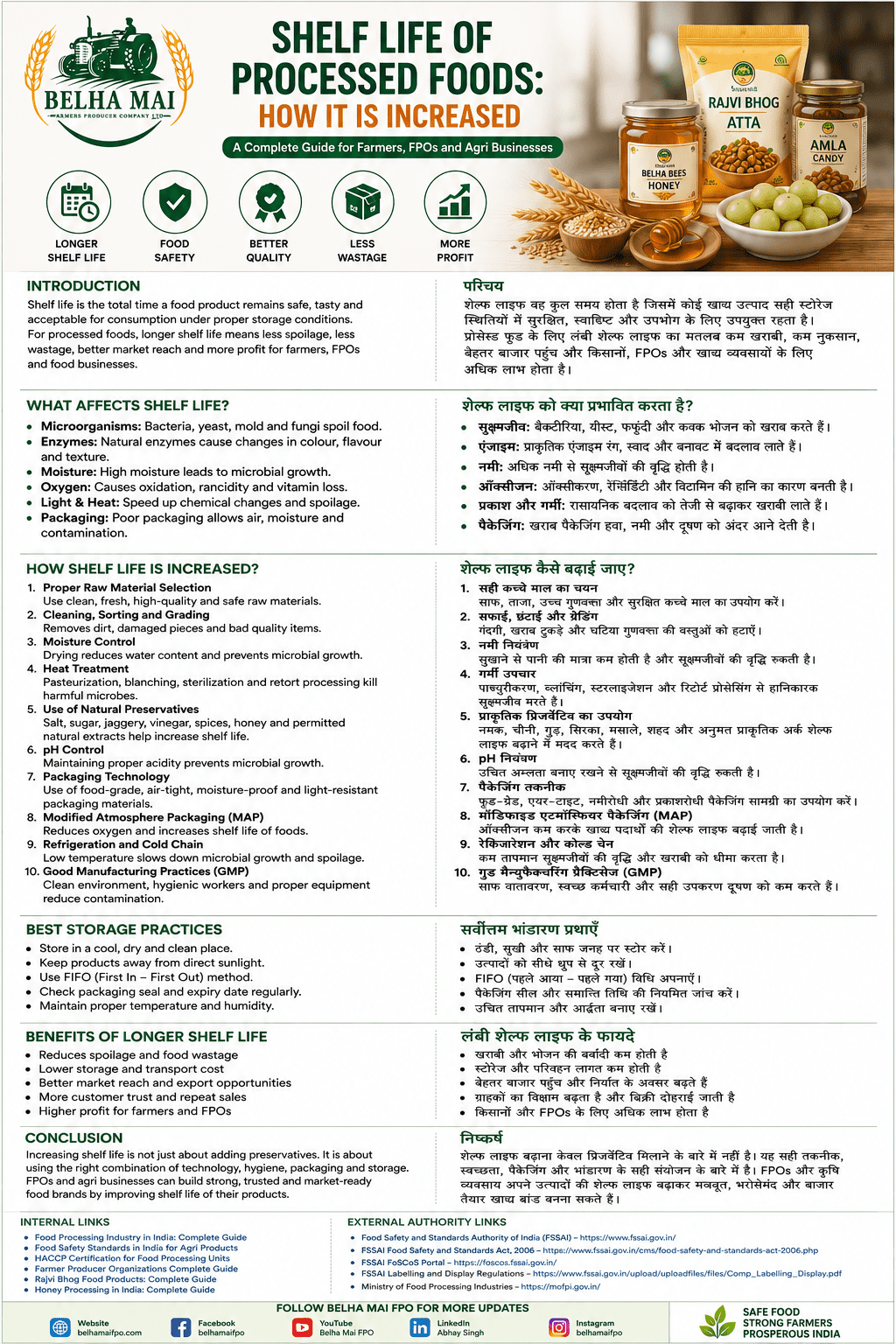
Shelf Life of Processed Foods means the period during which a food product remains safe, fresh, acceptable and suitable for consumption under proper storage conditions. For farmers, FPOs and food businesses, shelf life is very important because it directly affects product quality, wastage, market reach, customer trust and profitability.
Shelf Life of Processed Foods का अर्थ है वह समय अवधि, जिसमें कोई खाद्य उत्पाद सही भंडारण स्थितियों में सुरक्षित, ताजा, स्वीकार्य और उपभोग के योग्य बना रहता है। किसानों, FPOs और खाद्य व्यवसायों के लिए शेल्फ लाइफ बहुत महत्वपूर्ण है क्योंकि यह सीधे उत्पाद गुणवत्ता, नुकसान, बाजार पहुंच, ग्राहक भरोसे और लाभप्रदता को प्रभावित करती है।
In the Food Processing Industry in India, increasing shelf life is one of the main reasons for processing agricultural products. Fresh fruits, vegetables, grains, flour, honey, amla products, mango products and dehydrated foods need proper preservation, packaging and storage to remain safe for a longer time.
Food Processing Industry in India में कृषि उत्पादों की processing का एक मुख्य उद्देश्य shelf life बढ़ाना है। ताजे फल, सब्जियां, अनाज, आटा, शहद, आंवला उत्पाद, आम उत्पाद और डिहाइड्रेटेड फूड्स को लंबे समय तक सुरक्षित रखने के लिए सही preservation, packaging और storage की आवश्यकता होती है।
Why Shelf Life Matters for Farmers and FPOs
Farmers often face losses because fresh produce spoils quickly after harvesting. If fruits, vegetables, amla, mango or other perishable products are not sold in time, their value reduces sharply. Processing helps convert these products into stable forms such as powder, pulp, candy, murabba, dried slices, flour, juice, pickles, jam and packaged products.
किसानों को अक्सर नुकसान इसलिए होता है क्योंकि ताजा उत्पाद कटाई के बाद जल्दी खराब हो जाता है। यदि फल, सब्जियां, आंवला, आम या अन्य नाशवान उत्पाद समय पर नहीं बिकते, तो उनका मूल्य तेजी से घट जाता है। Processing इन उत्पादों को powder, pulp, candy, murabba, dried slices, flour, juice, pickles, jam और packaged products जैसे stable forms में बदलने में मदद करती है।
For FPOs, longer shelf life means more time to sell the product in better markets. It also reduces pressure selling during the harvest season. When Shelf Life of Processed Foods is increased, FPOs can plan inventory, supply retailers, serve institutional buyers, explore online sales and prepare for export opportunities.
FPOs के लिए लंबी shelf life का अर्थ है बेहतर बाजारों में उत्पाद बेचने के लिए अधिक समय। इससे harvest season में मजबूरी में कम दाम पर बेचने का दबाव भी कम होता है। जब Shelf Life of Processed Foods बढ़ती है, तो FPOs inventory plan कर सकते हैं, retailers को supply कर सकते हैं, institutional buyers को serve कर सकते हैं, online sales explore कर सकते हैं और export opportunities के लिए तैयारी कर सकते हैं।
What Affects Shelf Life of Processed Foods?
Shelf Life of Processed Foods depends on several factors such as moisture, temperature, oxygen, light, microorganisms, enzymes, packaging quality, storage condition and hygiene. If these factors are not controlled properly, the product may lose taste, colour, smell, texture, nutrition and safety.
Shelf Life of Processed Foods कई factors पर निर्भर करती है जैसे moisture, temperature, oxygen, light, microorganisms, enzymes, packaging quality, storage condition और hygiene। यदि इन factors को सही तरीके से control नहीं किया जाता, तो product taste, colour, smell, texture, nutrition और safety खो सकता है।
Microorganisms such as bacteria, yeast, mould and fungus are among the biggest causes of food spoilage. They grow faster when food has high moisture, poor hygiene and unsuitable temperature. Therefore, controlling moisture, cleanliness and storage condition is essential for increasing shelf life.
Bacteria, yeast, mould और fungus जैसे microorganisms food spoilage के सबसे बड़े कारणों में से हैं। ये high moisture, poor hygiene और unsuitable temperature में तेजी से बढ़ते हैं। इसलिए shelf life बढ़ाने के लिए moisture, cleanliness और storage condition को control करना आवश्यक है।
Moisture Control
Moisture control is one of the most important ways to increase Shelf Life of Processed Foods. High moisture supports microbial growth, fungus, bad smell, lump formation and quality loss. Products such as flour, grains, pulses, spices, dehydrated fruits and powders must be dried and stored properly.
Moisture control Shelf Life of Processed Foods बढ़ाने के सबसे महत्वपूर्ण तरीकों में से एक है। अधिक नमी microbial growth, fungus, bad smell, lump formation और quality loss को बढ़ाती है। Flour, grains, pulses, spices, dehydrated fruits और powders जैसे products को सही तरीके से dry और store करना चाहिए।
Drying and dehydration reduce water content in food. When water content is reduced, microorganisms cannot grow easily. This is why dehydration is widely used for products such as amla powder, dry amla, dehydrated mango slices, dried vegetables, spices and herbal products.
Drying और dehydration food में water content को कम करते हैं। जब water content कम हो जाता है, तो microorganisms आसानी से grow नहीं कर पाते। इसलिए dehydration का उपयोग amla powder, dry amla, dehydrated mango slices, dried vegetables, spices और herbal products जैसे products में व्यापक रूप से किया जाता है।
Heat Treatment
Heat treatment is another common method used to increase Shelf Life of Processed Foods. Heating can destroy or reduce harmful microorganisms and enzymes that cause spoilage. Methods such as pasteurisation, sterilisation, blanching, boiling and retort processing are used depending on the product type.
Heat treatment Shelf Life of Processed Foods बढ़ाने का एक सामान्य तरीका है। Heating harmful microorganisms और spoilage करने वाले enzymes को destroy या reduce कर सकती है। Product type के अनुसार pasteurisation, sterilisation, blanching, boiling और retort processing जैसी methods का उपयोग किया जाता है।
For example, fruit pulp, juices, sauces, pickles and ready-to-eat foods may require heat treatment to improve safety and shelf life. However, heat treatment must be done carefully because excessive heat can affect taste, colour and nutrition.
उदाहरण के लिए fruit pulp, juices, sauces, pickles और ready-to-eat foods को safety और shelf life improve करने के लिए heat treatment की आवश्यकता हो सकती है। लेकिन heat treatment सावधानी से किया जाना चाहिए क्योंकि excessive heat taste, colour और nutrition को प्रभावित कर सकती है।
Use of Natural Preservatives
Natural preservatives can help increase shelf life by slowing microbial growth, oxidation or spoilage. Traditional Indian food processing uses ingredients such as salt, sugar, oil, vinegar, lemon juice, spices, honey and natural acids to preserve food products.
Natural preservatives microbial growth, oxidation या spoilage को slow करके shelf life बढ़ाने में मदद कर सकते हैं। पारंपरिक भारतीय food processing में food products को preserve करने के लिए salt, sugar, oil, vinegar, lemon juice, spices, honey और natural acids जैसे ingredients का उपयोग किया जाता है।
For FPO-led products, natural preservation methods can be useful when they are applied correctly and safely. Amla murabba, pickles, chutneys, jams, honey-based products and traditional processed foods often use preservation techniques that combine sugar, salt, acidity, heat and hygienic packaging.
FPO-led products के लिए natural preservation methods उपयोगी हो सकते हैं यदि उन्हें सही और सुरक्षित तरीके से apply किया जाए। Amla murabba, pickles, chutneys, jams, honey-based products और traditional processed foods में अक्सर sugar, salt, acidity, heat और hygienic packaging को मिलाकर preservation techniques का उपयोग किया जाता है।
Control of Oxygen
Oxygen can reduce food quality by causing oxidation. Oxidation can lead to rancidity, colour change, flavour loss and nutrient loss. Products containing oils, fats, nuts, grains, flour and spices can be affected by oxygen exposure.
Oxygen oxidation के कारण food quality को कम कर सकता है। Oxidation से rancidity, colour change, flavour loss और nutrient loss हो सकता है। Oils, fats, nuts, grains, flour और spices वाले products oxygen exposure से प्रभावित हो सकते हैं।
To control oxygen, food businesses use air-tight packaging, vacuum packaging, nitrogen flushing and modified atmosphere packaging. These methods reduce contact between food and oxygen, helping maintain quality for a longer time.
Oxygen को control करने के लिए food businesses air-tight packaging, vacuum packaging, nitrogen flushing और modified atmosphere packaging का उपयोग करते हैं। ये methods food और oxygen के संपर्क को कम करती हैं, जिससे quality लंबे समय तक बनी रहती है।
Vacuum Packaging
Vacuum packaging removes air from the package before sealing. Since oxygen is reduced inside the pack, microbial growth and oxidation slow down. This helps increase the Shelf Life of Processed Foods, especially products that are sensitive to air, moisture and contamination.
Vacuum packaging sealing से पहले package से air को remove करती है। Pack के अंदर oxygen कम होने के कारण microbial growth और oxidation slow हो जाते हैं। इससे Shelf Life of Processed Foods बढ़ाने में मदद मिलती है, खासकर उन products की जो air, moisture और contamination के प्रति sensitive होते हैं।
For agri products, vacuum packaging can be useful for dried fruits, dehydrated vegetables, grains, spices, pulses, processed foods and some ready-to-cook products. However, packaging material and storage condition must be suitable for the product.
Agri products के लिए vacuum packaging dried fruits, dehydrated vegetables, grains, spices, pulses, processed foods और कुछ ready-to-cook products के लिए उपयोगी हो सकती है। लेकिन packaging material और storage condition product के लिए suitable होनी चाहिए।
Modified Atmosphere Packaging
Modified Atmosphere Packaging, also called MAP, changes the gas composition inside the package. It usually reduces oxygen and adjusts gases such as nitrogen or carbon dioxide to slow spoilage and maintain product quality.
Modified Atmosphere Packaging, जिसे MAP भी कहा जाता है, package के अंदर gas composition को बदलती है। इसमें आमतौर पर oxygen कम की जाती है और nitrogen या carbon dioxide जैसी gases को adjust किया जाता है ताकि spoilage slow हो और product quality बनी रहे।
MAP is used for products such as fresh-cut fruits, vegetables, snacks, bakery products and some processed foods. It can help increase shelf life when combined with hygiene, cold chain and proper packaging material.
MAP का उपयोग fresh-cut fruits, vegetables, snacks, bakery products और कुछ processed foods में किया जाता है। Hygiene, cold chain और proper packaging material के साथ मिलकर यह shelf life बढ़ाने में मदद कर सकती है।
Refrigeration and Cold Chain
Temperature is a major factor affecting Shelf Life of Processed Foods. Low temperature slows microbial growth and chemical changes. Refrigeration, freezing and cold chain logistics are important for products that are temperature-sensitive.
Temperature Shelf Life of Processed Foods को प्रभावित करने वाला प्रमुख factor है। Low temperature microbial growth और chemical changes को slow करता है। Refrigeration, freezing और cold chain logistics temperature-sensitive products के लिए महत्वपूर्ण हैं।
Products such as dairy, fresh-cut fruits, fruit pulp, juices, frozen vegetables, ready-to-eat foods and some processed products need controlled temperature. If the cold chain breaks during storage or transport, shelf life and safety may reduce.
Dairy, fresh-cut fruits, fruit pulp, juices, frozen vegetables, ready-to-eat foods और कुछ processed products को controlled temperature की आवश्यकता होती है। यदि storage या transport के दौरान cold chain टूटती है, तो shelf life और safety कम हो सकती है।
Hygienic Processing
Shelf life cannot be increased only by packaging or preservatives. Hygiene is the foundation. If raw material, workers, equipment, water, processing area or packaging material is contaminated, the product may spoil quickly even if it is packed well.
Shelf life केवल packaging या preservatives से नहीं बढ़ाई जा सकती। Hygiene इसकी foundation है। यदि raw material, workers, equipment, water, processing area या packaging material contaminated है, तो product अच्छी packaging के बावजूद जल्दी खराब हो सकता है।
Food businesses should follow good manufacturing practices such as clean premises, hand washing, pest control, safe water, equipment cleaning, waste management and worker hygiene. Hygienic processing helps reduce microbial load and improves shelf life.
Food businesses को clean premises, hand washing, pest control, safe water, equipment cleaning, waste management और worker hygiene जैसी good manufacturing practices follow करनी चाहिए। Hygienic processing microbial load को कम करता है और shelf life improve करता है।
Packaging Material
Packaging material plays a very important role in increasing Shelf Life of Processed Foods. Different foods need different packaging materials. Some products need moisture-proof packaging, some need light-resistant packaging, some need air-tight packaging and some need strong packaging for transport safety.
Packaging material Shelf Life of Processed Foods बढ़ाने में बहुत महत्वपूर्ण भूमिका निभाता है। अलग-अलग foods को अलग-अलग packaging materials की आवश्यकता होती है। कुछ products को moisture-proof packaging चाहिए, कुछ को light-resistant packaging, कुछ को air-tight packaging और कुछ को transport safety के लिए strong packaging चाहिए।
For example, flour and powders require protection from moisture. Honey requires clean and food-grade containers. Amla candy and dehydrated fruits require packaging that protects them from air and moisture. Good packaging improves shelf life, customer trust and brand value.
उदाहरण के लिए flour और powders को moisture से protection की आवश्यकता होती है। Honey को clean और food-grade containers चाहिए। Amla candy और dehydrated fruits को ऐसी packaging चाहिए जो उन्हें air और moisture से बचाए। अच्छी packaging shelf life, customer trust और brand value को improve करती है।
Role of pH and Acidity
pH is another important factor in food preservation. Some microorganisms cannot grow well in acidic conditions. This is why acidity is used in products such as pickles, sauces, chutneys, jams, fruit products and fermented foods.
pH food preservation में एक और महत्वपूर्ण factor है। कुछ microorganisms acidic conditions में अच्छी तरह grow नहीं कर पाते। इसलिए acidity का उपयोग pickles, sauces, chutneys, jams, fruit products और fermented foods में किया जाता है।
Lemon juice, vinegar, citric acid and natural fruit acids can help control pH in certain products. However, pH control should be done with proper knowledge because wrong levels may affect taste, safety and product stability.
Lemon juice, vinegar, citric acid और natural fruit acids कुछ products में pH control करने में मदद कर सकते हैं। लेकिन pH control proper knowledge के साथ किया जाना चाहिए क्योंकि गलत levels taste, safety और product stability को प्रभावित कर सकते हैं।
Lab Testing and Shelf Life Study
Shelf life should not be guessed only by looking at the product. Food businesses should conduct practical shelf life studies when launching processed products. These studies help understand how long the product remains safe and acceptable under specific storage conditions.
Shelf life को केवल product देखकर guess नहीं करना चाहिए। Food businesses को processed products launch करते समय practical shelf life studies करनी चाहिए। ये studies यह समझने में मदद करती हैं कि specific storage conditions में product कितने समय तक safe और acceptable रहता है।
Testing may include moisture, microbial load, rancidity, acidity, colour, taste, texture, packaging performance and sensory quality. FPOs can start with basic testing and improve gradually as the business grows.
Testing में moisture, microbial load, rancidity, acidity, colour, taste, texture, packaging performance और sensory quality शामिल हो सकते हैं। FPOs basic testing से शुरुआत कर सकते हैं और business बढ़ने के साथ gradually improve कर सकते हैं।
Storage Practices to Increase Shelf Life
Good storage practices are essential for increasing Shelf Life of Processed Foods. Products should be stored in a clean, dry and cool place away from direct sunlight, moisture, insects, rodents and chemicals. Food products should not be stored directly on the floor.
Shelf Life of Processed Foods बढ़ाने के लिए good storage practices आवश्यक हैं। Products को direct sunlight, moisture, insects, rodents और chemicals से दूर clean, dry और cool place में store करना चाहिए। Food products को सीधे floor पर store नहीं करना चाहिए।
FPOs should use pallets, racks or raised platforms for storage. They should follow the FIFO method, which means First In, First Out. Older stock should be sold or used first to reduce expiry risk and wastage.
FPOs को storage के लिए pallets, racks या raised platforms का उपयोग करना चाहिए। उन्हें FIFO method follow करना चाहिए, जिसका अर्थ है First In, First Out। पुराने stock को पहले sell या use करना चाहिए ताकि expiry risk और wastage कम हो।
Shelf Life and Labelling
Shelf life is directly connected with labelling. Packaged food products should mention manufacturing date, best before date or expiry date as applicable. This helps consumers understand product freshness and safety.
Shelf life सीधे labelling से जुड़ी हुई है। Packaged food products पर manufacturing date, best before date या expiry date जहां लागू हो, mention करनी चाहिए। इससे consumers product freshness और safety को समझ पाते हैं।
For FPOs, correct shelf life declaration is very important. If the shelf life is too short, market reach becomes limited. If the shelf life is claimed without proper testing, it can create customer complaints and compliance issues. Therefore, shelf life should be declared carefully.
FPOs के लिए correct shelf life declaration बहुत महत्वपूर्ण है। यदि shelf life बहुत कम है, तो market reach limited हो जाती है। यदि shelf life बिना proper testing के claim की जाती है, तो customer complaints और compliance issues पैदा हो सकते हैं। इसलिए shelf life carefully declare करनी चाहिए।
Benefits of Longer Shelf Life
Longer shelf life reduces spoilage and wastage. It gives farmers and FPOs more time to sell products in better markets. It also reduces transport pressure and allows products to reach distant buyers.
Longer shelf life spoilage और wastage को कम करती है। यह किसानों और FPOs को better markets में products बेचने के लिए अधिक समय देती है। यह transport pressure को भी कम करती है और products को distant buyers तक पहुंचाने में मदद करती है।
For food businesses, longer shelf life improves inventory planning, retail placement, online sales, institutional supply and export readiness. It also improves customer confidence because consumers prefer products that remain safe and stable for a reasonable period.
Food businesses के लिए longer shelf life inventory planning, retail placement, online sales, institutional supply और export readiness को improve करती है। यह customer confidence भी बढ़ाती है क्योंकि consumers ऐसे products पसंद करते हैं जो reasonable period तक safe और stable रहते हैं।
Shelf Life for FPO Products
FPO products such as atta, rice, dalia, suji, millet flour, honey, amla candy, amla powder, mango pulp, aamchur, dehydrated mango and spices need different shelf life strategies. One method cannot be applied to all products.
FPO products जैसे atta, rice, dalia, suji, millet flour, honey, amla candy, amla powder, mango pulp, aamchur, dehydrated mango और spices को अलग-अलग shelf life strategies की आवश्यकता होती है। एक method सभी products पर apply नहीं की जा सकती।
For flour and grain products, moisture control, clean milling, pest-free storage and strong packaging are important. For honey, moisture balance, filtration, clean containers and proper storage are important. For amla and mango products, dehydration, sugar concentration, acidity, heat treatment, packaging and storage conditions play an important role.
Flour और grain products के लिए moisture control, clean milling, pest-free storage और strong packaging महत्वपूर्ण हैं। Honey के लिए moisture balance, filtration, clean containers और proper storage महत्वपूर्ण हैं। Amla और mango products के लिए dehydration, sugar concentration, acidity, heat treatment, packaging और storage conditions महत्वपूर्ण भूमिका निभाते हैं।
Common Mistakes That Reduce Shelf Life
One common mistake is packing food before proper drying. If moisture remains high, the product may develop fungus, bad smell or lump formation. Another mistake is using poor-quality packaging that allows moisture, air or insects to enter.
एक common mistake यह है कि proper drying से पहले food को pack कर दिया जाता है। यदि moisture high रहता है, तो product में fungus, bad smell या lump formation हो सकता है। दूसरी mistake poor-quality packaging का उपयोग है, जिससे moisture, air या insects अंदर प्रवेश कर सकते हैं।
A third mistake is poor storage. Even a good product can spoil if it is stored in a hot, damp or pest-infested place. FPOs should also avoid mixing old stock with new stock without proper batch control.
तीसरी mistake poor storage है। एक अच्छा product भी खराब हो सकता है यदि उसे hot, damp या pest-infested place में store किया जाए। FPOs को proper batch control के बिना old stock को new stock के साथ mix करने से भी बचना चाहिए।
Belha Mai FPO Vision for Better Shelf Life
Belha Mai Farmers Producer Company Ltd. understands that shelf life is directly connected with farmer income, food safety, market reach and brand trust. Through Rajvi Bhog food products and Belha Bees honey, the FPO aims to develop products that are clean, safe, properly packed and market-ready.
Belha Mai Farmers Producer Company Ltd. समझता है कि shelf life सीधे farmer income, food safety, market reach और brand trust से जुड़ी हुई है। Rajvi Bhog food products और Belha Bees honey के माध्यम से FPO ऐसे products develop करना चाहता है जो clean, safe, properly packed और market-ready हों।
For Belha Mai FPO, increasing Shelf Life of Processed Foods is not only about technology. It is about building a complete system of raw material selection, hygiene, processing, packaging, storage, labelling and quality control. This can help farmer-led brands reach bigger markets with better value.
Belha Mai FPO के लिए Shelf Life of Processed Foods बढ़ाना केवल technology के बारे में नहीं है। यह raw material selection, hygiene, processing, packaging, storage, labelling और quality control की complete system building है। इससे farmer-led brands better value के साथ bigger markets तक पहुंच सकते हैं।
Conclusion
Shelf Life of Processed Foods is one of the most important factors in food processing and agri business. Longer shelf life reduces wastage, improves market access, strengthens customer trust and increases business profitability. For farmers and FPOs, shelf life improvement can convert seasonal produce into stable, branded and market-ready products.
Shelf Life of Processed Foods food processing और agri business के सबसे महत्वपूर्ण factors में से एक है। Longer shelf life wastage कम करती है, market access improve करती है, customer trust मजबूत करती है और business profitability बढ़ाती है। किसानों और FPOs के लिए shelf life improvement seasonal produce को stable, branded और market-ready products में बदल सकता है।
In the future of the Food Processing Industry in India, shelf life will play a major role in building successful food brands. FPOs that focus on hygiene, packaging, moisture control, processing, storage and quality testing will be better prepared for retail, institutional and export markets.
Food Processing Industry in India के future में shelf life successful food brands बनाने में major role निभाएगी। जो FPOs hygiene, packaging, moisture control, processing, storage और quality testing पर focus करेंगे, वे retail, institutional और export markets के लिए बेहतर तैयार होंगे।
FAQ
What is Shelf Life of Processed Foods?
Shelf Life of Processed Foods means the period during which a food product remains safe, fresh and acceptable for consumption under proper storage conditions.
Shelf Life of Processed Foods का अर्थ है वह समय अवधि, जिसमें food product सही storage conditions में safe, fresh और consumption के लिए acceptable रहता है।
Why is shelf life important for FPOs?
Shelf life is important for FPOs because it reduces wastage, increases market reach, improves inventory planning and helps sell products in better markets.
Shelf life FPOs के लिए महत्वपूर्ण है क्योंकि यह wastage कम करती है, market reach बढ़ाती है, inventory planning improve करती है और products को better markets में बेचने में मदद करती है।
How is shelf life increased?
Shelf life is increased through drying, dehydration, heat treatment, natural preservatives, moisture control, vacuum packaging, MAP, refrigeration, hygiene and proper storage.
Shelf life drying, dehydration, heat treatment, natural preservatives, moisture control, vacuum packaging, MAP, refrigeration, hygiene और proper storage के माध्यम से बढ़ाई जाती है।
What reduces shelf life of food products?
High moisture, poor hygiene, oxygen, heat, light, microorganisms, poor packaging and bad storage conditions reduce shelf life.
High moisture, poor hygiene, oxygen, heat, light, microorganisms, poor packaging और bad storage conditions shelf life को कम करते हैं।
Why is packaging important for shelf life?
Packaging protects food from moisture, air, insects, dust, light and contamination. Good packaging helps maintain quality and safety for a longer time.
Packaging food को moisture, air, insects, dust, light और contamination से बचाती है। Good packaging quality और safety को लंबे समय तक बनाए रखने में मदद करती है।
Can shelf life be increased without preservatives?
Yes, shelf life can be increased without artificial preservatives through dehydration, hygiene, vacuum packaging, refrigeration, moisture control and proper storage.
हाँ, artificial preservatives के बिना भी dehydration, hygiene, vacuum packaging, refrigeration, moisture control और proper storage के माध्यम से shelf life बढ़ाई जा सकती है।
Internal Links Section
👉 Food Processing Industry in India: Complete Guide
👉 Food Safety Standards in India for Agri Products
👉 HACCP Certification for Food Processing Units
👉 FSSAI Guidelines for Food Businesses in India
👉 Rajvi Bhog Food Products: Complete Guide
👉 Honey Processing in India: Complete Guide
External Authority Links
👉 Food Safety and Standards Authority of India
👉 Ministry of Food Processing Industries
👉 FAO – Food Quality and Safety
👉 Codex Alimentarius – International Food Standards
Follow Belha Mai FPO for More Updates
Stay connected with Belha Mai Farmers Producer Company Ltd. for more updates on agriculture, food processing, farmer development, FPO awareness, market linkage, value addition, rural entrepreneurship and sustainable farming.
👉 Website
👉 YouTube
Belha Mai FPO is committed to supporting farmers through better information, technology, market linkage, value addition, FPO awareness and rural development.