भारत में खेत उत्सर्जन कैसे कम करें
Introduction / परिचय
How to reduce farm emissions in India is an important question because Indian agriculture must feed a large population while also facing climate change, water stress, rising input cost, soil degradation and unpredictable weather. Farm emissions come from many sources such as flooded paddy fields, excessive fertilizer use, crop residue burning, diesel use, irrigation pumps, livestock digestion and poor manure management. The good news is that farmers can reduce farm emissions without reducing productivity if they adopt practical, climate-smart and soil-friendly practices.
भारत में खेत उत्सर्जन कैसे कम करें यह एक महत्वपूर्ण प्रश्न है, क्योंकि भारतीय कृषि को बड़ी आबादी का भोजन भी सुनिश्चित करना है और साथ ही जलवायु परिवर्तन, जल संकट, बढ़ती लागत, मिट्टी क्षरण और अनिश्चित मौसम का सामना भी करना है। खेत उत्सर्जन कई स्रोतों से आता है, जैसे पानी भरे धान खेत, अत्यधिक उर्वरक उपयोग, फसल अवशेष जलाना, डीजल उपयोग, सिंचाई पंप, पशुओं का पाचन और कमजोर गोबर प्रबंधन। अच्छी बात यह है कि किसान व्यावहारिक, जलवायु-अनुकूल और मिट्टी हितैषी पद्धतियाँ अपनाकर उत्पादन घटाए बिना खेत उत्सर्जन कम कर सकते हैं।
The topic How to reduce farm emissions in India is also important for FPOs because small farmers often need collective support, machinery access, soil testing, training, data management and technical guidance. Farmer Producer Organizations can help farmers adopt low-emission practices such as Direct Seeded Rice, Super Seeder, crop residue management, balanced nutrient use, composting, bio-inputs, agroforestry, water-saving irrigation and improved livestock management. These practices can reduce emissions, improve soil health and support future climate finance or carbon credit opportunities.
भारत में खेत उत्सर्जन कैसे कम करें विषय किसान उत्पादक संगठनों के लिए भी महत्वपूर्ण है, क्योंकि छोटे किसानों को अक्सर सामूहिक सहायता, कृषि यंत्र पहुँच, मिट्टी परीक्षण, प्रशिक्षण, आँकड़ा प्रबंधन और तकनीकी मार्गदर्शन की आवश्यकता होती है। किसान उत्पादक संगठन किसानों को सीधी बुवाई धान, सुपर सीडर, फसल अवशेष प्रबंधन, संतुलित पोषक उपयोग, कंपोस्ट, जैविक कृषि सामग्री, कृषि वानिकी, जल बचत सिंचाई और बेहतर पशुधन प्रबंधन जैसी कम उत्सर्जन वाली पद्धतियाँ अपनाने में मदद कर सकते हैं। ये पद्धतियाँ उत्सर्जन घटा सकती हैं, मिट्टी स्वास्थ्य सुधार सकती हैं और भविष्य के जलवायु वित्त या कार्बन क्रेडिट अवसरों को सहारा दे सकती हैं।
Where Do Farm Emissions Come From? / खेत उत्सर्जन कहाँ से आता है?
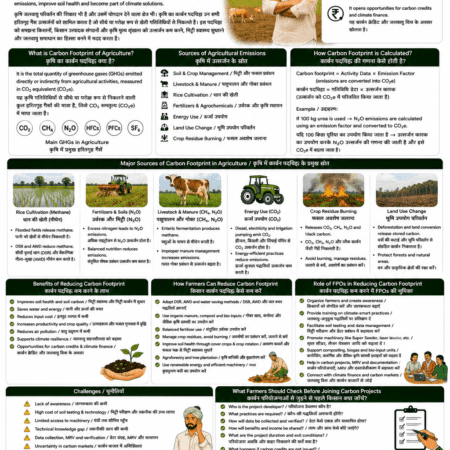
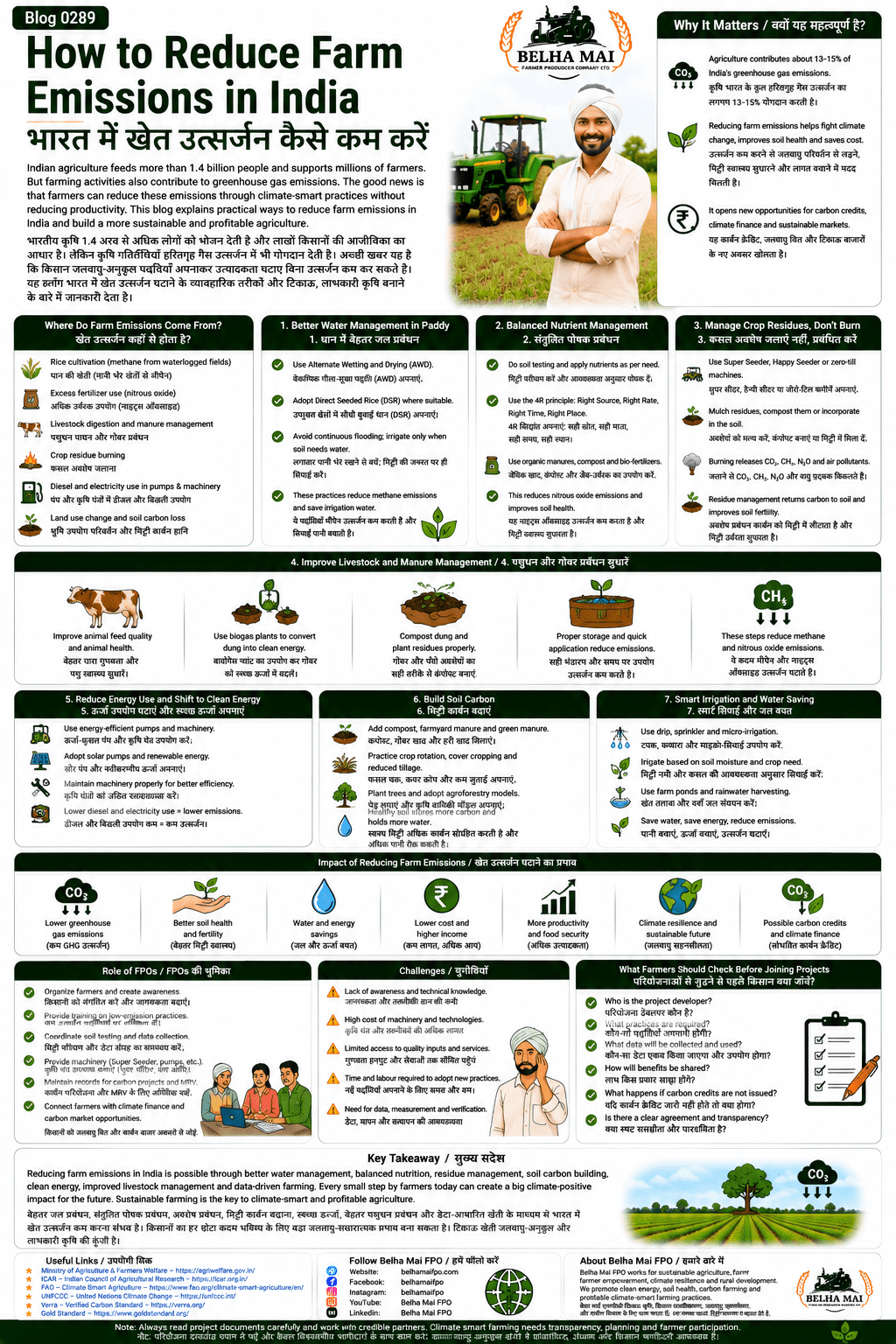
Farm emissions mainly come from rice cultivation, fertilizer use, livestock, manure management, crop residue burning, diesel use, electricity use, irrigation and loss of soil carbon. Flooded rice fields can produce methane. Excess nitrogen fertilizer can produce nitrous oxide. Diesel and electricity use can create carbon dioxide emissions. Crop residue burning releases smoke and greenhouse gases while also damaging soil health.
खेत उत्सर्जन मुख्य रूप से धान खेती, उर्वरक उपयोग, पशुधन, गोबर प्रबंधन, फसल अवशेष जलाना, डीजल उपयोग, बिजली उपयोग, सिंचाई और मिट्टी कार्बन की कमी से आता है। पानी भरे धान खेतों से मीथेन बन सकती है। अत्यधिक नाइट्रोजन उर्वरक से नाइट्रस ऑक्साइड बन सकती है। डीजल और बिजली उपयोग से कार्बन डाइऑक्साइड उत्सर्जन हो सकता है। फसल अवशेष जलाने से धुआँ और हरितगृह गैसें निकलती हैं और मिट्टी स्वास्थ्य को भी नुकसान होता है।
To understand How to reduce farm emissions in India, farmers first need to identify the biggest emission sources on their own farms. A paddy farmer may need better water management. A farmer using excess fertilizer may need soil testing and balanced nutrition. A farmer burning residues may need machinery access or composting support. Every farm has a different emission profile, so solutions must be practical and local.
भारत में खेत उत्सर्जन कैसे कम करें समझने के लिए किसानों को पहले अपने खेत के सबसे बड़े उत्सर्जन स्रोत पहचानने होंगे। धान किसान को बेहतर जल प्रबंधन की आवश्यकता हो सकती है। अधिक उर्वरक उपयोग करने वाले किसान को मिट्टी परीक्षण और संतुलित पोषण की आवश्यकता हो सकती है। अवशेष जलाने वाले किसान को कृषि यंत्र या कंपोस्ट सहायता की आवश्यकता हो सकती है। हर खेत की उत्सर्जन स्थिति अलग होती है, इसलिए समाधान व्यावहारिक और स्थानीय होने चाहिए।
1. Improve Water Management in Paddy / 1. धान में जल प्रबंधन सुधारें
Paddy cultivation is one of the important areas where farmers can reduce emissions. Traditional flooded rice fields can produce methane because soil remains without oxygen for a long time. Farmers can reduce this emission by avoiding unnecessary continuous flooding and by adopting better irrigation scheduling.
धान खेती उन महत्वपूर्ण क्षेत्रों में से एक है जहाँ किसान उत्सर्जन कम कर सकते हैं। पारंपरिक पानी भरे धान खेतों से मीथेन बन सकती है क्योंकि मिट्टी लंबे समय तक ऑक्सीजन की कमी वाली स्थिति में रहती है। किसान अनावश्यक लगातार पानी भरे रहने से बचकर और बेहतर सिंचाई समय अपनाकर इस उत्सर्जन को कम कर सकते हैं।
In How to reduce farm emissions in India, water management in paddy is a practical starting point. Alternate wetting and drying, Direct Seeded Rice and field-level water monitoring can reduce water use and methane emissions when properly implemented. These practices also save irrigation cost and reduce pressure on groundwater.
भारत में खेत उत्सर्जन कैसे कम करें में धान का जल प्रबंधन एक व्यावहारिक शुरुआत है। वैकल्पिक गीला-सूखा प्रबंधन, सीधी बुवाई धान और खेत स्तर जल निगरानी सही तरीके से अपनाने पर पानी की खपत और मीथेन उत्सर्जन घटा सकते हैं। ये पद्धतियाँ सिंचाई लागत बचाती हैं और भूजल पर दबाव कम करती हैं।
2. Adopt Direct Seeded Rice Where Suitable / 2. उपयुक्त क्षेत्रों में सीधी बुवाई धान अपनाएँ
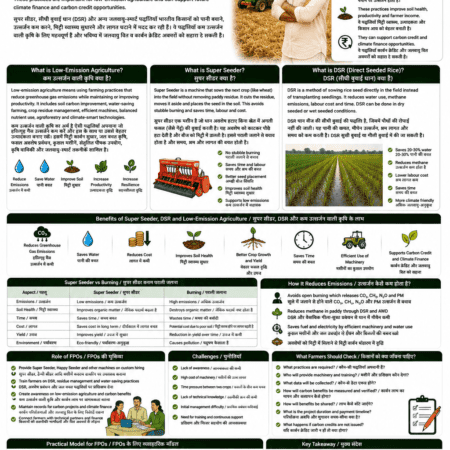
Direct Seeded Rice means sowing rice seeds directly in the field instead of transplanting seedlings into puddled and flooded fields. This practice can save water, reduce labour cost, reduce field preparation cost and lower methane emissions if farmers manage weeds and irrigation properly.
सीधी बुवाई धान का अर्थ है पौध तैयार करके पानी भरे खेत में रोपाई करने के बजाय खेत में सीधे धान बीज बोना। यदि किसान खरपतवार और सिंचाई का सही प्रबंधन करें, तो यह पद्धति पानी बचा सकती है, श्रम लागत घटा सकती है, खेत तैयारी खर्च कम कर सकती है और मीथेन उत्सर्जन घटा सकती है।
DSR is an important answer to How to reduce farm emissions in India, but it should not be adopted blindly. Farmers need training on seed rate, sowing time, soil moisture, weed control, nutrient management and irrigation scheduling. FPOs can organise demonstrations and technical support before scaling this practice.
सीधी बुवाई धान भारत में खेत उत्सर्जन कैसे कम करें का महत्वपूर्ण उत्तर है, लेकिन इसे बिना समझे नहीं अपनाना चाहिए। किसानों को बीज दर, बुवाई समय, मिट्टी नमी, खरपतवार नियंत्रण, पोषक प्रबंधन और सिंचाई समय पर प्रशिक्षण चाहिए। किसान उत्पादक संगठन इस पद्धति को विस्तार देने से पहले प्रदर्शन और तकनीकी सहायता आयोजित कर सकते हैं।
3. Use Balanced Nutrient Management / 3. संतुलित पोषक प्रबंधन अपनाएँ
Excess fertilizer use increases cost and can increase emissions. Nitrogen fertilizer, when used inefficiently, can lead to nitrous oxide emissions from soil. Farmers can reduce emissions by applying nutrients according to soil test results, crop requirement, correct timing and correct method.
अत्यधिक उर्वरक उपयोग लागत बढ़ाता है और उत्सर्जन भी बढ़ा सकता है। नाइट्रोजन उर्वरक का अकुशल उपयोग मिट्टी से नाइट्रस ऑक्साइड उत्सर्जन बढ़ा सकता है। किसान मिट्टी परीक्षण परिणाम, फसल आवश्यकता, सही समय और सही विधि के अनुसार पोषक तत्व देकर उत्सर्जन घटा सकते हैं।
In How to reduce farm emissions in India, balanced nutrient management is one of the easiest ways to reduce waste. Farmers should follow the principle of right source, right dose, right time and right place. Compost, green manure, crop residues and bio-inputs can also support soil fertility when used correctly.
भारत में खेत उत्सर्जन कैसे कम करें में संतुलित पोषक प्रबंधन बर्बादी घटाने के सबसे आसान तरीकों में से एक है। किसानों को सही स्रोत, सही मात्रा, सही समय और सही स्थान का सिद्धांत अपनाना चाहिए। कंपोस्ट, हरी खाद, फसल अवशेष और जैविक कृषि सामग्री सही उपयोग होने पर मिट्टी उर्वरता को सहारा दे सकते हैं।
4. Do Soil Testing Regularly / 4. नियमित मिट्टी परीक्षण कराएँ
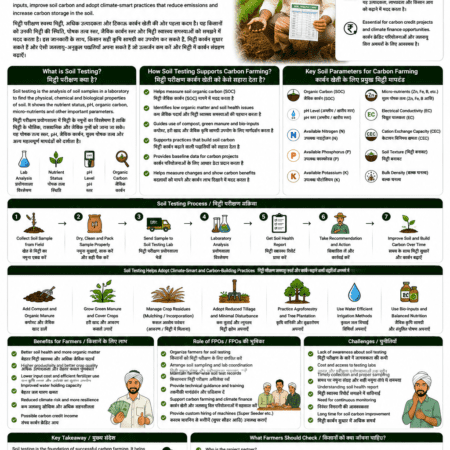
Soil testing helps farmers understand soil organic carbon, pH, nutrient status, salinity and soil health problems. Without soil testing, farmers may apply fertilizers by habit rather than actual need. This can increase cost and emissions while reducing soil balance.
मिट्टी परीक्षण किसानों को मिट्टी जैविक कार्बन, अम्लीयता-क्षारीयता स्तर, पोषक स्थिति, लवणता और मिट्टी स्वास्थ्य समस्याओं को समझने में मदद करता है। मिट्टी परीक्षण के बिना किसान वास्तविक आवश्यकता के बजाय आदत से उर्वरक डाल सकते हैं। इससे लागत और उत्सर्जन बढ़ सकता है और मिट्टी संतुलन घट सकता है।
Soil testing is central to How to reduce farm emissions in India because it supports scientific nutrient management and soil carbon improvement. FPOs can organise soil sampling, coordinate with laboratories, maintain farmer-wise soil records and guide farmers based on soil health reports.
मिट्टी परीक्षण भारत में खेत उत्सर्जन कैसे कम करें का केंद्रीय हिस्सा है क्योंकि यह वैज्ञानिक पोषक प्रबंधन और मिट्टी कार्बन सुधार को सहारा देता है। किसान उत्पादक संगठन मिट्टी नमूना संग्रह कर सकते हैं, प्रयोगशालाओं से समन्वय कर सकते हैं, किसानवार मिट्टी अभिलेख रख सकते हैं और मिट्टी स्वास्थ्य प्रतिवेदन के आधार पर किसानों को मार्गदर्शन दे सकते हैं।
5. Manage Crop Residues, Do Not Burn / 5. फसल अवशेष प्रबंधित करें, जलाएँ नहीं
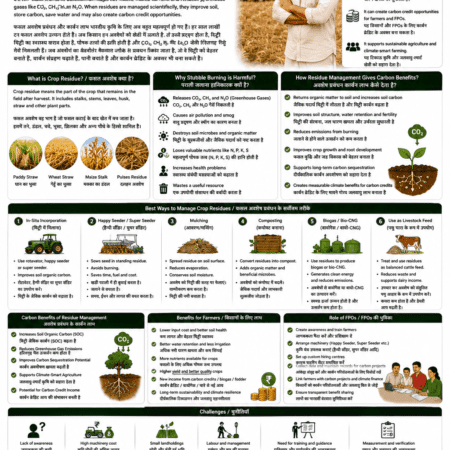
Crop residue burning is one of the most visible sources of farm emissions. Burning releases smoke, carbon dioxide, methane, nitrous oxide and particulate matter. It also destroys soil organic matter, beneficial microorganisms and nutrients near the soil surface.
फसल अवशेष जलाना खेत उत्सर्जन के सबसे स्पष्ट स्रोतों में से एक है। जलाने से धुआँ, कार्बन डाइऑक्साइड, मीथेन, नाइट्रस ऑक्साइड और सूक्ष्म कण निकलते हैं। यह मिट्टी की सतह के पास मौजूद जैविक पदार्थ, लाभकारी सूक्ष्मजीव और पोषक तत्वों को भी नष्ट करता है।
In How to reduce farm emissions in India, crop residue management is a powerful solution. Farmers can use Super Seeder, Happy Seeder, mulching, composting, biogas, animal feed or in-situ incorporation. These options reduce burning, improve soil health and help build soil organic carbon.
भारत में खेत उत्सर्जन कैसे कम करें में फसल अवशेष प्रबंधन एक मजबूत समाधान है। किसान सुपर सीडर, हैप्पी सीडर, आच्छादन, कंपोस्ट, बायोगैस, पशु चारा या खेत में अवशेष मिलाने के तरीके अपना सकते हैं। ये विकल्प अवशेष जलाने को कम करते हैं, मिट्टी स्वास्थ्य सुधारते हैं और मिट्टी जैविक कार्बन बढ़ाने में मदद करते हैं।
6. Use Super Seeder and Machinery Services / 6. सुपर सीडर और कृषि यंत्र सेवाएँ अपनाएँ
Super Seeder helps farmers sow wheat after paddy harvesting while managing paddy residue in the field. It reduces the need for burning and helps farmers complete sowing within the short period between paddy harvesting and wheat planting. This saves time and supports soil health.
सुपर सीडर किसानों को धान कटाई के बाद खेत में धान अवशेष प्रबंधन करते हुए गेहूँ बुवाई में मदद करता है। यह जलाने की आवश्यकता कम करता है और धान कटाई तथा गेहूँ बुवाई के बीच कम समय में बुवाई पूरी करने में सहायता देता है। इससे समय बचता है और मिट्टी स्वास्थ्य को सहारा मिलता है।
Super Seeder is an important practical tool in How to reduce farm emissions in India. Since individual small farmers may not be able to purchase such machines, FPOs can run custom hiring services. This makes low-emission machinery accessible to more farmers at affordable cost.
सुपर सीडर भारत में खेत उत्सर्जन कैसे कम करें में एक महत्वपूर्ण व्यावहारिक यंत्र है। चूँकि व्यक्तिगत छोटे किसान ऐसे यंत्र खरीदने में सक्षम नहीं हो सकते, इसलिए किसान उत्पादक संगठन कस्टम हायरिंग सेवा चला सकते हैं। इससे कम उत्सर्जन वाले कृषि यंत्र अधिक किसानों को किफायती लागत पर उपलब्ध हो सकते हैं।
7. Improve Livestock and Manure Management / 7. पशुधन और गोबर प्रबंधन सुधारें
Livestock emissions come from animal digestion and manure management. Better animal feed, improved animal health, proper dung storage, composting and biogas plants can reduce methane and nitrous oxide emissions. Manure should be treated as a valuable resource, not waste.
पशुधन उत्सर्जन पशुओं के पाचन और गोबर प्रबंधन से आता है। बेहतर चारा, पशु स्वास्थ्य सुधार, सही गोबर भंडारण, कंपोस्ट और बायोगैस संयंत्र मीथेन तथा नाइट्रस ऑक्साइड उत्सर्जन घटा सकते हैं। गोबर को कचरा नहीं, बल्कि मूल्यवान संसाधन समझना चाहिए।
In How to reduce farm emissions in India, livestock improvement is important because mixed farming is common in rural India. Composting dung and crop residues can improve soil organic matter. Biogas can provide clean energy, while slurry can be used as manure.
भारत में खेत उत्सर्जन कैसे कम करें में पशुधन सुधार महत्वपूर्ण है क्योंकि ग्रामीण भारत में मिश्रित खेती सामान्य है। गोबर और फसल अवशेषों से कंपोस्ट बनाकर मिट्टी जैविक पदार्थ सुधारा जा सकता है। बायोगैस स्वच्छ ऊर्जा दे सकती है और बची हुई घोल खाद के रूप में उपयोग हो सकती है।
8. Reduce Diesel and Electricity Use / 8. डीजल और बिजली उपयोग घटाएँ
Diesel pumps, tractors, tillage operations, irrigation pumping and repeated machinery use increase farm emissions and cost. Farmers can reduce emissions by using efficient pumps, maintaining machinery, reducing unnecessary tillage, using solar pumps where suitable and planning field operations properly.
डीजल पंप, ट्रैक्टर, जुताई कार्य, सिंचाई पंपिंग और बार-बार यंत्र उपयोग खेत उत्सर्जन और लागत बढ़ाते हैं। किसान कुशल पंप उपयोग करके, यंत्रों का सही रखरखाव करके, अनावश्यक जुताई घटाकर, उपयुक्त स्थानों पर सौर पंप अपनाकर और खेत कार्यों की सही योजना बनाकर उत्सर्जन घटा सकते हैं।
Energy efficiency is an important part of How to reduce farm emissions in India. Saving energy means saving money and reducing emissions at the same time. FPOs can support farmers by promoting machinery sharing, proper scheduling and energy-efficient irrigation systems.
ऊर्जा दक्षता भारत में खेत उत्सर्जन कैसे कम करें का महत्वपूर्ण हिस्सा है। ऊर्जा बचत का अर्थ है एक साथ धन बचाना और उत्सर्जन कम करना। किसान उत्पादक संगठन यंत्र साझा उपयोग, सही समय निर्धारण और ऊर्जा-कुशल सिंचाई प्रणालियों को बढ़ावा देकर किसानों की मदद कर सकते हैं।
9. Build Soil Carbon / 9. मिट्टी कार्बन बढ़ाएँ
Building soil carbon is one of the best long-term ways to reduce farm emissions and improve resilience. Farmers can build soil carbon by adding compost, farmyard manure, crop residues, green manure, cover crops and organic matter. Reduced tillage, crop rotation and agroforestry can also help.
मिट्टी कार्बन बढ़ाना खेत उत्सर्जन घटाने और सहनशीलता सुधारने का एक बेहतरीन दीर्घकालिक तरीका है। किसान कंपोस्ट, गोबर खाद, फसल अवशेष, हरी खाद, आवरण फसल और जैविक पदार्थ जोड़कर मिट्टी कार्बन बढ़ा सकते हैं। कम जुताई, फसल चक्र और कृषि वानिकी भी मदद कर सकते हैं।
In How to reduce farm emissions in India, soil carbon is important because healthy soil stores more carbon, holds more water and supports better crop growth. Better soil carbon can reduce irrigation need, improve nutrient cycling and support climate resilience.
भारत में खेत उत्सर्जन कैसे कम करें में मिट्टी कार्बन महत्वपूर्ण है क्योंकि स्वस्थ मिट्टी अधिक कार्बन संग्रहित करती है, अधिक पानी रोकती है और बेहतर फसल वृद्धि को सहारा देती है। बेहतर मिट्टी कार्बन सिंचाई आवश्यकता घटा सकता है, पोषक चक्र सुधार सकता है और जलवायु सहनशीलता को सहारा दे सकता है।
10. Adopt Agroforestry and Tree Plantation / 10. कृषि वानिकी और वृक्षारोपण अपनाएँ
Agroforestry and tree plantation help store carbon in trees, roots and soil. Trees also provide shade, reduce heat stress, improve biodiversity, protect soil and may provide fruit, fodder, fuelwood or timber income. Farmers can plant trees on field boundaries, bunds, degraded patches and suitable farm areas.
कृषि वानिकी और वृक्षारोपण पेड़ों, जड़ों और मिट्टी में कार्बन संग्रहित करने में मदद करते हैं। पेड़ छाया देते हैं, गर्मी तनाव कम करते हैं, जैव विविधता सुधारते हैं, मिट्टी की रक्षा करते हैं और फल, चारा, ईंधन लकड़ी या इमारती लकड़ी आय दे सकते हैं। किसान खेत की मेड़ों, सीमाओं, कमजोर हिस्सों और उपयुक्त कृषि क्षेत्रों में पेड़ लगा सकते हैं।
Agroforestry is a strong answer to How to reduce farm emissions in India because it combines farming with carbon storage. However, tree species, spacing, water availability, farmer interest and long-term protection must be planned carefully.
कृषि वानिकी भारत में खेत उत्सर्जन कैसे कम करें का मजबूत उत्तर है क्योंकि यह खेती को कार्बन संग्रहण से जोड़ती है। हालाँकि पेड़ प्रजाति, दूरी, जल उपलब्धता, किसान रुचि और दीर्घकालिक सुरक्षा की योजना सावधानी से बनानी चाहिए।
11. Use Smart Irrigation and Water-Saving Methods / 11. स्मार्ट सिंचाई और जल बचत पद्धतियाँ अपनाएँ
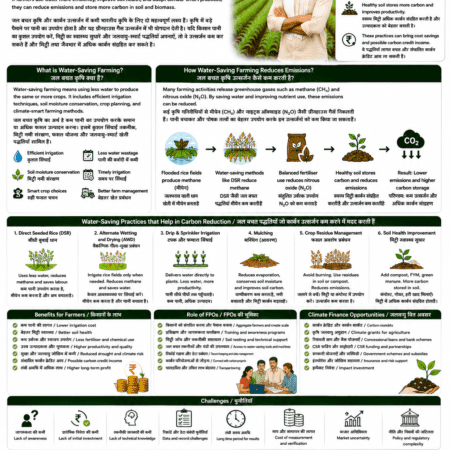
Water-saving farming reduces emissions by reducing pumping energy and improving soil moisture. Farmers can use drip irrigation, sprinkler irrigation, mulching, rainwater harvesting, farm ponds and irrigation scheduling based on crop need and soil moisture.
जल बचत खेती पंपिंग ऊर्जा घटाकर और मिट्टी नमी सुधारकर उत्सर्जन कम करती है। किसान टपक सिंचाई, फव्वारा सिंचाई, आच्छादन, वर्षा जल संग्रहण, खेत तालाब और फसल आवश्यकता तथा मिट्टी नमी के आधार पर सिंचाई समय अपनाकर पानी बचा सकते हैं।
In How to reduce farm emissions in India, water-saving is directly linked with cost saving. Less water pumping means lower electricity or diesel use. Better water use also improves crop resilience during dry periods.
भारत में खेत उत्सर्जन कैसे कम करें में जल बचत सीधे लागत बचत से जुड़ी है। कम पानी पंप करने का अर्थ है कम बिजली या डीजल उपयोग। बेहतर जल उपयोग सूखे समय में फसल सहनशीलता भी सुधारता है।
Benefits of Reducing Farm Emissions / खेत उत्सर्जन घटाने के लाभ
Reducing farm emissions improves soil health, saves water, lowers input cost, reduces fuel use, improves productivity and supports climate resilience. It can also reduce air pollution and improve the long-term sustainability of farming systems.
खेत उत्सर्जन घटाने से मिट्टी स्वास्थ्य सुधरता है, पानी बचता है, कृषि लागत घटती है, ईंधन उपयोग कम होता है, उत्पादकता सुधरती है और जलवायु सहनशीलता बढ़ती है। इससे वायु प्रदूषण भी कम होता है और खेती व्यवस्था का दीर्घकालिक टिकाऊपन सुधरता है।
Another benefit of How to reduce farm emissions in India is future readiness. Low-emission agriculture can help farmers prepare for carbon credits, climate finance, sustainable markets, responsible buyers and export-linked sustainability requirements. However, carbon income should be treated as possible additional income, not guaranteed income.
भारत में खेत उत्सर्जन कैसे कम करें का एक और लाभ भविष्य की तैयारी है। कम उत्सर्जन वाली कृषि किसानों को कार्बन क्रेडिट, जलवायु वित्त, टिकाऊ बाज़ार, जिम्मेदार खरीदार और निर्यात से जुड़ी टिकाऊपन आवश्यकताओं के लिए तैयार कर सकती है। हालाँकि कार्बन आय को संभावित अतिरिक्त आय के रूप में देखना चाहिए, निश्चित आय के रूप में नहीं।
Role of FPOs in Reducing Farm Emissions / खेत उत्सर्जन घटाने में किसान उत्पादक संगठनों की भूमिका
FPOs can play a major role in reducing farm emissions by organising farmers and providing services that individual farmers cannot access alone. They can coordinate soil testing, provide Super Seeder services, promote Direct Seeded Rice, arrange training, support crop residue management and maintain farmer records.
किसान उत्पादक संगठन किसानों को संगठित करके और ऐसी सेवाएँ देकर खेत उत्सर्जन घटाने में बड़ी भूमिका निभा सकते हैं, जिन्हें व्यक्तिगत किसान अकेले प्राप्त नहीं कर सकते। वे मिट्टी परीक्षण का समन्वय कर सकते हैं, सुपर सीडर सेवा दे सकते हैं, सीधी बुवाई धान को बढ़ावा दे सकते हैं, प्रशिक्षण आयोजित कर सकते हैं, फसल अवशेष प्रबंधन में सहायता कर सकते हैं और किसान अभिलेख रख सकते हैं।
In How to reduce farm emissions in India, FPOs are important because emission reduction needs scale, data and discipline. A single farmer can reduce emissions on one farm, but an FPO can create a village-level or block-level low-emission agriculture model. This can attract climate finance and carbon project partnerships.
भारत में खेत उत्सर्जन कैसे कम करें में किसान उत्पादक संगठन महत्वपूर्ण हैं क्योंकि उत्सर्जन कमी के लिए बड़ा स्तर, आँकड़े और अनुशासन चाहिए। एक किसान एक खेत में उत्सर्जन घटा सकता है, लेकिन किसान उत्पादक संगठन गाँव या विकासखंड स्तर पर कम उत्सर्जन कृषि मॉडल बना सकता है। इससे जलवायु वित्त और कार्बन परियोजना साझेदारियाँ आकर्षित हो सकती हैं।
Can Reducing Farm Emissions Generate Carbon Credits? / क्या खेत उत्सर्जन घटाने से कार्बन क्रेडिट बन सकते हैं?
Reducing farm emissions may support carbon credit projects if the reduction is real, measurable, additional and verified. Practices like DSR, Super Seeder, residue management, soil carbon improvement, agroforestry and better manure management can create measurable climate benefits under suitable project conditions.
यदि उत्सर्जन कमी वास्तविक, मापने योग्य, अतिरिक्त और सत्यापित हो, तो खेत उत्सर्जन घटाना कार्बन क्रेडिट परियोजनाओं को सहारा दे सकता है। सीधी बुवाई धान, सुपर सीडर, अवशेष प्रबंधन, मिट्टी कार्बन सुधार, कृषि वानिकी और बेहतर गोबर प्रबंधन जैसी पद्धतियाँ उपयुक्त परियोजना स्थितियों में मापने योग्य जलवायु लाभ बना सकती हैं।
However, How to reduce farm emissions in India should not be promoted with guaranteed carbon income promises. Carbon credits require baseline data, monitoring, reporting, verification, certification, credit issuance, buyer sale and transparent revenue sharing.
हालाँकि भारत में खेत उत्सर्जन कैसे कम करें को निश्चित कार्बन आय के वादों के साथ नहीं बढ़ाना चाहिए। कार्बन क्रेडिट के लिए आधार आँकड़े, निगरानी, प्रतिवेदन, सत्यापन, प्रमाणन, क्रेडिट जारी होना, खरीदार बिक्री और पारदर्शी आय बँटवारा आवश्यक है।
Challenges in Reducing Farm Emissions / खेत उत्सर्जन घटाने की चुनौतियाँ
The first challenge is lack of awareness. Many farmers do not know which farming activities create emissions. The second challenge is cost. Machinery, soil testing, drip irrigation, compost units and technical support may require investment. The third challenge is technical knowledge because new practices need proper training.
पहली चुनौती जागरूकता की कमी है। कई किसान नहीं जानते कि कौन-सी कृषि गतिविधियाँ उत्सर्जन बनाती हैं। दूसरी चुनौती लागत है। कृषि यंत्र, मिट्टी परीक्षण, टपक सिंचाई, कंपोस्ट इकाई और तकनीकी सहायता के लिए निवेश की आवश्यकता हो सकती है। तीसरी चुनौती तकनीकी ज्ञान है क्योंकि नई पद्धतियों के लिए सही प्रशिक्षण चाहिए।
Another challenge in How to reduce farm emissions in India is data and measurement. If farmers want to connect emission reduction with carbon credits or climate finance, records are necessary. FPOs can reduce this challenge by maintaining farmer-wise data and working with credible technical partners.
भारत में खेत उत्सर्जन कैसे कम करें में एक और चुनौती आँकड़े और मापन है। यदि किसान उत्सर्जन कमी को कार्बन क्रेडिट या जलवायु वित्त से जोड़ना चाहते हैं, तो अभिलेख आवश्यक होते हैं। किसान उत्पादक संगठन किसानवार आँकड़े रखकर और विश्वसनीय तकनीकी भागीदारों के साथ काम करके इस चुनौती को कम कर सकते हैं।
What Farmers Should Check Before Joining Projects / परियोजनाओं से जुड़ने से पहले किसान क्या जाँचें
Before joining any emission reduction or carbon project, farmers should ask who the project developer is, what practices are required, what data will be collected, who will verify the project, which standard will be used and how benefits will be shared.
किसी भी उत्सर्जन कमी या कार्बन परियोजना से जुड़ने से पहले किसानों को पूछना चाहिए कि परियोजना विकासकर्ता कौन है, कौन-सी पद्धतियाँ आवश्यक हैं, कौन से आँकड़े एकत्र होंगे, परियोजना का सत्यापन कौन करेगा, कौन सा मानक उपयोग होगा और लाभ कैसे बाँटे जाएँगे।
Farmers should also ask about carbon rights, data ownership, project duration, cost deductions, buyer linkage, payment timeline, exit conditions and what happens if carbon credits are not issued. These questions make How to reduce farm emissions in India safer and more transparent for farmers.
किसानों को कार्बन अधिकार, आँकड़ा स्वामित्व, परियोजना अवधि, लागत कटौती, खरीदार जुड़ाव, भुगतान समय-सीमा, बाहर निकलने की शर्तें और कार्बन क्रेडिट जारी न होने की स्थिति के बारे में भी पूछना चाहिए। ये प्रश्न भारत में खेत उत्सर्जन कैसे कम करें को किसानों के लिए अधिक सुरक्षित और पारदर्शी बनाते हैं।
Practical Model for Indian FPOs / भारतीय किसान उत्पादक संगठनों के लिए व्यावहारिक मॉडल
A practical model can begin with a low-emission agriculture pilot of 500 to 1,000 farmers. The FPO can collect baseline data on crop pattern, fertilizer use, irrigation method, residue burning, diesel use, soil health and livestock practices. This helps identify the biggest local emission sources.
एक व्यावहारिक मॉडल पाँच सौ से एक हजार किसानों की कम उत्सर्जन कृषि प्रायोगिक परियोजना से शुरू हो सकता है। किसान उत्पादक संगठन फसल पद्धति, उर्वरक उपयोग, सिंचाई तरीका, फसल अवशेष जलाना, डीजल उपयोग, मिट्टी स्वास्थ्य और पशुधन पद्धतियों पर आधार आँकड़े एकत्र कर सकता है। इससे स्थानीय स्तर पर सबसे बड़े उत्सर्जन स्रोत पहचानने में मदद मिलती है।
After that, the FPO can select two or three practical interventions such as soil testing, Super Seeder service, Direct Seeded Rice, balanced nutrient management, composting, water-saving irrigation or agroforestry. The FPO can monitor results and work with credible partners to explore climate finance or carbon credit opportunities.
इसके बाद किसान उत्पादक संगठन मिट्टी परीक्षण, सुपर सीडर सेवा, सीधी बुवाई धान, संतुलित पोषक प्रबंधन, कंपोस्ट, जल बचत सिंचाई या कृषि वानिकी जैसी दो या तीन व्यावहारिक गतिविधियाँ चुन सकता है। संगठन परिणामों की निगरानी कर सकता है और विश्वसनीय भागीदारों के साथ जलवायु वित्त या कार्बन क्रेडिट अवसरों की संभावना देख सकता है।
Conclusion / निष्कर्ष
How to reduce farm emissions in India can be answered through practical farming solutions, not only theory. Farmers can reduce emissions through better paddy water management, Direct Seeded Rice, balanced nutrient use, soil testing, crop residue management, Super Seeder, composting, livestock improvement, clean energy, soil carbon building, agroforestry and smart irrigation.
भारत में खेत उत्सर्जन कैसे कम करें का उत्तर केवल सिद्धांत से नहीं, बल्कि व्यावहारिक कृषि समाधानों से मिलता है। किसान धान में बेहतर जल प्रबंधन, सीधी बुवाई धान, संतुलित पोषक उपयोग, मिट्टी परीक्षण, फसल अवशेष प्रबंधन, सुपर सीडर, कंपोस्ट, पशुधन सुधार, स्वच्छ ऊर्जा, मिट्टी कार्बन वृद्धि, कृषि वानिकी और स्मार्ट सिंचाई के माध्यम से उत्सर्जन घटा सकते हैं।
For farmers, reducing farm emissions means lower cost, better soil, more water efficiency and stronger climate resilience. For FPOs, How to reduce farm emissions in India creates an opportunity to build climate-smart services, organise farmers, collect data and connect rural agriculture with climate finance and future carbon markets.
किसानों के लिए खेत उत्सर्जन घटाने का अर्थ कम लागत, बेहतर मिट्टी, अधिक जल उपयोग क्षमता और मजबूत जलवायु सहनशीलता है। किसान उत्पादक संगठनों के लिए भारत में खेत उत्सर्जन कैसे कम करें जलवायु-अनुकूल सेवाएँ बनाने, किसानों को संगठित करने, आँकड़े एकत्र करने और ग्रामीण कृषि को जलवायु वित्त तथा भविष्य के कार्बन बाज़ारों से जोड़ने का अवसर देता है।
Frequently Asked Questions (FAQs) / अक्सर पूछे जाने वाले प्रश्न
1. How to reduce farm emissions in India?
How to reduce farm emissions in India can be done through better paddy water management, DSR, balanced nutrient use, soil testing, residue management, Super Seeder, composting, clean energy, agroforestry and smart irrigation.
1. भारत में खेत उत्सर्जन कैसे कम करें?
भारत में खेत उत्सर्जन कैसे कम करें इसका उत्तर है बेहतर धान जल प्रबंधन, सीधी बुवाई धान, संतुलित पोषक उपयोग, मिट्टी परीक्षण, अवशेष प्रबंधन, सुपर सीडर, कंपोस्ट, स्वच्छ ऊर्जा, कृषि वानिकी और स्मार्ट सिंचाई अपनाना।
2. Which farm activity creates high emissions?
Flooded paddy fields, excess nitrogen fertilizer use, crop residue burning, diesel use, poor manure management and inefficient irrigation are major sources of farm emissions.
2. कौन-सी कृषि गतिविधियाँ अधिक उत्सर्जन बनाती हैं?
पानी भरे धान खेत, अधिक नाइट्रोजन उर्वरक उपयोग, फसल अवशेष जलाना, डीजल उपयोग, कमजोर गोबर प्रबंधन और अकुशल सिंचाई खेत उत्सर्जन के प्रमुख स्रोत हैं।
3. Can farmers reduce emissions without reducing yield?
Yes, farmers can reduce emissions without reducing yield by adopting scientific water management, soil testing, balanced nutrition, residue management, better machinery use and soil health practices.
3. क्या किसान उत्पादन घटाए बिना उत्सर्जन कम कर सकते हैं?
हाँ, किसान वैज्ञानिक जल प्रबंधन, मिट्टी परीक्षण, संतुलित पोषण, अवशेष प्रबंधन, बेहतर कृषि यंत्र उपयोग और मिट्टी स्वास्थ्य पद्धतियाँ अपनाकर उत्पादन घटाए बिना उत्सर्जन कम कर सकते हैं।
4. Can reducing farm emissions generate carbon credits?
Reducing farm emissions may support carbon credits if the reduction is real, measurable, verified, certified, issued and sold under a credible carbon project.
4. क्या खेत उत्सर्जन घटाने से कार्बन क्रेडिट बन सकते हैं?
यदि उत्सर्जन कमी वास्तविक, मापने योग्य, सत्यापित, प्रमाणित, जारी और विश्वसनीय कार्बन परियोजना के अंतर्गत बेची जाती है, तो खेत उत्सर्जन घटाना कार्बन क्रेडिट को सहारा दे सकता है।
5. How can FPOs help reduce farm emissions?
FPOs can organise farmers, provide machinery services, coordinate soil testing, promote DSR and Super Seeder, support residue management, maintain records and connect farmers with climate finance partners.
5. किसान उत्पादक संगठन खेत उत्सर्जन घटाने में कैसे मदद कर सकते हैं?
किसान उत्पादक संगठन किसानों को संगठित कर सकते हैं, कृषि यंत्र सेवाएँ दे सकते हैं, मिट्टी परीक्षण का समन्वय कर सकते हैं, सीधी बुवाई धान और सुपर सीडर को बढ़ावा दे सकते हैं, अवशेष प्रबंधन में सहायता कर सकते हैं, अभिलेख रख सकते हैं और किसानों को जलवायु वित्त भागीदारों से जोड़ सकते हैं।
Internal Links / आंतरिक लिंक
👉 Carbon Footprint of Agriculture Explained — https://belhamaifpo.com/agriculture/carbon-footprint-of-agriculture-explained/
👉 Role of Soil Testing in Carbon Farming — https://belhamaifpo.com/agriculture/role-of-soil-testing-in-carbon-farming/
👉 Super Seeder, DSR, and Low-Emission Agriculture — https://belhamaifpo.com/agriculture/super-seeder-dsr-and-low-emission-agriculture/
👉 Crop Residue Management and Carbon Benefits — https://belhamaifpo.com/agriculture/crop-residue-management-and-carbon-benefits/
👉 Water-Saving Farming and Carbon Reduction — https://belhamaifpo.com/agriculture/water-saving-farming-and-carbon-reduction/
👉 Climate-Smart Agriculture and Carbon Farming — https://belhamaifpo.com/agriculture/climate-smart-agriculture-and-carbon-farming/
👉 Sustainable Agriculture and Climate Finance — https://belhamaifpo.com/agriculture/sustainable-agriculture-and-climate-finance/
👉 Carbon Farming in India: Complete Guide — https://belhamaifpo.com/agriculture/carbon-farming-in-india-complete-guide/
👉 Carbon Credit Opportunities in Indian Agriculture — https://belhamaifpo.com/agriculture/carbon-credit-opportunities-in-indian-agriculture/
👉 How to Measure Carbon Reduction on Farms — https://belhamaifpo.com/agriculture/how-to-measure-carbon-reduction-on-farms/
👉 MRV in Carbon Credit Projects: What Farmers Should Know — https://belhamaifpo.com/agriculture/mrv-in-carbon-credit-projects-what-farmers-should-know/
👉 Role of FPOs in Carbon Credit Projects — https://belhamaifpo.com/agriculture/role-of-fpos-in-carbon-credit-projects/
👉 Farmer Producer Organizations Complete Guide — https://belhamaifpo.com/farmer-producer-organisation/farmer-producer-organizations-fpos/
👉 SDGs & Our FPO — https://belhamaifpo.com/sdg-goals/
External Authority Links / बाहरी प्राधिकरण लिंक
👉 Ministry of Agriculture & Farmers Welfare — https://agriwelfare.gov.in/
👉 ICAR — https://icar.org.in/
👉 FAO Climate-Smart Agriculture — https://www.fao.org/climate-smart-agriculture/en/
👉 FAO Soils Portal — https://www.fao.org/soils-portal/en/
👉 UNFCCC — https://unfccc.int/
👉 Verra Verified Carbon Standard — https://verra.org/programs/verified-carbon-standard/
👉 Gold Standard — https://www.goldstandard.org/
Follow Belha Mai FPO for More Updates / अधिक अपडेट के लिए Belha Mai FPO को फॉलो करें
👉 Website — https://belhamaifpo.com/
👉 Facebook — https://www.facebook.com/profile.php?id=61561043486818
👉 Instagram — https://instagram.com/belhamaifpo
👉 LinkedIn — https://www.linkedin.com/in/abhay-singh-ab5568280/
👉 YouTube — https://www.youtube.com/channel/UC9ZvojoTMCa7mU1-Q_Bh60A