जल बचत कृषि और कार्बन उत्सर्जन में कमी
Introduction / परिचय
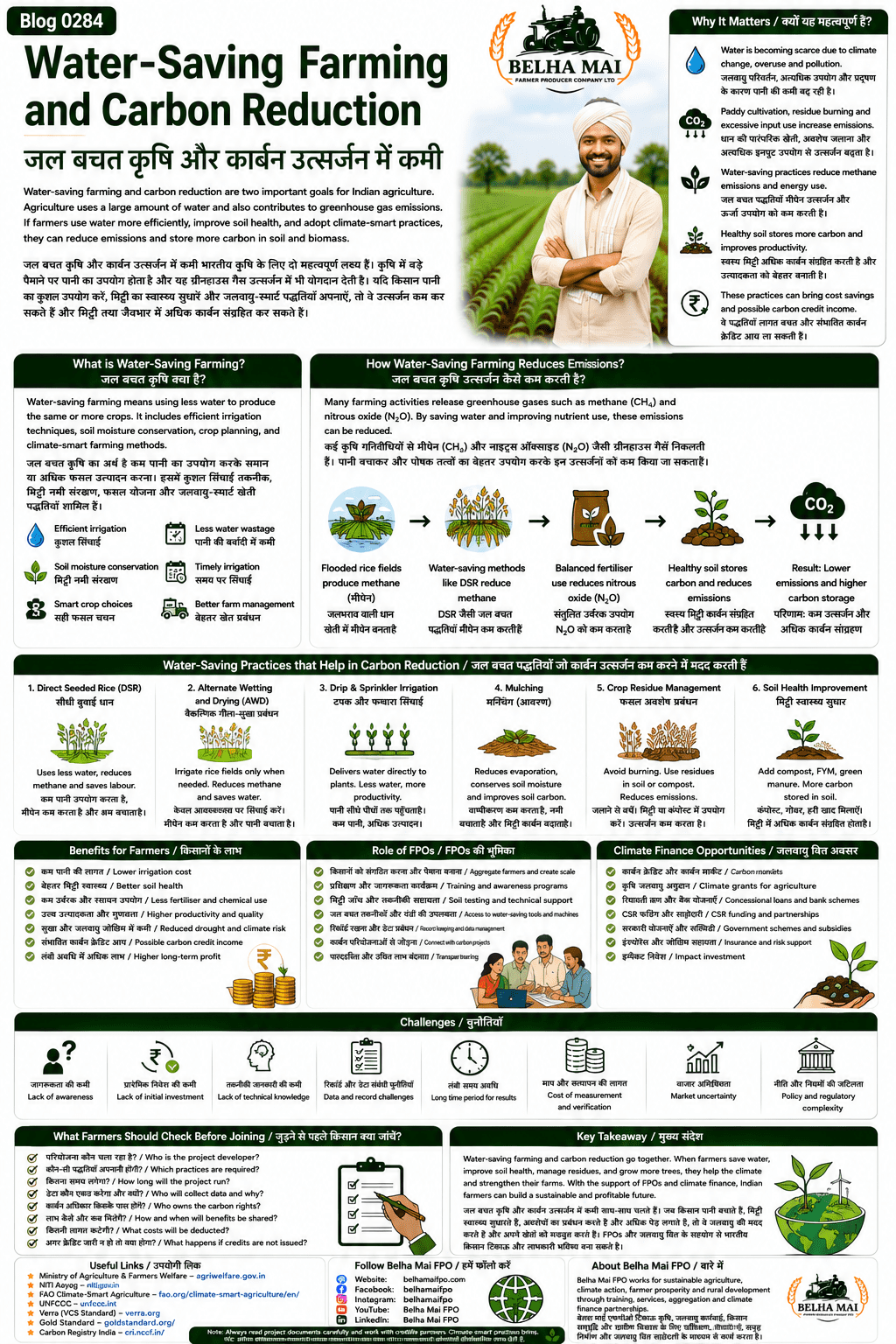
Water-saving farming and carbon reduction are closely connected because agriculture uses a large amount of water and also contributes to greenhouse gas emissions. When farmers use water efficiently, improve soil health, reduce unnecessary input use, manage crop residues properly, and adopt climate-smart practices, they can reduce emissions and improve farm resilience. Water-saving farming is not only about saving water; it is also about reducing cost, protecting soil, improving productivity, and supporting future carbon credit opportunities.
जल बचत कृषि और कार्बन उत्सर्जन में कमी आपस में गहराई से जुड़े हैं, क्योंकि कृषि में बड़ी मात्रा में पानी का उपयोग होता है और कृषि हरितगृह गैस उत्सर्जन में भी योगदान करती है। जब किसान पानी का कुशल उपयोग करते हैं, मिट्टी स्वास्थ्य सुधारते हैं, अनावश्यक कृषि सामग्री उपयोग घटाते हैं, फसल अवशेषों का सही प्रबंधन करते हैं और जलवायु-अनुकूल पद्धतियाँ अपनाते हैं, तो वे उत्सर्जन कम कर सकते हैं और खेत की सहनशीलता बढ़ा सकते हैं। जल बचत कृषि केवल पानी बचाने के बारे में नहीं है; यह लागत घटाने, मिट्टी की रक्षा करने, उत्पादकता सुधारने और भविष्य के कार्बन क्रेडिट अवसरों को सहारा देने के बारे में भी है।
The topic Water-saving farming and carbon reduction is very important for Indian farmers because climate change is increasing water stress, irregular rainfall, heat waves, drought risk, and crop uncertainty. In many areas, groundwater levels are falling and irrigation cost is rising. If farmers adopt better water management, they can save water, reduce pumping energy, improve soil moisture, reduce methane emissions in paddy, and create measurable climate benefits.
जल बचत कृषि और कार्बन उत्सर्जन में कमी विषय भारतीय किसानों के लिए बहुत महत्वपूर्ण है, क्योंकि जलवायु परिवर्तन जल संकट, अनियमित वर्षा, गर्मी की लहरें, सूखे का जोखिम और फसल अनिश्चितता बढ़ा रहा है। कई क्षेत्रों में भूजल स्तर घट रहा है और सिंचाई लागत बढ़ रही है। यदि किसान बेहतर जल प्रबंधन अपनाते हैं, तो वे पानी बचा सकते हैं, पंपिंग ऊर्जा घटा सकते हैं, मिट्टी की नमी सुधार सकते हैं, धान में मीथेन उत्सर्जन कम कर सकते हैं और मापने योग्य जलवायु लाभ बना सकते हैं।
What is Water-Saving Farming? / जल बचत कृषि क्या है?
Water-saving farming means using less water to produce the same or better crop output. It includes efficient irrigation, soil moisture conservation, crop planning, mulching, rainwater harvesting, farm ponds, drip irrigation, sprinkler irrigation, Direct Seeded Rice, alternate wetting and drying in paddy, and better irrigation scheduling.
जल बचत कृषि का अर्थ है समान या बेहतर फसल उत्पादन के लिए कम पानी का उपयोग करना। इसमें कुशल सिंचाई, मिट्टी नमी संरक्षण, फसल योजना, आच्छादन, वर्षा जल संग्रहण, खेत तालाब, टपक सिंचाई, फव्वारा सिंचाई, सीधी बुवाई धान, धान में वैकल्पिक गीला-सूखा प्रबंधन और बेहतर सिंचाई समय निर्धारण शामिल हैं।
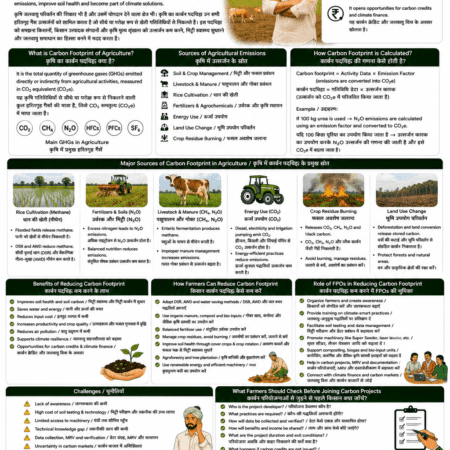
In Water-saving farming and carbon reduction, the main idea is that water management also affects emissions. For example, continuously flooded paddy fields can release methane. Excess irrigation can waste energy and nutrients. Poor soil moisture management can increase crop stress. Better water-saving practices can reduce these problems and improve sustainability.
जल बचत कृषि और कार्बन उत्सर्जन में कमी में मुख्य विचार यह है कि जल प्रबंधन उत्सर्जन को भी प्रभावित करता है। उदाहरण के लिए, लगातार पानी भरे धान खेतों से मीथेन निकल सकती है। अत्यधिक सिंचाई ऊर्जा और पोषक तत्वों की बर्बादी कर सकती है। कमजोर नमी प्रबंधन फसल तनाव बढ़ा सकता है। बेहतर जल बचत पद्धतियाँ इन समस्याओं को कम कर सकती हैं और टिकाऊपन सुधार सकती हैं।
How Water-Saving Farming Reduces Carbon Emissions / जल बचत कृषि कार्बन उत्सर्जन कैसे कम करती है
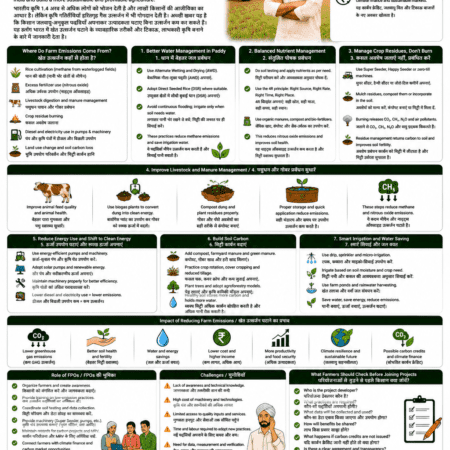
Water-saving farming reduces emissions in several ways. First, efficient irrigation reduces the energy required for pumping water. When less diesel or electricity is used for irrigation, farm-related emissions can decrease. Second, better water management in paddy can reduce methane emissions. Third, improved soil moisture supports healthier soil biology and better carbon storage.
जल बचत कृषि कई तरीकों से उत्सर्जन कम करती है। पहला, कुशल सिंचाई पानी पंप करने के लिए आवश्यक ऊर्जा घटाती है। जब सिंचाई में कम डीजल या बिजली उपयोग होती है, तो खेत से जुड़े उत्सर्जन घट सकते हैं। दूसरा, धान में बेहतर जल प्रबंधन मीथेन उत्सर्जन कम कर सकता है। तीसरा, बेहतर मिट्टी नमी स्वस्थ मिट्टी जीवन और बेहतर कार्बन संग्रहण को सहारा देती है।
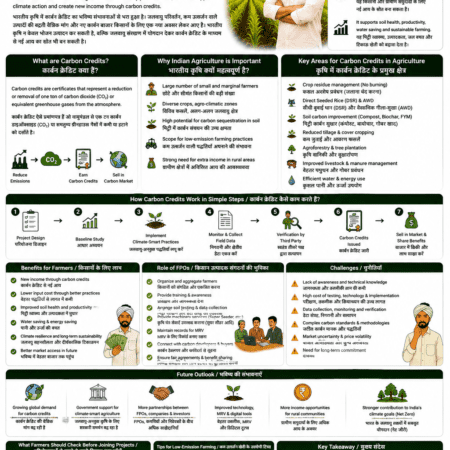
This connection makes Water-saving farming and carbon reduction important for carbon farming. If water-saving practices create measurable reductions in emissions or support increased soil carbon, they may become part of carbon credit projects. However, carbon credits are possible only when the benefits are properly measured, verified, certified, and sold.
यह संबंध जल बचत कृषि और कार्बन उत्सर्जन में कमी को कार्बन खेती के लिए महत्वपूर्ण बनाता है। यदि जल बचत पद्धतियाँ मापने योग्य उत्सर्जन कमी बनाती हैं या मिट्टी कार्बन वृद्धि को सहारा देती हैं, तो वे कार्बन क्रेडिट परियोजनाओं का हिस्सा बन सकती हैं। हालाँकि कार्बन क्रेडिट तभी संभव हैं जब लाभों का सही मापन, सत्यापन, प्रमाणन और बिक्री हो।
Practice 1: Direct Seeded Rice / पद्धति 1: सीधी बुवाई धान
Direct Seeded Rice is an important water-saving farming method. In this method, rice is sown directly into the field instead of transplanting seedlings into puddled and flooded fields. This can reduce water use, labour cost, and methane emissions when properly managed.
सीधी बुवाई धान जल बचत कृषि की महत्वपूर्ण पद्धति है। इस पद्धति में धान की रोपाई करने के बजाय खेत में सीधी बुवाई की जाती है। सही प्रबंधन होने पर यह पानी की खपत, श्रम लागत और मीथेन उत्सर्जन कम कर सकती है।
In Water-saving farming and carbon reduction, Direct Seeded Rice is important because traditional flooded rice systems can produce methane. When farmers reduce continuous flooding and manage water more efficiently, methane emissions can decrease. However, farmers need training in field preparation, seed rate, weed management, and irrigation scheduling.
जल बचत कृषि और कार्बन उत्सर्जन में कमी में सीधी बुवाई धान महत्वपूर्ण है क्योंकि पारंपरिक पानी भरे धान खेतों से मीथेन बन सकती है। जब किसान लगातार पानी भरे रहने को कम करते हैं और पानी का बेहतर प्रबंधन करते हैं, तो मीथेन उत्सर्जन घट सकता है। हालाँकि किसानों को खेत तैयारी, बीज दर, खरपतवार प्रबंधन और सिंचाई समय निर्धारण में प्रशिक्षण की आवश्यकता होती है।
Practice 2: Alternate Wetting and Drying in Paddy / पद्धति 2: धान में वैकल्पिक गीला-सूखा प्रबंधन
Alternate wetting and drying is a paddy water management practice where fields are not kept continuously flooded. Farmers allow the field to dry to a safe level before irrigating again. This can save water and reduce methane emissions while maintaining crop productivity when done correctly.
धान में वैकल्पिक गीला-सूखा प्रबंधन ऐसी जल प्रबंधन पद्धति है जिसमें खेत को लगातार पानी से भरा नहीं रखा जाता। किसान खेत को सुरक्षित स्तर तक सूखने देते हैं और फिर दोबारा सिंचाई करते हैं। सही तरीके से अपनाने पर यह पानी बचा सकती है और फसल उत्पादकता बनाए रखते हुए मीथेन उत्सर्जन कम कर सकती है।
This practice supports Water-saving farming and carbon reduction because methane emissions are higher in continuously flooded conditions. By changing water management, farmers can reduce emissions and save irrigation water. FPOs can help farmers learn this method through demonstrations and field monitoring.
यह पद्धति जल बचत कृषि और कार्बन उत्सर्जन में कमी को सहारा देती है क्योंकि लगातार पानी भरी स्थिति में मीथेन उत्सर्जन अधिक हो सकता है। जल प्रबंधन बदलकर किसान उत्सर्जन कम कर सकते हैं और सिंचाई जल बचा सकते हैं। किसान उत्पादक संगठन प्रदर्शन और खेत निगरानी के माध्यम से किसानों को यह पद्धति सिखा सकते हैं।
Practice 3: Drip and Sprinkler Irrigation / पद्धति 3: टपक और फव्वारा सिंचाई
Drip and sprinkler irrigation help farmers use water more efficiently. Drip irrigation delivers water directly near the plant root zone, while sprinkler irrigation distributes water more evenly than flood irrigation. These systems can reduce water waste, improve nutrient use, and reduce pumping requirements.
टपक और फव्वारा सिंचाई किसानों को पानी का अधिक कुशल उपयोग करने में मदद करती है। टपक सिंचाई पानी को सीधे पौधे की जड़ क्षेत्र के पास पहुँचाती है, जबकि फव्वारा सिंचाई बाढ़ सिंचाई की तुलना में पानी को अधिक समान रूप से फैलाती है। ये प्रणालियाँ पानी की बर्बादी कम कर सकती हैं, पोषक तत्व उपयोग सुधार सकती हैं और पंपिंग आवश्यकता घटा सकती हैं।
In Water-saving farming and carbon reduction, efficient irrigation can reduce energy use. Less pumping means lower diesel or electricity use, which can reduce farm emissions. These systems are especially useful in horticulture, vegetables, orchards, pulses, oilseeds, and water-stressed regions.
जल बचत कृषि और कार्बन उत्सर्जन में कमी में कुशल सिंचाई ऊर्जा उपयोग घटा सकती है। कम पंपिंग का अर्थ है कम डीजल या बिजली उपयोग, जिससे खेत उत्सर्जन घट सकता है। ये प्रणालियाँ विशेष रूप से बागवानी, सब्जियों, फल बागों, दलहन, तिलहन और जल संकट वाले क्षेत्रों में उपयोगी हैं।
Practice 4: Mulching and Soil Moisture Conservation / पद्धति 4: आच्छादन और मिट्टी नमी संरक्षण
Mulching means covering soil with crop residues, leaves, straw, grass, or other organic materials. It reduces evaporation, protects soil from heat, suppresses weeds, improves soil moisture, and adds organic matter over time. Mulching can also reduce irrigation frequency.
आच्छादन का अर्थ है मिट्टी को फसल अवशेष, पत्तियों, भूसा, घास या अन्य जैविक सामग्री से ढकना। यह वाष्पीकरण कम करता है, मिट्टी को गर्मी से बचाता है, खरपतवार दबाता है, मिट्टी नमी सुधारता है और समय के साथ जैविक पदार्थ जोड़ता है। आच्छादन सिंचाई की आवृत्ति भी घटा सकता है।
Mulching supports Water-saving farming and carbon reduction because it conserves water and improves soil carbon. Instead of burning crop residues, farmers can use them as mulch. This avoids emissions from burning and returns organic matter to the soil.
आच्छादन जल बचत कृषि और कार्बन उत्सर्जन में कमी को सहारा देता है क्योंकि यह पानी बचाता है और मिट्टी कार्बन सुधारता है। फसल अवशेष जलाने के बजाय किसान उन्हें आच्छादन के रूप में उपयोग कर सकते हैं। इससे जलाने से होने वाले उत्सर्जन से बचाव होता है और जैविक पदार्थ मिट्टी में लौटता है।
Practice 5: Crop Residue Management / पद्धति 5: फसल अवशेष प्रबंधन
Crop residue management is important for both water conservation and carbon reduction. Residues can be used as mulch, compost, animal bedding, or soil amendment. When residues are burned, emissions and pollution increase. When residues are managed properly, soil health improves.
फसल अवशेष प्रबंधन जल संरक्षण और कार्बन उत्सर्जन कमी दोनों के लिए महत्वपूर्ण है। अवशेषों को आच्छादन, कंपोस्ट, पशु बिछावन या मिट्टी सुधारक के रूप में उपयोग किया जा सकता है। जब अवशेष जलाए जाते हैं, तो उत्सर्जन और प्रदूषण बढ़ते हैं। जब अवशेषों का सही प्रबंधन होता है, तो मिट्टी स्वास्थ्य सुधरता है।
In Water-saving farming and carbon reduction, crop residue management helps soil retain moisture and store more carbon. FPOs with access to machines such as Super Seeder can help farmers avoid burning and manage residues efficiently.
जल बचत कृषि और कार्बन उत्सर्जन में कमी में फसल अवशेष प्रबंधन मिट्टी को नमी रोकने और अधिक कार्बन संग्रहित करने में मदद करता है। सुपर सीडर जैसे यंत्रों तक पहुँच रखने वाले किसान उत्पादक संगठन किसानों को अवशेष जलाने से बचाने और उन्हें कुशलता से प्रबंधित करने में मदद कर सकते हैं।
Practice 6: Soil Health Improvement / पद्धति 6: मिट्टी स्वास्थ्य सुधार
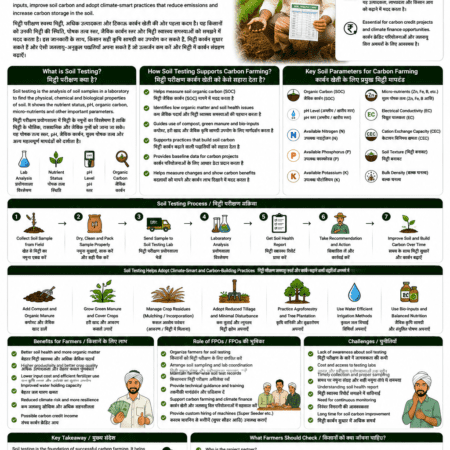
Healthy soil holds more water, supports stronger roots, improves nutrient cycling, and stores more carbon. Farmers can improve soil health through compost, green manure, farmyard manure, crop rotation, reduced tillage, bio-inputs, and balanced nutrient management.
स्वस्थ मिट्टी अधिक पानी रोकती है, मजबूत जड़ों को सहारा देती है, पोषक तत्व चक्र सुधारती है और अधिक कार्बन संग्रहित करती है। किसान कंपोस्ट, हरी खाद, गोबर खाद, फसल चक्र, कम जुताई, जैविक कृषि सामग्री और संतुलित पोषक प्रबंधन से मिट्टी स्वास्थ्य सुधार सकते हैं।
Soil health is at the centre of Water-saving farming and carbon reduction. If soil has more organic matter, it can hold more water and reduce irrigation need. It can also support carbon sequestration and improve climate resilience.
मिट्टी स्वास्थ्य जल बचत कृषि और कार्बन उत्सर्जन में कमी का केंद्र है। यदि मिट्टी में अधिक जैविक पदार्थ है, तो वह अधिक पानी रोक सकती है और सिंचाई की आवश्यकता कम कर सकती है। यह कार्बन अवशोषण और जलवायु सहनशीलता को भी सहारा दे सकती है।
Benefits for Farmers / किसानों के लिए लाभ
Farmers can benefit from Water-saving farming and carbon reduction through lower irrigation cost, reduced pumping energy, better soil health, improved moisture retention, reduced drought risk, better crop productivity, and possible carbon credit opportunities. These benefits can improve both farm income and farm resilience.
किसानों को जल बचत कृषि और कार्बन उत्सर्जन में कमी से कम सिंचाई लागत, कम पंपिंग ऊर्जा, बेहतर मिट्टी स्वास्थ्य, अधिक नमी धारण क्षमता, कम सूखा जोखिम, बेहतर फसल उत्पादकता और संभावित कार्बन क्रेडिट अवसरों के रूप में लाभ मिल सकता है। ये लाभ खेत आय और खेत सहनशीलता दोनों सुधार सकते हैं।
The most practical benefit is cost saving. If farmers save water, they also save energy, labour, and time. If they improve soil moisture, crops can perform better during dry periods. If they avoid residue burning and improve soil carbon, long-term productivity can improve.
सबसे व्यावहारिक लाभ लागत बचत है। यदि किसान पानी बचाते हैं, तो वे ऊर्जा, श्रम और समय भी बचाते हैं। यदि वे मिट्टी नमी सुधारते हैं, तो सूखे समय में फसल बेहतर टिक सकती है। यदि वे फसल अवशेष जलाने से बचते हैं और मिट्टी कार्बन सुधारते हैं, तो दीर्घकालिक उत्पादकता बेहतर हो सकती है।
Role of FPOs / FPOs की भूमिका
FPOs can play a major role in promoting Water-saving farming and carbon reduction. They can organise farmers, conduct awareness meetings, coordinate soil testing, provide training, support machinery access, promote drip or sprinkler irrigation, help with residue management, and maintain farmer-wise records.
किसान उत्पादक संगठन जल बचत कृषि और कार्बन उत्सर्जन में कमी को बढ़ावा देने में बड़ी भूमिका निभा सकते हैं। वे किसानों को संगठित कर सकते हैं, जागरूकता बैठकें कर सकते हैं, मिट्टी परीक्षण का समन्वय कर सकते हैं, प्रशिक्षण दे सकते हैं, कृषि यंत्र उपलब्धता में सहायता कर सकते हैं, टपक या फव्वारा सिंचाई को बढ़ावा दे सकते हैं, फसल अवशेष प्रबंधन में मदद कर सकते हैं और किसानवार अभिलेख रख सकते हैं।
FPOs can also connect farmers with climate finance, government schemes, CSR projects, banks, carbon project developers, and technical agencies. If water-saving practices create measurable climate benefits, FPOs can help farmers participate in carbon farming projects through proper MRV and credible partners.
किसान उत्पादक संगठन किसानों को जलवायु वित्त, सरकारी योजनाओं, सामाजिक उत्तरदायित्व परियोजनाओं, बैंकों, कार्बन परियोजना विकासकर्ताओं और तकनीकी संस्थाओं से भी जोड़ सकते हैं। यदि जल बचत पद्धतियाँ मापने योग्य जलवायु लाभ बनाती हैं, तो किसान उत्पादक संगठन सही मापन-प्रतिवेदन-सत्यापन और विश्वसनीय भागीदारों के माध्यम से किसानों को कार्बन खेती परियोजनाओं में भाग लेने में मदद कर सकते हैं।
Climate Finance Opportunities / जलवायु वित्त अवसर
Water-saving farming and carbon reduction can attract climate finance when benefits are measurable. Climate finance may come through government schemes, grants, concessional loans, CSR funding, carbon finance, impact investment, insurance support, and water conservation programmes.
जल बचत कृषि और कार्बन उत्सर्जन में कमी मापने योग्य लाभ बनने पर जलवायु वित्त आकर्षित कर सकती है। जलवायु वित्त सरकारी योजनाओं, अनुदान, रियायती ऋण, सामाजिक उत्तरदायित्व वित्त, कार्बन वित्त, प्रभाव निवेश, बीमा सहायता और जल संरक्षण कार्यक्रमों के माध्यम से आ सकता है।
For example, drip irrigation, farm ponds, soil moisture conservation, Direct Seeded Rice, and crop residue management may be supported through schemes or projects. If emissions are reduced and verified, carbon finance may become an additional opportunity, but it should not be treated as guaranteed income.
उदाहरण के लिए, टपक सिंचाई, खेत तालाब, मिट्टी नमी संरक्षण, सीधी बुवाई धान और फसल अवशेष प्रबंधन को योजनाओं या परियोजनाओं के माध्यम से सहायता मिल सकती है। यदि उत्सर्जन घटता है और सत्यापित होता है, तो कार्बन वित्त अतिरिक्त अवसर बन सकता है, लेकिन इसे निश्चित आय नहीं मानना चाहिए।
Challenges in Adoption / अपनाने की चुनौतियाँ
The first challenge is lack of awareness. Many farmers do not understand the connection between water saving and carbon reduction. The second challenge is initial investment. Drip irrigation, sprinklers, farm ponds, and machinery may need upfront cost. The third challenge is technical knowledge. Farmers need training to use water-saving methods properly.
पहली चुनौती जागरूकता की कमी है। कई किसान जल बचत और कार्बन उत्सर्जन कमी के संबंध को नहीं समझते। दूसरी चुनौती प्रारंभिक निवेश है। टपक सिंचाई, फव्वारा सिंचाई, खेत तालाब और कृषि यंत्रों के लिए शुरुआती लागत लग सकती है। तीसरी चुनौती तकनीकी ज्ञान है। जल बचत पद्धतियों का सही उपयोग करने के लिए किसानों को प्रशिक्षण चाहिए।
Another challenge in Water-saving farming and carbon reduction is measurement. If farmers want to connect water-saving practices with carbon credits, proper records, baseline data, monitoring, verification, and certification are needed. Without records, benefits cannot be proven.
जल बचत कृषि और कार्बन उत्सर्जन में कमी में एक और चुनौती मापन है। यदि किसान जल बचत पद्धतियों को कार्बन क्रेडिट से जोड़ना चाहते हैं, तो सही अभिलेख, आधार आँकड़े, निगरानी, सत्यापन और प्रमाणन आवश्यक हैं। अभिलेखों के बिना लाभ सिद्ध नहीं किए जा सकते।
What Farmers Should Check Before Joining / जुड़ने से पहले किसान क्या जाँचें
Before joining any water-saving or carbon project, farmers should ask what practices they must follow, who will provide training, who will pay the cost, what data will be collected, who will verify the project, and how benefits will be shared.
किसी भी जल बचत या कार्बन परियोजना से जुड़ने से पहले किसानों को पूछना चाहिए कि उन्हें कौन-सी पद्धतियाँ अपनानी होंगी, प्रशिक्षण कौन देगा, लागत कौन देगा, कौन से आँकड़े एकत्र होंगे, परियोजना का सत्यापन कौन करेगा और लाभ कैसे बाँटे जाएँगे।
Farmers should also ask about project duration, carbon rights, data ownership, cost deductions, buyer linkage, payment timeline, exit conditions, and what happens if carbon credits are not issued. These questions make Water-saving farming and carbon reduction safer and more transparent for farmers.
किसानों को परियोजना अवधि, कार्बन अधिकार, आँकड़ा स्वामित्व, लागत कटौती, खरीदार जुड़ाव, भुगतान समय-सीमा, बाहर निकलने की शर्तें और कार्बन क्रेडिट जारी न होने की स्थिति के बारे में भी पूछना चाहिए। ये प्रश्न जल बचत कृषि और कार्बन उत्सर्जन में कमी को किसानों के लिए अधिक सुरक्षित और पारदर्शी बनाते हैं।
Practical Model for Indian FPOs / भारतीय किसान उत्पादक संगठनों के लिए व्यावहारिक मॉडल
A practical model can begin with 500 to 1,000 farmers in water-stressed villages. The FPO can select one or two practices such as Direct Seeded Rice, crop residue management, mulching, drip irrigation, or soil moisture conservation. The FPO should collect baseline data on irrigation method, water use, crop type, soil condition, input use, and current farming practices.
एक व्यावहारिक मॉडल जल संकट वाले गाँवों में पाँच सौ से एक हजार किसानों से शुरू हो सकता है। किसान उत्पादक संगठन सीधी बुवाई धान, फसल अवशेष प्रबंधन, आच्छादन, टपक सिंचाई या मिट्टी नमी संरक्षण जैसी एक या दो पद्धतियाँ चुन सकता है। संगठन को सिंचाई तरीका, जल उपयोग, फसल प्रकार, मिट्टी स्थिति, कृषि सामग्री उपयोग और वर्तमान खेती पद्धतियों पर आधार आँकड़े एकत्र करने चाहिए।
After that, the FPO can organise training, demonstrations, soil testing, machinery support, and farmer-wise record keeping. If the project creates measurable water saving and emission reduction, the FPO can work with credible technical partners to explore climate finance or carbon credit opportunities.
इसके बाद किसान उत्पादक संगठन प्रशिक्षण, प्रदर्शन, मिट्टी परीक्षण, कृषि यंत्र सहायता और किसानवार अभिलेख व्यवस्था कर सकता है। यदि परियोजना मापने योग्य जल बचत और उत्सर्जन कमी बनाती है, तो संगठन विश्वसनीय तकनीकी भागीदारों के साथ जलवायु वित्त या कार्बन क्रेडिट अवसरों की संभावना देख सकता है।
Conclusion / निष्कर्ष
Water-saving farming and carbon reduction can create strong benefits for Indian farmers. When farmers save water, they often reduce energy use, improve soil moisture, reduce methane emissions in paddy, improve soil carbon, and strengthen climate resilience. These practices can reduce cost and improve long-term productivity.
जल बचत कृषि और कार्बन उत्सर्जन में कमी भारतीय किसानों के लिए मजबूत लाभ बना सकती है। जब किसान पानी बचाते हैं, तो वे अक्सर ऊर्जा उपयोग घटाते हैं, मिट्टी नमी सुधारते हैं, धान में मीथेन उत्सर्जन कम करते हैं, मिट्टी कार्बन सुधारते हैं और जलवायु सहनशीलता मजबूत करते हैं। ये पद्धतियाँ लागत घटा सकती हैं और दीर्घकालिक उत्पादकता सुधार सकती हैं।
For farmers, water-saving farming should first be seen as a practical way to reduce cost and risk. Carbon credit income should be treated as a possible additional benefit, not guaranteed income. For FPOs, Water-saving farming and carbon reduction create an opportunity to organise farmers, build climate-smart service models, and connect sustainable agriculture with climate finance.
किसानों के लिए जल बचत कृषि को पहले लागत और जोखिम घटाने का व्यावहारिक तरीका समझना चाहिए। कार्बन क्रेडिट आय को संभावित अतिरिक्त लाभ के रूप में देखना चाहिए, निश्चित आय के रूप में नहीं। किसान उत्पादक संगठनों के लिए जल बचत कृषि और कार्बन उत्सर्जन में कमी किसानों को संगठित करने, जलवायु-अनुकूल सेवा मॉडल बनाने और टिकाऊ कृषि को जलवायु वित्त से जोड़ने का अवसर बनाते हैं।
Frequently Asked Questions (FAQs) / अक्सर पूछे जाने वाले प्रश्न
1. What is Water-saving farming and carbon reduction?
Water-saving farming and carbon reduction means adopting farming practices that save water, reduce energy use, reduce emissions, improve soil moisture, and support possible carbon credit opportunities.
1. जल बचत कृषि और कार्बन उत्सर्जन में कमी क्या है?
जल बचत कृषि और कार्बन उत्सर्जन में कमी का अर्थ ऐसी कृषि पद्धतियाँ अपनाना है जो पानी बचाएँ, ऊर्जा उपयोग घटाएँ, उत्सर्जन कम करें, मिट्टी नमी सुधारें और संभावित कार्बन क्रेडिट अवसरों को सहारा दें।
2. How does water-saving farming reduce emissions?
Water-saving farming can reduce emissions by lowering pumping energy, reducing methane emissions in paddy, improving soil moisture, and supporting better soil carbon storage.
2. जल बचत कृषि उत्सर्जन कैसे कम करती है?
जल बचत कृषि पंपिंग ऊर्जा घटाकर, धान में मीथेन उत्सर्जन कम करके, मिट्टी नमी सुधारकर और बेहतर मिट्टी कार्बन संग्रहण को सहारा देकर उत्सर्जन कम कर सकती है।
3. Which practices help in water-saving farming?
Useful practices include Direct Seeded Rice, alternate wetting and drying, drip irrigation, sprinkler irrigation, mulching, crop residue management, farm ponds, rainwater harvesting, and soil health improvement.
3. जल बचत कृषि में कौन-सी पद्धतियाँ मदद करती हैं?
उपयोगी पद्धतियों में सीधी बुवाई धान, वैकल्पिक गीला-सूखा प्रबंधन, टपक सिंचाई, फव्वारा सिंचाई, आच्छादन, फसल अवशेष प्रबंधन, खेत तालाब, वर्षा जल संग्रहण और मिट्टी स्वास्थ्य सुधार शामिल हैं।
4. Can water-saving farming generate carbon credits?
Water-saving farming may support carbon credits if it creates measurable emission reduction or carbon storage and the project is properly measured, verified, certified, issued, and sold.
4. क्या जल बचत कृषि से कार्बन क्रेडिट बन सकते हैं?
यदि जल बचत कृषि मापने योग्य उत्सर्जन कमी या कार्बन संग्रहण बनाती है और परियोजना का सही मापन, सत्यापन, प्रमाणन, क्रेडिट जारी होना और बिक्री होती है, तो यह कार्बन क्रेडिट को सहारा दे सकती है।
5. How can FPOs promote water-saving farming and carbon reduction?
FPOs can organise farmers, provide training, coordinate soil testing, support machinery access, promote DSR and drip irrigation, maintain records, and connect farmers with climate finance and carbon project developers.
5. किसान उत्पादक संगठन जल बचत कृषि और कार्बन उत्सर्जन कमी को कैसे बढ़ावा दे सकते हैं?
किसान उत्पादक संगठन किसानों को संगठित कर सकते हैं, प्रशिक्षण दे सकते हैं, मिट्टी परीक्षण का समन्वय कर सकते हैं, कृषि यंत्र उपलब्धता में सहायता कर सकते हैं, सीधी बुवाई धान और टपक सिंचाई को बढ़ावा दे सकते हैं, अभिलेख रख सकते हैं और किसानों को जलवायु वित्त तथा कार्बन परियोजना विकासकर्ताओं से जोड़ सकते हैं।
Internal Links / आंतरिक लिंक
👉 Climate-Smart Agriculture and Carbon Farming — https://belhamaifpo.com/agriculture/climate-smart-agriculture-and-carbon-farming/
👉 Sustainable Agriculture and Climate Finance — https://belhamaifpo.com/agriculture/sustainable-agriculture-and-climate-finance/
👉 Is Carbon Credit Income Real for Indian Farmers? — https://belhamaifpo.com/agriculture/is-carbon-credit-income-real-for-indian-farmers/
👉 Challenges in Carbon Credit Projects for Small Farmers — https://belhamaifpo.com/agriculture/challenges-in-carbon-credit-projects-for-small-farmers/
👉 Carbon Credit Business Model for Farmer Producer Organizations — https://belhamaifpo.com/agriculture/carbon-credit-business-model-for-farmer-producer-organizations/
👉 Can FPOs Aggregate Farmers for Carbon Credits? — https://belhamaifpo.com/agriculture/can-fpos-aggregate-farmers-for-carbon-credits/
👉 Carbon Farming in India: Complete Guide — https://belhamaifpo.com/agriculture/carbon-farming-in-india-complete-guide/
👉 Direct Seeded Rice and Carbon Credit Potential — https://belhamaifpo.com/agriculture/direct-seeded-rice-and-carbon-credit-potential/
👉 Soil Carbon and Sustainable Farming — https://belhamaifpo.com/agriculture/soil-carbon-and-sustainable-farming/
👉 Role of FPOs in Carbon Credit Projects — https://belhamaifpo.com/agriculture/role-of-fpos-in-carbon-credit-projects/
👉 Farmer Producer Organizations Complete Guide — https://belhamaifpo.com/farmer-producer-organisation/farmer-producer-organizations-fpos/
👉 SDGs & Our FPO — https://belhamaifpo.com/sdg-goals/
External Authority Links / बाहरी प्राधिकरण लिंक
👉 Ministry of Agriculture & Farmers Welfare — https://agriwelfare.gov.in/
👉 NITI Aayog — https://www.niti.gov.in/
👉 FAO Climate-Smart Agriculture — https://www.fao.org/climate-smart-agriculture/en/
👉 FAO Water and Agriculture — https://www.fao.org/water/en/
👉 UNFCCC — https://unfccc.int/
👉 World Bank Climate-Smart Agriculture — https://www.worldbank.org/en/topic/climate-smart-agriculture
👉 Verra Verified Carbon Standard — https://verra.org/programs/verified-carbon-standard/
👉 Gold Standard — https://www.goldstandard.org/
Follow Belha Mai FPO for More Updates / अधिक अपडेट के लिए Belha Mai FPO को फॉलो करें
👉 Website — https://belhamaifpo.com/
👉 Facebook — https://www.facebook.com/profile.php?id=61561043486818
👉 Instagram — https://instagram.com/belhamaifpo
👉 LinkedIn — https://www.linkedin.com/in/abhay-singh-ab5568280/
👉 YouTube — https://www.youtube.com/channel/UC9ZvojoTMCa7mU1-Q_Bh60A