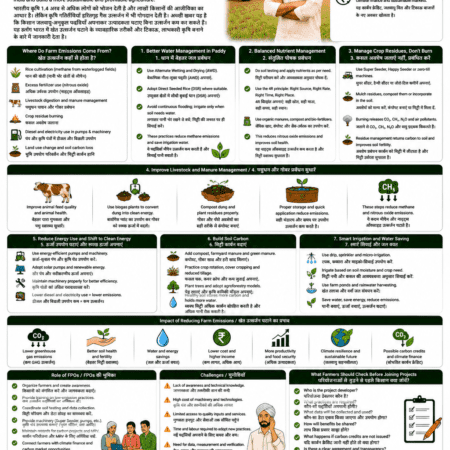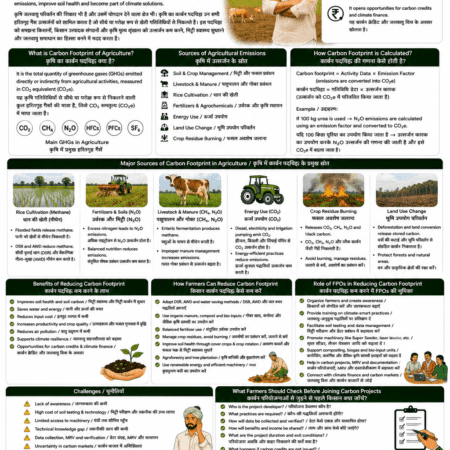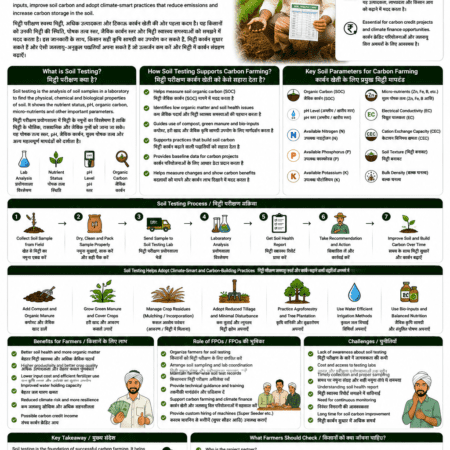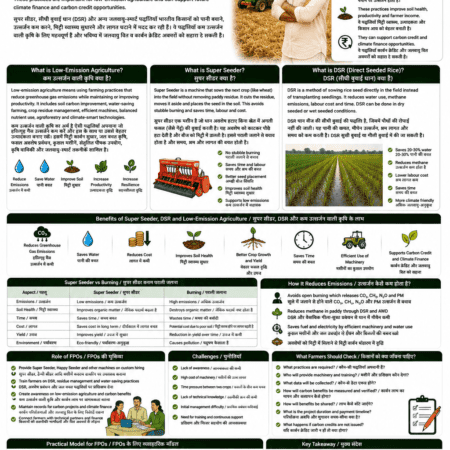
भारतीय कृषि में कार्बन क्रेडिट का भविष्य
Introduction / परिचय
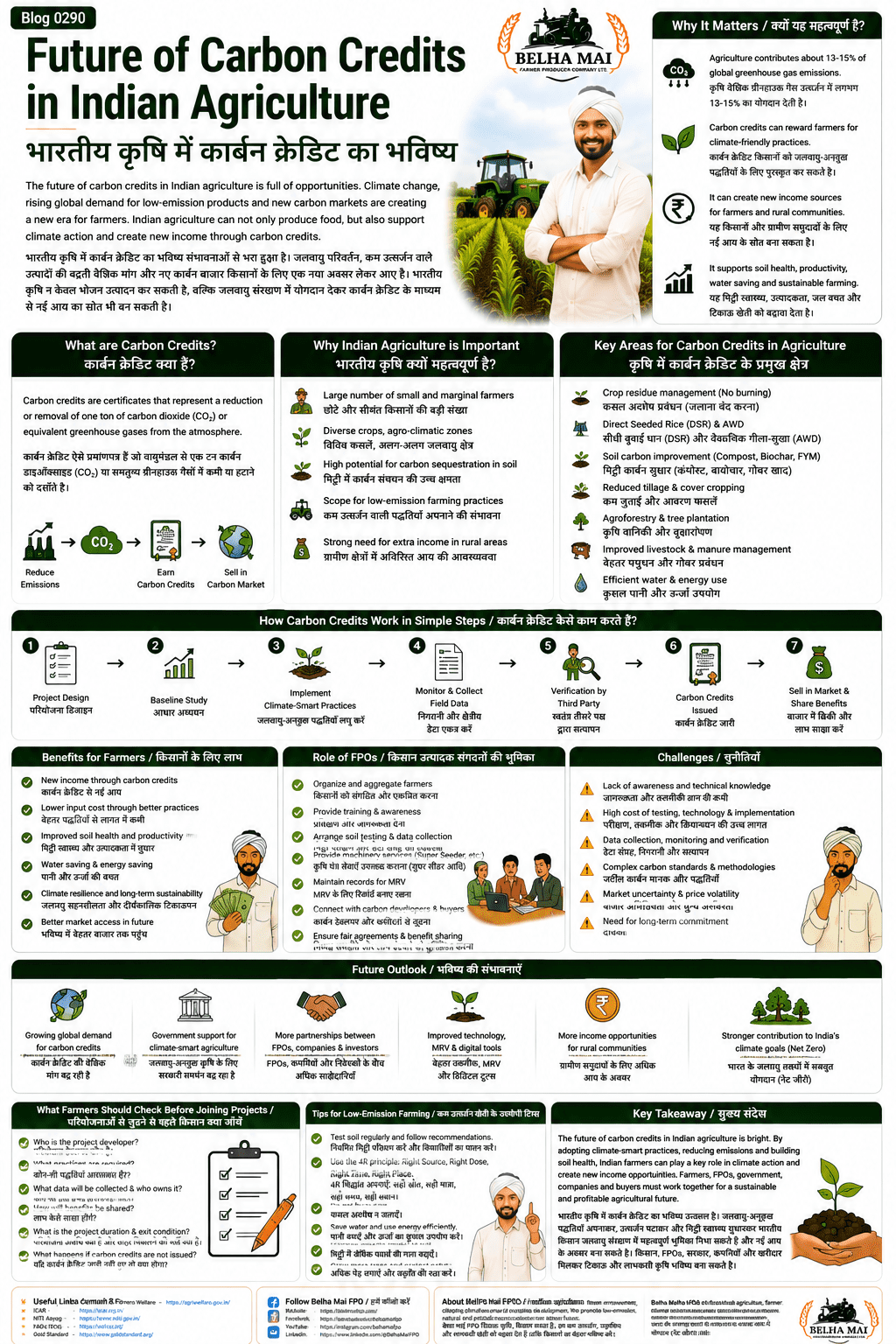
Future of carbon credits in Indian agriculture is becoming an important discussion for farmers, FPOs, agribusinesses, climate finance institutions and policymakers. Indian agriculture has huge potential to reduce emissions, store carbon in soil and trees, improve water efficiency, manage crop residues and build climate resilience. Carbon credits can become one possible way to reward farmers for these climate-positive practices, but the system must be built with transparency, scientific measurement and farmer-first agreements.
भारतीय कृषि में कार्बन क्रेडिट का भविष्य किसानों, किसान उत्पादक संगठनों, कृषि व्यवसायों, जलवायु वित्त संस्थानों और नीति निर्माताओं के लिए महत्वपूर्ण चर्चा बनता जा रहा है। भारतीय कृषि में उत्सर्जन घटाने, मिट्टी और पेड़ों में कार्बन संग्रहित करने, जल उपयोग क्षमता सुधारने, फसल अवशेष प्रबंधन करने और जलवायु सहनशीलता बनाने की बड़ी संभावना है। कार्बन क्रेडिट किसानों को इन जलवायु-सकारात्मक पद्धतियों के लिए पुरस्कृत करने का एक संभावित तरीका बन सकते हैं, लेकिन यह व्यवस्था पारदर्शिता, वैज्ञानिक मापन और किसान हितों को प्राथमिकता देने वाले समझौतों के साथ बननी चाहिए।
The topic Future of carbon credits in Indian agriculture is especially important because many farmers and FPOs have heard about carbon credits, but they still do not know how to access the opportunity, who will implement the project, who will measure carbon benefits, who will buy credits and how income will be shared. Therefore, the future will depend not only on carbon markets, but also on strong local institutions, credible companies, proper MRV, farmer awareness and fair revenue-sharing models.
भारतीय कृषि में कार्बन क्रेडिट का भविष्य विषय विशेष रूप से महत्वपूर्ण है, क्योंकि बहुत से किसानों और किसान उत्पादक संगठनों ने कार्बन क्रेडिट के बारे में सुना है, लेकिन उन्हें अभी भी यह नहीं पता कि अवसर तक कैसे पहुँचना है, परियोजना कौन लागू करेगा, कार्बन लाभ कौन मापेगा, क्रेडिट कौन खरीदेगा और आय कैसे बाँटी जाएगी। इसलिए भविष्य केवल कार्बन बाज़ारों पर निर्भर नहीं करेगा, बल्कि मजबूत स्थानीय संस्थाओं, विश्वसनीय कंपनियों, सही मापन-प्रतिवेदन-सत्यापन, किसान जागरूकता और उचित आय बँटवारा मॉडल पर भी निर्भर करेगा।
Why Carbon Credits Matter for Indian Agriculture / भारतीय कृषि के लिए कार्बन क्रेडिट क्यों महत्वपूर्ण हैं
Carbon credits matter for Indian agriculture because farming is directly connected with climate change. Farmers face heat stress, irregular rainfall, drought, flood, soil degradation, water scarcity and rising input costs. At the same time, farming practices can also reduce emissions and store carbon. This makes agriculture both vulnerable to climate change and important for climate solutions.
भारतीय कृषि के लिए कार्बन क्रेडिट महत्वपूर्ण हैं, क्योंकि खेती सीधे जलवायु परिवर्तन से जुड़ी है। किसान गर्मी तनाव, अनियमित वर्षा, सूखा, बाढ़, मिट्टी क्षरण, जल संकट और बढ़ती लागत का सामना करते हैं। साथ ही कृषि पद्धतियाँ उत्सर्जन घटा सकती हैं और कार्बन संग्रहित कर सकती हैं। इससे कृषि जलवायु परिवर्तन से प्रभावित भी होती है और जलवायु समाधान के लिए महत्वपूर्ण भी बनती है।
In Future of carbon credits in Indian agriculture, carbon credits can create an additional incentive for farmers to adopt better practices such as soil carbon improvement, crop residue management, Direct Seeded Rice, agroforestry, tree plantation, composting, water-saving farming, bio-inputs, natural farming and regenerative agriculture. However, carbon credits should be seen as possible additional income, not guaranteed income.
भारतीय कृषि में कार्बन क्रेडिट का भविष्य में कार्बन क्रेडिट किसानों को मिट्टी कार्बन सुधार, फसल अवशेष प्रबंधन, सीधी बुवाई धान, कृषि वानिकी, वृक्षारोपण, कंपोस्ट, जल बचत खेती, जैविक कृषि सामग्री, प्राकृतिक खेती और पुनर्योजी कृषि जैसी बेहतर पद्धतियाँ अपनाने के लिए अतिरिक्त प्रोत्साहन दे सकते हैं। हालाँकि कार्बन क्रेडिट को संभावित अतिरिक्त आय के रूप में देखना चाहिए, निश्चित आय के रूप में नहीं।
Current Reality for Farmers and FPOs / किसानों और FPOs की वर्तमान वास्तविकता
The current reality is that many farmers hear about carbon credits, but they do not have direct access to carbon markets. They do not know which companies to approach, what documents are required, how projects are certified, how carbon reduction is measured and how payment is calculated. This knowledge gap is one of the biggest barriers.
वर्तमान वास्तविकता यह है कि बहुत से किसान कार्बन क्रेडिट के बारे में सुनते हैं, लेकिन उनके पास कार्बन बाज़ारों तक सीधी पहुँच नहीं है। उन्हें यह नहीं पता कि किन कंपनियों से संपर्क करना है, कौन से दस्तावेज़ चाहिए, परियोजनाएँ कैसे प्रमाणित होती हैं, कार्बन कमी कैसे मापी जाती है और भुगतान की गणना कैसे होती है। यह जानकारी की कमी सबसे बड़ी बाधाओं में से एक है।
This is why Future of carbon credits in Indian agriculture will depend heavily on FPOs, cooperatives, credible carbon project developers, climate finance partners and government-supported awareness systems. If small farmers remain disconnected from project developers and buyers, carbon credit opportunities will stay limited to a few organised projects.
इसीलिए भारतीय कृषि में कार्बन क्रेडिट का भविष्य किसान उत्पादक संगठनों, सहकारी संस्थाओं, विश्वसनीय कार्बन परियोजना विकासकर्ताओं, जलवायु वित्त भागीदारों और सरकारी समर्थित जागरूकता प्रणालियों पर बहुत निर्भर करेगा। यदि छोटे किसान परियोजना विकासकर्ताओं और खरीदारों से कटे रहेंगे, तो कार्बन क्रेडिट अवसर कुछ संगठित परियोजनाओं तक ही सीमित रह जाएँगे।
Key Opportunity 1: Soil Carbon Improvement / प्रमुख अवसर 1: मिट्टी कार्बन सुधार
Soil carbon improvement is one of the biggest opportunities in Indian agriculture. Farmers can improve soil carbon by adding compost, farmyard manure, green manure, crop residues, cover crops and organic matter. Reduced tillage, crop rotation, bio-inputs and regenerative practices can also support soil carbon improvement.
मिट्टी कार्बन सुधार भारतीय कृषि में सबसे बड़े अवसरों में से एक है। किसान कंपोस्ट, गोबर खाद, हरी खाद, फसल अवशेष, आवरण फसल और जैविक पदार्थ जोड़कर मिट्टी कार्बन सुधार सकते हैं। कम जुताई, फसल चक्र, जैविक कृषि सामग्री और पुनर्योजी पद्धतियाँ भी मिट्टी कार्बन सुधार को सहारा दे सकती हैं।
In Future of carbon credits in Indian agriculture, soil carbon projects may become important because they connect climate action with soil health and productivity. However, soil carbon improvement takes time and needs proper soil testing, baseline data, repeated monitoring and credible verification.
भारतीय कृषि में कार्बन क्रेडिट का भविष्य में मिट्टी कार्बन परियोजनाएँ महत्वपूर्ण बन सकती हैं, क्योंकि वे जलवायु कार्रवाई को मिट्टी स्वास्थ्य और उत्पादकता से जोड़ती हैं। हालाँकि मिट्टी कार्बन सुधार में समय लगता है और इसके लिए सही मिट्टी परीक्षण, आधार आँकड़े, बार-बार निगरानी और विश्वसनीय सत्यापन आवश्यक है।
Key Opportunity 2: Crop Residue Management / प्रमुख अवसर 2: फसल अवशेष प्रबंधन
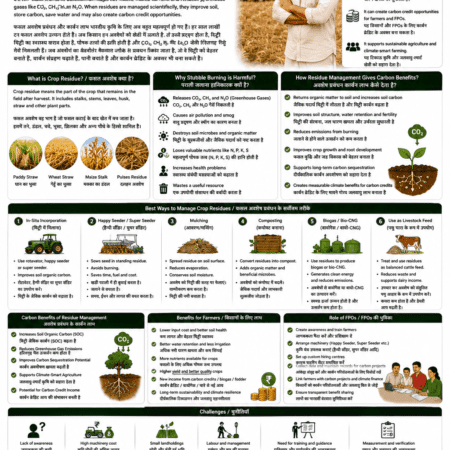
Crop residue management can create strong carbon benefits by avoiding residue burning and returning biomass to soil. Farmers can use Super Seeder, Happy Seeder, mulching, composting, in-situ incorporation, biogas and livestock feed models to manage residues instead of burning them.
फसल अवशेष प्रबंधन अवशेष जलाने से बचाकर और जैवभार को मिट्टी में लौटाकर मजबूत कार्बन लाभ बना सकता है। किसान अवशेष जलाने के बजाय सुपर सीडर, हैप्पी सीडर, आच्छादन, कंपोस्ट, खेत में अवशेष मिलाना, बायोगैस और पशु चारा मॉडल का उपयोग कर सकते हैं।
This will be an important part of Future of carbon credits in Indian agriculture because crop residue burning is a visible environmental problem and residue management creates direct farmer benefits. FPOs can build machinery service models and maintain farmer-wise residue management records for future carbon projects.
यह भारतीय कृषि में कार्बन क्रेडिट का भविष्य का महत्वपूर्ण हिस्सा होगा, क्योंकि फसल अवशेष जलाना एक स्पष्ट पर्यावरणीय समस्या है और अवशेष प्रबंधन किसानों को सीधे लाभ देता है। किसान उत्पादक संगठन कृषि यंत्र सेवा मॉडल बना सकते हैं और भविष्य की कार्बन परियोजनाओं के लिए किसानवार अवशेष प्रबंधन अभिलेख रख सकते हैं।
Key Opportunity 3: DSR and Paddy Methane Reduction / प्रमुख अवसर 3: सीधी बुवाई धान और धान मीथेन कमी
Paddy fields can produce methane when they remain continuously flooded. Direct Seeded Rice and better water management practices can reduce standing water duration and lower methane emissions. These practices can also save water, labour and cost when implemented correctly.
धान खेतों में लगातार पानी भरा रहने पर मीथेन बन सकती है। सीधी बुवाई धान और बेहतर जल प्रबंधन पद्धतियाँ पानी भरे रहने की अवधि घटा सकती हैं और मीथेन उत्सर्जन कम कर सकती हैं। सही तरीके से अपनाने पर ये पद्धतियाँ पानी, श्रम और लागत भी बचा सकती हैं।
In Future of carbon credits in Indian agriculture, paddy methane reduction projects can become important in rice-growing regions. However, farmers need proper training on seed rate, weed management, irrigation scheduling and field preparation. Without technical guidance, adoption may be difficult.
भारतीय कृषि में कार्बन क्रेडिट का भविष्य में धान मीथेन कमी परियोजनाएँ धान उत्पादक क्षेत्रों में महत्वपूर्ण बन सकती हैं। हालाँकि किसानों को बीज दर, खरपतवार प्रबंधन, सिंचाई समय और खेत तैयारी पर सही प्रशिक्षण चाहिए। तकनीकी मार्गदर्शन के बिना इसे अपनाना कठिन हो सकता है।
Key Opportunity 4: Agroforestry and Tree Plantation / प्रमुख अवसर 4: कृषि वानिकी और वृक्षारोपण
Agroforestry and tree plantation can store carbon in trees, roots, biomass and soil. Farmers can plant trees on field boundaries, bunds, degraded patches and suitable farm areas. Trees can also provide fruit, fodder, timber, shade, biodiversity and long-term income.
कृषि वानिकी और वृक्षारोपण पेड़ों, जड़ों, जैवभार और मिट्टी में कार्बन संग्रहित कर सकते हैं। किसान खेत सीमाओं, मेड़ों, कमजोर भूमि और उपयुक्त कृषि क्षेत्रों में पेड़ लगा सकते हैं। पेड़ फल, चारा, लकड़ी, छाया, जैव विविधता और दीर्घकालिक आय भी दे सकते हैं।
Agroforestry will play a strong role in Future of carbon credits in Indian agriculture because carbon storage from trees can be monitored over time. But tree survival, species selection, farmer interest, land suitability and long-term protection are very important for project success.
कृषि वानिकी भारतीय कृषि में कार्बन क्रेडिट का भविष्य में मजबूत भूमिका निभाएगी क्योंकि पेड़ों से कार्बन संग्रहण को समय के साथ मापा जा सकता है। लेकिन परियोजना सफलता के लिए पेड़ों का जीवित रहना, प्रजाति चयन, किसान रुचि, भूमि उपयुक्तता और दीर्घकालिक सुरक्षा बहुत महत्वपूर्ण हैं।
Key Opportunity 5: Bio-Inputs, Composting and Natural Farming / प्रमुख अवसर 5: जैविक कृषि सामग्री, कंपोस्ट और प्राकृतिक खेती
Bio-inputs, composting and natural farming can reduce unnecessary chemical dependency and improve soil health. Compost and organic matter can support soil carbon improvement. Bio-inputs may improve nutrient cycling and plant health when used correctly.
जैविक कृषि सामग्री, कंपोस्ट और प्राकृतिक खेती अनावश्यक रासायनिक निर्भरता कम कर सकती हैं और मिट्टी स्वास्थ्य सुधार सकती हैं। कंपोस्ट और जैविक पदार्थ मिट्टी कार्बन सुधार को सहारा दे सकते हैं। सही उपयोग होने पर जैविक कृषि सामग्री पोषक चक्र और पौध स्वास्थ्य सुधार सकती है।
In Future of carbon credits in Indian agriculture, these practices may support carbon farming if benefits are measurable and verified. However, farmers should use quality inputs and proper guidance. Poor-quality bio-inputs or unsupported claims may damage farmer trust.
भारतीय कृषि में कार्बन क्रेडिट का भविष्य में ये पद्धतियाँ कार्बन खेती को सहारा दे सकती हैं, यदि लाभ मापने योग्य और सत्यापित हों। हालाँकि किसानों को गुणवत्तापूर्ण कृषि सामग्री और सही मार्गदर्शन का उपयोग करना चाहिए। खराब गुणवत्ता वाली जैविक सामग्री या बिना प्रमाण के दावे किसान विश्वास को नुकसान पहुँचा सकते हैं।
Role of FPOs in the Future of Carbon Credits / कार्बन क्रेडिट के भविष्य में FPOs की भूमिका
FPOs will be central to the Future of carbon credits in Indian agriculture because small farmers need aggregation. A single small farmer may not have enough land, data, technical support or buyer access to participate independently. FPOs can aggregate farmers and create scale.
किसान उत्पादक संगठन भारतीय कृषि में कार्बन क्रेडिट का भविष्य में केंद्रीय भूमिका निभाएँगे क्योंकि छोटे किसानों को समूह की आवश्यकता होती है। एक अकेले छोटे किसान के पास स्वतंत्र रूप से भाग लेने के लिए पर्याप्त भूमि, आँकड़े, तकनीकी सहायता या खरीदार पहुँच नहीं हो सकती। किसान उत्पादक संगठन किसानों को संगठित करके बड़ा स्तर बना सकते हैं।
FPOs can organise awareness meetings, collect farmer consent, maintain land and crop records, coordinate soil testing, provide machinery services, support DSR, promote residue management, arrange tree plantation and work with credible carbon project developers. This makes the FPO a bridge between farmers and climate finance.
किसान उत्पादक संगठन जागरूकता बैठकें कर सकते हैं, किसान सहमति एकत्र कर सकते हैं, भूमि और फसल अभिलेख रख सकते हैं, मिट्टी परीक्षण का समन्वय कर सकते हैं, कृषि यंत्र सेवाएँ दे सकते हैं, सीधी बुवाई धान को सहारा दे सकते हैं, अवशेष प्रबंधन को बढ़ावा दे सकते हैं, वृक्षारोपण करा सकते हैं और विश्वसनीय कार्बन परियोजना विकासकर्ताओं के साथ काम कर सकते हैं। इससे किसान उत्पादक संगठन किसानों और जलवायु वित्त के बीच पुल बन जाता है।
Role of Carbon Credit Companies / कार्बन क्रेडिट कंपनियों की भूमिका
Carbon credit companies and project developers will also shape the Future of carbon credits in Indian agriculture. They can help design projects, select methodologies, create baseline data, collect field information, calculate carbon benefits, arrange verification, get credits issued and connect with buyers.
कार्बन क्रेडिट कंपनियाँ और परियोजना विकासकर्ता भी भारतीय कृषि में कार्बन क्रेडिट का भविष्य तय करेंगे। वे परियोजना रूपरेखा बनाने, पद्धति चुनने, आधार आँकड़े तैयार करने, खेत जानकारी एकत्र करने, कार्बन लाभ गणना करने, सत्यापन कराने, क्रेडिट जारी कराने और खरीदारों से जोड़ने में मदद कर सकते हैं।
However, farmers and FPOs should work only with credible and transparent partners. Every agreement should clearly mention farmer responsibility, carbon rights, data ownership, cost deduction, project duration, payment timeline, buyer linkage and revenue sharing. The future will become strong only if trust is protected.
हालाँकि किसानों और किसान उत्पादक संगठनों को केवल विश्वसनीय और पारदर्शी भागीदारों के साथ काम करना चाहिए। हर समझौते में किसान जिम्मेदारी, कार्बन अधिकार, आँकड़ा स्वामित्व, लागत कटौती, परियोजना अवधि, भुगतान समय-सीमा, खरीदार जुड़ाव और आय बँटवारा स्पष्ट होना चाहिए। भविष्य तभी मजबूत होगा जब विश्वास सुरक्षित रहेगा।
MRV Will Decide the Future / मापन-प्रतिवेदन-सत्यापन भविष्य तय करेगा
MRV means Measurement, Reporting and Verification. It is the backbone of carbon credit projects. Without MRV, carbon benefits cannot be trusted. Farmers may adopt good practices, but if records and verification are missing, carbon credits may not be issued.
मापन-प्रतिवेदन-सत्यापन कार्बन क्रेडिट परियोजनाओं की रीढ़ है। इसके बिना कार्बन लाभों पर विश्वास नहीं किया जा सकता। किसान अच्छी पद्धतियाँ अपना सकते हैं, लेकिन यदि अभिलेख और सत्यापन नहीं हैं, तो कार्बन क्रेडिट जारी नहीं हो सकते।
In Future of carbon credits in Indian agriculture, MRV systems will need to become farmer-friendly and cost-effective. Digital tools, satellite monitoring, soil testing, field photographs, mobile applications and FPO-led data systems can reduce cost and improve transparency.
भारतीय कृषि में कार्बन क्रेडिट का भविष्य में मापन-प्रतिवेदन-सत्यापन व्यवस्था को किसान हितैषी और किफायती बनना होगा। डिजिटल साधन, उपग्रह निगरानी, मिट्टी परीक्षण, खेत चित्र, मोबाइल अनुप्रयोग और किसान उत्पादक संगठन आधारित आँकड़ा व्यवस्था लागत कम कर सकती है और पारदर्शिता बढ़ा सकती है।
Climate Finance Beyond Carbon Credits / कार्बन क्रेडिट से आगे जलवायु वित्त
The Future of carbon credits in Indian agriculture should not be seen only as carbon credit income. Climate finance can also come through grants, concessional loans, CSR support, government schemes, impact investment, insurance support and climate-smart agriculture programmes.
भारतीय कृषि में कार्बन क्रेडिट का भविष्य को केवल कार्बन क्रेडिट आय के रूप में नहीं देखना चाहिए। जलवायु वित्त अनुदान, रियायती ऋण, सामाजिक उत्तरदायित्व सहायता, सरकारी योजनाओं, प्रभाव निवेश, बीमा सहायता और जलवायु-अनुकूल कृषि कार्यक्रमों के माध्यम से भी आ सकता है।
Carbon credits may become one part of a broader climate finance model. Farmers may receive support for soil testing, machinery, composting, water-saving irrigation, tree plantation, training, data systems and climate-smart farming. This is more practical than depending only on future carbon credit sale.
कार्बन क्रेडिट व्यापक जलवायु वित्त मॉडल का एक हिस्सा बन सकते हैं। किसानों को मिट्टी परीक्षण, कृषि यंत्र, कंपोस्ट, जल बचत सिंचाई, वृक्षारोपण, प्रशिक्षण, आँकड़ा व्यवस्था और जलवायु-अनुकूल खेती के लिए सहायता मिल सकती है। यह केवल भविष्य की कार्बन क्रेडिट बिक्री पर निर्भर रहने से अधिक व्यावहारिक है।
Challenges in the Future of Carbon Credits / कार्बन क्रेडिट के भविष्य की चुनौतियाँ
The first challenge is lack of farmer awareness. Many farmers do not understand carbon credits, carbon rights, MRV, certification, buyer sale and revenue sharing. The second challenge is high transaction cost. Small farmer projects can be expensive unless farmers are aggregated through FPOs.
पहली चुनौती किसान जागरूकता की कमी है। कई किसान कार्बन क्रेडिट, कार्बन अधिकार, मापन-प्रतिवेदन-सत्यापन, प्रमाणन, खरीदार बिक्री और आय बँटवारा नहीं समझते। दूसरी चुनौती अधिक लेन-देन लागत है। छोटे किसान परियोजनाएँ महंगी हो सकती हैं, जब तक किसानों को किसान उत्पादक संगठनों के माध्यम से संगठित न किया जाए।
The third challenge in Future of carbon credits in Indian agriculture is market uncertainty. Carbon credit prices and buyer demand can change. The fourth challenge is weak documentation. Without farmer records, soil data, land records and monitoring, carbon projects cannot become credible.
भारतीय कृषि में कार्बन क्रेडिट का भविष्य में तीसरी चुनौती बाज़ार अनिश्चितता है। कार्बन क्रेडिट मूल्य और खरीदार मांग बदल सकते हैं। चौथी चुनौती कमजोर दस्तावेज़ीकरण है। किसान अभिलेख, मिट्टी आँकड़े, भूमि अभिलेख और निगरानी के बिना कार्बन परियोजनाएँ विश्वसनीय नहीं बन सकतीं।
The fifth challenge is false promises. Some agents may promise quick and guaranteed income without explaining project risk. Farmers and FPOs should avoid unclear agreements and work only with credible partners.
पाँचवीं चुनौती झूठे वादे हैं। कुछ एजेंट परियोजना जोखिम समझाए बिना तुरंत और निश्चित आय का वादा कर सकते हैं। किसानों और किसान उत्पादक संगठनों को अस्पष्ट समझौतों से बचना चाहिए और केवल विश्वसनीय भागीदारों के साथ काम करना चाहिए।
What Farmers Should Check Before Joining Future Projects / भविष्य की परियोजनाओं से जुड़ने से पहले किसान क्या जाँचें
Before joining any carbon credit project, farmers should ask who the project developer is, what farming practices are required, what data will be collected, who will verify the project, which carbon standard will be used and who will buy the credits.
किसी भी कार्बन क्रेडिट परियोजना से जुड़ने से पहले किसानों को पूछना चाहिए कि परियोजना विकासकर्ता कौन है, कौन-सी कृषि पद्धतियाँ आवश्यक हैं, कौन से आँकड़े एकत्र होंगे, परियोजना का सत्यापन कौन करेगा, कौन सा कार्बन मानक उपयोग होगा और क्रेडिट कौन खरीदेगा।
Farmers should also ask about carbon rights, data ownership, project duration, cost deductions, payment timeline, revenue sharing, exit conditions and what happens if carbon credits are not issued. These questions will make Future of carbon credits in Indian agriculture safer and more transparent.
किसानों को कार्बन अधिकार, आँकड़ा स्वामित्व, परियोजना अवधि, लागत कटौती, भुगतान समय-सीमा, आय बँटवारा, बाहर निकलने की शर्तें और कार्बन क्रेडिट जारी न होने की स्थिति के बारे में भी पूछना चाहिए। ये प्रश्न भारतीय कृषि में कार्बन क्रेडिट का भविष्य अधिक सुरक्षित और पारदर्शी बनाएँगे।
Practical Future Model for Indian FPOs / भारतीय FPOs के लिए व्यावहारिक भविष्य मॉडल
A practical future model can begin with a pilot of 500 to 1,000 farmers. The FPO can choose one or two measurable activities such as soil carbon improvement, residue management, Direct Seeded Rice, Super Seeder service, tree plantation or water-saving farming. Starting small helps the FPO learn the process and reduce risk.
एक व्यावहारिक भविष्य मॉडल पाँच सौ से एक हजार किसानों की प्रायोगिक परियोजना से शुरू हो सकता है। किसान उत्पादक संगठन मिट्टी कार्बन सुधार, अवशेष प्रबंधन, सीधी बुवाई धान, सुपर सीडर सेवा, वृक्षारोपण या जल बचत खेती जैसी एक या दो मापने योग्य गतिविधियाँ चुन सकता है। छोटी शुरुआत संगठन को प्रक्रिया सीखने और जोखिम घटाने में मदद करती है।
The FPO should collect baseline data, conduct soil testing, record farmer consent, organise training, maintain field records and work with credible technical partners. After one or two seasons, the FPO can review adoption, cost, data quality, emission reduction potential and buyer linkage before scaling.
किसान उत्पादक संगठन को आधार आँकड़े एकत्र करने चाहिए, मिट्टी परीक्षण कराना चाहिए, किसान सहमति दर्ज करनी चाहिए, प्रशिक्षण आयोजित करना चाहिए, खेत अभिलेख रखने चाहिए और विश्वसनीय तकनीकी भागीदारों के साथ काम करना चाहिए। एक या दो मौसम के बाद संगठन विस्तार से पहले अपनाने की स्थिति, लागत, आँकड़ा गुणवत्ता, उत्सर्जन कमी संभावना और खरीदार जुड़ाव की समीक्षा कर सकता है।
Benefits for Farmers and FPOs / किसानों और FPOs के लाभ
Farmers can benefit from better soil health, reduced input waste, water saving, improved climate resilience, lower pollution and possible additional income from carbon credits. Even if carbon income takes time, the farming improvements can create direct benefits.
किसानों को बेहतर मिट्टी स्वास्थ्य, कम कृषि सामग्री बर्बादी, जल बचत, बेहतर जलवायु सहनशीलता, कम प्रदूषण और कार्बन क्रेडिट से संभावित अतिरिक्त आय के रूप में लाभ मिल सकता है। कार्बन आय आने में समय लगे, तब भी कृषि सुधार किसानों को सीधे लाभ दे सकते हैं।
FPOs can benefit by becoming climate-smart agriculture institutions. They can build services around soil testing, machinery hiring, composting, bio-inputs, tree plantation, farmer data systems, carbon project aggregation and climate finance partnerships. This makes Future of carbon credits in Indian agriculture a long-term institutional opportunity.
किसान उत्पादक संगठन जलवायु-अनुकूल कृषि संस्थान बनकर लाभ उठा सकते हैं। वे मिट्टी परीक्षण, कृषि यंत्र किराया सेवा, कंपोस्ट, जैविक कृषि सामग्री, वृक्षारोपण, किसान आँकड़ा व्यवस्था, कार्बन परियोजना समूह और जलवायु वित्त साझेदारी के आसपास सेवाएँ बना सकते हैं। इससे भारतीय कृषि में कार्बन क्रेडिट का भविष्य दीर्घकालिक संस्थागत अवसर बनता है।
Conclusion / निष्कर्ष
Future of carbon credits in Indian agriculture is promising, but it will not become successful through excitement alone. It needs farmer awareness, FPO aggregation, credible project developers, strong MRV, transparent agreements, fair revenue sharing and realistic expectations. Carbon credits can support Indian farmers, but only when the system protects farmer interests.
भारतीय कृषि में कार्बन क्रेडिट का भविष्य आशाजनक है, लेकिन यह केवल उत्साह से सफल नहीं होगा। इसके लिए किसान जागरूकता, किसान उत्पादक संगठन आधारित समूह, विश्वसनीय परियोजना विकासकर्ता, मजबूत मापन-प्रतिवेदन-सत्यापन, पारदर्शी समझौते, उचित आय बँटवारा और वास्तविक अपेक्षाएँ आवश्यक हैं। कार्बन क्रेडिट भारतीय किसानों को सहारा दे सकते हैं, लेकिन तभी जब व्यवस्था किसान हितों की रक्षा करे।
For farmers, carbon credits should be treated as possible additional income, not guaranteed income. For FPOs, Future of carbon credits in Indian agriculture is a chance to build climate-smart agriculture services, organise farmers, create data systems and connect rural India with future climate finance opportunities.
किसानों के लिए कार्बन क्रेडिट को संभावित अतिरिक्त आय के रूप में देखना चाहिए, निश्चित आय के रूप में नहीं। किसान उत्पादक संगठनों के लिए भारतीय कृषि में कार्बन क्रेडिट का भविष्य जलवायु-अनुकूल कृषि सेवाएँ बनाने, किसानों को संगठित करने, आँकड़ा व्यवस्था तैयार करने और ग्रामीण भारत को भविष्य के जलवायु वित्त अवसरों से जोड़ने का अवसर है।
Frequently Asked Questions (FAQs) / अक्सर पूछे जाने वाले प्रश्न
1. What is the Future of carbon credits in Indian agriculture?
Future of carbon credits in Indian agriculture is promising because farmers can reduce emissions, improve soil carbon, manage residues, save water, plant trees and participate in climate finance projects through proper MRV and FPO aggregation.
1. भारतीय कृषि में कार्बन क्रेडिट का भविष्य क्या है?
भारतीय कृषि में कार्बन क्रेडिट का भविष्य आशाजनक है, क्योंकि किसान उत्सर्जन घटा सकते हैं, मिट्टी कार्बन सुधार सकते हैं, अवशेष प्रबंधन कर सकते हैं, पानी बचा सकते हैं, पेड़ लगा सकते हैं और सही मापन-प्रतिवेदन-सत्यापन तथा किसान उत्पादक संगठन आधारित समूह के माध्यम से जलवायु वित्त परियोजनाओं में भाग ले सकते हैं।
2. Can Indian farmers earn from carbon credits in future?
Yes, Indian farmers may earn from carbon credits if projects are properly designed, measured, verified, certified, issued, sold and revenue is shared fairly.
2. क्या भारतीय किसान भविष्य में कार्बन क्रेडिट से आय कमा सकते हैं?
हाँ, भारतीय किसान कार्बन क्रेडिट से आय कमा सकते हैं यदि परियोजनाएँ सही रूप से बनाई जाएँ, मापी जाएँ, सत्यापित हों, प्रमाणित हों, क्रेडिट जारी हों, बेची जाएँ और आय का उचित बँटवारा हो।
3. Which practices have future carbon credit potential?
Soil carbon improvement, crop residue management, Direct Seeded Rice, agroforestry, tree plantation, composting, bio-inputs, water-saving farming, natural farming and regenerative agriculture may have future potential.
3. किन पद्धतियों में भविष्य की कार्बन क्रेडिट संभावना है?
मिट्टी कार्बन सुधार, फसल अवशेष प्रबंधन, सीधी बुवाई धान, कृषि वानिकी, वृक्षारोपण, कंपोस्ट, जैविक कृषि सामग्री, जल बचत खेती, प्राकृतिक खेती और पुनर्योजी कृषि में भविष्य की संभावना हो सकती है।
4. What role will FPOs play in carbon credits?
FPOs will aggregate farmers, collect data, organise training, coordinate soil testing, support machinery services, protect farmer rights and work with credible carbon project developers.
4. कार्बन क्रेडिट में FPOs की क्या भूमिका होगी?
किसान उत्पादक संगठन किसानों को संगठित करेंगे, आँकड़े एकत्र करेंगे, प्रशिक्षण आयोजित करेंगे, मिट्टी परीक्षण का समन्वय करेंगे, कृषि यंत्र सेवाएँ देंगे, किसान अधिकारों की रक्षा करेंगे और विश्वसनीय कार्बन परियोजना विकासकर्ताओं के साथ काम करेंगे।
5. Is carbon credit income guaranteed for farmers?
No, carbon credit income is not guaranteed. It depends on project quality, measurement, verification, certification, buyer demand, market price and revenue-sharing agreement.
5. क्या किसानों के लिए कार्बन क्रेडिट आय निश्चित होती है?
नहीं, कार्बन क्रेडिट आय निश्चित नहीं होती। यह परियोजना गुणवत्ता, मापन, सत्यापन, प्रमाणन, खरीदार मांग, बाज़ार मूल्य और आय बँटवारा समझौते पर निर्भर करती है।
Internal Links / आंतरिक लिंक
👉 How to Reduce Farm Emissions in India — https://belhamaifpo.com/agriculture/how-to-reduce-farm-emissions-in-india/
👉 Carbon Footprint of Agriculture Explained — https://belhamaifpo.com/agriculture/carbon-footprint-of-agriculture-explained/
👉 Role of Soil Testing in Carbon Farming — https://belhamaifpo.com/agriculture/role-of-soil-testing-in-carbon-farming/
👉 Super Seeder, DSR, and Low-Emission Agriculture — https://belhamaifpo.com/agriculture/super-seeder-dsr-and-low-emission-agriculture/
👉 Crop Residue Management and Carbon Benefits — https://belhamaifpo.com/agriculture/crop-residue-management-and-carbon-benefits/
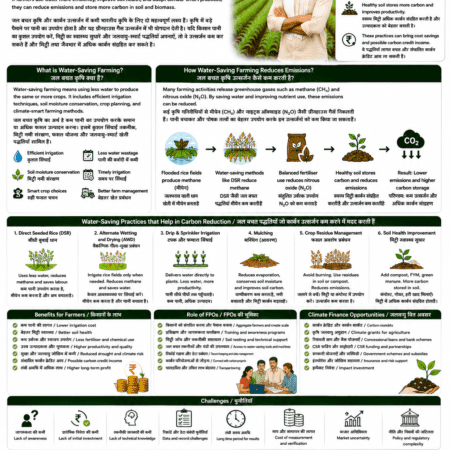
👉 Water-Saving Farming and Carbon Reduction — https://belhamaifpo.com/agriculture/water-saving-farming-and-carbon-reduction/
👉 Climate-Smart Agriculture and Carbon Farming — https://belhamaifpo.com/agriculture/climate-smart-agriculture-and-carbon-farming/
👉 Sustainable Agriculture and Climate Finance — https://belhamaifpo.com/agriculture/sustainable-agriculture-and-climate-finance/
👉 Is Carbon Credit Income Real for Indian Farmers? — https://belhamaifpo.com/agriculture/is-carbon-credit-income-real-for-indian-farmers/
👉 Carbon Credit Business Model for Farmer Producer Organizations — https://belhamaifpo.com/agriculture/carbon-credit-business-model-for-farmer-producer-organizations/
👉 Carbon Farming in India: Complete Guide — https://belhamaifpo.com/agriculture/carbon-farming-in-india-complete-guide/
👉 Carbon Credit Opportunities in Indian Agriculture — https://belhamaifpo.com/agriculture/carbon-credit-opportunities-in-indian-agriculture/
👉 Role of FPOs in Carbon Credit Projects — https://belhamaifpo.com/agriculture/role-of-fpos-in-carbon-credit-projects/
👉 Farmer Producer Organizations Complete Guide — https://belhamaifpo.com/farmer-producer-organisation/farmer-producer-organizations-fpos/
👉 SDGs & Our FPO — https://belhamaifpo.com/sdg-goals/
External Authority Links / बाहरी प्राधिकरण लिंक
👉 Ministry of Agriculture & Farmers Welfare — https://agriwelfare.gov.in/
👉 ICAR — https://icar.org.in/
👉 FAO Climate-Smart Agriculture — https://www.fao.org/climate-smart-agriculture/en/
👉 FAO Soils Portal — https://www.fao.org/soils-portal/en/
👉 UNFCCC — https://unfccc.int/
👉 Verra Verified Carbon Standard — https://verra.org/programs/verified-carbon-standard/
👉 Gold Standard — https://www.goldstandard.org/
👉 Carbon Registry-India — https://cri.nccf.in/
Follow Belha Mai FPO for More Updates / अधिक अपडेट के लिए Belha Mai FPO को फॉलो करें
👉 Website — https://belhamaifpo.com/
👉 Facebook — https://www.facebook.com/profile.php?id=61561043486818
👉 Instagram — https://instagram.com/belhamaifpo
👉 LinkedIn — https://www.linkedin.com/in/abhay-singh-ab5568280/
👉 YouTube — https://www.youtube.com/channel/UC9ZvojoTMCa7mU1-Q_Bh60A