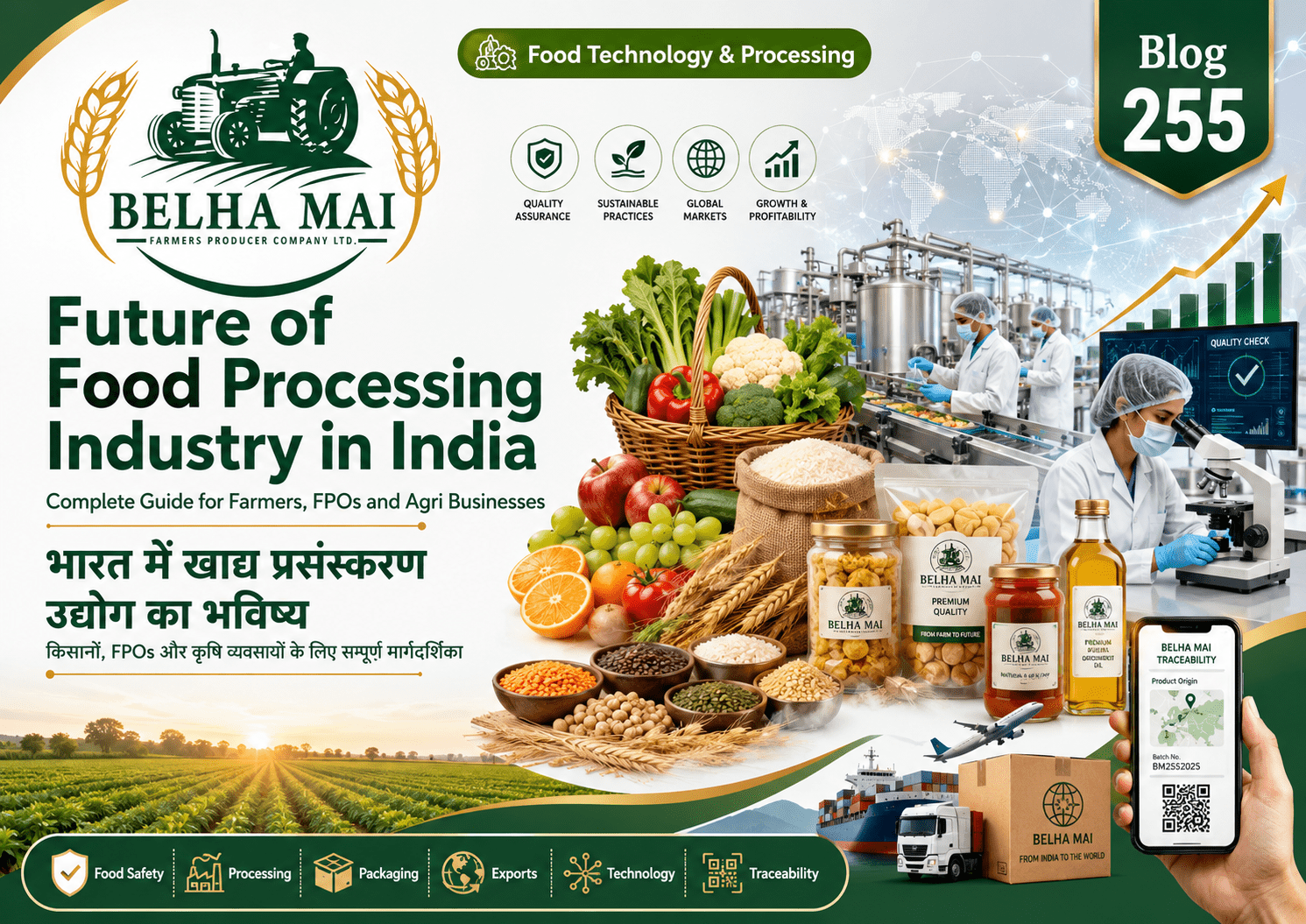
भारत में खाद्य प्रसंस्करण उद्योग का भविष्य: किसानों, FPOs और कृषि व्यवसायों के लिए सम्पूर्ण मार्गदर्शिका
Introduction
Food Processing Industry in India is becoming one of the most important opportunities for farmers, Farmer Producer Organisations, rural entrepreneurs and agri businesses. India produces a large quantity of fruits, vegetables, grains, pulses, milk, spices, honey and other agricultural products, but many farmers still sell raw produce without value addition. Food processing helps convert this raw produce into safe, packaged, branded and market-ready products with better shelf life and better income potential.
भारत में खाद्य प्रसंस्करण उद्योग किसानों, किसान उत्पादक संगठनों, ग्रामीण उद्यमियों और कृषि व्यवसायों के लिए सबसे महत्वपूर्ण अवसरों में से एक बनता जा रहा है। भारत में फल, सब्जियां, अनाज, दालें, दूध, मसाले, शहद और अन्य कृषि उत्पादों का बड़ा उत्पादन होता है, लेकिन कई किसान आज भी कच्चा माल बेचने तक सीमित हैं। खाद्य प्रसंस्करण कच्चे कृषि उत्पादों को सुरक्षित, पैक्ड, ब्रांडेड और बाजार के लिए तैयार उत्पादों में बदलता है, जिससे शेल्फ लाइफ और आय की संभावना दोनों बढ़ती हैं।
For FPOs, the Food Processing Industry in India is not only about machines and factories. It is about building a complete value chain from farm to fork. This includes collection, sorting, grading, cleaning, dehydration, milling, packaging, branding, quality testing, storage, logistics, exports and digital traceability. When these steps are managed properly, farmers can move from price uncertainty to organised agri business.
FPOs के लिए भारत में खाद्य प्रसंस्करण उद्योग केवल मशीन और फैक्ट्री तक सीमित नहीं है। यह खेत से उपभोक्ता तक पूरी वैल्यू चेन बनाने का माध्यम है। इसमें संग्रहण, छंटाई, ग्रेडिंग, सफाई, डिहाइड्रेशन, मिलिंग, पैकेजिंग, ब्रांडिंग, गुणवत्ता जांच, भंडारण, लॉजिस्टिक्स, निर्यात और डिजिटल ट्रेसबिलिटी शामिल हैं। जब ये सभी कदम सही तरीके से किए जाते हैं, तो किसान अनिश्चित कीमतों से निकलकर संगठित कृषि व्यवसाय की ओर बढ़ सकते हैं।
Why Food Processing Matters for Indian Farmers
Indian farmers often face low prices during peak harvest seasons because fresh produce has limited shelf life. Fruits, vegetables, amla, mango, honey, grains and pulses can lose value quickly if proper storage, processing and market linkage are not available. Food processing reduces wastage by converting perishable produce into stable products such as flour, pulp, juice, powder, dried slices, pickles, jams, snacks, ready-to-cook products and packaged staples.
भारतीय किसानों को फसल के समय अक्सर कम दाम मिलते हैं क्योंकि ताजा कृषि उत्पादों की शेल्फ लाइफ सीमित होती है। फल, सब्जियां, आंवला, आम, शहद, अनाज और दालें सही भंडारण, प्रसंस्करण और बाजार संपर्क के बिना जल्दी अपना मूल्य खो सकती हैं। खाद्य प्रसंस्करण नाशवान उत्पादों को आटा, पल्प, जूस, पाउडर, सूखे स्लाइस, अचार, जैम, स्नैक्स, रेडी-टू-कुक उत्पादों और पैक्ड स्टेपल जैसे स्थिर उत्पादों में बदलकर नुकसान कम करता है।
Food Processing Industry in India can help farmers earn more by increasing product value. For example, wheat can become atta, suji, maida and dalia. Mango can become pulp, aamchur, dehydrated slices and beverages. Amla can become powder, candy, murabba, juice and nutraceutical ingredients. Honey can be processed, filtered, packed and marketed under a trusted brand. This value addition creates better business opportunities for FPOs and rural enterprises.
भारत में खाद्य प्रसंस्करण उद्योग किसानों की आय बढ़ाने में मदद कर सकता है क्योंकि यह उत्पाद का मूल्य बढ़ाता है। उदाहरण के लिए गेहूं को आटा, सूजी, मैदा और दलिया में बदला जा सकता है। आम को पल्प, आमचूर, डिहाइड्रेटेड स्लाइस और पेय उत्पादों में बदला जा सकता है। आंवला को पाउडर, कैंडी, मुरब्बा, जूस और न्यूट्रास्यूटिकल सामग्री में बदला जा सकता है। शहद को प्रोसेस, फिल्टर, पैक और विश्वसनीय ब्रांड के तहत बेचा जा सकता है। यह वैल्यू एडिशन FPOs और ग्रामीण उद्यमों के लिए बेहतर व्यापारिक अवसर बनाता है।
Food Safety as the Foundation of Food Processing
Food safety is the first requirement of any food processing business. A processed food product must be safe for human consumption, clean, hygienic, properly packed and correctly labelled. In India, food businesses must follow the rules of the Food Safety and Standards Authority of India. For any FPO or agri business, FSSAI registration or license is an important step before selling processed food products in the market.
खाद्य सुरक्षा किसी भी खाद्य प्रसंस्करण व्यवसाय की पहली आवश्यकता है। कोई भी प्रसंस्कृत खाद्य उत्पाद मानव उपभोग के लिए सुरक्षित, स्वच्छ, हाइजीनिक, सही तरीके से पैक और सही लेबल वाला होना चाहिए। भारत में खाद्य व्यवसायों को भारतीय खाद्य सुरक्षा और मानक प्राधिकरण के नियमों का पालन करना होता है। किसी भी FPO या कृषि व्यवसाय के लिए बाजार में प्रसंस्कृत खाद्य उत्पाद बेचने से पहले FSSAI पंजीकरण या लाइसेंस एक महत्वपूर्ण कदम है।
Food Processing Industry in India will grow strongly only when consumers trust the product. Trust comes from hygiene, testing, batch control, proper packaging, expiry date, nutritional information, allergen information and traceability. Small farmers and FPOs should not see compliance as a burden. Compliance is actually a business tool that helps build confidence among buyers, retailers, institutions and export markets.
भारत में खाद्य प्रसंस्करण उद्योग तभी मजबूत रूप से बढ़ेगा जब उपभोक्ता उत्पाद पर भरोसा करेंगे। यह भरोसा स्वच्छता, टेस्टिंग, बैच कंट्रोल, सही पैकेजिंग, एक्सपायरी डेट, पोषण जानकारी, एलर्जेन जानकारी और ट्रेसबिलिटी से आता है। छोटे किसान और FPOs को अनुपालन को बोझ नहीं समझना चाहिए। अनुपालन वास्तव में एक व्यापारिक साधन है, जो खरीदारों, रिटेलर्स, संस्थानों और निर्यात बाजारों के बीच विश्वास बनाता है।
Role of HACCP and Quality Control
HACCP means Hazard Analysis and Critical Control Points. It is a system used to identify possible food safety risks and control them at important stages of processing. For example, contamination can happen during cleaning, drying, grinding, packaging, storage or transport. HACCP helps food businesses identify these risks and create control points to prevent unsafe food from reaching consumers.
HACCP का अर्थ है Hazard Analysis and Critical Control Points। यह एक ऐसी प्रणाली है जिसका उपयोग खाद्य सुरक्षा जोखिमों की पहचान करने और प्रसंस्करण के महत्वपूर्ण चरणों पर उन्हें नियंत्रित करने के लिए किया जाता है। उदाहरण के लिए सफाई, सुखाने, पीसने, पैकेजिंग, भंडारण या परिवहन के दौरान दूषण हो सकता है। HACCP खाद्य व्यवसायों को इन जोखिमों की पहचान करने और नियंत्रण बिंदु बनाने में मदद करता है ताकि असुरक्षित भोजन उपभोक्ताओं तक न पहुंचे।
Quality control is equally important for the Food Processing Industry in India. A product should have consistent taste, colour, moisture, texture, weight, packaging and shelf life. If every batch is different, customers lose trust. FPOs must maintain basic quality records such as raw material source, batch number, processing date, packaging date, testing details and dispatch details.
भारत में खाद्य प्रसंस्करण उद्योग के लिए गुणवत्ता नियंत्रण भी उतना ही महत्वपूर्ण है। किसी उत्पाद का स्वाद, रंग, नमी, बनावट, वजन, पैकेजिंग और शेल्फ लाइफ लगातार समान होनी चाहिए। यदि हर बैच अलग होगा, तो ग्राहक का भरोसा कम होगा। FPOs को कच्चे माल का स्रोत, बैच नंबर, प्रसंस्करण तिथि, पैकेजिंग तिथि, टेस्टिंग विवरण और डिस्पैच विवरण जैसे बुनियादी गुणवत्ता रिकॉर्ड बनाए रखने चाहिए।
Shelf Life and Food Preservation
Shelf life is one of the biggest advantages of food processing. Fresh produce may last only a few days, but processed products can last for weeks or months depending on the method used. Dehydration, vacuum packaging, modified atmosphere packaging, cold storage, pasteurisation, sterilisation, proper moisture control and hygienic packaging can increase shelf life and reduce wastage.
शेल्फ लाइफ खाद्य प्रसंस्करण का सबसे बड़ा लाभ है। ताजा उत्पाद कुछ दिनों तक ही टिक सकते हैं, लेकिन प्रसंस्कृत उत्पाद उपयोग की गई तकनीक के आधार पर कई सप्ताह या महीनों तक सुरक्षित रह सकते हैं। डिहाइड्रेशन, वैक्यूम पैकेजिंग, मॉडिफाइड एटमॉस्फियर पैकेजिंग, कोल्ड स्टोरेज, पाश्चराइजेशन, स्टेरिलाइजेशन, सही नमी नियंत्रण और हाइजीनिक पैकेजिंग शेल्फ लाइफ बढ़ाकर नुकसान कम कर सकते हैं।
For farmers, increased shelf life means more time to sell the product. For FPOs, it means better inventory planning and wider market access. For consumers, it means safe and convenient products. This is why shelf life improvement is a major pillar of the Food Processing Industry in India.
किसानों के लिए बढ़ी हुई शेल्फ लाइफ का मतलब है उत्पाद बेचने के लिए अधिक समय। FPOs के लिए इसका अर्थ है बेहतर इन्वेंटरी प्लानिंग और बड़े बाजारों तक पहुंच। उपभोक्ताओं के लिए इसका अर्थ है सुरक्षित और सुविधाजनक उत्पाद। इसलिए शेल्फ लाइफ सुधार भारत में खाद्य प्रसंस्करण उद्योग का एक प्रमुख आधार है।
Packaging and Branding in Food Processing
Packaging is not just a cover for the product. It protects food from moisture, dust, insects, contamination, breakage and quality loss. Good packaging also gives important information to consumers such as product name, ingredients, nutrition facts, net weight, manufacturing date, expiry date, FSSAI number, batch number and storage instructions.
पैकेजिंग केवल उत्पाद का कवर नहीं है। यह भोजन को नमी, धूल, कीड़े, दूषण, टूट-फूट और गुणवत्ता हानि से बचाती है। अच्छी पैकेजिंग उपभोक्ताओं को उत्पाद का नाम, सामग्री, पोषण जानकारी, शुद्ध वजन, निर्माण तिथि, समाप्ति तिथि, FSSAI नंबर, बैच नंबर और भंडारण निर्देश जैसी महत्वपूर्ण जानकारी भी देती है।
Branding gives identity to processed food products. Without branding, farmers sell commodities. With branding, FPOs can sell trust, quality, origin and story. A good brand can help Indian agri products reach retail shelves, online platforms, institutional buyers and export markets. For Belha Mai FPO, brands such as Rajvi Bhog and Belha Bees can become strong examples of farmer-led value addition.
ब्रांडिंग प्रसंस्कृत खाद्य उत्पादों को पहचान देती है। बिना ब्रांडिंग के किसान केवल कमोडिटी बेचते हैं। ब्रांडिंग के साथ FPOs भरोसा, गुणवत्ता, उत्पत्ति और कहानी बेच सकते हैं। एक अच्छा ब्रांड भारतीय कृषि उत्पादों को रिटेल शेल्फ, ऑनलाइन प्लेटफॉर्म, संस्थागत खरीदारों और निर्यात बाजारों तक पहुंचा सकता है। Belha Mai FPO के लिए Rajvi Bhog और Belha Bees जैसे ब्रांड किसान-नेतृत्व वाले वैल्यू एडिशन के मजबूत उदाहरण बन सकते हैं।
Export Opportunities for Processed Agri Products
Food Processing Industry in India has strong export potential because Indian agricultural products are known for diversity, taste and availability. Processed fruits, cereal preparations, pulses, groundnuts, mango pulp, processed vegetables, jaggery, spices, honey and milled products can find demand in international markets when quality, packaging and documentation are managed properly.
भारत में खाद्य प्रसंस्करण उद्योग में निर्यात की बड़ी संभावना है क्योंकि भारतीय कृषि उत्पाद अपनी विविधता, स्वाद और उपलब्धता के लिए प्रसिद्ध हैं। प्रोसेस्ड फल, सीरियल प्रिपरेशन, दालें, मूंगफली, आम पल्प, प्रोसेस्ड सब्जियां, गुड़, मसाले, शहद और मिल्ड प्रोडक्ट्स अंतरराष्ट्रीय बाजारों में मांग पा सकते हैं, यदि गुणवत्ता, पैकेजिंग और दस्तावेज़ीकरण सही तरीके से किया जाए।
For exports, FPOs must understand buyer requirements, APEDA registration, product standards, phytosanitary requirements, lab testing, packaging norms, export documentation, pricing, logistics and payment security. Export is not only about finding a foreign buyer. It is about building a reliable supply system that can deliver consistent quality on time.
निर्यात के लिए FPOs को खरीदार की आवश्यकताएं, APEDA पंजीकरण, उत्पाद मानक, फाइटोसैनिटरी आवश्यकताएं, लैब टेस्टिंग, पैकेजिंग नियम, निर्यात दस्तावेज़, मूल्य निर्धारण, लॉजिस्टिक्स और भुगतान सुरक्षा समझनी चाहिए। निर्यात केवल विदेशी खरीदार खोजने का काम नहीं है। यह एक भरोसेमंद सप्लाई सिस्टम बनाने का काम है, जो समय पर लगातार गुणवत्ता दे सके।
Technology in the Future of Food Processing
Technology will play a major role in the future of the Food Processing Industry in India. Artificial intelligence, IoT sensors, drones, digital platforms, automated sorting, smart packaging, QR code tracking, digital payments and online buyer networks can make food supply chains more transparent and efficient.
भारत में खाद्य प्रसंस्करण उद्योग के भविष्य में तकनीक की बहुत बड़ी भूमिका होगी। आर्टिफिशियल इंटेलिजेंस, IoT सेंसर, ड्रोन, डिजिटल प्लेटफॉर्म, ऑटोमेटेड सॉर्टिंग, स्मार्ट पैकेजिंग, QR कोड ट्रैकिंग, डिजिटल भुगतान और ऑनलाइन खरीदार नेटवर्क खाद्य आपूर्ति श्रृंखला को अधिक पारदर्शी और कुशल बना सकते हैं।
For FPOs, technology should not be seen as something only for big companies. Even small steps such as digital farmer records, batch-wise procurement, QR code traceability, WhatsApp-based buyer communication, online catalogues, Google Business Profile, e-commerce listings and digital inventory systems can create major improvements in business operations.
FPOs को तकनीक को केवल बड़ी कंपनियों की चीज नहीं समझना चाहिए। डिजिटल किसान रिकॉर्ड, बैच-वार खरीद, QR कोड ट्रेसबिलिटी, WhatsApp आधारित खरीदार संपर्क, ऑनलाइन कैटलॉग, Google Business Profile, ई-कॉमर्स लिस्टिंग और डिजिटल इन्वेंटरी सिस्टम जैसे छोटे कदम भी व्यापार संचालन में बड़ा सुधार ला सकते हैं।
Traceability from Farm to Fork
Traceability means the ability to track a product from farm to consumer. In food processing, traceability helps identify where the raw material came from, when it was processed, which batch it belongs to, how it was packed and where it was sold. This is very important for food safety, recalls, exports and brand trust.
ट्रेसबिलिटी का अर्थ है किसी उत्पाद को खेत से उपभोक्ता तक ट्रैक करने की क्षमता। खाद्य प्रसंस्करण में ट्रेसबिलिटी यह पहचानने में मदद करती है कि कच्चा माल कहां से आया, कब प्रोसेस हुआ, किस बैच से संबंधित है, कैसे पैक हुआ और कहां बेचा गया। यह खाद्य सुरक्षा, रिकॉल, निर्यात और ब्रांड भरोसे के लिए बहुत महत्वपूर्ण है।
QR code tracking can become a powerful tool for the Food Processing Industry in India. A consumer or buyer can scan a QR code and see information about product origin, farmer group, processing unit, batch details and quality assurance. This can help FPOs differentiate their products from ordinary market products.
QR कोड ट्रैकिंग भारत में खाद्य प्रसंस्करण उद्योग के लिए एक शक्तिशाली साधन बन सकती है। उपभोक्ता या खरीदार QR कोड स्कैन करके उत्पाद की उत्पत्ति, किसान समूह, प्रसंस्करण इकाई, बैच विवरण और गुणवत्ता आश्वासन की जानकारी देख सकता है। इससे FPOs अपने उत्पादों को सामान्य बाजार उत्पादों से अलग पहचान दे सकते हैं।
Sustainable and Regenerative Food Supply Chains
The future of food processing will not depend only on profit. It will also depend on sustainability. Consumers and buyers are increasingly interested in products that are safe, natural, responsibly sourced and environmentally friendly. Farmers and FPOs can benefit by adopting sustainable farming, water conservation, soil health improvement, residue reduction and responsible packaging.
खाद्य प्रसंस्करण का भविष्य केवल लाभ पर निर्भर नहीं करेगा। यह स्थिरता पर भी निर्भर करेगा। उपभोक्ता और खरीदार अब सुरक्षित, प्राकृतिक, जिम्मेदारी से प्राप्त और पर्यावरण-अनुकूल उत्पादों में अधिक रुचि ले रहे हैं। किसान और FPOs टिकाऊ खेती, जल संरक्षण, मिट्टी स्वास्थ्य सुधार, रसायन अवशेष कम करने और जिम्मेदार पैकेजिंग अपनाकर लाभ उठा सकते हैं।
Regenerative agriculture, carbon credit opportunities, net-zero farming and sustainable supply chains can become important business advantages in the coming years. FPOs that start preparing early can attract partnerships, grants, buyers and institutions looking for climate-smart agricultural models.
आने वाले वर्षों में पुनर्योजी कृषि, कार्बन क्रेडिट अवसर, नेट-जीरो खेती और टिकाऊ आपूर्ति श्रृंखला महत्वपूर्ण व्यापारिक लाभ बन सकते हैं। जो FPOs जल्दी तैयारी शुरू करेंगे, वे क्लाइमेट-स्मार्ट कृषि मॉडल की तलाश करने वाले साझेदारों, अनुदानों, खरीदारों और संस्थानों को आकर्षित कर सकते हैं।
How FPOs Can Build a Food Processing Business Model
A profitable food processing business model starts with local crop strength. Every FPO should first identify what its farmers already produce in quantity and quality. The next step is to study market demand, processing method, investment requirement, working capital, packaging cost, selling price, margin, storage need and buyer segment.
एक लाभदायक खाद्य प्रसंस्करण व्यापार मॉडल स्थानीय फसल क्षमता से शुरू होता है। हर FPO को पहले यह पहचानना चाहिए कि उसके किसान किस उत्पाद का पर्याप्त मात्रा और गुणवत्ता में उत्पादन करते हैं। अगला कदम बाजार मांग, प्रसंस्करण विधि, निवेश आवश्यकता, कार्यशील पूंजी, पैकेजिंग लागत, बिक्री मूल्य, मार्जिन, भंडारण आवश्यकता और खरीदार वर्ग का अध्ययन करना है।
For example, an FPO in a mango belt can focus on mango pulp, aamchur and dehydrated mango slices. An FPO in an amla belt can focus on amla powder, candy, murabba and juice. A grain-producing FPO can build a flour, dalia, suji, millet flour or rice packaging business. A honey-producing FPO can develop filtered honey, flavoured honey and institutional supply packs.
उदाहरण के लिए आम क्षेत्र में स्थित FPO आम पल्प, आमचूर और डिहाइड्रेटेड आम स्लाइस पर ध्यान दे सकता है। आंवला क्षेत्र में स्थित FPO आंवला पाउडर, कैंडी, मुरब्बा और जूस पर काम कर सकता है। अनाज उत्पादक FPO आटा, दलिया, सूजी, मिलेट फ्लोर या चावल पैकेजिंग व्यवसाय बना सकता है। शहद उत्पादक FPO फिल्टर्ड हनी, फ्लेवर्ड हनी और संस्थागत सप्लाई पैक विकसित कर सकता है।
Funding and Financial Management
Food processing requires investment in machines, building, packaging, licenses, working capital, raw material, testing, branding and marketing. FPOs can explore support from government schemes, NABARD, banks, grants, CSR partnerships, incubation programs, startup schemes and private buyers. However, funding should be planned carefully with realistic cost-benefit analysis.
खाद्य प्रसंस्करण के लिए मशीन, भवन, पैकेजिंग, लाइसेंस, कार्यशील पूंजी, कच्चा माल, टेस्टिंग, ब्रांडिंग और मार्केटिंग में निवेश की आवश्यकता होती है। FPOs सरकारी योजनाओं, NABARD, बैंकों, अनुदान, CSR साझेदारी, इनक्यूबेशन कार्यक्रम, स्टार्टअप योजनाओं और निजी खरीदारों से सहायता खोज सकते हैं। लेकिन फंडिंग की योजना वास्तविक लागत-लाभ विश्लेषण के साथ सावधानी से बनानी चाहिए।
Financial management is very important in the Food Processing Industry in India. Many processing units fail not because the product is bad, but because working capital, inventory, payment cycle, wastage, packaging cost and marketing cost are not planned properly. FPOs must calculate cost per kg, selling price, gross margin, net margin and break-even point before scaling operations.
भारत में खाद्य प्रसंस्करण उद्योग में वित्तीय प्रबंधन बहुत महत्वपूर्ण है। कई प्रसंस्करण इकाइयां इसलिए असफल नहीं होतीं कि उत्पाद खराब है, बल्कि इसलिए असफल होती हैं क्योंकि कार्यशील पूंजी, इन्वेंटरी, भुगतान चक्र, वेस्टेज, पैकेजिंग लागत और मार्केटिंग लागत की सही योजना नहीं होती। FPOs को संचालन बढ़ाने से पहले प्रति किलो लागत, बिक्री मूल्य, ग्रॉस मार्जिन, नेट मार्जिन और ब्रेक-ईवन पॉइंट की गणना करनी चाहिए।
Future Consumer Trends
Consumers are changing quickly. They want safe food, clean labels, natural ingredients, convenience, traceability, better packaging and trusted brands. Organic, natural, minimally processed, millet-based, high-protein, low-sugar, traditional and regional foods are gaining attention. This creates opportunities for FPO-led brands that can combine authenticity with quality.
उपभोक्ता तेजी से बदल रहे हैं। वे सुरक्षित भोजन, क्लीन लेबल, प्राकृतिक सामग्री, सुविधा, ट्रेसबिलिटी, बेहतर पैकेजिंग और भरोसेमंद ब्रांड चाहते हैं। ऑर्गेनिक, प्राकृतिक, कम प्रसंस्कृत, मिलेट आधारित, हाई-प्रोटीन, कम चीनी, पारंपरिक और क्षेत्रीय खाद्य उत्पादों की मांग बढ़ रही है। इससे FPO आधारित ब्रांडों के लिए अवसर बनते हैं, जो प्रामाणिकता को गुणवत्ता के साथ जोड़ सकते हैं।
Food Processing Industry in India can become a bridge between traditional Indian agriculture and modern consumer markets. Farmers already have the raw material and local knowledge. What they need is processing infrastructure, compliance, branding, digital marketing, buyer linkage and financial discipline.
भारत में खाद्य प्रसंस्करण उद्योग पारंपरिक भारतीय कृषि और आधुनिक उपभोक्ता बाजारों के बीच पुल बन सकता है। किसानों के पास पहले से कच्चा माल और स्थानीय ज्ञान है। उन्हें प्रसंस्करण अवसंरचना, अनुपालन, ब्रांडिंग, डिजिटल मार्केटिंग, खरीदार संपर्क और वित्तीय अनुशासन की आवश्यकता है।
Belha Mai FPO Vision for Food Processing
Belha Mai Farmers Producer Company Ltd. is working with a clear vision to strengthen farmers through value addition, market linkage, food processing, branding and rural enterprise development. Through Rajvi Bhog, Belha Bees, high-tech agriculture, value chain development and farmer awareness, the FPO aims to create a model where farmers are not only producers but also partners in processing and branding.
Belha Mai Farmers Producer Company Ltd. किसानों को वैल्यू एडिशन, बाजार संपर्क, खाद्य प्रसंस्करण, ब्रांडिंग और ग्रामीण उद्यम विकास के माध्यम से मजबूत करने की स्पष्ट दृष्टि के साथ काम कर रहा है। Rajvi Bhog, Belha Bees, हाई-टेक कृषि, वैल्यू चेन विकास और किसान जागरूकता के माध्यम से FPO एक ऐसा मॉडल बनाना चाहता है, जहां किसान केवल उत्पादक नहीं बल्कि प्रसंस्करण और ब्रांडिंग के साझेदार भी हों।
The goal is to build a farmer-led food processing ecosystem where quality, safety, traceability, technology and sustainability work together. This can help farmers get better value, consumers get trusted products and rural communities get new employment opportunities.
लक्ष्य एक किसान-नेतृत्व वाला खाद्य प्रसंस्करण इकोसिस्टम बनाना है, जहां गुणवत्ता, सुरक्षा, ट्रेसबिलिटी, तकनीक और स्थिरता एक साथ काम करें। इससे किसानों को बेहतर मूल्य, उपभोक्ताओं को भरोसेमंद उत्पाद और ग्रामीण समुदायों को नए रोजगार अवसर मिल सकते हैं।
Conclusion
Food Processing Industry in India is no longer an optional opportunity. It is becoming a necessary direction for farmers, FPOs and agri businesses that want better income, lower wastage, stronger brands and wider market access. The future will belong to those who can combine safe production, scientific processing, quality packaging, digital traceability, export readiness and consumer trust.
भारत में खाद्य प्रसंस्करण उद्योग अब केवल एक वैकल्पिक अवसर नहीं है। यह किसानों, FPOs और कृषि व्यवसायों के लिए एक आवश्यक दिशा बनता जा रहा है, जो बेहतर आय, कम नुकसान, मजबूत ब्रांड और बड़े बाजार तक पहुंच चाहते हैं। भविष्य उन लोगों का होगा जो सुरक्षित उत्पादन, वैज्ञानिक प्रसंस्करण, गुणवत्ता पैकेजिंग, डिजिटल ट्रेसबिलिटी, निर्यात तैयारी और उपभोक्ता भरोसे को एक साथ जोड़ पाएंगे।
For FPOs like Belha Mai Farmers Producer Company Ltd., food processing is not just a business activity. It is a rural transformation strategy. By connecting farmers with value addition, technology, branding and markets, the Food Processing Industry in India can become a strong pathway for farmer prosperity and sustainable rural development.
Belha Mai Farmers Producer Company Ltd. जैसे FPOs के लिए खाद्य प्रसंस्करण केवल एक व्यापारिक गतिविधि नहीं है। यह ग्रामीण परिवर्तन की रणनीति है। किसानों को वैल्यू एडिशन, तकनीक, ब्रांडिंग और बाजारों से जोड़कर भारत में खाद्य प्रसंस्करण उद्योग किसान समृद्धि और सतत ग्रामीण विकास का मजबूत मार्ग बन सकता है।
FAQ
What is Food Processing Industry in India?
Food Processing Industry in India includes activities that convert raw agricultural produce into value-added food products through cleaning, grading, processing, preservation, packaging, quality control, branding and distribution.
भारत में खाद्य प्रसंस्करण उद्योग उन गतिविधियों को शामिल करता है, जिनमें कच्चे कृषि उत्पादों को सफाई, ग्रेडिंग, प्रसंस्करण, संरक्षण, पैकेजिंग, गुणवत्ता नियंत्रण, ब्रांडिंग और वितरण के माध्यम से मूल्य-वर्धित खाद्य उत्पादों में बदला जाता है।
Why is food processing important for farmers?
Food processing helps farmers reduce post-harvest losses, increase shelf life, improve product value and reach better markets through packaged and branded products.
खाद्य प्रसंस्करण किसानों को कटाई के बाद होने वाले नुकसान को कम करने, शेल्फ लाइफ बढ़ाने, उत्पाद का मूल्य बढ़ाने और पैक्ड व ब्रांडेड उत्पादों के माध्यम से बेहतर बाजार तक पहुंचने में मदद करता है।
How can FPOs benefit from food processing?
FPOs can aggregate produce from farmers, process it, package it under a brand and sell it to retail, institutional, online and export markets. This helps farmers receive better value.
FPOs किसानों से उत्पाद इकट्ठा करके उसे प्रोसेस, पैक और ब्रांड के तहत रिटेल, संस्थागत, ऑनलाइन और निर्यात बाजारों में बेच सकते हैं। इससे किसानों को बेहतर मूल्य प्राप्त होता है।
Is FSSAI license required for processed food products?
Yes, food businesses in India generally require FSSAI registration or license depending on the size and nature of the business before selling food products.
हाँ, भारत में खाद्य उत्पाद बेचने से पहले खाद्य व्यवसायों को व्यवसाय के आकार और प्रकृति के अनुसार सामान्यतः FSSAI पंजीकरण या लाइसेंस की आवश्यकता होती है।
What is the role of packaging in food processing?
Packaging protects food from contamination, moisture, insects and quality loss. It also carries important information such as batch number, manufacturing date, expiry date, ingredients and FSSAI details.
पैकेजिंग भोजन को दूषण, नमी, कीड़ों और गुणवत्ता हानि से बचाती है। यह बैच नंबर, निर्माण तिथि, समाप्ति तिथि, सामग्री और FSSAI विवरण जैसी महत्वपूर्ण जानकारी भी देती है।
Can Indian FPOs export processed food products?
Yes, Indian FPOs can export processed food products if they meet quality standards, registration requirements, buyer specifications, documentation norms and packaging requirements.
हाँ, भारतीय FPOs प्रसंस्कृत खाद्य उत्पादों का निर्यात कर सकते हैं यदि वे गुणवत्ता मानकों, पंजीकरण आवश्यकताओं, खरीदार की शर्तों, दस्तावेज़ नियमों और पैकेजिंग आवश्यकताओं को पूरा करते हैं।
What is traceability in food processing?
Traceability means tracking a food product from farm to consumer. It helps identify product origin, batch details, processing history, quality records and supply chain movement.
ट्रेसबिलिटी का अर्थ है खाद्य उत्पाद को खेत से उपभोक्ता तक ट्रैक करना। यह उत्पाद की उत्पत्ति, बैच विवरण, प्रसंस्करण इतिहास, गुणवत्ता रिकॉर्ड और आपूर्ति श्रृंखला की जानकारी पहचानने में मदद करता है।
What is the future of Food Processing Industry in India?
The future of Food Processing Industry in India will be driven by food safety, value addition, branding, exports, digital traceability, technology, sustainable supply chains and farmer-led enterprises.
भारत में खाद्य प्रसंस्करण उद्योग का भविष्य खाद्य सुरक्षा, वैल्यू एडिशन, ब्रांडिंग, निर्यात, डिजिटल ट्रेसबिलिटी, तकनीक, टिकाऊ आपूर्ति श्रृंखला और किसान-नेतृत्व वाले उद्यमों पर आधारित होगा।
Internal Links Section
👉 Farmer Producer Organizations Complete Guide
https://belhamaifpo.com/farmer-producer-organisation/farmer-producer-organizations-fpos/
👉 Why Small Farmers Struggle in India
https://belhamaifpo.com/agriculture/why-small-farmers-struggle-in-india/
👉 Mango Farming in India: Complete Guide
https://belhamaifpo.com/agriculture/mango-farming-in-india/
👉 Rajvi Bhog Food Products: Complete Guide
https://belhamaifpo.com/agriculture/rajvi-bhog-food-products-quality-export-guide/
👉 Honey Processing in India: Complete Guide
https://belhamaifpo.com/agriculture/honey-processing-in-india-complete-guide/
Related Blogs in This Food Technology & Processing Cluster
Food Safety, Processing Standards & Preservation
👉 Food Safety Standards in India for Agri Products
👉 HACCP Certification for Food Processing Units
👉 FSSAI Guidelines for Food Businesses in India
👉 Shelf Life of Processed Foods: How It Is Increased
👉 Role of Dehydration in Food Preservation
👉 Vacuum Packaging in Agriculture Products
👉 Modified Atmosphere Packaging MAP Explained
👉 Quality Control in Food Processing Industry
Agri Export, APEDA, Buyers & Export Pricing
👉 Step-by-Step Process to Export Agricultural Products from India
👉 APEDA Registration for Agri Exporters
👉 How to Find International Buyers for Agri Products
👉 Export Documentation for Food Products
👉 Global Demand for Indian Agricultural Products
👉 Top Countries Importing Indian Fruits and Grains
👉 Export Pricing Strategy for Agri Products
👉 Common Challenges in Agri Export Business
Agri Business, Funding, FPO Finance & Risk
👉 How to Build a Profitable Agri Business Model
👉 Funding Options for Agri Startups in India
👉 Role of NABARD in Rural Development
👉 How FPOs Can Access Government Funding
👉 Financial Management in FPOs
👉 Cost-Benefit Analysis in Agriculture Projects
👉 Risk Management in Agriculture Business
Smart Farming, Digital Agriculture & Technology
👉 Smart Farming Technologies in India
👉 Use of Drones in Agriculture
👉 IoT in Farming: Applications and Benefits
👉 Precision Agriculture Explained
👉 Digital Platforms for Farmers in India
Sustainability, Climate-Smart Farming & Traceability
👉 Carbon Credit Opportunities for Farmers
👉 Sustainable Supply Chains in Agriculture
👉 Water Conservation Techniques in Farming
👉 Regenerative Agriculture in India
👉 Net-Zero Farming: Concept and Challenges
👉 Traceability in Agriculture: Farm to Fork Explained
👉 QR Code Tracking in Food Supply Chain
Branding, Consumer Trust & Food Market Trends
👉 Importance of Branding for Agri Exports
👉 Building Trust in Food Brands
👉 Consumer Trends in Organic and Natural Foods
External Authority Links
👉 Food Safety and Standards Authority of India
https://www.fssai.gov.in/
👉 FSSAI FoSCoS Portal
https://foscos.fssai.gov.in/
👉 Ministry of Food Processing Industries
https://mofpi.gov.in/
👉 APEDA – Processed Foods
https://apeda.gov.in/ProcessedFoods
👉 Codex Alimentarius – International Food Standards
https://www.fao.org/fao-who-codexalimentarius/
👉 NABARD
https://www.nabard.org/
Reference basis used for this pillar page: FSSAI’s Food Safety and Standards Act page explains India’s consolidated food safety law and FSSAI’s role; FoSCoS is the official licensing and compliance portal; MoFPI describes schemes for creation and expansion of processing/preservation capacities; APEDA provides processed food export information; Codex provides international food hygiene and HACCP guidance.
Follow Belha Mai FPO for More Updates
Stay connected with Belha Mai Farmers Producer Company Ltd. for more updates on agriculture, food processing, farmer development, FPO awareness, market linkage, value addition, rural entrepreneurship and sustainable farming.
👉 Website
https://belhamaifpo.com/
👉 Facebook
https://www.facebook.com/profile.php?id=61561043486818
👉 YouTube
https://www.youtube.com/channel/UC9ZvojoTMCa7mU1-Q_Bh60A
👉 LinkedIn
https://www.linkedin.com/in/abhay-singh-ab5568280/
👉 Instagram
https://instagram.com/belhamaifpo
Belha Mai FPO is committed to supporting farmers through better information, technology, market linkage, value addition, FPO awareness and rural development.