Introduction
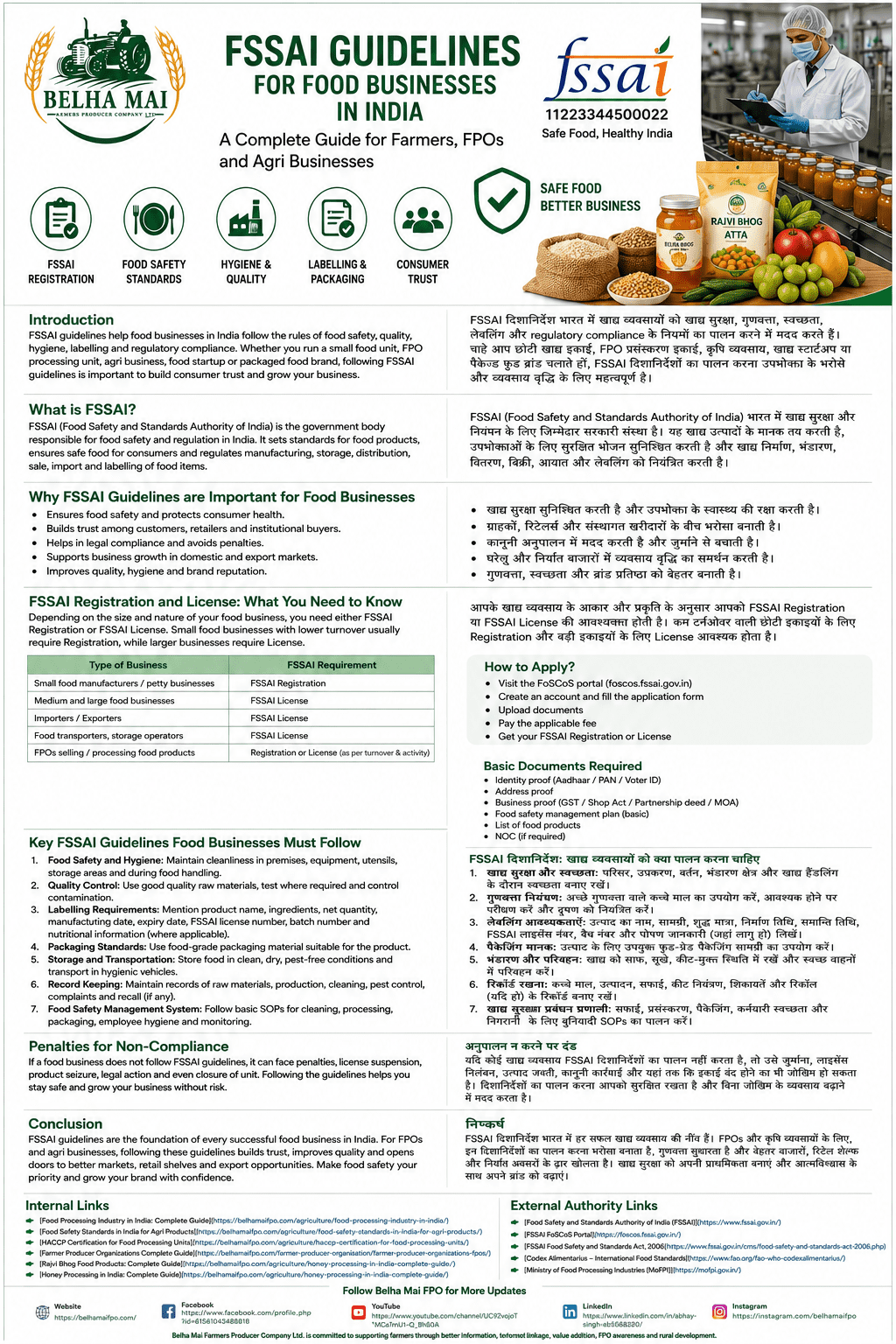
FSSAI Guidelines are very important for every food business in India. Whether a business is small or large, local or export-focused, farmer-led or corporate, it must give priority to safe, hygienic and properly labelled food products. For farmers, FPOs and agri businesses, understanding FSSAI Guidelines is the first step toward building a trusted food brand.
FSSAI Guidelines भारत में हर खाद्य व्यवसाय के लिए बहुत महत्वपूर्ण हैं। चाहे व्यवसाय छोटा हो या बड़ा, स्थानीय हो या निर्यात-केंद्रित, किसान-नेतृत्व वाला हो या कॉर्पोरेट, उसे सुरक्षित, स्वच्छ और सही लेबल वाले खाद्य उत्पादों को प्राथमिकता देनी चाहिए। किसानों, FPOs और कृषि व्यवसायों के लिए FSSAI Guidelines को समझना एक भरोसेमंद खाद्य ब्रांड बनाने की पहली शुरुआत है।
In India, food businesses may include manufacturers, processors, packers, traders, retailers, transporters, storage operators, importers, exporters, caterers, cloud kitchens, e-commerce sellers and FPOs selling packaged food products. If a Farmer Producer Organisation sells atta, rice, pulses, honey, amla products, mango products, millet flour, dehydrated food or any packaged food item, FSSAI compliance becomes necessary.
भारत में खाद्य व्यवसायों में manufacturers, processors, packers, traders, retailers, transporters, storage operators, importers, exporters, caterers, cloud kitchens, e-commerce sellers और packaged food products बेचने वाले FPOs शामिल हो सकते हैं। यदि कोई किसान उत्पादक संगठन आटा, चावल, दाल, शहद, आंवला उत्पाद, आम उत्पाद, मिलेट फ्लोर, डिहाइड्रेटेड फूड या कोई packaged food item बेचता है, तो FSSAI compliance आवश्यक हो जाता है।
What is FSSAI?
FSSAI stands for Food Safety and Standards Authority of India. It is the main food safety authority in India responsible for setting science-based standards and regulating food manufacture, storage, distribution, sale and import. FSSAI works under the Food Safety and Standards Act, 2006 and plays a central role in consumer protection and food business regulation.
FSSAI का अर्थ है Food Safety and Standards Authority of India। यह भारत की मुख्य खाद्य सुरक्षा संस्था है, जो science-based standards तय करती है और food manufacture, storage, distribution, sale और import को regulate करती है। FSSAI Food Safety and Standards Act, 2006 के तहत काम करती है और consumer protection तथा food business regulation में केंद्रीय भूमिका निभाती है।
The purpose of FSSAI Guidelines is to make sure that food sold in India is safe for human consumption. These guidelines cover registration, licensing, hygiene, quality control, packaging, labelling, storage, transportation, product standards, food testing and record keeping. For food businesses, FSSAI Guidelines are not only legal rules; they are also a foundation for customer trust.
FSSAI Guidelines का उद्देश्य यह सुनिश्चित करना है कि भारत में बेचा जाने वाला भोजन मानव उपभोग के लिए सुरक्षित हो। इन दिशानिर्देशों में registration, licensing, hygiene, quality control, packaging, labelling, storage, transportation, product standards, food testing और record keeping शामिल हैं। खाद्य व्यवसायों के लिए FSSAI Guidelines केवल कानूनी नियम नहीं हैं; ये customer trust की नींव भी हैं।
Why FSSAI Guidelines Matter for Food Businesses
FSSAI Guidelines help food businesses build trust with consumers, retailers, institutions, online buyers and export markets. When a product carries proper FSSAI details, correct labelling and safe packaging, buyers feel more confident. This is especially important for new food brands and FPO-led brands that are trying to enter competitive markets.
FSSAI Guidelines खाद्य व्यवसायों को consumers, retailers, institutions, online buyers और export markets के साथ भरोसा बनाने में मदद करती हैं। जब किसी product पर proper FSSAI details, correct labelling और safe packaging होती है, तो buyers को अधिक confidence होता है। यह नए food brands और FPO-led brands के लिए विशेष रूप से महत्वपूर्ण है, जो competitive markets में प्रवेश करना चाहते हैं।
For FPOs, FSSAI Guidelines can help convert raw farm produce into professional food products. A farmer group may produce good grains, fruits, honey or pulses, but without food safety compliance, proper packaging and labelling, it becomes difficult to enter organised retail, institutional supply and online markets.
FPOs के लिए FSSAI Guidelines raw farm produce को professional food products में बदलने में मदद कर सकती हैं। कोई किसान समूह अच्छे grains, fruits, honey या pulses का उत्पादन कर सकता है, लेकिन food safety compliance, proper packaging और labelling के बिना organised retail, institutional supply और online markets में प्रवेश करना कठिन हो जाता है।
FSSAI Registration and License
Every food business operator in India is generally required to obtain FSSAI registration or license depending on the size, turnover and nature of the business. Small or petty food businesses usually require FSSAI registration, while larger food businesses require FSSAI license. The correct category depends on business activity, scale and eligibility criteria.
भारत में हर food business operator को सामान्यतः व्यवसाय के आकार, turnover और nature के अनुसार FSSAI registration या license लेना होता है। छोटे या petty food businesses को सामान्यतः FSSAI registration की आवश्यकता होती है, जबकि बड़े food businesses को FSSAI license की आवश्यकता होती है। सही category business activity, scale और eligibility criteria पर निर्भर करती है।
For FPOs and agri businesses, it is important to choose the correct kind of business while applying. A business may be a manufacturer, processor, repacker, relabeller, storage operator, transporter, retailer, wholesaler, distributor, exporter or importer. If the wrong activity is selected, it may create compliance issues later.
FPOs और agri businesses के लिए apply करते समय सही kind of business चुनना जरूरी है। कोई business manufacturer, processor, repacker, relabeller, storage operator, transporter, retailer, wholesaler, distributor, exporter या importer हो सकता है। यदि गलत activity चुनी जाती है, तो बाद में compliance issues पैदा हो सकते हैं।
FoSCoS Portal for FSSAI Compliance
FoSCoS stands for Food Safety Compliance System. It is the official online platform for FSSAI-related services such as new license or registration, renewal, modification, annual return, application tracking and other compliance activities. Food businesses should use the FoSCoS portal for official FSSAI work.
FoSCoS का अर्थ है Food Safety Compliance System। यह FSSAI से संबंधित services जैसे new license या registration, renewal, modification, annual return, application tracking और अन्य compliance activities के लिए official online platform है। खाद्य व्यवसायों को official FSSAI work के लिए FoSCoS portal का उपयोग करना चाहिए।
For FPOs, FoSCoS can help manage license status, renewal dates, business details, product categories and compliance requirements. One common mistake is taking an FSSAI license and then forgetting renewal or modification. If a business adds a new product category, processing activity or location, modification may be required.
FPOs के लिए FoSCoS license status, renewal dates, business details, product categories और compliance requirements को manage करने में मदद कर सकता है। एक common mistake यह है कि FSSAI license लेने के बाद renewal या modification को भूल जाना। यदि कोई business new product category, processing activity या location जोड़ता है, तो modification की आवश्यकता हो सकती है।
Basic Documents Required
The documents required for FSSAI registration or license may vary based on the business type and scale. Common documents may include identity proof, address proof, business registration document, list of food products, premises proof, layout plan, water test report, food safety management plan, photograph, equipment details and nominee details.
FSSAI registration या license के लिए documents business type और scale के अनुसार अलग हो सकते हैं। सामान्य documents में identity proof, address proof, business registration document, list of food products, premises proof, layout plan, water test report, food safety management plan, photograph, equipment details और nominee details शामिल हो सकते हैं।
For FPOs, documents may also include company incorporation certificate, PAN, GST if applicable, board authorisation, FPO address proof, processing unit details, product list and responsible person details. Before applying, the FPO should prepare documents carefully to avoid delay or rejection.
FPOs के लिए documents में company incorporation certificate, PAN, जहां लागू हो GST, board authorisation, FPO address proof, processing unit details, product list और responsible person details भी शामिल हो सकते हैं। Apply करने से पहले FPO को documents carefully prepare करने चाहिए ताकि delay या rejection से बचा जा सके।
Hygiene and Sanitation Guidelines
FSSAI Guidelines give strong importance to hygiene and sanitation. Food should be handled in clean premises using clean equipment, safe water, proper drainage, pest control and hygienic worker practices. Processing areas should be protected from dust, insects, rodents, animals, chemical contamination and waste accumulation.
FSSAI Guidelines hygiene और sanitation को बहुत महत्व देती हैं। Food को clean premises में clean equipment, safe water, proper drainage, pest control और hygienic worker practices के साथ handle किया जाना चाहिए। Processing areas को dust, insects, rodents, animals, chemical contamination और waste accumulation से सुरक्षित रखना चाहिए।
Workers should follow basic hygiene practices such as hand washing, clean clothing, hair covering, nail cleanliness and illness reporting. Food handlers should avoid smoking, chewing tobacco, spitting or eating inside processing areas. These simple habits can make a major difference in food safety.
Workers को hand washing, clean clothing, hair covering, nail cleanliness और illness reporting जैसी basic hygiene practices का पालन करना चाहिए। Food handlers को processing areas के अंदर smoking, chewing tobacco, spitting या eating से बचना चाहिए। ये सरल आदतें food safety में बड़ा अंतर ला सकती हैं।
Quality Control and Raw Material Safety
FSSAI Guidelines require food businesses to use safe and suitable raw materials. For agri products, this means checking grains, fruits, vegetables, pulses, honey, spices and other raw materials before processing or packaging. Raw material should be free from visible dirt, stones, insects, fungus, bad smell, foreign matter and unsafe contamination.
FSSAI Guidelines के अनुसार food businesses को safe और suitable raw materials का उपयोग करना चाहिए। Agri products के लिए इसका अर्थ है processing या packaging से पहले grains, fruits, vegetables, pulses, honey, spices और अन्य raw materials की जांच करना। Raw material visible dirt, stones, insects, fungus, bad smell, foreign matter और unsafe contamination से मुक्त होना चाहिए।
Quality control should be done at every stage, not only at the final stage. FPOs should check raw material quality, moisture level, cleaning, sorting, processing, packaging seal, label accuracy, storage condition and dispatch records. This helps prevent unsafe or poor-quality products from reaching the market.
Quality control हर stage पर किया जाना चाहिए, केवल final stage पर नहीं। FPOs को raw material quality, moisture level, cleaning, sorting, processing, packaging seal, label accuracy, storage condition और dispatch records की जांच करनी चाहिए। इससे unsafe या poor-quality products को market तक पहुंचने से रोका जा सकता है।
Packaging Guidelines
Packaging protects food from contamination, moisture, dust, insects, light, leakage, breakage and quality loss. FSSAI Guidelines require packaging material to be suitable for food contact. Poor packaging can reduce shelf life, damage product safety and create customer complaints.
Packaging food को contamination, moisture, dust, insects, light, leakage, breakage और quality loss से बचाती है। FSSAI Guidelines के अनुसार packaging material food contact के लिए suitable होना चाहिए। Poor packaging shelf life कम कर सकती है, product safety को नुकसान पहुंचा सकती है और customer complaints पैदा कर सकती है।
For FPO products such as atta, rice, dalia, suji, millet flour, honey, amla powder, mango products and dehydrated foods, packaging should be strong, clean and suitable for the product. The packaging should protect the product during storage and transport while also presenting the brand professionally.
FPO products जैसे atta, rice, dalia, suji, millet flour, honey, amla powder, mango products और dehydrated foods के लिए packaging strong, clean और product के लिए suitable होनी चाहिए। Packaging को storage और transport के दौरान product की रक्षा करनी चाहिए और brand को professionally present भी करना चाहिए।
Labelling Guidelines
Labelling is one of the most visible parts of FSSAI Guidelines. A food label helps consumers understand what they are buying. Packaged food labels should clearly display important details such as product name, ingredients, net quantity, manufacturing date, best before or expiry date, batch number, FSSAI license number, manufacturer details and storage instructions.
Labelling FSSAI Guidelines का सबसे visible हिस्सा है। Food label consumers को यह समझने में मदद करता है कि वे क्या खरीद रहे हैं। Packaged food labels पर product name, ingredients, net quantity, manufacturing date, best before या expiry date, batch number, FSSAI license number, manufacturer details और storage instructions जैसी important details साफ दिखाई देनी चाहिए।
If required, labels should also mention nutritional information, allergen details, vegetarian or non-vegetarian symbol, usage instructions, customer care details and special claims. Any claim such as natural, organic, fortified, sugar-free, high-protein or immunity-related claim should be made carefully and only when it is legally and scientifically supported.
जहां आवश्यक हो, labels पर nutritional information, allergen details, vegetarian या non-vegetarian symbol, usage instructions, customer care details और special claims भी दिए जाने चाहिए। Natural, organic, fortified, sugar-free, high-protein या immunity-related claim जैसे दावे सावधानी से और केवल legal तथा scientific support होने पर ही करने चाहिए।
Storage and Transportation
Food businesses must store products in clean, dry and pest-free conditions. Raw material, packaging material and finished products should be stored separately where required. Products should not be kept directly on the floor. Bags, cartons and containers should be placed on pallets or raised platforms.
Food businesses को products को clean, dry और pest-free conditions में store करना चाहिए। Raw material, packaging material और finished products को जहां आवश्यक हो अलग-अलग store करना चाहिए। Products को सीधे floor पर नहीं रखना चाहिए। Bags, cartons और containers को pallets या raised platforms पर रखना चाहिए।
Transportation should also maintain product safety. Vehicles used for food transport should be clean, dry and free from chemicals, animals, waste or other contamination sources. For temperature-sensitive products, proper cold chain or temperature control may be needed.
Transportation में भी product safety बनाए रखना जरूरी है। Food transport के लिए उपयोग किए जाने वाले vehicles clean, dry और chemicals, animals, waste या अन्य contamination sources से मुक्त होने चाहिए। Temperature-sensitive products के लिए proper cold chain या temperature control की आवश्यकता हो सकती है।
Record Keeping and Compliance
FSSAI Guidelines become stronger when a food business maintains proper records. Records help prove that the business follows food safety practices. Important records may include raw material records, supplier records, cleaning records, pest control records, production records, batch records, testing reports, stock records and complaint records.
FSSAI Guidelines तब मजबूत होती हैं जब food business proper records maintain करता है। Records यह साबित करने में मदद करते हैं कि business food safety practices का पालन करता है। Important records में raw material records, supplier records, cleaning records, pest control records, production records, batch records, testing reports, stock records और complaint records शामिल हो सकते हैं।
For FPOs, record keeping should be simple but regular. Every batch of processed or packaged product should have basic details such as raw material source, processing date, packaging date, batch number, quantity and dispatch details. This supports traceability and quality control.
FPOs के लिए record keeping simple लेकिन regular होनी चाहिए। हर processed या packaged product batch में raw material source, processing date, packaging date, batch number, quantity और dispatch details जैसी basic details होनी चाहिए। इससे traceability और quality control को support मिलता है।
Food Safety Management System
A Food Safety Management System helps a business control food safety risks through written procedures and daily practices. It may include cleaning schedules, worker hygiene rules, pest control plan, waste disposal plan, water safety, equipment cleaning, raw material inspection and corrective action methods.
Food Safety Management System written procedures और daily practices के माध्यम से food safety risks को control करने में मदद करता है। इसमें cleaning schedules, worker hygiene rules, pest control plan, waste disposal plan, water safety, equipment cleaning, raw material inspection और corrective action methods शामिल हो सकते हैं।
For small FPOs, the system does not need to be complicated in the beginning. A simple register-based system can work if it is followed properly. As the business grows, the FPO can move toward stronger systems such as HACCP, ISO 22000, lab testing plans and QR code traceability.
छोटे FPOs के लिए शुरुआत में system complicated होने की आवश्यकता नहीं है। यदि सही तरीके से follow किया जाए, तो simple register-based system भी काम कर सकता है। जैसे-जैसे business बढ़ता है, FPO HACCP, ISO 22000, lab testing plans और QR code traceability जैसे stronger systems की ओर बढ़ सकता है।
FSSAI Guidelines for FPOs and Farmer-Led Brands
FPOs are now entering food processing and branded product businesses. This makes FSSAI Guidelines very important for farmer-led brands. Products such as Rajvi Bhog atta, suji, dalia, rice, millet flour, amla products, mango products and Belha Bees honey require proper food safety, packaging, labelling and batch records.
FPOs अब food processing और branded product businesses में प्रवेश कर रहे हैं। इससे farmer-led brands के लिए FSSAI Guidelines बहुत महत्वपूर्ण हो जाती हैं। Rajvi Bhog atta, suji, dalia, rice, millet flour, amla products, mango products और Belha Bees honey जैसे products के लिए proper food safety, packaging, labelling और batch records की आवश्यकता होती है।
When an FPO follows FSSAI Guidelines, it can improve its credibility with consumers, government departments, institutional buyers, retailers and exporters. This can help the FPO move from local selling to organised market supply.
जब कोई FPO FSSAI Guidelines का पालन करता है, तो वह consumers, government departments, institutional buyers, retailers और exporters के बीच अपनी credibility बढ़ा सकता है। इससे FPO local selling से organised market supply की ओर बढ़ सकता है।
Common Mistakes Food Businesses Should Avoid
One common mistake is starting food sales without checking whether FSSAI registration or license is required. This can create legal and business problems later. Every food business should confirm its correct registration or license requirement before selling food products.
एक common mistake यह है कि FSSAI registration या license requirement check किए बिना food sales शुरू कर दी जाती है। इससे बाद में legal और business problems पैदा हो सकती हैं। हर food business को food products बेचने से पहले अपनी सही registration या license requirement confirm करनी चाहिए।
Another mistake is poor labelling. Missing FSSAI number, wrong product name, unclear expiry date, missing batch number, incorrect claims or incomplete manufacturer details can create problems. Labels should be checked carefully before printing and packaging.
दूसरी mistake poor labelling है। Missing FSSAI number, wrong product name, unclear expiry date, missing batch number, incorrect claims या incomplete manufacturer details problems पैदा कर सकते हैं। Labels को printing और packaging से पहले carefully check करना चाहिए।
A third mistake is ignoring hygiene and records. Even if the license is obtained, the business must follow food safety practices daily. FSSAI compliance is not only about certificate; it is about safe food culture.
तीसरी mistake hygiene और records को ignore करना है। License लेने के बाद भी business को daily food safety practices follow करनी होती हैं। FSSAI compliance केवल certificate के बारे में नहीं है; यह safe food culture के बारे में है।
Penalties for Non-Compliance
If a food business does not follow FSSAI Guidelines, it may face penalties, license suspension, product seizure, legal action, business loss and damage to brand reputation. The seriousness of action depends on the type of violation, product risk and legal provisions applicable to the case.
यदि कोई food business FSSAI Guidelines का पालन नहीं करता, तो उसे penalties, license suspension, product seizure, legal action, business loss और brand reputation damage का सामना करना पड़ सकता है। Action की seriousness violation type, product risk और case पर लागू legal provisions पर निर्भर करती है।
For FPOs, non-compliance can also affect farmer confidence and buyer relationships. Therefore, FSSAI Guidelines should be treated as a business protection tool. Proper compliance protects consumers, protects the brand and protects the farmers connected with the organisation.
FPOs के लिए non-compliance farmer confidence और buyer relationships को भी प्रभावित कर सकता है। इसलिए FSSAI Guidelines को business protection tool के रूप में देखना चाहिए। Proper compliance consumers की रक्षा करता है, brand की रक्षा करता है और organisation से जुड़े farmers की रक्षा करता है।
Practical Checklist for Food Businesses
Every food business should first check whether it needs FSSAI registration or license. Then it should apply through the official FoSCoS portal, choose the correct business activity, submit correct documents and keep renewal dates in mind.
हर food business को सबसे पहले यह check करना चाहिए कि उसे FSSAI registration या license की आवश्यकता है या नहीं। इसके बाद official FoSCoS portal के माध्यम से apply करना चाहिए, correct business activity चुननी चाहिए, correct documents submit करने चाहिए और renewal dates को ध्यान में रखना चाहिए।
The business should maintain clean premises, safe water, hygienic workers, pest control, proper packaging, correct labelling, batch records, stock records and complaint records. It should also avoid false claims and ensure that the food product is safe before sale.
Business को clean premises, safe water, hygienic workers, pest control, proper packaging, correct labelling, batch records, stock records और complaint records maintain करने चाहिए। उसे false claims से बचना चाहिए और sale से पहले food product की safety सुनिश्चित करनी चाहिए।
Belha Mai FPO Vision for FSSAI-Compliant Food Business
Belha Mai Farmers Producer Company Ltd. understands that the future of farmer-led business depends on food safety, compliance, branding and market trust. Through Rajvi Bhog and Belha Bees, the FPO aims to build food products that are safe, traceable, properly packed and trusted by consumers.
Belha Mai Farmers Producer Company Ltd. समझता है कि farmer-led business का future food safety, compliance, branding और market trust पर निर्भर करता है। Rajvi Bhog और Belha Bees के माध्यम से FPO ऐसे food products बनाना चाहता है, जो safe, traceable, properly packed और consumers के लिए trusted हों।
For Belha Mai FPO, FSSAI Guidelines are not just formal requirements. They are a pathway to organised retail, institutional supply, online sales, export readiness and long-term brand growth. When farmers follow food safety and quality systems, their products can reach better markets with better value.
Belha Mai FPO के लिए FSSAI Guidelines केवल formal requirements नहीं हैं। ये organised retail, institutional supply, online sales, export readiness और long-term brand growth का मार्ग हैं। जब किसान food safety और quality systems का पालन करते हैं, तो उनके products better value के साथ better markets तक पहुंच सकते हैं।
Conclusion
FSSAI Guidelines are the foundation of a safe and successful food business in India. They help food businesses follow registration, licensing, hygiene, packaging, labelling, storage, quality control and compliance requirements. For FPOs and agri businesses, these guidelines are essential for building consumer trust and entering organised markets.
FSSAI Guidelines भारत में safe और successful food business की नींव हैं। ये food businesses को registration, licensing, hygiene, packaging, labelling, storage, quality control और compliance requirements follow करने में मदद करती हैं। FPOs और agri businesses के लिए ये guidelines consumer trust बनाने और organised markets में प्रवेश करने के लिए essential हैं।
In the future of the Food Processing Industry in India, only those businesses will grow strongly that take food safety seriously. FSSAI compliance, quality control, proper labelling and traceability will help farmer-led brands become more professional, trusted and market-ready.
Food Processing Industry in India के future में वही businesses मजबूत रूप से बढ़ेंगे, जो food safety को serious लेते हैं। FSSAI compliance, quality control, proper labelling और traceability farmer-led brands को अधिक professional, trusted और market-ready बनाने में मदद करेंगे।
FAQ
What are FSSAI Guidelines?
FSSAI Guidelines are food safety rules and compliance requirements for food businesses in India. They cover registration, licensing, hygiene, packaging, labelling, storage, quality control and consumer safety.
FSSAI Guidelines भारत में food businesses के लिए food safety rules और compliance requirements हैं। इनमें registration, licensing, hygiene, packaging, labelling, storage, quality control और consumer safety शामिल हैं।
Is FSSAI registration mandatory for food businesses?
Food business operators in India are generally required to obtain FSSAI registration or license depending on the size, turnover and activity of the business.
भारत में food business operators को सामान्यतः business size, turnover और activity के अनुसार FSSAI registration या license लेना होता है।
What is the FoSCoS portal?
FoSCoS is the official Food Safety Compliance System portal used for FSSAI registration, license application, renewal, modification, annual return and other compliance activities.
FoSCoS official Food Safety Compliance System portal है, जिसका उपयोग FSSAI registration, license application, renewal, modification, annual return और अन्य compliance activities के लिए किया जाता है।
Do FPOs need FSSAI license?
If an FPO is involved in processing, packing, storing, selling or distributing food products, it may need FSSAI registration or license depending on its business scale and activity.
यदि कोई FPO food products की processing, packing, storing, selling या distribution में शामिल है, तो उसे business scale और activity के अनुसार FSSAI registration या license की आवश्यकता हो सकती है।
What details should be on a food label?
A food label should generally include product name, ingredients, net quantity, manufacturing date, best before or expiry date, batch number, FSSAI license number, manufacturer details and storage instructions.
Food label पर सामान्यतः product name, ingredients, net quantity, manufacturing date, best before या expiry date, batch number, FSSAI license number, manufacturer details और storage instructions होने चाहिए।
Why are FSSAI Guidelines important for FPOs?
FSSAI Guidelines help FPOs build safe, hygienic, properly packed and legally compliant food products. This improves consumer trust and opens better market opportunities.
FSSAI Guidelines FPOs को safe, hygienic, properly packed और legally compliant food products बनाने में मदद करती हैं। इससे consumer trust बढ़ता है और better market opportunities मिलती हैं।
Internal Links Section
👉 Food Processing Industry in India: Complete Guide
👉 Food Safety Standards in India for Agri Products
👉 HACCP Certification for Food Processing Units
👉 Farmer Producer Organizations Complete Guide
👉 Rajvi Bhog Food Products: Complete Guide
👉 Honey Processing in India: Complete Guide
External Authority Links
👉 Food Safety and Standards Authority of India
👉 FSSAI Registration Information
👉 FSSAI Labelling and Display Regulations
👉 Ministry of Food Processing Industries
Reference basis: FSSAI states that food business operators in India are required to be licensed or registered under the Food Safety and Standards Authority of India, and that registration is meant for petty food businesses up to the stated turnover threshold while larger businesses require licensing. The FoSCoS portal is the official platform for FSSAI license, registration, renewal, modification and annual-return related services. FSSAI’s labelling regulations prescribe labelling requirements for pre-packaged foods and display of essential information at food premises.
Follow Belha Mai FPO for More Updates
Stay connected with Belha Mai Farmers Producer Company Ltd. for more updates on agriculture, food processing, farmer development, FPO awareness, market linkage, value addition, rural entrepreneurship and sustainable farming.
👉 Website
👉 YouTube
Belha Mai FPO is committed to supporting farmers through better information, technology, market linkage, value addition, FPO awareness and rural development.