Introduction
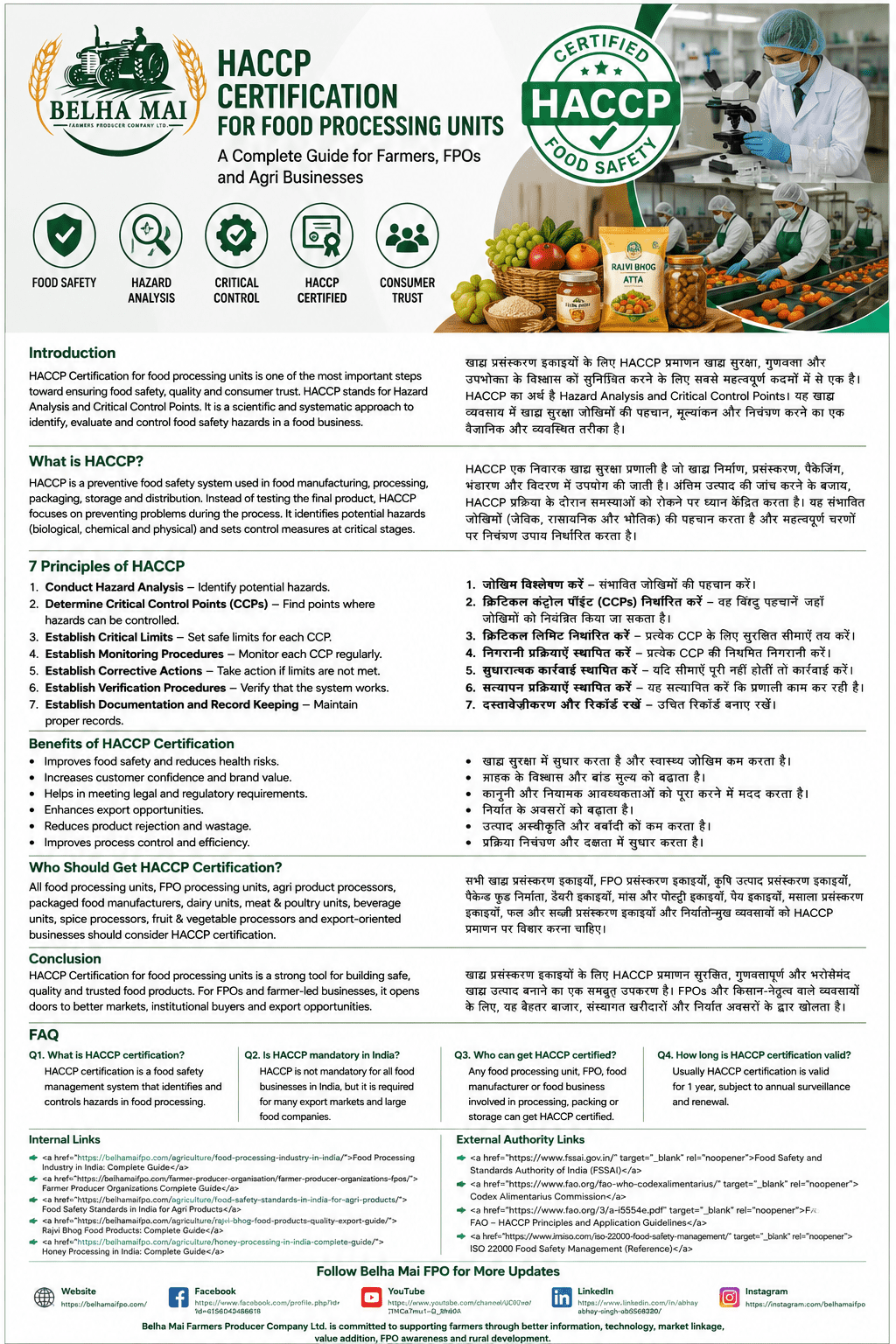
HACCP Certification is one of the most important food safety systems for food processing units, Farmer Producer Organisations, agri businesses and food brands. HACCP stands for Hazard Analysis and Critical Control Points. It helps identify possible food safety hazards and control them at important stages of production, processing, packaging, storage and distribution.
HACCP Certification खाद्य प्रसंस्करण इकाइयों, किसान उत्पादक संगठनों, कृषि व्यवसायों और खाद्य ब्रांडों के लिए सबसे महत्वपूर्ण खाद्य सुरक्षा प्रणालियों में से एक है। HACCP का अर्थ है Hazard Analysis and Critical Control Points। यह उत्पादन, प्रसंस्करण, पैकेजिंग, भंडारण और वितरण के महत्वपूर्ण चरणों पर संभावित खाद्य सुरक्षा जोखिमों की पहचान और नियंत्रण करने में मदद करता है।
For FPOs and rural food processing businesses, HACCP Certification is not only a certificate. It is a practical method to build safe, hygienic, reliable and buyer-ready food products. When an FPO wants to supply packaged food, processed fruits, grains, honey, flour, dehydrated products or export-oriented products, HACCP-based systems can improve trust and reduce business risk.
FPOs और ग्रामीण खाद्य प्रसंस्करण व्यवसायों के लिए HACCP Certification केवल एक प्रमाणपत्र नहीं है। यह सुरक्षित, स्वच्छ, भरोसेमंद और buyer-ready खाद्य उत्पाद बनाने की एक व्यावहारिक पद्धति है। जब कोई FPO पैक्ड फूड, प्रोसेस्ड फल, अनाज, शहद, आटा, डिहाइड्रेटेड उत्पाद या export-oriented products सप्लाई करना चाहता है, तो HACCP आधारित प्रणाली भरोसा बढ़ाती है और व्यापारिक जोखिम कम करती है।
What is HACCP?
HACCP is a preventive food safety system. Instead of checking only the final product, HACCP focuses on identifying and controlling risks during the entire process. These risks may be biological, chemical or physical. Biological risks may include bacteria, fungus or harmful microorganisms. Chemical risks may include pesticide residues, cleaning chemicals or toxins. Physical risks may include stones, glass, metal pieces, plastic or other foreign matter.
HACCP एक preventive food safety system है। यह केवल final product की जांच करने के बजाय पूरी प्रक्रिया के दौरान जोखिमों की पहचान और नियंत्रण पर ध्यान देता है। ये जोखिम biological, chemical या physical हो सकते हैं। Biological risks में bacteria, fungus या harmful microorganisms शामिल हो सकते हैं। Chemical risks में pesticide residues, cleaning chemicals या toxins शामिल हो सकते हैं। Physical risks में पत्थर, कांच, metal pieces, plastic या अन्य foreign matter शामिल हो सकते हैं।
In simple words, HACCP helps a food business ask three important questions. What can go wrong? Where can it go wrong? How can we prevent or control it before the product reaches the customer? This makes HACCP Certification very useful for food processing units that want to become more professional and quality-focused.
सरल शब्दों में, HACCP एक खाद्य व्यवसाय को तीन महत्वपूर्ण प्रश्न पूछने में मदद करता है। क्या गलत हो सकता है? कहां गलत हो सकता है? उत्पाद ग्राहक तक पहुंचने से पहले उसे कैसे रोका या नियंत्रित किया जा सकता है? इसलिए HACCP Certification उन खाद्य प्रसंस्करण इकाइयों के लिए बहुत उपयोगी है, जो अधिक professional और quality-focused बनना चाहती हैं।
Why HACCP Certification is Important for Food Processing Units
Food processing units handle raw material, machines, workers, water, packaging material, storage areas and transport systems. At every stage, there is a possibility of contamination or quality loss. HACCP Certification helps create a systematic process where risks are identified, control measures are defined and records are maintained.
खाद्य प्रसंस्करण इकाइयां कच्चे माल, मशीनों, कर्मचारियों, पानी, पैकेजिंग सामग्री, भंडारण क्षेत्रों और परिवहन प्रणाली को संभालती हैं। हर चरण पर contamination या quality loss की संभावना होती है। HACCP Certification एक systematic process बनाने में मदद करता है, जहां जोखिम पहचाने जाते हैं, control measures तय किए जाते हैं और records बनाए जाते हैं।
For food processing units, HACCP Certification can improve consumer trust, buyer confidence, regulatory readiness, export preparation and internal process control. It also helps reduce product rejection, wastage, complaints and brand damage. For FPOs, this is very important because one unsafe batch can affect the reputation of the entire farmer-led brand.
खाद्य प्रसंस्करण इकाइयों के लिए HACCP Certification consumer trust, buyer confidence, regulatory readiness, export preparation और internal process control को बेहतर बना सकता है। यह product rejection, wastage, complaints और brand damage को कम करने में भी मदद करता है। FPOs के लिए यह बहुत महत्वपूर्ण है क्योंकि एक unsafe batch पूरे farmer-led brand की reputation को प्रभावित कर सकता है।
HACCP and Food Safety Standards in India
HACCP Certification supports the larger food safety framework followed by food businesses in India. While FSSAI registration or license is a legal requirement for many food businesses, HACCP is a structured food safety management approach that helps improve process control. It is especially useful for food processing units that want to supply large buyers, institutions, modern retail chains and export markets.
HACCP Certification भारत में खाद्य व्यवसायों द्वारा अपनाए जाने वाले बड़े food safety framework को support करता है। जहां FSSAI registration या license कई खाद्य व्यवसायों के लिए legal requirement है, वहीं HACCP एक structured food safety management approach है, जो process control को बेहतर बनाता है। यह विशेष रूप से उन खाद्य प्रसंस्करण इकाइयों के लिए उपयोगी है, जो large buyers, institutions, modern retail chains और export markets को supply करना चाहती हैं।
Food Safety Standards in India are becoming more important because consumers now expect clean, safe, labelled and traceable food products. HACCP Certification helps food processing units meet these expectations by creating a risk-based system. This is why HACCP is strongly connected with quality control, hygiene, food safety, traceability and export readiness.
Food Safety Standards in India अब अधिक महत्वपूर्ण होते जा रहे हैं क्योंकि उपभोक्ता clean, safe, labelled और traceable food products की अपेक्षा करते हैं। HACCP Certification food processing units को risk-based system बनाकर इन अपेक्षाओं को पूरा करने में मदद करता है। इसलिए HACCP quality control, hygiene, food safety, traceability और export readiness से गहराई से जुड़ा हुआ है।
Seven Principles of HACCP
HACCP is based on seven core principles. The first principle is hazard analysis. This means identifying possible hazards in the food processing system. For example, in a flour processing unit, hazards may include stones, dust, insects, moisture, fungus or metal particles. In a honey processing unit, hazards may include moisture imbalance, contamination, poor filtration or unsuitable packaging.
HACCP सात मुख्य principles पर आधारित है। पहला principle है hazard analysis। इसका अर्थ है food processing system में संभावित hazards की पहचान करना। उदाहरण के लिए, flour processing unit में hazards में पत्थर, धूल, कीड़े, नमी, fungus या metal particles शामिल हो सकते हैं। honey processing unit में hazards में moisture imbalance, contamination, poor filtration या unsuitable packaging शामिल हो सकते हैं।
The second principle is identifying Critical Control Points. A Critical Control Point is a stage where a food safety risk can be prevented, removed or reduced to an acceptable level. For example, drying, heating, filtering, metal detection, packaging seal checking and storage temperature control may become important control points depending on the product.
दूसरा principle है Critical Control Points की पहचान करना। Critical Control Point वह चरण है जहां food safety risk को prevent, remove या acceptable level तक reduce किया जा सकता है। उदाहरण के लिए drying, heating, filtering, metal detection, packaging seal checking और storage temperature control product के अनुसार important control points बन सकते हैं।
The third principle is establishing critical limits. A critical limit is the safe boundary for a control point. For example, safe moisture level, correct temperature, processing time, acceptable foreign matter limit or proper seal condition can become critical limits. These limits help workers understand when the process is under control.
तीसरा principle है critical limits तय करना। Critical limit किसी control point की safe boundary होती है। उदाहरण के लिए safe moisture level, correct temperature, processing time, acceptable foreign matter limit या proper seal condition critical limits बन सकते हैं। ये limits workers को यह समझने में मदद करते हैं कि process control में है या नहीं।
The fourth principle is monitoring. Monitoring means regularly checking whether the critical limits are being followed. This may include temperature checks, moisture testing, visual inspection, seal checks, cleaning checks, machine checks or batch-wise records. Monitoring makes HACCP Certification practical in day-to-day operations.
चौथा principle है monitoring। Monitoring का अर्थ है नियमित रूप से जांच करना कि critical limits का पालन हो रहा है या नहीं। इसमें temperature checks, moisture testing, visual inspection, seal checks, cleaning checks, machine checks या batch-wise records शामिल हो सकते हैं। Monitoring HACCP Certification को daily operations में practical बनाती है।
The fifth principle is corrective action. If monitoring shows that a limit has not been followed, the food business must take corrective action. This may include stopping production, reprocessing the batch, rejecting unsafe material, repairing equipment, cleaning the area or retraining workers. Corrective action prevents unsafe food from reaching the market.
पांचवां principle है corrective action। यदि monitoring से पता चलता है कि limit का पालन नहीं हुआ है, तो food business को corrective action लेना चाहिए। इसमें production रोकना, batch reprocess करना, unsafe material reject करना, equipment repair करना, area clean करना या workers को retrain करना शामिल हो सकता है। Corrective action unsafe food को market तक पहुंचने से रोकता है।
The sixth principle is verification. Verification means confirming that the HACCP system is working properly. This can be done through internal audits, lab testing, record review, process review, equipment calibration and third-party inspection. Verification helps the business know whether its food safety controls are effective.
छठा principle है verification। Verification का अर्थ है यह confirm करना कि HACCP system सही तरीके से काम कर रहा है। यह internal audits, lab testing, record review, process review, equipment calibration और third-party inspection के माध्यम से किया जा सकता है। Verification business को यह समझने में मदद करता है कि food safety controls effective हैं या नहीं।
The seventh principle is documentation and record keeping. HACCP requires proper records of hazards, control points, monitoring, corrective action, verification, training, cleaning, testing and batch details. Records are very important because they prove that the food processing unit is following a proper system.
सातवां principle है documentation and record keeping। HACCP में hazards, control points, monitoring, corrective action, verification, training, cleaning, testing और batch details के proper records रखने होते हैं। Records बहुत महत्वपूर्ण हैं क्योंकि वे साबित करते हैं कि food processing unit सही system का पालन कर रही है।
Who Should Get HACCP Certification?
HACCP Certification is useful for food processing units, FPOs, food manufacturers, packers, exporters, dairy units, fruit and vegetable processors, grain processing units, flour mills, honey processing units, spice processors, ready-to-eat food units, beverage units and institutional food suppliers.
HACCP Certification खाद्य प्रसंस्करण इकाइयों, FPOs, food manufacturers, packers, exporters, dairy units, fruit and vegetable processors, grain processing units, flour mills, honey processing units, spice processors, ready-to-eat food units, beverage units और institutional food suppliers के लिए उपयोगी है।
For farmer-led businesses, HACCP Certification becomes more important when the business wants to move beyond local selling. If an FPO wants to supply hotels, retailers, government institutions, schools, hospitals, corporate canteens, exporters or online customers, HACCP-based food safety systems can provide a strong advantage.
Farmer-led businesses के लिए HACCP Certification तब और अधिक महत्वपूर्ण हो जाता है जब business local selling से आगे बढ़ना चाहता है। यदि कोई FPO hotels, retailers, government institutions, schools, hospitals, corporate canteens, exporters या online customers को supply करना चाहता है, तो HACCP-based food safety systems एक strong advantage दे सकते हैं।
HACCP Certification Process
The HACCP Certification process usually starts with understanding the product and process flow. The food processing unit must identify each step from raw material receiving to final dispatch. This includes procurement, inspection, cleaning, sorting, processing, packing, storage and transportation.
HACCP Certification process आमतौर पर product और process flow को समझने से शुरू होता है। Food processing unit को raw material receiving से final dispatch तक हर step की पहचान करनी होती है। इसमें procurement, inspection, cleaning, sorting, processing, packing, storage और transportation शामिल हैं।
After process mapping, the unit conducts hazard analysis and identifies Critical Control Points. Then it establishes critical limits, monitoring systems, corrective actions and verification methods. Staff training is also important because HACCP can work only when workers understand hygiene, food safety, process control and record keeping.
Process mapping के बाद unit hazard analysis करती है और Critical Control Points की पहचान करती है। इसके बाद critical limits, monitoring systems, corrective actions और verification methods तय किए जाते हैं। Staff training भी महत्वपूर्ण है क्योंकि HACCP तभी काम कर सकता है जब workers hygiene, food safety, process control और record keeping को समझें।
Once the HACCP plan is prepared and implemented, the unit may approach a recognised certification body for audit. The auditor checks documents, records, premises, hygiene practices, process control, training and corrective action systems. If the unit meets the requirements, HACCP Certification may be granted.
जब HACCP plan तैयार और implement हो जाता है, तो unit audit के लिए किसी recognised certification body से संपर्क कर सकती है। Auditor documents, records, premises, hygiene practices, process control, training और corrective action systems की जांच करता है। यदि unit requirements पूरी करती है, तो HACCP Certification दिया जा सकता है।
Documents Required for HACCP Certification
A food processing unit may need documents such as business registration, FSSAI license or registration, product list, process flow chart, plant layout, water testing report, pest control records, cleaning schedule, worker hygiene records, training records, equipment maintenance records, supplier records and batch production records.
किसी food processing unit को business registration, FSSAI license या registration, product list, process flow chart, plant layout, water testing report, pest control records, cleaning schedule, worker hygiene records, training records, equipment maintenance records, supplier records और batch production records जैसे documents की आवश्यकता हो सकती है।
The exact documents may vary depending on product type, unit size, certification body and buyer requirement. For FPOs, it is better to start with simple but disciplined records. Even a small unit can become professional if it maintains batch records, cleaning records, raw material records, packaging records and complaint records properly.
Exact documents product type, unit size, certification body और buyer requirement के अनुसार अलग हो सकते हैं। FPOs के लिए बेहतर है कि वे simple but disciplined records से शुरुआत करें। एक छोटी unit भी professional बन सकती है यदि वह batch records, cleaning records, raw material records, packaging records और complaint records सही तरीके से maintain करती है।
Benefits of HACCP Certification
HACCP Certification improves food safety by reducing the chance of contamination and unsafe products. It helps businesses identify weak points in their production process and take preventive action. This is better than waiting for complaints after the product has already reached the customer.
HACCP Certification contamination और unsafe products की संभावना कम करके food safety को बेहतर बनाता है। यह businesses को production process के weak points पहचानने और preventive action लेने में मदद करता है। यह product customer तक पहुंचने के बाद complaints का इंतजार करने से बेहतर है।
HACCP Certification also improves buyer confidence. Many institutional buyers, retailers and export buyers prefer suppliers who follow recognised food safety systems. For FPOs, this can open doors to better markets, long-term supply contracts and stronger brand positioning.
HACCP Certification buyer confidence को भी बढ़ाता है। कई institutional buyers, retailers और export buyers ऐसे suppliers को पसंद करते हैं जो recognised food safety systems का पालन करते हैं। FPOs के लिए यह better markets, long-term supply contracts और stronger brand positioning के अवसर खोल सकता है।
Another benefit is process discipline. HACCP encourages proper cleaning, monitoring, documentation, worker training and corrective action. This improves efficiency, reduces wastage and creates a culture of quality inside the processing unit.
एक और benefit process discipline है। HACCP proper cleaning, monitoring, documentation, worker training और corrective action को बढ़ावा देता है। इससे efficiency बढ़ती है, wastage कम होता है और processing unit के अंदर quality culture बनता है।
HACCP for FPOs and Farmer-Led Brands
FPOs are now moving from raw produce aggregation to value addition and branded food products. Products such as atta, rice, suji, dalia, millet flour, amla candy, amla powder, mango pulp, aamchur, dehydrated mango, honey and spices require proper food safety systems. HACCP Certification can help FPOs handle these products more professionally.
FPOs अब raw produce aggregation से value addition और branded food products की ओर बढ़ रहे हैं। Atta, rice, suji, dalia, millet flour, amla candy, amla powder, mango pulp, aamchur, dehydrated mango, honey और spices जैसे products के लिए proper food safety systems की आवश्यकता होती है। HACCP Certification FPOs को इन products को अधिक professional तरीके से handle करने में मदद कर सकता है।
For Belha Mai FPO, HACCP-based systems can support Rajvi Bhog food products and Belha Bees honey by improving quality control, batch tracking, hygiene and buyer confidence. As the FPO moves toward processing, packaging, institutional supply and export readiness, HACCP can become a strong foundation.
Belha Mai FPO के लिए HACCP-based systems Rajvi Bhog food products और Belha Bees honey को quality control, batch tracking, hygiene और buyer confidence के माध्यम से support कर सकते हैं। जैसे-जैसे FPO processing, packaging, institutional supply और export readiness की ओर बढ़ेगा, HACCP एक strong foundation बन सकता है।
HACCP and Export Readiness
Export markets often demand higher levels of food safety, documentation and traceability. HACCP Certification can help food processing units prepare for export because it shows that the business follows a risk-based food safety system. It also supports buyer audits and international quality expectations.
Export markets अक्सर food safety, documentation और traceability के higher levels की मांग करते हैं। HACCP Certification food processing units को export preparation में मदद कर सकता है क्योंकि यह दिखाता है कि business risk-based food safety system का पालन करता है। यह buyer audits और international quality expectations को भी support करता है।
For agri export businesses, HACCP Certification should be combined with proper lab testing, export documentation, APEDA registration where applicable, buyer specifications, packaging standards and traceability records. Certification alone is not enough; the full supply chain must be reliable.
Agri export businesses के लिए HACCP Certification को proper lab testing, export documentation, जहां लागू हो APEDA registration, buyer specifications, packaging standards और traceability records के साथ जोड़ा जाना चाहिए। केवल certification पर्याप्त नहीं है; पूरी supply chain reliable होनी चाहिए।
Common Mistakes During HACCP Implementation
One common mistake is treating HACCP as only a paper certificate. Some businesses prepare documents only for audit but do not follow the system in daily operations. This weakens food safety and creates risk. HACCP must be used practically every day.
एक common mistake यह है कि HACCP को केवल paper certificate समझ लिया जाता है। कुछ businesses audit के लिए documents तैयार करते हैं लेकिन daily operations में system का पालन नहीं करते। इससे food safety कमजोर होती है और risk बनता है। HACCP को रोज़ practically use करना चाहिए।
Another mistake is poor staff training. If workers do not understand hygiene, cleaning, control points, monitoring and record keeping, the HACCP plan will not work properly. Training should be simple, repeated and connected with actual unit operations.
दूसरी mistake poor staff training है। यदि workers hygiene, cleaning, control points, monitoring और record keeping को नहीं समझते, तो HACCP plan सही से काम नहीं करेगा। Training simple, repeated और actual unit operations से connected होनी चाहिए।
A third mistake is ignoring records. Without records, a food processing unit cannot prove that it followed safety controls. Records do not need to be complicated, but they must be accurate, regular and easy to verify.
तीसरी mistake records को ignore करना है। Records के बिना food processing unit यह prove नहीं कर सकती कि उसने safety controls का पालन किया। Records complicated होने की आवश्यकता नहीं है, लेकिन accurate, regular और easy to verify होने चाहिए।
Practical Checklist Before HACCP Certification
Before applying for HACCP Certification, a food processing unit should prepare its process flow chart, identify hazards, decide control points, set critical limits and train staff. The unit should also maintain cleaning records, pest control records, equipment maintenance records, raw material inspection records, batch records and corrective action records.
HACCP Certification के लिए apply करने से पहले food processing unit को अपना process flow chart तैयार करना चाहिए, hazards identify करने चाहिए, control points तय करने चाहिए, critical limits set करनी चाहिए और staff को train करना चाहिए। Unit को cleaning records, pest control records, equipment maintenance records, raw material inspection records, batch records और corrective action records भी maintain करने चाहिए।
The premises should be clean, ventilated, pest-free and suitable for food processing. Machines and contact surfaces should be clean and food-grade. Packaging material should be safe and properly stored. Water used in processing should be safe and tested where required.
Premises clean, ventilated, pest-free और food processing के लिए suitable होने चाहिए। Machines और contact surfaces clean और food-grade होने चाहिए। Packaging material safe और properly stored होना चाहिए। Processing में इस्तेमाल होने वाला water safe होना चाहिए और जहां आवश्यक हो tested होना चाहिए।
Belha Mai FPO Vision for HACCP-Based Food Safety
Belha Mai Farmers Producer Company Ltd. is working to build a farmer-led value chain where agricultural products move from raw produce to safe, branded and market-ready food products. HACCP Certification can support this vision by strengthening food safety, process control, quality assurance and buyer confidence.
Belha Mai Farmers Producer Company Ltd. एक farmer-led value chain बनाने की दिशा में काम कर रहा है, जहां कृषि उत्पाद raw produce से safe, branded और market-ready food products में बदल सकें। HACCP Certification food safety, process control, quality assurance और buyer confidence को मजबूत करके इस vision को support कर सकता है।
For brands like Rajvi Bhog and Belha Bees, food safety is directly connected with trust. When consumers, retailers, institutions and export buyers see that the product is produced under a disciplined food safety system, the brand becomes stronger. HACCP Certification can help farmer-led brands compete with larger food companies.
Rajvi Bhog और Belha Bees जैसे brands के लिए food safety सीधे trust से जुड़ी हुई है। जब consumers, retailers, institutions और export buyers देखते हैं कि product एक disciplined food safety system के तहत बनाया गया है, तो brand मजबूत होता है। HACCP Certification farmer-led brands को बड़ी food companies के साथ compete करने में मदद कर सकता है।
Conclusion
HACCP Certification is a strong tool for food processing units, FPOs and agri businesses that want to build safe, trusted and professional food brands. It helps identify risks, control hazards, improve hygiene, maintain records, reduce rejection and prepare for better markets.
HACCP Certification खाद्य प्रसंस्करण इकाइयों, FPOs और agri businesses के लिए एक मजबूत tool है, जो safe, trusted और professional food brands बनाना चाहते हैं। यह risks identify करने, hazards control करने, hygiene improve करने, records maintain करने, rejection कम करने और better markets के लिए prepare करने में मदद करता है।
For FPOs, HACCP Certification should be seen as an investment in future growth. It can improve product quality, open institutional and export opportunities, increase buyer confidence and support long-term brand development. In the future of food processing, safety and trust will decide which brands grow stronger.
FPOs के लिए HACCP Certification को future growth में investment के रूप में देखना चाहिए। यह product quality improve कर सकता है, institutional और export opportunities खोल सकता है, buyer confidence बढ़ा सकता है और long-term brand development को support कर सकता है। Food processing के future में safety और trust ही तय करेंगे कि कौन से brands stronger बनेंगे।
FAQ
What is HACCP Certification?
HACCP Certification is a food safety certification based on Hazard Analysis and Critical Control Points. It helps food processing units identify, control and prevent food safety hazards.
HACCP Certification Hazard Analysis and Critical Control Points पर आधारित food safety certification है। यह food processing units को food safety hazards identify, control और prevent करने में मदद करता है।
Is HACCP Certification mandatory in India?
HACCP Certification is not mandatory for every food business in India, but it is highly useful for food processing units, exporters, institutional suppliers and businesses that want stronger food safety systems.
HACCP Certification भारत में हर food business के लिए mandatory नहीं है, लेकिन food processing units, exporters, institutional suppliers और stronger food safety systems चाहने वाले businesses के लिए बहुत उपयोगी है।
Who needs HACCP Certification?
Food processing units, FPOs, food manufacturers, exporters, packers, dairy units, fruit processors, grain processors, honey processors and institutional suppliers can benefit from HACCP Certification.
Food processing units, FPOs, food manufacturers, exporters, packers, dairy units, fruit processors, grain processors, honey processors और institutional suppliers HACCP Certification से लाभ उठा सकते हैं।
What are Critical Control Points in HACCP?
Critical Control Points are stages in food processing where a food safety hazard can be prevented, removed or reduced to a safe level.
Critical Control Points food processing के वे stages हैं जहां food safety hazard को prevent, remove या safe level तक reduce किया जा सकता है।
How does HACCP help FPOs?
HACCP helps FPOs improve hygiene, reduce contamination, maintain batch records, build buyer trust and prepare for institutional and export markets.
HACCP FPOs को hygiene improve करने, contamination कम करने, batch records maintain करने, buyer trust बनाने और institutional तथा export markets के लिए prepare करने में मदद करता है।
What documents are needed for HACCP Certification?
Documents may include process flow chart, hazard analysis, control point records, FSSAI license, cleaning records, pest control records, training records, batch records and corrective action records.
Documents में process flow chart, hazard analysis, control point records, FSSAI license, cleaning records, pest control records, training records, batch records और corrective action records शामिल हो सकते हैं।
Internal Links Section
👉 Food Processing Industry in India: Complete Guide
👉 Food Safety Standards in India for Agri Products
👉 Farmer Producer Organizations Complete Guide
👉 Rajvi Bhog Food Products: Complete Guide
👉 Honey Processing in India: Complete Guide
👉 Why Small Farmers Struggle in India
External Authority Links
👉 Food Safety and Standards Authority of India
👉 Codex Alimentarius – International Food Standards
👉 FAO – HACCP System and Guidelines
👉 ISO 22000 Food Safety Management
Follow Belha Mai FPO for More Updates
Stay connected with Belha Mai Farmers Producer Company Ltd. for more updates on agriculture, food processing, farmer development, FPO awareness, market linkage, value addition, rural entrepreneurship and sustainable farming.
👉 Website
https://belhamaifpo.com/
👉 Facebook
https://www.facebook.com/profile.php?id=61561043486818
👉 YouTube
https://www.youtube.com/channel/UC9ZvojoTMCa7mU1-Q_Bh60A
👉 LinkedIn
https://www.linkedin.com/in/abhay-singh-ab5568280/
👉 Instagram
https://instagram.com/belhamaifpo
Belha Mai FPO is committed to supporting farmers through better information, technology, market linkage, value addition, FPO awareness and rural development.