Introduction
Mango harvesting is one of the most important stages in mango farming. A farmer may work hard for the whole year, but if harvesting is done incorrectly, fruit quality, shelf life and market price can be badly affected. Wrong harvesting can cause fruit injury, sap burn, early rotting, poor ripening and rejection by buyers.
Mango harvesting should not be treated as simple fruit picking. It is a technical activity that needs correct maturity identification, proper tools, careful handling, de-sapping, sorting, grading, packaging and transport planning.
For farmers and FPOs, proper harvesting is important because the value of mango depends not only on production but also on quality after harvesting.
आम की तुड़ाई की सही तकनीक
आम की तुड़ाई आम की खेती की सबसे महत्वपूर्ण अवस्थाओं में से एक है। किसान पूरे साल मेहनत करता है, लेकिन यदि तुड़ाई गलत तरीके से की गई, तो फल की गुणवत्ता, भंडारण क्षमता और बाजार भाव पर बुरा असर पड़ सकता है।
गलत तुड़ाई से फल में चोट, रस जलन, जल्दी सड़न, खराब पकना और खरीदारों द्वारा अस्वीकृति जैसी समस्याएं हो सकती हैं।
आम की तुड़ाई को केवल फल तोड़ना नहीं समझना चाहिए। यह एक तकनीकी कार्य है, जिसमें सही परिपक्वता पहचान, सही उपकरण, सावधानीपूर्वक हैंडलिंग, डी-सैपिंग, छंटाई, ग्रेडिंग, पैकिंग और परिवहन योजना शामिल होती है।
Why Correct Mango Harvesting Is Important
Correct harvesting helps farmers maintain fruit quality from orchard to market. If fruits are harvested too early, they may not develop proper sweetness, aroma and colour. If fruits are harvested too late, they may become soft, overripe and unsuitable for long-distance transport.
Correct harvesting helps in:
better fruit quality,
proper ripening,
less physical damage,
lower post-harvest loss,
better shelf life,
better grading,
higher market price,
and better export readiness.
For premium and export markets, mangoes must be harvested carefully because buyers check fruit appearance, maturity, damage, disease symptoms and uniformity.
सही तुड़ाई क्यों जरूरी है?
सही तुड़ाई से किसान आम की गुणवत्ता को बाग से बाजार तक बनाए रख सकता है। यदि आम बहुत जल्दी तोड़ा गया, तो उसमें सही मिठास, सुगंध और रंग विकसित नहीं होगा। यदि आम बहुत देर से तोड़ा गया, तो फल नरम हो सकता है और दूर के बाजारों के लिए उपयुक्त नहीं रहेगा।
सही तुड़ाई से ये लाभ मिलते हैं:
बेहतर फल गुणवत्ता,
सही पकना,
कम चोट,
कम पोस्ट-हार्वेस्ट नुकसान,
अच्छी शेल्फ लाइफ,
बेहतर ग्रेडिंग,
अधिक बाजार भाव,
और बेहतर निर्यात तैयारी।
प्रीमियम और निर्यात बाजार में फल की दिखावट, परिपक्वता, चोट, रोग लक्षण और समानता बहुत महत्वपूर्ण होती है।
Identifying Mango Maturity
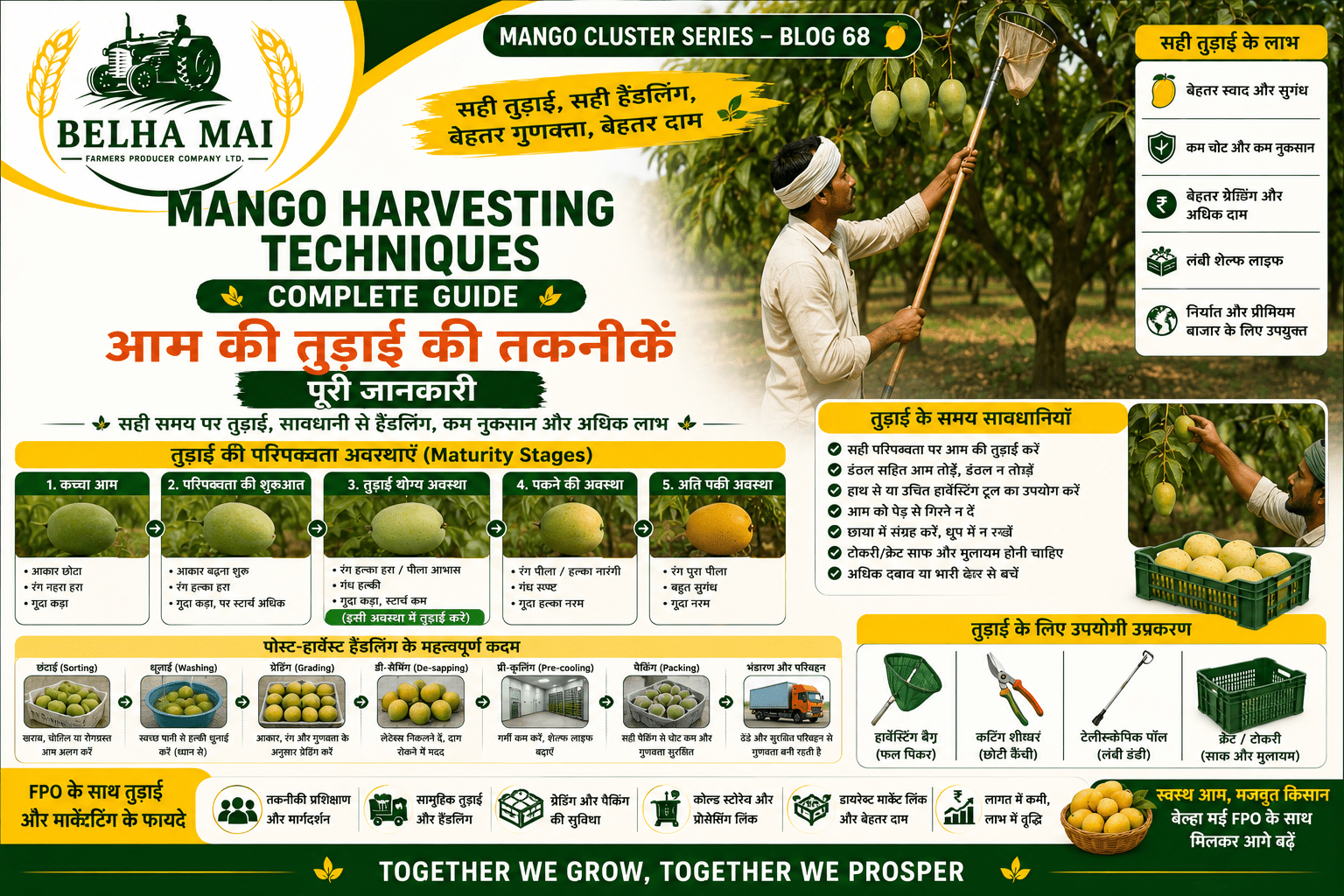
Mango should be harvested at the correct maturity stage. Maturity does not mean full ripeness. For market supply, mango is generally harvested when it is mature but still firm, so that it can ripen properly after harvesting and survive transport.
Common maturity signs include:
fruit shoulders become full,
fruit size reaches variety standard,
fruit colour starts changing slightly,
fruit surface becomes mature and less shiny,
specific gravity improves,
latex flow reduces,
and the seed becomes hard.
Maturity signs may differ according to variety. Dasheri, Langra, Chausa, Alphonso, Kesar and Totapuri do not mature in exactly the same way. Farmers should follow local horticulture advice and market requirement.
आम की परिपक्वता कैसे पहचानें?
आम की तुड़ाई सही परिपक्व अवस्था में करनी चाहिए। परिपक्वता का मतलब पूरी तरह पका हुआ फल नहीं होता। बाजार के लिए आम सामान्य रूप से तब तोड़ा जाता है जब वह परिपक्व हो लेकिन अभी मजबूत हो, ताकि वह तुड़ाई के बाद सही तरीके से पक सके और परिवहन में खराब न हो।
आम की परिपक्वता के सामान्य संकेत:
फल के कंधे भरे हुए दिखें,
फल का आकार किस्म के अनुसार पूरा हो,
रंग में हल्का बदलाव शुरू हो,
फल की सतह परिपक्व दिखे,
लेटेक्स प्रवाह कम हो,
बीज कठोर हो जाए,
और फल का आकार व वजन सही हो।
परिपक्वता के संकेत किस्म के अनुसार बदल सकते हैं। दशहरी, लंगड़ा, चौसा, अल्फांसो, केसर और तोतापुरी एक जैसे परिपक्व नहीं होते। किसान को स्थानीय बागवानी सलाह और बाजार मांग के अनुसार निर्णय लेना चाहिए।
Best Time for Mango Harvesting
Mango harvesting should preferably be done during cool hours of the day. Early morning harvesting is better than harvesting during strong afternoon heat. High temperature during harvesting can increase field heat and reduce fruit shelf life.
Harvesting should be avoided during rain or immediately after heavy rain because wet fruits are more prone to disease and handling damage. Fruits should be kept in shade after harvesting and should not be exposed to direct sunlight for long periods.
आम की तुड़ाई का सही समय
आम की तुड़ाई दिन के ठंडे समय में करना बेहतर होता है। सुबह जल्दी तुड़ाई दोपहर की तेज गर्मी से बेहतर होती है। अधिक गर्मी में तुड़ाई करने से फल में फील्ड हीट बढ़ती है और भंडारण क्षमता कम हो सकती है।
बारिश के समय या भारी बारिश के तुरंत बाद तुड़ाई से बचना चाहिए क्योंकि गीले फल में रोग और हैंडलिंग नुकसान की संभावना बढ़ जाती है। तुड़ाई के बाद फलों को छाया में रखना चाहिए और लंबे समय तक सीधी धूप में नहीं छोड़ना चाहिए।
Proper Harvesting Tools
Mangoes should not be harvested by shaking branches or beating the tree. This causes fruit injury, bruising and internal damage. Fruits that look fine from outside may get damaged inside and later rot during ripening or transport.
Useful harvesting tools include:
mango harvester with net,
picking pole,
sharp cutter,
fruit clippers,
collection bags,
plastic crates,
and padded harvesting baskets.
The harvesting tool should allow the fruit to be picked with a small stalk. Pulling fruits forcefully can cause sap flow and skin damage.
तुड़ाई के सही उपकरण
आम की तुड़ाई पेड़ हिलाकर या डंडे मारकर नहीं करनी चाहिए। इससे फल में चोट, दबाव और अंदरूनी नुकसान होता है। कई बार फल बाहर से ठीक दिखता है लेकिन अंदर से खराब हो जाता है और पकने या परिवहन के समय सड़ सकता है।
उपयोगी तुड़ाई उपकरण:
नेट वाला आम हार्वेस्टर,
पिकिंग पोल,
तेज कटर,
फ्रूट क्लिपर,
कलेक्शन बैग,
प्लास्टिक क्रेट,
और गद्देदार टोकरी।
तुड़ाई उपकरण ऐसा होना चाहिए जिससे फल छोटे डंठल के साथ कटे। जोर से खींचने से रस निकलता है और फल की त्वचा खराब हो सकती है।
Do Not Drop Mangoes on the Ground
One of the biggest mistakes in mango harvesting is allowing fruits to fall on the ground. Fallen fruits may suffer bruising, internal injury and fungal infection. Such fruits may not be suitable for premium markets.
Farmers should collect fruits carefully in crates or baskets. Harvested fruits should not be thrown from one person to another. They should be gently placed in crates.
The crate should not be overloaded. Too much weight can crush fruits at the bottom and reduce quality.
आम को जमीन पर न गिरने दें
आम की तुड़ाई में सबसे बड़ी गलती फल को जमीन पर गिरने देना है। जमीन पर गिरा फल चोटिल हो सकता है, अंदर से दब सकता है और फफूंद संक्रमण का शिकार हो सकता है। ऐसे फल प्रीमियम बाजार के लिए उपयुक्त नहीं रहते।
किसानों को फल सावधानी से क्रेट या टोकरी में रखना चाहिए। तुड़ाई किए गए फलों को एक व्यक्ति से दूसरे व्यक्ति की ओर फेंकना नहीं चाहिए। उन्हें धीरे से क्रेट में रखना चाहिए।
क्रेट को बहुत ज्यादा नहीं भरना चाहिए। अधिक वजन से नीचे के फल दब सकते हैं और गुणवत्ता कम हो सकती है।
Harvesting with Stalk
Mangoes should ideally be harvested with a small stalk attached. This helps reduce sap burn and improves post-harvest handling. If the stalk is removed directly from the fruit, sap can flow on the fruit surface and cause black spots or skin injury.
After harvesting, fruits should be placed stem-end down for de-sapping where recommended. Proper de-sapping is important for maintaining clean fruit appearance.
डंठल के साथ तुड़ाई
आम को छोटे डंठल के साथ तोड़ना बेहतर होता है। इससे रस जलन कम होती है और पोस्ट-हार्वेस्ट हैंडलिंग बेहतर होती है। यदि फल को डंठल से सीधे तोड़ा गया, तो रस फल की सतह पर आ सकता है और काले दाग या त्वचा नुकसान कर सकता है।
तुड़ाई के बाद जहां सलाह हो, फलों को डी-सैपिंग के लिए डंठल की ओर नीचे रख सकते हैं। सही डी-सैपिंग से फल साफ और आकर्षक दिखता है।
De-Sapping After Harvest
De-sapping is the process of removing or draining latex from mango after harvesting. Mango latex can burn the fruit skin and create black marks. These marks reduce fruit appearance and market value.
De-sapping is especially important for premium fruit, long-distance transport and export markets. Farmers and FPOs should create a simple de-sapping area near the orchard or collection centre.
Basic de-sapping practices include:
placing fruits carefully,
keeping stem-end down where required,
avoiding latex contact with fruit skin,
using clean surfaces,
keeping fruits in shade,
and separating damaged fruits.
तुड़ाई के बाद डी-सैपिंग
डी-सैपिंग का मतलब है तुड़ाई के बाद आम से निकलने वाले रस को हटाना या बहने देना। आम का रस फल की त्वचा को जला सकता है और काले दाग बना सकता है। इससे फल की दिखावट और बाजार मूल्य कम हो जाता है।
डी-सैपिंग प्रीमियम फल, लंबी दूरी के परिवहन और निर्यात बाजार के लिए बहुत जरूरी है। किसान और FPO बाग या संग्रह केंद्र के पास एक सरल डी-सैपिंग व्यवस्था बना सकते हैं।
डी-सैपिंग के मुख्य उपाय:
फल सावधानी से रखना,
जहां जरूरत हो डंठल की ओर नीचे रखना,
रस को फल की त्वचा पर न लगने देना,
साफ सतह का उपयोग,
फल को छाया में रखना,
और खराब फल अलग करना।
Sorting After Harvesting
After harvesting, mangoes should be sorted before grading. Sorting means removing fruits that are damaged, diseased, immature, over-mature, cracked, bruised or pest-affected.
Sorting helps farmers avoid mixing poor quality fruits with premium fruits. If all fruits are mixed together, buyers may reduce the price for the entire lot.
Sorting categories may include:
premium fruit,
table fruit,
processing-grade fruit,
damaged fruit,
and rejected fruit.
तुड़ाई के बाद छंटाई
तुड़ाई के बाद आम की ग्रेडिंग से पहले छंटाई करनी चाहिए। छंटाई का मतलब है खराब, रोगी, कच्चे, ज्यादा पके, फटे, चोटिल या कीट प्रभावित फलों को अलग करना।
छंटाई से किसान खराब फल को प्रीमियम फल के साथ मिलाने से बचता है। यदि सभी फल मिलाकर बेचे जाते हैं, तो खरीदार पूरी खेप का भाव कम कर सकता है।
छंटाई की श्रेणियां:
प्रीमियम फल,
टेबल फल,
प्रोसेसिंग ग्रेड फल,
खराब फल,
और रिजेक्ट फल।
Grading Mangoes
Grading means separating mangoes according to size, weight, maturity, colour and quality. Grading is very important for better market value. Buyers prefer uniform fruits because they are easier to pack, transport and sell.
Common grading factors include:
fruit size,
fruit weight,
maturity,
colour,
shape,
skin cleanliness,
damage level,
and disease symptoms.
FPOs can create common grading facilities so small farmers can sell quality mangoes in organized lots.
आम की ग्रेडिंग
ग्रेडिंग का मतलब है आम को आकार, वजन, परिपक्वता, रंग और गुणवत्ता के आधार पर अलग करना। बेहतर बाजार मूल्य के लिए ग्रेडिंग बहुत जरूरी है। खरीदार समान आकार और गुणवत्ता वाले फलों को पसंद करते हैं क्योंकि उन्हें पैक करना, परिवहन करना और बेचना आसान होता है।
ग्रेडिंग के मुख्य आधार:
फल आकार,
फल वजन,
परिपक्वता,
रंग,
आकार की समानता,
त्वचा की सफाई,
चोट का स्तर,
और रोग लक्षण।
FPO छोटे किसानों के लिए सामूहिक ग्रेडिंग व्यवस्था बना सकता है।
Packaging After Harvesting
Good packaging protects mangoes from damage during transport. Loose packing in gunny bags or overloaded baskets can damage fruits. Mangoes should be packed in clean, strong and ventilated boxes or crates.
Packaging should be selected according to market type. Local market, premium retail, institutional buyers and export markets may require different packaging standards.
Good packaging helps in:
reducing damage,
improving appearance,
maintaining uniformity,
building buyer trust,
and getting better price.
तुड़ाई के बाद पैकेजिंग
अच्छी पैकेजिंग आम को परिवहन के दौरान नुकसान से बचाती है। बोरी या बहुत भरी हुई टोकरी में आम रखने से फल दब सकते हैं और खराब हो सकते हैं। आम को साफ, मजबूत और हवादार बॉक्स या क्रेट में पैक करना चाहिए।
पैकेजिंग बाजार के अनुसार चुननी चाहिए। स्थानीय बाजार, प्रीमियम रिटेल, संस्थागत खरीदार और निर्यात बाजार की पैकेजिंग जरूरत अलग हो सकती है।
अच्छी पैकेजिंग से:
नुकसान कम होता है,
दिखावट सुधरती है,
समानता बनी रहती है,
खरीदार भरोसा बढ़ता है,
और बेहतर भाव मिल सकता है।
Transport of Harvested Mangoes
Transport planning is very important after harvesting. Mangoes should be transported in clean vehicles. Fruits should not be loaded roughly. Overloading should be avoided.
During long-distance transport, ventilation and temperature management are important. If fruits are transported in high heat or under pressure, damage and rotting may increase.
FPOs can help farmers by arranging collective transport. This reduces cost and improves access to better markets.
तुड़ाई के बाद परिवहन
तुड़ाई के बाद परिवहन योजना बहुत महत्वपूर्ण है। आम को साफ वाहन में ले जाना चाहिए। फलों को कठोर तरीके से लोड नहीं करना चाहिए। ओवरलोडिंग से बचना चाहिए।
लंबी दूरी के परिवहन में हवा और तापमान प्रबंधन महत्वपूर्ण है। यदि फल अधिक गर्मी या दबाव में ले जाए जाते हैं, तो नुकसान और सड़न बढ़ सकती है।
FPO सामूहिक परिवहन व्यवस्था करके किसानों की मदद कर सकता है। इससे लागत कम होती है और बेहतर बाजार तक पहुंच बढ़ती है।
Harvesting for Local Market vs Export Market
Harvesting for local markets and export markets is different. Local markets may accept slightly mixed quality fruits, but export and premium buyers require strict quality control.
Export-oriented harvesting needs:
correct maturity,
careful picking,
de-sapping,
sorting,
grading,
clean packaging,
traceability,
and proper documentation.
Farmers who want to enter export markets must start quality control from the orchard itself. Export quality cannot be created only at the packhouse if harvesting is poor.
स्थानीय बाजार और निर्यात बाजार के लिए तुड़ाई
स्थानीय बाजार और निर्यात बाजार के लिए तुड़ाई में अंतर होता है। स्थानीय बाजार में कुछ मिले-जुले फल स्वीकार हो सकते हैं, लेकिन निर्यात और प्रीमियम खरीदार सख्त गुणवत्ता नियंत्रण चाहते हैं।
निर्यात के लिए जरूरी बातें:
सही परिपक्वता,
सावधानीपूर्वक तुड़ाई,
डी-सैपिंग,
छंटाई,
ग्रेडिंग,
साफ पैकेजिंग,
ट्रेसबिलिटी,
और सही दस्तावेज।
जो किसान निर्यात बाजार में जाना चाहते हैं, उन्हें गुणवत्ता नियंत्रण बाग स्तर से शुरू करना होगा। यदि तुड़ाई खराब है, तो केवल पैकहाउस में निर्यात गुणवत्ता नहीं बनाई जा सकती।
Role of FPOs in Mango Harvesting
FPOs can play a major role in improving mango harvesting practices. Small farmers often harvest individually without proper tools, crates, grading or market planning. This leads to quality loss and low prices.
An FPO can support mango farmers through:
harvesting training,
common harvesting tools,
plastic crates,
de-sapping unit,
sorting table,
grading system,
packaging material,
collective transport,
buyer linkage,
processing linkage,
and export-oriented quality planning.
For Belha Mai Farmers Producer Company Ltd., mango harvesting support can become an important service under the Mango Cluster. It can help farmers reduce damage, improve quality and earn better prices.
आम की तुड़ाई में FPO की भूमिका
FPO आम की तुड़ाई व्यवस्था को बेहतर बनाने में बड़ी भूमिका निभा सकता है। छोटे किसान अक्सर बिना सही उपकरण, क्रेट, ग्रेडिंग या बाजार योजना के अलग-अलग तुड़ाई करते हैं। इससे गुणवत्ता घटती है और भाव कम मिलता है।
FPO किसानों की मदद कर सकता है:
तुड़ाई प्रशिक्षण,
सामूहिक तुड़ाई उपकरण,
प्लास्टिक क्रेट,
डी-सैपिंग यूनिट,
छंटाई टेबल,
ग्रेडिंग सिस्टम,
पैकेजिंग सामग्री,
सामूहिक परिवहन,
खरीदार संपर्क,
प्रोसेसिंग संपर्क,
और निर्यात गुणवत्ता योजना।
Belha Mai Farmers Producer Company Ltd. के लिए Mango Cluster के तहत तुड़ाई सहायता एक महत्वपूर्ण किसान सेवा बन सकती है।
Common Mistakes in Mango Harvesting
Farmers should avoid common harvesting mistakes because these mistakes reduce fruit quality and income.
Common mistakes include:
harvesting immature fruits,
harvesting over-mature fruits,
shaking branches,
letting fruits fall on ground,
pulling fruits without stalk,
keeping fruits in direct sun,
mixing damaged fruits with good fruits,
overloading crates,
using poor packaging,
and delaying transport.
Avoiding these mistakes can improve fruit quality and market value.
आम की तुड़ाई में सामान्य गलतियां
किसानों को तुड़ाई की सामान्य गलतियों से बचना चाहिए क्योंकि ये गलतियां फल गुणवत्ता और आय को कम करती हैं।
सामान्य गलतियां:
कच्चे फल तोड़ना,
बहुत पके फल तोड़ना,
पेड़ हिलाना,
फल जमीन पर गिराना,
बिना डंठल फल खींचना,
फल को सीधी धूप में रखना,
खराब फल अच्छे फल के साथ मिलाना,
क्रेट ज्यादा भरना,
खराब पैकेजिंग,
और परिवहन में देरी।
इन गलतियों से बचकर किसान फल गुणवत्ता और बाजार मूल्य बढ़ा सकते हैं।
Conclusion
Mango harvesting techniques directly affect farmer income. Proper harvesting helps maintain fruit quality, reduce post-harvest losses, improve shelf life and increase market value. Farmers should harvest mangoes at the correct maturity stage using proper tools and careful handling.
For premium and export markets, harvesting must be linked with de-sapping, sorting, grading, packaging and transport planning. FPOs can help small farmers by providing training, tools, crates, grading systems, packaging and buyer linkage.
With scientific harvesting practices, mango farmers can reduce losses and earn better prices from domestic, institutional, processing and export markets.
निष्कर्ष
आम की तुड़ाई की सही तकनीक सीधे किसान की आय को प्रभावित करती है। सही तुड़ाई से फल की गुणवत्ता बनी रहती है, पोस्ट-हार्वेस्ट नुकसान कम होता है, शेल्फ लाइफ बढ़ती है और बाजार मूल्य बेहतर मिलता है।
किसानों को सही परिपक्वता अवस्था में, सही उपकरणों से और सावधानीपूर्वक आम की तुड़ाई करनी चाहिए। प्रीमियम और निर्यात बाजार के लिए तुड़ाई को डी-सैपिंग, छंटाई, ग्रेडिंग, पैकेजिंग और परिवहन योजना से जोड़ना जरूरी है।
FPO छोटे किसानों को ट्रेनिंग, उपकरण, क्रेट, ग्रेडिंग सिस्टम, पैकेजिंग और खरीदार संपर्क देकर बड़ी मदद कर सकता है। वैज्ञानिक तुड़ाई तकनीक अपनाकर आम किसान नुकसान कम कर सकते हैं और बेहतर दाम पा सकते हैं।
15. FAQ in English + Hindi
FAQ 1: What is the best time to harvest mangoes?
Mangoes should be harvested at the correct maturity stage, preferably during cool hours such as early morning. Harvesting during strong afternoon heat or rainy conditions should be avoided.
प्रश्न 1: आम की तुड़ाई का सही समय क्या है?
आम की तुड़ाई सही परिपक्व अवस्था में और ठंडे समय जैसे सुबह करना बेहतर है। दोपहर की तेज गर्मी या बारिश के समय तुड़ाई से बचना चाहिए।
FAQ 2: How can farmers identify mature mangoes?
Mature mangoes usually show full shoulders, proper fruit size, slight colour change, mature skin surface, reduced latex flow and hard seed. Exact signs depend on variety.
प्रश्न 2: किसान पके तोड़ने योग्य आम की पहचान कैसे करें?
परिपक्व आम में कंधे भरे हुए दिखते हैं, फल का आकार पूरा होता है, रंग में हल्का बदलाव होता है, फल की सतह परिपक्व दिखती है, रस कम निकलता है और बीज कठोर होता है। सही संकेत किस्म पर निर्भर करते हैं।
FAQ 3: Why should mangoes not be dropped on the ground?
Dropping mangoes causes bruising, internal injury and fungal infection. Such fruits may rot early and get lower market price.
प्रश्न 3: आम को जमीन पर क्यों नहीं गिराना चाहिए?
जमीन पर गिरने से आम में चोट, अंदरूनी नुकसान और फफूंद संक्रमण हो सकता है। ऐसे फल जल्दी सड़ सकते हैं और कम भाव पर बिकते हैं।
FAQ 4: What is de-sapping in mango harvesting?
De-sapping is the process of removing or draining latex from harvested mangoes. It prevents sap burn and black marks on fruit skin.
प्रश्न 4: आम में डी-सैपिंग क्या होती है?
डी-सैपिंग तुड़ाई के बाद आम से निकलने वाले रस को हटाने या बहने देने की प्रक्रिया है। इससे फल की त्वचा पर रस जलन और काले दाग कम होते हैं।
FAQ 5: How can FPOs help in mango harvesting?
FPOs can help farmers through harvesting training, proper tools, plastic crates, de-sapping units, grading systems, packaging, collective transport and buyer linkage.
प्रश्न 5: FPO आम की तुड़ाई में कैसे मदद कर सकता है?
FPO किसानों को तुड़ाई प्रशिक्षण, सही उपकरण, प्लास्टिक क्रेट, डी-सैपिंग यूनिट, ग्रेडिंग सिस्टम, पैकेजिंग, सामूहिक परिवहन और खरीदार संपर्क में मदद कर सकता है।
Internal Links Section
Related Mango Cluster Blogs
👉 Mango Farming in India: Complete Guide
https://belhamaifpo.com/agriculture/mango-farming-in-india/
👉 Profit per Acre in Mango Farming
https://belhamaifpo.com/agriculture/profit-per-acre-in-mango-farming/
👉 Best Mango Varieties in India
https://belhamaifpo.com/agriculture/best-mango-varieties-in-india/
👉 Cultivation of Langra Mango: Complete Guide
https://belhamaifpo.com/agriculture/cultivation-of-langra-mango/
👉 Cultivation of Dasheri Mango: Complete Guide
https://belhamaifpo.com/agriculture/cultivation-of-dasheri-mango/
👉 Mango Orchard Management Practices
https://belhamaifpo.com/agriculture/mango-orchard-management-practices/
👉 Mango Flowering and Fruiting Cycle Explained
https://belhamaifpo.com/agriculture/mango-flowering-and-fruiting-cycle/
👉 Pest and Disease Management in Mango Farming
https://belhamaifpo.com/agriculture/pest-and-disease-management-in-mango-farming/
हिंदी में संबंधित आम क्लस्टर ब्लॉग
👉 भारत में आम की खेती: पूरी जानकारी
https://belhamaifpo.com/agriculture/mango-farming-in-india/
👉 आम की खेती में प्रति एकड़ लाभ
https://belhamaifpo.com/agriculture/profit-per-acre-in-mango-farming/
👉 भारत की प्रमुख आम किस्में
https://belhamaifpo.com/agriculture/best-mango-varieties-in-india/
👉 लंगड़ा आम की खेती: पूरी जानकारी
https://belhamaifpo.com/agriculture/cultivation-of-langra-mango/
👉 दशहरी आम की खेती: पूरी जानकारी
https://belhamaifpo.com/agriculture/cultivation-of-dasheri-mango/
👉 आम बाग प्रबंधन: पूरी जानकारी
https://belhamaifpo.com/agriculture/mango-orchard-management-practices/
👉 आम में फूल और फल बनने की प्रक्रिया
https://belhamaifpo.com/agriculture/mango-flowering-and-fruiting-cycle/
👉 आम की खेती में कीट और रोग प्रबंधन
https://belhamaifpo.com/agriculture/pest-and-disease-management-in-mango-farming/
External Authority Links
👉 NHB Mango Cultivation Guide
https://nhb.gov.in/report_files/mango/mango.htm
👉 APEDA Mango Export Information
https://apeda.gov.in/Mango
👉 Uttar Pradesh Mango Export SOP
https://www.upkrishivipran.in/pdf/MangoSOP.pdf
👉 ICAR-CISH Lucknow
https://www.cish.org.in/
👉 TNAU Mango Crop Information
https://agritech.tnau.ac.in/govt_schemes_services/aas/mango.html