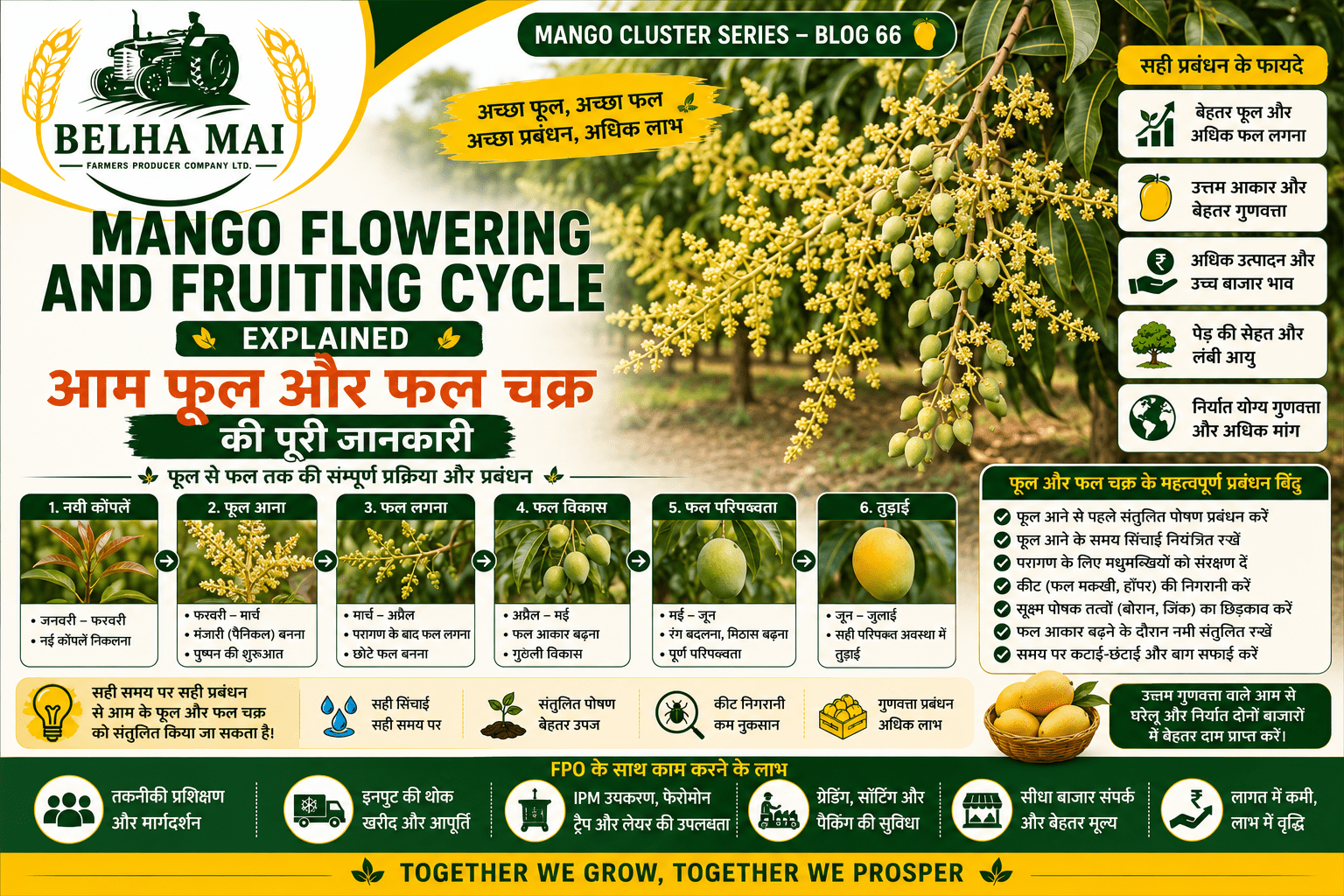
Mango flowering and fruiting cycle is one of the most important parts of mango farming. A mango tree may look healthy, but if flowering is poor or fruit setting is weak, final yield will be low. Farmers must understand that mango production is not decided only at harvest time. It is decided much earlier during new flush, flower initiation, panicle emergence, pollination, fruit setting and fruit development.
TNAU’s mango information describes the annual cycle of fruiting orchards in three phases: pre-flowering, flowering and fruiting, and post-harvest to the end of wet season. This shows that mango management should be planned throughout the year, not only during harvest.
आम में फूल और फल बनने की प्रक्रिया
आम में फूल और फल बनने की प्रक्रिया आम की खेती का सबसे महत्वपूर्ण हिस्सा है। आम का पेड़ देखने में स्वस्थ हो सकता है, लेकिन यदि फूल कम आएं या फल लगना कमजोर हो, तो अंतिम उत्पादन कम होगा।
किसानों को समझना चाहिए कि आम की पैदावार केवल तुड़ाई के समय तय नहीं होती। यह बहुत पहले तय हो जाती है — नई कोपल, फूल बनने की शुरुआत, मंजर निकलना, परागण, फल लगना और फल विकास की अवस्था में।
Stage 1: New Flush and Bud Development
The mango flowering cycle starts with tree health and new vegetative flush. A healthy tree produces good shoots and buds. These buds may later develop into flowering panicles depending on variety, temperature, tree age, pruning, nutrition, moisture stress and overall orchard condition.
If the tree is weak, overcrowded, diseased or nutritionally imbalanced, flowering may be poor. This is why post-harvest care, pruning, canopy management and balanced nutrition are very important before the flowering season.
चरण 1: नई कोपल और कली विकास
आम में फूल आने की प्रक्रिया पेड़ की सेहत और नई कोपलों से शुरू होती है। स्वस्थ पेड़ में अच्छी टहनियां और कलियां बनती हैं। बाद में ये कलियां फूलों के गुच्छे, यानी मंजर में बदल सकती हैं।
यह प्रक्रिया किस्म, तापमान, पेड़ की उम्र, कटाई-छंटाई, पोषण, नमी और बाग की सेहत पर निर्भर करती है। यदि पेड़ कमजोर, बहुत घना, रोगी या पोषण असंतुलित है, तो फूल कम आ सकते हैं।
Stage 2: Flower Initiation
Flower initiation is the stage when the mango tree prepares internally for flowering. Farmers may not see visible flowers immediately, but inside the buds, the tree starts shifting towards flowering.
Temperature plays an important role in mango flowering. ICAR-linked horticulture literature notes that mango-growing areas in subtropical regions face low fruit set due to temperature fluctuations and lack of pollination.
For better flowering, farmers should maintain tree health, avoid unnecessary heavy irrigation before flowering where dry conditions are required, and follow local horticulture advisory.
चरण 2: फूल बनने की शुरुआत
फूल बनने की शुरुआत वह अवस्था है जब आम का पेड़ अंदर से फूल आने की तैयारी करता है। इस समय फूल तुरंत दिखाई नहीं देते, लेकिन कलियों के अंदर बदलाव शुरू हो जाता है।
तापमान आम में फूल आने में महत्वपूर्ण भूमिका निभाता है। तापमान में अचानक बदलाव या परागण की कमी से फल लगना कम हो सकता है। इसलिए किसानों को पेड़ की सेहत, पोषण, सिंचाई और बाग की स्थिति पर ध्यान देना चाहिए।
Stage 3: Panicle Emergence
When flower clusters become visible, they are called panicles or मंजर. This is a very sensitive stage. Mango panicles carry many small flowers, but only a small percentage finally becomes mature fruits.
During panicle emergence, farmers should avoid practices that disturb flowering. Pest and disease monitoring is very important because mango hopper, powdery mildew and other problems can damage flowers and reduce fruit setting.
TNAU’s canopy management document notes that mango normally produces flowers from December onwards, flowering can extend up to March, and fruit development may range from January to May depending on flower formation.
चरण 3: मंजर निकलना
जब फूलों के गुच्छे दिखाई देने लगते हैं, तो उन्हें मंजर कहा जाता है। यह अवस्था बहुत संवेदनशील होती है। आम के मंजर में बहुत छोटे-छोटे फूल होते हैं, लेकिन उनमें से बहुत कम फूल आगे चलकर पके फल बनते हैं।
मंजर निकलने के समय किसान को कीट और रोग की नियमित निगरानी करनी चाहिए। मैंगो हॉपर, पाउडरी मिल्ड्यू और अन्य समस्याएं फूलों को नुकसान पहुंचाकर फल लगने को कम कर सकती हैं।
Stage 4: Pollination and Fruit Setting
Pollination is necessary for fruit setting. Mango flowers need pollinating insects and suitable weather conditions. If weather is cloudy, humid, rainy or extremely hot during flowering, pollination and fruit set may be affected.
Good flowering does not guarantee good production. What matters is how many flowers successfully convert into small fruits. Fruit setting depends on pollination, temperature, humidity, nutrition, pest control and tree health.
Recent reports also show that extreme weather, temperature fluctuations and heat stress can damage mango flowering and fruit quality. In Maharashtra’s Alphonso belt, severe weather changes caused major crop losses, showing how sensitive mango flowering and fruiting can be to climate conditions.
चरण 4: परागण और फल लगना
फल बनने के लिए परागण जरूरी है। आम के फूलों में परागण के लिए कीटों और अनुकूल मौसम की जरूरत होती है। यदि फूल आने के समय बादल, अधिक नमी, बारिश या बहुत अधिक गर्मी हो, तो परागण और फल लगना प्रभावित हो सकता है।
अधिक फूल आने का मतलब अधिक उत्पादन नहीं होता। असली महत्व इस बात का है कि कितने फूल छोटे फलों में बदलते हैं। फल लगना परागण, तापमान, नमी, पोषण, कीट नियंत्रण और पेड़ की सेहत पर निर्भर करता है।
Stage 5: Fruit Drop
Fruit drop is common in mango. After fruit setting, many small fruits naturally fall from the tree. Some fruit drop is normal, but excessive fruit drop can reduce yield seriously.
Fruit drop may happen due to:
poor pollination,
nutrient imbalance,
water stress,
high temperature,
pest attack,
disease infection,
weak tree health,
and improper orchard management.
PPQS mango IPM guidance mentions plant growth and flowering/fruit retention practices such as NAA spray at flowering and KNO3 at mustard-size stage to increase fruit set and retention, but farmers should follow expert advice before using any plant growth regulator or nutrient spray.
चरण 5: फल झड़ना
आम में फल झड़ना सामान्य बात है। फल लगने के बाद कई छोटे फल पेड़ से गिर जाते हैं। कुछ फल झड़ना प्राकृतिक है, लेकिन बहुत अधिक फल झड़ने से उत्पादन कम हो सकता है।
फल झड़ने के कारण हो सकते हैं:
कमजोर परागण,
पोषण असंतुलन,
पानी की कमी,
अधिक तापमान,
कीट हमला,
रोग संक्रमण,
कमजोर पेड़,
और गलत बाग प्रबंधन।
किसानों को किसी भी ग्रोथ रेगुलेटर या पोषक स्प्रे का उपयोग विशेषज्ञ सलाह के अनुसार ही करना चाहिए।
Stage 6: Fruit Development
After fruit setting, mango fruits slowly increase in size. This stage needs proper nutrition, water management and pest monitoring. Water stress can reduce fruit size, while excess irrigation can create root problems and disease risk.
NHB’s mango guidance mentions irrigation after fruit set and notes frequent irrigation during the fruit-development period.
During fruit development, farmers should also monitor fruit fly, anthracnose, stem-end rot and physical damage. Fruits damaged at this stage may not get premium market value.
चरण 6: फल विकास
फल लगने के बाद आम धीरे-धीरे आकार में बढ़ता है। इस अवस्था में सही पोषण, सिंचाई और कीट निगरानी बहुत जरूरी होती है। पानी की कमी से फल छोटा रह सकता है, जबकि ज्यादा पानी से जड़ों और रोग की समस्या हो सकती है।
फल विकास के समय किसानों को फल मक्खी, एन्थ्रेक्नोज, स्टेम एंड रॉट और फलों की चोट पर भी ध्यान देना चाहिए। इस अवस्था में खराब हुए फल प्रीमियम बाजार में अच्छा दाम नहीं पाते।
Stage 7: Fruit Maturity and Harvesting
Fruit maturity is the final stage before harvesting. Mango should be harvested at the right maturity stage. If harvested too early, fruit may not develop proper taste, aroma and ripening quality. If harvested too late, it may become soft and suffer more damage during transport.
Harvest timing depends on variety, region, weather and market requirement. For export or long-distance markets, maturity and handling become even more important.
चरण 7: फल परिपक्वता और तुड़ाई
फल परिपक्वता तुड़ाई से पहले की अंतिम अवस्था है। आम को सही परिपक्व अवस्था में तोड़ना चाहिए। यदि आम जल्दी तोड़ा गया, तो उसमें सही स्वाद, सुगंध और पकने की गुणवत्ता नहीं आएगी। यदि बहुत देर से तोड़ा गया, तो फल नरम हो सकता है और परिवहन में नुकसान बढ़ सकता है।
तुड़ाई का समय किस्म, क्षेत्र, मौसम और बाजार की मांग पर निर्भर करता है। निर्यात या दूर के बाजारों के लिए परिपक्वता और हैंडलिंग बहुत महत्वपूर्ण होती है।
Flowering Stage Pest and Disease Management
The flowering stage is highly sensitive to pests and diseases. Mango hopper can damage flowers and reduce fruit setting. Powdery mildew can affect panicles and young fruits. Anthracnose may also affect fruit quality.
Farmers should follow Integrated Pest Management during this stage. They should monitor the orchard regularly, maintain sanitation, avoid unnecessary chemical sprays and use need-based protection under expert guidance.
IPM is important because it reduces pesticide cost and helps produce cleaner fruit. Cleaner fruit with lower pesticide residue is more suitable for premium, institutional and export markets.
फूल अवस्था में कीट और रोग प्रबंधन
फूल की अवस्था कीट और रोग के लिए बहुत संवेदनशील होती है। मैंगो हॉपर फूलों को नुकसान पहुंचाकर फल लगने को कम कर सकता है। पाउडरी मिल्ड्यू मंजर और छोटे फलों को प्रभावित कर सकता है। एन्थ्रेक्नोज भी फल गुणवत्ता को नुकसान पहुंचा सकता है।
किसानों को इस अवस्था में समेकित कीट प्रबंधन अपनाना चाहिए। नियमित निगरानी करें, बाग की सफाई रखें, अनावश्यक रासायनिक छिड़काव से बचें और जरूरत के अनुसार विशेषज्ञ सलाह पर ही छिड़काव करें।
Role of Nutrition and Irrigation
Nutrition and irrigation directly affect mango flowering and fruiting. Weak trees may not produce strong flowering. Nutrient imbalance may cause poor fruit set and fruit drop. Water stress during fruit development can reduce fruit size.
Farmers should use soil testing and leaf analysis where available. Balanced nutrition, organic manure, micronutrients and proper irrigation scheduling can improve tree health and fruit quality.
पोषण और सिंचाई की भूमिका
पोषण और सिंचाई आम में फूल और फल बनने पर सीधा असर डालते हैं। कमजोर पेड़ में अच्छे फूल नहीं आते। पोषण असंतुलन से फल लगना कम हो सकता है और फल झड़ सकते हैं। फल विकास के समय पानी की कमी से फल का आकार छोटा रह सकता है।
किसानों को जहां संभव हो मिट्टी परीक्षण और पत्ती परीक्षण कराना चाहिए। संतुलित पोषण, जैविक खाद, सूक्ष्म पोषक तत्व और सही सिंचाई से पेड़ की सेहत और फल गुणवत्ता बेहतर होती है।
Role of FPOs in Flowering and Fruiting Management
FPOs can help farmers manage the mango flowering and fruiting cycle in a scientific way. Small farmers often do not receive timely advisory during critical stages. FPOs can provide collective training, weather alerts, input supply, IPM support and market planning.
An FPO can support farmers through:
flowering-stage advisory,
weather-based alerts,
soil testing,
balanced nutrition planning,
IPM kits,
pheromone traps and lures,
pest monitoring,
proper harvesting guidance,
aggregation,
grading and packaging support.
For Belha Mai Farmers Producer Company Ltd., flowering and fruiting advisory can become an important farmer service under the Mango Cluster. This can help improve yield, reduce losses and produce better quality mangoes.
फूल और फल प्रबंधन में FPO की भूमिका
FPO किसानों को आम के फूल और फल चक्र का वैज्ञानिक प्रबंधन करने में मदद कर सकता है। छोटे किसानों को अक्सर महत्वपूर्ण अवस्था में समय पर सलाह नहीं मिलती। FPO सामूहिक ट्रेनिंग, मौसम सूचना, इनपुट सप्लाई, IPM सहायता और बाजार योजना उपलब्ध करा सकता है।
FPO किसानों की मदद कर सकता है:
फूल अवस्था की सलाह,
मौसम आधारित सूचना,
मिट्टी परीक्षण,
संतुलित पोषण योजना,
IPM किट,
फेरोमोन ट्रैप और ल्योर,
कीट निगरानी,
सही तुड़ाई मार्गदर्शन,
एग्रीगेशन,
ग्रेडिंग और पैकिंग सहायता।
Conclusion
Mango flowering and fruiting cycle decides the final success of mango farming. Farmers should not wait until harvest to think about yield. They should manage the orchard from pre-flowering to flowering, fruit setting, fruit development and harvesting.
Better flowering, good pollination, proper nutrition, balanced irrigation, IPM and careful harvesting can improve mango yield and quality. For small farmers, FPO-supported advisory and collective management can reduce risk, improve quality and create better market opportunities.
निष्कर्ष
आम में फूल और फल बनने की प्रक्रिया आम की खेती की सफलता तय करती है। किसानों को उत्पादन के बारे में केवल तुड़ाई के समय नहीं सोचना चाहिए। बाग का प्रबंधन प्री-फ्लावरिंग, फूल, फल लगना, फल विकास और तुड़ाई तक लगातार करना चाहिए।
बेहतर फूल, अच्छा परागण, सही पोषण, संतुलित सिंचाई, IPM और सावधानीपूर्वक तुड़ाई से आम की उपज और गुणवत्ता बेहतर होती है। छोटे किसानों के लिए FPO आधारित सलाह और सामूहिक प्रबंधन जोखिम कम कर सकते हैं और बेहतर बाजार अवसर बना सकते हैं।
15. FAQ in English + Hindi
FAQ 1: When does mango flowering happen in India?
Mango flowering usually starts from December onwards and can continue up to March under normal conditions, depending on variety, region and weather. Fruit development may continue from January to May.
प्रश्न 1: भारत में आम में फूल कब आते हैं?
भारत में सामान्य रूप से आम में फूल दिसंबर से आना शुरू हो सकते हैं और मार्च तक जारी रह सकते हैं। यह किस्म, क्षेत्र और मौसम पर निर्भर करता है। फल विकास जनवरी से मई तक हो सकता है।
FAQ 2: Why do mango flowers fall?
Mango flowers may fall due to poor pollination, high temperature, humidity, rain, pest attack, disease, weak tree health or nutrient imbalance.
प्रश्न 2: आम के फूल क्यों झड़ते हैं?
आम के फूल खराब परागण, अधिक तापमान, नमी, बारिश, कीट हमला, रोग, कमजोर पेड़ या पोषण असंतुलन के कारण झड़ सकते हैं।
FAQ 3: Why do small mango fruits drop?
Small mango fruits may drop due to natural fruit drop, poor pollination, water stress, nutrient deficiency, high temperature, pest attack or disease infection.
प्रश्न 3: आम के छोटे फल क्यों गिरते हैं?
आम के छोटे फल प्राकृतिक फल झड़ना, कमजोर परागण, पानी की कमी, पोषण कमी, अधिक तापमान, कीट हमला या रोग संक्रमण के कारण गिर सकते हैं।
FAQ 4: How can farmers improve mango fruit setting?
Farmers can improve fruit setting through healthy orchard management, balanced nutrition, proper irrigation, pollinator-friendly practices, pest and disease control, and expert-based flowering-stage advisory.
प्रश्न 4: किसान आम में फल लगना कैसे सुधार सकते हैं?
किसान स्वस्थ बाग प्रबंधन, संतुलित पोषण, सही सिंचाई, परागण सहायक वातावरण, कीट-रोग नियंत्रण और विशेषज्ञ सलाह से फल लगना सुधार सकते हैं।
FAQ 5: Can FPOs help in mango flowering and fruiting management?
Yes, FPOs can help farmers through training, weather alerts, soil testing, input supply, IPM kits, pheromone traps, pest monitoring, harvesting guidance, grading and market linkage.
प्रश्न 5: क्या FPO आम के फूल और फल प्रबंधन में मदद कर सकता है?
हां, FPO ट्रेनिंग, मौसम सूचना, मिट्टी परीक्षण, इनपुट सप्लाई, IPM किट, फेरोमोन ट्रैप, कीट निगरानी, तुड़ाई सलाह, ग्रेडिंग और बाजार संपर्क के माध्यम से मदद कर सकता है।
16. Internal Links Section
Related Mango Cluster Blogs
👉 Mango Farming in India: Complete Guide
https://belhamaifpo.com/agriculture/mango-farming-in-india/
👉 Profit per Acre in Mango Farming
https://belhamaifpo.com/agriculture/profit-per-acre-in-mango-farming/
👉 Best Mango Varieties in India
https://belhamaifpo.com/agriculture/best-mango-varieties-in-india/
👉 Cultivation of Langra Mango: Complete Guide
https://belhamaifpo.com/agriculture/cultivation-of-langra-mango/
👉 Cultivation of Dasheri Mango: Complete Guide
https://belhamaifpo.com/agriculture/cultivation-of-dasheri-mango/
👉 Mango Orchard Management Practices
https://belhamaifpo.com/agriculture/mango-orchard-management-practices/
हिंदी में संबंधित आम क्लस्टर ब्लॉग
👉 भारत में आम की खेती: पूरी जानकारी
https://belhamaifpo.com/agriculture/mango-farming-in-india/
👉 आम की खेती में प्रति एकड़ लाभ
https://belhamaifpo.com/agriculture/profit-per-acre-in-mango-farming/
👉 भारत की प्रमुख आम किस्में
https://belhamaifpo.com/agriculture/best-mango-varieties-in-india/
👉 लंगड़ा आम की खेती: पूरी जानकारी
https://belhamaifpo.com/agriculture/cultivation-of-langra-mango/
👉 दशहरी आम की खेती: पूरी जानकारी
https://belhamaifpo.com/agriculture/cultivation-of-dasheri-mango/
👉 आम बाग प्रबंधन: पूरी जानकारी
https://belhamaifpo.com/agriculture/mango-orchard-management-practices/
17. External Authority Links
👉 TNAU Mango Annual Growth Cycle Information
https://agritech.tnau.ac.in/govt_schemes_services/aas/mango.html
👉 TNAU Canopy Management in Mango PDF
https://agritech.tnau.ac.in/horticulture/cm-mango-eng.pdf
👉 ICAR-CISH / Indian Horticulture Mango Reference
https://icar.org.in/sites/default/files/2022-06/IH-July-Aug-2021.pdf
👉 PPQS IPM Package of Practices for Mango
https://ppqs.gov.in/sites/default/files/mango_pop_final_-08.12.2022.pdf
👉 NHB Mango Cultivation Guide
https://nhb.gov.in/report_files/mango/mango.htm