Introduction
Post-harvest management of mango starts immediately after harvesting. Mango is a perishable fruit, and if it is not handled properly after harvest, farmers can lose a large part of their income. Even good quality mangoes can become low-value fruits due to poor handling, sap burn, bruising, poor sorting, wrong packaging, heat exposure and delayed transport.
Many farmers focus only on production, but mango income depends equally on post-harvest management. A mango that is harvested properly, de-sapped, cleaned, sorted, graded, packed and transported carefully can get better market value.
For farmers and FPOs, post-harvest management is not an extra activity. It is a direct income-improvement strategy.
आम का कटाई के बाद प्रबंधन
आम का कटाई के बाद प्रबंधन तुड़ाई के तुरंत बाद शुरू होता है। आम जल्दी खराब होने वाला फल है। यदि तुड़ाई के बाद उसका सही प्रबंधन न हो, तो किसान अपनी आय का बड़ा हिस्सा खो सकता है।
अच्छी गुणवत्ता वाला आम भी खराब हैंडलिंग, रस जलन, चोट, खराब छंटाई, गलत पैकिंग, धूप में रखने और परिवहन में देरी के कारण कम दाम वाला फल बन सकता है।
कई किसान केवल उत्पादन पर ध्यान देते हैं, लेकिन आम से अच्छी आय पोस्ट-हार्वेस्ट प्रबंधन पर भी निर्भर करती है। जो आम सही तरीके से तोड़ा गया, डी-सैप किया गया, साफ किया गया, छांटा गया, ग्रेड किया गया, पैक किया गया और सावधानी से बाजार तक पहुंचाया गया, उसे बेहतर दाम मिल सकते हैं।
Why Post-Harvest Management Is Important
Post-harvest losses reduce farmer income. Mangoes can be damaged after harvesting due to physical injury, disease infection, high temperature, poor packaging, overloading and improper ripening.
Good post-harvest management helps farmers in many ways:
reduces fruit damage,
improves shelf life,
maintains fruit appearance,
reduces disease spread,
supports better grading,
improves buyer confidence,
increases market price,
and prepares fruit for premium and export markets.
For FPOs, post-harvest management creates an opportunity to move from simple aggregation to quality-based mango marketing.
पोस्ट-हार्वेस्ट प्रबंधन क्यों जरूरी है?
कटाई के बाद नुकसान से किसान की आय कम होती है। आम तुड़ाई के बाद चोट, रोग संक्रमण, अधिक गर्मी, खराब पैकिंग, ओवरलोडिंग और गलत पकाने की प्रक्रिया के कारण खराब हो सकता है।
अच्छे पोस्ट-हार्वेस्ट प्रबंधन से किसानों को ये लाभ मिलते हैं:
फल नुकसान कम होता है,
शेल्फ लाइफ बढ़ती है,
फल की दिखावट बनी रहती है,
रोग फैलाव कम होता है,
बेहतर ग्रेडिंग होती है,
खरीदार का भरोसा बढ़ता है,
बाजार भाव बेहतर मिलता है,
और फल प्रीमियम व निर्यात बाजार के लिए तैयार होता है।
FPO के लिए पोस्ट-हार्वेस्ट प्रबंधन केवल आम इकट्ठा करने से आगे बढ़कर गुणवत्ता आधारित मार्केटिंग का अवसर बनाता है।
Step 1: Receiving Mangoes After Harvesting
After harvesting, mangoes should be brought carefully to a shaded collection point. Fruits should not be kept directly under the sun. Heat increases fruit respiration and can reduce shelf life.
At the collection point, fruits should be placed in clean plastic crates. Gunny bags or overloaded baskets should be avoided because they can cause bruising and compression damage.
The collection point should be clean, shaded and well-ventilated. Fruits should be handled gently from the beginning because early damage becomes visible later during ripening.
चरण 1: तुड़ाई के बाद आम की प्राप्ति
तुड़ाई के बाद आम को सावधानी से छायादार संग्रह स्थान पर लाना चाहिए। फलों को सीधी धूप में नहीं रखना चाहिए। गर्मी से फल की श्वसन प्रक्रिया तेज होती है और शेल्फ लाइफ कम हो सकती है।
संग्रह स्थान पर आम को साफ प्लास्टिक क्रेट में रखना चाहिए। बोरी या बहुत भरी हुई टोकरी से बचना चाहिए क्योंकि इससे फल दबते हैं और चोट लगती है।
संग्रह स्थान साफ, छायादार और हवादार होना चाहिए। फल को शुरुआत से ही धीरे से हैंडल करना चाहिए क्योंकि शुरुआती नुकसान पकने के समय दिखाई देता है।
Step 2: De-Sapping
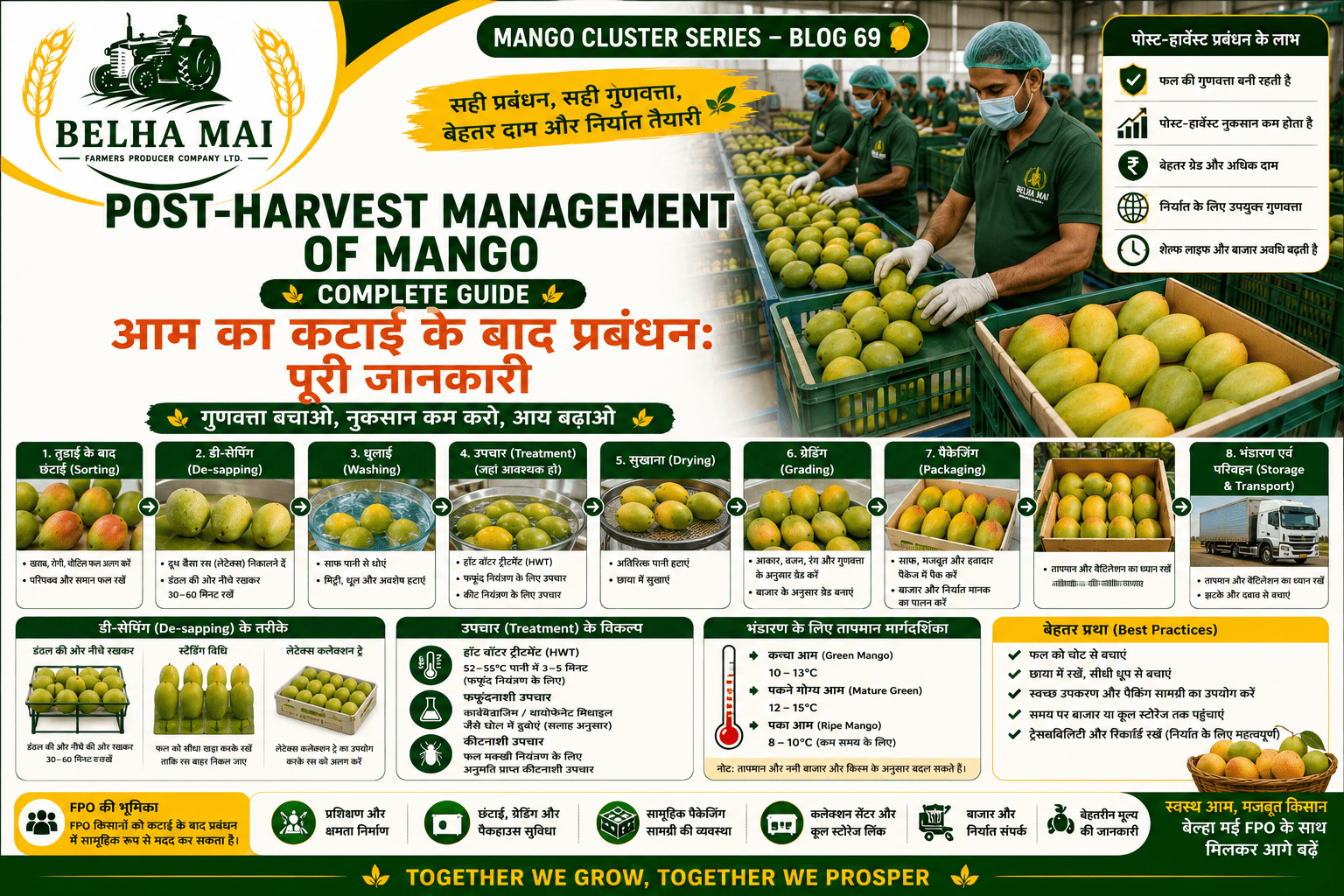
De-sapping is one of the most important post-harvest steps in mango. Mango latex can flow from the stem end after harvesting. If this latex touches the fruit skin, it can cause black marks, stains or sap burn. This reduces fruit appearance and market value.
De-sapping helps keep mangoes clean and attractive. It is especially important for premium markets, long-distance transport and export-oriented supply chains.
Basic de-sapping practices include:
keeping fruits in shade,
placing fruit carefully with stem-end down where required,
allowing latex to drain,
using clean surfaces,
avoiding latex contact with fruit skin,
and separating damaged fruits.
चरण 2: डी-सैपिंग
डी-सैपिंग आम के पोस्ट-हार्वेस्ट प्रबंधन का बहुत महत्वपूर्ण कदम है। तुड़ाई के बाद आम के डंठल वाले हिस्से से रस निकल सकता है। यदि यह रस फल की त्वचा पर लग जाता है, तो काले दाग, धब्बे या रस जलन हो सकती है। इससे फल की दिखावट और बाजार मूल्य कम हो जाता है।
डी-सैपिंग से आम साफ और आकर्षक रहता है। यह प्रीमियम बाजार, लंबी दूरी के परिवहन और निर्यात आधारित सप्लाई चेन के लिए बहुत जरूरी है।
डी-सैपिंग के मुख्य उपाय:
फलों को छाया में रखना,
जहां जरूरत हो डंठल की ओर नीचे रखना,
रस को निकलने देना,
साफ सतह का उपयोग करना,
रस को फल की त्वचा पर लगने से बचाना,
और खराब फल अलग करना।
Step 3: Cleaning and Washing
After de-sapping, mangoes may require cleaning to remove dust, dirt, latex stains and field impurities. Cleaning improves fruit appearance and buyer confidence.
Washing should be done carefully with clean water where required. Fruits should not be roughly rubbed. After washing, mangoes should be dried properly because wet fruits can develop fungal problems during storage and transport.
For premium and export-oriented markets, cleaning should be done in a hygienic way with proper handling practices.
चरण 3: सफाई और धुलाई
डी-सैपिंग के बाद आम की सफाई की जा सकती है ताकि धूल, मिट्टी, रस के दाग और खेत की गंदगी हट जाए। सफाई से फल की दिखावट बेहतर होती है और खरीदार का भरोसा बढ़ता है।
जहां जरूरत हो, साफ पानी से धुलाई करनी चाहिए। फल को जोर से रगड़ना नहीं चाहिए। धुलाई के बाद आम को ठीक से सुखाना जरूरी है क्योंकि गीले फल में भंडारण और परिवहन के दौरान फफूंद की समस्या हो सकती है।
प्रीमियम और निर्यात बाजार के लिए सफाई स्वच्छ तरीके से करनी चाहिए।
Step 4: Sorting
Sorting means separating mangoes according to condition before grading. This is one of the most important steps because damaged fruits should not be mixed with good fruits.
During sorting, remove:
damaged fruits,
diseased fruits,
cracked fruits,
immature fruits,
over-mature fruits,
sap-burnt fruits,
fruit fly affected fruits,
and physically injured fruits.
If damaged fruits are mixed with premium fruits, buyers may reduce the price of the whole lot.
चरण 4: छंटाई
छंटाई का मतलब है ग्रेडिंग से पहले आम को उनकी स्थिति के अनुसार अलग करना। यह बहुत महत्वपूर्ण कदम है क्योंकि खराब फल अच्छे फलों के साथ नहीं मिलाने चाहिए।
छंटाई के दौरान अलग करें:
चोटिल फल,
रोगी फल,
फटे हुए फल,
कच्चे फल,
ज्यादा पके फल,
रस जलन वाले फल,
फल मक्खी प्रभावित फल,
और दबे हुए फल।
यदि खराब फल प्रीमियम फल के साथ मिल जाते हैं, तो खरीदार पूरी खेप का भाव कम कर सकता है।
Step 5: Grading
Grading means separating mangoes according to size, weight, maturity, colour, shape and quality. Grading helps farmers sell different quality fruits to different markets.
For example:
premium fruits can go to retail or export-oriented buyers,
medium-grade fruits can go to wholesale markets,
processing-grade fruits can go to pulp, pickle, chutney or aamchur units,
and damaged fruits should be removed from the saleable lot.
Grading gives farmers better control over price. It also improves buyer trust because buyers receive uniform fruits.
चरण 5: ग्रेडिंग
ग्रेडिंग का मतलब है आम को आकार, वजन, परिपक्वता, रंग, आकार की समानता और गुणवत्ता के आधार पर अलग करना। ग्रेडिंग से किसान अलग-अलग गुणवत्ता वाले फलों को अलग-अलग बाजारों में बेच सकता है।
उदाहरण:
प्रीमियम फल रिटेल या निर्यात खरीदारों को जा सकते हैं,
मध्यम ग्रेड फल थोक बाजार में जा सकते हैं,
प्रोसेसिंग ग्रेड फल पल्प, अचार, चटनी या आमचूर यूनिट में जा सकते हैं,
और खराब फल बिक्री योग्य खेप से अलग कर देने चाहिए।
ग्रेडिंग से किसान को भाव पर बेहतर नियंत्रण मिलता है। इससे खरीदार का भरोसा भी बढ़ता है क्योंकि उसे समान गुणवत्ता वाले फल मिलते हैं।
Step 6: Treatment Where Required
Mangoes may require specific post-harvest treatments depending on market requirement. Treatments may be used to manage diseases, reduce pest risk, improve shelf life or meet export standards.
Treatment requirements are different for domestic, premium and export markets. Farmers should never use any chemical or treatment without technical guidance. Wrong treatment can damage fruit quality and create safety issues.
For export-oriented mangoes, treatments and compliance should be planned according to buyer and destination-country requirements.
चरण 6: जरूरत अनुसार उपचार
बाजार की जरूरत के अनुसार आम को कुछ पोस्ट-हार्वेस्ट उपचार की आवश्यकता हो सकती है। ये उपचार रोग नियंत्रण, कीट जोखिम कम करने, शेल्फ लाइफ बढ़ाने या निर्यात मानकों को पूरा करने के लिए किए जा सकते हैं।
घरेलू, प्रीमियम और निर्यात बाजार की उपचार जरूरत अलग हो सकती है। किसानों को बिना तकनीकी सलाह के कोई रसायन या उपचार नहीं करना चाहिए। गलत उपचार से फल की गुणवत्ता खराब हो सकती है और सुरक्षा समस्या बन सकती है।
निर्यात आधारित आम के लिए उपचार और नियम खरीदार और गंतव्य देश की जरूरत के अनुसार तय करने चाहिए।
Step 7: Drying After Washing or Treatment
If mangoes are washed or treated, they should be dried properly before packaging. Wet fruits inside boxes can increase fungal growth and rotting.
Drying should be done in a clean, shaded and ventilated area. Fruits should not be dried under harsh sunlight because direct heat can affect quality.
Good drying helps maintain fruit appearance and reduces post-harvest disease risk.
चरण 7: धुलाई या उपचार के बाद सुखाना
यदि आम की धुलाई या उपचार किया गया है, तो पैकेजिंग से पहले उन्हें ठीक से सुखाना चाहिए। गीले फल यदि बॉक्स में पैक किए जाते हैं, तो फफूंद और सड़न की संभावना बढ़ सकती है।
सुखाने का काम साफ, छायादार और हवादार स्थान पर करना चाहिए। तेज धूप में सुखाने से फल की गुणवत्ता प्रभावित हो सकती है।
अच्छी तरह सुखाने से फल की दिखावट बनी रहती है और पोस्ट-हार्वेस्ट रोग का खतरा कम होता है।
Step 8: Packaging
Packaging protects mangoes during handling, storage and transport. Good packaging reduces bruising, compression damage and physical injury.
Important points for mango packaging:
use clean boxes or crates,
avoid overfilling,
keep fruits of similar grade together,
use proper ventilation,
avoid rough handling,
label the boxes properly,
and keep traceability records where possible.
Premium buyers prefer clean, uniform and well-labelled packaging. Export buyers may require specific packaging standards.
चरण 8: पैकेजिंग
पैकेजिंग आम को हैंडलिंग, भंडारण और परिवहन के दौरान सुरक्षित रखती है। अच्छी पैकेजिंग से दबाव, चोट और टूट-फूट कम होती है।
आम पैकेजिंग में ध्यान देने योग्य बातें:
साफ बॉक्स या क्रेट का उपयोग करें,
ज्यादा न भरें,
एक जैसे ग्रेड के फल साथ रखें,
हवादार पैकिंग करें,
कठोर हैंडलिंग से बचें,
बॉक्स पर सही लेबल लगाएं,
और जहां संभव हो ट्रेसबिलिटी रिकॉर्ड रखें।
प्रीमियम खरीदार साफ, समान और अच्छे लेबल वाले पैकेज पसंद करते हैं। निर्यात खरीदारों की पैकेजिंग जरूरत अलग हो सकती है।
Step 9: Storage and Temperature Management
Mango storage depends on fruit maturity, variety, market distance and ripening requirement. Mangoes should not be stored carelessly in hot, closed or dirty places.
Temperature management is important because high temperature speeds up ripening and spoilage. Very low temperature can also damage mangoes, depending on variety and maturity stage. Therefore, storage should be planned carefully with technical advice.
For farmers and FPOs, even a small shaded collection centre or pre-cooling support can reduce losses and improve quality.
चरण 9: भंडारण और तापमान प्रबंधन
आम का भंडारण फल की परिपक्वता, किस्म, बाजार दूरी और पकाने की जरूरत पर निर्भर करता है। आम को गर्म, बंद या गंदी जगह पर लापरवाही से नहीं रखना चाहिए।
तापमान प्रबंधन महत्वपूर्ण है क्योंकि अधिक तापमान से पकने और खराब होने की प्रक्रिया तेज होती है। बहुत कम तापमान भी किस्म और परिपक्वता के अनुसार नुकसान कर सकता है। इसलिए भंडारण तकनीकी सलाह के साथ करना चाहिए।
किसानों और FPO के लिए एक छोटा छायादार संग्रह केंद्र या प्री-कूलिंग सहायता भी नुकसान कम कर सकती है और गुणवत्ता सुधार सकती है।
Step 10: Ripening Management
Ripening is a very important stage in mango marketing. Mangoes should be ripened safely and uniformly. Wrong ripening practices can damage fruit quality and create health and legal problems.
Farmers, traders and FPOs should avoid unsafe ripening methods. Scientific ripening chambers or approved ripening systems are better for organized markets.
Uniform ripening improves:
fruit colour,
taste,
aroma,
consumer acceptance,
retail value,
and brand reputation.
चरण 10: पकाने का प्रबंधन
आम मार्केटिंग में पकाने की प्रक्रिया बहुत महत्वपूर्ण है। आम को सुरक्षित और समान रूप से पकाना चाहिए। गलत पकाने की विधि फल की गुणवत्ता खराब कर सकती है और स्वास्थ्य व कानूनी समस्या पैदा कर सकती है।
किसान, व्यापारी और FPO को असुरक्षित पकाने की विधियों से बचना चाहिए। संगठित बाजारों के लिए वैज्ञानिक रिपनिंग चेंबर या स्वीकृत पकाने की प्रणाली बेहतर होती है।
समान पकने से:
फल का रंग बेहतर होता है,
स्वाद अच्छा होता है,
सुगंध आती है,
ग्राहक संतुष्टि बढ़ती है,
रिटेल मूल्य बढ़ता है,
और ब्रांड की प्रतिष्ठा मजबूत होती है।
Step 11: Transport Management
Transport is a critical part of post-harvest management. Mangoes should be transported in clean vehicles with careful loading and unloading. Overloading can damage fruits at the bottom. Rough transport can cause bruising and cracking.
For long-distance markets, transport should be planned according to fruit maturity, temperature and delivery time. Delays can reduce quality and price.
FPOs can help farmers by arranging collective transport to reduce cost and improve market access.
चरण 11: परिवहन प्रबंधन
परिवहन पोस्ट-हार्वेस्ट प्रबंधन का महत्वपूर्ण हिस्सा है। आम को साफ वाहन में सावधानी से लोड और अनलोड करना चाहिए। ओवरलोडिंग से नीचे के फल दब सकते हैं। खराब परिवहन से फल में चोट और फटने की समस्या हो सकती है।
लंबी दूरी के बाजारों के लिए परिवहन फल की परिपक्वता, तापमान और डिलीवरी समय के अनुसार योजना बनाकर करना चाहिए। देरी से गुणवत्ता और भाव दोनों घट सकते हैं।
FPO सामूहिक परिवहन व्यवस्था बनाकर किसानों की लागत कम कर सकता है और बेहतर बाजार तक पहुंच बढ़ा सकता है।
Post-Harvest Management for Export Markets
Export markets require strict quality control. Farmers and FPOs must understand that export quality cannot be created only at the last stage. It starts from orchard management, harvesting, handling and post-harvest process.
Export-oriented mango management needs:
correct maturity,
careful harvesting,
de-sapping,
cleaning,
sorting,
grading,
approved treatment where required,
proper packaging,
traceability,
documentation,
and timely transport.
FPOs can play a strong role by building a common post-harvest handling system for member farmers.
निर्यात बाजार के लिए पोस्ट-हार्वेस्ट प्रबंधन
निर्यात बाजार में सख्त गुणवत्ता नियंत्रण की जरूरत होती है। किसानों और FPO को समझना चाहिए कि निर्यात गुणवत्ता केवल अंतिम चरण में नहीं बनाई जा सकती। यह बाग प्रबंधन, तुड़ाई, हैंडलिंग और पोस्ट-हार्वेस्ट प्रक्रिया से शुरू होती है।
निर्यात आधारित आम प्रबंधन में जरूरत होती है:
सही परिपक्वता,
सावधानीपूर्वक तुड़ाई,
डी-सैपिंग,
सफाई,
छंटाई,
ग्रेडिंग,
जहां जरूरी हो स्वीकृत उपचार,
सही पैकेजिंग,
ट्रेसबिलिटी,
दस्तावेज,
और समय पर परिवहन।
FPO सदस्य किसानों के लिए सामूहिक पोस्ट-हार्वेस्ट हैंडलिंग सिस्टम बनाकर बड़ी भूमिका निभा सकता है।
Role of FPOs in Post-Harvest Management
FPOs can help small farmers reduce post-harvest losses and get better market prices. Individual farmers may not have access to grading tables, crates, de-sapping facilities, packaging material, cold storage or direct buyers. FPOs can provide these services collectively.
An FPO can support mango farmers through:
collection centres,
plastic crates,
de-sapping units,
sorting and grading tables,
washing and cleaning systems,
packaging material,
pre-cooling support,
cold storage linkage,
ripening chamber linkage,
transport management,
processing linkage,
and direct buyer connection.
For Belha Mai Farmers Producer Company Ltd., post-harvest management can become a powerful Mango Cluster service. It can help farmers reduce losses, improve quality and sell mangoes to premium, institutional, processing and export markets.
पोस्ट-हार्वेस्ट प्रबंधन में FPO की भूमिका
FPO छोटे किसानों को पोस्ट-हार्वेस्ट नुकसान कम करने और बेहतर बाजार भाव दिलाने में मदद कर सकता है। छोटे किसानों के पास अक्सर ग्रेडिंग टेबल, क्रेट, डी-सैपिंग सुविधा, पैकेजिंग सामग्री, कोल्ड स्टोरेज या सीधे खरीदार तक पहुंच नहीं होती। FPO ये सेवाएं सामूहिक रूप से दे सकता है।
FPO आम किसानों की मदद कर सकता है:
संग्रह केंद्र,
प्लास्टिक क्रेट,
डी-सैपिंग यूनिट,
छंटाई और ग्रेडिंग टेबल,
धुलाई और सफाई व्यवस्था,
पैकेजिंग सामग्री,
प्री-कूलिंग सहायता,
कोल्ड स्टोरेज संपर्क,
रिपनिंग चेंबर संपर्क,
परिवहन प्रबंधन,
प्रोसेसिंग संपर्क,
और सीधे खरीदार से संपर्क।
Belha Mai Farmers Producer Company Ltd. के लिए पोस्ट-हार्वेस्ट प्रबंधन Mango Cluster के तहत एक मजबूत किसान सेवा बन सकता है।
Common Mistakes in Mango Post-Harvest Management
Farmers should avoid common mistakes because they directly reduce mango quality and price.
Common mistakes include:
keeping harvested fruits in direct sunlight,
using gunny bags for transport,
mixing damaged fruits with good fruits,
not doing de-sapping,
rough handling,
overloading crates,
packing wet fruits,
using dirty packaging,
delaying transport,
and unsafe ripening practices.
Avoiding these mistakes can improve quality and farmer income.
आम पोस्ट-हार्वेस्ट प्रबंधन में सामान्य गलतियां
किसानों को सामान्य गलतियों से बचना चाहिए क्योंकि ये सीधे आम की गुणवत्ता और भाव को कम करती हैं।
सामान्य गलतियां:
तुड़ाई के बाद फल धूप में रखना,
परिवहन के लिए बोरी का उपयोग,
खराब फल अच्छे फल के साथ मिलाना,
डी-सैपिंग न करना,
कठोर हैंडलिंग,
क्रेट को बहुत भरना,
गीले फल पैक करना,
गंदी पैकेजिंग,
परिवहन में देरी,
और असुरक्षित पकाने की विधि।
इन गलतियों से बचकर किसान गुणवत्ता और आय दोनों बढ़ा सकते हैं।
Conclusion
Post-harvest management of mango is essential for reducing losses and increasing farmer income. Proper de-sapping, cleaning, sorting, grading, packaging, storage, ripening and transport can convert ordinary mango supply into quality mango marketing.
For premium and export markets, post-harvest management is even more important. Farmers should understand that better price does not come only from production. It comes from quality, uniformity, handling and buyer confidence.
FPO-led post-harvest systems can help small farmers access better markets, reduce wastage and build a strong mango value chain.
निष्कर्ष
आम का कटाई के बाद प्रबंधन नुकसान कम करने और किसान आय बढ़ाने के लिए बहुत जरूरी है। सही डी-सैपिंग, सफाई, छंटाई, ग्रेडिंग, पैकेजिंग, भंडारण, पकाने और परिवहन से सामान्य आम सप्लाई को गुणवत्ता आधारित आम मार्केटिंग में बदला जा सकता है।
प्रीमियम और निर्यात बाजारों के लिए पोस्ट-हार्वेस्ट प्रबंधन और भी महत्वपूर्ण है। किसानों को समझना चाहिए कि बेहतर दाम केवल उत्पादन से नहीं, बल्कि गुणवत्ता, समानता, सही हैंडलिंग और खरीदार भरोसे से मिलता है।
FPO आधारित पोस्ट-हार्वेस्ट सिस्टम छोटे किसानों को बेहतर बाजार, कम नुकसान और मजबूत आम वैल्यू चेन से जोड़ सकता है।
15. FAQ in English + Hindi
FAQ 1: What is post-harvest management of mango?
Post-harvest management of mango includes all activities after harvesting such as de-sapping, cleaning, sorting, grading, treatment, packaging, storage, ripening and transport.
प्रश्न 1: आम का पोस्ट-हार्वेस्ट प्रबंधन क्या है?
आम का पोस्ट-हार्वेस्ट प्रबंधन तुड़ाई के बाद की सभी गतिविधियों को कहते हैं, जैसे डी-सैपिंग, सफाई, छंटाई, ग्रेडिंग, उपचार, पैकेजिंग, भंडारण, पकाना और परिवहन।
FAQ 2: Why is de-sapping important in mango?
De-sapping removes or drains mango latex after harvesting. It prevents sap burn, black stains and skin damage, which helps improve fruit appearance and market value.
प्रश्न 2: आम में डी-सैपिंग क्यों जरूरी है?
डी-सैपिंग तुड़ाई के बाद आम से निकलने वाले रस को हटाने या बहने देने की प्रक्रिया है। इससे रस जलन, काले दाग और त्वचा नुकसान कम होता है, जिससे फल की दिखावट और बाजार मूल्य बेहतर होता है।
FAQ 3: Why should mangoes be graded?
Mangoes should be graded to separate fruits by size, weight, maturity, colour and quality. Grading helps farmers sell premium fruits separately and get better prices.
प्रश्न 3: आम की ग्रेडिंग क्यों करनी चाहिए?
आम की ग्रेडिंग फल को आकार, वजन, परिपक्वता, रंग और गुणवत्ता के आधार पर अलग करने के लिए की जाती है। इससे किसान प्रीमियम फल अलग बेचकर बेहतर दाम पा सकते हैं।
FAQ 4: How can post-harvest losses in mango be reduced?
Post-harvest losses can be reduced through careful harvesting, shade handling, de-sapping, sorting, grading, clean packaging, proper storage, safe ripening and timely transport.
प्रश्न 4: आम में पोस्ट-हार्वेस्ट नुकसान कैसे कम किया जा सकता है?
सावधानीपूर्वक तुड़ाई, छाया में रखना, डी-सैपिंग, छंटाई, ग्रेडिंग, साफ पैकिंग, सही भंडारण, सुरक्षित पकाने और समय पर परिवहन से पोस्ट-हार्वेस्ट नुकसान कम किया जा सकता है।
FAQ 5: How can FPOs help in mango post-harvest management?
FPOs can help through collection centres, crates, de-sapping units, grading tables, packaging material, cold storage linkage, transport, processing linkage and direct buyer connection.
प्रश्न 5: FPO आम पोस्ट-हार्वेस्ट प्रबंधन में कैसे मदद कर सकता है?
FPO संग्रह केंद्र, क्रेट, डी-सैपिंग यूनिट, ग्रेडिंग टेबल, पैकेजिंग सामग्री, कोल्ड स्टोरेज संपर्क, परिवहन, प्रोसेसिंग संपर्क और सीधे खरीदार संपर्क के माध्यम से मदद कर सकता है।
16. Internal Links Section
Related Mango Cluster Blogs
👉 Mango Farming in India: Complete Guide
https://belhamaifpo.com/agriculture/mango-farming-in-india/
👉 Profit per Acre in Mango Farming
https://belhamaifpo.com/agriculture/profit-per-acre-in-mango-farming/
👉 Best Mango Varieties in India
https://belhamaifpo.com/agriculture/best-mango-varieties-in-india/
👉 Pest and Disease Management in Mango Farming
https://belhamaifpo.com/agriculture/pest-and-disease-management-in-mango-farming/
👉 Mango Harvesting Techniques
https://belhamaifpo.com/agriculture/mango-harvesting-techniques/
हिंदी में संबंधित आम क्लस्टर ब्लॉग
👉 भारत में आम की खेती: पूरी जानकारी
https://belhamaifpo.com/agriculture/mango-farming-in-india/
👉 आम की खेती में प्रति एकड़ लाभ
https://belhamaifpo.com/agriculture/profit-per-acre-in-mango-farming/
👉 भारत की प्रमुख आम किस्में
https://belhamaifpo.com/agriculture/best-mango-varieties-in-india/
👉 आम बाग प्रबंधन: पूरी जानकारी
https://belhamaifpo.com/agriculture/mango-orchard-management-practices/
👉 आम की खेती में कीट और रोग प्रबंधन
https://belhamaifpo.com/agriculture/pest-and-disease-management-in-mango-farming/
👉 आम की तुड़ाई की सही तकनीक
https://belhamaifpo.com/agriculture/mango-harvesting-techniques/
17. External Authority Links
👉 NHB Mango Cultivation Guide
https://nhb.gov.in/report_files/mango/mango.htm
👉 APEDA Mango Export Information
https://apeda.gov.in/Mango
👉 Uttar Pradesh Mango Export SOP
https://www.upkrishivipran.in/pdf/MangoSOP.pdf
👉 ICAR-CISH Lucknow
https://www.cish.org.in/
👉 TNAU Mango Crop Information
https://agritech.tnau.ac.in/govt_schemes_services/aas/mango.html