Introduction
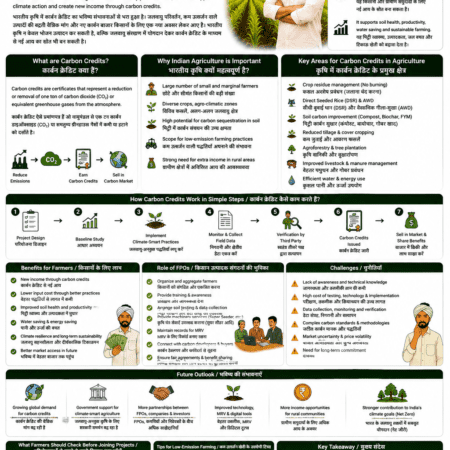
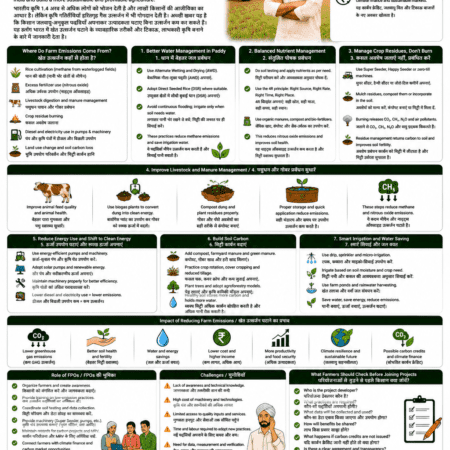
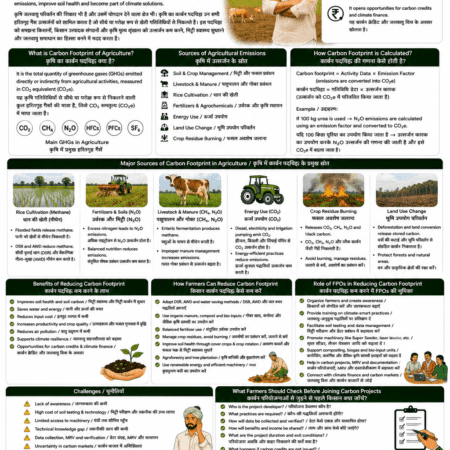
Natural Farming Practices in India are becoming increasingly important for soil health, low-cost agriculture, climate resilience, biodiversity protection, and farmer livelihoods. Many farmers are facing rising input costs, declining soil fertility, water stress, pest problems, and uncertainty due to changing climate conditions. Natural farming offers a way to reduce dependence on external inputs and use local resources more effectively.
Natural farming is based on the idea that soil is a living system. It focuses on improving soil biology, using farm-based inputs, protecting biodiversity, conserving water, and maintaining ecological balance. Instead of depending heavily on chemical fertilizers and pesticides, natural farming encourages farmers to use locally available materials and traditional knowledge along with practical field learning.
Farmer Producer Organizations can play an important role in promoting natural farming practices in India. Through training, demonstration plots, input preparation, soil testing, market linkage, and collective farmer action, FPOs can help make natural farming more practical, organized, and economically useful for small and marginal farmers.
Natural Farming Practices in India and Why They Matter
Natural Farming Practices in India matter because agriculture cannot remain sustainable if soil health continues to decline and input costs continue to rise. Farmers need farming methods that protect soil, reduce costs, improve resilience, and support long-term income.
Natural farming helps farmers focus on soil life, organic matter, beneficial microbes, crop diversity, local inputs, and ecological balance. It can reduce input dependency and improve farm sustainability when adopted carefully and scientifically.
For small farmers, natural farming is important because it can reduce financial pressure. If farmers can prepare some inputs locally and improve soil health over time, they can reduce recurring expenses and improve net income.
What Is Natural Farming?
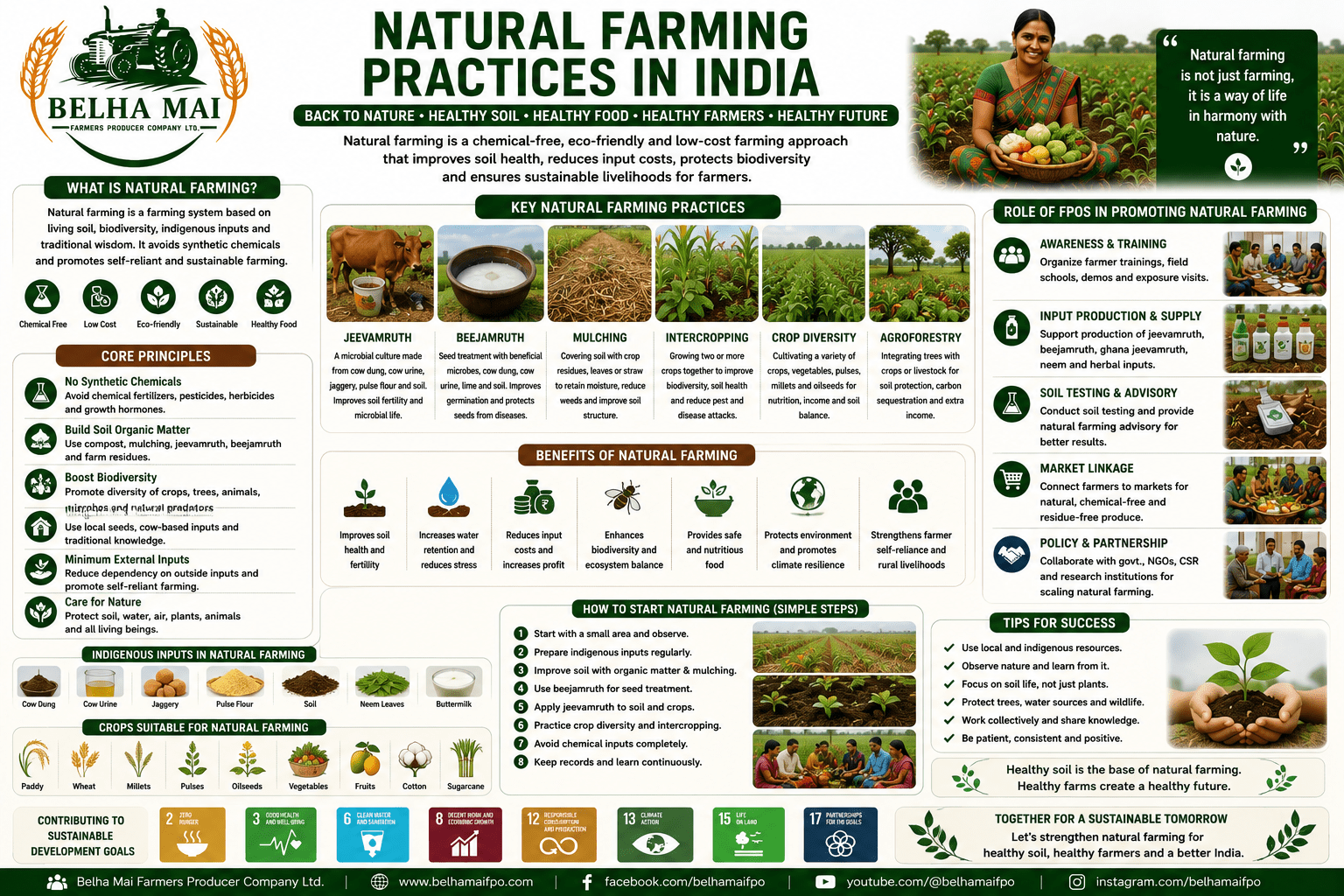
Natural farming is a farming approach that uses local resources, living soil, biodiversity, indigenous knowledge, and natural inputs to grow crops. It aims to reduce or avoid synthetic chemical fertilizers, pesticides, herbicides, and outside inputs.
Natural farming does not mean careless farming or leaving crops unmanaged. It requires observation, planning, crop diversity, soil care, pest monitoring, and regular preparation of natural inputs.
The goal is to build a self-reliant farming system where soil, crops, animals, trees, microbes, water, and farmers work together in balance.
Core Principles of Natural Farming
Natural farming is based on some core principles. These include improving soil organic matter, using locally available inputs, protecting soil microbes, maintaining crop diversity, reducing chemical dependency, conserving water, and protecting biodiversity.
Another important principle is reducing farmer dependency on costly external inputs. Farmers are encouraged to use cow dung, cow urine, jaggery, pulse flour, soil from bunds, leaves, biomass, crop residue, and local materials.
Natural farming also promotes observation. Farmers must observe soil, plants, insects, weather, moisture, crop growth, and pest patterns. This helps them make better decisions.
Natural Farming Practices in India Through Jeevamrut
Jeevamrut is one of the most discussed natural farming inputs in India. It is usually prepared using cow dung, cow urine, jaggery, pulse flour, soil, and water. It is used to increase microbial activity in the soil.
The purpose of jeevamrut is to support soil biology and improve nutrient cycling. It does not work like a chemical fertilizer that gives direct nutrients instantly. Instead, it supports the living processes in soil.
Farmers need proper training to prepare and use jeevamrut correctly. FPOs can organize demonstrations and input preparation groups so farmers can learn practical methods.
Natural Farming Practices in India Through Beejamrut
Beejamrut is used for seed treatment in natural farming. It is usually prepared from cow-based ingredients and local materials. Farmers use it to treat seeds before sowing.
Seed treatment can help protect seeds from some soil-borne problems and support early crop growth. It is also a low-cost practice that farmers can prepare locally.
FPOs can train farmers in seed treatment practices and help them understand the importance of healthy seeds, proper storage, and seed quality.
Natural Farming Practices in India Through Mulching
Mulching is a key natural farming practice. It means covering soil with crop residue, straw, leaves, grass, biomass, or other organic materials. Mulching protects soil from direct sunlight, erosion, and moisture loss.
Mulching improves water retention, supports soil microbes, reduces weed pressure, and gradually adds organic matter as the mulch decomposes. It also protects the topsoil, which is the most fertile layer.
In dry and water-stressed areas, mulching can be very useful because it helps conserve soil moisture and reduce crop stress.
Natural Farming Practices in India Through Intercropping
Intercropping means growing two or more crops together in the same field. It helps improve biodiversity, reduce pest risk, support soil fertility, and create multiple income sources.
Farmers can intercrop cereals with pulses, vegetables with legumes, fruit trees with seasonal crops, or different crops based on local conditions. Proper crop selection and spacing are important.
Intercropping reduces dependence on a single crop. If one crop performs poorly, another crop may still provide income or food security.
Natural Farming Practices in India Through Crop Diversity
Crop diversity is central to natural farming. Growing only one crop repeatedly can increase pest pressure, reduce soil balance, and increase income risk.
Natural farming encourages farmers to grow multiple crops such as cereals, pulses, millets, oilseeds, vegetables, fruits, fodder, medicinal plants, and agroforestry plants. Diversity improves ecological balance and strengthens livelihoods.
FPOs can help farmers plan crop diversity based on market demand, local soil, climate, water availability, and farmer income needs.
Natural Farming Practices in India Through Agroforestry
Agroforestry combines trees with crops or livestock. It is an important natural farming practice because trees support biodiversity, reduce soil erosion, improve microclimate, add biomass, and create long-term income.
Trees can be grown on field boundaries, degraded land, orchards, or suitable farm areas. They can provide fruits, fodder, timber, fuelwood, shade, and ecological benefits.
Agroforestry connects natural farming with climate resilience and income diversification. FPOs can support farmers through planting material, training, and market linkage.
Natural Farming Practices in India Through Soil Health Improvement
Natural farming focuses strongly on soil health. Soil is treated as a living system that needs organic matter, microbes, moisture, air, and biological balance.
Farmers can improve soil health through compost, farmyard manure, crop residue, mulching, green manure, jeevamrut, vermicompost, crop rotation, and reduced chemical pressure.
Healthy soil supports better root growth, water retention, nutrient cycling, and crop resilience. Soil health improvement is the foundation of natural farming.
Natural Farming Practices in India Through Organic Matter
Organic matter is essential for natural farming. It improves soil structure, moisture retention, microbial activity, and nutrient availability.
Farmers can add organic matter through compost, farmyard manure, green manure, crop residues, mulching, biomass, vermicompost, and cover crops.
Without organic matter, soil becomes weak and less productive. Natural farming works best when farmers continuously return biomass and organic material to the soil.
Natural Farming Practices in India Through Natural Pest Management
Natural farming promotes ecological pest management instead of depending only on chemical pesticides. Farmers can use botanical extracts, neem-based preparations, trap crops, pheromone traps, bird perches, beneficial insects, and crop diversity.
The goal is not to kill every insect. Many insects are beneficial and help control harmful pests. A balanced farm ecosystem reduces pest outbreaks.
Farmers need training to identify harmful and beneficial insects. FPOs can organize field schools and demonstrations on natural pest management.
Natural Farming Practices in India Through Water Conservation
Water conservation is important in natural farming. Healthy soil with organic matter holds water better. Mulching, crop diversity, agroforestry, rainwater harvesting, and proper irrigation planning can reduce water stress.
Farmers can also use farm ponds, drip irrigation, mulching, soil cover, and drought-resilient crops to manage water more efficiently.
Water conservation reduces crop risk and improves climate resilience. Natural farming practices should always be linked with better water management.
Natural Farming Practices in India Through Local Resource Use
Natural farming encourages farmers to use local resources instead of depending completely on market-purchased inputs. Local resources may include cow dung, cow urine, farm biomass, leaves, crop residue, soil, jaggery, pulse flour, and local plants.
Using local resources reduces cost and improves farmer self-reliance. It also helps recycle farm waste into useful inputs.
FPOs can help farmers identify available local resources and train them in input preparation and correct application.
Natural Farming Practices in India Through Reduced Chemical Dependency
One of the main objectives of natural farming is to reduce dependence on chemical fertilizers and pesticides. This can lower input costs and reduce pressure on soil, water, insects, and biodiversity.
However, farmers should transition carefully. Sudden changes without training, soil preparation, and market planning can create risk. Natural farming adoption should be gradual and based on local conditions.
FPOs can help farmers adopt natural farming step by step through demonstration plots, farmer groups, and expert guidance.
Natural Farming Practices in India Through Farmer Training
Training is essential for natural farming. Farmers need to know how to prepare inputs, when to apply them, how to manage pests naturally, how to plan crop diversity, and how to maintain soil health.
Training should be practical and field-based. Farmers learn better when they see results in demonstration plots and nearby farms.
FPOs, agricultural universities, Krishi Vigyan Kendras, NGOs, CSR organizations, and government departments can work together to create natural farming training programs.
Natural Farming Practices in India Through Demonstration Plots
Demonstration plots are important because farmers trust what they can see. Natural farming practices should be tested and shown in real fields under local conditions.
A demonstration plot can show the difference in soil moisture, crop health, input cost, biodiversity, pest control, and farmer income. It can also help farmers learn through observation.
FPOs can create demonstration plots with selected farmers and use them as learning centers for other members.
Natural Farming Practices in India Through Farmer Groups
Natural farming becomes stronger when farmers work in groups. Farmer groups can prepare inputs together, share knowledge, compare results, organize training, and market produce collectively.
Group-based natural farming reduces fear and improves confidence. Farmers can learn from each other and solve problems together.
FPOs are ideal platforms for forming natural farming groups because they already work with farmers and understand local needs.
Natural Farming Practices in India Through Women Participation
Women can play a strong role in natural farming. They are often involved in livestock care, composting, kitchen gardens, seed preservation, biomass management, and household nutrition.
Women can lead activities such as bio-input preparation, kitchen nutrition gardens, seed treatment, composting, processing, and value addition. Natural farming can create income and leadership opportunities for women.
FPOs can support women-led natural farming models through training, finance linkage, market access, and enterprise support.
Natural Farming Practices in India Through Youth Participation
Rural youth can bring energy, technology, documentation, and marketing support to natural farming. They can help with digital records, farm monitoring, marketing, content creation, input preparation, and customer connection.
Youth can also become natural farming trainers, agri-service providers, nursery managers, bio-input entrepreneurs, and digital marketing coordinators.
FPOs can engage rural youth in natural farming enterprises and sustainable agriculture projects.
Natural Farming Practices in India Through Bio-Input Production
Bio-input production can become an important rural enterprise linked with natural farming. Farmers and FPOs can prepare inputs such as jeevamrut, beejamrut, compost, vermicompost, botanical extracts, and biofertilizer-based products where technically suitable.
Bio-input production can reduce farmer input costs and create employment for rural youth and women.
Quality and training are important. Farmers must understand correct preparation, storage, use, and limitations of each input.
Natural Farming Practices in India Through Seed Conservation
Natural farming is closely linked with seed conservation. Local and traditional seeds often perform better under low-input and local farming conditions.
Farmers can preserve native seeds, exchange seeds, and create community seed banks. This supports biodiversity and reduces dependence on purchased seeds.
FPOs can organize seed conservation programs and connect farmers with suitable local varieties and market opportunities.
Natural Farming Practices in India Through Market Linkage
Natural farming becomes more sustainable when farmers receive fair value for their produce. If naturally grown produce is sold at ordinary prices, farmers may lose motivation.
FPOs can help farmers aggregate produce, maintain quality, create branding, connect with health-conscious consumers, and build direct or institutional market linkages.
Market linkage is essential because natural farming must support both soil health and farmer income.
Natural Farming Practices in India Through Certification and Trust
Some markets require certification for organic or natural produce. Certification can be useful, but it may be difficult for small farmers if done individually.
Group certification or participatory systems can help farmers build market trust. Documentation, traceability, and quality control are important.
FPOs can help farmers organize records, maintain standards, and build buyer confidence around natural farming products.
Natural Farming Practices in India Through Value Addition
Value addition can improve the economic viability of natural farming. Naturally grown produce can be processed, packed, branded, and marketed as higher-value products.
Examples include natural grains, pulses, millets, fruits, vegetables, honey, amla products, mango products, herbal products, and local foods.
FPOs can create value addition opportunities through processing units, packaging, branding, and market linkage. This helps farmers earn more from sustainable practices.
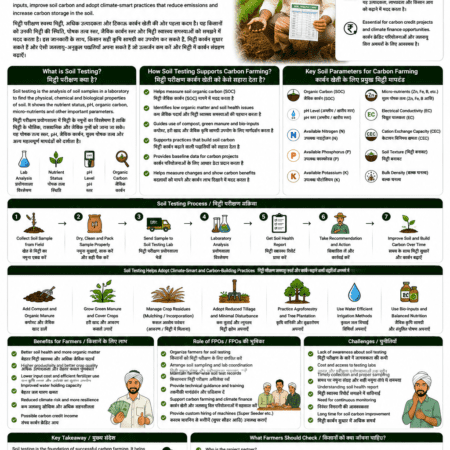
Natural Farming Practices in India Through Soil Testing
Even in natural farming, soil testing is important. Farmers need to know soil pH, organic carbon, nutrient status, and soil problems.
Soil testing helps farmers understand whether their natural farming practices are improving soil health over time. It also helps identify specific deficiencies that need attention.
FPOs can organize soil testing campaigns and explain reports to farmers in simple language.
Natural Farming Practices in India Through Integrated Approach
Natural farming should not be treated as one single input or one single method. It is an integrated approach that includes soil health, biodiversity, water conservation, crop diversity, local inputs, farmer knowledge, and market planning.
Farmers need a complete system, not just a recipe. Every farm is different, and natural farming must be adapted to local soil, climate, crop, water, livestock, and market conditions.
FPOs can help farmers adopt this integrated approach through local planning and continuous support.
Natural Farming Practices in India and Farmer Income
Natural farming can support farmer income by reducing input costs, improving soil health, diversifying crops, creating value-added products, and connecting with better markets.
However, income improvement depends on proper adoption, farmer training, crop planning, transition support, and market linkage. Natural farming should not be promoted without business planning.
FPOs can help farmers balance ecological benefits with economic benefits. This is essential for long-term adoption.
Natural Farming Practices in India and Climate Resilience
Natural farming supports climate resilience by improving soil organic matter, water retention, biodiversity, crop diversity, and local resource use.
Healthy soil can better withstand drought and irregular rainfall. Diverse crops reduce risk. Trees and agroforestry improve microclimate. Reduced input dependency lowers financial risk.
Climate resilience is one of the strongest reasons to promote natural farming in India.
Natural Farming Practices in India and Sustainable Development Goals
Natural farming practices support several Sustainable Development Goals. They connect with SDG 1 No Poverty, SDG 2 Zero Hunger, SDG 3 Good Health, SDG 6 Clean Water, SDG 8 Decent Work, SDG 12 Responsible Production, SDG 13 Climate Action, SDG 15 Life on Land, and SDG 17 Partnerships.
Natural farming contributes to sustainable agriculture, soil restoration, biodiversity protection, climate resilience, and farmer livelihoods.
This makes natural farming highly relevant for CSR organizations, NGOs, government agencies, and development partners.
Role of FPOs in Promoting Natural Farming
FPOs can promote natural farming by organizing farmers, providing training, creating demonstration plots, supporting input preparation, arranging soil testing, helping with market linkage, and building partnerships.
FPOs can also help farmers avoid common mistakes. Natural farming requires patience, observation, and proper planning. Farmers need support during the transition.
Through collective action, natural farming can become more practical and market-connected for small farmers.
Belha Mai FPO and Natural Farming
Belha Mai Farmers Producer Company Ltd. recognizes that natural farming can support soil health, biodiversity, low-cost agriculture, women participation, climate resilience, and farmer income.
Through FPO-led training, farmer awareness, sustainable input support, soil health education, value addition, market linkage, and partnerships, natural farming practices can be promoted in a practical way.
For Belha Mai FPO, natural farming is not only about reducing chemicals. It is about restoring soil, strengthening farmers, protecting nature, and building a sustainable rural future.
Challenges in Natural Farming Adoption
Natural farming also has challenges. Farmers may fear yield loss, lack training, face market uncertainty, lack livestock-based resources, or not receive fair prices for naturally grown produce.
Some farmers may adopt only one input without understanding the full system. This can lead to disappointment. Natural farming needs proper guidance and gradual transition.
The solution is training, demonstrations, collective learning, market linkage, and support from FPOs, government, NGOs, and CSR partners.
Why Natural Farming Matters for India’s Future
India’s agriculture needs to be productive, profitable, and sustainable. Natural farming can help reduce input dependency, restore soil, protect biodiversity, conserve water, and improve climate resilience.
It can also create opportunities for farmer-led brands, value-added products, women-led enterprises, and rural employment.
Natural farming is not a replacement for all agricultural systems overnight, but it is an important pathway toward more sustainable farming and rural development.
Conclusion
Natural Farming Practices in India offer a practical path toward healthy soil, lower input costs, biodiversity protection, climate resilience, and sustainable farmer livelihoods. Practices such as jeevamrut, beejamrut, mulching, intercropping, crop diversity, agroforestry, soil health improvement, natural pest management, and local resource use can help farmers build stronger farming systems.
FPOs can make natural farming more successful by providing training, soil testing, input preparation support, demonstration plots, market linkage, and collective farmer action.
For Belha Mai Farmers Producer Company Ltd., natural farming represents a farmer-centered approach to sustainable agriculture, where healthy soil, healthy crops, healthy farmers, and a healthy future grow together.
FAQ
What are Natural Farming Practices in India?
Natural farming practices in India include jeevamrut, beejamrut, mulching, intercropping, crop diversity, agroforestry, composting, natural pest management, water conservation, seed conservation, and local resource-based farming.
Why is natural farming important?
Natural farming is important because it improves soil health, reduces input costs, protects biodiversity, conserves water, supports climate resilience, and promotes sustainable farmer livelihoods.
How does natural farming improve soil health?
Natural farming improves soil health by increasing organic matter, supporting soil microbes, improving water retention, reducing chemical pressure, and encouraging crop diversity and biological activity.
Can natural farming increase farmer income?
Natural farming can increase farmer income when it reduces input costs, improves soil health, supports crop diversification, creates value addition, and connects farmers with better markets.
How can FPOs promote natural farming?
FPOs can promote natural farming through farmer training, demonstration plots, soil testing, natural input preparation, bio-input support, market linkage, certification support, and partnerships with development organizations.
Why should CSR organizations support natural farming?
CSR organizations should support natural farming because it creates impact in soil health, climate resilience, farmer income, biodiversity protection, water conservation, women empowerment, and sustainable rural development.
Internal Links Section
👉 SDG Goals — https://belhamaifpo.com/sdg-goals/
👉 Farmer Producer Organizations Complete Guide — https://belhamaifpo.com/farmer-producer-organisation/farmer-producer-organizations-fpos/
👉 Soil Health Challenges in Indian Agriculture — https://belhamaifpo.com/sdg-goals/soil-health-challenges-in-indian-agriculture/
👉 Importance of Organic Farming in Soil Restoration —https://belhamaifpo.com/sdg-goals/importance-of-organic-farming-in-soil-restoration/
👉 How Chemical Fertilizers Affect Soil Health —https://belhamaifpo.com/sdg-goals/how-chemical-fertilizers-affect-soil-health/
👉 Biodiversity Loss in Agriculture and Solutions —https://belhamaifpo.com/sdg-goals/biodiversity-loss-in-agriculture-and-solutions/
👉 Why FPOs are Key to Sustainable Agriculture — https://belhamaifpo.com/sdg-goals/why-fpos-are-key-to-sustainable-agriculture/
👉 Linking Local Farming Practices to Global Development Goals — https://belhamaifpo.com/sdg-goals/linking-local-farming-practices-to-global-development-goals/
👉 How Agriculture Can Reduce Rural Poverty in India — https://belhamaifpo.com/sdg-goals/how-agriculture-can-reduce-rural-poverty-in-india/
👉 Role of Collective Farming in Increasing Farmer Income —https://belhamaifpo.com/sdg-goals/role-of-collective-farming-in-increasing-farmer-income/
👉 Farm Machinery Bank — https://belhamaifpo.com/farm-machinery-bank/
👉 Belha Mai FPO — https://belhamaifpo.com/
External Authority Links
👉 National Centre of Organic and Natural Farming — https://nconf.dac.gov.in/
👉 Paramparagat Krishi Vikas Yojana — https://pgsindia-ncof.gov.in/
👉 Ministry of Agriculture and Farmers Welfare — https://agriwelfare.gov.in/
👉 Soil Health Card Scheme — https://soilhealth.dac.gov.in/
👉 Indian Council of Agricultural Research — https://icar.org.in/
👉 United Nations Sustainable Development Goals — https://sdgs.un.org/goals
👉 National Bank for Agriculture and Rural Development — https://www.nabard.org/
👉 Small Farmers’ Agribusiness Consortium — https://sfacindia.com/
Follow Belha Mai FPO for More Updates
Website: https://belhamaifpo.com/
Facebook: https://www.facebook.com/profile.php?id=61561043486818
YouTube: https://www.youtube.com/channel/UC9ZvojoTMCa7mU1-Q_Bh60A
LinkedIn:https://www.linkedin.com/in/abhay-singh-ab5568280/
Instagram: https://instagram.com/belhamaifpo
Belha Mai Farmers Producer Company Ltd. supports farmers through better information, technology, market linkage, value addition, FPO awareness, rural development, women empowerment, soil health, natural farming, and sustainable agriculture.