कृषि में कार्बन क्रेडिट क्या है?
Introduction / परिचय
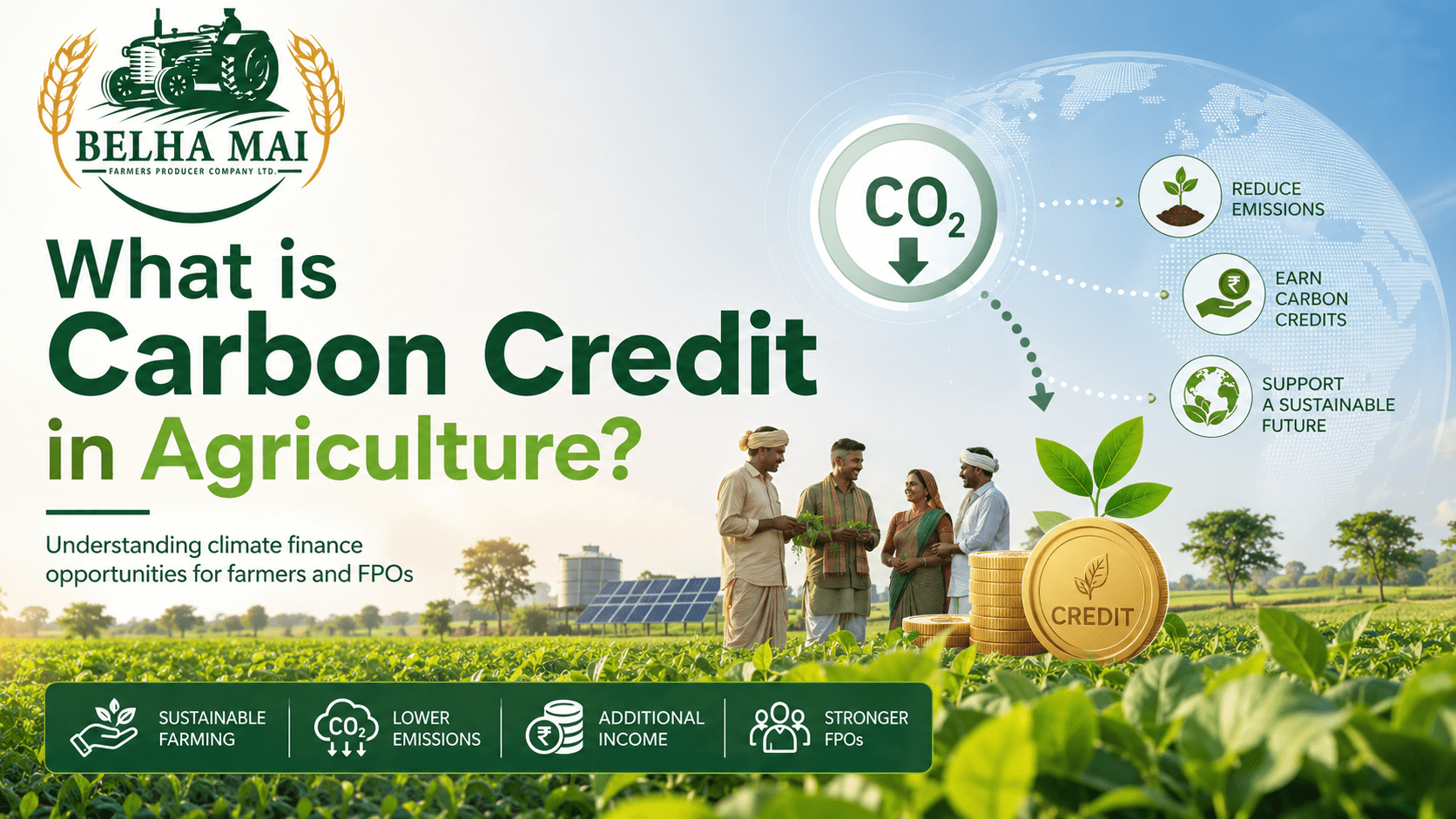
What is Carbon Credit in Agriculture is an emerging concept that connects farming practices with climate action and additional income opportunities. In simple words, when farmers adopt practices that reduce greenhouse gas emissions or increase carbon storage in soil and trees, these environmental benefits can potentially be measured, verified, and converted into carbon credits. These credits may then be sold in carbon markets to companies or organisations that want to offset their emissions. For Indian farmers and Farmer Producer Organizations (FPOs), carbon credits are being discussed widely, but most people still do not clearly understand how the system works, who implements these projects, how farmers can participate, or whether the income opportunity is practical and real.
कृषि में कार्बन क्रेडिट एक उभरती हुई अवधारणा है, जो खेती की पद्धतियों को जलवायु कार्रवाई और अतिरिक्त आय के अवसरों से जोड़ती है। सरल शब्दों में, जब किसान ऐसी कृषि पद्धतियाँ अपनाते हैं जो greenhouse gas emissions को कम करती हैं या मिट्टी और पेड़ों में carbon storage बढ़ाती हैं, तो इन पर्यावरणीय लाभों को मापा, सत्यापित किया जा सकता है और संभावित रूप से carbon credits में बदला जा सकता है। बाद में इन credits को carbon markets में उन कंपनियों या संस्थाओं को बेचा जा सकता है जो अपने emissions को offset करना चाहती हैं। भारतीय किसानों और Farmer Producer Organizations (FPOs) के लिए carbon credit आज एक बहुत चर्चित विषय है, लेकिन अधिकांश लोगों को अभी भी यह स्पष्ट रूप से समझ नहीं है कि यह प्रणाली कैसे काम करती है, इसे कौन लागू करता है, किसान इसमें कैसे भाग ले सकते हैं, और क्या यह आय का अवसर वास्तव में व्यावहारिक और वास्तविक है।
Today, many farmers and FPOs have heard the term carbon credit, but very few know how to actually take advantage of it. There is a major gap between awareness and implementation. Most small farmers do not have direct access to carbon markets, measurement systems, verification agencies, or implementing companies. Even some agri-tech startups are talking about carbon farming, regenerative agriculture, and climate finance, but on-ground implementation at farmer level is still limited. This is why understanding carbon credit in agriculture is important—not just as a concept, but as a possible future opportunity for organised farmer groups, FPOs, and sustainable rural development.
आज बहुत से किसान और FPOs ने carbon credit शब्द तो सुना है, लेकिन वास्तव में इसका लाभ कैसे लिया जाए, यह बहुत कम लोग जानते हैं। जागरूकता और वास्तविक क्रियान्वयन के बीच एक बड़ा अंतर है। अधिकांश छोटे किसानों के पास carbon markets, measurement systems, verification agencies या implementing companies तक सीधी पहुँच नहीं होती। कुछ agri-tech startups carbon farming, regenerative agriculture और climate finance की बात तो कर रहे हैं, लेकिन जमीनी स्तर पर किसान स्तर पर implementation अभी भी सीमित है। यही कारण है कि कृषि में carbon credit को समझना बहुत महत्वपूर्ण है—सिर्फ एक अवधारणा के रूप में नहीं, बल्कि संगठित किसान समूहों, FPOs और sustainable rural development के लिए एक संभावित भविष्य अवसर के रूप में।
What is a Carbon Credit? / कार्बन क्रेडिट क्या है?
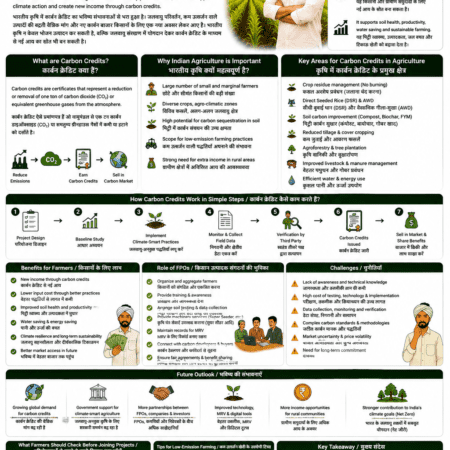
A carbon credit is generally considered a tradable unit that represents the reduction, removal, or avoidance of one metric tonne of carbon dioxide equivalent (CO₂e). In agriculture, this means that if farming practices reduce emissions or capture carbon in soil, biomass, or trees, those benefits may be converted into credits if they are scientifically measured and officially verified. These credits become valuable only when the environmental impact is documented according to accepted standards and buyers are willing to purchase them.
Carbon credit सामान्यतः एक ऐसी व्यापार योग्य इकाई मानी जाती है, जो एक metric tonne carbon dioxide equivalent (CO₂e) के reduction, removal या avoidance का प्रतिनिधित्व करती है। कृषि में इसका अर्थ यह है कि यदि खेती की पद्धतियाँ emissions को कम करती हैं या मिट्टी, biomass या पेड़ों में carbon capture बढ़ाती हैं, तो इन लाभों को carbon credits में बदला जा सकता है, बशर्ते इन्हें वैज्ञानिक रूप से मापा जाए और आधिकारिक रूप से सत्यापित किया जाए। ये credits तभी मूल्यवान बनते हैं जब पर्यावरणीय प्रभाव स्वीकृत standards के अनुसार documented हो और buyers उन्हें खरीदने के लिए तैयार हों।
In simple farmer language, carbon credit means getting recognition and possible financial value for farming in a cleaner, more climate-friendly way. However, it is not as easy as changing one farming method and immediately receiving money. A proper system is required involving data collection, baseline assessment, monitoring, reporting, verification, and market linkage. That is why carbon credits are usually not accessible to individual small farmers on their own, but may become possible through aggregation models such as FPOs.
सरल किसान भाषा में कहें तो carbon credit का अर्थ है साफ़, जलवायु-अनुकूल तरीके से खेती करने पर मान्यता और संभावित आर्थिक मूल्य मिलना। हालांकि, यह इतना आसान नहीं है कि किसान एक खेती पद्धति बदलें और तुरंत पैसा मिल जाए। इसके लिए एक व्यवस्थित प्रणाली की आवश्यकता होती है, जिसमें data collection, baseline assessment, monitoring, reporting, verification और market linkage शामिल होते हैं। इसी कारण carbon credits आमतौर पर अकेले छोटे किसानों के लिए सुलभ नहीं होते, लेकिन FPO जैसे aggregation models के माध्यम से यह संभव हो सकता है।
How Does Carbon Credit Relate to Agriculture? / कार्बन क्रेडिट का कृषि से क्या संबंध है?
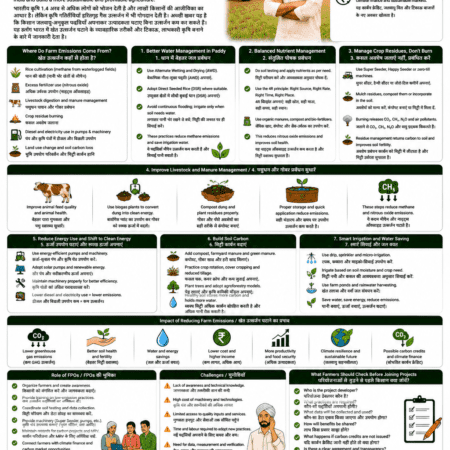
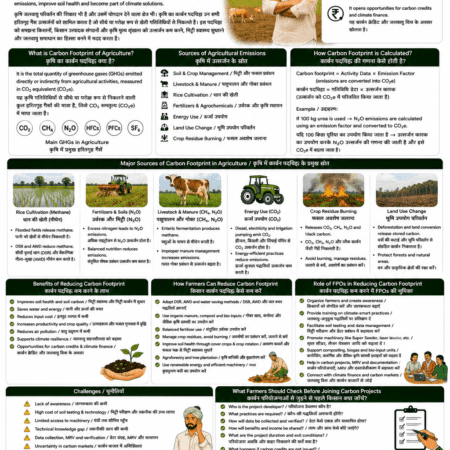
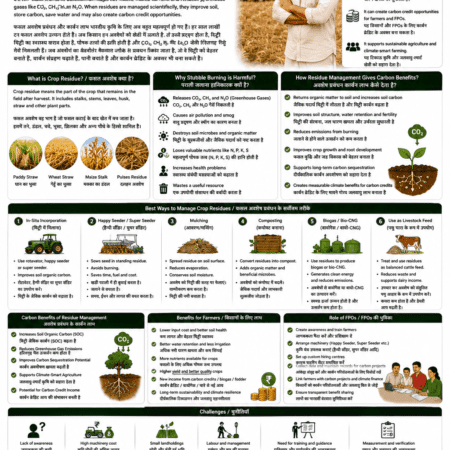
Agriculture is both affected by climate change and linked to greenhouse gas emissions. Farming activities such as residue burning, excessive tillage, overuse of chemical inputs, poor water management in paddy, and loss of soil organic matter can increase emissions. On the other hand, sustainable practices such as regenerative agriculture, reduced tillage, Direct Seeded Rice (DSR), crop residue management, agroforestry, tree plantation, bio-inputs, soil health improvement, and better irrigation practices can reduce emissions or improve carbon sequestration. These climate-positive changes create the basis for agricultural carbon credit projects.
कृषि एक ऐसा क्षेत्र है जो climate change से प्रभावित भी होता है और greenhouse gas emissions से जुड़ा भी होता है। खेती की गतिविधियाँ जैसे residue burning, excessive tillage, chemical inputs का अत्यधिक उपयोग, paddy में poor water management, और soil organic matter की हानि emissions को बढ़ा सकती हैं। दूसरी ओर, regenerative agriculture, reduced tillage, Direct Seeded Rice (DSR), crop residue management, agroforestry, tree plantation, bio-inputs, soil health improvement और बेहतर irrigation practices जैसी sustainable पद्धतियाँ emissions को कम कर सकती हैं या carbon sequestration बढ़ा सकती हैं। यही climate-positive परिवर्तन agricultural carbon credit projects की नींव बनाते हैं।
This is why carbon credit in agriculture is not a separate activity from farming—it is linked to how the farm is managed. If farmers adopt better practices and maintain proper records, those improvements may create measurable environmental outcomes. But the key word here is “measurable.” Carbon projects do not work only on assumptions. They depend on evidence that a real reduction or removal has happened, and that is where technology, verification, and project implementation become important.
इसीलिए कृषि में carbon credit खेती से अलग कोई गतिविधि नहीं है—यह सीधे इस बात से जुड़ा है कि खेत का प्रबंधन कैसे किया जा रहा है। यदि किसान बेहतर practices अपनाते हैं और proper records बनाए रखते हैं, तो ये सुधार measurable environmental outcomes पैदा कर सकते हैं। लेकिन यहाँ मुख्य शब्द है “measurable”। Carbon projects केवल अनुमान पर काम नहीं करते। वे इस प्रमाण पर आधारित होते हैं कि वास्तव में reduction या removal हुआ है, और यही वह बिंदु है जहाँ technology, verification और project implementation महत्वपूर्ण हो जाते हैं।
Why Farmers and FPOs Are Confused / किसान और FPOs क्यों भ्रमित हैं
One of the biggest challenges is that carbon credit is being discussed more than it is being understood. Farmers often hear that they can earn money from carbon credits, but they are rarely told what exact practices are required, how long the project will run, how the carbon is measured, who will verify it, what the contract terms are, or when the payment will actually come. This creates unrealistic expectations and confusion at the grassroots level.
सबसे बड़ी चुनौतियों में से एक यह है कि carbon credit को समझने से अधिक उसके बारे में चर्चा हो रही है। किसान अक्सर सुनते हैं कि वे carbon credits से आय कमा सकते हैं, लेकिन उन्हें बहुत कम बताया जाता है कि इसके लिए कौन-कौन सी practices आवश्यक हैं, project कितने समय तक चलेगा, carbon कैसे मापा जाएगा, कौन इसे verify करेगा, contract terms क्या होंगी, और वास्तव में payment कब आएगी। इससे जमीनी स्तर पर अवास्तविक उम्मीदें और भ्रम पैदा होता है।
FPOs also face similar confusion. They understand that carbon credits may become an opportunity for organised farmer groups, but they often do not know which agencies to approach, whether startup companies are credible, what business model is viable, and how risks should be managed. There is also uncertainty about revenue sharing, ownership of carbon rights, cost of MRV, and whether smallholder farmer participation is financially practical. This gap between the promise and the process is exactly why awareness alone is not enough.
FPOs भी इसी प्रकार के भ्रम का सामना करते हैं। वे समझते हैं कि carbon credits संगठित किसान समूहों के लिए एक अवसर बन सकते हैं, लेकिन उन्हें अक्सर यह नहीं पता होता कि किन agencies से संपर्क किया जाए, कौन-सी startup companies विश्वसनीय हैं, कौन-सा business model व्यवहारिक है, और risks को कैसे manage किया जाए। Revenue sharing, carbon rights के ownership, MRV की लागत, और यह प्रश्न कि smallholder farmer participation वित्तीय रूप से व्यावहारिक है या नहीं—इन सभी विषयों पर अनिश्चितता रहती है। Promise और process के बीच यही अंतर बताता है कि केवल awareness पर्याप्त नहीं है।
How Carbon Credit Projects Usually Work / कार्बन क्रेडिट प्रोजेक्ट सामान्यतः कैसे काम करते हैं
A typical agricultural carbon credit project starts with identifying a group of farmers and defining the farming practices that will be promoted. A project developer or implementing agency then creates a baseline, which means understanding what farmers are currently doing and what emissions profile or soil-carbon condition exists before the project begins. After that, selected climate-friendly practices are introduced and farmers are trained to adopt them. Over time, data is collected to monitor whether the required changes are actually happening.
एक सामान्य agricultural carbon credit project की शुरुआत किसानों के एक समूह की पहचान करने और उन farming practices को निर्धारित करने से होती है जिन्हें बढ़ावा दिया जाएगा। इसके बाद project developer या implementing agency baseline तैयार करती है, अर्थात यह समझती है कि project शुरू होने से पहले किसान वर्तमान में क्या कर रहे हैं और emissions profile या soil-carbon condition क्या है। इसके बाद चयनित climate-friendly practices को लागू किया जाता है और किसानों को उन्हें अपनाने के लिए प्रशिक्षित किया जाता है। समय के साथ data collect किया जाता है ताकि यह monitor किया जा सके कि आवश्यक बदलाव वास्तव में हो रहे हैं या नहीं।
The next stage usually involves MRV, which stands for Monitoring, Reporting, and Verification. This is one of the most critical parts of the process because carbon credits require evidence. Once the changes are documented and verified under a recognized methodology or standard, credits may be issued. Those credits can then be sold to buyers in voluntary carbon markets. Only after sale and settlement does the revenue flow back to the project structure, where it is then shared among stakeholders such as farmers, FPOs, and project developers, depending on the agreement.
अगला चरण सामान्यतः MRV होता है, जिसका अर्थ है Monitoring, Reporting, and Verification। यह पूरी प्रक्रिया का सबसे महत्वपूर्ण हिस्सा होता है क्योंकि carbon credits के लिए प्रमाण आवश्यक है। जब बदलावों को एक recognized methodology या standard के अंतर्गत document और verify कर लिया जाता है, तब credits जारी किए जा सकते हैं। बाद में इन्हें voluntary carbon markets में buyers को बेचा जा सकता है। Sale और settlement के बाद ही revenue project structure में वापस आता है, और फिर agreement के अनुसार farmers, FPOs तथा project developers जैसे stakeholders के बीच बाँटा जाता है।
Why FPOs Matter in Carbon Credit Projects / कार्बन क्रेडिट प्रोजेक्ट में FPOs क्यों महत्वपूर्ण हैं
For small and marginal farmers, direct participation in carbon markets is usually difficult because landholdings are fragmented, documentation is weak, awareness is low, and verification costs are high. This is where Farmer Producer Organizations can play a major role. FPOs can aggregate farmers, collect farm-level data, maintain records, coordinate trainings, encourage practice adoption, and act as a local implementation partner for larger climate-finance or carbon-credit programs.
छोटे और सीमांत किसानों के लिए carbon markets में सीधे भाग लेना सामान्यतः कठिन होता है क्योंकि landholdings बिखरी हुई होती हैं, documentation कमजोर होता है, awareness कम होती है, और verification costs अधिक होती हैं। यहीं पर Farmer Producer Organizations महत्वपूर्ण भूमिका निभा सकते हैं। FPOs किसानों को aggregate कर सकते हैं, farm-level data collect कर सकते हैं, records maintain कर सकते हैं, trainings coordinate कर सकते हैं, practice adoption को बढ़ावा दे सकते हैं, और बड़े climate-finance या carbon-credit programs के लिए local implementation partner के रूप में काम कर सकते हैं।
For an FPO, carbon credit is not only about possible income—it is also about institutional strengthening. If an FPO becomes active in sustainable agriculture, soil health, water saving, residue management, DSR, agroforestry, and bio-input promotion, it creates a stronger value proposition for development agencies, corporate sustainability programs, climate-tech companies, and carbon project developers. In this way, carbon credit projects can also improve the long-term relevance and capacity of the FPO itself.
किसी FPO के लिए carbon credit केवल संभावित आय का विषय नहीं है—यह संस्थागत सुदृढ़ीकरण का भी विषय है। यदि कोई FPO sustainable agriculture, soil health, water saving, residue management, DSR, agroforestry और bio-input promotion में सक्रिय होता है, तो वह development agencies, corporate sustainability programs, climate-tech companies और carbon project developers के लिए अधिक मजबूत value proposition तैयार करता है। इस प्रकार carbon credit projects, FPO की दीर्घकालिक उपयोगिता और क्षमता को भी बढ़ा सकते हैं।
Examples of Practices That May Support Carbon Credits / वे पद्धतियाँ जो कार्बन क्रेडिट में सहायक हो सकती हैं
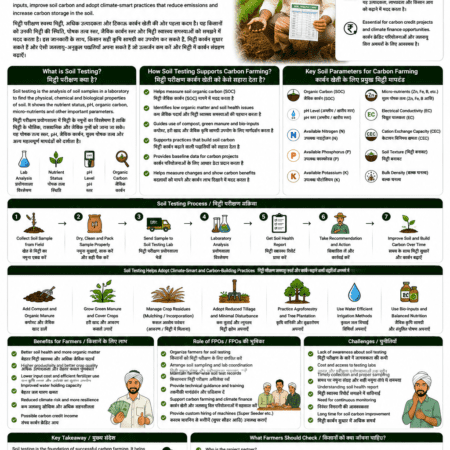
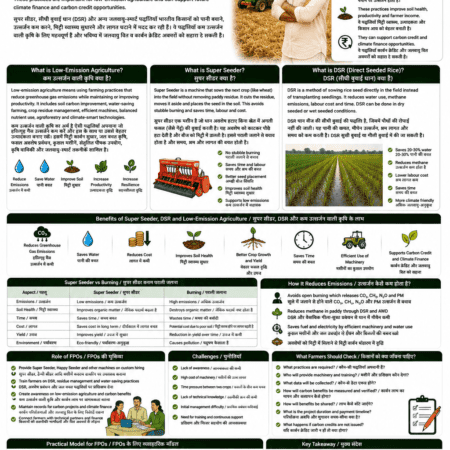
Agricultural carbon projects may support practices such as reduced tillage, crop residue retention, Super Seeder-based residue management, Direct Seeded Rice, alternate wetting and drying, agroforestry, tree plantation, composting, bio-input application, improved nutrient use efficiency, and soil organic carbon enhancement. These practices differ by region, crop, and methodology, so no single model works everywhere. What matters is whether the practice can demonstrate measurable environmental benefit and whether it fits local farming systems.
Agricultural carbon projects reduced tillage, crop residue retention, Super Seeder-based residue management, Direct Seeded Rice, alternate wetting and drying, agroforestry, tree plantation, composting, bio-input application, improved nutrient use efficiency, और soil organic carbon enhancement जैसी practices को समर्थन दे सकते हैं। ये practices क्षेत्र, फसल और methodology के अनुसार अलग-अलग हो सकती हैं, इसलिए एक ही model हर जगह लागू नहीं होता। महत्वपूर्ण बात यह है कि क्या वह practice measurable environmental benefit दिखा सकती है और क्या वह local farming systems के अनुरूप है।
For Belha Mai FPO and similar organisations, this area is especially relevant because services like soil testing, farm machinery support, crop residue management, DSR, and sustainable farming awareness are already linked to the broader climate-smart agriculture agenda. This means that FPOs doing such work may already be building the foundation required for future carbon projects, even if they are not yet formally part of the carbon market.
Belha Mai FPO और इसी प्रकार की संस्थाओं के लिए यह क्षेत्र विशेष रूप से प्रासंगिक है क्योंकि soil testing, farm machinery support, crop residue management, DSR और sustainable farming awareness जैसी सेवाएँ पहले से ही व्यापक climate-smart agriculture agenda से जुड़ी हुई हैं। इसका अर्थ यह है कि जो FPOs इस प्रकार का कार्य कर रहे हैं, वे भविष्य के carbon projects के लिए आवश्यक आधार पहले से तैयार कर रहे हो सकते हैं, भले ही वे अभी औपचारिक रूप से carbon market का हिस्सा न हों।
Is Carbon Credit Income Guaranteed? / क्या कार्बन क्रेडिट से आय निश्चित होती है?
No, carbon credit income is not guaranteed. This is a very important point for farmers and FPOs to understand. Carbon credit revenue depends on many factors, including project design, verification success, methodology, buyer demand, market price, farmer participation quality, and long-term monitoring. Because of these uncertainties, carbon credit should not be presented as easy or immediate income. It is better understood as a future-oriented opportunity linked to organised implementation and verified climate benefits.
नहीं, carbon credit से आय निश्चित नहीं होती। किसानों और FPOs के लिए इस बात को समझना बहुत महत्वपूर्ण है। Carbon credit revenue कई कारकों पर निर्भर करता है, जिनमें project design, verification success, methodology, buyer demand, market price, farmer participation quality और long-term monitoring शामिल हैं। इन अनिश्चितताओं के कारण carbon credit को आसान या त्वरित आय के रूप में प्रस्तुत नहीं किया जाना चाहिए। इसे एक भविष्य-उन्मुख अवसर के रूप में समझना बेहतर है, जो organised implementation और verified climate benefits से जुड़ा है।
This is also why caution is necessary when dealing with startups or agencies that make big promises. Before joining any carbon program, FPOs and farmers should clearly understand who is implementing the project, who bears the cost, what share of revenue will come to farmers, what the contract duration is, who owns the carbon rights, and what happens if the expected credit generation does not materialize. Transparent agreements are essential.
इसी कारण उन startups या agencies के साथ काम करते समय सावधानी आवश्यक है जो बड़े-बड़े वादे करती हैं। किसी भी carbon program से जुड़ने से पहले FPOs और किसानों को स्पष्ट रूप से समझ लेना चाहिए कि project को कौन लागू कर रहा है, लागत कौन वहन करेगा, revenue का कितना हिस्सा किसानों को मिलेगा, contract की अवधि क्या होगी, carbon rights का ownership किसके पास होगा, और यदि अपेक्षित credit generation नहीं हो पाती है तो क्या होगा। पारदर्शी agreements अत्यंत आवश्यक हैं।
What Farmers Should Do First / किसानों को शुरुआत में क्या करना चाहिए
The first step is not to rush into a carbon project, but to understand the basics. Farmers should learn which practices on their farms may help reduce emissions or improve soil carbon. FPOs should begin identifying suitable villages, crops, and farmer groups for pilot-level interventions. They should also strengthen documentation, soil data, acreage records, and awareness on sustainable practices. Without good records and organised implementation, carbon credit participation becomes difficult.
पहला कदम यह नहीं है कि किसान तुरंत किसी carbon project में शामिल हो जाएँ, बल्कि यह है कि वे मूल बातें समझें। किसानों को यह जानना चाहिए कि उनके खेतों पर कौन-सी practices emissions कम करने या soil carbon बढ़ाने में मदद कर सकती हैं। FPOs को pilot-level interventions के लिए उपयुक्त villages, crops और farmer groups की पहचान शुरू करनी चाहिए। उन्हें documentation, soil data, acreage records और sustainable practices पर awareness को भी मजबूत करना चाहिए। अच्छे records और organised implementation के बिना carbon credit participation कठिन हो जाती है।
The next practical step for an FPO is to approach credible project developers, climate-tech companies, or implementation agencies with a pilot proposal. Instead of asking only general questions, the FPO should ask about minimum scale, methodology, MRV process, payment structure, cost sharing, data requirements, and contract conditions. This approach makes the discussion more practical and protects the interests of farmers.
किसी FPO के लिए अगला व्यावहारिक कदम यह है कि वह credible project developers, climate-tech companies या implementation agencies के पास एक pilot proposal के साथ जाए। केवल सामान्य प्रश्न पूछने के बजाय, FPO को minimum scale, methodology, MRV process, payment structure, cost sharing, data requirements और contract conditions के बारे में पूछना चाहिए। यह approach चर्चा को अधिक व्यावहारिक बनाती है और किसानों के हितों की रक्षा करती है।
Conclusion / निष्कर्ष
Carbon credit in agriculture is a promising but still evolving opportunity. It offers the possibility of connecting sustainable farming with climate finance, but it is not a simple or automatic income source. For most small farmers, direct access is difficult. That is why FPOs can become the most practical bridge between farmers and the carbon market. They can organise farmers, support implementation, maintain records, and work with credible agencies to build scalable models.
कृषि में carbon credit एक आशाजनक लेकिन अभी विकसित हो रहा अवसर है। यह sustainable farming को climate finance से जोड़ने की संभावना देता है, लेकिन यह कोई सरल या automatic income source नहीं है। अधिकांश छोटे किसानों के लिए direct access कठिन है। इसलिए FPOs किसानों और carbon market के बीच सबसे व्यावहारिक bridge बन सकते हैं। वे किसानों को संगठित कर सकते हैं, implementation को support कर सकते हैं, records maintain कर सकते हैं, और credible agencies के साथ मिलकर scalable models बना सकते हैं।
The real need today is not just more discussion about carbon credits, but more clarity, practical guidance, and trustworthy implementation models. If farmers and FPOs are properly informed and connected with the right partners, carbon credit may become an important part of climate-smart agriculture and rural income diversification in India. Until then, awareness, caution, and institution-building remain the most important first steps.
आज वास्तविक आवश्यकता केवल carbon credits पर अधिक चर्चा की नहीं है, बल्कि अधिक clarity, practical guidance और trustworthy implementation models की है। यदि किसानों और FPOs को सही जानकारी दी जाए और उन्हें सही partners से जोड़ा जाए, तो carbon credit भारत में climate-smart agriculture और rural income diversification का एक महत्वपूर्ण हिस्सा बन सकता है। तब तक awareness, caution और institution-building ही सबसे महत्वपूर्ण प्रारंभिक कदम बने रहेंगे।
Frequently Asked Questions (FAQs) / अक्सर पूछे जाने वाले प्रश्न
1. What is carbon credit in agriculture?
Carbon credit in agriculture refers to a tradable environmental value created when farmers adopt practices that reduce emissions or increase carbon storage, and these benefits are measured and verified.
1. कृषि में carbon credit क्या है?
कृषि में carbon credit का अर्थ है एक ऐसा व्यापार योग्य पर्यावरणीय मूल्य, जो तब बनता है जब किसान emissions कम करने या carbon storage बढ़ाने वाली practices अपनाते हैं और इन लाभों को मापा तथा सत्यापित किया जाता है।
2. Can small farmers earn from carbon credits?
Yes, but usually not individually. Small farmers often need to participate through FPOs, cooperatives, or project aggregators because scale, data, and verification are important.
2. क्या छोटे किसान carbon credits से आय कमा सकते हैं?
हाँ, लेकिन सामान्यतः अकेले नहीं। छोटे किसानों को अक्सर FPOs, cooperatives या project aggregators के माध्यम से जुड़ना पड़ता है क्योंकि scale, data और verification महत्वपूर्ण होते हैं।
3. Are carbon credits easy money for farmers?
No, carbon credits are not easy money. They require practice changes, data collection, monitoring, verification, and successful market sale.
3. क्या carbon credits किसानों के लिए आसान पैसा हैं?
नहीं, carbon credits आसान पैसा नहीं हैं। इनके लिए practice changes, data collection, monitoring, verification और successful market sale की आवश्यकता होती है।
4. Why are FPOs important in carbon credit projects?
FPOs help aggregate farmers, maintain records, coordinate training, and act as local implementation partners, which makes participation more practical for smallholders.
4. कार्बन क्रेडिट प्रोजेक्ट में FPOs क्यों महत्वपूर्ण हैं?
FPOs किसानों को aggregate करने, records maintain करने, training coordinate करने और local implementation partner के रूप में काम करने में मदद करते हैं, जिससे smallholders की participation अधिक practical बनती है।
5. What should farmers check before joining a carbon project?
Farmers should understand the implementing agency, contract duration, revenue-sharing model, carbon rights ownership, costs, and expected payment timeline.
5. किसी carbon project से जुड़ने से पहले किसानों को क्या देखना चाहिए?
किसानों को implementing agency, contract duration, revenue-sharing model, carbon rights ownership, costs और expected payment timeline को अच्छी तरह समझना चाहिए।
Internal Links / आंतरिक लिंक
👉 Farmer Producer Organizations (FPOs): Complete Guide —https://belhamaifpo.com/farmer-producer-organisation/farmer-producer-organizations-fpos/
👉 Why Small Farmers Struggle in India — https://belhamaifpo.com/agriculture/why-small-farmers-struggle-in-india/
👉 Food Processing Industry in India — https://belhamaifpo.com/agriculture/food-processing-industry-in-india/
👉 SDGs & Our FPO — https://belhamaifpo.com/sdg-goals/
External Authority Links / बाहरी प्राधिकरण लिंक
👉 Ministry of Agriculture & Farmers Welfare — https://agriwelfare.gov.in/
👉 NITI Aayog — https://www.niti.gov.in/
👉 FAO Climate-Smart Agriculture — https://www.fao.org/climate-smart-agriculture/en/
👉 UNFCCC — https://unfccc.int/
👉 World Bank Climate Agriculture Resources — https://www.worldbank.org/
Follow Belha Mai FPO for More Updates / अधिक अपडेट के लिए Belha Mai FPO को फॉलो करें
👉 Website — https://belhamaifpo.com/
👉 Facebook —https://www.facebook.com/profile.php?id=61561043486818
👉 Instagram —https://instagram.com/belhamaifpo
👉 LinkedIn — https://www.linkedin.com/in/abhay-singh-ab5568280/
👉 YouTube — https://www.youtube.com/channel/UC9ZvojoTMCa7mU1-Q_Bh60A