Introduction
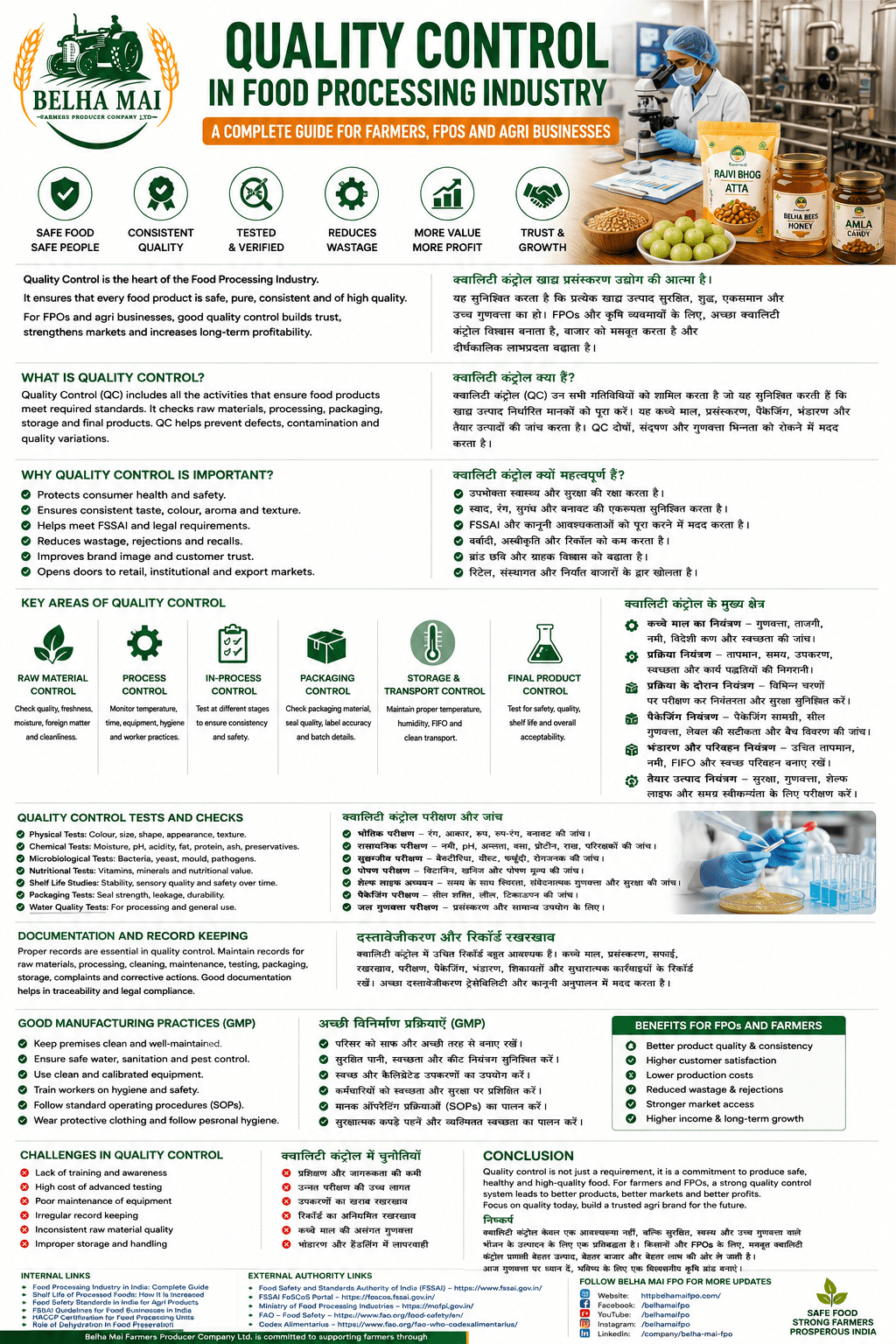
Quality Control in Food Processing Industry is one of the most important foundations of a successful food business. It ensures that every food product is safe, consistent, hygienic, properly packed and suitable for consumers. For farmers, FPOs and agri businesses, quality control is essential for building trust and entering organised markets.
Quality Control in Food Processing Industry एक सफल खाद्य व्यवसाय की सबसे महत्वपूर्ण नींवों में से एक है। यह सुनिश्चित करता है कि हर खाद्य उत्पाद सुरक्षित, एकसमान, स्वच्छ, सही तरीके से पैक और उपभोक्ताओं के लिए उपयुक्त हो। किसानों, FPOs और कृषि व्यवसायों के लिए गुणवत्ता नियंत्रण भरोसा बनाने और संगठित बाजारों में प्रवेश करने के लिए आवश्यक है।
In the Food Processing Industry in India, quality control is not only about testing the final product. It starts from raw material selection and continues through cleaning, sorting, grading, processing, packaging, storage, transport and customer feedback. If quality is controlled at every stage, the final product becomes stronger and more reliable.
Food Processing Industry in India में quality control केवल final product testing तक सीमित नहीं है। यह raw material selection से शुरू होकर cleaning, sorting, grading, processing, packaging, storage, transport और customer feedback तक चलता है। यदि हर stage पर quality control किया जाए, तो final product अधिक मजबूत और भरोसेमंद बनता है।
What is Quality Control?
Quality control means checking and controlling all activities that affect product quality and food safety. It includes raw material inspection, process monitoring, worker hygiene, equipment cleaning, packaging checks, labelling accuracy, storage conditions and final product testing.
Quality control का अर्थ है उन सभी गतिविधियों की जांच और नियंत्रण करना, जो product quality और food safety को प्रभावित करती हैं। इसमें raw material inspection, process monitoring, worker hygiene, equipment cleaning, packaging checks, labelling accuracy, storage conditions और final product testing शामिल हैं।
For food businesses, quality control helps ensure that every batch meets the required standard. If one batch is good and another batch is poor, customers lose trust. Therefore, consistency is one of the main goals of Quality Control in Food Processing Industry.
Food businesses के लिए quality control यह सुनिश्चित करने में मदद करता है कि हर batch required standard को पूरा करे। यदि एक batch अच्छा और दूसरा batch खराब हो, तो customers का भरोसा कम हो जाता है। इसलिए consistency, Quality Control in Food Processing Industry का एक मुख्य लक्ष्य है।
Why Quality Control is Important
Quality control protects consumer health and business reputation. Unsafe or poor-quality food can lead to complaints, product rejection, financial loss, legal action and brand damage. Good quality control reduces these risks and helps the business grow with confidence.
Quality control consumer health और business reputation की रक्षा करता है। Unsafe या poor-quality food से complaints, product rejection, financial loss, legal action और brand damage हो सकता है। अच्छा quality control इन risks को कम करता है और business को confidence के साथ बढ़ने में मदद करता है।
For FPOs, quality control is even more important because the brand represents many farmers. If a farmer-led brand supplies safe and consistent products, it can build strong credibility in retail, institutional, online and export markets. If quality fails, the reputation of the whole farmer group may be affected.
FPOs के लिए quality control और भी अधिक महत्वपूर्ण है क्योंकि brand कई किसानों का प्रतिनिधित्व करता है। यदि farmer-led brand safe और consistent products supply करता है, तो वह retail, institutional, online और export markets में मजबूत credibility बना सकता है। यदि quality fail होती है, तो पूरे farmer group की reputation प्रभावित हो सकती है।
Quality Control Starts with Raw Material
Good food processing starts with good raw material. If raw material is dirty, infected, damaged, wet or contaminated, the final product cannot become high quality. Therefore, raw material inspection is the first step of Quality Control in Food Processing Industry.
Good food processing अच्छे raw material से शुरू होती है। यदि raw material dirty, infected, damaged, wet या contaminated है, तो final product high quality नहीं बन सकता। इसलिए raw material inspection, Quality Control in Food Processing Industry का पहला step है।
For agri products, raw material should be checked for freshness, moisture, foreign matter, insects, stones, fungus, bad smell and visible damage. Grains, pulses, fruits, vegetables, honey, spices and dehydrated products all require different quality checks before processing.
Agri products के लिए raw material को freshness, moisture, foreign matter, insects, stones, fungus, bad smell और visible damage के लिए check करना चाहिए। Grains, pulses, fruits, vegetables, honey, spices और dehydrated products सभी को processing से पहले अलग-अलग quality checks की आवश्यकता होती है।
Cleaning, Sorting and Grading
Cleaning removes dust, mud, stones, insects, plant waste and other foreign matter. Sorting separates good material from damaged or infected material. Grading divides the product based on size, colour, maturity, weight, variety or quality.
Cleaning dust, mud, stones, insects, plant waste और अन्य foreign matter को हटाती है। Sorting good material को damaged या infected material से अलग करती है। Grading product को size, colour, maturity, weight, variety या quality के आधार पर divide करती है।
These steps are basic but very powerful. For example, properly graded mango, amla, rice, pulses or grains can receive better market value. In food processing, uniform raw material also gives better final product consistency.
ये steps basic हैं लेकिन बहुत powerful हैं। उदाहरण के लिए properly graded mango, amla, rice, pulses या grains को better market value मिल सकती है। Food processing में uniform raw material final product consistency को भी बेहतर बनाता है।
Process Control
Process control means monitoring the actual processing activity. This includes checking temperature, time, moisture, machine performance, worker practices and product condition during processing. Without process control, even good raw material can become poor-quality final product.
Process control का अर्थ actual processing activity की monitoring करना है। इसमें processing के दौरान temperature, time, moisture, machine performance, worker practices और product condition को check करना शामिल है। Process control के बिना अच्छा raw material भी poor-quality final product बन सकता है।
For example, in dehydration, wrong temperature can affect colour, flavour and texture. In flour milling, poor cleaning or machine contamination can affect safety. In honey processing, moisture and filtration must be controlled. Every product needs its own process control points.
उदाहरण के लिए dehydration में wrong temperature colour, flavour और texture को प्रभावित कर सकता है। Flour milling में poor cleaning या machine contamination safety को affect कर सकता है। Honey processing में moisture और filtration को control करना जरूरी है। हर product के अपने process control points होते हैं।
In-Process Quality Checks
In-process quality checks are checks done during production instead of waiting until the final product is ready. These checks help detect problems early and reduce wastage. If a problem is found at an early stage, corrective action becomes easier.
In-process quality checks वे जांच हैं जो production के दौरान की जाती हैं, final product ready होने का इंतजार किए बिना। ये checks problems को जल्दी detect करने और wastage कम करने में मदद करते हैं। यदि problem early stage पर मिल जाती है, तो corrective action आसान हो जाता है।
In-process checks may include moisture testing, visual inspection, size checking, temperature checking, pH checking, packaging seal checking and cleanliness checks. FPOs can start with simple checklists and improve gradually as the unit grows.
In-process checks में moisture testing, visual inspection, size checking, temperature checking, pH checking, packaging seal checking और cleanliness checks शामिल हो सकते हैं। FPOs simple checklists से शुरुआत कर सकते हैं और unit बढ़ने के साथ gradually improve कर सकते हैं।
Hygiene and Sanitation Control
Hygiene is a major part of quality control. If workers, machines, water, tools or premises are not clean, food can become contaminated. Food processing units must follow cleaning schedules, pest control, safe water practices and worker hygiene rules.
Hygiene quality control का एक major हिस्सा है। यदि workers, machines, water, tools या premises clean नहीं हैं, तो food contaminated हो सकता है। Food processing units को cleaning schedules, pest control, safe water practices और worker hygiene rules follow करने चाहिए।
Workers should wash hands, wear clean clothing, cover hair and avoid handling food when sick. Processing areas should be protected from dust, rodents, insects, animals and waste. These practices improve both safety and product quality.
Workers को hands wash करने चाहिए, clean clothing पहननी चाहिए, hair cover करना चाहिए और बीमार होने पर food handling से बचना चाहिए। Processing areas को dust, rodents, insects, animals और waste से protect करना चाहिए। ये practices safety और product quality दोनों को improve करती हैं।
Packaging Quality Control
Packaging quality control is important because even a good product can spoil if packaging is weak. Packaging should protect the product from moisture, air, dust, insects, leakage, light and physical damage. The packaging material must be food-grade and suitable for the product.
Packaging quality control महत्वपूर्ण है क्योंकि अच्छा product भी weak packaging के कारण खराब हो सकता है। Packaging को product को moisture, air, dust, insects, leakage, light और physical damage से protect करना चाहिए। Packaging material food-grade और product के लिए suitable होना चाहिए।
Packaging checks may include pouch strength, seal quality, leakage, label accuracy, net weight, batch number, manufacturing date, best-before date and FSSAI details. For vacuum packaging and MAP, seal integrity becomes even more important.
Packaging checks में pouch strength, seal quality, leakage, label accuracy, net weight, batch number, manufacturing date, best-before date और FSSAI details शामिल हो सकते हैं। Vacuum packaging और MAP के लिए seal integrity और भी अधिक important हो जाती है।
Labelling Control
Labelling is part of quality control because it provides important information to consumers and regulators. A wrong label can create confusion, compliance problems and customer complaints. Labels should be checked carefully before printing and before dispatch.
Labelling quality control का हिस्सा है क्योंकि यह consumers और regulators को important information देती है। Wrong label confusion, compliance problems और customer complaints पैदा कर सकता है। Labels को printing से पहले और dispatch से पहले carefully check करना चाहिए।
Food labels should correctly mention product name, ingredients, net quantity, batch number, manufacturing date, best-before or expiry date, FSSAI license number, manufacturer details and storage instructions. Any claims should be truthful and legally supportable.
Food labels पर product name, ingredients, net quantity, batch number, manufacturing date, best-before या expiry date, FSSAI license number, manufacturer details और storage instructions सही तरीके से mention होने चाहिए। कोई भी claims truthful और legally supportable होने चाहिए।
Storage and Transport Control
Quality control does not end after packaging. Storage and transport can also affect product quality. Products should be stored in clean, dry, cool and pest-free conditions. They should not be kept directly on the floor.
Quality control packaging के बाद समाप्त नहीं होता। Storage और transport भी product quality को affect कर सकते हैं। Products को clean, dry, cool और pest-free conditions में store करना चाहिए। उन्हें directly floor पर नहीं रखना चाहिए।
Transport vehicles should be clean and suitable for food products. Products should be protected from heat, moisture, dust, chemicals and physical damage. For temperature-sensitive foods, cold chain or controlled temperature may be necessary.
Transport vehicles clean और food products के लिए suitable होने चाहिए। Products को heat, moisture, dust, chemicals और physical damage से protect करना चाहिए। Temperature-sensitive foods के लिए cold chain या controlled temperature necessary हो सकता है।
Final Product Testing
Final product testing confirms whether the food product is safe, stable and acceptable. Testing depends on product type. It may include moisture, microbial load, pH, acidity, pesticide residue, heavy metals, adulteration, purity, nutritional values or sensory quality.
Final product testing यह confirm करती है कि food product safe, stable और acceptable है। Testing product type पर निर्भर करती है। इसमें moisture, microbial load, pH, acidity, pesticide residue, heavy metals, adulteration, purity, nutritional values या sensory quality शामिल हो सकते हैं।
For FPOs, every test may not be required for every batch. A practical testing plan should be made based on product risk, buyer requirement, shelf life target and regulatory needs. Testing builds confidence and helps enter better markets.
FPOs के लिए हर test हर batch के लिए required नहीं हो सकता। Product risk, buyer requirement, shelf life target और regulatory needs के आधार पर practical testing plan बनाया जाना चाहिए। Testing confidence बनाती है और better markets में प्रवेश करने में मदद करती है।
Documentation and Record Keeping
Records are essential in Quality Control in Food Processing Industry. Without records, it becomes difficult to prove that quality checks were done. Records also help identify the source of a problem if any complaint or rejection happens.
Quality Control in Food Processing Industry में records essential हैं। Records के बिना यह prove करना मुश्किल हो जाता है कि quality checks किए गए थे। यदि कोई complaint या rejection होता है, तो records problem के source को identify करने में भी मदद करते हैं।
Important records include raw material records, supplier records, cleaning records, pest control records, production records, batch records, testing reports, packaging records, stock records, dispatch records and complaint records.
Important records में raw material records, supplier records, cleaning records, pest control records, production records, batch records, testing reports, packaging records, stock records, dispatch records और complaint records शामिल हैं।
Batch Control and Traceability
Batch control means giving every production batch a unique identification number. This helps track raw material, processing date, packaging date, testing status and dispatch details. Batch control is very important for professional food business.
Batch control का अर्थ है हर production batch को unique identification number देना। इससे raw material, processing date, packaging date, testing status और dispatch details track करने में मदद मिलती है। Professional food business के लिए batch control बहुत important है।
Traceability means tracking the product from farm to consumer. For FPOs, traceability can include farmer name, village, crop source, processing unit, batch number and buyer details. Traceability builds transparency and trust.
Traceability का अर्थ product को farm से consumer तक track करना है। FPOs के लिए traceability में farmer name, village, crop source, processing unit, batch number और buyer details शामिल हो सकते हैं। Traceability transparency और trust बनाती है।
Good Manufacturing Practices
Good Manufacturing Practices, also called GMP, are basic rules that help food businesses produce safe and quality food. GMP includes clean premises, safe water, hygienic workers, proper equipment, pest control, waste disposal, cleaning schedules and standard operating procedures.
Good Manufacturing Practices, जिन्हें GMP भी कहा जाता है, basic rules हैं जो food businesses को safe और quality food produce करने में मदद करते हैं। GMP में clean premises, safe water, hygienic workers, proper equipment, pest control, waste disposal, cleaning schedules और standard operating procedures शामिल हैं।
For FPOs, GMP should be the first step before advanced certifications. A small processing unit can improve significantly by following simple written SOPs and regular quality checks. Discipline is more important than complicated paperwork.
FPOs के लिए GMP advanced certifications से पहले पहला step होना चाहिए। एक small processing unit simple written SOPs और regular quality checks follow करके काफी improve कर सकती है। Complicated paperwork से अधिक important discipline है।
HACCP and Quality Control
HACCP is closely connected with quality control. While quality control checks product quality and consistency, HACCP focuses on identifying food safety hazards and controlling them at critical points. Together, they create a stronger food safety system.
HACCP quality control से closely connected है। जहां quality control product quality और consistency check करता है, वहीं HACCP food safety hazards identify करने और critical points पर उन्हें control करने पर focus करता है। दोनों मिलकर stronger food safety system बनाते हैं।
For food processing units that want to supply institutional buyers or export markets, HACCP-based systems can improve buyer confidence. FPOs can start with basic quality control and gradually move toward HACCP certification as business grows.
जो food processing units institutional buyers या export markets को supply करना चाहती हैं, उनके लिए HACCP-based systems buyer confidence improve कर सकते हैं। FPOs basic quality control से शुरुआत कर सकते हैं और business grow होने पर gradually HACCP certification की ओर बढ़ सकते हैं।
Quality Control for FPO Products
FPO products such as atta, rice, suji, dalia, millet flour, honey, amla candy, amla powder, mango pulp, aamchur, dehydrated mango and spices all need proper quality control. Each product has different risks and quality requirements.
FPO products जैसे atta, rice, suji, dalia, millet flour, honey, amla candy, amla powder, mango pulp, aamchur, dehydrated mango और spices सभी को proper quality control की आवश्यकता होती है। हर product के risks और quality requirements अलग होते हैं।
For grains and flour, moisture, insects, foreign matter and packaging are important. For honey, moisture, purity, filtration and clean packing are important. For dehydrated fruits, moisture level, colour, texture and packaging are important. FPOs should create product-wise quality checklists.
Grains और flour के लिए moisture, insects, foreign matter और packaging important हैं। Honey के लिए moisture, purity, filtration और clean packing important हैं। Dehydrated fruits के लिए moisture level, colour, texture और packaging important हैं। FPOs को product-wise quality checklists बनानी चाहिए।
Benefits of Quality Control for Farmers and FPOs
Quality control helps farmers and FPOs get better value for their products. When products are clean, sorted, tested, packed and labelled properly, they can reach better markets. Buyers prefer suppliers who can provide consistent quality.
Quality control किसानों और FPOs को अपने products का better value पाने में मदद करता है। जब products clean, sorted, tested, packed और properly labelled होते हैं, तो वे better markets तक पहुंच सकते हैं। Buyers उन suppliers को पसंद करते हैं जो consistent quality दे सकें।
Quality control also reduces wastage, complaints and product rejection. It improves brand image and supports long-term business relationships. For farmer-led brands, this is very important for sustainable growth.
Quality control wastage, complaints और product rejection को भी कम करता है। यह brand image improve करता है और long-term business relationships को support करता है। Farmer-led brands के लिए यह sustainable growth के लिए बहुत important है।
Challenges in Quality Control
Many small food businesses face challenges in quality control due to lack of training, limited testing facilities, high testing cost, poor equipment maintenance and irregular record keeping. FPOs may also face difficulty in standardising raw material from many farmers.
कई small food businesses quality control में training की कमी, limited testing facilities, high testing cost, poor equipment maintenance और irregular record keeping जैसी challenges का सामना करते हैं। FPOs को कई farmers से raw material आने के कारण standardisation में भी difficulty हो सकती है।
These challenges can be solved step by step. FPOs can start with simple raw material checks, cleaning records, batch records, packaging checks and storage control. Later they can add lab testing, HACCP systems and digital traceability.
इन challenges को step by step solve किया जा सकता है। FPOs simple raw material checks, cleaning records, batch records, packaging checks और storage control से शुरुआत कर सकते हैं। बाद में lab testing, HACCP systems और digital traceability add किए जा सकते हैं।
Common Quality Control Mistakes
One common mistake is testing only the final product. If quality problems are found only at the end, the loss is already high. In-process checks are necessary to detect problems early.
एक common mistake केवल final product testing करना है। यदि quality problems केवल end में मिलती हैं, तो loss पहले ही अधिक हो चुका होता है। Problems को early detect करने के लिए in-process checks necessary हैं।
Another mistake is poor documentation. If records are missing, the business cannot prove compliance or trace the source of a problem. FPOs should maintain simple but regular records.
दूसरी mistake poor documentation है। यदि records missing हैं, तो business compliance prove नहीं कर सकता या problem का source trace नहीं कर सकता। FPOs को simple लेकिन regular records maintain करने चाहिए।
A third mistake is ignoring packaging quality. Good food packed in poor packaging can lose quality quickly. Packaging should always be part of quality control.
तीसरी mistake packaging quality को ignore करना है। Poor packaging में packed अच्छा food भी जल्दी quality खो सकता है। Packaging हमेशा quality control का हिस्सा होनी चाहिए।
Belha Mai FPO Vision for Quality Control
Belha Mai Farmers Producer Company Ltd. understands that quality control is the backbone of farmer-led food brands. Through Rajvi Bhog food products and Belha Bees honey, the FPO aims to build products that are safe, hygienic, consistent and trusted by consumers.
Belha Mai Farmers Producer Company Ltd. समझता है कि quality control farmer-led food brands की backbone है। Rajvi Bhog food products और Belha Bees honey के माध्यम से FPO ऐसे products बनाना चाहता है जो safe, hygienic, consistent और consumers के लिए trusted हों।
For Belha Mai FPO, Quality Control in Food Processing Industry is not only a technical activity. It is a business strategy for better market access, stronger branding, institutional supply, export readiness and farmer income growth.
Belha Mai FPO के लिए Quality Control in Food Processing Industry केवल technical activity नहीं है। यह better market access, stronger branding, institutional supply, export readiness और farmer income growth की business strategy है।
Conclusion
Quality Control in Food Processing Industry is essential for building safe, consistent and trusted food products. It starts with raw material selection and continues through processing, packaging, testing, storage, transport and customer feedback.
Quality Control in Food Processing Industry safe, consistent और trusted food products बनाने के लिए essential है। यह raw material selection से शुरू होकर processing, packaging, testing, storage, transport और customer feedback तक चलता है।
For farmers, FPOs and agri businesses, quality control is an investment in long-term growth. In the future of the Food Processing Industry in India, those who focus on quality, safety, documentation and trust will have better opportunities in retail, institutional and export markets.
Farmers, FPOs और agri businesses के लिए quality control long-term growth में investment है। Food Processing Industry in India के future में जो लोग quality, safety, documentation और trust पर focus करेंगे, उन्हें retail, institutional और export markets में better opportunities मिलेंगी।
FAQ
What is Quality Control in Food Processing Industry?
Quality Control in Food Processing Industry means checking and controlling raw materials, processing, packaging, storage and final products to ensure safety, consistency and quality.
Quality Control in Food Processing Industry का अर्थ है safety, consistency और quality सुनिश्चित करने के लिए raw materials, processing, packaging, storage और final products की जांच और control करना।
Why is quality control important in food processing?
Quality control is important because it protects consumer health, reduces rejection, improves consistency, builds trust and helps food businesses enter better markets.
Quality control important है क्योंकि यह consumer health protect करता है, rejection कम करता है, consistency improve करता है, trust बनाता है और food businesses को better markets में प्रवेश करने में मदद करता है।
What are common quality checks in food processing?
Common checks include raw material inspection, moisture testing, hygiene checks, process monitoring, packaging checks, label checks, storage control and final product testing.
Common checks में raw material inspection, moisture testing, hygiene checks, process monitoring, packaging checks, label checks, storage control और final product testing शामिल हैं।
How does quality control help FPOs?
Quality control helps FPOs produce clean, safe, consistent and market-ready products. It improves buyer confidence and supports retail, institutional and export opportunities.
Quality control FPOs को clean, safe, consistent और market-ready products produce करने में मदद करता है। यह buyer confidence improve करता है और retail, institutional तथा export opportunities को support करता है।
What is batch control?
Batch control means giving every production batch a unique number so that raw material, processing, packaging, testing and dispatch details can be tracked.
Batch control का अर्थ है हर production batch को unique number देना ताकि raw material, processing, packaging, testing और dispatch details track की जा सकें।
Is lab testing necessary for food businesses?
Lab testing is useful and sometimes necessary depending on product type, buyer requirement and regulatory needs. It helps confirm safety, quality and shelf life.
Lab testing product type, buyer requirement और regulatory needs के अनुसार useful और कभी-कभी necessary होती है। यह safety, quality और shelf life confirm करने में मदद करती है।
Internal Links Section
👉 Food Processing Industry in India: Complete Guide
👉 Food Safety Standards in India for Agri Products
👉 HACCP Certification for Food Processing Units
👉 FSSAI Guidelines for Food Businesses in India
👉 Shelf Life of Processed Foods: How It Is Increased
👉 Modified Atmosphere Packaging MAP Explained
External Authority Links
👉 Food Safety and Standards Authority of India
👉 Ministry of Food Processing Industries
👉 Codex Alimentarius – International Food Standards
Follow Belha Mai FPO for More Updates
Stay connected with Belha Mai Farmers Producer Company Ltd. for more updates on agriculture, food processing, farmer development, FPO awareness, market linkage, value addition, rural entrepreneurship and sustainable farming.
👉 Website
👉 YouTube
Belha Mai FPO is committed to supporting farmers through better information, technology, market linkage, value addition, FPO awareness and rural development.