प्राकृतिक खेती और जलवायु लाभ
Introduction / परिचय
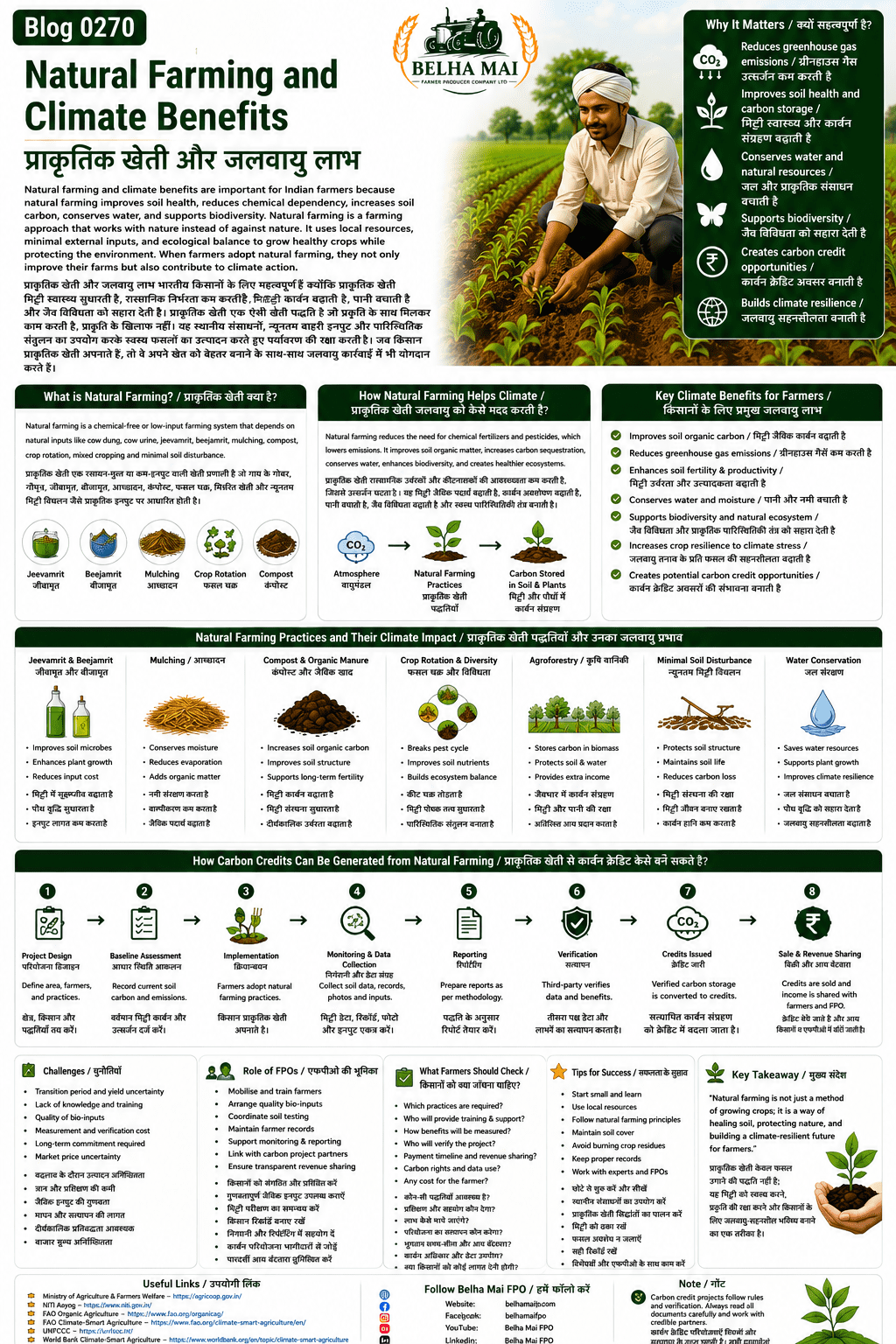
Natural farming and climate benefits are becoming important for Indian farmers because natural farming focuses on improving soil health, reducing external input dependency, conserving water, supporting biodiversity, and building climate-resilient farms. Natural farming encourages farmers to work with nature instead of depending heavily on costly external inputs. It uses local resources, biological processes, crop diversity, mulching, soil life improvement, and natural preparations to support healthy crop growth.
प्राकृतिक खेती और जलवायु लाभ भारतीय किसानों के लिए महत्वपूर्ण होते जा रहे हैं, क्योंकि प्राकृतिक खेती मिट्टी स्वास्थ्य सुधारने, बाहरी कृषि सामग्री पर निर्भरता घटाने, जल संरक्षण करने, जैव विविधता को सहारा देने और जलवायु-सहनशील खेत बनाने पर केंद्रित होती है। प्राकृतिक खेती किसानों को महंगी बाहरी सामग्री पर अधिक निर्भर रहने के बजाय प्रकृति के साथ मिलकर खेती करने के लिए प्रोत्साहित करती है। इसमें स्थानीय संसाधनों, जैविक प्रक्रियाओं, फसल विविधता, आच्छादन, मिट्टी जीवन सुधार और प्राकृतिक तैयारियों का उपयोग किया जाता है।
The reason Natural farming and climate benefits matter today is that farmers are facing rising input costs, declining soil fertility, irregular rainfall, heat stress, water scarcity, and crop risk. Natural farming may help farmers reduce unnecessary costs, improve soil organic matter, conserve moisture, and increase farm resilience. If the climate benefits of natural farming are properly measured and verified, they may also support future carbon credit opportunities. However, farmers must understand that natural farming does not automatically create carbon credits.
आज प्राकृतिक खेती और जलवायु लाभ इसलिए महत्वपूर्ण हैं क्योंकि किसान बढ़ती लागत, घटती मिट्टी उर्वरता, अनियमित वर्षा, गर्मी के तनाव, जल संकट और फसल जोखिम का सामना कर रहे हैं। प्राकृतिक खेती किसानों को अनावश्यक लागत घटाने, मिट्टी जैविक पदार्थ सुधारने, नमी बचाने और खेत की सहनशीलता बढ़ाने में मदद कर सकती है। यदि प्राकृतिक खेती के जलवायु लाभों को सही तरीके से मापा और सत्यापित किया जाए, तो वे भविष्य के कार्बन क्रेडिट अवसरों को भी सहारा दे सकते हैं। हालाँकि किसानों को समझना चाहिए कि प्राकृतिक खेती अपने आप कार्बन क्रेडिट नहीं बनाती।
What is Natural Farming? / प्राकृतिक खेती क्या है?
Natural farming is a farming approach that reduces dependence on external chemical inputs and focuses on local resources, soil biology, crop diversity, natural preparations, and ecological balance. It promotes the idea that healthy soil, active microorganisms, plant diversity, and natural farm cycles can support crop production in a more sustainable way.
प्राकृतिक खेती ऐसी कृषि पद्धति है जो बाहरी रासायनिक सामग्री पर निर्भरता कम करती है और स्थानीय संसाधनों, मिट्टी जीवविज्ञान, फसल विविधता, प्राकृतिक तैयारियों तथा पारिस्थितिक संतुलन पर ध्यान देती है। यह विचार बढ़ावा देती है कि स्वस्थ मिट्टी, सक्रिय सूक्ष्मजीव, पौध विविधता और प्राकृतिक खेत चक्र अधिक टिकाऊ तरीके से फसल उत्पादन को सहारा दे सकते हैं।
In the context of Natural farming and climate benefits, natural farming is important because it aims to reduce chemical dependency, increase soil organic matter, improve water retention, and protect biodiversity. These outcomes can help reduce farming-related pressure on the environment and make farms more resilient against climate stress.
प्राकृतिक खेती और जलवायु लाभ के संदर्भ में प्राकृतिक खेती महत्वपूर्ण है क्योंकि इसका उद्देश्य रासायनिक निर्भरता कम करना, मिट्टी जैविक पदार्थ बढ़ाना, जल धारण क्षमता सुधारना और जैव विविधता की रक्षा करना है। ये परिणाम पर्यावरण पर खेती से पड़ने वाले दबाव को कम कर सकते हैं और खेतों को जलवायु तनाव के प्रति अधिक सहनशील बना सकते हैं।
How Natural Farming Helps Climate / प्राकृतिक खेती जलवायु को कैसे सहारा देती है
Natural farming helps climate by improving soil carbon, reducing unnecessary chemical input use, conserving water, reducing soil disturbance, and supporting biodiversity. When soil has more organic matter, it can store more carbon and hold more water. This helps crops survive dry periods and reduces the need for excessive irrigation.
प्राकृतिक खेती मिट्टी कार्बन सुधारकर, अनावश्यक रासायनिक कृषि सामग्री उपयोग घटाकर, पानी बचाकर, मिट्टी की अनावश्यक छेड़छाड़ कम करके और जैव विविधता को सहारा देकर जलवायु को समर्थन देती है। जब मिट्टी में अधिक जैविक पदार्थ होता है, तो वह अधिक कार्बन संग्रहित कर सकती है और अधिक पानी रोक सकती है। इससे फसलें सूखे समय में बेहतर टिकती हैं और अत्यधिक सिंचाई की आवश्यकता कम होती है।
This is why Natural farming and climate benefits are closely connected. Climate-friendly farming is not only about reducing emissions; it is also about making farms stronger against climate shocks. Natural farming practices can help improve soil structure, reduce erosion, conserve moisture, and create a healthier farming ecosystem.
इसीलिए प्राकृतिक खेती और जलवायु लाभ आपस में गहराई से जुड़े हैं। जलवायु-अनुकूल खेती केवल उत्सर्जन कम करने के बारे में नहीं है; यह खेतों को जलवायु झटकों के प्रति मजबूत बनाने के बारे में भी है। प्राकृतिक खेती की पद्धतियाँ मिट्टी बनावट सुधारने, कटाव कम करने, नमी बचाने और स्वस्थ खेती पारिस्थितिकी बनाने में मदद कर सकती हैं।
Natural Farming and Soil Health / प्राकृतिक खेती और मिट्टी स्वास्थ्य
Soil health is the foundation of natural farming. Healthy soil contains organic matter, beneficial microorganisms, earthworms, roots, and balanced nutrients. Natural farming supports soil health through mulching, compost, crop residues, cow-based preparations, crop rotation, intercropping, and minimal soil disturbance.
मिट्टी स्वास्थ्य प्राकृतिक खेती की आधारशिला है। स्वस्थ मिट्टी में जैविक पदार्थ, लाभकारी सूक्ष्मजीव, केंचुए, जड़ें और संतुलित पोषक तत्व होते हैं। प्राकृतिक खेती आच्छादन, कंपोस्ट, फसल अवशेष, पशु आधारित प्राकृतिक तैयारियों, फसल चक्र, मिश्रित खेती और न्यूनतम मिट्टी छेड़छाड़ के माध्यम से मिट्टी स्वास्थ्य को सहारा देती है।
For Natural farming and climate benefits, soil health is very important because healthy soil can store carbon and retain moisture. When soil becomes stronger, the farm becomes less vulnerable to drought, heat, and irregular rainfall. This makes natural farming useful for climate adaptation as well as climate mitigation.
प्राकृतिक खेती और जलवायु लाभ के लिए मिट्टी स्वास्थ्य बहुत महत्वपूर्ण है क्योंकि स्वस्थ मिट्टी कार्बन संग्रहित कर सकती है और नमी रोक सकती है। जब मिट्टी मजबूत होती है, तो खेत सूखा, गर्मी और अनियमित वर्षा के प्रति कम असुरक्षित होता है। इससे प्राकृतिक खेती जलवायु अनुकूलन और जलवायु शमन दोनों के लिए उपयोगी बनती है।
Natural Farming and Soil Carbon / प्राकृतिक खेती और मिट्टी कार्बन
Natural farming can support soil carbon improvement by adding organic matter and reducing practices that damage soil life. Mulching, crop residues, compost, green manure, mixed cropping, and root biomass can add carbon-rich material to soil. Over time, part of this organic material becomes soil organic carbon.
प्राकृतिक खेती जैविक पदार्थ जोड़कर और मिट्टी जीवन को नुकसान पहुँचाने वाली पद्धतियों को घटाकर मिट्टी कार्बन सुधार में सहायता कर सकती है। आच्छादन, फसल अवशेष, कंपोस्ट, हरी खाद, मिश्रित खेती और जड़ जैवभार मिट्टी में कार्बन युक्त सामग्री जोड़ सकते हैं। समय के साथ इस जैविक सामग्री का एक भाग मिट्टी जैविक कार्बन बन जाता है।
This explains one of the strongest links between Natural farming and climate benefits. Soil carbon improves fertility, water retention, microbial activity, and crop resilience. If soil carbon increase is measured and verified under a recognised carbon project, it may also support carbon credit opportunities.
यह प्राकृतिक खेती और जलवायु लाभ के सबसे मजबूत संबंधों में से एक को समझाता है। मिट्टी कार्बन उर्वरता, जल धारण क्षमता, सूक्ष्मजीव गतिविधि और फसल सहनशीलता सुधारता है। यदि मिट्टी कार्बन वृद्धि को किसी मान्यता प्राप्त कार्बन परियोजना के अंतर्गत मापा और सत्यापित किया जाए, तो यह कार्बन क्रेडिट अवसरों को भी सहारा दे सकती है।
Water Conservation Through Natural Farming / प्राकृतिक खेती से जल संरक्षण
Natural farming supports water conservation by improving soil structure and increasing organic matter. Soil with more organic matter can hold more moisture and reduce water loss. Mulching also helps reduce evaporation from the soil surface and keeps soil temperature more stable.
प्राकृतिक खेती मिट्टी की बनावट सुधारकर और जैविक पदार्थ बढ़ाकर जल संरक्षण को सहारा देती है। अधिक जैविक पदार्थ वाली मिट्टी अधिक नमी रोक सकती है और जल हानि कम कर सकती है। आच्छादन मिट्टी की सतह से वाष्पीकरण भी कम करता है और मिट्टी तापमान को अधिक संतुलित रखता है।
Water conservation is a major part of Natural farming and climate benefits because climate change is increasing rainfall uncertainty and water stress. If farmers can conserve more moisture in the soil, they can reduce irrigation pressure and improve crop survival during dry periods.
जल संरक्षण प्राकृतिक खेती और जलवायु लाभ का बड़ा हिस्सा है क्योंकि जलवायु परिवर्तन वर्षा अनिश्चितता और जल तनाव बढ़ा रहा है। यदि किसान मिट्टी में अधिक नमी बचा सकें, तो वे सिंचाई दबाव कम कर सकते हैं और सूखे समय में फसल जीवित रहने की संभावना बढ़ा सकते हैं।
Natural Farming and Biodiversity / प्राकृतिक खेती और जैव विविधता
Natural farming encourages biodiversity through mixed cropping, intercropping, crop rotation, border plants, trees, beneficial insects, soil organisms, and natural pest balance. Biodiversity helps farms become more stable because different crops and organisms support each other in the ecosystem.
प्राकृतिक खेती मिश्रित खेती, सहफसली खेती, फसल चक्र, सीमा पौधों, पेड़ों, लाभकारी कीटों, मिट्टी जीवों और प्राकृतिक कीट संतुलन के माध्यम से जैव विविधता को बढ़ावा देती है। जैव विविधता खेतों को अधिक स्थिर बनाती है क्योंकि अलग-अलग फसलें और जीव पारिस्थितिकी में एक-दूसरे को सहारा देते हैं।
This is another important part of Natural farming and climate benefits. Farms with more biodiversity can be more resilient against pests, diseases, heat, and rainfall variation. Biodiversity also supports pollinators and beneficial insects, which are important for long-term agricultural productivity.
यह प्राकृतिक खेती और जलवायु लाभ का एक और महत्वपूर्ण हिस्सा है। अधिक जैव विविधता वाले खेत कीट, रोग, गर्मी और वर्षा परिवर्तन के प्रति अधिक सहनशील हो सकते हैं। जैव विविधता परागण करने वाले जीवों और लाभकारी कीटों को भी सहारा देती है, जो दीर्घकालिक कृषि उत्पादकता के लिए महत्वपूर्ण हैं।
Important Natural Farming Practices / प्रमुख प्राकृतिक खेती पद्धतियाँ
Mulching is one of the most important natural farming practices. It covers the soil with crop residues, leaves, straw, or other organic material. Mulching protects the soil, reduces evaporation, suppresses weeds, adds organic matter, and supports soil organisms.
आच्छादन प्राकृतिक खेती की सबसे महत्वपूर्ण पद्धतियों में से एक है। इसमें फसल अवशेष, पत्तियाँ, भूसा या अन्य जैविक सामग्री से मिट्टी को ढका जाता है। आच्छादन मिट्टी की रक्षा करता है, वाष्पीकरण कम करता है, खरपतवार दबाता है, जैविक पदार्थ जोड़ता है और मिट्टी जीवों को सहारा देता है।
Crop rotation and mixed cropping are also important. They improve soil health, break pest cycles, improve nutrient balance, and reduce risk. These practices support Natural farming and climate benefits by making the farm more diverse and resilient.
फसल चक्र और मिश्रित खेती भी महत्वपूर्ण हैं। वे मिट्टी स्वास्थ्य सुधारते हैं, कीट चक्र तोड़ते हैं, पोषक संतुलन बेहतर करते हैं और जोखिम कम करते हैं। ये पद्धतियाँ खेत को अधिक विविध और सहनशील बनाकर प्राकृतिक खेती और जलवायु लाभ को सहारा देती हैं।
Compost and natural preparations can support soil biology and plant growth. Farmers may use locally available materials to prepare natural inputs, but they should follow proper guidance and avoid unscientific claims. The goal should be to improve soil life and reduce unnecessary external dependency.
कंपोस्ट और प्राकृतिक तैयारियाँ मिट्टी जीवविज्ञान और पौध वृद्धि को सहारा दे सकती हैं। किसान स्थानीय रूप से उपलब्ध सामग्री से प्राकृतिक कृषि सामग्री तैयार कर सकते हैं, लेकिन उन्हें सही मार्गदर्शन का पालन करना चाहिए और अवैज्ञानिक दावों से बचना चाहिए। उद्देश्य मिट्टी जीवन सुधारना और अनावश्यक बाहरी निर्भरता कम करना होना चाहिए।
Natural Farming and Carbon Credit Opportunities / प्राकृतिक खेती और कार्बन क्रेडिट अवसर
Natural farming may support carbon credit opportunities if it creates measurable climate benefits. These benefits may include increased soil carbon, reduced chemical input-related emissions, improved water use, reduced residue burning, and increased biomass. However, these benefits must be recorded, monitored, and verified.
यदि प्राकृतिक खेती मापने योग्य जलवायु लाभ बनाती है, तो यह कार्बन क्रेडिट अवसरों को सहारा दे सकती है। इन लाभों में मिट्टी कार्बन वृद्धि, रासायनिक कृषि सामग्री से जुड़े उत्सर्जन में कमी, बेहतर जल उपयोग, फसल अवशेष जलाने में कमी और जैवभार वृद्धि शामिल हो सकते हैं। हालाँकि इन लाभों को दर्ज, निगरानी और सत्यापित करना आवश्यक है।
This point is very important in Natural farming and climate benefits. Natural farming does not automatically generate carbon credits. A carbon project must follow a proper process: baseline assessment, farmer records, practice monitoring, reporting, verification, credit issuance, sale, and revenue sharing.
प्राकृतिक खेती और जलवायु लाभ में यह बात बहुत महत्वपूर्ण है। प्राकृतिक खेती अपने आप कार्बन क्रेडिट नहीं बनाती। कार्बन परियोजना को सही प्रक्रिया का पालन करना होता है: आधार स्थिति आकलन, किसान अभिलेख, पद्धति निगरानी, प्रतिवेदन, सत्यापन, क्रेडिट जारी होना, बिक्री और आय बँटवारा।
How Carbon Credits Can Be Generated from Natural Farming / प्राकृतिक खेती से कार्बन क्रेडिट कैसे बन सकते हैं
The first step is project design. The project identifies farmers, crops, villages, land area, and natural farming practices to be adopted. The second step is baseline assessment, where current farming practices, soil condition, input use, residue management, and water use are recorded.
पहला चरण परियोजना रूपरेखा है। परियोजना किसान, फसलें, गाँव, भूमि क्षेत्र और अपनाई जाने वाली प्राकृतिक खेती पद्धतियों की पहचान करती है। दूसरा चरण आधार स्थिति आकलन है, जिसमें वर्तमान कृषि पद्धतियाँ, मिट्टी स्थिति, कृषि सामग्री उपयोग, फसल अवशेष प्रबंधन और जल उपयोग दर्ज किए जाते हैं।
The third step is implementation. Farmers adopt natural farming practices such as mulching, composting, crop rotation, mixed cropping, natural pest management, and soil health improvement. The fourth step is monitoring and data collection. The fifth step is verification. If benefits are accepted, credits may be issued and sold.
तीसरा चरण क्रियान्वयन है। किसान आच्छादन, कंपोस्ट, फसल चक्र, मिश्रित खेती, प्राकृतिक कीट प्रबंधन और मिट्टी स्वास्थ्य सुधार जैसी प्राकृतिक खेती पद्धतियाँ अपनाते हैं। चौथा चरण निगरानी और आँकड़ा संग्रह है। पाँचवाँ चरण सत्यापन है। यदि लाभ स्वीकार होते हैं, तो क्रेडिट जारी और बेचे जा सकते हैं।
This process makes Natural farming and climate benefits practical for carbon farming. But farmers should clearly understand that payment may take time and depends on successful verification and market sale.
यह प्रक्रिया प्राकृतिक खेती और जलवायु लाभ को कार्बन खेती के लिए व्यावहारिक बनाती है। लेकिन किसानों को स्पष्ट समझना चाहिए कि भुगतान में समय लग सकता है और यह सफल सत्यापन तथा बाज़ार बिक्री पर निर्भर करता है।
Role of FPOs in Natural Farming Climate Projects / प्राकृतिक खेती जलवायु परियोजनाओं में किसान उत्पादक संगठनों की भूमिका
FPOs can play a major role in promoting Natural farming and climate benefits among small farmers. They can organise training, identify interested farmers, coordinate soil testing, promote local input preparation, support record keeping, and connect farmers with credible carbon project developers.
किसान उत्पादक संगठन छोटे किसानों के बीच प्राकृतिक खेती और जलवायु लाभ को बढ़ावा देने में बड़ी भूमिका निभा सकते हैं। वे प्रशिक्षण आयोजित कर सकते हैं, इच्छुक किसानों की पहचान कर सकते हैं, मिट्टी परीक्षण का समन्वय कर सकते हैं, स्थानीय कृषि सामग्री तैयारी को बढ़ावा दे सकते हैं, अभिलेख रखने में सहायता कर सकते हैं और किसानों को विश्वसनीय कार्बन परियोजना विकासकर्ताओं से जोड़ सकते हैं।
FPOs can also protect farmers from false promises. Farmers should not be told that natural farming will immediately generate fixed carbon credit income. The FPO should explain the real process, risks, responsibilities, payment timeline, carbon rights, and revenue sharing before farmers join any project.
किसान उत्पादक संगठन किसानों को झूठे वादों से भी बचा सकते हैं। किसानों से यह नहीं कहा जाना चाहिए कि प्राकृतिक खेती से तुरंत निश्चित कार्बन क्रेडिट आय मिलेगी। किसान उत्पादक संगठन को किसी भी परियोजना से जुड़ने से पहले वास्तविक प्रक्रिया, जोखिम, जिम्मेदारियाँ, भुगतान समय-सीमा, कार्बन अधिकार और आय बँटवारा समझाना चाहिए।
Challenges in Natural Farming Adoption / प्राकृतिक खेती अपनाने की चुनौतियाँ
The first challenge is transition time. Farmers shifting from high-input farming to natural farming may need time to rebuild soil health. During the transition, yield may vary depending on soil condition, crop, climate, and management. Farmers need guidance and patience.
पहली चुनौती बदलाव की अवधि है। अधिक बाहरी सामग्री आधारित खेती से प्राकृतिक खेती की ओर बढ़ने वाले किसानों को मिट्टी स्वास्थ्य पुनर्निर्माण में समय लग सकता है। बदलाव के दौरान मिट्टी स्थिति, फसल, जलवायु और प्रबंधन के आधार पर उत्पादन में अंतर आ सकता है। किसानों को मार्गदर्शन और धैर्य की आवश्यकता होती है।
The second challenge is knowledge. Natural farming requires understanding of soil, local resources, crop diversity, pest balance, moisture management, and timing. Without training, farmers may adopt practices incorrectly and lose confidence.
दूसरी चुनौती ज्ञान है। प्राकृतिक खेती के लिए मिट्टी, स्थानीय संसाधन, फसल विविधता, कीट संतुलन, नमी प्रबंधन और सही समय की समझ आवश्यक होती है। प्रशिक्षण के बिना किसान पद्धतियों को गलत तरीके से अपना सकते हैं और उनका विश्वास घट सकता है।
The third challenge is measurement. If Natural farming and climate benefits are linked with carbon credits, benefits must be measured and verified. This requires data, records, monitoring, and technical partners. Individual small farmers may find this difficult without FPO support.
तीसरी चुनौती मापन है। यदि प्राकृतिक खेती और जलवायु लाभ को कार्बन क्रेडिट से जोड़ा जाता है, तो लाभों को मापना और सत्यापित करना होगा। इसके लिए आँकड़े, अभिलेख, निगरानी और तकनीकी भागीदारों की आवश्यकता होती है। किसान उत्पादक संगठन की सहायता के बिना व्यक्तिगत छोटे किसानों के लिए यह कठिन हो सकता है।
What Farmers Should Check Before Joining / जुड़ने से पहले किसानों को क्या जाँचना चाहिए
Before joining a natural farming carbon project, farmers should ask which practices are required, who will provide training, whether any input must be purchased, how benefits will be measured, who will verify the project, and how long the project will continue.
प्राकृतिक खेती कार्बन परियोजना से जुड़ने से पहले किसानों को पूछना चाहिए कि कौन-सी पद्धतियाँ आवश्यक हैं, प्रशिक्षण कौन देगा, क्या कोई कृषि सामग्री खरीदनी अनिवार्य है, लाभ कैसे मापे जाएँगे, परियोजना का सत्यापन कौन करेगा और परियोजना कितने समय तक चलेगी।
Farmers should also ask about carbon rights, payment timeline, revenue sharing, data use, exit conditions, and responsibility if expected benefits are not achieved. Since Natural farming and climate benefits involve long-term changes, farmers should not sign unclear documents.
किसानों को कार्बन अधिकार, भुगतान समय-सीमा, आय बँटवारा, आँकड़ों के उपयोग, बाहर निकलने की शर्तों और अपेक्षित लाभ न मिलने की स्थिति में जिम्मेदारी के बारे में भी पूछना चाहिए। क्योंकि प्राकृतिक खेती और जलवायु लाभ में दीर्घकालिक बदलाव शामिल होते हैं, किसानों को अस्पष्ट दस्तावेज़ों पर हस्ताक्षर नहीं करने चाहिए।
Practical Model for Indian FPOs / भारतीय किसान उत्पादक संगठनों के लिए व्यावहारिक मॉडल
A practical model can begin with 500 to 1,000 interested farmers. The FPO can select villages, identify crops, conduct soil testing, organise natural farming training, promote mulching and composting, support local input preparation, and maintain farmer-wise records. The project should begin as a pilot before scaling.
एक व्यावहारिक मॉडल पाँच सौ से एक हजार इच्छुक किसानों से शुरू हो सकता है। किसान उत्पादक संगठन गाँव चुन सकता है, फसलों की पहचान कर सकता है, मिट्टी परीक्षण करा सकता है, प्राकृतिक खेती प्रशिक्षण आयोजित कर सकता है, आच्छादन और कंपोस्ट को बढ़ावा दे सकता है, स्थानीय कृषि सामग्री तैयारी में सहायता कर सकता है और किसानवार अभिलेख रख सकता है। परियोजना को बड़े स्तर पर बढ़ाने से पहले प्रायोगिक रूप में शुरू करना चाहिए।
The FPO can then partner with a credible carbon project developer or climate finance partner. The FPO handles farmer mobilisation and local implementation, while the technical partner handles methodology, monitoring, verification, certification, and buyer linkage. This makes Natural farming and climate benefits more practical for small farmers.
इसके बाद किसान उत्पादक संगठन किसी विश्वसनीय कार्बन परियोजना विकासकर्ता या जलवायु वित्त भागीदार से साझेदारी कर सकता है। संगठन किसान समन्वय और स्थानीय क्रियान्वयन संभालता है, जबकि तकनीकी भागीदार पद्धति, निगरानी, सत्यापन, प्रमाणन और खरीदार से जुड़ाव संभालता है। इससे प्राकृतिक खेती और जलवायु लाभ छोटे किसानों के लिए अधिक व्यावहारिक बनते हैं।
Benefits Beyond Carbon Credits / कार्बन क्रेडिट से आगे के लाभ
Even if carbon credit income takes time, natural farming can provide important benefits to farmers. It can reduce input dependency, improve soil health, conserve water, support biodiversity, reduce crop risk, and improve long-term farm resilience. These benefits can be valuable even without immediate carbon credit income.
भले ही कार्बन क्रेडिट आय आने में समय लगे, प्राकृतिक खेती किसानों को महत्वपूर्ण लाभ दे सकती है। यह कृषि सामग्री निर्भरता घटा सकती है, मिट्टी स्वास्थ्य सुधार सकती है, पानी बचा सकती है, जैव विविधता को सहारा दे सकती है, फसल जोखिम कम कर सकती है और खेत की दीर्घकालिक सहनशीलता बढ़ा सकती है। ये लाभ तुरंत कार्बन क्रेडिट आय के बिना भी मूल्यवान हो सकते हैं।
This is why Natural farming and climate benefits should be promoted as a sustainable farming strategy first. Carbon credit income should be presented only as a possible future benefit if environmental outcomes are properly measured, verified, and sold in the carbon market.
इसीलिए प्राकृतिक खेती और जलवायु लाभ को पहले टिकाऊ खेती रणनीति के रूप में बढ़ावा देना चाहिए। कार्बन क्रेडिट आय को केवल संभावित भविष्य लाभ के रूप में प्रस्तुत करना चाहिए, यदि पर्यावरणीय परिणाम सही तरीके से मापे जाएँ, सत्यापित हों और कार्बन बाज़ार में बेचे जाएँ।
Conclusion / निष्कर्ष
Natural farming and climate benefits can become a meaningful pathway for Indian farmers when implemented with proper knowledge, patience, local resources, soil health planning, and transparent project systems. Natural farming can improve soil carbon, conserve water, reduce external input dependency, support biodiversity, and build climate resilience.
प्राकृतिक खेती और जलवायु लाभ भारतीय किसानों के लिए अर्थपूर्ण मार्ग बन सकते हैं, यदि इन्हें सही ज्ञान, धैर्य, स्थानीय संसाधनों, मिट्टी स्वास्थ्य योजना और पारदर्शी परियोजना व्यवस्था के साथ लागू किया जाए। प्राकृतिक खेती मिट्टी कार्बन सुधार सकती है, पानी बचा सकती है, बाहरी कृषि सामग्री निर्भरता घटा सकती है, जैव विविधता को सहारा दे सकती है और जलवायु सहनशीलता बना सकती है।
For farmers, the first goal should be healthier soil, lower risk, and sustainable productivity. Carbon credit income should not be treated as guaranteed income. For FPOs, Natural farming and climate benefits create an opportunity to organise farmers, build natural farming models, maintain farm-level records, and connect small farmers with credible climate finance opportunities.
किसानों के लिए पहला लक्ष्य स्वस्थ मिट्टी, कम जोखिम और टिकाऊ उत्पादकता होना चाहिए। कार्बन क्रेडिट आय को निश्चित आय नहीं मानना चाहिए। किसान उत्पादक संगठनों के लिए प्राकृतिक खेती और जलवायु लाभ किसानों को संगठित करने, प्राकृतिक खेती मॉडल बनाने, खेत स्तर के अभिलेख रखने और छोटे किसानों को विश्वसनीय जलवायु वित्त अवसरों से जोड़ने का अवसर देते हैं।
Frequently Asked Questions (FAQs) / अक्सर पूछे जाने वाले प्रश्न
1. What are Natural farming and climate benefits?
Natural farming and climate benefits refer to the environmental advantages of natural farming, such as improved soil carbon, water conservation, reduced chemical dependency, biodiversity support, and climate resilience.
1. प्राकृतिक खेती और जलवायु लाभ क्या हैं?
प्राकृतिक खेती और जलवायु लाभ का अर्थ प्राकृतिक खेती से मिलने वाले पर्यावरणीय लाभ हैं, जैसे मिट्टी कार्बन सुधार, जल संरक्षण, रासायनिक निर्भरता में कमी, जैव विविधता समर्थन और जलवायु सहनशीलता।
2. Does natural farming reduce emissions?
Natural farming may help reduce emissions by reducing unnecessary chemical input use, improving soil carbon, conserving water, and supporting low-carbon farming practices.
2. क्या प्राकृतिक खेती उत्सर्जन कम करती है?
प्राकृतिक खेती अनावश्यक रासायनिक कृषि सामग्री उपयोग घटाकर, मिट्टी कार्बन सुधारकर, पानी बचाकर और कम-कार्बन खेती पद्धतियों को सहारा देकर उत्सर्जन कम करने में मदद कर सकती है।
3. Can natural farming generate carbon credits?
Natural farming may support carbon credits if climate benefits are measurable, monitored, reported, verified, and accepted under a recognised carbon project.
3. क्या प्राकृतिक खेती से कार्बन क्रेडिट बन सकते हैं?
यदि जलवायु लाभ मापने योग्य हों, निगरानी किए जाएँ, प्रतिवेदित हों, सत्यापित हों और मान्यता प्राप्त कार्बन परियोजना में स्वीकार हों, तो प्राकृतिक खेती कार्बन क्रेडिट को सहारा दे सकती है।
4. What practices are used in natural farming?
Natural farming may include mulching, composting, crop rotation, mixed cropping, natural preparations, reduced soil disturbance, water conservation, and biodiversity-based pest balance.
4. प्राकृतिक खेती में कौन-सी पद्धतियाँ उपयोग होती हैं?
प्राकृतिक खेती में आच्छादन, कंपोस्ट, फसल चक्र, मिश्रित खेती, प्राकृतिक तैयारियाँ, कम मिट्टी छेड़छाड़, जल संरक्षण और जैव विविधता आधारित कीट संतुलन शामिल हो सकते हैं।
5. How can FPOs support natural farming climate projects?
FPOs can organise farmers, provide training, coordinate soil testing, support local input preparation, maintain records, connect with project developers, and ensure transparent benefit sharing.
5. किसान उत्पादक संगठन प्राकृतिक खेती जलवायु परियोजनाओं में कैसे सहायता कर सकते हैं?
किसान उत्पादक संगठन किसानों को संगठित कर सकते हैं, प्रशिक्षण दे सकते हैं, मिट्टी परीक्षण का समन्वय कर सकते हैं, स्थानीय कृषि सामग्री तैयारी में सहायता कर सकते हैं, अभिलेख रख सकते हैं, परियोजना विकासकर्ताओं से जोड़ सकते हैं और पारदर्शी लाभ बँटवारा सुनिश्चित कर सकते हैं।
Internal Links / आंतरिक लिंक
👉 Carbon Farming in India: Complete Guide — https://belhamaifpo.com/agriculture/carbon-farming-in-india-complete-guide/
👉 Organic Farming and Carbon Credit Opportunities — https://belhamaifpo.com/agriculture/organic-farming-and-carbon-credit-opportunities/
👉 Bio-inputs and Low-Carbon Farming Systems —https://belhamaifpo.com/agriculture/bio-inputs-and-low-carbon-farming-systems/
👉 Carbon Sequestration in Agriculture Explained — https://belhamaifpo.com/agriculture/carbon-sequestration-in-agriculture-explained/
👉 Tree Plantation and Carbon Farming for Farmers — https://belhamaifpo.com/agriculture/tree-plantation-and-carbon-farming-for-farmers/
👉 Agroforestry and Carbon Credit Income —https://belhamaifpo.com/agriculture/agroforestry-and-carbon-credit-income/
👉 How Regenerative Agriculture Supports Carbon Credits —https://belhamaifpo.com/agriculture/how-regenerative-agriculture-supports-carbon-credits/
👉 Soil Carbon and Sustainable Farming —https://belhamaifpo.com/agriculture/soil-carbon-and-sustainable-farming/
👉 Carbon Credit Opportunities in Indian Agriculture —https://belhamaifpo.com/agriculture/carbon-credit-opportunities-in-indian-agriculture/
👉 Role of FPOs in Carbon Credit Projects — https://belhamaifpo.com/agriculture/role-of-fpos-in-carbon-credit-projects/
👉 Farmer Producer Organizations Complete Guide —https://belhamaifpo.com/farmer-producer-organisation/farmer-producer-organizations-fpos/
👉 SDGs & Our FPO — https://belhamaifpo.com/sdg-goals/
External Authority Links / बाहरी प्राधिकरण लिंक
👉 Ministry of Agriculture & Farmers Welfare — https://agriwelfare.gov.in/
👉 NITI Aayog — https://www.niti.gov.in/
👉 FAO Climate-Smart Agriculture — https://www.fao.org/climate-smart-agriculture/en/
👉 FAO Agroecology Knowledge Hub — https://www.fao.org/agroecology/overview/en/
👉 UNFCCC — https://unfccc.int/
👉 World Bank Climate-Smart Agriculture — https://www.worldbank.org/en/topic/climate-smart-agriculture
Follow Belha Mai FPO for More Updates / अधिक अपडेट के लिए Belha Mai FPO को फॉलो करें
👉 Website — https://belhamaifpo.com/
👉 Facebook — https://www.facebook.com/profile.php?id=61561043486818
👉 Instagram —https://instagram.com/belhamaifpo
👉 LinkedIn — https://www.linkedin.com/in/abhay-singh-ab5568280/
👉 YouTube — https://www.youtube.com/channel/UC9ZvojoTMCa7mU1-Q_Bh60A