पुनर्योजी कृषि कार्बन क्रेडिट को कैसे समर्थन देती है
Introduction / परिचय
How regenerative agriculture supports carbon credits is an important question for farmers, FPOs, climate finance agencies, and sustainable agriculture stakeholders. Regenerative agriculture is a farming approach that focuses on rebuilding soil health, increasing organic matter, improving biodiversity, conserving water, and making farms more resilient to climate change. When these improvements reduce greenhouse gas emissions or increase carbon storage in soil, trees, roots, and biomass, they may support carbon credit generation if they are properly measured, monitored, reported, and verified.
पुनर्योजी कृषि कार्बन क्रेडिट को कैसे समर्थन देती है यह किसानों, किसान उत्पादक संगठनों, जलवायु वित्त संस्थाओं और टिकाऊ कृषि से जुड़े हितधारकों के लिए एक महत्वपूर्ण प्रश्न है। पुनर्योजी कृषि ऐसी खेती पद्धति है जो मिट्टी स्वास्थ्य को पुनर्जीवित करने, जैविक पदार्थ बढ़ाने, जैव विविधता सुधारने, पानी बचाने और खेतों को जलवायु परिवर्तन के प्रति अधिक सहनशील बनाने पर केंद्रित होती है। जब ये सुधार हरितगृह गैस उत्सर्जन को कम करते हैं या मिट्टी, पेड़ों, जड़ों और जैवभार में कार्बन संग्रहण बढ़ाते हैं, तो सही मापन, निगरानी, प्रतिवेदन और सत्यापन के बाद ये कार्बन क्रेडिट निर्माण में सहायता कर सकते हैं।
The reason How regenerative agriculture supports carbon credits matters is that carbon credit projects are not based on claims alone. They require proof that farming practices have created real environmental benefits. Regenerative agriculture provides many such practices, including composting, crop residue management, reduced tillage, cover crops, crop rotation, agroforestry, bio-inputs, integrated livestock management, and water conservation. These practices can improve soil carbon and reduce emissions, which makes regenerative agriculture highly relevant for carbon farming.
पुनर्योजी कृषि कार्बन क्रेडिट को कैसे समर्थन देती है यह इसलिए महत्वपूर्ण है क्योंकि कार्बन क्रेडिट परियोजनाएँ केवल दावों पर आधारित नहीं होतीं। उन्हें यह प्रमाण चाहिए कि कृषि पद्धतियों ने वास्तविक पर्यावरणीय लाभ बनाए हैं। पुनर्योजी कृषि ऐसी अनेक पद्धतियाँ प्रदान करती है, जिनमें कंपोस्ट, फसल अवशेष प्रबंधन, कम जुताई, आवरण फसलें, फसल चक्र, कृषि वानिकी, जैविक कृषि सामग्री, एकीकृत पशुपालन प्रबंधन और जल संरक्षण शामिल हैं। ये पद्धतियाँ मिट्टी कार्बन को सुधार सकती हैं और उत्सर्जन कम कर सकती हैं, इसलिए पुनर्योजी कृषि कार्बन खेती के लिए अत्यंत प्रासंगिक है।
What is Regenerative Agriculture? / पुनर्योजी कृषि क्या है?
Regenerative agriculture is a farming system that aims to restore and improve natural farm resources instead of only extracting production from the land. It focuses on soil health, biodiversity, water cycles, organic matter, crop diversity, and ecosystem balance. The goal is to make the farm healthier every year so that productivity, resilience, and environmental value improve over time.
पुनर्योजी कृषि ऐसी खेती व्यवस्था है जिसका उद्देश्य भूमि से केवल उत्पादन लेना नहीं, बल्कि खेत के प्राकृतिक संसाधनों को पुनर्जीवित और बेहतर बनाना है। यह मिट्टी स्वास्थ्य, जैव विविधता, जल चक्र, जैविक पदार्थ, फसल विविधता और पारिस्थितिक संतुलन पर ध्यान देती है। इसका लक्ष्य खेत को हर वर्ष अधिक स्वस्थ बनाना है, ताकि समय के साथ उत्पादकता, सहनशीलता और पर्यावरणीय मूल्य बेहतर हों।
To understand How regenerative agriculture supports carbon credits, farmers must first understand that regenerative agriculture is not a single technique. It is a complete farming approach. It may include many practices depending on the region, crop, soil, water availability, livestock, and farmer capacity. The common idea is to return life to the soil and reduce practices that damage the farming ecosystem.
पुनर्योजी कृषि कार्बन क्रेडिट को कैसे समर्थन देती है इसे समझने के लिए किसानों को पहले यह समझना होगा कि पुनर्योजी कृषि कोई एक तकनीक नहीं है। यह एक संपूर्ण खेती दृष्टिकोण है। इसमें क्षेत्र, फसल, मिट्टी, पानी की उपलब्धता, पशुपालन और किसान क्षमता के अनुसार अनेक पद्धतियाँ शामिल हो सकती हैं। इसका सामान्य विचार मिट्टी में जीवन वापस लाना और खेती पारिस्थितिकी को नुकसान पहुँचाने वाली पद्धतियों को कम करना है।
Connection Between Regenerative Agriculture and Carbon Credits / पुनर्योजी कृषि और कार्बन क्रेडिट का संबंध
The connection between regenerative agriculture and carbon credits is based on measurable climate benefits. Regenerative practices can increase soil organic carbon, reduce residue burning, reduce excessive tillage, improve water efficiency, support tree biomass, and reduce input waste. These improvements may reduce emissions or increase carbon storage. This is the basic reason How regenerative agriculture supports carbon credits becomes a practical topic for farmers and FPOs.
पुनर्योजी कृषि और कार्बन क्रेडिट का संबंध मापने योग्य जलवायु लाभों पर आधारित है। पुनर्योजी पद्धतियाँ मिट्टी जैविक कार्बन बढ़ा सकती हैं, फसल अवशेष जलाने की समस्या कम कर सकती हैं, अत्यधिक जुताई घटा सकती हैं, जल उपयोग क्षमता सुधार सकती हैं, पेड़ों के जैवभार को बढ़ा सकती हैं और अनावश्यक कृषि सामग्री उपयोग कम कर सकती हैं। ये सुधार उत्सर्जन घटा सकते हैं या कार्बन संग्रहण बढ़ा सकते हैं। यही मुख्य कारण है कि पुनर्योजी कृषि कार्बन क्रेडिट को कैसे समर्थन देती है यह किसानों और किसान उत्पादक संगठनों के लिए व्यावहारिक विषय बन जाता है।
However, regenerative agriculture does not automatically create carbon credits. A carbon project must create a baseline, monitor practice changes, collect data, verify results, and follow an accepted methodology. Only after successful verification can carbon credits be issued and sold. Therefore, regenerative agriculture creates the foundation, while the carbon credit process converts verified benefits into tradable credits.
हालाँकि पुनर्योजी कृषि अपने आप कार्बन क्रेडिट नहीं बनाती। कार्बन परियोजना को आधार स्थिति बनानी होती है, पद्धति परिवर्तन की निगरानी करनी होती है, आँकड़े एकत्र करने होते हैं, परिणामों का सत्यापन करना होता है और स्वीकृत पद्धति का पालन करना होता है। सफल सत्यापन के बाद ही कार्बन क्रेडिट जारी और बेचे जा सकते हैं। इसलिए पुनर्योजी कृषि आधार तैयार करती है, जबकि कार्बन क्रेडिट प्रक्रिया सत्यापित लाभों को व्यापार योग्य क्रेडिट में बदलती है।
How Regenerative Agriculture Supports Carbon Credits Through Soil Carbon / मिट्टी कार्बन के माध्यम से पुनर्योजी कृषि कार्बन क्रेडिट को कैसे समर्थन देती है
One of the strongest answers to How regenerative agriculture supports carbon credits is soil carbon improvement. Regenerative agriculture increases organic matter in soil through compost, crop residues, green manure, cover crops, root biomass, and microbial activity. When more organic matter enters the soil and soil disturbance is reduced, soil can store more carbon over time.
पुनर्योजी कृषि कार्बन क्रेडिट को कैसे समर्थन देती है इसका सबसे मजबूत उत्तर मिट्टी कार्बन सुधार है। पुनर्योजी कृषि कंपोस्ट, फसल अवशेष, हरी खाद, आवरण फसलें, जड़ जैवभार और सूक्ष्मजीव गतिविधि के माध्यम से मिट्टी में जैविक पदार्थ बढ़ाती है। जब अधिक जैविक पदार्थ मिट्टी में जाता है और मिट्टी को उलटने-पलटने की प्रक्रिया कम होती है, तो मिट्टी समय के साथ अधिक कार्बन संग्रहित कर सकती है।
Soil carbon is important because it improves fertility, water holding capacity, soil structure, and microbial life. If a carbon project can prove that regenerative practices increased soil carbon compared to the baseline, it may support carbon credit generation. This is why soil testing, field records, and long-term monitoring are very important.
मिट्टी कार्बन महत्वपूर्ण है क्योंकि यह उर्वरता, जल धारण क्षमता, मिट्टी की बनावट और सूक्ष्मजीव जीवन को सुधारता है। यदि कोई कार्बन परियोजना यह सिद्ध कर सके कि पुनर्योजी पद्धतियों ने आधार स्थिति की तुलना में मिट्टी कार्बन बढ़ाया है, तो यह कार्बन क्रेडिट निर्माण में सहायता कर सकता है। इसलिए मिट्टी परीक्षण, खेत अभिलेख और दीर्घकालिक निगरानी बहुत महत्वपूर्ण हैं।
Reduced Tillage and Carbon Storage / कम जुताई और कार्बन संग्रहण
Reduced tillage is an important regenerative practice. Excessive tillage breaks soil structure, exposes organic matter, and may increase carbon loss from soil. When farmers reduce unnecessary tillage, soil organisms are protected, soil aggregates become stronger, moisture is conserved, and organic carbon can remain in the soil for longer.
कम जुताई एक महत्वपूर्ण पुनर्योजी पद्धति है। अत्यधिक जुताई मिट्टी की बनावट को तोड़ती है, जैविक पदार्थ को उजागर करती है और मिट्टी से कार्बन हानि बढ़ा सकती है। जब किसान अनावश्यक जुताई कम करते हैं, तो मिट्टी के जीव सुरक्षित रहते हैं, मिट्टी के कण समूह मजबूत होते हैं, नमी बचती है और जैविक कार्बन मिट्टी में अधिक समय तक रह सकता है।
This is another way How regenerative agriculture supports carbon credits becomes clear. Reduced tillage can support soil carbon retention and may also reduce fuel use if fewer machinery operations are required. But this practice must be suitable for the local crop and soil conditions, otherwise farmers may face weed or yield challenges.
यह एक और तरीका है जिससे पुनर्योजी कृषि कार्बन क्रेडिट को कैसे समर्थन देती है स्पष्ट होता है। कम जुताई मिट्टी कार्बन को रोकने में सहायता कर सकती है और यदि कृषि यंत्रों का उपयोग कम हो, तो ईंधन उपयोग भी घट सकता है। लेकिन यह पद्धति स्थानीय फसल और मिट्टी परिस्थितियों के अनुकूल होनी चाहिए, अन्यथा किसानों को खरपतवार या उत्पादन संबंधी चुनौतियाँ हो सकती हैं।
Cover Crops and Crop Rotation / आवरण फसलें और फसल चक्र
Cover crops help keep the soil covered between main crops. They reduce erosion, add biomass, improve root activity, suppress weeds, and support soil organic matter. Crop rotation adds diversity to the farming system by including cereals, pulses, oilseeds, vegetables, or green manure crops. This diversity supports soil biology and improves nutrient cycling.
आवरण फसलें मुख्य फसलों के बीच मिट्टी को ढका रखने में सहायता करती हैं। वे कटाव कम करती हैं, जैवभार जोड़ती हैं, जड़ गतिविधि सुधारती हैं, खरपतवार दबाती हैं और मिट्टी जैविक पदार्थ को सहारा देती हैं। फसल चक्र अनाज, दलहन, तिलहन, सब्ज़ियों या हरी खाद वाली फसलों को शामिल करके खेती व्यवस्था में विविधता लाता है। यह विविधता मिट्टी जीवविज्ञान को सहारा देती है और पोषक तत्व चक्र को बेहतर बनाती है।
Cover crops and crop rotation show How regenerative agriculture supports carbon credits because they increase plant biomass and root contribution to soil. More roots and residues mean more organic material entering the soil. If this improvement is documented and verified, it can support soil carbon-related carbon credit projects.
आवरण फसलें और फसल चक्र यह दिखाते हैं कि पुनर्योजी कृषि कार्बन क्रेडिट को कैसे समर्थन देती है, क्योंकि वे पौध जैवभार और जड़ों का योगदान मिट्टी में बढ़ाते हैं। अधिक जड़ें और अवशेष का अर्थ है मिट्टी में अधिक जैविक पदार्थ का प्रवेश। यदि इस सुधार को दर्ज और सत्यापित किया जाए, तो यह मिट्टी कार्बन आधारित कार्बन क्रेडिट परियोजनाओं को सहारा दे सकता है।
Crop Residue Management / फसल अवशेष प्रबंधन
Crop residue management is one of the most practical regenerative practices for Indian agriculture. Instead of burning crop residue, farmers can use residue as mulch, compost it, incorporate it into the soil, or use Super Seeder-based sowing. This reduces air pollution, returns organic matter to the soil, and improves soil structure.
फसल अवशेष प्रबंधन भारतीय कृषि के लिए सबसे व्यावहारिक पुनर्योजी पद्धतियों में से एक है। फसल अवशेष जलाने के बजाय किसान उसे आच्छादन के रूप में उपयोग कर सकते हैं, कंपोस्ट बना सकते हैं, मिट्टी में मिला सकते हैं या सुपर सीडर आधारित बुवाई कर सकते हैं। इससे वायु प्रदूषण कम होता है, जैविक पदार्थ मिट्टी में लौटता है और मिट्टी की बनावट सुधरती है।
This practice strongly explains How regenerative agriculture supports carbon credits because avoiding residue burning can reduce emissions, while residue retention can support soil carbon. For FPOs with access to farm machinery such as Super Seeder, crop residue management can become a strong carbon farming practice.
यह पद्धति मजबूती से समझाती है कि पुनर्योजी कृषि कार्बन क्रेडिट को कैसे समर्थन देती है, क्योंकि फसल अवशेष न जलाने से उत्सर्जन कम हो सकता है और अवशेष रोकने से मिट्टी कार्बन बढ़ सकता है। जिन किसान उत्पादक संगठनों के पास सुपर सीडर जैसे कृषि यंत्र उपलब्ध हैं, उनके लिए फसल अवशेष प्रबंधन एक मजबूत कार्बन खेती पद्धति बन सकता है।
Agroforestry and Tree-Based Regeneration / कृषि वानिकी और पेड़ आधारित पुनर्जीवन
Agroforestry is a regenerative approach where trees are integrated with crops, livestock, or farm boundaries. Trees store carbon in wood, leaves, roots, and biomass. They also improve biodiversity, reduce erosion, provide shade, support moisture conservation, and create long-term farm resilience.
कृषि वानिकी एक पुनर्योजी दृष्टिकोण है जिसमें पेड़ों को फसलों, पशुपालन या खेत की मेड़ों के साथ जोड़ा जाता है। पेड़ लकड़ी, पत्तियों, जड़ों और जैवभार में कार्बन संग्रहित करते हैं। वे जैव विविधता सुधारते हैं, कटाव कम करते हैं, छाया देते हैं, नमी संरक्षण में सहायता करते हैं और खेत की दीर्घकालिक मजबूती बनाते हैं।
Agroforestry is a clear example of How regenerative agriculture supports carbon credits because tree growth can be measured over time and carbon storage can be estimated. However, tree-based carbon projects require proper species selection, survival monitoring, spacing, farmer interest, and long-term commitment.
कृषि वानिकी यह स्पष्ट उदाहरण है कि पुनर्योजी कृषि कार्बन क्रेडिट को कैसे समर्थन देती है, क्योंकि पेड़ों की वृद्धि को समय के साथ मापा जा सकता है और कार्बन संग्रहण का अनुमान लगाया जा सकता है। हालाँकि पेड़ आधारित कार्बन परियोजनाओं के लिए सही प्रजाति चयन, जीवित रहने की निगरानी, उचित दूरी, किसान रुचि और दीर्घकालिक प्रतिबद्धता आवश्यक होती है।
Bio-Inputs and Organic Amendments / जैविक कृषि सामग्री और जैविक सुधार
Bio-inputs and organic amendments support regenerative agriculture by improving soil biology and reducing unnecessary chemical pressure. Compost, vermicompost, farmyard manure, microbial solutions, biofertilizers, and biopesticides can support healthier soil systems when used properly. These practices build organic matter and improve soil life.
जैविक कृषि सामग्री और जैविक सुधार मिट्टी जीवविज्ञान को सुधारकर और अनावश्यक रासायनिक दबाव घटाकर पुनर्योजी कृषि को सहारा देते हैं। कंपोस्ट, केंचुआ खाद, गोबर खाद, सूक्ष्मजीव घोल, जैव उर्वरक और जैव कीटनाशक सही उपयोग होने पर स्वस्थ मिट्टी व्यवस्था को सहारा दे सकते हैं। ये पद्धतियाँ जैविक पदार्थ बढ़ाती हैं और मिट्टी जीवन को सुधारती हैं।
This is another way How regenerative agriculture supports carbon credits can be understood. If organic amendments increase soil organic matter and reduce emissions linked with excessive input use, they may support carbon credit projects. However, proper agronomy, soil testing, and balanced nutrient planning are essential.
यह एक और तरीका है जिससे पुनर्योजी कृषि कार्बन क्रेडिट को कैसे समर्थन देती है समझा जा सकता है। यदि जैविक सुधार मिट्टी जैविक पदार्थ बढ़ाते हैं और अत्यधिक कृषि सामग्री उपयोग से जुड़े उत्सर्जन को कम करते हैं, तो वे कार्बन क्रेडिट परियोजनाओं को सहारा दे सकते हैं। हालाँकि सही कृषि विज्ञान, मिट्टी परीक्षण और संतुलित पोषक योजना आवश्यक हैं।
Water Management and Emission Reduction / जल प्रबंधन और उत्सर्जन में कमी
Water management is very important in regenerative agriculture, especially in rice-based systems. Traditional flooded paddy can produce methane emissions. Practices such as Direct Seeded Rice, alternate wetting and drying, better irrigation scheduling, mulching, and drip irrigation can reduce water use and support lower-emission farming where suitable.
जल प्रबंधन पुनर्योजी कृषि में बहुत महत्वपूर्ण है, विशेषकर धान आधारित खेती में। पारंपरिक पानी भरी धान खेती से मीथेन उत्सर्जन हो सकता है। सीधी बुवाई धान, आंतरायिक गीलापन और सूखापन, बेहतर सिंचाई समय निर्धारण, आच्छादन और बूँद-बूँद सिंचाई जैसी पद्धतियाँ उपयुक्त स्थितियों में जल उपयोग कम कर सकती हैं और कम उत्सर्जन वाली खेती को सहारा दे सकती हैं।
Water management explains How regenerative agriculture supports carbon credits because reducing methane emissions from rice cultivation can become a measurable climate benefit. However, farmer training and local suitability are very important because water-saving practices must not harm yield or crop establishment.
जल प्रबंधन यह समझाता है कि पुनर्योजी कृषि कार्बन क्रेडिट को कैसे समर्थन देती है, क्योंकि धान खेती से मीथेन उत्सर्जन कम करना मापने योग्य जलवायु लाभ बन सकता है। हालाँकि किसान प्रशिक्षण और स्थानीय अनुकूलता बहुत महत्वपूर्ण हैं, क्योंकि जल बचत पद्धतियों से उत्पादन या फसल स्थापना को नुकसान नहीं होना चाहिए।
Integrated Livestock and Manure Management / एकीकृत पशुपालन और गोबर प्रबंधन
Regenerative agriculture also includes better livestock and manure management. Livestock can support soil fertility when manure is properly collected, composted, and applied to fields. Poor manure management can create emissions, while better manure handling can reduce waste and improve soil organic matter.
पुनर्योजी कृषि में बेहतर पशुपालन और गोबर प्रबंधन भी शामिल है। जब गोबर को सही तरीके से एकत्र, कंपोस्ट और खेतों में उपयोग किया जाता है, तो पशुपालन मिट्टी की उर्वरता को सहारा दे सकता है। खराब गोबर प्रबंधन से उत्सर्जन हो सकता है, जबकि बेहतर गोबर प्रबंधन अपशिष्ट कम कर सकता है और मिट्टी जैविक पदार्थ बढ़ा सकता है।
This supports How regenerative agriculture supports carbon credits because improved manure management may reduce emissions and increase organic matter return to soil. Village-level livestock systems can become part of carbon farming if records, training, and monitoring are properly managed.
यह पुनर्योजी कृषि कार्बन क्रेडिट को कैसे समर्थन देती है को सहारा देता है, क्योंकि बेहतर गोबर प्रबंधन उत्सर्जन कम कर सकता है और मिट्टी में जैविक पदार्थ की वापसी बढ़ा सकता है। यदि अभिलेख, प्रशिक्षण और निगरानी सही रूप से हों, तो गाँव स्तर की पशुपालन व्यवस्था कार्बन खेती का हिस्सा बन सकती है।
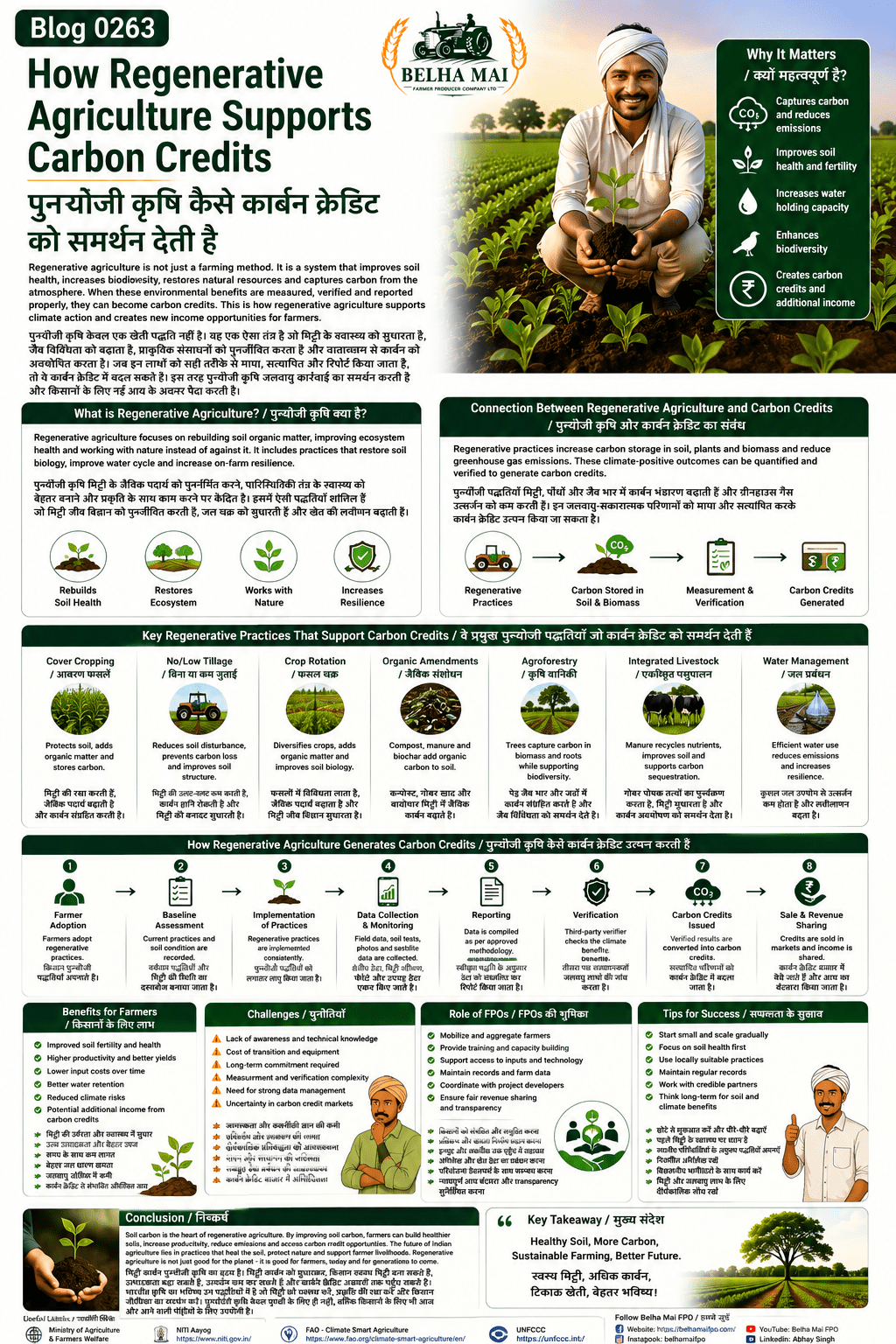
How Regenerative Agriculture Generates Carbon Credits / पुनर्योजी कृषि कार्बन क्रेडिट कैसे बनाती है
The process begins with farmer mobilisation. Farmers are organised through FPOs, cooperatives, project developers, or other credible institutions. Then a baseline is created to record current farming practices, soil condition, residue management, irrigation, input use, and existing tree cover. This baseline is essential because carbon credits are based on improvement compared to the earlier condition.
प्रक्रिया किसानों को संगठित करने से शुरू होती है। किसानों को किसान उत्पादक संगठनों, सहकारी संस्थाओं, परियोजना विकासकर्ताओं या अन्य विश्वसनीय संस्थाओं के माध्यम से जोड़ा जाता है। इसके बाद वर्तमान कृषि पद्धतियों, मिट्टी की स्थिति, फसल अवशेष प्रबंधन, सिंचाई, कृषि सामग्री उपयोग और मौजूदा वृक्ष आवरण को दर्ज करने के लिए आधार स्थिति बनाई जाती है। यह आधार स्थिति आवश्यक है क्योंकि कार्बन क्रेडिट पहले की स्थिति की तुलना में हुए सुधार पर आधारित होते हैं।
After the baseline, farmers adopt regenerative practices. Data is collected through field visits, photographs, soil testing, farm records, location mapping, satellite tools, and farmer declarations. The project then prepares reports and completes verification through an independent agency. If the climate benefit is accepted, carbon credits may be issued and sold. This full process explains How regenerative agriculture supports carbon credits in a practical way.
आधार स्थिति के बाद किसान पुनर्योजी पद्धतियाँ अपनाते हैं। आँकड़े खेत भ्रमण, चित्र, मिट्टी परीक्षण, खेत अभिलेख, स्थान मानचित्रण, उपग्रह आधारित साधनों और किसान घोषणाओं के माध्यम से एकत्र किए जाते हैं। इसके बाद परियोजना प्रतिवेदन तैयार करती है और स्वतंत्र संस्था के माध्यम से सत्यापन पूरा करती है। यदि जलवायु लाभ स्वीकार हो जाता है, तो कार्बन क्रेडिट जारी और बेचे जा सकते हैं। यह पूरी प्रक्रिया व्यावहारिक रूप से समझाती है कि पुनर्योजी कृषि कार्बन क्रेडिट को कैसे समर्थन देती है।
Role of FPOs in Regenerative Carbon Projects / पुनर्योजी कार्बन परियोजनाओं में किसान उत्पादक संगठनों की भूमिका
FPOs are very important because regenerative agriculture requires farmer trust, training, consistency, and documentation. FPOs can mobilise farmers, organise awareness programmes, promote composting, support residue management, provide access to farm machinery, coordinate soil testing, distribute bio-inputs, and maintain farmer-level records.
किसान उत्पादक संगठन बहुत महत्वपूर्ण हैं क्योंकि पुनर्योजी कृषि में किसान विश्वास, प्रशिक्षण, निरंतरता और दस्तावेज़ीकरण की आवश्यकता होती है। किसान उत्पादक संगठन किसानों को संगठित कर सकते हैं, जागरूकता कार्यक्रम आयोजित कर सकते हैं, कंपोस्ट को बढ़ावा दे सकते हैं, फसल अवशेष प्रबंधन में सहायता कर सकते हैं, कृषि यंत्र सुविधा उपलब्ध करा सकते हैं, मिट्टी परीक्षण का समन्वय कर सकते हैं, जैविक कृषि सामग्री उपलब्ध करा सकते हैं और किसान स्तर के अभिलेख रख सकते हैं।
FPOs also help translate the technical idea of How regenerative agriculture supports carbon credits into practical field action. Instead of farmers dealing directly with complex carbon markets, FPOs can act as local implementation partners for credible project developers. This makes participation safer and more practical for small farmers.
किसान उत्पादक संगठन पुनर्योजी कृषि कार्बन क्रेडिट को कैसे समर्थन देती है जैसे तकनीकी विचार को खेत स्तर की व्यावहारिक कार्रवाई में बदलने में भी मदद करते हैं। किसानों को जटिल कार्बन बाज़ार से सीधे जुड़ने के बजाय किसान उत्पादक संगठन विश्वसनीय परियोजना विकासकर्ताओं के स्थानीय क्रियान्वयन भागीदार के रूप में काम कर सकते हैं। इससे छोटे किसानों की भागीदारी अधिक सुरक्षित और व्यावहारिक बनती है।
Benefits for Farmers / किसानों के लिए लाभ
Regenerative agriculture benefits farmers even before carbon credit income is generated. Better soil health can improve productivity. More organic matter can improve water holding capacity. Reduced residue burning can improve air quality and soil structure. Better nutrient cycling can reduce unnecessary input cost. Agroforestry can provide long-term benefits such as fruit, fodder, timber, shade, and climate resilience.
पुनर्योजी कृषि किसानों को कार्बन क्रेडिट आय बनने से पहले भी लाभ देती है। बेहतर मिट्टी स्वास्थ्य उत्पादकता सुधार सकता है। अधिक जैविक पदार्थ जल धारण क्षमता बढ़ा सकता है। फसल अवशेष न जलाने से वायु गुणवत्ता और मिट्टी बनावट सुधर सकती है। बेहतर पोषक तत्व चक्र अनावश्यक कृषि खर्च कम कर सकता है। कृषि वानिकी फल, चारा, लकड़ी, छाया और जलवायु सहनशीलता जैसे दीर्घकालिक लाभ दे सकती है।
Carbon credit income should be seen as a possible additional benefit, not the only benefit. This is important when explaining How regenerative agriculture supports carbon credits to farmers. The first goal should be healthy soil, lower risk, better productivity, and sustainable farming. Carbon credit income may come later if the project is properly verified and credits are sold.
कार्बन क्रेडिट आय को संभावित अतिरिक्त लाभ के रूप में देखना चाहिए, एकमात्र लाभ के रूप में नहीं। किसानों को पुनर्योजी कृषि कार्बन क्रेडिट को कैसे समर्थन देती है समझाते समय यह बात महत्वपूर्ण है। पहला लक्ष्य स्वस्थ मिट्टी, कम जोखिम, बेहतर उत्पादकता और टिकाऊ खेती होना चाहिए। यदि परियोजना सही तरीके से सत्यापित होती है और क्रेडिट बेचे जाते हैं, तो कार्बन क्रेडिट आय बाद में आ सकती है।
Challenges in Regenerative Agriculture and Carbon Credits / पुनर्योजी कृषि और कार्बन क्रेडिट की चुनौतियाँ
The first challenge is awareness. Many farmers have heard about carbon credits but do not understand regenerative agriculture, carbon storage, monitoring, verification, or payment timelines. Without clear training, farmers may expect quick income and later feel disappointed.
पहली चुनौती जागरूकता की कमी है। बहुत से किसानों ने कार्बन क्रेडिट के बारे में सुना है, लेकिन वे पुनर्योजी कृषि, कार्बन संग्रहण, निगरानी, सत्यापन या भुगतान समय-सीमा को नहीं समझते। स्पष्ट प्रशिक्षण के बिना किसान त्वरित आय की अपेक्षा कर सकते हैं और बाद में निराश हो सकते हैं।
The second challenge is transition cost. Some regenerative practices require labour, equipment, compost preparation, seed for cover crops, field monitoring, and technical guidance. Farmers may need support from FPOs, government programmes, project partners, or climate finance institutions.
दूसरी चुनौती बदलाव की लागत है। कुछ पुनर्योजी पद्धतियों में श्रम, उपकरण, कंपोस्ट तैयारी, आवरण फसल के बीज, खेत निगरानी और तकनीकी मार्गदर्शन की आवश्यकता होती है। किसानों को किसान उत्पादक संगठनों, सरकारी कार्यक्रमों, परियोजना भागीदारों या जलवायु वित्त संस्थाओं से सहायता की आवश्यकता हो सकती है।
The third challenge is measurement. Carbon benefits must be measured and verified. Soil carbon changes slowly and can vary across fields. This makes strong data systems essential. This is why How regenerative agriculture supports carbon credits must always be explained along with measurement and verification requirements.
तीसरी चुनौती मापन है। कार्बन लाभों को मापना और सत्यापित करना आवश्यक होता है। मिट्टी कार्बन धीरे-धीरे बदलता है और खेतों के अनुसार अलग हो सकता है। इसलिए मजबूत आँकड़ा व्यवस्था आवश्यक है। इसी कारण पुनर्योजी कृषि कार्बन क्रेडिट को कैसे समर्थन देती है इसे हमेशा मापन और सत्यापन आवश्यकताओं के साथ समझाना चाहिए।
Practical Model for Indian FPOs / भारतीय किसान उत्पादक संगठनों के लिए व्यावहारिक मॉडल
A practical model can begin with 500 to 1,000 farmers in selected villages. The FPO can identify farmers who are ready to adopt regenerative practices such as residue management, composting, reduced tillage, crop rotation, bio-inputs, agroforestry, and water-saving methods. The FPO can collect land records, crop records, soil testing data, and current farming practice details.
एक व्यावहारिक मॉडल चुने हुए गाँवों में पाँच सौ से एक हजार किसानों से शुरू हो सकता है। किसान उत्पादक संगठन ऐसे किसानों की पहचान कर सकता है जो फसल अवशेष प्रबंधन, कंपोस्ट, कम जुताई, फसल चक्र, जैविक कृषि सामग्री, कृषि वानिकी और जल बचत पद्धतियाँ अपनाने के लिए तैयार हों। संगठन भूमि अभिलेख, फसल अभिलेख, मिट्टी परीक्षण आँकड़े और वर्तमान कृषि पद्धतियों का विवरण एकत्र कर सकता है।
The FPO can then partner with a credible carbon project developer or climate-tech company. The FPO handles farmer mobilisation and local implementation, while the technical partner handles methodology, monitoring, reporting, verification, and buyer linkage. This model makes How regenerative agriculture supports carbon credits practical for Indian small farmers.
इसके बाद किसान उत्पादक संगठन किसी विश्वसनीय कार्बन परियोजना विकासकर्ता या जलवायु तकनीक कंपनी के साथ साझेदारी कर सकता है। संगठन किसान समन्वय और स्थानीय क्रियान्वयन संभालता है, जबकि तकनीकी भागीदार पद्धति, निगरानी, प्रतिवेदन, सत्यापन और खरीदार से जुड़ाव संभालता है। यह मॉडल पुनर्योजी कृषि कार्बन क्रेडिट को कैसे समर्थन देती है को भारतीय छोटे किसानों के लिए व्यावहारिक बनाता है।
Conclusion / निष्कर्ष
How regenerative agriculture supports carbon credits can be understood through one simple idea: healthier farms can create measurable climate benefits. Regenerative practices improve soil carbon, reduce emissions, conserve water, support biodiversity, and build resilience. If these benefits are measured, monitored, reported, and verified under a credible carbon project, they may support carbon credit generation and future income opportunities.
पुनर्योजी कृषि कार्बन क्रेडिट को कैसे समर्थन देती है इसे एक सरल विचार से समझा जा सकता है: स्वस्थ खेत मापने योग्य जलवायु लाभ बना सकते हैं। पुनर्योजी पद्धतियाँ मिट्टी कार्बन सुधारती हैं, उत्सर्जन घटाती हैं, पानी बचाती हैं, जैव विविधता को सहारा देती हैं और सहनशीलता बनाती हैं। यदि इन लाभों को किसी विश्वसनीय कार्बन परियोजना के अंतर्गत मापा, निगरानी किया, प्रतिवेदित और सत्यापित किया जाए, तो वे कार्बन क्रेडिट निर्माण और भविष्य की आय संभावनाओं को सहारा दे सकते हैं।
For farmers, regenerative agriculture should first be seen as a path to better soil, lower risk, and sustainable productivity. Carbon credit income should be treated as a possible additional benefit, not a guaranteed promise. For FPOs, regenerative agriculture creates a strong opportunity to organise farmers, build data systems, partner with credible agencies, and connect small farmers with climate finance.
किसानों के लिए पुनर्योजी कृषि को पहले बेहतर मिट्टी, कम जोखिम और टिकाऊ उत्पादकता के मार्ग के रूप में देखना चाहिए। कार्बन क्रेडिट आय को संभावित अतिरिक्त लाभ के रूप में लेना चाहिए, निश्चित वादा नहीं। किसान उत्पादक संगठनों के लिए पुनर्योजी कृषि किसानों को संगठित करने, आँकड़ा व्यवस्था बनाने, विश्वसनीय संस्थाओं से साझेदारी करने और छोटे किसानों को जलवायु वित्त से जोड़ने का मजबूत अवसर देती है।
Frequently Asked Questions (FAQs) / अक्सर पूछे जाने वाले प्रश्न
1. How regenerative agriculture supports carbon credits?
How regenerative agriculture supports carbon credits can be explained through practices that increase soil carbon, reduce emissions, improve water use, support tree growth, and create measurable climate benefits.
1. पुनर्योजी कृषि कार्बन क्रेडिट को कैसे समर्थन देती है?
पुनर्योजी कृषि कार्बन क्रेडिट को कैसे समर्थन देती है इसे उन पद्धतियों से समझा जा सकता है जो मिट्टी कार्बन बढ़ाती हैं, उत्सर्जन कम करती हैं, जल उपयोग सुधारती हैं, पेड़ वृद्धि को सहारा देती हैं और मापने योग्य जलवायु लाभ बनाती हैं।
2. Which regenerative practices can support carbon credits?
Reduced tillage, cover crops, crop rotation, composting, residue management, agroforestry, bio-inputs, water management, and manure management can support carbon credit projects.
2. कौन-सी पुनर्योजी पद्धतियाँ कार्बन क्रेडिट में सहायक हो सकती हैं?
कम जुताई, आवरण फसलें, फसल चक्र, कंपोस्ट, फसल अवशेष प्रबंधन, कृषि वानिकी, जैविक कृषि सामग्री, जल प्रबंधन और गोबर प्रबंधन कार्बन क्रेडिट परियोजनाओं में सहायक हो सकते हैं।
3. Does regenerative agriculture automatically create carbon credits?
No, regenerative agriculture does not automatically create carbon credits. The climate benefits must be measured, monitored, reported, and verified under a recognised project.
3. क्या पुनर्योजी कृषि अपने आप कार्बन क्रेडिट बनाती है?
नहीं, पुनर्योजी कृषि अपने आप कार्बन क्रेडिट नहीं बनाती। जलवायु लाभों को मान्यता प्राप्त परियोजना के अंतर्गत मापना, निगरानी करना, प्रतिवेदित करना और सत्यापित करना आवश्यक होता है।
4. Why are FPOs important in regenerative carbon projects?
FPOs are important because they aggregate farmers, organise training, maintain records, support sustainable practices, and coordinate with project developers.
4. पुनर्योजी कार्बन परियोजनाओं में किसान उत्पादक संगठन क्यों महत्वपूर्ण हैं?
किसान उत्पादक संगठन इसलिए महत्वपूर्ण हैं क्योंकि वे किसानों को संगठित करते हैं, प्रशिक्षण आयोजित करते हैं, अभिलेख रखते हैं, टिकाऊ पद्धतियों में सहायता करते हैं और परियोजना विकासकर्ताओं से समन्वय करते हैं।
5. Can farmers earn from regenerative agriculture and carbon credits?
Farmers may earn if regenerative practices create verified carbon credits that are sold in carbon markets. However, income is not immediate or guaranteed.
5. क्या किसान पुनर्योजी कृषि और कार्बन क्रेडिट से आय कमा सकते हैं?
यदि पुनर्योजी पद्धतियों से सत्यापित कार्बन क्रेडिट बनते हैं और वे कार्बन बाज़ार में बेचे जाते हैं, तो किसान आय कमा सकते हैं। हालाँकि आय तुरंत या निश्चित नहीं होती।
Internal Links / आंतरिक लिंक
👉 Carbon Farming in India: Complete Guide — https://belhamaifpo.com/agriculture/carbon-farming-in-india-complete-guide/
👉 Soil Carbon and Sustainable Farming — https://belhamaifpo.com/agriculture/soil-carbon-and-sustainable-farming/
👉 Carbon Credit Opportunities in Indian Agriculture — https://belhamaifpo.com/agriculture/carbon-credit-opportunities-in-indian-agriculture/
👉 Role of FPOs in Carbon Credit Projects — https://belhamaifpo.com/agriculture/role-of-fpos-in-carbon-credit-projects/
👉 Can Small Farmers Earn from Carbon Credits? — https://belhamaifpo.com/agriculture/can-small-farmers-earn-from-carbon-credits/
👉 How Carbon Credits Work for Farmers — https://belhamaifpo.com/agriculture/how-carbon-credits-work-for-farmers/
👉 What is Carbon Credit in Agriculture? — https://belhamaifpo.com/agriculture/what-is-carbon-credit-in-agriculture/
👉 Farmer Producer Organizations Complete Guide — https://belhamaifpo.com/farmer-producer-organisation/farmer-producer-organizations-fpos/
👉 SDGs & Our FPO — https://belhamaifpo.com/sdg-goals/
External Authority Links / बाहरी प्राधिकरण लिंक
👉 Ministry of Agriculture & Farmers Welfare — https://agriwelfare.gov.in/
👉 NITI Aayog — https://www.niti.gov.in/
👉 FAO Climate-Smart Agriculture — https://www.fao.org/climate-smart-agriculture/en/
👉 UNFCCC — https://unfccc.int/
👉 World Bank Climate-Smart Agriculture — https://www.worldbank.org/en/topic/climate-smart-agriculture
Follow Belha Mai FPO for More Updates / अधिक अपडेट के लिए Belha Mai FPO को फॉलो करें
👉 Website — https://belhamaifpo.com/
👉 Facebook — https://www.facebook.com/profile.php?id=61561043486818
👉 Instagram — https://instagram.com/belhamaifpo
👉 LinkedIn — https://www.linkedin.com/in/abhay-singh-ab5568280/
👉 YouTube — https://www.youtube.com/channel/UC9ZvojoTMCa7mU1-Q_Bh60A