सीधी बुवाई धान और कार्बन क्रेडिट की संभावना
Introduction / परिचय
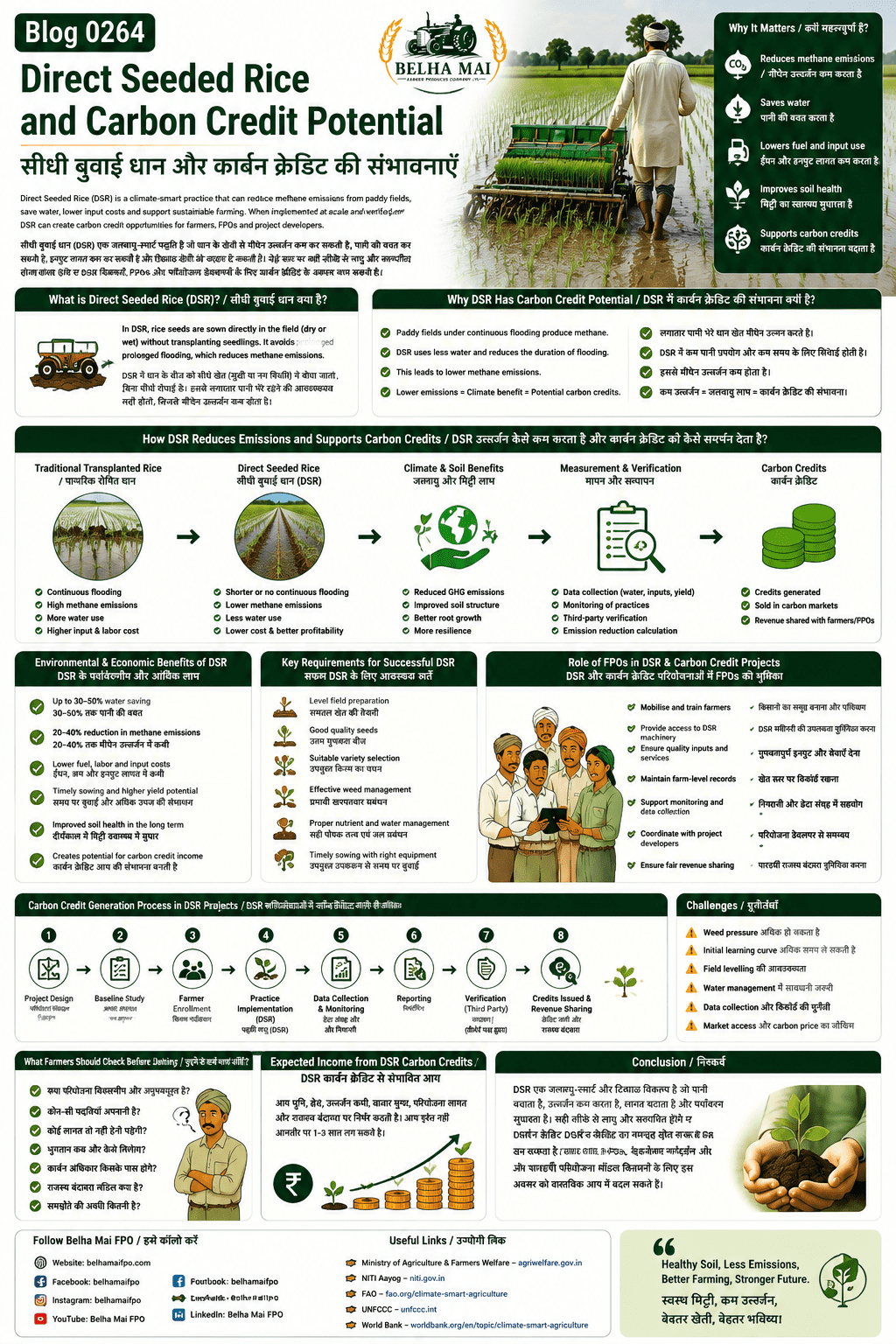
Direct Seeded Rice and carbon credit potential is an important topic for Indian agriculture because rice cultivation is closely linked with water use, methane emissions, labour cost, and climate-smart farming. In traditional transplanted paddy, fields often remain flooded for a long period, which can increase methane emissions. Direct Seeded Rice, commonly known as DSR, allows rice seeds to be sown directly in the field instead of transplanting seedlings from a nursery. When implemented properly, DSR can reduce water use, reduce labour requirement, shorten flooding duration, and support lower-emission rice cultivation.
सीधी बुवाई धान और कार्बन क्रेडिट की संभावना भारतीय कृषि के लिए एक महत्वपूर्ण विषय है, क्योंकि धान खेती पानी के उपयोग, मीथेन उत्सर्जन, श्रम लागत और जलवायु-अनुकूल खेती से गहराई से जुड़ी है। पारंपरिक रोपाई वाले धान में खेत अक्सर लंबे समय तक पानी से भरे रहते हैं, जिससे मीथेन उत्सर्जन बढ़ सकता है। सीधी बुवाई धान में पौधशाला से पौधे निकालकर रोपाई करने के बजाय धान का बीज सीधे खेत में बोया जाता है। यदि इसे सही तरीके से अपनाया जाए, तो इससे पानी की बचत, श्रम की कमी, खेत में पानी भरे रहने की अवधि में कमी और कम उत्सर्जन वाली धान खेती को बढ़ावा मिल सकता है।
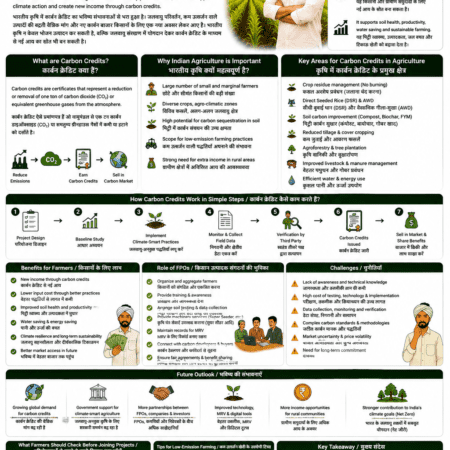
The reason Direct Seeded Rice and carbon credit potential matters is that carbon credit projects require measurable climate benefits. If DSR reduces methane emissions, saves irrigation water, reduces fuel use, and improves soil conditions, these benefits may support carbon credit generation under a properly designed and verified project. However, DSR does not automatically create carbon credits. Farmers and FPOs need proper project design, baseline assessment, monitoring, data collection, verification, and transparent revenue sharing.
सीधी बुवाई धान और कार्बन क्रेडिट की संभावना इसलिए महत्वपूर्ण है क्योंकि कार्बन क्रेडिट परियोजनाओं में मापने योग्य जलवायु लाभ आवश्यक होते हैं। यदि सीधी बुवाई धान मीथेन उत्सर्जन कम करती है, सिंचाई पानी बचाती है, ईंधन उपयोग घटाती है और मिट्टी की स्थिति सुधारती है, तो ये लाभ सही रूप से बनाई और सत्यापित परियोजना के अंतर्गत कार्बन क्रेडिट निर्माण में सहायक हो सकते हैं। हालाँकि सीधी बुवाई धान अपने आप कार्बन क्रेडिट नहीं बनाती। किसानों और किसान उत्पादक संगठनों को सही परियोजना रूपरेखा, आधार स्थिति आकलन, निगरानी, आँकड़ा संग्रह, सत्यापन और पारदर्शी आय बँटवारे की आवश्यकता होती है।
What is Direct Seeded Rice? / सीधी बुवाई धान क्या है?
Direct Seeded Rice is a rice cultivation method in which rice seeds are directly sown into the field instead of transplanting seedlings from a nursery. It may be done in dry or wet field conditions depending on soil, water availability, machinery, and local farming practice. In traditional transplanted rice, farmers first raise seedlings in a nursery and then transplant them into puddled fields. DSR removes this transplanting stage.
सीधी बुवाई धान ऐसी धान खेती पद्धति है जिसमें धान का बीज पौधशाला से पौधे निकालकर रोपने के बजाय सीधे खेत में बोया जाता है। इसे मिट्टी, पानी की उपलब्धता, कृषि यंत्र और स्थानीय खेती पद्धति के आधार पर सूखी या गीली स्थिति में अपनाया जा सकता है। पारंपरिक रोपाई वाले धान में किसान पहले पौधशाला में पौधे तैयार करते हैं और फिर उन्हें कीचड़युक्त खेत में रोपते हैं। सीधी बुवाई धान इस रोपाई चरण को हटाती है।
To understand Direct Seeded Rice and carbon credit potential, farmers must understand that DSR is not just a different sowing method. It changes the water management, field preparation, weed management, labour requirement, and crop establishment process. If these changes reduce emissions and resource use, they may become important for carbon farming and climate-smart agriculture.
सीधी बुवाई धान और कार्बन क्रेडिट की संभावना को समझने के लिए किसानों को यह जानना होगा कि सीधी बुवाई धान केवल अलग बुवाई पद्धति नहीं है। यह जल प्रबंधन, खेत तैयारी, खरपतवार प्रबंधन, श्रम आवश्यकता और फसल स्थापना प्रक्रिया को बदलती है। यदि ये बदलाव उत्सर्जन और संसाधन उपयोग कम करते हैं, तो वे कार्बन खेती और जलवायु-अनुकूल कृषि के लिए महत्वपूर्ण हो सकते हैं।
Why Traditional Paddy Creates Emission Concerns / पारंपरिक धान खेती में उत्सर्जन की चिंता क्यों होती है
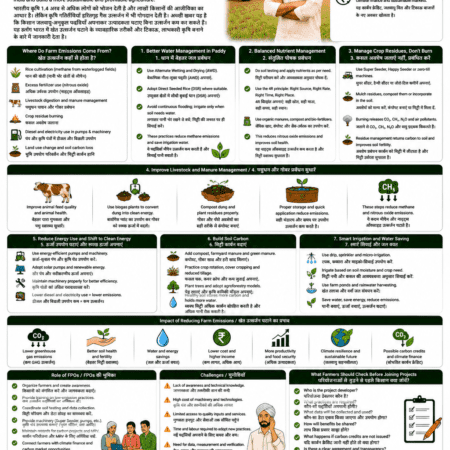
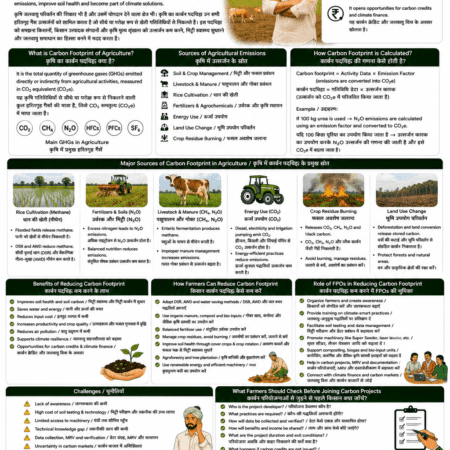
Traditional transplanted paddy often depends on puddling and continuous or frequent flooding. Under flooded conditions, soil oxygen becomes limited and methane-producing conditions can develop. Methane is a powerful greenhouse gas, and rice cultivation is one of the important agricultural sources of methane emissions. This is why improved rice cultivation practices are becoming important in climate-smart agriculture.
पारंपरिक रोपाई वाली धान खेती अक्सर कीचड़ तैयार करने और लगातार या बार-बार पानी भरे रखने पर निर्भर करती है। पानी भरी स्थिति में मिट्टी में ऑक्सीजन की कमी हो जाती है और मीथेन बनने की स्थिति पैदा हो सकती है। मीथेन एक प्रभावशाली हरितगृह गैस है, और धान खेती कृषि क्षेत्र में मीथेन उत्सर्जन के महत्वपूर्ण स्रोतों में से एक है। इसलिए बेहतर धान खेती पद्धतियाँ जलवायु-अनुकूल कृषि में महत्वपूर्ण होती जा रही हैं।
This is where Direct Seeded Rice and carbon credit potential becomes relevant. If DSR reduces the period of standing water and supports better water management, it may reduce methane emissions compared to continuously flooded systems. These emission reductions can become valuable only when they are measured, reported, and verified under a credible carbon project.
यहीं पर सीधी बुवाई धान और कार्बन क्रेडिट की संभावना प्रासंगिक होती है। यदि सीधी बुवाई धान खेत में पानी खड़े रहने की अवधि कम करती है और बेहतर जल प्रबंधन को सहारा देती है, तो लगातार पानी भरी व्यवस्था की तुलना में मीथेन उत्सर्जन कम हो सकता है। ये उत्सर्जन कमी तभी मूल्यवान बनती है जब उन्हें किसी विश्वसनीय कार्बन परियोजना के अंतर्गत मापा, प्रतिवेदित और सत्यापित किया जाए।
How DSR Reduces Emissions / सीधी बुवाई धान उत्सर्जन कैसे कम कर सकती है
DSR can reduce emissions mainly through improved water management. Since the crop is directly sown, the field does not always require the same level of puddling and continuous flooding as transplanted rice. Reduced flooding can lower methane-producing conditions in the soil. In addition, if DSR reduces field operations, fuel use may also reduce in some cases.
सीधी बुवाई धान मुख्य रूप से बेहतर जल प्रबंधन के माध्यम से उत्सर्जन कम कर सकती है। क्योंकि फसल सीधे बोई जाती है, इसलिए खेत को पारंपरिक रोपाई वाले धान जैसी कीचड़ तैयारी और लगातार पानी भरे रखने की आवश्यकता हमेशा नहीं होती। पानी भरे रहने की अवधि कम होने से मिट्टी में मीथेन बनने की स्थिति घट सकती है। इसके अतिरिक्त, यदि सीधी बुवाई धान खेत में यंत्र संचालन कम करती है, तो कुछ स्थितियों में ईंधन उपयोग भी घट सकता है।
This is a key reason why Direct Seeded Rice and carbon credit potential is being discussed. Carbon credit projects are interested in practices that create measurable emission reductions. If DSR adoption is compared with a clear baseline of traditional transplanted paddy and the reduction is properly calculated, it may support carbon credit opportunities.
यही मुख्य कारण है कि सीधी बुवाई धान और कार्बन क्रेडिट की संभावना पर चर्चा हो रही है। कार्बन क्रेडिट परियोजनाएँ ऐसी पद्धतियों में रुचि रखती हैं जो मापने योग्य उत्सर्जन कमी बनाती हैं। यदि सीधी बुवाई धान को पारंपरिक रोपाई वाले धान की स्पष्ट आधार स्थिति से तुलना करके अपनाया जाए और कमी की सही गणना हो, तो यह कार्बन क्रेडिट अवसरों को सहारा दे सकती है।
Water Saving Benefits of DSR / सीधी बुवाई धान से पानी की बचत
One of the biggest benefits of DSR is water saving. Traditional transplanted paddy usually requires more water because fields are puddled and kept flooded. DSR can reduce water use because the crop is established without transplanting and may be managed with less standing water. This can be especially important in areas where groundwater is declining or irrigation cost is increasing.
सीधी बुवाई धान का सबसे बड़ा लाभ पानी की बचत है। पारंपरिक रोपाई वाले धान में सामान्यतः अधिक पानी की आवश्यकता होती है क्योंकि खेत को कीचड़युक्त बनाया जाता है और पानी भरा रखा जाता है। सीधी बुवाई धान पानी का उपयोग कम कर सकती है क्योंकि फसल रोपाई के बिना स्थापित होती है और कम खड़े पानी के साथ प्रबंधित की जा सकती है। यह उन क्षेत्रों में विशेष रूप से महत्वपूर्ण हो सकता है जहाँ भूजल घट रहा है या सिंचाई लागत बढ़ रही है।
Water saving also strengthens Direct Seeded Rice and carbon credit potential because water management is linked with emissions in rice cultivation. Reduced flooding can lower methane emissions, while better irrigation efficiency can improve climate resilience. For farmers, the direct benefit may be lower water cost and better resource use.
पानी की बचत सीधी बुवाई धान और कार्बन क्रेडिट की संभावना को भी मजबूत करती है, क्योंकि धान खेती में जल प्रबंधन उत्सर्जन से जुड़ा होता है। पानी भरे रहने की अवधि कम होने से मीथेन उत्सर्जन घट सकता है, जबकि बेहतर सिंचाई दक्षता जलवायु सहनशीलता बढ़ा सकती है। किसानों के लिए इसका सीधा लाभ कम सिंचाई लागत और बेहतर संसाधन उपयोग के रूप में मिल सकता है।
Economic Benefits for Farmers / किसानों के लिए आर्थिक लाभ
DSR can reduce labour requirements because transplanting is not needed. In many areas, labour shortage and rising labour cost have become serious challenges during the paddy season. By removing the nursery raising and transplanting stage, DSR can reduce labour pressure and help farmers complete sowing in time.
सीधी बुवाई धान श्रम आवश्यकता कम कर सकती है क्योंकि इसमें रोपाई की आवश्यकता नहीं होती। कई क्षेत्रों में धान मौसम के दौरान श्रमिकों की कमी और बढ़ती मजदूरी गंभीर समस्या बन चुकी है। पौधशाला और रोपाई चरण हटने से सीधी बुवाई धान श्रम दबाव कम कर सकती है और किसानों को समय पर बुवाई पूरी करने में मदद कर सकती है।
The economic side is also important for Direct Seeded Rice and carbon credit potential. Farmers will adopt DSR only if it is economically practical. If DSR saves water, labour, fuel, and time while maintaining yield, farmers are more likely to continue it. Carbon credit income should be treated as a possible additional benefit, not the only reason for adopting DSR.
आर्थिक पक्ष सीधी बुवाई धान और कार्बन क्रेडिट की संभावना के लिए भी महत्वपूर्ण है। किसान सीधी बुवाई धान तभी अपनाएँगे जब यह आर्थिक रूप से व्यावहारिक हो। यदि इससे पानी, श्रम, ईंधन और समय की बचत होती है और उत्पादन बना रहता है, तो किसान इसे जारी रखने की अधिक संभावना रखते हैं। कार्बन क्रेडिट आय को संभावित अतिरिक्त लाभ समझना चाहिए, सीधी बुवाई धान अपनाने का एकमात्र कारण नहीं।
Key Requirements for Successful DSR / सफल सीधी बुवाई धान के लिए आवश्यक बातें
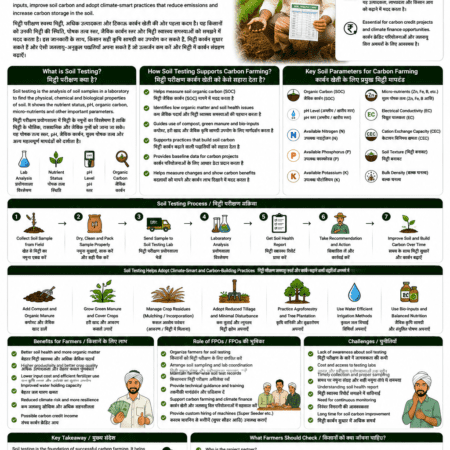
DSR requires proper field preparation. The field should be level, and water management should be planned carefully. Poor levelling can cause uneven germination, waterlogging in some areas, and dry patches in others. Proper land levelling improves crop establishment and water efficiency.
सीधी बुवाई धान के लिए सही खेत तैयारी आवश्यक है। खेत समतल होना चाहिए और जल प्रबंधन की योजना सावधानी से बनानी चाहिए। खराब समतलीकरण से कहीं बीज उगने में असमानता, कहीं जलभराव और कहीं सूखे टुकड़े बन सकते हैं। सही खेत समतलीकरण फसल स्थापना और जल दक्षता को सुधारता है।
Good seed quality and suitable variety selection are also important. Farmers should choose varieties that suit local conditions and DSR systems. Weed management is one of the biggest challenges in DSR. Since the field is not puddled like traditional transplanted rice, weeds can compete strongly with the crop. Timely weed control is essential.
अच्छी बीज गुणवत्ता और उपयुक्त किस्म चयन भी महत्वपूर्ण है। किसानों को स्थानीय परिस्थितियों और सीधी बुवाई धान व्यवस्था के अनुरूप किस्म चुननी चाहिए। खरपतवार प्रबंधन सीधी बुवाई धान की सबसे बड़ी चुनौतियों में से एक है। क्योंकि खेत पारंपरिक रोपाई वाले धान की तरह कीचड़युक्त नहीं होता, खरपतवार फसल से तेज़ प्रतिस्पर्धा कर सकते हैं। समय पर खरपतवार नियंत्रण आवश्यक है।
These requirements are important because Direct Seeded Rice and carbon credit potential will only become successful if the practice works for farmers. If DSR fails due to poor weed management or uneven crop establishment, farmers will not continue it. Therefore, training and technical guidance are essential.
ये आवश्यकताएँ इसलिए महत्वपूर्ण हैं क्योंकि सीधी बुवाई धान और कार्बन क्रेडिट की संभावना तभी सफल होगी जब यह पद्धति किसानों के लिए काम करेगी। यदि खराब खरपतवार प्रबंधन या असमान फसल स्थापना के कारण सीधी बुवाई धान विफल होती है, तो किसान इसे जारी नहीं रखेंगे। इसलिए प्रशिक्षण और तकनीकी मार्गदर्शन आवश्यक हैं।
How DSR Can Generate Carbon Credits / सीधी बुवाई धान से कार्बन क्रेडिट कैसे बन सकते हैं
The first step is project design. A carbon project must clearly define the area, crop season, participating farmers, baseline practice, and DSR intervention. The baseline may be traditional transplanted rice with continuous or frequent flooding. The project then records how DSR changes water use, flooding duration, input use, and emissions.
पहला चरण परियोजना रूपरेखा है। कार्बन परियोजना को क्षेत्र, फसल मौसम, भाग लेने वाले किसान, आधार पद्धति और सीधी बुवाई धान हस्तक्षेप को स्पष्ट रूप से निर्धारित करना होता है। आधार स्थिति पारंपरिक रोपाई वाला धान हो सकती है, जिसमें लगातार या बार-बार पानी भरा रहता है। इसके बाद परियोजना यह दर्ज करती है कि सीधी बुवाई धान जल उपयोग, पानी भरे रहने की अवधि, कृषि सामग्री उपयोग और उत्सर्जन को कैसे बदलती है।
The second step is data collection and monitoring. Farmers and FPOs need to maintain records of sowing date, field area, seed rate, irrigation, weed management, input use, yield, and crop condition. The project developer may use field visits, mobile applications, photographs, satellite tools, and farmer declarations. This monitoring supports Direct Seeded Rice and carbon credit potential by creating evidence.
दूसरा चरण आँकड़ा संग्रह और निगरानी है। किसानों और किसान उत्पादक संगठनों को बुवाई तिथि, खेत क्षेत्र, बीज दर, सिंचाई, खरपतवार प्रबंधन, कृषि सामग्री उपयोग, उत्पादन और फसल स्थिति के अभिलेख रखने होंगे। परियोजना विकासकर्ता खेत भ्रमण, मोबाइल अनुप्रयोग, चित्र, उपग्रह आधारित साधन और किसान घोषणाओं का उपयोग कर सकता है। यह निगरानी प्रमाण बनाकर सीधी बुवाई धान और कार्बन क्रेडिट की संभावना को सहारा देती है।
The third step is verification. A third-party verifier checks whether DSR was actually adopted and whether the claimed emission reduction is valid. If the project passes verification, carbon credits may be issued and sold. After sale, revenue is shared according to the agreement among farmers, FPOs, project developers, and other stakeholders.
तीसरा चरण सत्यापन है। स्वतंत्र सत्यापन संस्था यह जाँचती है कि सीधी बुवाई धान वास्तव में अपनाई गई या नहीं और दावा की गई उत्सर्जन कमी मान्य है या नहीं। यदि परियोजना सत्यापन में सफल होती है, तो कार्बन क्रेडिट जारी और बेचे जा सकते हैं। बिक्री के बाद किसानों, किसान उत्पादक संगठनों, परियोजना विकासकर्ताओं और अन्य पक्षों के बीच समझौते के अनुसार आय बाँटी जाती है।
Role of FPOs in DSR Carbon Projects / सीधी बुवाई धान कार्बन परियोजनाओं में किसान उत्पादक संगठनों की भूमिका
FPOs can play a major role in making DSR practical for small farmers. They can mobilise farmers, organise training, provide access to DSR machinery, help with seed selection, coordinate technical support, and maintain field records. Without FPO support, many small farmers may find DSR difficult because it requires planning and timely operations.
किसान उत्पादक संगठन छोटे किसानों के लिए सीधी बुवाई धान को व्यावहारिक बनाने में बड़ी भूमिका निभा सकते हैं। वे किसानों को संगठित कर सकते हैं, प्रशिक्षण आयोजित कर सकते हैं, सीधी बुवाई धान यंत्र उपलब्ध करा सकते हैं, बीज चयन में सहायता कर सकते हैं, तकनीकी सहयोग का समन्वय कर सकते हैं और खेत अभिलेख रख सकते हैं। किसान उत्पादक संगठन की सहायता के बिना कई छोटे किसानों को सीधी बुवाई धान कठिन लग सकती है, क्योंकि इसमें योजना और समय पर कार्य आवश्यक हैं।
FPOs are also important for Direct Seeded Rice and carbon credit potential because carbon projects require aggregation and documentation. A single farmer may not generate enough climate benefit to justify the cost of monitoring and verification. But an FPO can bring hundreds or thousands of farmers together and create a project scale suitable for carbon credit development.
किसान उत्पादक संगठन सीधी बुवाई धान और कार्बन क्रेडिट की संभावना के लिए भी महत्वपूर्ण हैं क्योंकि कार्बन परियोजनाओं में किसानों का समूह और दस्तावेज़ आवश्यक होते हैं। एक अकेला किसान निगरानी और सत्यापन लागत को उचित ठहराने लायक पर्याप्त जलवायु लाभ नहीं बना सकता। लेकिन किसान उत्पादक संगठन सैकड़ों या हजारों किसानों को साथ लाकर कार्बन क्रेडिट विकास के लिए उपयुक्त परियोजना स्तर बना सकता है।
Challenges in DSR and Carbon Credit Projects / सीधी बुवाई धान और कार्बन क्रेडिट परियोजनाओं की चुनौतियाँ
The first challenge in DSR is weed management. Farmers who are new to DSR may face heavy weed pressure if they do not follow proper timing and control methods. Poor weed management can reduce yield and discourage farmers from continuing the practice.
सीधी बुवाई धान की पहली चुनौती खरपतवार प्रबंधन है। जो किसान इस पद्धति में नए हैं, उन्हें सही समय और नियंत्रण विधियाँ न अपनाने पर अधिक खरपतवार दबाव का सामना करना पड़ सकता है। खराब खरपतवार प्रबंधन उत्पादन घटा सकता है और किसानों को यह पद्धति जारी रखने से रोक सकता है।
The second challenge is farmer confidence. Many farmers are used to traditional transplanting and may hesitate to shift to DSR. Demonstrations, field visits, and successful local examples are necessary. The third challenge is data discipline. For Direct Seeded Rice and carbon credit potential to become real, accurate records must be maintained for every participating farm.
दूसरी चुनौती किसान विश्वास है। कई किसान पारंपरिक रोपाई के आदी होते हैं और सीधी बुवाई धान अपनाने में संकोच कर सकते हैं। प्रदर्शन, खेत भ्रमण और सफल स्थानीय उदाहरण आवश्यक हैं। तीसरी चुनौती आँकड़ा अनुशासन है। सीधी बुवाई धान और कार्बन क्रेडिट की संभावना को वास्तविक बनाने के लिए प्रत्येक भागीदार खेत के सही अभिलेख रखना आवश्यक है।
The fourth challenge is market uncertainty. Carbon credit income depends on verification, buyer demand, price, and revenue-sharing agreements. Farmers should not be promised fixed or immediate income. The project must clearly explain timelines, risks, and benefit-sharing terms.
चौथी चुनौती बाज़ार अनिश्चितता है। कार्बन क्रेडिट आय सत्यापन, खरीदार मांग, मूल्य और आय बँटवारा समझौते पर निर्भर करती है। किसानों से निश्चित या तुरंत आय का वादा नहीं करना चाहिए। परियोजना को समय-सीमा, जोखिम और लाभ बँटवारे की शर्तें स्पष्ट रूप से समझानी चाहिए।
What Farmers Should Check Before Joining / जुड़ने से पहले किसानों को क्या जाँचना चाहिए
Before joining a DSR carbon credit project, farmers should ask who is implementing the project, what practices are required, whether DSR machinery support will be available, how weed management will be handled, whether any cost has to be paid, and how long the project will run.
सीधी बुवाई धान कार्बन क्रेडिट परियोजना से जुड़ने से पहले किसानों को पूछना चाहिए कि परियोजना कौन लागू कर रहा है, कौन-सी पद्धतियाँ आवश्यक हैं, क्या सीधी बुवाई धान यंत्र सहायता उपलब्ध होगी, खरपतवार प्रबंधन कैसे होगा, क्या कोई लागत देनी होगी और परियोजना कितने समय तक चलेगी।
Farmers should also ask about carbon rights, payment timeline, revenue sharing, data use, and exit conditions. This is important because Direct Seeded Rice and carbon credit potential can benefit farmers only when agreements are transparent and farmer interests are protected.
किसानों को कार्बन अधिकार, भुगतान समय-सीमा, आय बँटवारा, आँकड़ों के उपयोग और बाहर निकलने की शर्तों के बारे में भी पूछना चाहिए। यह महत्वपूर्ण है क्योंकि सीधी बुवाई धान और कार्बन क्रेडिट की संभावना किसानों को तभी लाभ दे सकती है जब समझौते पारदर्शी हों और किसान हित सुरक्षित हों।
Practical Model for Indian FPOs / भारतीय किसान उत्पादक संगठनों के लिए व्यावहारिक मॉडल
A practical DSR carbon project can begin with selected paddy-growing villages and 500 to 1,000 farmers. The FPO can identify farmers interested in DSR, map their fields, collect current paddy cultivation practices, organise training, arrange machinery support, and coordinate technical guidance.
एक व्यावहारिक सीधी बुवाई धान कार्बन परियोजना चयनित धान उत्पादक गाँवों और पाँच सौ से एक हजार किसानों से शुरू हो सकती है। किसान उत्पादक संगठन सीधी बुवाई धान में रुचि रखने वाले किसानों की पहचान कर सकता है, उनके खेतों का मानचित्रण कर सकता है, वर्तमान धान खेती पद्धतियाँ दर्ज कर सकता है, प्रशिक्षण आयोजित कर सकता है, यंत्र सहायता की व्यवस्था कर सकता है और तकनीकी मार्गदर्शन का समन्वय कर सकता है।
The FPO can then partner with a credible carbon project developer or climate finance partner. The FPO handles farmer mobilisation and local implementation, while the technical partner handles methodology, emission calculation, monitoring, verification, credit issuance, and buyer linkage. This model makes Direct Seeded Rice and carbon credit potential practical for small farmers.
इसके बाद किसान उत्पादक संगठन किसी विश्वसनीय कार्बन परियोजना विकासकर्ता या जलवायु वित्त भागीदार से साझेदारी कर सकता है। संगठन किसान समन्वय और स्थानीय क्रियान्वयन संभालता है, जबकि तकनीकी भागीदार पद्धति, उत्सर्जन गणना, निगरानी, सत्यापन, क्रेडिट जारी करना और खरीदार से जुड़ाव संभालता है। यह मॉडल छोटे किसानों के लिए सीधी बुवाई धान और कार्बन क्रेडिट की संभावना को व्यावहारिक बनाता है।
Conclusion / निष्कर्ष
Direct Seeded Rice and carbon credit potential is a promising area for Indian agriculture because DSR can reduce water use, reduce methane emissions, lower labour requirement, and support climate-smart rice cultivation. However, DSR must be implemented correctly with proper field preparation, seed selection, weed management, water management, training, and farmer support.
सीधी बुवाई धान और कार्बन क्रेडिट की संभावना भारतीय कृषि के लिए आशाजनक क्षेत्र है क्योंकि सीधी बुवाई धान पानी का उपयोग कम कर सकती है, मीथेन उत्सर्जन घटा सकती है, श्रम आवश्यकता कम कर सकती है और जलवायु-अनुकूल धान खेती को सहारा दे सकती है। हालाँकि सीधी बुवाई धान को सही खेत तैयारी, बीज चयन, खरपतवार प्रबंधन, जल प्रबंधन, प्रशिक्षण और किसान सहायता के साथ सही तरीके से लागू करना आवश्यक है।
For farmers, the first benefit of DSR should be water saving, reduced labour pressure, and better resource efficiency. Carbon credit income should be seen as a possible additional opportunity, not a guaranteed promise. For FPOs, Direct Seeded Rice and carbon credit potential can become a strong climate-smart agriculture model if implemented with credible partners, proper data, verification, and transparent benefit sharing.
किसानों के लिए सीधी बुवाई धान का पहला लाभ पानी की बचत, कम श्रम दबाव और बेहतर संसाधन उपयोग होना चाहिए। कार्बन क्रेडिट आय को संभावित अतिरिक्त अवसर के रूप में देखना चाहिए, निश्चित वादा नहीं। किसान उत्पादक संगठनों के लिए सीधी बुवाई धान और कार्बन क्रेडिट की संभावना एक मजबूत जलवायु-अनुकूल कृषि मॉडल बन सकती है, यदि इसे विश्वसनीय भागीदारों, सही आँकड़ों, सत्यापन और पारदर्शी लाभ बँटवारे के साथ लागू किया जाए।
Frequently Asked Questions (FAQs) / अक्सर पूछे जाने वाले प्रश्न
1. What is Direct Seeded Rice?
Direct Seeded Rice is a method where rice seeds are sown directly in the field instead of transplanting seedlings from a nursery.
1. सीधी बुवाई धान क्या है?
सीधी बुवाई धान ऐसी पद्धति है जिसमें पौधशाला से पौधे निकालकर रोपाई करने के बजाय धान का बीज सीधे खेत में बोया जाता है।
2. Why is Direct Seeded Rice and carbon credit potential important?
Direct Seeded Rice and carbon credit potential is important because DSR can reduce water use and methane emissions, which may create measurable climate benefits under verified carbon projects.
2. सीधी बुवाई धान और कार्बन क्रेडिट की संभावना क्यों महत्वपूर्ण है?
सीधी बुवाई धान और कार्बन क्रेडिट की संभावना इसलिए महत्वपूर्ण है क्योंकि सीधी बुवाई धान पानी का उपयोग और मीथेन उत्सर्जन कम कर सकती है, जिससे सत्यापित कार्बन परियोजनाओं में मापने योग्य जलवायु लाभ बन सकते हैं।
3. Does DSR automatically create carbon credits?
No, DSR does not automatically create carbon credits. The emission reduction must be measured, monitored, reported, and verified under a recognised carbon project.
3. क्या सीधी बुवाई धान अपने आप कार्बन क्रेडिट बनाती है?
नहीं, सीधी बुवाई धान अपने आप कार्बन क्रेडिट नहीं बनाती। उत्सर्जन कमी को मान्यता प्राप्त कार्बन परियोजना के अंतर्गत मापना, निगरानी करना, प्रतिवेदित करना और सत्यापित करना आवश्यक होता है।
4. What are the main challenges in DSR?
The main challenges include weed management, proper field levelling, seed selection, farmer training, water management, and accurate record keeping.
4. सीधी बुवाई धान की मुख्य चुनौतियाँ क्या हैं?
मुख्य चुनौतियों में खरपतवार प्रबंधन, सही खेत समतलीकरण, बीज चयन, किसान प्रशिक्षण, जल प्रबंधन और सही अभिलेख रखना शामिल हैं।
5. How can FPOs support DSR carbon projects?
FPOs can mobilise farmers, provide training, arrange machinery support, maintain records, coordinate monitoring, and work with credible carbon project developers.
5. किसान उत्पादक संगठन सीधी बुवाई धान कार्बन परियोजनाओं में कैसे सहायता कर सकते हैं?
किसान उत्पादक संगठन किसानों को संगठित कर सकते हैं, प्रशिक्षण दे सकते हैं, यंत्र सहायता उपलब्ध करा सकते हैं, अभिलेख रख सकते हैं, निगरानी का समन्वय कर सकते हैं और विश्वसनीय कार्बन परियोजना विकासकर्ताओं के साथ काम कर सकते हैं।
Internal Links / आंतरिक लिंक
👉 Carbon Farming in India: Complete Guide — https://belhamaifpo.com/agriculture/carbon-farming-in-india-complete-guide/
👉 How Regenerative Agriculture Supports Carbon Credits — https://belhamaifpo.com/agriculture/how-regenerative-agriculture-supports-carbon-credits/
👉 Soil Carbon and Sustainable Farming — https://belhamaifpo.com/agriculture/soil-carbon-and-sustainable-farming/
👉 Carbon Credit Opportunities in Indian Agriculture — https://belhamaifpo.com/agriculture/carbon-credit-opportunities-in-indian-agriculture/
👉 Role of FPOs in Carbon Credit Projects — https://belhamaifpo.com/agriculture/role-of-fpos-in-carbon-credit-projects/
👉 Can Small Farmers Earn from Carbon Credits? — https://belhamaifpo.com/agriculture/can-small-farmers-earn-from-carbon-credits/
👉 How Carbon Credits Work for Farmers — https://belhamaifpo.com/agriculture/how-carbon-credits-work-for-farmers/
👉 What is Carbon Credit in Agriculture? — https://belhamaifpo.com/agriculture/what-is-carbon-credit-in-agriculture/
👉 Farmer Producer Organizations Complete Guide — https://belhamaifpo.com/farmer-producer-organisation/farmer-producer-organizations-fpos/
👉 SDGs & Our FPO — https://belhamaifpo.com/sdg-goals/
External Authority Links / बाहरी प्राधिकरण लिंक
👉 Ministry of Agriculture & Farmers Welfare — https://agriwelfare.gov.in/
👉 NITI Aayog — https://www.niti.gov.in/
👉 FAO Climate-Smart Agriculture — https://www.fao.org/climate-smart-agriculture/en/
👉 UNFCCC — https://unfccc.int/
👉 World Bank Climate-Smart Agriculture — https://www.worldbank.org/en/topic/climate-smart-agriculture
Follow Belha Mai FPO for More Updates / अधिक अपडेट के लिए Belha Mai FPO को फॉलो करें
👉 Website — https://belhamaifpo.com/
👉 Facebook — https://www.facebook.com/profile.php?id=61561043486818
👉 Instagram — https://instagram.com/belhamaifpo
👉 LinkedIn — https://www.linkedin.com/in/abhay-singh-ab5568280/
👉 YouTube — https://www.youtube.com/channel/UC9ZvojoTMCa7mU1-Q_Bh60A