खेतों पर कार्बन कमी को कैसे मापें
Introduction / परिचय
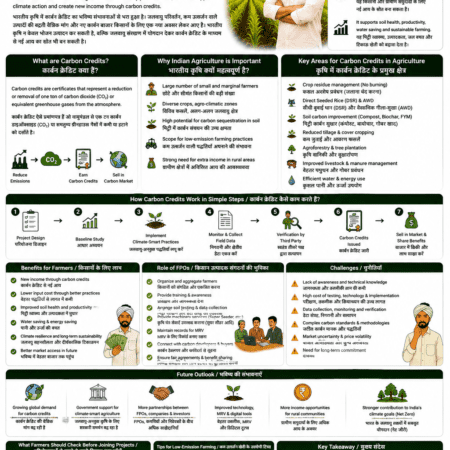
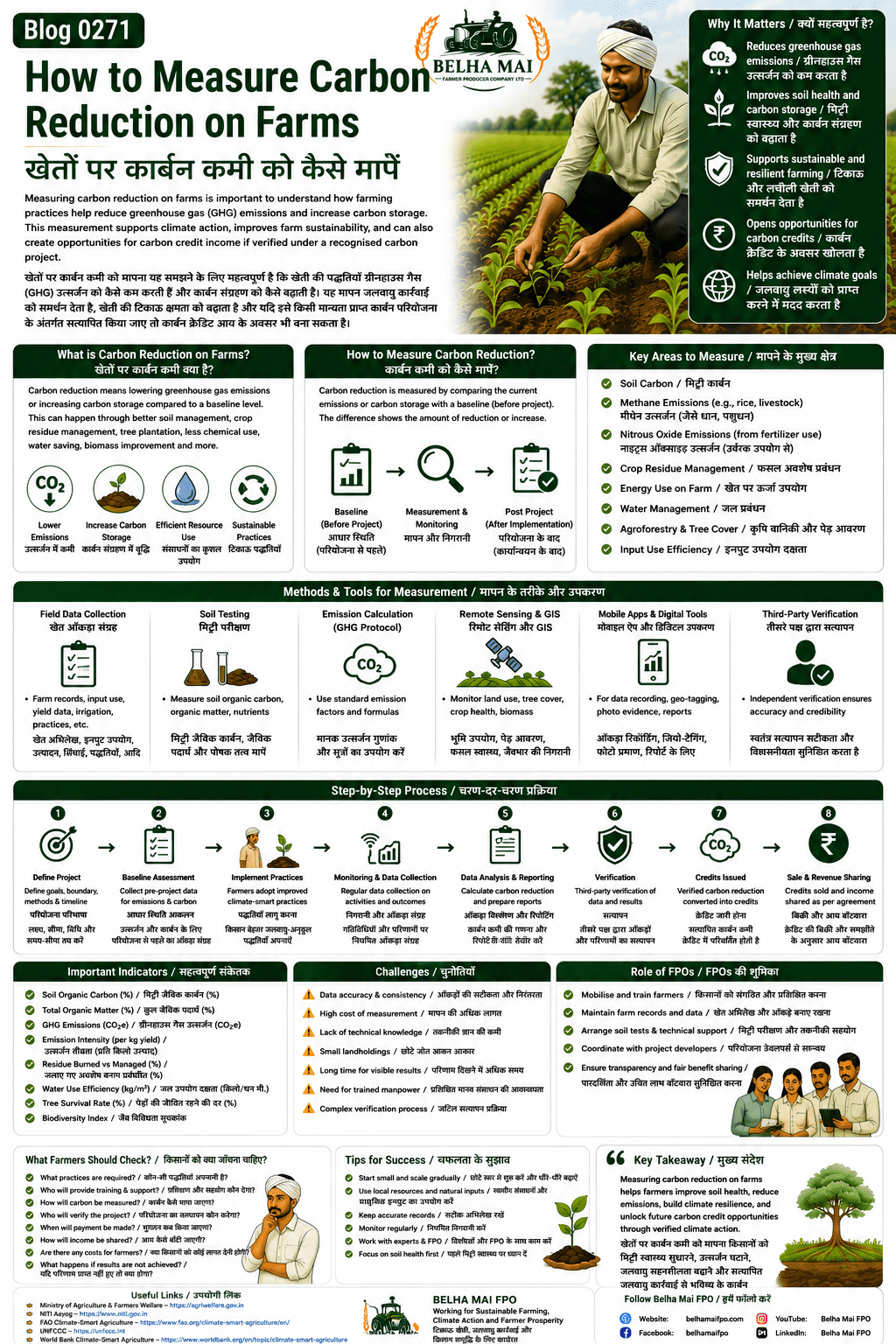
How to measure carbon reduction on farms is one of the most important questions in carbon farming because carbon credit projects depend on proof, not assumptions. Farmers may adopt better practices such as crop residue management, reduced tillage, tree plantation, composting, water-saving irrigation, bio-inputs, and Direct Seeded Rice, but these practices must be measured and verified to prove whether emissions have actually reduced or carbon storage has increased. Without proper measurement, carbon reduction cannot become a reliable carbon credit opportunity.
खेतों पर कार्बन कमी को कैसे मापें यह कार्बन खेती का सबसे महत्वपूर्ण प्रश्नों में से एक है, क्योंकि कार्बन क्रेडिट परियोजनाएँ अनुमान पर नहीं, प्रमाण पर आधारित होती हैं। किसान फसल अवशेष प्रबंधन, कम जुताई, वृक्षारोपण, कंपोस्ट, जल बचत सिंचाई, जैविक कृषि सामग्री और सीधी बुवाई धान जैसी बेहतर पद्धतियाँ अपना सकते हैं, लेकिन यह सिद्ध करने के लिए कि उत्सर्जन वास्तव में घटा है या कार्बन संग्रहण बढ़ा है, इन पद्धतियों को मापना और सत्यापित करना आवश्यक है। सही मापन के बिना कार्बन कमी विश्वसनीय कार्बन क्रेडिट अवसर नहीं बन सकती।
The topic How to measure carbon reduction on farms is especially important for small farmers and FPOs because most farmers do not know how carbon benefits are calculated. They may hear that carbon credits can provide additional income, but they often do not understand baseline assessment, monitoring, soil testing, data collection, emission calculation, verification, and revenue sharing. This blog explains the process in simple language so that farmers and Farmer Producer Organizations can understand what is required before joining any carbon project.
खेतों पर कार्बन कमी को कैसे मापें विषय छोटे किसानों और किसान उत्पादक संगठनों के लिए विशेष रूप से महत्वपूर्ण है, क्योंकि अधिकांश किसान यह नहीं जानते कि कार्बन लाभ की गणना कैसे होती है। वे सुनते हैं कि कार्बन क्रेडिट से अतिरिक्त आय मिल सकती है, लेकिन वे आधार स्थिति आकलन, निगरानी, मिट्टी परीक्षण, आँकड़ा संग्रह, उत्सर्जन गणना, सत्यापन और आय बँटवारे को ठीक से नहीं समझते। यह लेख इस प्रक्रिया को सरल भाषा में समझाता है, ताकि किसान और किसान उत्पादक संगठन किसी भी कार्बन परियोजना से जुड़ने से पहले आवश्यक बातों को समझ सकें।
What is Carbon Reduction on Farms? / खेतों पर कार्बन कमी क्या है?
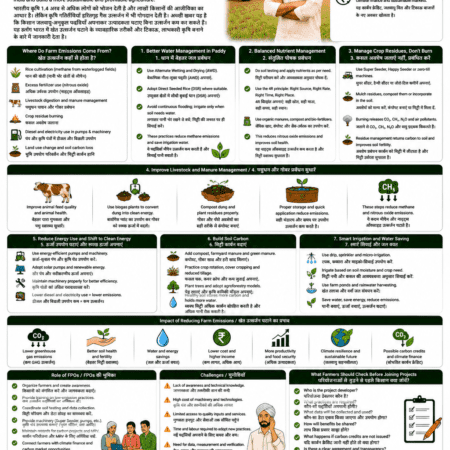
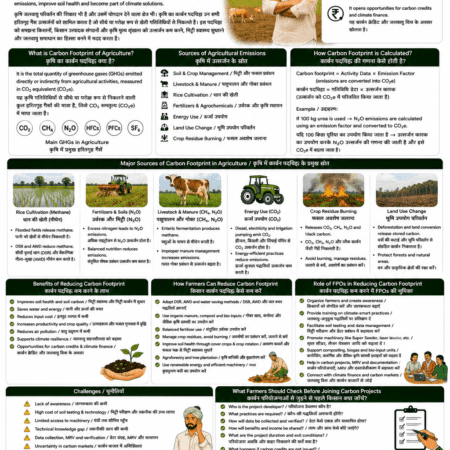
Carbon reduction on farms means lowering greenhouse gas emissions or increasing carbon storage compared to an earlier baseline. In agriculture, emissions may come from flooded rice fields, excessive fertilizer use, residue burning, fuel use, poor manure management, and soil carbon loss. Carbon reduction happens when farmers adopt practices that reduce these emissions or store more carbon in soil, trees, roots, and biomass.
खेतों पर कार्बन कमी का अर्थ है पहले की आधार स्थिति की तुलना में हरितगृह गैस उत्सर्जन कम करना या कार्बन संग्रहण बढ़ाना। कृषि में उत्सर्जन पानी भरे धान खेतों, उर्वरकों के असंतुलित उपयोग, फसल अवशेष जलाने, ईंधन उपयोग, खराब गोबर प्रबंधन और मिट्टी कार्बन हानि से हो सकता है। कार्बन कमी तब होती है जब किसान ऐसी पद्धतियाँ अपनाते हैं जो इन उत्सर्जनों को घटाती हैं या मिट्टी, पेड़ों, जड़ों और जैवभार में अधिक कार्बन संग्रहित करती हैं।
To understand How to measure carbon reduction on farms, farmers must understand the difference between reduction and storage. Reduction means lowering emissions, such as reducing methane from rice or avoiding residue burning. Storage means increasing carbon in soil, trees, or biomass. Both can support carbon farming, but both require proper measurement and verification.
खेतों पर कार्बन कमी को कैसे मापें समझने के लिए किसानों को कमी और संग्रहण का अंतर समझना चाहिए। कमी का अर्थ उत्सर्जन घटाना है, जैसे धान से मीथेन कम करना या फसल अवशेष जलाने से बचना। संग्रहण का अर्थ मिट्टी, पेड़ों या जैवभार में कार्बन बढ़ाना है। दोनों कार्बन खेती को सहारा दे सकते हैं, लेकिन दोनों के लिए सही मापन और सत्यापन आवश्यक है।
Why Measurement is Important / मापन क्यों महत्वपूर्ण है
Measurement is important because carbon credits are issued only when climate benefits are proven. A project must show what the situation was before the project and what changed after farmers adopted better practices. This comparison helps calculate carbon reduction or carbon storage. Without measurement, no buyer or verification agency can trust the claim.
मापन इसलिए महत्वपूर्ण है क्योंकि कार्बन क्रेडिट तभी जारी होते हैं जब जलवायु लाभ सिद्ध हो जाते हैं। परियोजना को यह दिखाना होता है कि परियोजना से पहले स्थिति क्या थी और किसानों द्वारा बेहतर पद्धतियाँ अपनाने के बाद क्या बदलाव हुआ। यही तुलना कार्बन कमी या कार्बन संग्रहण की गणना में मदद करती है। मापन के बिना कोई खरीदार या सत्यापन संस्था दावे पर भरोसा नहीं कर सकती।
This is why How to measure carbon reduction on farms is the foundation of carbon credit projects. Farmers may be doing good work, but if there is no record, no baseline, and no monitoring, the project cannot prove the benefit. Therefore, measurement protects both farmers and buyers by creating transparency.
इसीलिए खेतों पर कार्बन कमी को कैसे मापें कार्बन क्रेडिट परियोजनाओं की आधारशिला है। किसान अच्छा काम कर रहे हों, लेकिन यदि अभिलेख, आधार स्थिति और निगरानी नहीं है, तो परियोजना लाभ सिद्ध नहीं कर सकती। इसलिए मापन पारदर्शिता बनाकर किसानों और खरीदारों दोनों की रक्षा करता है।
Step 1: Baseline Assessment / चरण 1: आधार स्थिति आकलन
The first step in measuring carbon reduction is baseline assessment. Baseline means the condition before the carbon project begins. It records existing farming practices, crop pattern, fertilizer use, irrigation method, residue management, tillage practice, soil condition, tree cover, livestock waste management, and energy use on the farm.
कार्बन कमी मापने का पहला चरण आधार स्थिति आकलन है। आधार स्थिति का अर्थ है कार्बन परियोजना शुरू होने से पहले की स्थिति। इसमें वर्तमान कृषि पद्धतियाँ, फसल पद्धति, उर्वरक उपयोग, सिंचाई तरीका, फसल अवशेष प्रबंधन, जुताई पद्धति, मिट्टी स्थिति, वृक्ष आवरण, पशु अपशिष्ट प्रबंधन और खेत पर ऊर्जा उपयोग दर्ज किया जाता है।
In How to measure carbon reduction on farms, baseline is essential because carbon reduction is calculated by comparing the new practice with the old practice. For example, if a farmer earlier burned crop residues and now uses residue incorporation or Super Seeder, the project must record the earlier burning practice and the new residue management practice. Without baseline, improvement cannot be calculated properly.
खेतों पर कार्बन कमी को कैसे मापें में आधार स्थिति आवश्यक है क्योंकि कार्बन कमी की गणना नई पद्धति की तुलना पुरानी पद्धति से करके होती है। उदाहरण के लिए, यदि किसान पहले फसल अवशेष जलाता था और अब अवशेष मिलाने या सुपर सीडर का उपयोग करता है, तो परियोजना को पहले की जलाने वाली पद्धति और नई अवशेष प्रबंधन पद्धति दोनों दर्ज करनी होंगी। आधार स्थिति के बिना सुधार की सही गणना नहीं हो सकती।
Step 2: Identify Key Areas to Measure / चरण 2: मापन के मुख्य क्षेत्रों की पहचान
The second step is identifying what should be measured. In agriculture, key areas may include soil carbon, methane emissions from rice fields, nitrous oxide emissions from fertilizer use, carbon storage in trees, crop residue management, fuel use, water management, manure management, and input efficiency. Different projects measure different areas depending on crop, region, practice, and carbon methodology.
दूसरा चरण यह पहचानना है कि क्या मापा जाना चाहिए। कृषि में मुख्य क्षेत्रों में मिट्टी कार्बन, धान खेतों से मीथेन उत्सर्जन, उर्वरक उपयोग से नाइट्रस ऑक्साइड उत्सर्जन, पेड़ों में कार्बन संग्रहण, फसल अवशेष प्रबंधन, ईंधन उपयोग, जल प्रबंधन, गोबर प्रबंधन और कृषि सामग्री उपयोग क्षमता शामिल हो सकते हैं। अलग-अलग परियोजनाएँ फसल, क्षेत्र, पद्धति और कार्बन पद्धति के आधार पर अलग-अलग क्षेत्रों को मापती हैं।
For example, a Direct Seeded Rice project may focus on methane reduction and water use. A tree plantation project may focus on tree survival and biomass carbon. A soil carbon project may focus on organic matter, crop residues, composting, and reduced tillage. This shows why How to measure carbon reduction on farms depends on the type of farming practice being promoted.
उदाहरण के लिए, सीधी बुवाई धान परियोजना मीथेन कमी और जल उपयोग पर ध्यान दे सकती है। वृक्षारोपण परियोजना पेड़ों के जीवित रहने और जैवभार कार्बन पर ध्यान दे सकती है। मिट्टी कार्बन परियोजना जैविक पदार्थ, फसल अवशेष, कंपोस्ट और कम जुताई पर ध्यान दे सकती है। इससे स्पष्ट होता है कि खेतों पर कार्बन कमी को कैसे मापें इस बात पर निर्भर करता है कि कौन-सी कृषि पद्धति बढ़ावा दी जा रही है।
Step 3: Field Data Collection / चरण 3: खेत स्तर पर आँकड़ा संग्रह
Field data collection is a practical and essential part of measuring carbon reduction. Farmers, FPOs, or project teams collect information such as farm area, crop type, sowing date, irrigation details, fertilizer use, pesticide use, residue handling, tillage operations, yield, machinery use, and photographs of practices. This data becomes the evidence base for the project.
खेत स्तर पर आँकड़ा संग्रह कार्बन कमी मापने का व्यावहारिक और आवश्यक भाग है। किसान, किसान उत्पादक संगठन या परियोजना दल खेत क्षेत्र, फसल प्रकार, बुवाई तिथि, सिंचाई विवरण, उर्वरक उपयोग, कीटनाशक उपयोग, फसल अवशेष प्रबंधन, जुताई कार्य, उत्पादन, कृषि यंत्र उपयोग और पद्धतियों के चित्र जैसी जानकारी एकत्र करते हैं। यही आँकड़े परियोजना के प्रमाण का आधार बनते हैं।
In How to measure carbon reduction on farms, good data collection is very important because wrong or incomplete data can weaken the project. FPOs can help farmers maintain farmer-wise and crop-wise records. They can also collect training attendance, soil testing reports, machinery service records, and practice adoption details.
खेतों पर कार्बन कमी को कैसे मापें में सही आँकड़ा संग्रह बहुत महत्वपूर्ण है क्योंकि गलत या अधूरे आँकड़े परियोजना को कमजोर कर सकते हैं। किसान उत्पादक संगठन किसानवार और फसलवार अभिलेख रखने में मदद कर सकते हैं। वे प्रशिक्षण उपस्थिति, मिट्टी परीक्षण प्रतिवेदन, कृषि यंत्र सेवा अभिलेख और अपनाई गई पद्धतियों का विवरण भी एकत्र कर सकते हैं।
Step 4: Soil Testing and Soil Carbon Measurement / चरण 4: मिट्टी परीक्षण और मिट्टी कार्बन मापन
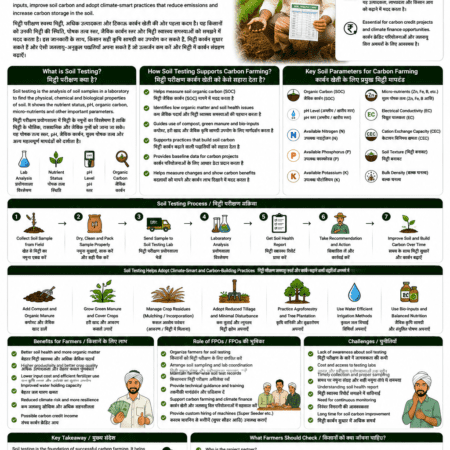
Soil testing is important when the project aims to measure soil carbon improvement. Soil samples may be collected from selected fields and tested for soil organic carbon, organic matter, nutrients, pH, and other soil health indicators. Soil testing helps show whether sustainable practices are improving soil over time.
जब परियोजना का उद्देश्य मिट्टी कार्बन सुधार मापना हो, तब मिट्टी परीक्षण महत्वपूर्ण होता है। चयनित खेतों से मिट्टी नमूने लेकर मिट्टी जैविक कार्बन, जैविक पदार्थ, पोषक तत्व, अम्लीयता-क्षारीयता और अन्य मिट्टी स्वास्थ्य संकेतकों की जाँच की जा सकती है। मिट्टी परीक्षण यह दिखाने में मदद करता है कि टिकाऊ पद्धतियाँ समय के साथ मिट्टी सुधार रही हैं या नहीं।
However, soil carbon changes slowly. One test may not be enough. Projects may need repeated soil testing at fixed intervals. This is an important part of How to measure carbon reduction on farms, especially for projects related to composting, reduced tillage, residue management, organic farming, natural farming, and regenerative agriculture.
हालाँकि मिट्टी कार्बन धीरे-धीरे बदलता है। एक परीक्षण पर्याप्त नहीं हो सकता। परियोजनाओं को निश्चित अंतराल पर बार-बार मिट्टी परीक्षण की आवश्यकता हो सकती है। यह खेतों पर कार्बन कमी को कैसे मापें का महत्वपूर्ण हिस्सा है, विशेषकर कंपोस्ट, कम जुताई, फसल अवशेष प्रबंधन, जैविक खेती, प्राकृतिक खेती और पुनर्योजी कृषि से जुड़ी परियोजनाओं में।
Step 5: Emission Calculation / चरण 5: उत्सर्जन गणना
Emission calculation means estimating how much greenhouse gas emission has been reduced because of the new practice. For example, if rice fields are no longer continuously flooded, methane emissions may reduce. If crop residues are not burned, emissions from burning may reduce. If fertilizer use becomes more efficient, emissions related to fertilizer use may reduce.
उत्सर्जन गणना का अर्थ है यह अनुमान लगाना कि नई पद्धति के कारण हरितगृह गैस उत्सर्जन कितना कम हुआ। उदाहरण के लिए, यदि धान खेतों में लगातार पानी नहीं भरा जाता, तो मीथेन उत्सर्जन कम हो सकता है। यदि फसल अवशेष नहीं जलाए जाते, तो जलाने से होने वाला उत्सर्जन कम हो सकता है। यदि उर्वरक उपयोग अधिक कुशल हो जाता है, तो उर्वरक उपयोग से जुड़ा उत्सर्जन कम हो सकता है।
In How to measure carbon reduction on farms, emission calculation usually follows accepted formulas, emission factors, or carbon project methodologies. Farmers do not need to calculate everything themselves, but FPOs and project developers must explain the method clearly. Transparency is important because the final carbon credit claim depends on these calculations.
खेतों पर कार्बन कमी को कैसे मापें में उत्सर्जन गणना सामान्यतः स्वीकृत सूत्रों, उत्सर्जन गुणांकों या कार्बन परियोजना पद्धतियों के अनुसार होती है। किसानों को सब कुछ स्वयं गणना करने की आवश्यकता नहीं होती, लेकिन किसान उत्पादक संगठनों और परियोजना विकासकर्ताओं को पद्धति स्पष्ट रूप से समझानी चाहिए। पारदर्शिता महत्वपूर्ण है क्योंकि अंतिम कार्बन क्रेडिट दावा इन्हीं गणनाओं पर निर्भर करता है।
Step 6: Remote Sensing and Digital Tools / चरण 6: दूरसंवेदी तकनीक और डिजिटल साधन
Remote sensing and digital tools can help measure land use, crop cover, tree cover, water patterns, biomass growth, and field-level changes. Satellite images, mobile applications, location mapping, photographs, and digital records can support monitoring. These tools help reduce manual errors and improve project transparency.
दूरसंवेदी तकनीक और डिजिटल साधन भूमि उपयोग, फसल आवरण, वृक्ष आवरण, जल स्थिति, जैवभार वृद्धि और खेत स्तर के बदलाव मापने में मदद कर सकते हैं। उपग्रह चित्र, मोबाइल अनुप्रयोग, स्थान मानचित्रण, चित्र और डिजिटल अभिलेख निगरानी को सहारा दे सकते हैं। ये साधन मानवीय त्रुटियों को कम करने और परियोजना पारदर्शिता सुधारने में मदद करते हैं।
However, digital tools cannot replace field reality completely. Ground verification is still important. In How to measure carbon reduction on farms, the best approach combines field visits, farmer records, soil testing, digital tools, and third-party verification.
हालाँकि डिजिटल साधन खेत की वास्तविकता को पूरी तरह बदल नहीं सकते। जमीन पर सत्यापन फिर भी महत्वपूर्ण है। खेतों पर कार्बन कमी को कैसे मापें में सबसे अच्छा तरीका खेत भ्रमण, किसान अभिलेख, मिट्टी परीक्षण, डिजिटल साधन और स्वतंत्र सत्यापन को साथ मिलाकर अपनाना है।
Step 7: Monitoring and Reporting / चरण 7: निगरानी और प्रतिवेदन
Monitoring means regularly checking whether farmers are actually following the required practices. Reporting means converting the collected data into a structured document according to the project methodology. Reports may include farmer details, farm area, practice adoption, soil results, emission calculations, photographs, and field observations.
निगरानी का अर्थ है नियमित रूप से यह जाँचना कि किसान वास्तव में आवश्यक पद्धतियों का पालन कर रहे हैं या नहीं। प्रतिवेदन का अर्थ है एकत्र आँकड़ों को परियोजना पद्धति के अनुसार व्यवस्थित दस्तावेज़ में बदलना। प्रतिवेदन में किसान विवरण, खेत क्षेत्र, पद्धति अपनाने का विवरण, मिट्टी परिणाम, उत्सर्जन गणना, चित्र और खेत निरीक्षण शामिल हो सकते हैं।
This stage is very important in How to measure carbon reduction on farms because it connects farm activity with carbon credit documentation. If monitoring is weak, even a good project may fail during verification. Farmers and FPOs must maintain regular records throughout the project period.
यह चरण खेतों पर कार्बन कमी को कैसे मापें में बहुत महत्वपूर्ण है क्योंकि यह खेत गतिविधि को कार्बन क्रेडिट दस्तावेज़ीकरण से जोड़ता है। यदि निगरानी कमजोर है, तो अच्छी परियोजना भी सत्यापन में असफल हो सकती है। किसानों और किसान उत्पादक संगठनों को परियोजना अवधि के दौरान नियमित अभिलेख रखने होंगे।
Step 8: Third-Party Verification / चरण 8: स्वतंत्र सत्यापन
Third-party verification means an independent agency checks whether the carbon reduction claim is correct. The verifier may review records, inspect fields, check data quality, assess calculations, and confirm whether project rules were followed. This process gives credibility to the carbon credit claim.
स्वतंत्र सत्यापन का अर्थ है कि एक स्वतंत्र संस्था यह जाँचती है कि कार्बन कमी का दावा सही है या नहीं। सत्यापन संस्था अभिलेखों की समीक्षा कर सकती है, खेतों का निरीक्षण कर सकती है, आँकड़ों की गुणवत्ता जाँच सकती है, गणनाओं का आकलन कर सकती है और यह पुष्टि कर सकती है कि परियोजना नियमों का पालन हुआ या नहीं। यह प्रक्रिया कार्बन क्रेडिट दावे को विश्वसनीयता देती है।
In How to measure carbon reduction on farms, verification is the final trust-building step before credits are issued. Farmers should understand that verification is not a formality. If data is weak or practices are not followed properly, carbon credits may not be issued.
खेतों पर कार्बन कमी को कैसे मापें में सत्यापन क्रेडिट जारी होने से पहले विश्वास बनाने का अंतिम चरण है। किसानों को समझना चाहिए कि सत्यापन केवल औपचारिकता नहीं है। यदि आँकड़े कमजोर हैं या पद्धतियों का सही पालन नहीं हुआ है, तो कार्बन क्रेडिट जारी नहीं हो सकते।
Important Indicators to Track / मापने योग्य महत्वपूर्ण संकेतक
Important indicators may include soil organic carbon percentage, total organic matter, fertilizer use, irrigation water use, number of trees planted, tree survival rate, crop residue burned or managed, area under improved practices, fuel use, yield, and biodiversity indicators. The exact indicators depend on the project type.
महत्वपूर्ण संकेतकों में मिट्टी जैविक कार्बन प्रतिशत, कुल जैविक पदार्थ, उर्वरक उपयोग, सिंचाई जल उपयोग, लगाए गए पेड़ों की संख्या, पेड़ों की जीवित रहने की दर, जलाए या प्रबंधित फसल अवशेष, बेहतर पद्धतियों के अंतर्गत क्षेत्र, ईंधन उपयोग, उत्पादन और जैव विविधता संकेतक शामिल हो सकते हैं। वास्तविक संकेतक परियोजना के प्रकार पर निर्भर करते हैं।
These indicators help answer How to measure carbon reduction on farms in a practical way. Farmers and FPOs should not wait until the end of the project to collect data. Data should be collected from the beginning and maintained regularly.
ये संकेतक खेतों पर कार्बन कमी को कैसे मापें का व्यावहारिक उत्तर देते हैं। किसानों और किसान उत्पादक संगठनों को आँकड़ा संग्रह के लिए परियोजना के अंत तक प्रतीक्षा नहीं करनी चाहिए। आँकड़ा शुरुआत से ही एकत्र और नियमित रूप से सुरक्षित रखना चाहिए।
Role of FPOs in Measuring Carbon Reduction / कार्बन कमी मापने में किसान उत्पादक संगठनों की भूमिका
FPOs can play a major role in measuring carbon reduction because they can organise farmers and maintain records at scale. They can collect farmer data, coordinate soil testing, arrange training, support digital record keeping, monitor practice adoption, and work with project developers for reporting and verification.
किसान उत्पादक संगठन कार्बन कमी मापने में बड़ी भूमिका निभा सकते हैं क्योंकि वे किसानों को संगठित कर सकते हैं और बड़े स्तर पर अभिलेख रख सकते हैं। वे किसान आँकड़े एकत्र कर सकते हैं, मिट्टी परीक्षण का समन्वय कर सकते हैं, प्रशिक्षण आयोजित कर सकते हैं, डिजिटल अभिलेख रखने में सहायता कर सकते हैं, पद्धति अपनाने की निगरानी कर सकते हैं और प्रतिवेदन तथा सत्यापन के लिए परियोजना विकासकर्ताओं के साथ काम कर सकते हैं।
For small farmers, FPOs make How to measure carbon reduction on farms more practical. A single farmer may not have the knowledge or resources for measurement and verification. But an FPO can aggregate many farmers and create a system that project developers and buyers can trust.
छोटे किसानों के लिए किसान उत्पादक संगठन खेतों पर कार्बन कमी को कैसे मापें को अधिक व्यावहारिक बनाते हैं। एक अकेले किसान के पास मापन और सत्यापन के लिए जानकारी या संसाधन नहीं हो सकते। लेकिन किसान उत्पादक संगठन अनेक किसानों को जोड़कर ऐसी व्यवस्था बना सकता है जिस पर परियोजना विकासकर्ता और खरीदार भरोसा कर सकें।
Challenges in Measuring Carbon Reduction / कार्बन कमी मापने की चुनौतियाँ
The first challenge is data accuracy. If farmers do not maintain proper records, the project may not be able to prove the benefit. The second challenge is cost. Soil testing, monitoring, digital tools, and verification can be expensive. The third challenge is technical complexity. Farmers may need expert support to understand carbon calculations.
पहली चुनौती आँकड़ों की सटीकता है। यदि किसान सही अभिलेख नहीं रखते, तो परियोजना लाभ सिद्ध नहीं कर सकती। दूसरी चुनौती लागत है। मिट्टी परीक्षण, निगरानी, डिजिटल साधन और सत्यापन महंगे हो सकते हैं। तीसरी चुनौती तकनीकी जटिलता है। किसानों को कार्बन गणना समझने के लिए विशेषज्ञ सहायता की आवश्यकता हो सकती है।
Another challenge is time. Carbon benefits may take years to become clearly visible, especially in soil carbon projects and tree plantation projects. This is why How to measure carbon reduction on farms must be explained honestly. Farmers should not expect instant results or immediate payment.
एक और चुनौती समय है। कार्बन लाभ स्पष्ट रूप से दिखाई देने में वर्षों लग सकते हैं, विशेषकर मिट्टी कार्बन और वृक्षारोपण परियोजनाओं में। इसीलिए खेतों पर कार्बन कमी को कैसे मापें को ईमानदारी से समझाना चाहिए। किसानों को तुरंत परिणाम या तुरंत भुगतान की उम्मीद नहीं करनी चाहिए।
What Farmers Should Check Before Joining / जुड़ने से पहले किसानों को क्या जाँचना चाहिए
Before joining a carbon project, farmers should ask what will be measured, who will collect data, who will pay for soil testing, how often monitoring will happen, who will verify the project, and how long the project will continue. These questions help farmers understand their responsibilities.
कार्बन परियोजना से जुड़ने से पहले किसानों को पूछना चाहिए कि क्या मापा जाएगा, आँकड़े कौन एकत्र करेगा, मिट्टी परीक्षण की लागत कौन देगा, निगरानी कितनी बार होगी, परियोजना का सत्यापन कौन करेगा और परियोजना कितने समय तक चलेगी। ये प्रश्न किसानों को उनकी जिम्मेदारियाँ समझने में मदद करते हैं।
Farmers should also ask about carbon rights, payment timeline, revenue sharing, data ownership, and exit conditions. Since How to measure carbon reduction on farms involves data and long-term monitoring, farmers should not sign unclear agreements.
किसानों को कार्बन अधिकार, भुगतान समय-सीमा, आय बँटवारा, आँकड़ा स्वामित्व और बाहर निकलने की शर्तों के बारे में भी पूछना चाहिए। क्योंकि खेतों पर कार्बन कमी को कैसे मापें में आँकड़े और दीर्घकालिक निगरानी शामिल होती है, इसलिए किसानों को अस्पष्ट समझौतों पर हस्ताक्षर नहीं करने चाहिए।
Practical Model for Indian FPOs / भारतीय किसान उत्पादक संगठनों के लिए व्यावहारिक मॉडल
A practical model can begin with a pilot group of 500 to 1,000 farmers. The FPO can select villages, record baseline practices, collect land and crop details, organise soil testing, train farmers, and maintain farmer-wise records. The project can focus on measurable practices such as residue management, DSR, tree plantation, composting, reduced tillage, or water-saving irrigation.
एक व्यावहारिक मॉडल पाँच सौ से एक हजार किसानों के प्रायोगिक समूह से शुरू हो सकता है। किसान उत्पादक संगठन गाँव चुन सकता है, आधार पद्धतियाँ दर्ज कर सकता है, भूमि और फसल विवरण एकत्र कर सकता है, मिट्टी परीक्षण करा सकता है, किसानों को प्रशिक्षण दे सकता है और किसानवार अभिलेख रख सकता है। परियोजना फसल अवशेष प्रबंधन, सीधी बुवाई धान, वृक्षारोपण, कंपोस्ट, कम जुताई या जल बचत सिंचाई जैसी मापने योग्य पद्धतियों पर केंद्रित हो सकती है।
The FPO can then work with a credible carbon project developer or technical partner. The FPO handles farmer mobilisation and local data collection, while the technical partner handles methodology, calculations, verification, certification, and buyer linkage. This makes How to measure carbon reduction on farms practical for small farmers.
इसके बाद किसान उत्पादक संगठन किसी विश्वसनीय कार्बन परियोजना विकासकर्ता या तकनीकी भागीदार के साथ काम कर सकता है। संगठन किसान समन्वय और स्थानीय आँकड़ा संग्रह संभालता है, जबकि तकनीकी भागीदार पद्धति, गणना, सत्यापन, प्रमाणन और खरीदार से जुड़ाव संभालता है। इससे खेतों पर कार्बन कमी को कैसे मापें छोटे किसानों के लिए व्यावहारिक बनता है।
Conclusion / निष्कर्ष
How to measure carbon reduction on farms is the key to converting sustainable farming into verified climate benefits. Carbon reduction must be measured through baseline assessment, field data, soil testing, emission calculations, digital tools, monitoring, reporting, and third-party verification. Without this process, carbon credit claims cannot become credible.
खेतों पर कार्बन कमी को कैसे मापें टिकाऊ खेती को सत्यापित जलवायु लाभों में बदलने की कुंजी है। कार्बन कमी को आधार स्थिति आकलन, खेत आँकड़े, मिट्टी परीक्षण, उत्सर्जन गणना, डिजिटल साधन, निगरानी, प्रतिवेदन और स्वतंत्र सत्यापन के माध्यम से मापना होता है। इस प्रक्रिया के बिना कार्बन क्रेडिट दावे विश्वसनीय नहीं बन सकते।
For farmers, measurement should not be seen as a burden only. It can help improve soil health, reduce input waste, track farm progress, and build trust with carbon project partners. For FPOs, How to measure carbon reduction on farms creates an opportunity to build strong farmer data systems and connect small farmers with future climate finance opportunities.
किसानों के लिए मापन को केवल बोझ नहीं समझना चाहिए। यह मिट्टी स्वास्थ्य सुधारने, अनावश्यक कृषि खर्च घटाने, खेत की प्रगति देखने और कार्बन परियोजना भागीदारों के साथ विश्वास बनाने में मदद कर सकता है। किसान उत्पादक संगठनों के लिए खेतों पर कार्बन कमी को कैसे मापें मजबूत किसान आँकड़ा व्यवस्था बनाने और छोटे किसानों को भविष्य के जलवायु वित्त अवसरों से जोड़ने का अवसर देता है।
Frequently Asked Questions (FAQs) / अक्सर पूछे जाने वाले प्रश्न
1. How to measure carbon reduction on farms?
How to measure carbon reduction on farms involves baseline assessment, field data collection, soil testing, emission calculation, monitoring, reporting, and third-party verification.
1. खेतों पर कार्बन कमी को कैसे मापें?
खेतों पर कार्बन कमी को कैसे मापें में आधार स्थिति आकलन, खेत आँकड़ा संग्रह, मिट्टी परीक्षण, उत्सर्जन गणना, निगरानी, प्रतिवेदन और स्वतंत्र सत्यापन शामिल हैं।
2. What is a baseline in carbon measurement?
A baseline is the condition before the project begins. It records earlier farming practices, emissions, soil condition, and carbon storage so that improvement can be calculated later.
2. कार्बन मापन में आधार स्थिति क्या है?
आधार स्थिति परियोजना शुरू होने से पहले की स्थिति है। इसमें पहले की कृषि पद्धतियाँ, उत्सर्जन, मिट्टी स्थिति और कार्बन संग्रहण दर्ज होते हैं, ताकि बाद में सुधार की गणना की जा सके।
3. What data is needed to measure carbon reduction?
Farm area, crop type, fertilizer use, irrigation, residue management, tillage, soil testing, tree survival, fuel use, yield, and practice records may be needed.
3. कार्बन कमी मापने के लिए कौन से आँकड़े चाहिए?
खेत क्षेत्र, फसल प्रकार, उर्वरक उपयोग, सिंचाई, फसल अवशेष प्रबंधन, जुताई, मिट्टी परीक्षण, पेड़ों की जीवित रहने की दर, ईंधन उपयोग, उत्पादन और पद्धति अभिलेख आवश्यक हो सकते हैं।
4. Can farmers measure carbon reduction alone?
Individual farmers may find it difficult because measurement requires technical knowledge, data systems, soil testing, and verification. FPOs and credible project partners can help.
4. क्या किसान अकेले कार्बन कमी माप सकते हैं?
व्यक्तिगत किसानों के लिए यह कठिन हो सकता है क्योंकि मापन के लिए तकनीकी ज्ञान, आँकड़ा व्यवस्था, मिट्टी परीक्षण और सत्यापन आवश्यक होते हैं। किसान उत्पादक संगठन और विश्वसनीय परियोजना भागीदार मदद कर सकते हैं।
5. Why is verification important in carbon projects?
Verification confirms that the claimed carbon reduction is real, measurable, and valid. Without verification, carbon credits cannot be trusted or issued.
5. कार्बन परियोजनाओं में सत्यापन क्यों महत्वपूर्ण है?
सत्यापन यह पुष्टि करता है कि दावा की गई कार्बन कमी वास्तविक, मापने योग्य और मान्य है। सत्यापन के बिना कार्बन क्रेडिट पर भरोसा नहीं किया जा सकता और वे जारी नहीं हो सकते।
Internal Links / आंतरिक लिंक
👉 Carbon Farming in India: Complete Guide —https://belhamaifpo.com/agriculture/carbon-farming-in-india-complete-guide/
👉 Natural Farming and Climate Benefits —https://belhamaifpo.com/agriculture/natural-farming-and-climate-benefits/
👉 Organic Farming and Carbon Credit Opportunities —https://belhamaifpo.com/agriculture/organic-farming-and-carbon-credit-opportunities/
👉 Bio-inputs and Low-Carbon Farming Systems — https://belhamaifpo.com/agriculture/bio-inputs-and-low-carbon-farming-systems/
👉 Carbon Sequestration in Agriculture Explained —https://belhamaifpo.com/agriculture/carbon-sequestration-in-agriculture-explained/
👉 Tree Plantation and Carbon Farming for Farmers —https://belhamaifpo.com/agriculture/tree-plantation-and-carbon-farming-for-farmers/
👉 Agroforestry and Carbon Credit Income —https://belhamaifpo.com/agriculture/agroforestry-and-carbon-credit-income/
👉 Direct Seeded Rice and Carbon Credit Potential —https://belhamaifpo.com/agriculture/direct-seeded-rice-and-carbon-credit-potential/
👉 Soil Carbon and Sustainable Farming —https://belhamaifpo.com/agriculture/soil-carbon-and-sustainable-farming/
👉 Carbon Credit Opportunities in Indian Agriculture — https://belhamaifpo.com/agriculture/carbon-credit-opportunities-in-indian-agriculture/
👉 Role of FPOs in Carbon Credit Projects — https://belhamaifpo.com/agriculture/role-of-fpos-in-carbon-credit-projects/
👉 Farmer Producer Organizations Complete Guide —https://belhamaifpo.com/farmer-producer-organisation/farmer-producer-organizations-fpos/
👉 SDGs & Our FPO — https://belhamaifpo.com/sdg-goals/
External Authority Links / बाहरी प्राधिकरण लिंक
👉 Ministry of Agriculture & Farmers Welfare — https://agriwelfare.gov.in/
👉 NITI Aayog — https://www.niti.gov.in/
👉 FAO Climate-Smart Agriculture — https://www.fao.org/climate-smart-agriculture/en/
👉 FAO Measuring Greenhouse Gas Emissions in Agriculture — https://www.fao.org/
👉 UNFCCC — https://unfccc.int/
👉 World Bank Climate-Smart Agriculture — https://www.worldbank.org/en/topic/climate-smart-agriculture
Follow Belha Mai FPO for More Updates / अधिक अपडेट के लिए Belha Mai FPO को फॉलो करें
👉 Website — https://belhamaifpo.com/
👉 Facebook —https://www.facebook.com/profile.php?id=61561043486818
👉 Instagram — https://instagram.com/belhamaifpo
👉 LinkedIn —https://www.linkedin.com/in/abhay-singh-ab5568280/
👉 YouTube — https://www.youtube.com/channel/UC9ZvojoTMCa7mU1-Q_Bh60A