Introduction
Mango pulp processing business is one of the most important value-addition opportunities in the mango sector. Every year, mango farmers face price fluctuations during peak season. When mango supply increases in the market, fresh mango prices may fall, and farmers may not receive fair value for their produce.
Mango pulp processing can help solve this problem. Instead of selling all mangoes as fresh fruit, farmers and FPOs can convert suitable mangoes into pulp, puree, juice base, nectar, squash, ice cream base, bakery ingredient and other processed products.
For Farmer Producer Organizations, mango pulp processing is not only a factory activity. It is a complete business model involving farmer aggregation, raw material planning, sorting, grading, processing, packaging, branding, storage and market linkage.
आम पल्प प्रोसेसिंग व्यवसाय
आम पल्प प्रोसेसिंग व्यवसाय आम सेक्टर में सबसे महत्वपूर्ण मूल्यवर्धन अवसरों में से एक है। हर साल आम किसानों को सीजन में भाव के उतार-चढ़ाव का सामना करना पड़ता है। जब बाजार में आम की सप्लाई ज्यादा होती है, तो ताजा आम के दाम घट सकते हैं और किसानों को उचित मूल्य नहीं मिल पाता।
आम पल्प प्रोसेसिंग इस समस्या का समाधान बन सकती है। सभी आम को ताजा फल के रूप में बेचने के बजाय किसान और FPO उपयुक्त आम को पल्प, प्यूरी, जूस बेस, नेक्टर, स्क्वैश, आइसक्रीम बेस, बेकरी सामग्री और अन्य प्रोसेस्ड उत्पादों में बदल सकते हैं।
Farmer Producer Organizations के लिए आम पल्प प्रोसेसिंग केवल फैक्ट्री गतिविधि नहीं है। यह किसान एग्रीगेशन, कच्चे माल की योजना, छंटाई, ग्रेडिंग, प्रोसेसिंग, पैकेजिंग, ब्रांडिंग, भंडारण और बाजार संपर्क से जुड़ा पूरा बिजनेस मॉडल है।
Why Mango Pulp Processing Is Important
Mango is a seasonal fruit, but mango pulp can be stored and used for a longer period when processed and packed properly. This helps convert a seasonal crop into a year-round business opportunity.
Mango pulp processing is important because it helps in:
reducing post-harvest losses,
using surplus mangoes,
creating value-added products,
supporting food processing industries,
creating rural employment,
improving farmer income,
supporting FPO business growth,
and opening export opportunities.
When farmers sell only fresh mangoes, they depend heavily on market price during a short season. Processing helps reduce this risk.
आम पल्प प्रोसेसिंग क्यों महत्वपूर्ण है?
आम एक मौसमी फल है, लेकिन सही तरीके से प्रोसेस और पैक किया गया आम पल्प लंबे समय तक उपयोग किया जा सकता है। इससे मौसमी फसल को सालभर के व्यवसाय में बदला जा सकता है।
आम पल्प प्रोसेसिंग महत्वपूर्ण है क्योंकि यह मदद करती है:
पोस्ट-हार्वेस्ट नुकसान कम करने में,
अधिशेष आम के उपयोग में,
मूल्यवर्धित उत्पाद बनाने में,
फूड प्रोसेसिंग उद्योग को सप्लाई में,
ग्रामीण रोजगार बनाने में,
किसान आय बढ़ाने में,
FPO व्यवसाय विकास में,
और निर्यात अवसर खोलने में।
जब किसान केवल ताजा आम बेचते हैं, तो वे छोटे सीजन के बाजार भाव पर निर्भर रहते हैं। प्रोसेसिंग इस जोखिम को कम करती है।
Raw Material for Mango Pulp
Good mango pulp starts with good raw material. The quality of pulp depends on the variety, maturity, fruit quality, ripeness, sugar content, aroma, colour and handling of mangoes.
Mangoes used for pulp should be:
properly mature,
clean,
free from severe disease,
free from rotting,
safe for processing,
properly ripened,
and suitable for pulp recovery.
Processing does not mean using rotten fruit. Rotten or unsafe fruits should never be used for pulp. Only safe and suitable fruits should enter the processing line.
आम पल्प के लिए कच्चा माल
अच्छा आम पल्प अच्छे कच्चे माल से बनता है। पल्प की गुणवत्ता आम की किस्म, परिपक्वता, फल गुणवत्ता, पकने की अवस्था, मिठास, सुगंध, रंग और हैंडलिंग पर निर्भर करती है।
पल्प के लिए उपयोग होने वाले आम होने चाहिए:
सही परिपक्व,
साफ,
गंभीर रोग से मुक्त,
सड़न रहित,
प्रोसेसिंग के लिए सुरक्षित,
सही तरीके से पके हुए,
और अच्छे पल्प रिकवरी वाले।
प्रोसेसिंग का मतलब सड़े हुए फल का उपयोग करना नहीं है। सड़े या असुरक्षित फलों को पल्प में कभी इस्तेमाल नहीं करना चाहिए। केवल सुरक्षित और उपयुक्त फल प्रोसेसिंग लाइन में जाने चाहिए।
Suitable Mango Varieties for Pulp Processing
Different mango varieties are used for pulp processing depending on taste, colour, aroma, pulp recovery and buyer demand. Some varieties are more suitable for table purpose, while some varieties are preferred by processing industries.
Commonly discussed pulp varieties include:
Totapuri,
Alphonso,
Kesar,
Banganapalli,
Dasheri,
and other regional varieties depending on market demand.
Totapuri is widely known for pulp processing because of its availability and processing suitability. Alphonso and Kesar are often associated with premium pulp and high-value products. North Indian varieties such as Dasheri and Langra may also create regional value-added opportunities if processed properly.
पल्प प्रोसेसिंग के लिए उपयुक्त आम किस्में
पल्प प्रोसेसिंग के लिए अलग-अलग आम किस्मों का उपयोग स्वाद, रंग, सुगंध, पल्प रिकवरी और खरीदार मांग के आधार पर किया जाता है। कुछ किस्में खाने के लिए अच्छी होती हैं, जबकि कुछ प्रोसेसिंग उद्योग के लिए अधिक उपयुक्त होती हैं।
पल्प के लिए आमतौर पर चर्चा की जाने वाली किस्में:
तोतापुरी,
अल्फांसो,
केसर,
बंगनपल्ली,
दशहरी,
और बाजार मांग के अनुसार अन्य क्षेत्रीय किस्में।
तोतापुरी पल्प प्रोसेसिंग के लिए प्रसिद्ध है क्योंकि इसकी उपलब्धता और प्रोसेसिंग suitability अच्छी होती है। अल्फांसो और केसर प्रीमियम पल्प और उच्च मूल्य उत्पादों से जुड़े होते हैं। दशहरी और लंगड़ा जैसी उत्तर भारतीय किस्में भी सही प्रोसेसिंग के साथ क्षेत्रीय मूल्यवर्धन अवसर बना सकती हैं।
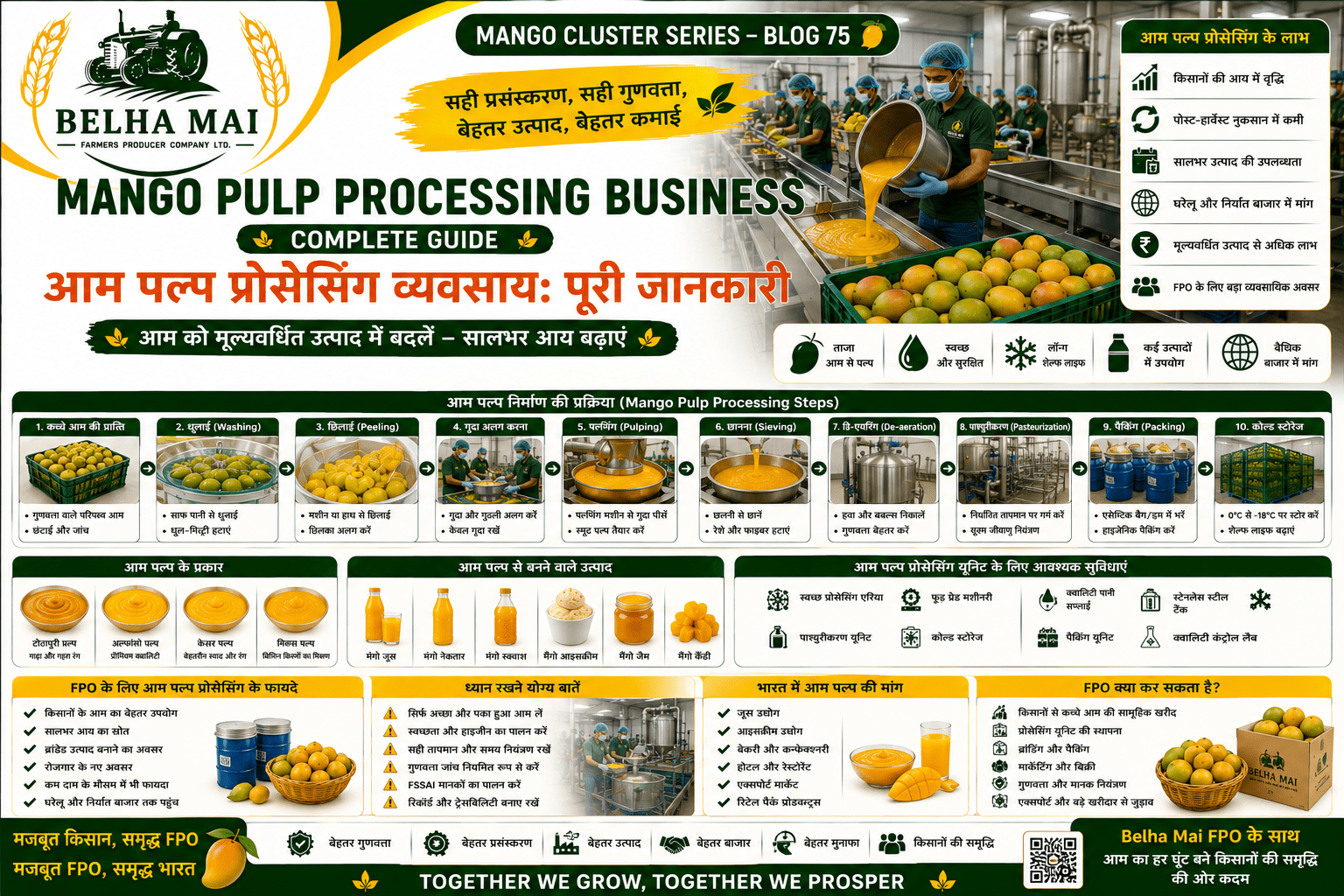
Mango Pulp Processing Steps
Mango pulp processing requires a clean, systematic and hygienic process. The exact process may vary according to plant size, machinery and product requirement, but the general steps remain similar.
Main steps include:
raw mango procurement,
receiving and inspection,
washing,
sorting,
ripening where required,
peeling,
destoning,
pulp extraction,
refining,
de-aeration,
pasteurization,
filling,
sealing,
cooling,
storage,
and dispatch.
Each step affects the final quality, taste, colour, safety and shelf life of mango pulp.
आम पल्प प्रोसेसिंग के चरण
आम पल्प प्रोसेसिंग के लिए साफ, व्यवस्थित और स्वच्छ प्रक्रिया जरूरी है। प्लांट का आकार, मशीनरी और उत्पाद आवश्यकता के अनुसार प्रक्रिया थोड़ी बदल सकती है, लेकिन सामान्य चरण लगभग समान रहते हैं।
मुख्य चरण:
कच्चे आम की खरीद,
प्राप्ति और निरीक्षण,
धुलाई,
छंटाई,
जहां जरूरत हो पकाना,
छिलका हटाना,
गुठली अलग करना,
पल्प निकालना,
रिफाइनिंग,
डी-एरेशन,
पाश्चराइजेशन,
फिलिंग,
सीलिंग,
कूलिंग,
भंडारण,
और डिस्पैच।
हर चरण पल्प की अंतिम गुणवत्ता, स्वाद, रंग, सुरक्षा और शेल्फ लाइफ को प्रभावित करता है।
Step 1: Raw Mango Procurement
Raw mango procurement should be planned before the season starts. FPOs should identify farmers, varieties, expected quantity, harvesting period and quality standards.
Procurement should not be random. The processing unit should know:
which variety is coming,
how much quantity is expected,
when fruit will arrive,
what maturity stage is required,
and what quality parameters will be followed.
FPOs can create farmer-wise procurement plans and avoid last-minute market purchases.
चरण 1: कच्चे आम की खरीद
कच्चे आम की खरीद की योजना सीजन शुरू होने से पहले बनानी चाहिए। FPO को किसान, किस्म, अनुमानित मात्रा, तुड़ाई समय और गुणवत्ता मानक तय करने चाहिए।
खरीद random नहीं होनी चाहिए। प्रोसेसिंग यूनिट को पता होना चाहिए:
कौन सी किस्म आ रही है,
कितनी मात्रा अपेक्षित है,
फल कब आएगा,
किस परिपक्वता अवस्था की जरूरत है,
और कौन से गुणवत्ता मानक अपनाए जाएंगे।
FPO किसानवार procurement plan बनाकर आखिरी समय की बाजार खरीद से बच सकता है।
Step 2: Receiving and Inspection
When mangoes arrive at the processing unit, they should be inspected carefully. Fruits should be checked for maturity, ripeness, disease, damage, rotting and foreign material.
At this stage, unsuitable fruits should be rejected. If poor quality fruits enter the processing line, they can affect the quality and safety of the final pulp.
Inspection should be done by trained staff using clean handling practices.
चरण 2: प्राप्ति और निरीक्षण
जब आम प्रोसेसिंग यूनिट पर पहुंचते हैं, तो उनका सावधानी से निरीक्षण करना चाहिए। फलों की परिपक्वता, पकने की अवस्था, रोग, चोट, सड़न और बाहरी गंदगी की जांच करनी चाहिए।
इस चरण में अनुपयुक्त फलों को अलग कर देना चाहिए। यदि खराब गुणवत्ता वाले फल प्रोसेसिंग लाइन में चले गए, तो वे अंतिम पल्प की गुणवत्ता और सुरक्षा को प्रभावित कर सकते हैं।
निरीक्षण प्रशिक्षित कर्मचारियों द्वारा साफ हैंडलिंग के साथ करना चाहिए।
Step 3: Washing and Cleaning
Washing removes dust, soil, latex stains and field impurities from mangoes. Clean raw material is essential for safe processing.
Washing should be done with clean water and proper food safety practices. After washing, fruits should be handled hygienically and moved to sorting or peeling stages.
Dirty fruits should never directly enter the pulping process.
चरण 3: धुलाई और सफाई
धुलाई से आम से धूल, मिट्टी, रस के दाग और खेत की गंदगी हटती है। सुरक्षित प्रोसेसिंग के लिए साफ कच्चा माल जरूरी है।
धुलाई साफ पानी और फूड सेफ्टी अभ्यासों के अनुसार करनी चाहिए। धुलाई के बाद फलों को स्वच्छ तरीके से हैंडल करके छंटाई या छिलका हटाने के चरण में भेजना चाहिए।
गंदे फल सीधे पल्पिंग प्रक्रिया में नहीं जाने चाहिए।
Step 4: Sorting and Ripening
After washing, fruits should be sorted again. Overripe, rotten, diseased or damaged fruits should be removed. Only suitable fruits should go into processing.
Some fruits may require controlled ripening before pulping. Proper ripening improves pulp colour, sweetness, aroma and flavour. Unsafe ripening methods should be avoided.
Uniform ripening helps produce consistent pulp quality.
चरण 4: छंटाई और पकाना
धुलाई के बाद फलों की फिर से छंटाई करनी चाहिए। बहुत पके, सड़े, रोगी या चोटिल फलों को हटाना चाहिए। केवल उपयुक्त फल प्रोसेसिंग में जाने चाहिए।
कुछ फलों को पल्पिंग से पहले नियंत्रित तरीके से पकाने की जरूरत हो सकती है। सही पकने से पल्प का रंग, मिठास, सुगंध और स्वाद बेहतर होता है। असुरक्षित पकाने की विधियों से बचना चाहिए।
समान पकने से पल्प की गुणवत्ता स्थिर रहती है।
Step 5: Peeling and Destoning
Peeling removes the outer skin of mango, while destoning removes the seed. These steps can be manual or machine-based depending on plant size.
In small processing units, peeling and destoning may be done manually with hygiene precautions. In larger units, machinery can improve speed, uniformity and labour efficiency.
Care should be taken to avoid contamination during peeling and destoning.
चरण 5: छिलका और गुठली अलग करना
Peeling में आम का बाहरी छिलका हटाया जाता है और destoning में गुठली अलग की जाती है। ये चरण प्लांट के आकार के अनुसार हाथ से या मशीन द्वारा किए जा सकते हैं।
छोटी प्रोसेसिंग यूनिट में छिलका और गुठली अलग करना स्वच्छता सावधानी के साथ हाथ से किया जा सकता है। बड़ी यूनिट में मशीनरी से गति, समानता और श्रम दक्षता बढ़ती है।
इस चरण में contamination से बचना बहुत जरूरी है।
Step 6: Pulp Extraction
Pulp extraction is the main processing step. The mango flesh is passed through pulping equipment to extract smooth pulp. The pulp should be free from seed particles, skin pieces and unwanted fibres.
Pulp quality depends on:
fruit variety,
ripeness,
cleanliness,
pulping method,
temperature control,
and processing hygiene.
The extracted pulp should be processed quickly to maintain colour, flavour and safety.
चरण 6: पल्प निकालना
पल्प निकालना मुख्य प्रोसेसिंग चरण है। आम के गूदे को पल्पिंग मशीन से निकालकर स्मूथ पल्प बनाया जाता है। पल्प में गुठली के टुकड़े, छिलका या अनचाहे फाइबर नहीं होने चाहिए।
पल्प गुणवत्ता निर्भर करती है:
किस्म पर,
पकने की अवस्था पर,
सफाई पर,
पल्पिंग विधि पर,
तापमान नियंत्रण पर,
और प्रोसेसिंग स्वच्छता पर।
निकाले गए पल्प को रंग, स्वाद और सुरक्षा बनाए रखने के लिए जल्दी प्रोसेस करना चाहिए।
Step 7: Refining and De-Aeration
Refining improves the texture of mango pulp by removing coarse fibres and making the pulp smoother. De-aeration helps remove trapped air from the pulp. This can improve colour retention, reduce oxidation and support product stability.
These steps are especially important for high-quality pulp meant for beverage, ice cream, bakery or export markets.
चरण 7: रिफाइनिंग और डी-एरेशन
रिफाइनिंग पल्प की बनावट सुधारती है और मोटे फाइबर हटाकर पल्प को स्मूथ बनाती है। डी-एरेशन पल्प में फंसी हवा को हटाने में मदद करता है। इससे रंग बेहतर बना रहता है, oxidation कम होती है और उत्पाद stability बेहतर होती है।
ये चरण beverage, ice cream, bakery या export market के लिए high-quality pulp में विशेष रूप से महत्वपूर्ण हैं।
Step 8: Pasteurization
Pasteurization is a key food safety step in mango pulp processing. It uses controlled heating to reduce harmful microorganisms and improve shelf life.
Temperature and time should be controlled carefully. Under-processing can create food safety risk, while over-processing can affect colour, flavour and nutrition.
Pasteurization should be done using proper equipment and trained staff.
चरण 8: पाश्चराइजेशन
पाश्चराइजेशन आम पल्प प्रोसेसिंग में महत्वपूर्ण food safety step है। इसमें नियंत्रित heating से हानिकारक microorganisms कम किए जाते हैं और shelf life बढ़ाई जाती है।
तापमान और समय का सही नियंत्रण जरूरी है। कम processing से food safety risk हो सकता है, जबकि ज्यादा processing से रंग, स्वाद और पोषण प्रभावित हो सकता है।
पाश्चराइजेशन सही उपकरण और प्रशिक्षित कर्मचारियों द्वारा करना चाहिए।
Step 9: Filling and Packaging
After pasteurization, mango pulp is filled into suitable packaging. Packaging depends on market type, shelf life requirement and buyer demand.
Common packaging options include:
aseptic bags,
cans,
glass bottles,
plastic jars,
pouches,
drums,
and bulk food-grade containers.
For industrial buyers, aseptic bags or drums may be suitable. For retail buyers, smaller bottles, jars or pouches may be used.
Packaging must be clean, food-safe, properly sealed and labelled.
चरण 9: फिलिंग और पैकेजिंग
पाश्चराइजेशन के बाद आम पल्प को उपयुक्त पैकेजिंग में भरा जाता है। पैकेजिंग बाजार, shelf life requirement और खरीदार मांग पर निर्भर करती है।
सामान्य पैकेजिंग विकल्प:
aseptic bags,
cans,
glass bottles,
plastic jars,
pouches,
drums,
और bulk food-grade containers।
Industrial buyers के लिए aseptic bags या drums उपयुक्त हो सकते हैं। Retail buyers के लिए छोटी bottles, jars या pouches उपयोग किए जा सकते हैं।
पैकेजिंग साफ, food-safe, सही तरीके से sealed और labelled होनी चाहिए।
Step 10: Storage and Dispatch
Processed mango pulp should be stored according to packaging type and shelf-life requirement. Some pulp products may need ambient storage if processed and packed properly, while others may require chilled or frozen storage.
Storage area should be clean, pest-free and well-managed. Finished goods should be stored batch-wise with proper records.
Dispatch should be done according to buyer order, transport condition and product requirement.
चरण 10: भंडारण और डिस्पैच
प्रोसेस्ड आम पल्प को पैकेजिंग प्रकार और shelf-life requirement के अनुसार स्टोर करना चाहिए। कुछ पल्प उत्पाद सही processing और packaging के बाद ambient storage में रखे जा सकते हैं, जबकि कुछ को chilled या frozen storage की जरूरत हो सकती है।
भंडारण क्षेत्र साफ, कीट-मुक्त और व्यवस्थित होना चाहिए। तैयार माल को batch-wise record के साथ रखना चाहिए।
डिस्पैच खरीदार order, transport condition और product requirement के अनुसार होना चाहिए।
Machinery Required for Mango Pulp Processing
Mango pulp processing machinery depends on plant capacity and product range. A small unit may start with basic equipment, while a larger plant may need automated processing lines.
Common machinery includes:
fruit washer,
sorting table,
peeler or peeling tools,
destoner,
pulper,
refiner,
de-aerator,
pasteurizer,
filling machine,
sealing machine,
boiler or steam system,
cold storage,
testing equipment,
and packaging equipment.
FPOs should select machinery according to realistic raw material availability, market demand and working capital capacity.
आम पल्प प्रोसेसिंग के लिए मशीनरी
आम पल्प प्रोसेसिंग मशीनरी प्लांट क्षमता और उत्पाद range पर निर्भर करती है। छोटी यूनिट basic equipment से शुरू कर सकती है, जबकि बड़ी यूनिट को automated processing line की जरूरत हो सकती है।
सामान्य मशीनरी:
fruit washer,
sorting table,
peeler या peeling tools,
destoner,
pulper,
refiner,
de-aerator,
pasteurizer,
filling machine,
sealing machine,
boiler या steam system,
cold storage,
testing equipment,
और packaging equipment।
FPO को मशीनरी का चयन वास्तविक raw material availability, market demand और working capital capacity के अनुसार करना चाहिए।
Quality and Food Safety
Quality and food safety are the foundation of mango pulp business. Poor hygiene can spoil the product and damage the brand reputation.
Important quality factors include:
colour,
taste,
aroma,
Brix level,
pulp consistency,
absence of contamination,
proper pasteurization,
proper packaging,
and batch-wise records.
Food safety standards, hygiene practices, staff training, clean water, equipment cleaning and pest control are essential for a successful processing unit.
गुणवत्ता और फूड सेफ्टी
गुणवत्ता और food safety आम पल्प व्यवसाय की नींव हैं। खराब hygiene से उत्पाद खराब हो सकता है और brand reputation को नुकसान हो सकता है।
महत्वपूर्ण quality factors:
रंग,
स्वाद,
सुगंध,
Brix level,
pulp consistency,
contamination न होना,
सही pasteurization,
सही packaging,
और batch-wise records।
Food safety standards, hygiene practices, staff training, clean water, equipment cleaning और pest control सफल processing unit के लिए जरूरी हैं।
Market Demand for Mango Pulp
Mango pulp has demand in several industries. It is used as a raw material for beverages, dairy, bakery, confectionery, ice cream, hotels, restaurants, catering, institutional kitchens and export buyers.
Potential buyers include:
juice manufacturers,
ice cream companies,
dairy brands,
bakery units,
hotels and restaurants,
sweet manufacturers,
food processors,
exporters,
retail consumers,
and online buyers.
FPOs can supply bulk pulp to industry and also create their own branded retail products.
आम पल्प की बाजार मांग
आम पल्प की मांग कई उद्योगों में होती है। यह beverages, dairy, bakery, confectionery, ice cream, hotels, restaurants, catering, institutional kitchens और export buyers के लिए raw material के रूप में उपयोग होता है।
संभावित खरीदार:
juice manufacturers,
ice cream companies,
dairy brands,
bakery units,
hotels and restaurants,
sweet manufacturers,
food processors,
exporters,
retail consumers,
और online buyers।
FPO industry को bulk pulp supply कर सकता है और अपने branded retail products भी बना सकता है।
Products Made from Mango Pulp
Mango pulp can be used to make many value-added products. This makes it a powerful base product for FPOs and food businesses.
Products include:
mango juice,
mango nectar,
mango squash,
mango smoothie,
mango ice cream,
mango yogurt,
mango lassi,
mango jam,
mango jelly,
mango candy,
mango dessert,
mango bakery filling,
and mango-based beverages.
This allows FPOs to create multiple product lines from one raw material.
आम पल्प से बनने वाले उत्पाद
आम पल्प से कई मूल्यवर्धित उत्पाद बनाए जा सकते हैं। यह FPO और food business के लिए मजबूत base product है।
उत्पाद:
आम जूस,
आम नेक्टर,
आम स्क्वैश,
आम स्मूदी,
आम आइसक्रीम,
आम योगर्ट,
आम लस्सी,
आम जैम,
आम जेली,
आम कैंडी,
आम dessert,
आम bakery filling,
और आम आधारित beverages।
एक ही raw material से FPO कई product lines बना सकता है।
Business Model for FPOs
For an FPO, mango pulp processing business can be developed step by step. The FPO should not immediately jump into a large plant without understanding raw material availability, market demand, investment, working capital and technical skills.
A practical FPO model can include:
farmer aggregation,
quality mango procurement,
processing-grade mango collection,
tie-up with existing processor,
small pilot processing unit,
branded mango pulp,
bulk B2B supply,
retail packs,
online sales,
institutional supply,
and export linkage.
Belha Mai Farmers Producer Company Ltd. can start with farmer aggregation and processing linkage, then move towards its own value-added mango products.
FPO के लिए बिजनेस मॉडल
FPO आम पल्प प्रोसेसिंग व्यवसाय को चरणबद्ध तरीके से विकसित कर सकता है। FPO को raw material availability, market demand, investment, working capital और technical skills समझे बिना तुरंत बड़ा प्लांट नहीं लगाना चाहिए।
एक व्यावहारिक FPO model:
farmer aggregation,
quality mango procurement,
processing-grade mango collection,
existing processor से tie-up,
small pilot processing unit,
branded mango pulp,
bulk B2B supply,
retail packs,
online sales,
institutional supply,
और export linkage।
Belha Mai Farmers Producer Company Ltd. किसान aggregation और processing linkage से शुरुआत कर सकता है, फिर अपने value-added mango products की ओर बढ़ सकता है।
Challenges in Mango Pulp Processing Business
Mango pulp processing has strong potential, but it also has challenges. Farmers and FPOs should understand these before investing.
Common challenges include:
seasonal raw material,
quality variation,
working capital requirement,
machinery cost,
food safety compliance,
technical skill,
packaging cost,
storage requirement,
market competition,
and buyer payment cycle.
These challenges can be managed through planning, training, partnerships, phased investment and strong market linkage.
आम पल्प प्रोसेसिंग व्यवसाय की चुनौतियां
आम पल्प प्रोसेसिंग में अच्छी संभावना है, लेकिन चुनौतियां भी हैं। किसानों और FPO को निवेश से पहले इन्हें समझना चाहिए।
सामान्य चुनौतियां:
seasonal raw material,
quality variation,
working capital requirement,
machinery cost,
food safety compliance,
technical skill,
packaging cost,
storage requirement,
market competition,
और buyer payment cycle।
इन चुनौतियों को planning, training, partnerships, phased investment और strong market linkage से संभाला जा सकता है।
Role of FPOs in Mango Pulp Processing
FPOs can play a major role in mango pulp processing because they can organize farmers and create a reliable raw material base. A processing unit needs consistent quantity and quality, which can be difficult for individual farmers but possible through FPO aggregation.
An FPO can support mango pulp processing through:
farmer mobilization,
variety mapping,
raw material planning,
quality procurement,
sorting and grading,
processing-grade mango supply,
training,
processing unit setup,
branding,
packaging,
B2B buyer linkage,
retail marketing,
and export preparation.
For Belha Mai Farmers Producer Company Ltd., mango pulp processing can become a strong value-addition vertical under the Mango Cluster.
आम पल्प प्रोसेसिंग में FPO की भूमिका
FPO आम पल्प प्रोसेसिंग में बड़ी भूमिका निभा सकता है क्योंकि वह किसानों को संगठित करके reliable raw material base बना सकता है। प्रोसेसिंग यूनिट को लगातार मात्रा और गुणवत्ता चाहिए, जो व्यक्तिगत किसान के लिए कठिन लेकिन FPO aggregation से संभव है।
FPO आम पल्प प्रोसेसिंग में मदद कर सकता है:
farmer mobilization,
variety mapping,
raw material planning,
quality procurement,
sorting and grading,
processing-grade mango supply,
training,
processing unit setup,
branding,
packaging,
B2B buyer linkage,
retail marketing,
और export preparation।
Belha Mai Farmers Producer Company Ltd. के लिए आम पल्प प्रोसेसिंग Mango Cluster के तहत मजबूत value-addition vertical बन सकता है।
Conclusion
Mango pulp processing business can transform mango farming from seasonal fruit selling into a value-added food business. It helps reduce post-harvest losses, uses surplus mangoes, creates rural employment and opens domestic and export market opportunities.
For small farmers, mango pulp processing is difficult individually. But through FPOs, farmers can aggregate produce, improve quality, supply processors and gradually build their own branded products.
Belha Mai Farmers Producer Company Ltd. can use mango pulp processing as a long-term Mango Cluster strategy for farmer income growth, value addition, processing business and export-ready product development.
निष्कर्ष
आम पल्प प्रोसेसिंग व्यवसाय आम खेती को मौसमी फल बिक्री से मूल्यवर्धित food business में बदल सकता है। यह पोस्ट-हार्वेस्ट नुकसान कम करता है, अधिशेष आम का उपयोग करता है, ग्रामीण रोजगार बनाता है और घरेलू व निर्यात बाजार अवसर खोलता है।
छोटे किसानों के लिए व्यक्तिगत रूप से आम पल्प प्रोसेसिंग कठिन है। लेकिन FPO के माध्यम से किसान उत्पादन इकट्ठा कर सकते हैं, गुणवत्ता सुधार सकते हैं, प्रोसेसर को सप्लाई कर सकते हैं और धीरे-धीरे अपने branded products बना सकते हैं।
Belha Mai Farmers Producer Company Ltd. आम पल्प प्रोसेसिंग को किसान आय वृद्धि, मूल्यवर्धन, प्रोसेसिंग व्यवसाय और export-ready product development की दीर्घकालिक Mango Cluster रणनीति बना सकता है।
15. FAQ in English + Hindi
FAQ 1: What is mango pulp processing?
Mango pulp processing is the process of converting ripe mangoes into smooth pulp through washing, peeling, destoning, pulping, refining, pasteurization, packaging and storage.
प्रश्न 1: आम पल्प प्रोसेसिंग क्या है?
आम पल्प प्रोसेसिंग पके आम को धुलाई, छिलका हटाने, गुठली अलग करने, पल्प निकालने, रिफाइनिंग, पाश्चराइजेशन, पैकेजिंग और भंडारण के माध्यम से smooth pulp में बदलने की प्रक्रिया है।
FAQ 2: Is mango pulp processing profitable?
Mango pulp processing can be profitable if raw material supply, quality control, machinery, packaging, storage, working capital and market linkage are managed properly.
प्रश्न 2: क्या आम पल्प प्रोसेसिंग लाभदायक है?
हां, यदि कच्चे माल की सप्लाई, गुणवत्ता नियंत्रण, मशीनरी, पैकेजिंग, भंडारण, working capital और market linkage सही हो, तो आम पल्प प्रोसेसिंग लाभदायक हो सकती है।
FAQ 3: Which mango varieties are used for pulp?
Totapuri, Alphonso, Kesar, Banganapalli, Dasheri and other regional varieties can be used for pulp depending on buyer demand, taste, colour, aroma and pulp recovery.
प्रश्न 3: पल्प के लिए कौन सी आम किस्में उपयोग होती हैं?
तोतापुरी, अल्फांसो, केसर, बंगनपल्ली, दशहरी और अन्य क्षेत्रीय किस्में buyer demand, taste, colour, aroma और pulp recovery के अनुसार उपयोग की जा सकती हैं।
FAQ 4: What products can be made from mango pulp?
Mango pulp can be used to make juice, nectar, squash, smoothie, ice cream, yogurt, lassi, jam, jelly, candy, bakery filling and mango-based beverages.
प्रश्न 4: आम पल्प से कौन-कौन से उत्पाद बन सकते हैं?
आम पल्प से जूस, नेक्टर, स्क्वैश, स्मूदी, आइसक्रीम, योगर्ट, लस्सी, जैम, जेली, कैंडी, bakery filling और आम आधारित beverages बनाए जा सकते हैं।
FAQ 5: How can FPOs help in mango pulp processing?
FPOs can help through farmer aggregation, raw material planning, quality procurement, sorting, grading, processing linkage, unit setup, branding, packaging and buyer connection.
प्रश्न 5: FPO आम पल्प प्रोसेसिंग में कैसे मदद कर सकता है?
FPO किसान aggregation, raw material planning, quality procurement, छंटाई, ग्रेडिंग, processing linkage, unit setup, branding, packaging और buyer connection के माध्यम से मदद कर सकता है।
Internal Links Section
Related Mango Cluster Blogs
👉 Mango Farming in India: Complete Guide
https://belhamaifpo.com/agriculture/mango-farming-in-india/
👉 Best Mango Varieties in India
https://belhamaifpo.com/agriculture/best-mango-varieties-in-india/
👉 Post-Harvest Management of Mango
https://belhamaifpo.com/agriculture/post-harvest-management-of-mango/
👉 Mango Grading and Sorting Process
https://belhamaifpo.com/agriculture/mango-grading-and-sorting-process/
👉 Mango Supply Chain in India
https://belhamaifpo.com/agriculture/mango-supply-chain-in-india/
👉 Mango Export Business in India
https://belhamaifpo.com/agriculture/mango-export-business-in-india/
हिंदी में संबंधित आम क्लस्टर ब्लॉग
👉 भारत में आम की खेती: पूरी जानकारी
https://belhamaifpo.com/agriculture/mango-farming-in-india/
👉 भारत की प्रमुख आम किस्में
https://belhamaifpo.com/agriculture/best-mango-varieties-in-india/
👉 आम का कटाई के बाद प्रबंधन
https://belhamaifpo.com/agriculture/post-harvest-management-of-mango/
👉 आम की ग्रेडिंग और छंटाई प्रक्रिया
https://belhamaifpo.com/agriculture/mango-grading-and-sorting-process/
👉 भारत में आम सप्लाई चेन
https://belhamaifpo.com/agriculture/mango-supply-chain-in-india/
👉 भारत में आम निर्यात व्यवसाय
https://belhamaifpo.com/agriculture/mango-export-business-in-india/
External Authority Links
👉 APEDA Mango Pulp Information
https://apeda.gov.in/MangoPulp
👉 APEDA Mango Export Information
https://apeda.gov.in/Mango
👉 NHB Mango Cultivation Guide
https://nhb.gov.in/report_files/mango/mango.htm
👉 ICAR-CISH Lucknow
https://www.cish.org.in/
👉 PMFME Scheme – Ministry of Food Processing Industries
https://pmfme.mofpi.gov.in/