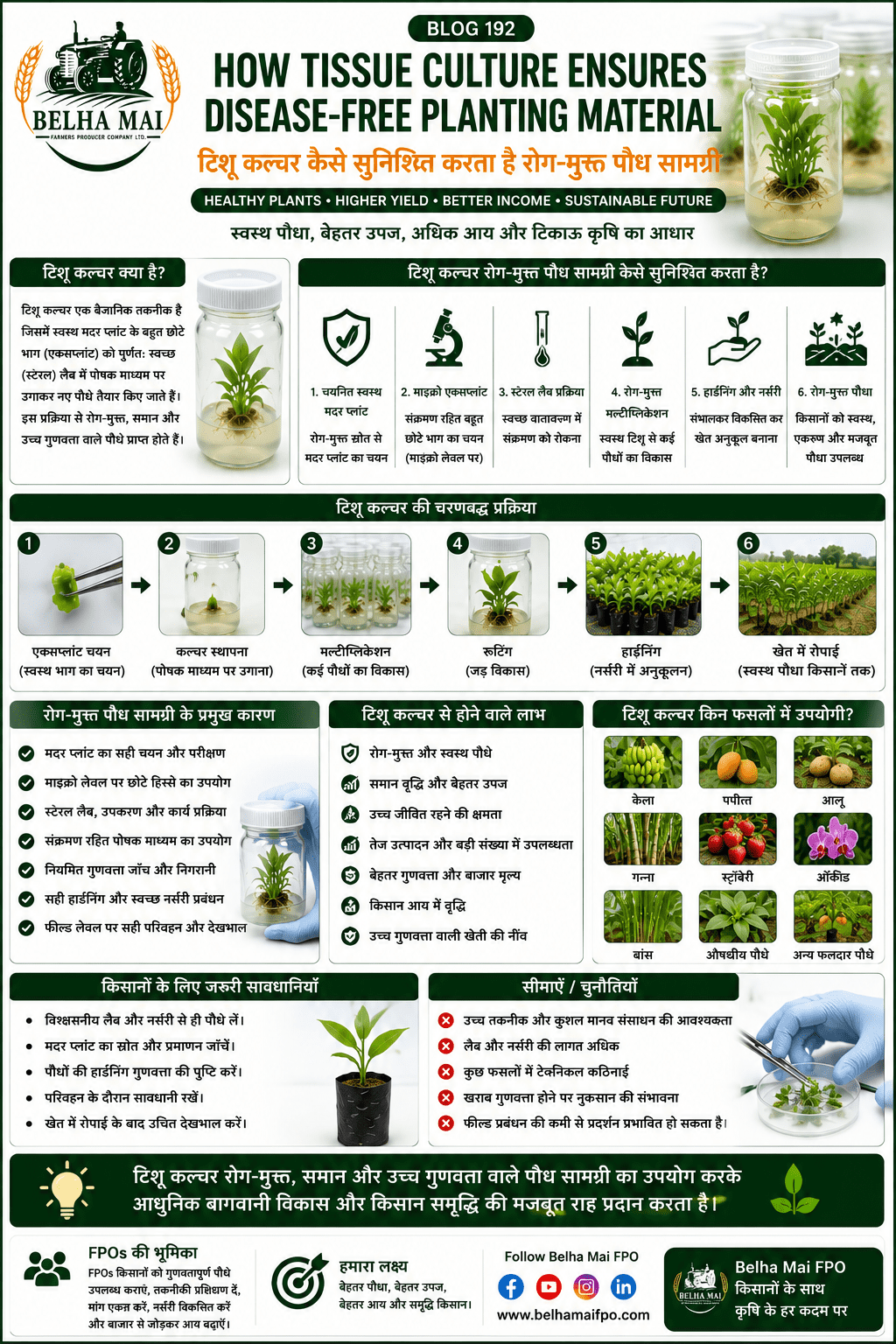
टिशू कल्चर रोग-मुक्त पौध सामग्री कैसे सुनिश्चित करता है?
Introduction
Disease-free planting material is one of the most important requirements for successful agriculture and horticulture. Many farmers suffer losses because diseases enter the field through infected seeds, suckers, cuttings, grafts or nursery plants. Tissue culture helps reduce this risk by producing plants under controlled and sterile laboratory conditions. When the process is done correctly, tissue culture can provide farmers with healthy, uniform and disease-free planting material that supports better crop growth, higher productivity and improved income.
रोग-मुक्त पौध सामग्री सफल कृषि और बागवानी की सबसे महत्वपूर्ण आवश्यकताओं में से एक है। कई किसान नुकसान इसलिए झेलते हैं क्योंकि बीमारी संक्रमित बीज, सकर्स, कटिंग, ग्राफ्ट या नर्सरी पौधों के माध्यम से खेत में प्रवेश कर जाती है। टिशू कल्चर नियंत्रित और स्वच्छ प्रयोगशाला वातावरण में पौधे तैयार करके इस जोखिम को कम करने में मदद करता है। जब प्रक्रिया सही तरीके से की जाती है, तो टिशू कल्चर किसानों को स्वस्थ, समान और रोग-मुक्त पौध सामग्री उपलब्ध करा सकता है, जिससे बेहतर फसल वृद्धि, अधिक उत्पादकता और बेहतर आय में मदद मिलती है।
Meaning of Disease-Free Planting Material
Disease-free planting material means plants that are free from major harmful diseases and are suitable for healthy crop establishment. In horticulture crops, the quality of planting material is extremely important because many fruit and plantation crops remain in the field for several years. If the plant is infected at the beginning, the farmer may face long-term loss. Disease-free planting material gives farmers a stronger start and reduces the risk of disease spreading in the field.
रोग-मुक्त पौध सामग्री का अर्थ है ऐसे पौधे जो प्रमुख हानिकारक बीमारियों से मुक्त हों और स्वस्थ फसल स्थापना के लिए उपयुक्त हों। बागवानी फसलों में पौध सामग्री की गुणवत्ता बहुत महत्वपूर्ण होती है क्योंकि कई फलदार और प्लांटेशन फसलें कई वर्षों तक खेत में रहती हैं। यदि शुरुआत में पौधा संक्रमित है, तो किसान को लंबे समय तक नुकसान हो सकता है। रोग-मुक्त पौध सामग्री किसानों को मजबूत शुरुआत देती है और खेत में बीमारी फैलने के जोखिम को कम करती है।
How Tissue Culture Starts with Healthy Mother Plants
The first step in producing disease-free planting material through tissue culture is the selection of a healthy mother plant. The mother plant must be true-to-type, vigorous and free from visible disease symptoms. If the mother plant itself is weak or infected, the quality of the final plants can be affected. Therefore, good tissue culture labs carefully select, maintain and monitor mother plants before using them for plant multiplication.
टिशू कल्चर के माध्यम से रोग-मुक्त पौध सामग्री तैयार करने का पहला कदम स्वस्थ मदर प्लांट का चयन है। मदर प्लांट सही किस्म का, मजबूत और बीमारी के स्पष्ट लक्षणों से मुक्त होना चाहिए। यदि मदर प्लांट ही कमजोर या संक्रमित है, तो अंतिम पौधों की गुणवत्ता प्रभावित हो सकती है। इसलिए अच्छी टिशू कल्चर लैब पौधों के मल्टीप्लिकेशन से पहले मदर प्लांट का सावधानीपूर्वक चयन, रखरखाव और निगरानी करती हैं।
Use of Clean Explants
In tissue culture, a small plant part called an explant is taken from the selected mother plant. This explant may be a shoot tip, meristem, bud or other suitable plant tissue. For disease-free planting material, the explant must be carefully selected and cleaned before it is placed in the culture medium. Proper explant selection reduces the chances of disease and contamination entering the laboratory process.
टिशू कल्चर में चुने हुए मदर प्लांट से एक छोटा पौध भाग लिया जाता है, जिसे एक्सप्लांट कहा जाता है। यह एक्सप्लांट शूट टिप, मेरिस्टेम, कली या अन्य उपयुक्त पौध ऊतक हो सकता है। रोग-मुक्त पौध सामग्री के लिए एक्सप्लांट का सावधानीपूर्वक चयन और सफाई आवश्यक है, इससे पहले कि उसे कल्चर माध्यम पर रखा जाए। सही एक्सप्लांट चयन बीमारी और संक्रमण के प्रयोगशाला प्रक्रिया में प्रवेश करने की संभावना को कम करता है।
Sterile Laboratory Conditions
Tissue culture ensures disease-free planting material by using sterile laboratory conditions. The work is done in clean rooms, laminar airflow cabinets and sterilized culture vessels. Tools, media, containers and working surfaces are sterilized to prevent contamination from bacteria, fungi and other harmful microorganisms. This clean environment is one of the main reasons why tissue culture plants can be healthier than plants produced through unorganized nursery methods.
टिशू कल्चर स्वच्छ प्रयोगशाला परिस्थितियों का उपयोग करके रोग-मुक्त पौध सामग्री सुनिश्चित करता है। यह कार्य क्लीन रूम, लैमिनार एयरफ्लो कैबिनेट और स्टरलाइज्ड कल्चर वेसल में किया जाता है। बैक्टीरिया, फंगस और अन्य हानिकारक सूक्ष्मजीवों से संक्रमण रोकने के लिए उपकरण, माध्यम, कंटेनर और कार्य सतहों को स्टरलाइज किया जाता है। यही स्वच्छ वातावरण मुख्य कारणों में से एक है कि टिशू कल्चर पौधे असंगठित नर्सरी विधियों से तैयार पौधों की तुलना में अधिक स्वस्थ हो सकते हैं।
Nutrient Medium and Controlled Growth
In tissue culture, plant tissues are grown on a nutrient medium that contains minerals, vitamins, sugar and plant growth regulators. The plants grow under controlled temperature, light and humidity. This controlled growth environment helps reduce stress and supports healthy plant development. Since the plants are not exposed to open soil and uncontrolled field conditions during early growth, the chances of disease infection are reduced.
टिशू कल्चर में पौध ऊतक ऐसे पोषक माध्यम पर उगाए जाते हैं जिसमें खनिज, विटामिन, शर्करा और पौध वृद्धि नियंत्रक होते हैं। पौधे नियंत्रित तापमान, प्रकाश और आर्द्रता में बढ़ते हैं। यह नियंत्रित वृद्धि वातावरण तनाव को कम करता है और स्वस्थ पौध विकास को समर्थन देता है। चूंकि शुरुआती वृद्धि के दौरान पौधे खुली मिट्टी और अनियंत्रित खेत परिस्थितियों के संपर्क में नहीं आते, इसलिए बीमारी के संक्रमण की संभावना कम होती है।
Meristem Culture and Disease Reduction
Meristem culture is an important tissue culture technique used for producing disease-free planting material in many crops. The meristem is a very small growing region of the plant where disease infection may be lower compared to other plant parts. By using meristem tissue, scientists can develop cleaner plantlets. This technique is especially useful for crops where diseases are commonly transmitted through planting material.
मेरिस्टेम कल्चर कई फसलों में रोग-मुक्त पौध सामग्री तैयार करने की एक महत्वपूर्ण टिशू कल्चर तकनीक है। मेरिस्टेम पौधे का बहुत छोटा बढ़ने वाला भाग होता है, जहां अन्य पौध भागों की तुलना में बीमारी का संक्रमण कम हो सकता है। मेरिस्टेम ऊतक का उपयोग करके वैज्ञानिक अधिक स्वच्छ पौधे तैयार कर सकते हैं। यह तकनीक उन फसलों के लिए विशेष रूप से उपयोगी है जहां बीमारी पौध सामग्री के माध्यम से फैलती है।
Multiplication Under Controlled Conditions
After culture initiation, the selected plant tissue is multiplied into many shoots under controlled conditions. This multiplication stage allows the production of a large number of uniform plants from healthy material. Since the process is carried out inside the laboratory, the risk of disease transmission from soil, insects or open nursery conditions is reduced. This makes tissue culture useful for producing disease-free planting material at scale.
कल्चर शुरू होने के बाद चुने हुए पौध ऊतक को नियंत्रित परिस्थितियों में कई शूट्स में बढ़ाया जाता है। यह मल्टीप्लिकेशन चरण स्वस्थ सामग्री से बड़ी संख्या में समान पौधे तैयार करने में मदद करता है। चूंकि यह प्रक्रिया प्रयोगशाला के अंदर होती है, इसलिए मिट्टी, कीट या खुले नर्सरी वातावरण से बीमारी फैलने का जोखिम कम होता है। इसलिए टिशू कल्चर बड़े पैमाने पर रोग-मुक्त पौध सामग्री तैयार करने के लिए उपयोगी है।
Rooting and Healthy Plant Development
The next stage in tissue culture is rooting, where small shoots are encouraged to develop roots. Strong root development is important because roots help the plant survive after transfer to nursery and field conditions. Disease-free planting material must not only be clean but also strong enough to establish properly. Good labs carefully monitor rooting so that the plantlets become healthy and suitable for nursery hardening.
टिशू कल्चर का अगला चरण रूटिंग है, जिसमें छोटे शूट्स में जड़ें विकसित कराई जाती हैं। मजबूत जड़ विकास महत्वपूर्ण है क्योंकि जड़ें पौधे को नर्सरी और खेत की परिस्थितियों में स्थानांतरण के बाद जीवित रहने में मदद करती हैं। रोग-मुक्त पौध सामग्री केवल स्वच्छ ही नहीं, बल्कि सही ढंग से स्थापित होने के लिए मजबूत भी होनी चाहिए। अच्छी लैब रूटिंग की सावधानीपूर्वक निगरानी करती हैं ताकि पौधे स्वस्थ और नर्सरी हार्डनिंग के लिए उपयुक्त बनें।
Nursery Hardening and Disease Prevention
Nursery hardening is a critical stage in ensuring disease-free planting material. Tissue culture plantlets are delicate when they come out of the laboratory and must slowly adjust to normal nursery conditions. During hardening, plants are kept under protected environments such as polyhouses, shade net houses or mist chambers. Proper hygiene, clean media, careful watering and disease monitoring are necessary to prevent infection during this stage.
रोग-मुक्त पौध सामग्री सुनिश्चित करने में नर्सरी हार्डनिंग एक महत्वपूर्ण चरण है। प्रयोगशाला से बाहर आने पर टिशू कल्चर पौधे नाजुक होते हैं और उन्हें धीरे-धीरे सामान्य नर्सरी वातावरण के अनुकूल बनाना पड़ता है। हार्डनिंग के दौरान पौधों को पॉलीहाउस, शेडनेट हाउस या मिस्ट चेंबर जैसे संरक्षित वातावरण में रखा जाता है। इस चरण में संक्रमण रोकने के लिए स्वच्छता, साफ माध्यम, सावधानीपूर्वक सिंचाई और रोग निगरानी आवश्यक है।
Quality Testing and Monitoring
Disease-free planting material requires regular quality testing and monitoring. A reliable tissue culture system checks the mother plant, laboratory cultures, multiplication stage, rooting stage and nursery plants. If contamination is found, affected cultures must be removed immediately. Quality control helps maintain plant health and protects farmers from receiving infected or weak plants. Without proper testing, tissue culture cannot achieve its full benefit.
रोग-मुक्त पौध सामग्री के लिए नियमित गुणवत्ता परीक्षण और निगरानी आवश्यक है। एक विश्वसनीय टिशू कल्चर प्रणाली मदर प्लांट, प्रयोगशाला कल्चर, मल्टीप्लिकेशन चरण, रूटिंग चरण और नर्सरी पौधों की जांच करती है। यदि संक्रमण मिलता है, तो प्रभावित कल्चर को तुरंत हटाना चाहिए। गुणवत्ता नियंत्रण पौध स्वास्थ्य बनाए रखने में मदद करता है और किसानों को संक्रमित या कमजोर पौधे मिलने से बचाता है। उचित परीक्षण के बिना टिशू कल्चर अपना पूरा लाभ नहीं दे सकता।
Traceability of Planting Material
Traceability is important for disease-free planting material because farmers and nurseries should know the source of the plant. A good tissue culture system maintains records of mother plant source, batch number, production date, hardening date and supply details. Traceability builds trust and helps identify problems if any issue appears later in the field. For FPOs and commercial nurseries, traceability is essential for quality assurance and farmer confidence.
रोग-मुक्त पौध सामग्री के लिए ट्रेसबिलिटी महत्वपूर्ण है क्योंकि किसानों और नर्सरियों को पौधे का स्रोत पता होना चाहिए। अच्छी टिशू कल्चर प्रणाली मदर प्लांट स्रोत, बैच नंबर, उत्पादन तिथि, हार्डनिंग तिथि और आपूर्ति विवरण का रिकॉर्ड रखती है। ट्रेसबिलिटी विश्वास बनाती है और यदि बाद में खेत में कोई समस्या आती है तो उसके कारण की पहचान करने में मदद करती है। FPOs और व्यावसायिक नर्सरियों के लिए ट्रेसबिलिटी गुणवत्ता आश्वासन और किसान विश्वास के लिए आवश्यक है।
Why Disease-Free Plants Improve Productivity
Disease-free planting material improves productivity because healthy plants establish better, grow more uniformly and face lower early-stage disease pressure. When farmers plant healthy plants, they can manage irrigation, nutrition and plant protection more efficiently. Disease-free plants also reduce the cost and stress of managing crop problems caused by infected planting material. This improves the farmer’s chance of achieving better yield and better quality produce.
रोग-मुक्त पौध सामग्री उत्पादकता सुधारती है क्योंकि स्वस्थ पौधे बेहतर स्थापित होते हैं, अधिक समान रूप से बढ़ते हैं और शुरुआती चरण में बीमारी का दबाव कम होता है। जब किसान स्वस्थ पौधे लगाते हैं, तो वे सिंचाई, पोषण और पौध सुरक्षा को अधिक प्रभावी ढंग से प्रबंधित कर सकते हैं। रोग-मुक्त पौधे संक्रमित पौध सामग्री से उत्पन्न फसल समस्याओं के प्रबंधन की लागत और तनाव को भी कम करते हैं। इससे किसान की बेहतर उत्पादन और बेहतर गुणवत्ता वाले उत्पाद प्राप्त करने की संभावना बढ़ती है।
Importance for Horticulture Crops
Disease-free planting material is especially important for horticulture crops because many of these crops remain in the field for several years. In fruit crops such as banana, mango, guava, papaya, amla and other plantation crops, poor planting material can damage long-term income. Tissue culture can help farmers access healthier plants, especially in crops where protocols are well-developed. This makes tissue culture an important tool for horticulture development.
रोग-मुक्त पौध सामग्री बागवानी फसलों के लिए विशेष रूप से महत्वपूर्ण है क्योंकि इनमें से कई फसलें कई वर्षों तक खेत में रहती हैं। केला, आम, अमरूद, पपीता, आंवला और अन्य प्लांटेशन फसलों में खराब पौध सामग्री दीर्घकालिक आय को नुकसान पहुंचा सकती है। जिन फसलों में प्रोटोकॉल अच्छी तरह विकसित हैं, वहां टिशू कल्चर किसानों को स्वस्थ पौधे उपलब्ध कराने में मदद कर सकता है। इसलिए टिशू कल्चर बागवानी विकास का महत्वपूर्ण साधन है।
Farmer Precautions While Buying Plants
Farmers should be careful while buying tissue culture plants. They should check whether the nursery or lab is reliable, whether the plants are properly hardened, whether the plants look healthy, and whether variety details are clearly provided. Farmers should avoid weak, yellow, damaged or poorly rooted plants. Disease-free planting material should come with trust, proper documentation and technical support.
टिशू कल्चर पौधे खरीदते समय किसानों को सावधानी रखनी चाहिए। उन्हें देखना चाहिए कि नर्सरी या लैब विश्वसनीय है या नहीं, पौधों की हार्डनिंग सही हुई है या नहीं, पौधे स्वस्थ दिखाई दे रहे हैं या नहीं, और किस्म की जानकारी स्पष्ट दी गई है या नहीं। किसानों को कमजोर, पीले, क्षतिग्रस्त या कमजोर जड़ वाले पौधों से बचना चाहिए। रोग-मुक्त पौध सामग्री विश्वास, सही दस्तावेज और तकनीकी सहायता के साथ मिलनी चाहिए।
Role of FPOs in Disease-Free Plant Supply
FPOs can play a major role in supplying disease-free planting material to farmers. Many small farmers cannot directly verify lab quality or negotiate with large nurseries. An FPO can aggregate demand, identify reliable suppliers, check plant quality, arrange training and support farmers after planting. FPO-led plant supply systems can reduce farmer risk and make tissue culture benefits available at the village level.
FPOs किसानों को रोग-मुक्त पौध सामग्री उपलब्ध कराने में बड़ी भूमिका निभा सकते हैं। कई छोटे किसान सीधे लैब की गुणवत्ता जांच नहीं पाते या बड़ी नर्सरियों से बातचीत नहीं कर पाते। एक FPO मांग एकत्र कर सकता है, विश्वसनीय आपूर्तिकर्ताओं की पहचान कर सकता है, पौध गुणवत्ता जांच सकता है, प्रशिक्षण आयोजित कर सकता है और रोपाई के बाद किसानों को सहायता दे सकता है। FPO आधारित पौध आपूर्ति प्रणाली किसान जोखिम को कम कर सकती है और टिशू कल्चर के लाभ गांव स्तर तक पहुंचा सकती है।
Disease-Free Planting Material and Value Chain
Disease-free planting material is the first step in a strong agricultural value chain. Healthy plants lead to better production, better production supports aggregation, and aggregation supports grading, processing, branding and market linkage. If planting material is poor, the entire value chain becomes weak. Therefore, tissue culture can help build a stronger foundation for horticulture clusters, FPO business models and farmer income growth.
रोग-मुक्त पौध सामग्री मजबूत कृषि वैल्यू चेन का पहला कदम है। स्वस्थ पौधे बेहतर उत्पादन देते हैं, बेहतर उत्पादन एग्रीगेशन को मजबूत करता है, और एग्रीगेशन ग्रेडिंग, प्रोसेसिंग, ब्रांडिंग और बाजार लिंक को समर्थन देता है। यदि पौध सामग्री खराब है, तो पूरी वैल्यू चेन कमजोर हो जाती है। इसलिए टिशू कल्चर बागवानी क्लस्टर, FPO व्यवसाय मॉडल और किसान आय वृद्धि के लिए मजबूत आधार बना सकता है।
Limitations and Challenges
Tissue culture can ensure disease-free planting material only when the entire process is properly managed. If the mother plant is not tested, if the lab is not clean, if cultures are contaminated, or if nursery hardening is poor, plant quality can suffer. Tissue culture plants may also cost more than ordinary plants. Therefore, reliable labs, skilled technicians, quality testing, certification and farmer guidance are necessary for successful use of this technology.
टिशू कल्चर रोग-मुक्त पौध सामग्री तभी सुनिश्चित कर सकता है जब पूरी प्रक्रिया सही तरीके से प्रबंधित हो। यदि मदर प्लांट का परीक्षण नहीं हुआ, लैब स्वच्छ नहीं है, कल्चर संक्रमित हैं या नर्सरी हार्डनिंग खराब है, तो पौध गुणवत्ता प्रभावित हो सकती है। टिशू कल्चर पौधे सामान्य पौधों की तुलना में महंगे भी हो सकते हैं। इसलिए इस तकनीक के सफल उपयोग के लिए विश्वसनीय लैब, कुशल तकनीशियन, गुणवत्ता परीक्षण, प्रमाणन और किसान मार्गदर्शन आवश्यक हैं।
Belha Mai FPO Vision
Belha Mai Farmers Producer Company Ltd. believes that disease-free planting material is essential for improving farmer productivity and income. Through high-tech nursery development, tissue culture awareness, farmer training and value chain support, FPOs can help farmers access better plants and better markets. Belha Mai FPO aims to promote practical agricultural technologies that reduce risk, improve crop quality and support sustainable rural development.
Belha Mai Farmers Producer Company Ltd. का मानना है कि रोग-मुक्त पौध सामग्री किसान उत्पादकता और आय सुधारने के लिए आवश्यक है। हाई-टेक नर्सरी विकास, टिशू कल्चर जागरूकता, किसान प्रशिक्षण और वैल्यू चेन समर्थन के माध्यम से FPOs किसानों को बेहतर पौधे और बेहतर बाजार उपलब्ध कराने में मदद कर सकते हैं। Belha Mai FPO ऐसी व्यावहारिक कृषि तकनीकों को बढ़ावा देना चाहता है जो जोखिम कम करें, फसल गुणवत्ता सुधारें और सतत ग्रामीण विकास को समर्थन दें।
Conclusion
Disease-free planting material is the foundation of successful farming, especially in horticulture and long-duration crops. Tissue culture helps ensure disease-free planting material through healthy mother plant selection, clean explants, sterile laboratory conditions, controlled multiplication, proper rooting, nursery hardening, quality testing and traceability. For farmers and FPOs, this technology can reduce crop risk, improve productivity and strengthen horticulture value chains when used through reliable sources and proper technical guidance.
रोग-मुक्त पौध सामग्री सफल खेती की नींव है, विशेष रूप से बागवानी और लंबी अवधि वाली फसलों में। टिशू कल्चर स्वस्थ मदर प्लांट चयन, स्वच्छ एक्सप्लांट, स्वच्छ प्रयोगशाला वातावरण, नियंत्रित मल्टीप्लिकेशन, सही रूटिंग, नर्सरी हार्डनिंग, गुणवत्ता परीक्षण और ट्रेसबिलिटी के माध्यम से रोग-मुक्त पौध सामग्री सुनिश्चित करने में मदद करता है। किसानों और FPOs के लिए यह तकनीक फसल जोखिम कम कर सकती है, उत्पादकता सुधार सकती है और विश्वसनीय स्रोत तथा तकनीकी मार्गदर्शन के साथ बागवानी वैल्यू चेन को मजबूत कर सकती है।
FAQ
What is disease-free planting material?
Disease-free planting material means plants that are free from major harmful diseases and suitable for healthy crop establishment.
रोग-मुक्त पौध सामग्री का अर्थ है ऐसे पौधे जो प्रमुख हानिकारक बीमारियों से मुक्त हों और स्वस्थ फसल स्थापना के लिए उपयुक्त हों।
How does tissue culture produce disease-free plants?
Tissue culture produces disease-free plants through healthy mother plant selection, clean explants, sterile laboratory conditions, controlled multiplication, quality testing and nursery hardening.
टिशू कल्चर स्वस्थ मदर प्लांट चयन, स्वच्छ एक्सप्लांट, स्वच्छ प्रयोगशाला वातावरण, नियंत्रित मल्टीप्लिकेशन, गुणवत्ता परीक्षण और नर्सरी हार्डनिंग के माध्यम से रोग-मुक्त पौधे तैयार करता है।
Are all tissue culture plants disease-free?
Not automatically. Tissue culture plants are disease-free only when produced by reliable labs using proper protocols, testing, hygiene and quality control.
हर टिशू कल्चर पौधा अपने आप रोग-मुक्त नहीं होता। टिशू कल्चर पौधे तभी रोग-मुक्त होते हैं जब उन्हें विश्वसनीय लैब सही प्रोटोकॉल, परीक्षण, स्वच्छता और गुणवत्ता नियंत्रण के साथ तैयार करे।
Why is disease-free planting material important for farmers?
Disease-free planting material helps farmers reduce crop risk, improve plant survival, achieve better growth and increase productivity.
रोग-मुक्त पौध सामग्री किसानों को फसल जोखिम कम करने, पौधों की जीवित रहने की क्षमता सुधारने, बेहतर वृद्धि प्राप्त करने और उत्पादकता बढ़ाने में मदद करती है।
How can FPOs help farmers get disease-free plants?
FPOs can help by aggregating demand, sourcing plants from reliable labs, checking quality, arranging farmer training and supporting crop management after planting.
FPOs मांग एकत्र करके, विश्वसनीय लैब से पौधे उपलब्ध कराकर, गुणवत्ता जांचकर, किसान प्रशिक्षण आयोजित करके और रोपाई के बाद फसल प्रबंधन में सहायता देकर किसानों को रोग-मुक्त पौधे दिलाने में मदद कर सकते हैं।
Internal Links Section
👉 High-Tech Nursery in India: Complete Guide —https://belhamaifpo.com/agriculture/high-tech-nursery-in-india-complete-guide/
👉 What is Plant Tissue Culture in Agriculture? — https://belhamaifpo.com/agriculture/what-is-plant-tissue-culture-in-agriculture/
👉 Benefits of Tissue Culture Plants for Farmers — https://belhamaifpo.com/agriculture/benefits-of-tissue-culture-plants-for-farmers/
👉 Tissue Culture vs Traditional Plant Propagation — https://belhamaifpo.com/agriculture/tissue-culture-vs-traditional-plant-propagation/
👉 Role of Tissue Culture in Horticulture Development —https://belhamaifpo.com/agriculture/role-of-tissue-culture-in-horticulture-development/
👉 Mango Farming in India: Complete Guide —https://belhamaifpo.com/agriculture/mango-farming-in-india/
👉 Belha Mai FPO Website — https://belhamaifpo.com/
External Authority Links
👉 National Horticulture Board — https://nhb.gov.in/
👉 Ministry of Agriculture & Farmers Welfare — https://agriwelfare.gov.in/
👉 Department of Biotechnology, Government of India — https://dbtindia.gov.in/
👉 ICAR — https://icar.org.in/
👉 APEDA — https://apeda.gov.in/
Follow Belha Mai FPO for More Updates
Website: https://belhamaifpo.com/
Facebook:https://www.facebook.com/profile.php?id=61561043486818
YouTube: https://www.youtube.com/channel/UC9ZvojoTMCa7mU1-Q_Bh60A
LinkedIn:https://www.linkedin.com/in/abhay-singh-ab5568280/
Instagram:https://instagram.com/belhamaifpo
Belha Mai FPO is working to support farmers through better information, technology, market linkage, value addition, FPO awareness and rural development.