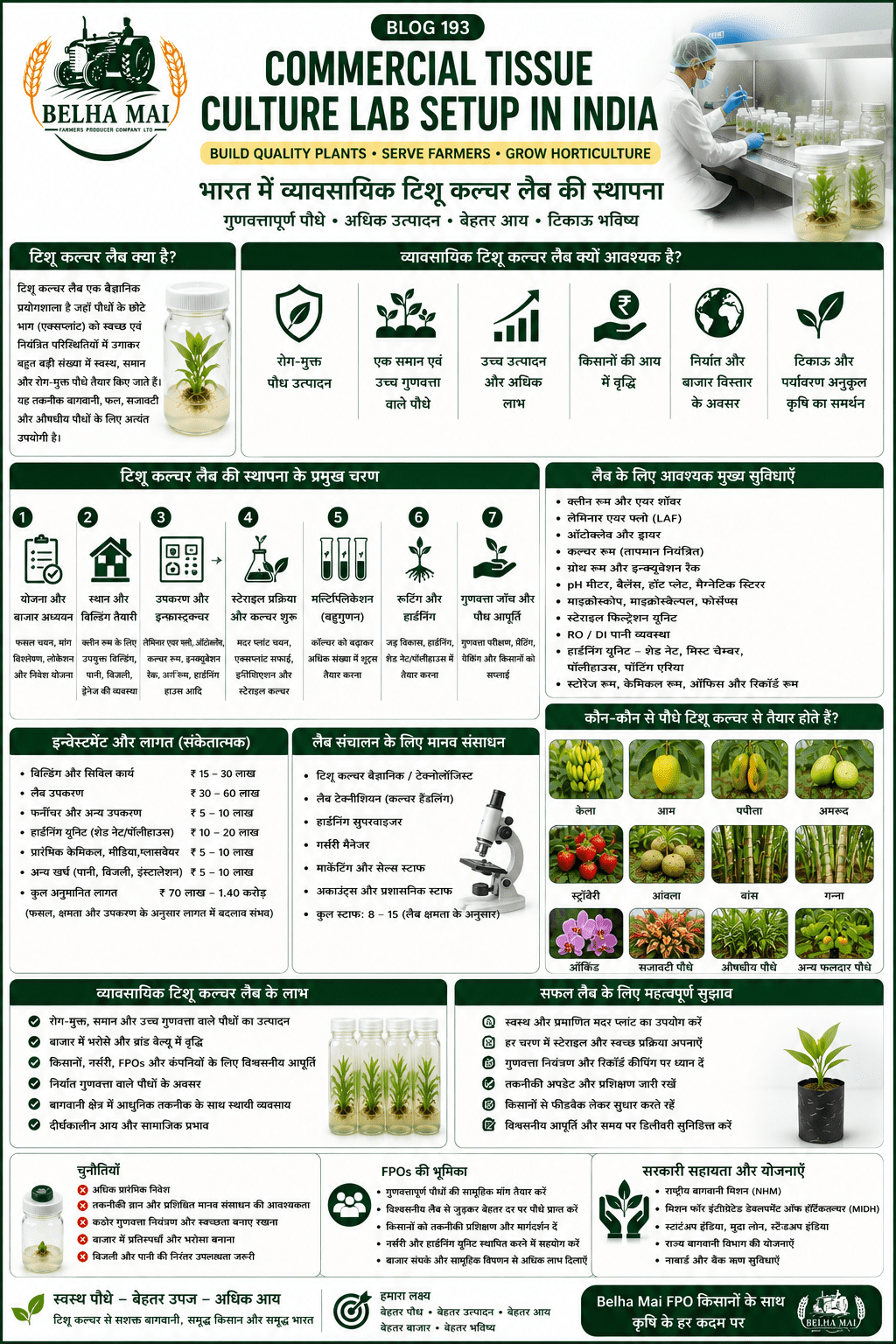
भारत में व्यावसायिक टिशू कल्चर लैब की स्थापना
Introduction
Commercial tissue culture lab setup in India is becoming an important opportunity for entrepreneurs, nurseries, FPOs and horticulture businesses. Tissue culture technology helps produce healthy, uniform and disease-free plants under controlled laboratory conditions. As India moves towards high-value horticulture, fruit crop expansion, agroforestry and quality planting material, commercial tissue culture labs can play a major role in supplying reliable plants to farmers. However, this business requires planning, technical knowledge, infrastructure, skilled manpower, quality control and strong nursery linkage.
भारत में व्यावसायिक टिशू कल्चर लैब की स्थापना उद्यमियों, नर्सरियों, FPOs और बागवानी व्यवसायों के लिए एक महत्वपूर्ण अवसर बन रही है। टिशू कल्चर तकनीक नियंत्रित प्रयोगशाला परिस्थितियों में स्वस्थ, समान और रोग-मुक्त पौधे तैयार करने में मदद करती है। जैसे-जैसे भारत उच्च मूल्य वाली बागवानी, फल फसल विस्तार, एग्रोफॉरेस्ट्री और गुणवत्तापूर्ण पौध सामग्री की ओर बढ़ रहा है, व्यावसायिक टिशू कल्चर लैब किसानों को विश्वसनीय पौधे उपलब्ध कराने में बड़ी भूमिका निभा सकती हैं। हालांकि इस व्यवसाय के लिए योजना, तकनीकी ज्ञान, इंफ्रास्ट्रक्चर, कुशल मानव संसाधन, गुणवत्ता नियंत्रण और मजबूत नर्सरी लिंक आवश्यक है।
What is a Commercial Tissue Culture Lab?
A commercial tissue culture lab is a laboratory designed to produce plants in large numbers using plant tissue culture technology. In this lab, small plant parts from selected mother plants are grown on nutrient media under sterile conditions. These plant tissues are multiplied into many plantlets, rooted, hardened and finally supplied to farmers or nurseries. The main objective of a commercial tissue culture lab setup is to produce quality planting material for agriculture, horticulture, forestry, medicinal plants and ornamental plants.
व्यावसायिक टिशू कल्चर लैब ऐसी प्रयोगशाला होती है जहां पौधों को बड़ी संख्या में प्लांट टिशू कल्चर तकनीक से तैयार किया जाता है। इस लैब में चुने हुए मदर प्लांट के छोटे पौध भागों को स्वच्छ वातावरण में पोषक माध्यम पर उगाया जाता है। इन पौध ऊतकों को कई पौधों में बढ़ाया जाता है, उनमें जड़ें विकसित की जाती हैं, हार्डनिंग की जाती है और अंत में किसानों या नर्सरियों को उपलब्ध कराया जाता है। व्यावसायिक टिशू कल्चर लैब सेटअप का मुख्य उद्देश्य कृषि, बागवानी, वानिकी, औषधीय पौधों और सजावटी पौधों के लिए गुणवत्तापूर्ण पौध सामग्री तैयार करना है।
Why Commercial Tissue Culture Lab Setup is Important in India
Commercial tissue culture lab setup is important in India because farmers need reliable planting material for better productivity and income. Many farmers still depend on unorganized nurseries where plant quality, variety purity and disease-free status may not always be assured. Tissue culture labs can help produce plants in a scientific and controlled way. This is especially useful for crops like banana, potato, bamboo, strawberry, orchids, medicinal plants and other high-value horticulture crops where quality plants directly affect crop performance.
भारत में व्यावसायिक टिशू कल्चर लैब सेटअप इसलिए महत्वपूर्ण है क्योंकि किसानों को बेहतर उत्पादकता और आय के लिए विश्वसनीय पौध सामग्री की आवश्यकता होती है। कई किसान अभी भी असंगठित नर्सरियों पर निर्भर हैं, जहां पौध गुणवत्ता, किस्म की शुद्धता और रोग-मुक्त स्थिति हमेशा सुनिश्चित नहीं होती। टिशू कल्चर लैब वैज्ञानिक और नियंत्रित तरीके से पौधे तैयार करने में मदद कर सकती हैं। यह विशेष रूप से केला, आलू, बांस, स्ट्रॉबेरी, ऑर्किड, औषधीय पौधे और अन्य उच्च मूल्य वाली बागवानी फसलों के लिए उपयोगी है, जहां गुणवत्तापूर्ण पौधे सीधे फसल प्रदर्शन को प्रभावित करते हैं।
Market Opportunity for Tissue Culture Labs
Commercial tissue culture lab setup in India has strong market opportunities because horticulture, plantation crops, landscaping, agroforestry and export-oriented agriculture are growing sectors. Farmers are increasingly looking for uniform, disease-free and high-quality plants. Government programs, horticulture missions, private nurseries, FPOs and agribusiness companies also create demand for quality planting material. A well-managed tissue culture lab can serve farmers, nurseries, institutions, government projects and private plantations.
भारत में व्यावसायिक टिशू कल्चर लैब सेटअप में मजबूत बाजार अवसर हैं क्योंकि बागवानी, प्लांटेशन फसलें, लैंडस्केपिंग, एग्रोफॉरेस्ट्री और निर्यात-उन्मुख कृषि तेजी से बढ़ते क्षेत्र हैं। किसान अब अधिक समान, रोग-मुक्त और उच्च गुणवत्ता वाले पौधों की तलाश कर रहे हैं। सरकारी कार्यक्रम, बागवानी मिशन, निजी नर्सरियां, FPOs और एग्रीबिजनेस कंपनियां भी गुणवत्तापूर्ण पौध सामग्री की मांग पैदा करती हैं। एक अच्छी तरह संचालित टिशू कल्चर लैब किसानों, नर्सरियों, संस्थानों, सरकारी परियोजनाओं और निजी बागानों को सेवा दे सकती है।
Suitable Crops for Commercial Tissue Culture Lab
A commercial tissue culture lab can produce plants for crops such as banana, potato, sugarcane, bamboo, strawberry, orchids, medicinal plants, ornamental plants and selected horticulture crops. Banana tissue culture is already popular in India because commercial farmers need uniform and disease-free plants. Bamboo and ornamental plants also have good market potential. For crops like mango, amla, guava and other fruit crops, tissue culture may require stronger research and crop-specific protocols before commercial scaling.
व्यावसायिक टिशू कल्चर लैब केला, आलू, गन्ना, बांस, स्ट्रॉबेरी, ऑर्किड, औषधीय पौधे, सजावटी पौधे और चुनी हुई बागवानी फसलों के पौधे तैयार कर सकती है। भारत में केला टिशू कल्चर पहले से लोकप्रिय है क्योंकि व्यावसायिक किसानों को समान और रोग-मुक्त पौधों की आवश्यकता होती है। बांस और सजावटी पौधों में भी अच्छी बाजार संभावना है। आम, आंवला, अमरूद और अन्य फलदार फसलों के लिए व्यावसायिक स्तर पर विस्तार से पहले मजबूत शोध और फसल-विशेष प्रोटोकॉल की आवश्यकता हो सकती है।
Basic Infrastructure Required
Commercial tissue culture lab setup requires proper infrastructure with separate functional areas. These areas usually include washing room, media preparation room, sterilization room, inoculation room, culture growth room, rooting area, hardening area, office, storage and record room. The layout should support cleanliness, smooth workflow and contamination control. A poorly designed lab can increase contamination risk and reduce production efficiency. Therefore, lab design should be planned with technical guidance.
व्यावसायिक टिशू कल्चर लैब सेटअप के लिए अलग-अलग कार्य क्षेत्रों वाला उचित इंफ्रास्ट्रक्चर आवश्यक है। इन क्षेत्रों में सामान्यतः वॉशिंग रूम, मीडिया प्रिपरेशन रूम, स्टरलाइजेशन रूम, इनोकुलेशन रूम, कल्चर ग्रोथ रूम, रूटिंग एरिया, हार्डनिंग एरिया, ऑफिस, स्टोरेज और रिकॉर्ड रूम शामिल होते हैं। लेआउट ऐसा होना चाहिए जिससे स्वच्छता, कार्य प्रवाह और संक्रमण नियंत्रण आसानी से हो सके। खराब डिजाइन वाली लैब संक्रमण जोखिम बढ़ा सकती है और उत्पादन क्षमता कम कर सकती है। इसलिए लैब डिजाइन तकनीकी मार्गदर्शन के साथ करना चाहिए।
Media Preparation Room
The media preparation room is one of the most important parts of a commercial tissue culture lab setup. In this room, nutrient media are prepared using minerals, vitamins, sugar, agar and plant growth regulators. Proper weighing, mixing, pH adjustment and sterilization are necessary for successful culture growth. If the media is not prepared correctly, plant growth may be poor or contamination may increase. Therefore, media preparation requires trained staff and proper equipment.
मीडिया प्रिपरेशन रूम व्यावसायिक टिशू कल्चर लैब सेटअप का सबसे महत्वपूर्ण हिस्सा है। इस कमरे में खनिज, विटामिन, शर्करा, अगर और पौध वृद्धि नियंत्रकों का उपयोग करके पोषक माध्यम तैयार किया जाता है। सफल कल्चर वृद्धि के लिए सही वजन, मिक्सिंग, pH समायोजन और स्टरलाइजेशन जरूरी है। यदि माध्यम सही तरीके से तैयार नहीं किया गया, तो पौध वृद्धि कमजोर हो सकती है या संक्रमण बढ़ सकता है। इसलिए मीडिया प्रिपरेशन के लिए प्रशिक्षित स्टाफ और उचित उपकरण आवश्यक हैं।
Sterilization Room
The sterilization room is required to sterilize media, glassware, tools and culture containers. Autoclaves, hot air ovens and sterilization equipment are commonly used in this area. Sterilization is essential because tissue culture plants grow in a nutrient-rich medium where bacteria and fungi can also grow quickly if contamination enters. A commercial tissue culture lab must maintain strict sterilization practices to ensure disease-free and contamination-free plant production.
स्टरलाइजेशन रूम मीडिया, ग्लासवेयर, उपकरण और कल्चर कंटेनरों को स्टरलाइज करने के लिए आवश्यक होता है। इस क्षेत्र में ऑटोक्लेव, हॉट एयर ओवन और स्टरलाइजेशन उपकरणों का उपयोग किया जाता है। स्टरलाइजेशन इसलिए आवश्यक है क्योंकि टिशू कल्चर पौधे पोषक तत्वों से भरपूर माध्यम में बढ़ते हैं, जहां संक्रमण आने पर बैक्टीरिया और फंगस भी तेजी से बढ़ सकते हैं। व्यावसायिक टिशू कल्चर लैब को रोग-मुक्त और संक्रमण-मुक्त पौध उत्पादन के लिए सख्त स्टरलाइजेशन प्रणाली बनाए रखनी चाहिए।
Inoculation Room
The inoculation room is where selected plant parts are placed on the nutrient medium under sterile conditions. This work is usually done inside laminar airflow cabinets by trained technicians. The inoculation room must be clean, controlled and free from dust and contamination. This stage is highly sensitive because even small contamination can spoil the culture. Therefore, skilled manpower and strict hygiene are essential for successful commercial tissue culture lab setup.
इनोकुलेशन रूम वह स्थान है जहां चुने हुए पौध भागों को स्वच्छ परिस्थितियों में पोषक माध्यम पर रखा जाता है। यह कार्य सामान्यतः प्रशिक्षित तकनीशियनों द्वारा लैमिनार एयरफ्लो कैबिनेट में किया जाता है। इनोकुलेशन रूम साफ, नियंत्रित और धूल तथा संक्रमण से मुक्त होना चाहिए। यह चरण बहुत संवेदनशील होता है क्योंकि छोटा संक्रमण भी कल्चर को खराब कर सकता है। इसलिए सफल व्यावसायिक टिशू कल्चर लैब सेटअप के लिए कुशल मानव संसाधन और सख्त स्वच्छता आवश्यक है।
Culture Growth Room
The culture growth room is used for keeping culture bottles or vessels under controlled temperature, light and humidity. This room must have racks, lights, air conditioning and monitoring systems. Plants multiply and grow in this room over a planned period. Good culture room management helps improve multiplication rate and plant health. Poor temperature control, improper lighting or contamination can affect the quality and number of plantlets produced.
कल्चर ग्रोथ रूम का उपयोग कल्चर बोतलों या वेसल्स को नियंत्रित तापमान, प्रकाश और आर्द्रता में रखने के लिए किया जाता है। इस कमरे में रैक, लाइट, एयर कंडीशनिंग और निगरानी प्रणाली होनी चाहिए। पौधे इस कमरे में निर्धारित अवधि के दौरान बढ़ते और मल्टीप्लाई होते हैं। अच्छा कल्चर रूम प्रबंधन मल्टीप्लिकेशन दर और पौध स्वास्थ्य सुधारने में मदद करता है। खराब तापमान नियंत्रण, गलत प्रकाश या संक्रमण से पौधों की गुणवत्ता और संख्या प्रभावित हो सकती है।
Rooting and Hardening Unit
Rooting and hardening are very important in commercial tissue culture lab setup. After multiplication, plantlets need proper root development before they are transferred to nursery conditions. Once rooted, the plantlets are moved to hardening units such as polyhouses, shade net houses or mist chambers. Hardening helps delicate laboratory plants adjust to outside conditions. Without proper hardening, plant survival in the field can be poor.
व्यावसायिक टिशू कल्चर लैब सेटअप में रूटिंग और हार्डनिंग बहुत महत्वपूर्ण हैं। मल्टीप्लिकेशन के बाद पौधों में नर्सरी परिस्थितियों में स्थानांतरण से पहले सही जड़ विकास आवश्यक होता है। जड़ विकसित होने के बाद पौधों को पॉलीहाउस, शेडनेट हाउस या मिस्ट चेंबर जैसे हार्डनिंग यूनिट में भेजा जाता है। हार्डनिंग नाजुक प्रयोगशाला पौधों को बाहरी परिस्थितियों के अनुकूल बनाती है। सही हार्डनिंग के बिना खेत में पौधों की जीवित रहने की क्षमता कमजोर हो सकती है।
Essential Equipment
A commercial tissue culture lab setup requires equipment such as autoclave, laminar airflow cabinet, pH meter, weighing balance, hot air oven, refrigerator, culture racks, growth lights, air conditioning, microscope, water purification system, glassware, culture bottles, forceps, scalpels and sterilization tools. The equipment requirement depends on the lab size, crop type and production capacity. Good-quality equipment reduces contamination risk and improves production efficiency.
व्यावसायिक टिशू कल्चर लैब सेटअप के लिए ऑटोक्लेव, लैमिनार एयरफ्लो कैबिनेट, pH मीटर, वेइंग बैलेंस, हॉट एयर ओवन, रेफ्रिजरेटर, कल्चर रैक, ग्रोथ लाइट, एयर कंडीशनिंग, माइक्रोस्कोप, वाटर प्यूरीफिकेशन सिस्टम, ग्लासवेयर, कल्चर बोतलें, फोर्सेप्स, स्कैल्पल और स्टरलाइजेशन उपकरणों की आवश्यकता होती है। उपकरणों की आवश्यकता लैब के आकार, फसल प्रकार और उत्पादन क्षमता पर निर्भर करती है। अच्छी गुणवत्ता वाले उपकरण संक्रमण जोखिम कम करते हैं और उत्पादन दक्षता बढ़ाते हैं।
Skilled Manpower Requirement
Commercial tissue culture lab setup requires skilled manpower because tissue culture is a technical process. A lab may need tissue culture scientists, lab technicians, media preparation staff, inoculation technicians, hardening supervisors, quality control staff, nursery workers, marketing staff and administrative support. Skilled manpower ensures proper lab operation, contamination control, plant quality and production planning. Without trained staff, even good infrastructure may fail.
व्यावसायिक टिशू कल्चर लैब सेटअप के लिए कुशल मानव संसाधन आवश्यक है क्योंकि टिशू कल्चर एक तकनीकी प्रक्रिया है। एक लैब को टिशू कल्चर वैज्ञानिक, लैब तकनीशियन, मीडिया प्रिपरेशन स्टाफ, इनोकुलेशन तकनीशियन, हार्डनिंग सुपरवाइजर, गुणवत्ता नियंत्रण स्टाफ, नर्सरी कर्मचारी, मार्केटिंग स्टाफ और प्रशासनिक सहायता की आवश्यकता हो सकती है। कुशल मानव संसाधन सही लैब संचालन, संक्रमण नियंत्रण, पौध गुणवत्ता और उत्पादन योजना सुनिश्चित करता है। प्रशिक्षित स्टाफ के बिना अच्छा इंफ्रास्ट्रक्चर भी सफल नहीं हो सकता।
Investment and Cost Factors
The investment for commercial tissue culture lab setup depends on land, building, lab size, equipment quality, production capacity, crop type, electricity, water, manpower and hardening infrastructure. A small lab may require lower investment, while a large commercial lab with high production capacity may need much higher capital. Entrepreneurs should prepare a detailed project report before investment. The DPR should include capital cost, operating cost, plant production target, market demand, working capital and revenue projection.
व्यावसायिक टिशू कल्चर लैब सेटअप में निवेश भूमि, भवन, लैब आकार, उपकरण गुणवत्ता, उत्पादन क्षमता, फसल प्रकार, बिजली, पानी, मानव संसाधन और हार्डनिंग इंफ्रास्ट्रक्चर पर निर्भर करता है। छोटी लैब में कम निवेश लग सकता है, जबकि उच्च उत्पादन क्षमता वाली बड़ी व्यावसायिक लैब के लिए अधिक पूंजी की आवश्यकता हो सकती है। उद्यमियों को निवेश से पहले विस्तृत परियोजना रिपोर्ट तैयार करनी चाहिए। DPR में पूंजी लागत, संचालन लागत, पौध उत्पादन लक्ष्य, बाजार मांग, कार्यशील पूंजी और राजस्व अनुमान शामिल होने चाहिए।
Business Model of Tissue Culture Lab
A commercial tissue culture lab can follow different business models. It can sell plantlets directly to farmers, supply hardened plants through nurseries, work with FPOs, supply government projects, serve private plantations or develop contract-based plant production. The best model depends on crop demand, location, technical capacity and market network. For long-term success, the lab must connect production with reliable demand and strong after-sales technical support.
व्यावसायिक टिशू कल्चर लैब अलग-अलग व्यवसाय मॉडल अपना सकती है। यह सीधे किसानों को पौधे बेच सकती है, नर्सरियों के माध्यम से हार्डन किए गए पौधे उपलब्ध करा सकती है, FPOs के साथ काम कर सकती है, सरकारी परियोजनाओं को आपूर्ति कर सकती है, निजी बागानों की सेवा कर सकती है या कॉन्ट्रैक्ट आधारित पौध उत्पादन कर सकती है। सबसे अच्छा मॉडल फसल मांग, स्थान, तकनीकी क्षमता और बाजार नेटवर्क पर निर्भर करता है। दीर्घकालिक सफलता के लिए लैब को उत्पादन को विश्वसनीय मांग और मजबूत आफ्टर-सेल्स तकनीकी सहायता से जोड़ना होगा।
Quality Control System
Quality control is the backbone of commercial tissue culture lab setup. A lab must monitor mother plants, explants, media preparation, sterilization, contamination rate, multiplication rate, rooting, hardening and final plant quality. Batch records, plant health records and traceability systems should be maintained. If quality control is weak, farmers may receive poor plants and the lab may lose credibility. Strong quality control builds trust and supports business growth.
गुणवत्ता नियंत्रण व्यावसायिक टिशू कल्चर लैब सेटअप की रीढ़ है। लैब को मदर प्लांट, एक्सप्लांट, मीडिया प्रिपरेशन, स्टरलाइजेशन, संक्रमण दर, मल्टीप्लिकेशन दर, रूटिंग, हार्डनिंग और अंतिम पौध गुणवत्ता की निगरानी करनी चाहिए। बैच रिकॉर्ड, पौध स्वास्थ्य रिकॉर्ड और ट्रेसबिलिटी प्रणाली रखनी चाहिए। यदि गुणवत्ता नियंत्रण कमजोर है, तो किसानों को खराब पौधे मिल सकते हैं और लैब की विश्वसनीयता घट सकती है। मजबूत गुणवत्ता नियंत्रण विश्वास बनाता है और व्यवसाय वृद्धि को समर्थन देता है।
Certification and Compliance
Commercial tissue culture lab setup should follow required legal, technical and quality standards as applicable. Entrepreneurs should check permissions, business registration, pollution-related requirements, electricity load, building safety, labour rules and agriculture or horticulture department guidelines. Certification and accreditation can improve credibility, especially when supplying to government projects, FPOs or large farmers. Compliance helps the lab operate professionally and build market trust.
व्यावसायिक टिशू कल्चर लैब सेटअप को लागू कानूनी, तकनीकी और गुणवत्ता मानकों का पालन करना चाहिए। उद्यमियों को अनुमति, व्यवसाय पंजीकरण, प्रदूषण संबंधित आवश्यकता, बिजली लोड, भवन सुरक्षा, श्रम नियम और कृषि या बागवानी विभाग के दिशानिर्देशों की जांच करनी चाहिए। प्रमाणन और मान्यता विश्वसनीयता बढ़ा सकते हैं, विशेष रूप से जब सरकारी परियोजनाओं, FPOs या बड़े किसानों को आपूर्ति करनी हो। अनुपालन लैब को पेशेवर तरीके से संचालित करने और बाजार विश्वास बनाने में मदद करता है।
Role of High-Tech Nursery with Tissue Culture Lab
A commercial tissue culture lab should not work alone; it should be linked with a high-tech nursery. Laboratory plantlets need hardening, acclimatization, grading and field-ready preparation. A high-tech nursery with polyhouse, shade net house, mist chamber, irrigation system and trained staff can improve plant survival. The combination of tissue culture lab and high-tech nursery creates a complete plant production system from mother plant to farmer field.
व्यावसायिक टिशू कल्चर लैब को अकेले काम नहीं करना चाहिए; इसे हाई-टेक नर्सरी से जोड़ा जाना चाहिए। प्रयोगशाला में तैयार पौधों को हार्डनिंग, वातावरण अनुकूलन, ग्रेडिंग और खेत-तैयार तैयारी की जरूरत होती है। पॉलीहाउस, शेडनेट हाउस, मिस्ट चेंबर, सिंचाई प्रणाली और प्रशिक्षित स्टाफ वाली हाई-टेक नर्सरी पौधों की जीवित रहने की क्षमता बढ़ा सकती है। टिशू कल्चर लैब और हाई-टेक नर्सरी का संयोजन मदर प्लांट से किसान के खेत तक पूर्ण पौध उत्पादन प्रणाली बनाता है।
Challenges in Commercial Tissue Culture Lab Setup
Commercial tissue culture lab setup has several challenges. These include high initial investment, skilled manpower shortage, contamination risk, electricity and water requirement, crop-specific protocol development, market uncertainty and working capital needs. Plant production also takes time, so entrepreneurs must manage cash flow carefully. Without proper planning and technical support, the lab may struggle. Therefore, a strong DPR, expert guidance and market linkage are essential before starting.
व्यावसायिक टिशू कल्चर लैब सेटअप में कई चुनौतियां हैं। इनमें उच्च प्रारंभिक निवेश, कुशल मानव संसाधन की कमी, संक्रमण जोखिम, बिजली और पानी की आवश्यकता, फसल-विशेष प्रोटोकॉल विकास, बाजार अनिश्चितता और कार्यशील पूंजी की जरूरत शामिल हैं। पौध उत्पादन में समय भी लगता है, इसलिए उद्यमियों को नकदी प्रवाह का सावधानीपूर्वक प्रबंधन करना चाहिए। सही योजना और तकनीकी सहायता के बिना लैब संघर्ष कर सकती है। इसलिए शुरुआत से पहले मजबूत DPR, विशेषज्ञ मार्गदर्शन और बाजार लिंक आवश्यक हैं।
Role of FPOs in Tissue Culture Lab Business
FPOs can play an important role in commercial tissue culture lab setup by aggregating farmer demand, identifying suitable crops and creating assured plant supply channels. An FPO may not need to start a full lab immediately; it can first work with reliable labs and develop a hardening nursery. Later, if demand is strong, the FPO can explore its own tissue culture lab or partnership model. FPOs can also provide farmer training, technical support and market linkage for crops grown from tissue culture plants.
FPOs किसान मांग एकत्र करके, उपयुक्त फसलों की पहचान करके और सुनिश्चित पौध आपूर्ति चैनल बनाकर व्यावसायिक टिशू कल्चर लैब सेटअप में महत्वपूर्ण भूमिका निभा सकते हैं। एक FPO को तुरंत पूरी लैब शुरू करने की आवश्यकता नहीं है; वह पहले विश्वसनीय लैब के साथ काम करके हार्डनिंग नर्सरी विकसित कर सकता है। बाद में यदि मांग मजबूत हो, तो FPO अपनी टिशू कल्चर लैब या साझेदारी मॉडल पर विचार कर सकता है। FPOs टिशू कल्चर पौधों से उगाई जाने वाली फसलों के लिए किसान प्रशिक्षण, तकनीकी सहायता और बाजार लिंक भी प्रदान कर सकते हैं।
Government Schemes and Support
Commercial tissue culture lab setup may be supported through different agriculture, horticulture, biotechnology, MSME, startup and rural enterprise schemes depending on location, eligibility and project design. Entrepreneurs and FPOs should check with the State Horticulture Department, National Horticulture Board, MIDH, MSME offices, startup programs and relevant government agencies. Scheme support may vary by state and year, so updated verification is necessary before project planning.
व्यावसायिक टिशू कल्चर लैब सेटअप को स्थान, पात्रता और परियोजना डिजाइन के आधार पर कृषि, बागवानी, बायोटेक्नोलॉजी, MSME, स्टार्टअप और ग्रामीण उद्यम योजनाओं से सहायता मिल सकती है। उद्यमियों और FPOs को राज्य बागवानी विभाग, National Horticulture Board, MIDH, MSME कार्यालय, स्टार्टअप कार्यक्रम और संबंधित सरकारी एजेंसियों से जानकारी लेनी चाहिए। योजनाओं की सहायता राज्य और वर्ष के अनुसार बदल सकती है, इसलिए परियोजना योजना से पहले अद्यतन जानकारी की पुष्टि आवश्यक है।
Commercial Tissue Culture Lab and Farmer Income
Commercial tissue culture lab setup can indirectly improve farmer income by supplying better planting material. When farmers receive healthy and uniform plants, they can plan crops better, reduce early disease risk and improve productivity potential. However, farmer income increases only when planting material is supported by crop training, proper management and market linkage. Therefore, tissue culture labs should work with nurseries, FPOs and buyers to create a complete value chain.
व्यावसायिक टिशू कल्चर लैब सेटअप बेहतर पौध सामग्री उपलब्ध कराकर अप्रत्यक्ष रूप से किसान आय सुधार सकता है। जब किसानों को स्वस्थ और समान पौधे मिलते हैं, तो वे बेहतर फसल योजना बना सकते हैं, शुरुआती बीमारी जोखिम कम कर सकते हैं और उत्पादकता क्षमता बढ़ा सकते हैं। हालांकि किसान आय तभी बढ़ती है जब पौध सामग्री को फसल प्रशिक्षण, सही प्रबंधन और बाजार लिंक का समर्थन मिले। इसलिए टिशू कल्चर लैब को पूर्ण वैल्यू चेन बनाने के लिए नर्सरियों, FPOs और खरीदारों के साथ काम करना चाहिए।
Belha Mai FPO Vision
Belha Mai Farmers Producer Company Ltd. believes that commercial tissue culture lab setup and high-tech nursery development can create new opportunities for farmers, FPOs and rural entrepreneurs. Quality planting material is the foundation of strong horticulture and agroforestry value chains. By promoting tissue culture awareness, nursery infrastructure, farmer training and market linkage, Belha Mai FPO aims to support farmers with better plants, better productivity, better income and sustainable rural development.
Belha Mai Farmers Producer Company Ltd. का मानना है कि व्यावसायिक टिशू कल्चर लैब सेटअप और हाई-टेक नर्सरी विकास किसानों, FPOs और ग्रामीण उद्यमियों के लिए नए अवसर बना सकते हैं। गुणवत्तापूर्ण पौध सामग्री मजबूत बागवानी और एग्रोफॉरेस्ट्री वैल्यू चेन की नींव है। टिशू कल्चर जागरूकता, नर्सरी इंफ्रास्ट्रक्चर, किसान प्रशिक्षण और बाजार लिंक को बढ़ावा देकर Belha Mai FPO किसानों को बेहतर पौधे, बेहतर उत्पादकता, बेहतर आय और सतत ग्रामीण विकास में सहायता देना चाहता है।
Conclusion
Commercial tissue culture lab setup in India is a promising opportunity, but it must be planned carefully. A successful lab requires proper infrastructure, equipment, skilled manpower, quality control, nursery hardening, traceability, working capital and market linkage. Tissue culture labs can support disease-free planting material, high-tech nursery development, horticulture expansion and FPO-led value chains. For farmers and rural enterprises, this technology can become a strong foundation for modern agriculture when implemented with technical discipline and practical business planning.
भारत में व्यावसायिक टिशू कल्चर लैब सेटअप एक संभावनाशील अवसर है, लेकिन इसकी सावधानीपूर्वक योजना आवश्यक है। सफल लैब के लिए उचित इंफ्रास्ट्रक्चर, उपकरण, कुशल मानव संसाधन, गुणवत्ता नियंत्रण, नर्सरी हार्डनिंग, ट्रेसबिलिटी, कार्यशील पूंजी और बाजार लिंक जरूरी हैं। टिशू कल्चर लैब रोग-मुक्त पौध सामग्री, हाई-टेक नर्सरी विकास, बागवानी विस्तार और FPO आधारित वैल्यू चेन को समर्थन दे सकती है। किसानों और ग्रामीण उद्यमों के लिए यह तकनीक आधुनिक कृषि की मजबूत नींव बन सकती है, यदि इसे तकनीकी अनुशासन और व्यावहारिक व्यवसाय योजना के साथ लागू किया जाए।
FAQ
What is a commercial tissue culture lab?
A commercial tissue culture lab is a laboratory that produces plants in large numbers using plant tissue culture technology under controlled and sterile conditions.
व्यावसायिक टिशू कल्चर लैब ऐसी प्रयोगशाला होती है जो नियंत्रित और स्वच्छ परिस्थितियों में प्लांट टिशू कल्चर तकनीक से बड़ी संख्या में पौधे तैयार करती है।
Which crops are suitable for tissue culture lab production?
Banana, potato, sugarcane, bamboo, strawberry, orchids, medicinal plants and ornamental plants are commonly suitable for tissue culture lab production.
केला, आलू, गन्ना, बांस, स्ट्रॉबेरी, ऑर्किड, औषधीय पौधे और सजावटी पौधे सामान्य रूप से टिशू कल्चर लैब उत्पादन के लिए उपयुक्त हैं।
What equipment is needed for commercial tissue culture lab setup?
A tissue culture lab needs equipment such as autoclave, laminar airflow cabinet, pH meter, weighing balance, culture racks, growth lights, refrigerator, microscope and sterilization tools.
टिशू कल्चर लैब के लिए ऑटोक्लेव, लैमिनार एयरफ्लो कैबिनेट, pH मीटर, वेइंग बैलेंस, कल्चर रैक, ग्रोथ लाइट, रेफ्रिजरेटर, माइक्रोस्कोप और स्टरलाइजेशन उपकरणों की आवश्यकता होती है।
Is tissue culture lab business profitable?
Tissue culture lab business can be profitable when there is strong market demand, good crop selection, technical expertise, quality control and reliable plant supply channels.
टिशू कल्चर लैब व्यवसाय लाभदायक हो सकता है, यदि मजबूत बाजार मांग, सही फसल चयन, तकनीकी विशेषज्ञता, गुणवत्ता नियंत्रण और विश्वसनीय पौध आपूर्ति चैनल हों।
Can FPOs start a tissue culture lab?
Yes, FPOs can explore tissue culture lab setup, but they should first assess farmer demand, technical capacity, investment requirement and market linkage. They can also start with a hardening nursery model before setting up a full lab.
हां, FPOs टिशू कल्चर लैब सेटअप पर विचार कर सकते हैं, लेकिन पहले किसान मांग, तकनीकी क्षमता, निवेश आवश्यकता और बाजार लिंक का आकलन करना चाहिए। वे पूरी लैब शुरू करने से पहले हार्डनिंग नर्सरी मॉडल से भी शुरुआत कर सकते हैं।
Internal Links Section
👉 High-Tech Nursery in India: Complete Guide —https://belhamaifpo.com/agriculture/high-tech-nursery-in-india-complete-guide/
👉 What is Plant Tissue Culture in Agriculture? — https://belhamaifpo.com/agriculture/what-is-plant-tissue-culture-in-agriculture/
👉 Benefits of Tissue Culture Plants for Farmers — https://belhamaifpo.com/agriculture/benefits-of-tissue-culture-plants-for-farmers/
👉 How Tissue Culture Ensures Disease-Free Planting Material —https://belhamaifpo.com/agriculture/how-tissue-culture-ensures-disease-free-planting-material/
👉 Role of Tissue Culture in Horticulture Development — https://belhamaifpo.com/agriculture/role-of-tissue-culture-in-horticulture-development/
👉 Belha Mai FPO Website — https://belhamaifpo.com/
External Authority Links
👉 National Horticulture Board — https://nhb.gov.in/
👉 Ministry of Agriculture & Farmers Welfare — https://agriwelfare.gov.in/
👉 Department of Biotechnology, Government of India — https://dbtindia.gov.in/
👉 ICAR — https://icar.org.in/
👉 MSME — https://msme.gov.in/
Follow Belha Mai FPO for More Updates
Website: https://belhamaifpo.com/
Facebook: https://www.facebook.com/profile.php?id=61561043486818
YouTube: https://www.youtube.com/channel/UC9ZvojoTMCa7mU1-Q_Bh60A
LinkedIn: https://www.linkedin.com/in/abhay-singh-ab5568280/
Instagram: https://instagram.com/belhamaifpo
Belha Mai FPO is working to support farmers through better information, technology, market linkage, value addition, FPO awareness and rural development.