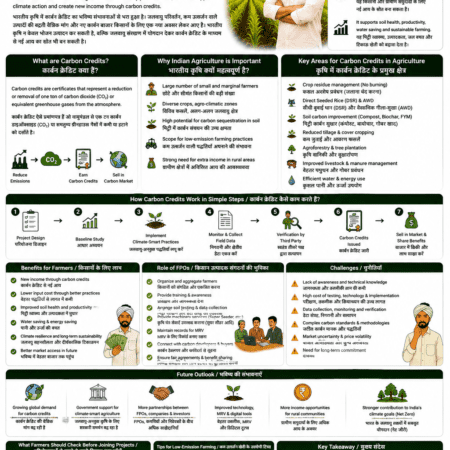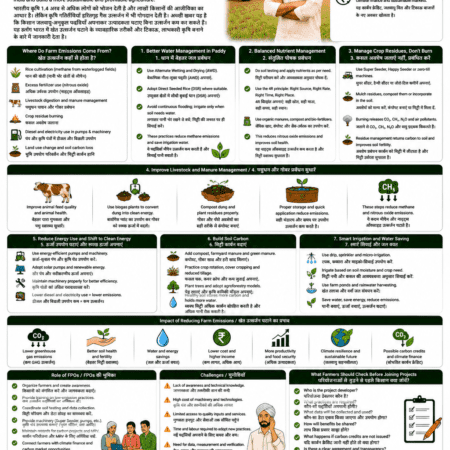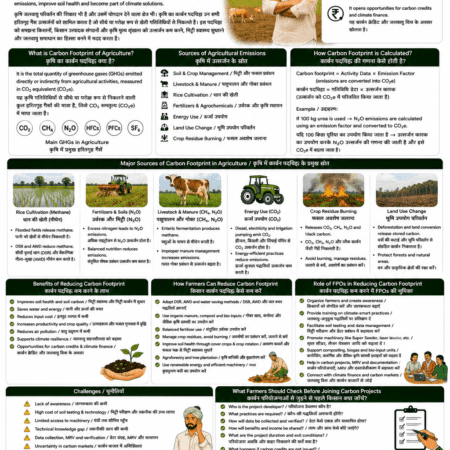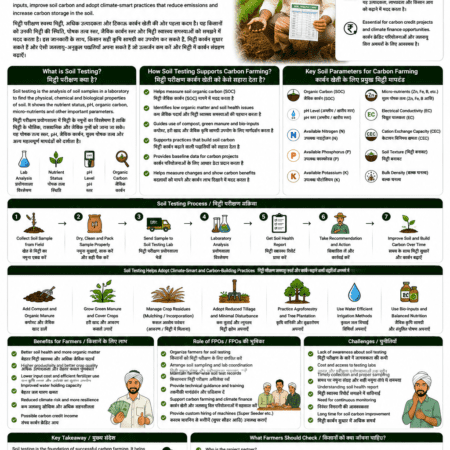
टिशू कल्चर बनाम पारंपरिक पौध प्रसार
Introduction
Tissue culture vs traditional plant propagation is an important topic for farmers, nurseries, FPOs and horticulture businesses because the method used for producing plants directly affects plant quality, crop growth and farmer income. Traditional plant propagation has been used for centuries through seeds, cuttings, grafting, budding, layering and suckers. Tissue culture is a modern laboratory-based technique used to produce healthy, uniform and disease-free plants under controlled conditions. Both methods have their own importance, but farmers must understand the difference before selecting planting material.
टिशू कल्चर बनाम पारंपरिक पौध प्रसार किसानों, नर्सरियों, FPOs और बागवानी व्यवसायों के लिए एक महत्वपूर्ण विषय है क्योंकि पौधे तैयार करने की विधि सीधे पौध गुणवत्ता, फसल वृद्धि और किसान आय को प्रभावित करती है। पारंपरिक पौध प्रसार सदियों से बीज, कटिंग, ग्राफ्टिंग, बडिंग, लेयरिंग और सकर्स के माध्यम से किया जाता रहा है। टिशू कल्चर एक आधुनिक प्रयोगशाला आधारित तकनीक है, जिसके माध्यम से नियंत्रित वातावरण में स्वस्थ, समान और रोग-मुक्त पौधे तैयार किए जाते हैं। दोनों विधियों का अपना महत्व है, लेकिन किसानों को पौध सामग्री चुनने से पहले इनके अंतर को समझना चाहिए।
What is Traditional Plant Propagation?
Traditional plant propagation is the conventional method of producing new plants through seeds or vegetative parts of plants. In seed propagation, plants are grown from seeds, while vegetative propagation uses plant parts such as stem cuttings, root cuttings, grafts, buds, layers or suckers. This method is commonly used in fruit crops, vegetables, forestry plants and ornamental plants. Traditional plant propagation is simple, familiar and widely practiced, especially in local nurseries and farmer-level plant production systems.
पारंपरिक पौध प्रसार नए पौधे तैयार करने की सामान्य विधि है, जिसमें बीज या पौधे के वानस्पतिक भागों का उपयोग किया जाता है। बीज प्रसार में पौधे बीज से तैयार होते हैं, जबकि वानस्पतिक प्रसार में तने की कटिंग, जड़ की कटिंग, ग्राफ्ट, बड, लेयर या सकर्स का उपयोग किया जाता है। यह विधि फलदार पौधों, सब्जियों, वानिकी पौधों और सजावटी पौधों में सामान्य रूप से अपनाई जाती है। पारंपरिक पौध प्रसार सरल, परिचित और व्यापक रूप से उपयोग की जाने वाली पद्धति है, विशेष रूप से स्थानीय नर्सरियों और किसान स्तर की पौध उत्पादन प्रणालियों में।
What is Tissue Culture Propagation?
Tissue culture propagation is a scientific method where a small part of a healthy mother plant is grown under sterile laboratory conditions on a nutrient medium. The selected plant tissue is multiplied into many plantlets inside bottles or culture vessels. After multiplication and rooting, these plantlets are hardened in nursery conditions and then supplied to farmers. Tissue culture is especially useful when farmers need a large number of uniform, disease-free and high-quality plants within a planned time.
टिशू कल्चर प्रसार एक वैज्ञानिक विधि है, जिसमें स्वस्थ मदर प्लांट के छोटे भाग को स्वच्छ प्रयोगशाला वातावरण में पोषक माध्यम पर उगाया जाता है। चुने हुए पौध ऊतक को बोतलों या कल्चर वेसल में कई छोटे पौधों में बढ़ाया जाता है। मल्टीप्लिकेशन और रूटिंग के बाद इन पौधों को नर्सरी वातावरण में हार्डन किया जाता है और फिर किसानों को दिया जाता है। टिशू कल्चर विशेष रूप से तब उपयोगी होता है जब किसानों को योजनाबद्ध समय में बड़ी संख्या में समान, रोग-मुक्त और उच्च गुणवत्ता वाले पौधों की आवश्यकता होती है।
Main Difference Between Tissue Culture and Traditional Plant Propagation
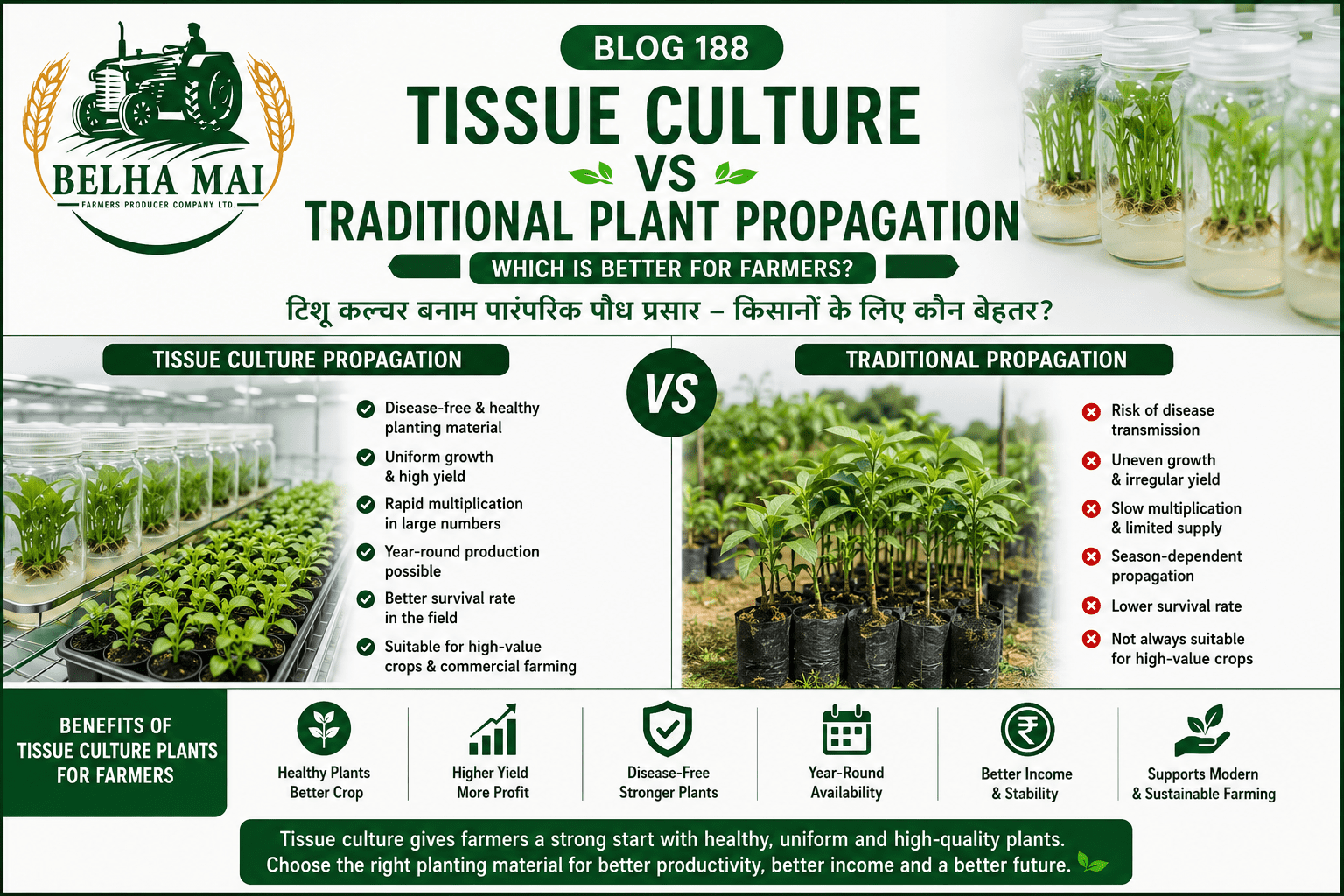
The main difference in tissue culture vs traditional plant propagation is the production environment and quality control. Traditional propagation is usually done in open nursery or field conditions, while tissue culture is done inside a controlled laboratory. Traditional methods depend more on natural growth and seasonal conditions, whereas tissue culture uses controlled temperature, light, nutrients and sterile conditions. This difference makes tissue culture more suitable for producing uniform and disease-free plants, especially for commercial cultivation.
टिशू कल्चर बनाम पारंपरिक पौध प्रसार में मुख्य अंतर उत्पादन वातावरण और गुणवत्ता नियंत्रण का है। पारंपरिक पौध प्रसार सामान्यतः खुले नर्सरी या खेत वातावरण में किया जाता है, जबकि टिशू कल्चर नियंत्रित प्रयोगशाला में किया जाता है। पारंपरिक विधियां प्राकृतिक वृद्धि और मौसमी परिस्थितियों पर अधिक निर्भर होती हैं, जबकि टिशू कल्चर में नियंत्रित तापमान, प्रकाश, पोषक तत्व और स्वच्छ वातावरण का उपयोग किया जाता है। इसी अंतर के कारण टिशू कल्चर समान और रोग-मुक्त पौधे तैयार करने के लिए अधिक उपयुक्त माना जाता है, विशेष रूप से व्यावसायिक खेती के लिए।
Plant Quality Comparison
In tissue culture vs traditional plant propagation, plant quality is one of the most important comparison points. Tissue culture plants are produced from selected mother plants under controlled conditions, so they are generally more uniform and healthy when proper procedures are followed. Traditional plants may also be good if produced by a skilled nursery, but quality can vary depending on mother plant selection, nursery hygiene, climate and propagation method. Therefore, reliable source and proper plant selection are important in both systems.
टिशू कल्चर बनाम पारंपरिक पौध प्रसार में पौध गुणवत्ता सबसे महत्वपूर्ण तुलना बिंदुओं में से एक है। टिशू कल्चर पौधे नियंत्रित परिस्थितियों में चुने हुए मदर प्लांट से तैयार किए जाते हैं, इसलिए सही प्रक्रिया अपनाने पर वे सामान्यतः अधिक समान और स्वस्थ होते हैं। पारंपरिक पौधे भी अच्छे हो सकते हैं यदि उन्हें कुशल नर्सरी द्वारा तैयार किया गया हो, लेकिन उनकी गुणवत्ता मदर प्लांट चयन, नर्सरी स्वच्छता, मौसम और प्रसार विधि पर निर्भर करती है। इसलिए दोनों प्रणालियों में विश्वसनीय स्रोत और सही पौध चयन महत्वपूर्ण है।
Disease-Free Planting Material
Tissue culture propagation has an advantage when it comes to producing disease-free planting material, especially if the mother plant is carefully selected and laboratory hygiene is properly maintained. In traditional plant propagation, diseases can sometimes pass from the mother plant, soil or nursery environment to the new plant. This is a serious problem in crops where disease spreads through planting material. Tissue culture helps reduce this risk, but it also requires strict quality control at every stage.
रोग-मुक्त पौध सामग्री तैयार करने में टिशू कल्चर प्रसार को लाभ होता है, विशेष रूप से तब जब मदर प्लांट का चयन सावधानी से किया गया हो और प्रयोगशाला स्वच्छता सही रखी गई हो। पारंपरिक पौध प्रसार में कई बार बीमारी मदर प्लांट, मिट्टी या नर्सरी वातावरण से नए पौधे में पहुंच सकती है। यह उन फसलों में गंभीर समस्या है जहां बीमारी पौध सामग्री से फैलती है। टिशू कल्चर इस जोखिम को कम करने में मदद करता है, लेकिन इसके लिए हर चरण में सख्त गुणवत्ता नियंत्रण आवश्यक है।
Uniformity of Plants
Uniformity is another major difference in tissue culture vs traditional plant propagation. Tissue culture plants are usually more uniform because they come from selected plant tissue and are multiplied under controlled conditions. Uniform plants help farmers manage irrigation, fertilizer, pest control and harvesting more efficiently. Traditional plants can show more variation, especially when grown from seed or from mixed plant sources. In commercial farming, uniformity is important because it improves crop management and market planning.
टिशू कल्चर बनाम पारंपरिक पौध प्रसार में समानता एक और बड़ा अंतर है। टिशू कल्चर पौधे सामान्यतः अधिक समान होते हैं क्योंकि वे चुने हुए पौध ऊतक से नियंत्रित परिस्थितियों में तैयार किए जाते हैं। समान पौधे किसानों को सिंचाई, खाद प्रबंधन, कीट नियंत्रण और कटाई को बेहतर तरीके से करने में मदद करते हैं। पारंपरिक पौधों में अधिक भिन्नता हो सकती है, विशेष रूप से जब वे बीज से या मिश्रित पौध स्रोतों से तैयार किए गए हों। व्यावसायिक खेती में समानता महत्वपूर्ण है क्योंकि इससे फसल प्रबंधन और बाजार योजना बेहतर होती है।
Speed of Multiplication
Tissue culture has a clear advantage in rapid multiplication of selected varieties. A small plant tissue can be multiplied into thousands of plantlets under laboratory conditions. Traditional propagation may take more time, especially in crops where planting material develops slowly. For example, some fruit plants, bamboo and plantation crops may require longer periods for multiplication through conventional methods. Tissue culture can help meet large demand quickly, especially when nurseries and FPOs need planned plant supply.
चुनी हुई किस्मों के तेज प्रसार में टिशू कल्चर को स्पष्ट लाभ है। पौधे के छोटे ऊतक से प्रयोगशाला परिस्थितियों में हजारों छोटे पौधे तैयार किए जा सकते हैं। पारंपरिक पौध प्रसार में अधिक समय लग सकता है, विशेष रूप से उन फसलों में जहां पौध सामग्री धीरे-धीरे विकसित होती है। उदाहरण के लिए कुछ फलदार पौधे, बांस और प्लांटेशन फसलें पारंपरिक विधियों से बढ़ाने में अधिक समय ले सकती हैं। टिशू कल्चर बड़ी मांग को जल्दी पूरा करने में मदद कर सकता है, विशेष रूप से जब नर्सरियों और FPOs को योजनाबद्ध पौध आपूर्ति की आवश्यकता होती है।
Cost Comparison
In tissue culture vs traditional plant propagation, cost is an important factor for farmers. Tissue culture plants are usually more expensive because they require laboratory infrastructure, skilled technicians, sterile conditions, quality control and nursery hardening. Traditional plants may be cheaper and easier to access locally. However, farmers should not look only at purchase price. If tissue culture plants are healthy, uniform and disease-free, they may reduce crop risk and support better productivity when managed properly.
टिशू कल्चर बनाम पारंपरिक पौध प्रसार में लागत किसानों के लिए महत्वपूर्ण कारक है। टिशू कल्चर पौधे सामान्यतः महंगे होते हैं क्योंकि इनके लिए प्रयोगशाला इंफ्रास्ट्रक्चर, प्रशिक्षित तकनीशियन, स्वच्छ वातावरण, गुणवत्ता नियंत्रण और नर्सरी हार्डनिंग की आवश्यकता होती है। पारंपरिक पौधे सस्ते और स्थानीय स्तर पर आसानी से उपलब्ध हो सकते हैं। हालांकि किसानों को केवल खरीद मूल्य नहीं देखना चाहिए। यदि टिशू कल्चर पौधे स्वस्थ, समान और रोग-मुक्त हैं, तो वे सही प्रबंधन के साथ फसल जोखिम को कम करके बेहतर उत्पादकता में मदद कर सकते हैं।
Availability and Seasonality
Traditional plant propagation is often seasonal because many plants can be propagated only during suitable weather conditions. Tissue culture can support year-round multiplication inside a laboratory because the environment is controlled. However, final hardening and field planting still need proper seasonal planning. For farmers, this means tissue culture can improve plant availability, but planting should still be done according to crop requirement, local climate and expert advice.
पारंपरिक पौध प्रसार अक्सर मौसमी होता है क्योंकि कई पौधों का प्रसार केवल उपयुक्त मौसम में ही किया जा सकता है। टिशू कल्चर प्रयोगशाला में नियंत्रित वातावरण के कारण साल भर पौधों के प्रसार में मदद कर सकता है। हालांकि अंतिम हार्डनिंग और खेत में रोपाई के लिए फिर भी सही मौसम योजना आवश्यक होती है। किसानों के लिए इसका अर्थ है कि टिशू कल्चर पौध उपलब्धता को बेहतर बना सकता है, लेकिन रोपाई फसल की आवश्यकता, स्थानीय जलवायु और विशेषज्ञ सलाह के अनुसार ही करनी चाहिए।
Suitability for Different Crops
Tissue culture is highly suitable for crops where uniformity, disease-free status and rapid multiplication are important, such as banana, potato, sugarcane, bamboo, strawberry, orchids and several horticulture crops. Traditional propagation remains suitable for many fruit crops, forestry plants, vegetables and crops where grafting or seed propagation is practical and economical. Therefore, the choice between tissue culture vs traditional plant propagation depends on crop type, farmer budget, market demand and availability of reliable planting material.
टिशू कल्चर उन फसलों के लिए अधिक उपयुक्त है जहां समानता, रोग-मुक्त स्थिति और तेज प्रसार महत्वपूर्ण हैं, जैसे केला, आलू, गन्ना, बांस, स्ट्रॉबेरी, ऑर्किड और कई बागवानी फसलें। पारंपरिक पौध प्रसार कई फलदार पौधों, वानिकी पौधों, सब्जियों और उन फसलों के लिए उपयुक्त रहता है जहां ग्राफ्टिंग या बीज प्रसार व्यावहारिक और किफायती है। इसलिए टिशू कल्चर बनाम पारंपरिक पौध प्रसार का चयन फसल प्रकार, किसान बजट, बाजार मांग और विश्वसनीय पौध सामग्री की उपलब्धता पर निर्भर करता है।
Field Performance
Field performance in tissue culture vs traditional plant propagation depends not only on the plant production method but also on nursery hardening and farm management. Tissue culture plants can perform very well if they are properly hardened and farmers follow recommended practices. Traditional plants can also perform well when they come from healthy mother plants and good nurseries. Poor-quality plants from either method can fail. Therefore, farmers should focus on source credibility, plant health and technical guidance.
टिशू कल्चर बनाम पारंपरिक पौध प्रसार में खेत का प्रदर्शन केवल पौध उत्पादन विधि पर निर्भर नहीं करता, बल्कि नर्सरी हार्डनिंग और खेत प्रबंधन पर भी निर्भर करता है। टिशू कल्चर पौधे सही हार्डनिंग और किसान द्वारा अनुशंसित पद्धति अपनाने पर बहुत अच्छा प्रदर्शन कर सकते हैं। पारंपरिक पौधे भी अच्छा प्रदर्शन कर सकते हैं यदि वे स्वस्थ मदर प्लांट और अच्छी नर्सरी से आए हों। किसी भी विधि से खराब गुणवत्ता वाले पौधे असफल हो सकते हैं। इसलिए किसानों को स्रोत की विश्वसनीयता, पौध स्वास्थ्य और तकनीकी मार्गदर्शन पर ध्यान देना चाहिए।
Role of High-Tech Nursery
A high-tech nursery plays an important role in both tissue culture and traditional plant propagation. In tissue culture, nursery hardening is essential because laboratory plantlets need to adapt to outside conditions. In traditional propagation, nursery management ensures proper root development, plant health, spacing, irrigation and pest protection. A strong high-tech nursery can improve the quality of planting material, reduce plant mortality and support farmers with better field-ready plants.
हाई-टेक नर्सरी टिशू कल्चर और पारंपरिक पौध प्रसार दोनों में महत्वपूर्ण भूमिका निभाती है। टिशू कल्चर में नर्सरी हार्डनिंग आवश्यक है क्योंकि प्रयोगशाला में तैयार छोटे पौधों को बाहरी वातावरण के अनुकूल बनाना होता है। पारंपरिक पौध प्रसार में नर्सरी प्रबंधन सही जड़ विकास, पौध स्वास्थ्य, दूरी, सिंचाई और कीट सुरक्षा सुनिश्चित करता है। मजबूत हाई-टेक नर्सरी पौध सामग्री की गुणवत्ता सुधार सकती है, पौध मृत्यु दर कम कर सकती है और किसानों को बेहतर खेत-तैयार पौधे उपलब्ध करा सकती है।
Which Method is Better for Farmers?
There is no single answer to which method is better in tissue culture vs traditional plant propagation. Tissue culture is better when the farmer needs disease-free, uniform and large-scale planting material for commercial crops. Traditional propagation is better when it is economical, locally available and suitable for the crop. Farmers should choose the method based on crop requirement, plant quality, budget, nursery credibility and expected market return. The best decision is not the cheapest plant, but the most reliable planting material.
टिशू कल्चर बनाम पारंपरिक पौध प्रसार में कौन सी विधि बेहतर है, इसका एक ही उत्तर नहीं है। टिशू कल्चर तब बेहतर है जब किसान को व्यावसायिक फसलों के लिए रोग-मुक्त, समान और बड़ी संख्या में पौध सामग्री चाहिए। पारंपरिक पौध प्रसार तब बेहतर है जब वह किफायती, स्थानीय रूप से उपलब्ध और फसल के लिए उपयुक्त हो। किसानों को फसल की आवश्यकता, पौध गुणवत्ता, बजट, नर्सरी विश्वसनीयता और संभावित बाजार लाभ के आधार पर विधि चुननी चाहिए। सबसे अच्छा निर्णय सबसे सस्ता पौधा नहीं, बल्कि सबसे विश्वसनीय पौध सामग्री है।
Role of FPOs in Helping Farmers Choose
FPOs can help farmers choose between tissue culture vs traditional plant propagation by providing technical guidance, demand aggregation and reliable plant sourcing. Many small farmers do not have enough information to judge plant quality. An FPO can connect farmers with certified nurseries, tissue culture labs, horticulture experts and government schemes. This reduces risk and helps farmers adopt better planting material with confidence. FPO-led nursery models can also create local employment and rural enterprise opportunities.
FPOs किसानों को टिशू कल्चर बनाम पारंपरिक पौध प्रसार के बीच सही चयन करने में तकनीकी मार्गदर्शन, मांग एकत्रीकरण और विश्वसनीय पौध स्रोत उपलब्ध कराकर मदद कर सकते हैं। कई छोटे किसानों के पास पौध गुणवत्ता जांचने की पर्याप्त जानकारी नहीं होती। एक FPO किसानों को प्रमाणित नर्सरियों, टिशू कल्चर लैब, बागवानी विशेषज्ञों और सरकारी योजनाओं से जोड़ सकता है। इससे जोखिम कम होता है और किसान बेहतर पौध सामग्री को आत्मविश्वास के साथ अपना सकते हैं। FPO आधारित नर्सरी मॉडल स्थानीय रोजगार और ग्रामीण उद्यमिता के अवसर भी बना सकता है।
Importance for Horticulture Value Chain
The comparison of tissue culture vs traditional plant propagation is important for the entire horticulture value chain. Good planting material leads to better production, better production supports aggregation, and aggregation supports processing, branding and marketing. If the first step of the value chain is weak, the entire chain suffers. Therefore, farmers, FPOs and nurseries must treat plant propagation as the foundation of successful horticulture, agroforestry and commercial agriculture.
टिशू कल्चर बनाम पारंपरिक पौध प्रसार की तुलना पूरी बागवानी वैल्यू चेन के लिए महत्वपूर्ण है। अच्छी पौध सामग्री बेहतर उत्पादन देती है, बेहतर उत्पादन एग्रीगेशन को मजबूत करता है, और एग्रीगेशन प्रोसेसिंग, ब्रांडिंग और मार्केटिंग को आधार देता है। यदि वैल्यू चेन का पहला कदम कमजोर है, तो पूरी चेन प्रभावित होती है। इसलिए किसानों, FPOs और नर्सरियों को पौध प्रसार को सफल बागवानी, एग्रोफॉरेस्ट्री और व्यावसायिक कृषि की नींव मानना चाहिए।
Belha Mai FPO Vision
Belha Mai Farmers Producer Company Ltd. believes that farmers should have access to the right planting material, whether it is tissue culture or traditional propagation. The focus should always be on quality, disease-free plants, proper nursery management, farmer training and market linkage. Through high-tech nursery development, horticulture promotion and FPO-led value chain models, Belha Mai FPO aims to support farmers with better productivity, better income and sustainable rural development.
Belha Mai Farmers Producer Company Ltd. का मानना है कि किसानों को सही पौध सामग्री उपलब्ध होनी चाहिए, चाहे वह टिशू कल्चर हो या पारंपरिक पौध प्रसार। ध्यान हमेशा गुणवत्ता, रोग-मुक्त पौधे, सही नर्सरी प्रबंधन, किसान प्रशिक्षण और बाजार लिंक पर होना चाहिए। हाई-टेक नर्सरी विकास, बागवानी प्रोत्साहन और FPO आधारित वैल्यू चेन मॉडल के माध्यम से Belha Mai FPO किसानों को बेहतर उत्पादकता, बेहतर आय और सतत ग्रामीण विकास में सहायता देना चाहता है।
Conclusion
Tissue culture vs traditional plant propagation is not about rejecting one method and accepting the other. Both methods are important in agriculture. Tissue culture is powerful for disease-free, uniform and rapid plant production, while traditional propagation remains practical, affordable and suitable for many crops. Farmers should select planting material carefully based on crop need, quality, source reliability and long-term income potential. For modern agriculture, the right plant at the right time from the right source is the foundation of success.
टिशू कल्चर बनाम पारंपरिक पौध प्रसार का अर्थ यह नहीं है कि एक विधि को पूरी तरह छोड़कर दूसरी को अपनाया जाए। कृषि में दोनों विधियां महत्वपूर्ण हैं। टिशू कल्चर रोग-मुक्त, समान और तेज पौध उत्पादन के लिए शक्तिशाली है, जबकि पारंपरिक पौध प्रसार कई फसलों के लिए व्यावहारिक, किफायती और उपयुक्त है। किसानों को फसल आवश्यकता, गुणवत्ता, स्रोत विश्वसनीयता और दीर्घकालिक आय क्षमता के आधार पर पौध सामग्री का चयन सावधानी से करना चाहिए। आधुनिक कृषि में सही समय पर सही स्रोत से सही पौधा मिलना सफलता की नींव है।
FAQ
What is the main difference between tissue culture and traditional plant propagation?
The main difference is that tissue culture is done under controlled laboratory conditions, while traditional plant propagation is done through seeds, cuttings, grafting, budding, layering or suckers in nursery or field conditions.
मुख्य अंतर यह है कि टिशू कल्चर नियंत्रित प्रयोगशाला परिस्थितियों में किया जाता है, जबकि पारंपरिक पौध प्रसार बीज, कटिंग, ग्राफ्टिंग, बडिंग, लेयरिंग या सकर्स के माध्यम से नर्सरी या खेत वातावरण में किया जाता है।
Is tissue culture better than traditional propagation?
Tissue culture is better for crops where disease-free, uniform and large-scale plant production is needed. Traditional propagation is better for crops where it is practical, affordable and reliable.
टिशू कल्चर उन फसलों के लिए बेहतर है जहां रोग-मुक्त, समान और बड़े पैमाने पर पौध उत्पादन की आवश्यकता होती है। पारंपरिक पौध प्रसार उन फसलों के लिए बेहतर है जहां यह व्यावहारिक, किफायती और विश्वसनीय है।
Are tissue culture plants more expensive?
Yes, tissue culture plants are usually more expensive because they require laboratory infrastructure, skilled manpower, sterile conditions and nursery hardening.
हां, टिशू कल्चर पौधे सामान्यतः महंगे होते हैं क्योंकि इनके लिए प्रयोगशाला इंफ्रास्ट्रक्चर, प्रशिक्षित मानव संसाधन, स्वच्छ वातावरण और नर्सरी हार्डनिंग की आवश्यकता होती है।
Can traditional plants also be good quality?
Yes, traditional plants can also be good quality if they are produced from healthy mother plants by a reliable nursery using proper management practices.
हां, पारंपरिक पौधे भी अच्छी गुणवत्ता के हो सकते हैं यदि उन्हें स्वस्थ मदर प्लांट से विश्वसनीय नर्सरी द्वारा सही प्रबंधन पद्धतियों के साथ तैयार किया गया हो।
How can farmers choose the right planting material?
Farmers should choose planting material based on crop requirement, plant health, nursery credibility, variety details, disease-free status and technical guidance.
किसानों को फसल आवश्यकता, पौध स्वास्थ्य, नर्सरी विश्वसनीयता, किस्म की जानकारी, रोग-मुक्त स्थिति और तकनीकी मार्गदर्शन के आधार पर पौध सामग्री चुननी चाहिए।
Internal Links Section
👉 High-Tech Nursery in India: Complete Guide — https://belhamaifpo.com/agriculture/high-tech-nursery-in-india-complete-guide/
👉 What is Plant Tissue Culture in Agriculture? — https://belhamaifpo.com/agriculture/what-is-plant-tissue-culture-in-agriculture/
👉 Benefits of Tissue Culture Plants for Farmers —https://belhamaifpo.com/agriculture/benefits-of-tissue-culture-plants-for-farmers/
👉 Why small farmers struggle in India — https://belhamaifpo.com/agriculture/why-small-farmers-struggle-in-india/
👉 Belha Mai FPO Website — https://belhamaifpo.com/
External Authority Links
👉 National Horticulture Board — https://nhb.gov.in/
👉 Ministry of Agriculture & Farmers Welfare — https://agriwelfare.gov.in/
👉 Department of Biotechnology, Government of India — https://dbtindia.gov.in/
👉 ICAR — https://icar.org.in/
👉 APEDA — https://apeda.gov.in/
Follow Belha Mai FPO for More Updates
Website: https://belhamaifpo.com/
Facebook: https://www.facebook.com/profile.php?id=61561043486818
YouTube: https://www.youtube.com/channel/UC9ZvojoTMCa7mU1-Q_Bh60A
LinkedIn:https://www.linkedin.com/in/abhay-singh-ab5568280/
Instagram: https://instagram.com/belhamaifpo
Belha Mai FPO is working to support farmers through better information, technology, market linkage, value addition, FPO awareness and rural development.