किसानों के लिए कार्बन क्रेडिट के अवसर
Introduction
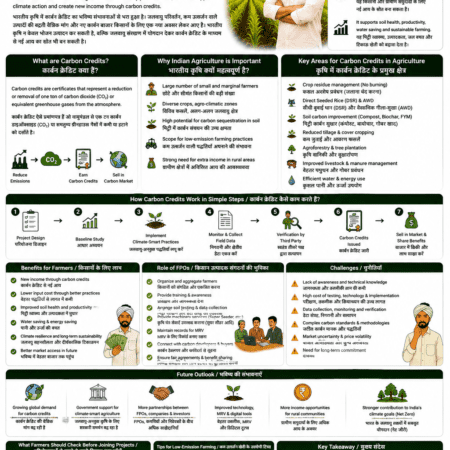
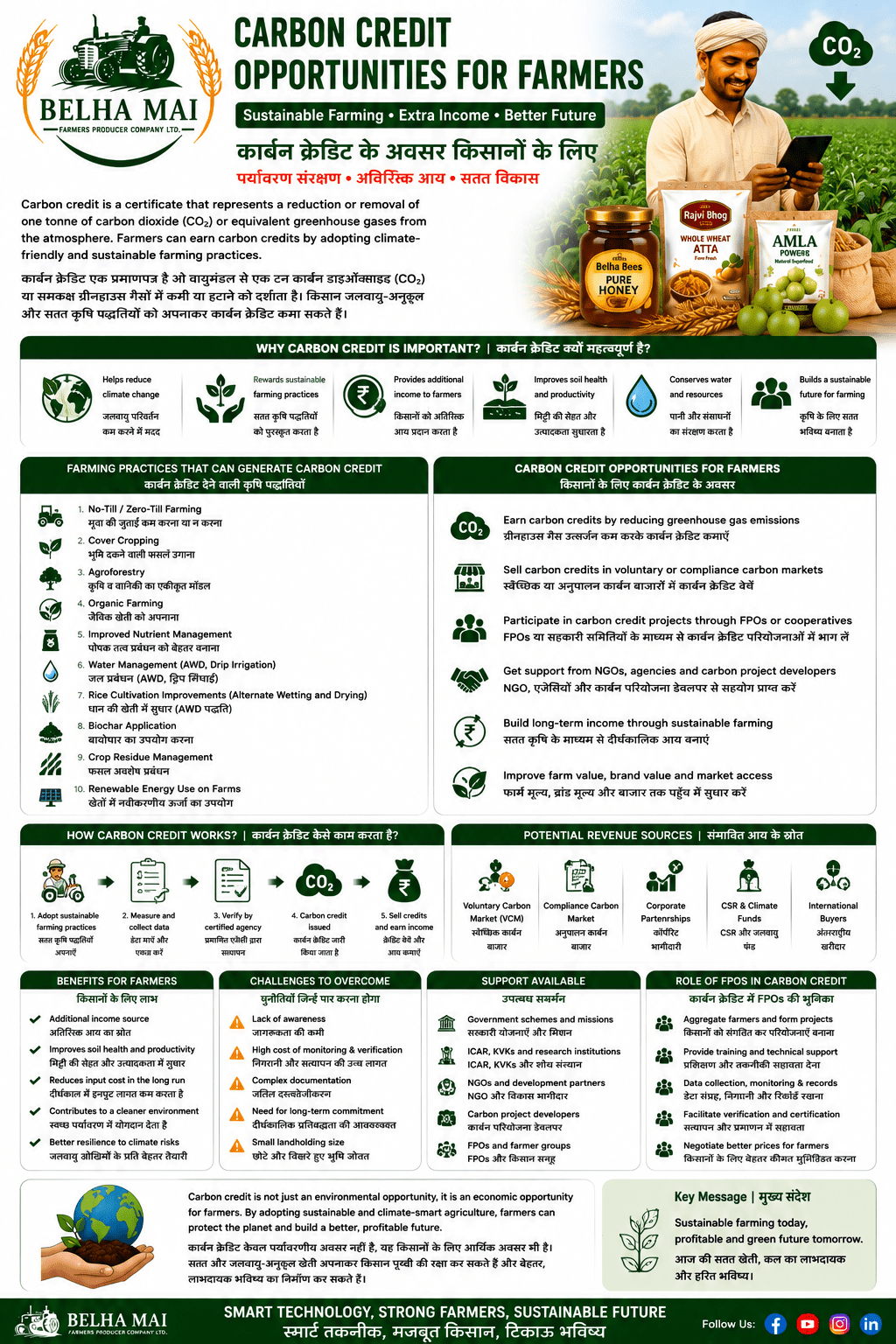
Carbon Credit Opportunities for Farmers are becoming important as the world searches for practical ways to reduce greenhouse gas emissions and promote sustainable agriculture. Farmers can play a major role in climate action because agriculture is directly connected with soil, water, crops, trees, livestock and land management.
किसानों के लिए कार्बन क्रेडिट के अवसर महत्वपूर्ण होते जा रहे हैं, क्योंकि दुनिया ग्रीनहाउस गैस उत्सर्जन को कम करने और सतत कृषि को बढ़ावा देने के व्यावहारिक तरीकों की तलाश कर रही है। किसान जलवायु कार्रवाई में बड़ी भूमिका निभा सकते हैं, क्योंकि कृषि सीधे मिट्टी, पानी, फसल, पेड़, पशुधन और भूमि प्रबंधन से जुड़ी होती है।
A carbon credit is generally linked with the reduction, removal or avoidance of greenhouse gas emissions. When farmers adopt climate-friendly practices that store carbon in soil or trees, reduce emissions or save resources, they may become part of carbon credit projects.
कार्बन क्रेडिट सामान्यतः ग्रीनहाउस गैस उत्सर्जन को कम करने, हटाने या रोकने से जुड़ा होता है। जब किसान ऐसी जलवायु-अनुकूल कृषि पद्धतियाँ अपनाते हैं जो मिट्टी या पेड़ों में कार्बन संग्रहित करती हैं, उत्सर्जन कम करती हैं या संसाधन बचाती हैं, तो वे कार्बन क्रेडिट परियोजनाओं का हिस्सा बन सकते हैं।
For small farmers, carbon credit income is usually difficult to access individually. FPOs can play an important role by aggregating farmers, collecting data, coordinating projects, supporting verification and connecting farmers with carbon market partners.
छोटे किसानों के लिए व्यक्तिगत रूप से कार्बन क्रेडिट से आय प्राप्त करना सामान्यतः कठिन होता है। FPOs किसानों को संगठित करके, आँकड़े एकत्र करके, परियोजनाओं का समन्वय करके, सत्यापन में सहायता देकर और किसानों को कार्बन बाजार के भागीदारों से जोड़कर महत्वपूर्ण भूमिका निभा सकते हैं।
What Is a Carbon Credit
A carbon credit is a certificate or tradable unit that represents a measured reduction or removal of greenhouse gas emissions. In simple words, if a project reduces or removes one tonne of carbon dioxide or equivalent greenhouse gas, it may generate one carbon credit, subject to proper rules and verification.
कार्बन क्रेडिट एक प्रमाणपत्र या व्यापार योग्य इकाई है, जो ग्रीनहाउस गैस उत्सर्जन में मापी गई कमी या हटाने को दर्शाती है। सरल शब्दों में, यदि कोई परियोजना एक टन कार्बन डाइऑक्साइड या उसके बराबर ग्रीनहाउस गैस को कम करती है या हटाती है, तो सही नियमों और सत्यापन के आधार पर एक कार्बन क्रेडिट बन सकता है।
In agriculture, carbon credits may come from improved soil management, agroforestry, reduced tillage, crop residue management, water-saving practices, methane reduction and renewable energy use.
कृषि में कार्बन क्रेडिट बेहतर मिट्टी प्रबंधन, कृषि वानिकी, कम जुताई, फसल अवशेष प्रबंधन, जल-बचत पद्धतियों, मीथेन उत्सर्जन में कमी और नवीकरणीय ऊर्जा के उपयोग से प्राप्त हो सकते हैं।
However, carbon credits are not automatic. They require proper project design, baseline measurement, farmer participation, monitoring, verification and market linkage.
हालाँकि कार्बन क्रेडिट अपने-आप नहीं मिलते। इसके लिए सही परियोजना डिजाइन, आधारभूत माप, किसानों की भागीदारी, निगरानी, सत्यापन और बाजार संपर्क की आवश्यकता होती है।
Why Carbon Credits Matter for Farmers
Carbon Credit Opportunities for Farmers matter because they can create an additional income source while promoting sustainable agriculture. Farmers can be rewarded for practices that improve soil health, save water, reduce emissions and protect the environment.
किसानों के लिए कार्बन क्रेडिट के अवसर इसलिए महत्वपूर्ण हैं क्योंकि वे सतत कृषि को बढ़ावा देते हुए अतिरिक्त आय का स्रोत बना सकते हैं। किसानों को ऐसी पद्धतियों के लिए प्रोत्साहन मिल सकता है जो मिट्टी की सेहत सुधारती हैं, पानी बचाती हैं, उत्सर्जन कम करती हैं और पर्यावरण की रक्षा करती हैं।
Many climate-friendly farming practices also improve farm productivity in the long term. Better soil organic matter, water conservation and crop diversity can make farming more resilient.
कई जलवायु-अनुकूल कृषि पद्धतियाँ लंबे समय में खेत की उत्पादकता भी सुधारती हैं। बेहतर मिट्टी में जैविक पदार्थ, जल संरक्षण और फसल विविधता खेती को अधिक मजबूत बना सकते हैं।
For FPOs, carbon credit projects can create new business opportunities, strengthen farmer services and improve the organisation’s role in climate-smart rural development.
FPOs के लिए कार्बन क्रेडिट परियोजनाएँ नए व्यावसायिक अवसर बना सकती हैं, किसान सेवाओं को मजबूत कर सकती हैं और जलवायु-स्मार्ट ग्रामीण विकास में संगठन की भूमिका को बेहतर बना सकती हैं।
Agriculture and Climate Change
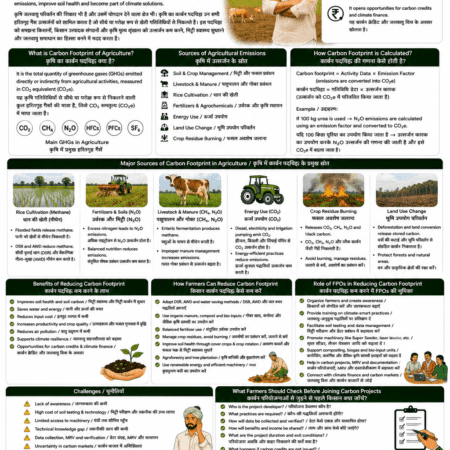
Agriculture is affected by climate change through irregular rainfall, drought, flood, heat stress, pest attacks and changing growing seasons. At the same time, agriculture can also contribute to climate solutions through better land and resource management.
कृषि जलवायु परिवर्तन से अनियमित वर्षा, सूखा, बाढ़, गर्मी के तनाव, कीट प्रकोप और बदलते मौसम चक्रों के माध्यम से प्रभावित होती है। साथ ही कृषि बेहतर भूमि और संसाधन प्रबंधन के माध्यम से जलवायु समाधान में भी योगदान दे सकती है।
Farmers can reduce emissions by using resources more efficiently and can remove carbon from the atmosphere by increasing carbon storage in soil and trees.
किसान संसाधनों का अधिक कुशल उपयोग करके उत्सर्जन कम कर सकते हैं और मिट्टी तथा पेड़ों में कार्बन संग्रहण बढ़ाकर वातावरण से कार्बन हटाने में मदद कर सकते हैं।
This is why carbon credit systems are increasingly looking at agriculture as an important area for climate action.
इसी कारण कार्बन क्रेडिट व्यवस्था कृषि को जलवायु कार्रवाई के महत्वपूर्ण क्षेत्र के रूप में देख रही है।
Soil Carbon Improvement
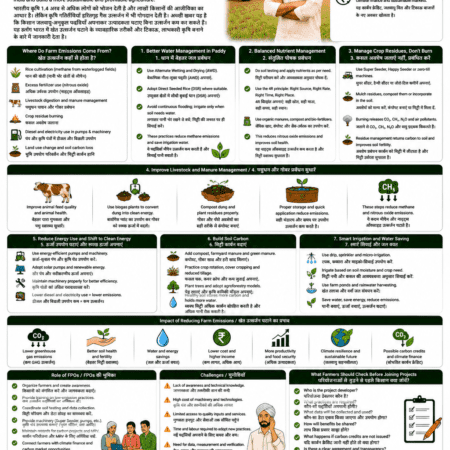
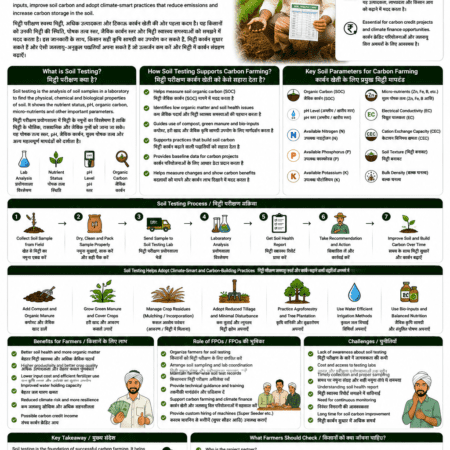
Soil carbon improvement is one of the key opportunities for farmers. Healthy soil stores organic carbon, improves fertility, holds moisture and supports better crop growth.
मिट्टी में कार्बन सुधार किसानों के लिए प्रमुख अवसरों में से एक है। स्वस्थ मिट्टी जैविक कार्बन को संग्रहित करती है, उर्वरता बढ़ाती है, नमी को बनाए रखती है और फसल वृद्धि को बेहतर बनाती है।
Farmers can improve soil carbon through organic matter addition, compost, farmyard manure, green manuring, cover crops, crop rotation and reduced soil disturbance.
किसान जैविक पदार्थ, compost, गोबर खाद, हरी खाद, cover crops, crop rotation और मिट्टी की कम छेड़छाड़ के माध्यम से मिट्टी में कार्बन सुधार सकते हैं।
When soil carbon increases over time and is properly measured, it may become part of a carbon credit project.
जब समय के साथ मिट्टी में कार्बन बढ़ता है और उसका सही माप किया जाता है, तो वह कार्बन क्रेडिट परियोजना का हिस्सा बन सकता है।
Agroforestry and Tree Plantation
Agroforestry is a strong opportunity for carbon credits because trees absorb carbon dioxide and store carbon in biomass and soil. Farmers can integrate trees with crops, boundaries, orchards or degraded land.
कृषि वानिकी कार्बन क्रेडिट के लिए मजबूत अवसर है, क्योंकि पेड़ कार्बन डाइऑक्साइड को अवशोषित करते हैं और जैविक द्रव्य तथा मिट्टी में कार्बन संग्रहित करते हैं। किसान पेड़ों को फसलों, खेत की सीमाओं, बागों या अनुपयोगी भूमि के साथ जोड़ सकते हैं।
Tree-based farming can also provide additional benefits such as timber, fruits, fodder, shade, biodiversity, soil protection and long-term farm value.
पेड़-आधारित खेती लकड़ी, फल, चारा, छाया, जैव विविधता, मिट्टी संरक्षण और खेत के दीर्घकालिक मूल्य जैसे अतिरिक्त लाभ भी दे सकती है।
For FPOs, agroforestry projects can be planned collectively so that many farmers participate and carbon benefits can be measured at scale.
FPOs के लिए कृषि वानिकी परियोजनाएँ सामूहिक रूप से बनाई जा सकती हैं, ताकि कई किसान भाग लें और कार्बन लाभों को बड़े स्तर पर मापा जा सके।
No-Till and Reduced Tillage Farming
No-till and reduced tillage farming reduce soil disturbance. When soil is disturbed less, it can help protect soil structure, reduce erosion and support carbon storage.
बिना जुताई और कम जुताई वाली खेती मिट्टी की छेड़छाड़ को कम करती है। जब मिट्टी को कम disturbed किया जाता है, तो इससे मिट्टी की संरचना सुरक्षित रहती है, कटाव कम होता है और carbon storage को support मिलता है।
These practices may also reduce fuel use and labour cost because farmers do not need to plough the field repeatedly.
ये पद्धतियाँ fuel use और labour cost भी कम कर सकती हैं, क्योंकि किसानों को बार-बार खेत की जुताई नहीं करनी पड़ती।
For carbon credit projects, such practices need proper documentation, monitoring and evidence over time.
कार्बन क्रेडिट परियोजनाओं के लिए ऐसी पद्धतियों के सही documentation, monitoring और समय के साथ evidence की आवश्यकता होती है।
Crop Residue Management
Crop residue management is important because burning crop residues releases greenhouse gases and creates air pollution. Managing residues properly can reduce emissions and improve soil health.
फसल अवशेष प्रबंधन महत्वपूर्ण है क्योंकि अवशेष जलाने से ग्रीनहाउस गैसों का उत्सर्जन होता है और वायु प्रदूषण बढ़ता है। अवशेषों का सही प्रबंधन उत्सर्जन कम कर सकता है और मिट्टी की सेहत सुधार सकता है।
Farmers can use crop residues as mulch, compost, animal bedding, biochar or raw material for other value-added uses.
किसान फसल अवशेषों का उपयोग mulch, compost, पशु बिछावन, biochar या अन्य मूल्य-वर्धित उपयोगों के लिए raw material के रूप में कर सकते हैं।
FPOs can support residue management through machinery services, farmer training, awareness campaigns and linkages with biomass-based enterprises.
FPOs machinery services, farmer training, awareness campaigns और biomass-based enterprises से संपर्क के माध्यम से फसल अवशेष प्रबंधन को support कर सकते हैं।
Water Management and Methane Reduction
Water management can create carbon credit opportunities, especially in crops where water use affects emissions. In paddy cultivation, improved water management practices can help reduce methane emissions.
जल प्रबंधन कार्बन क्रेडिट के अवसर बना सकता है, विशेष रूप से उन फसलों में जहाँ पानी का उपयोग उत्सर्जन को प्रभावित करता है। धान की खेती में बेहतर जल प्रबंधन पद्धतियाँ मीथेन उत्सर्जन को कम करने में मदद कर सकती हैं।
Practices such as alternate wetting and drying may reduce water use and emissions when applied properly under suitable conditions.
उपयुक्त परिस्थितियों में सही तरीके से अपनाई गई alternate wetting and drying जैसी पद्धतियाँ पानी के उपयोग और उत्सर्जन को कम कर सकती हैं।
FPOs working with paddy farmers can explore carbon projects linked with water-saving practices, but technical guidance and proper measurement are necessary.
धान किसानों के साथ काम करने वाले FPOs जल-बचत पद्धतियों से जुड़े carbon projects explore कर सकते हैं, लेकिन तकनीकी मार्गदर्शन और सही measurement आवश्यक है।
Organic and Natural Farming Practices
Organic and natural farming practices may support carbon credit opportunities when they improve soil health, reduce chemical dependency and increase organic matter.
Organic और natural farming practices मिट्टी की सेहत सुधारने, रासायनिक निर्भरता कम करने और जैविक पदार्थ बढ़ाने पर कार्बन क्रेडिट अवसरों को support कर सकती हैं।
However, carbon credits depend on measurable climate impact, not only on the name of the farming system. Practices must be documented and verified.
हालाँकि कार्बन क्रेडिट केवल farming system के नाम पर नहीं, बल्कि measurable climate impact पर निर्भर करते हैं। Practices का documentation और verification आवश्यक है।
Farmers should focus on real soil improvement, biodiversity, composting, residue management and efficient input use.
किसानों को वास्तविक soil improvement, biodiversity, composting, residue management और efficient input use पर ध्यान देना चाहिए।
Biochar and Compost
Biochar and compost can help improve soil quality and carbon storage. Biochar is a carbon-rich material produced from biomass under controlled conditions.
Biochar और compost मिट्टी की गुणवत्ता और carbon storage को सुधारने में मदद कर सकते हैं। Biochar biomass से नियंत्रित परिस्थितियों में तैयार किया गया carbon-rich material है।
Compost adds organic matter to soil and improves microbial activity, soil structure and nutrient availability.
Compost मिट्टी में जैविक पदार्थ जोड़ता है और microbial activity, soil structure तथा nutrient availability को सुधारता है।
When properly measured and used in a verified system, such practices may support climate-smart farming and carbon credit possibilities.
यदि सही तरीके से मापा जाए और verified system में उपयोग किया जाए, तो ऐसी practices climate-smart farming और carbon credit possibilities को support कर सकती हैं।
Renewable Energy Use on Farms
Renewable energy use on farms can reduce emissions from diesel and conventional electricity. Solar pumps, solar dryers, solar cold rooms and renewable-powered processing units can support low-carbon agriculture.
खेतों में renewable energy का उपयोग diesel और पारंपरिक electricity से होने वाले उत्सर्जन को कम कर सकता है। Solar pumps, solar dryers, solar cold rooms और renewable-powered processing units low-carbon agriculture को support कर सकते हैं।
For FPOs, renewable energy can reduce operating costs and improve sustainability in storage, irrigation, food processing and rural enterprise activities.
FPOs के लिए renewable energy storage, irrigation, food processing और rural enterprise activities में operating costs कम कर सकती है और sustainability को सुधार सकती है।
Such projects may also become part of climate finance or carbon-linked opportunities when properly designed.
ऐसी परियोजनाएँ सही तरीके से design होने पर climate finance या carbon-linked opportunities का हिस्सा बन सकती हैं।
How Carbon Credit Projects Work
A carbon credit project usually starts with project design. The project defines the farming practice, farmer area, expected emission reduction, monitoring method and verification process.
कार्बन क्रेडिट परियोजना सामान्यतः project design से शुरू होती है। Project farming practice, farmer area, expected emission reduction, monitoring method और verification process को define करता है।
The next step is baseline measurement. This means understanding what would have happened without the project and comparing it with the improved practice.
अगला कदम baseline measurement है। इसका अर्थ है यह समझना कि project के बिना क्या होता और उसकी तुलना improved practice से करना।
After monitoring and verification by approved systems or agencies, carbon credits may be issued and sold in suitable markets.
Approved systems या agencies द्वारा monitoring और verification के बाद carbon credits जारी किए जा सकते हैं और suitable markets में बेचे जा सकते हैं।
Role of Measurement and Verification
Measurement and verification are the backbone of carbon credit projects. Without proper measurement, it is difficult to prove that carbon reduction or removal has actually happened.
Measurement और verification carbon credit projects की backbone हैं। Proper measurement के बिना यह साबित करना कठिन है कि carbon reduction या removal वास्तव में हुआ है।
Farm data, satellite data, soil samples, field records, photographs, farmer declarations and third-party verification may be used depending on the project type.
Project type के अनुसार farm data, satellite data, soil samples, field records, photographs, farmer declarations और third-party verification का उपयोग किया जा सकता है।
FPOs can help maintain records and coordinate with project developers, technical agencies and farmers.
FPOs records maintain करने और project developers, technical agencies तथा farmers के साथ coordination करने में मदद कर सकते हैं।
Why Individual Farmers Need Aggregation
Individual small farmers may not have enough land, data, technical capacity or market access to participate directly in carbon credit markets.
छोटे individual farmers के पास carbon credit markets में सीधे भाग लेने के लिए पर्याप्त land, data, technical capacity या market access नहीं हो सकता।
Aggregation helps combine many farmers into one project. This makes measurement, verification and market linkage more practical.
Aggregation कई किसानों को एक project में जोड़ने में मदद करता है। इससे measurement, verification और market linkage अधिक practical बनते हैं।
FPOs are well-positioned to aggregate farmers because they already work with farmer members, local crops and rural business systems.
FPOs farmers को aggregate करने के लिए अच्छी स्थिति में होते हैं क्योंकि वे पहले से farmer members, local crops और rural business systems के साथ काम करते हैं।
Role of FPOs in Carbon Credit Projects
FPOs can play an important role in carbon credit projects by mobilising farmers, explaining practices, collecting data, maintaining records and coordinating project implementation.
FPOs farmers को mobilise करके, practices समझाकर, data collect करके, records maintain करके और project implementation का coordination करके carbon credit projects में महत्वपूर्ण भूमिका निभा सकते हैं।
They can also help ensure that farmers understand project terms, payment mechanisms, responsibilities and long-term commitments.
वे यह सुनिश्चित करने में भी मदद कर सकते हैं कि farmers project terms, payment mechanisms, responsibilities और long-term commitments को समझें।
A strong FPO can protect farmer interests and prevent unfair agreements in carbon credit projects.
मजबूत FPO farmers के हितों की रक्षा कर सकता है और carbon credit projects में unfair agreements से बचाने में मदद कर सकता है।
Potential Income from Carbon Credits
Carbon credit income can become an additional income source for farmers, but it should not be treated as guaranteed income. Income depends on project type, carbon price, verification cost, farmer area, practice adoption and market demand.
Carbon credit income किसानों के लिए additional income source बन सकती है, लेकिन इसे guaranteed income नहीं समझना चाहिए। Income project type, carbon price, verification cost, farmer area, practice adoption और market demand पर निर्भर करती है।
Some projects may generate small payments, while others may become more attractive when implemented at scale.
कुछ projects छोटे payments दे सकते हैं, जबकि कुछ projects बड़े स्तर पर लागू होने पर अधिक attractive हो सकते हैं।
Farmers and FPOs should carefully understand the payment model before joining any carbon credit project.
Farmers और FPOs को किसी भी carbon credit project से जुड़ने से पहले payment model को सावधानी से समझना चाहिए।
Challenges in Carbon Credit Opportunities
Carbon credit projects can be complex. Challenges include lack of awareness, high monitoring cost, technical documentation, verification requirements, long project duration and uncertainty in market prices.
Carbon credit projects complex हो सकते हैं। Challenges में awareness की कमी, high monitoring cost, technical documentation, verification requirements, long project duration और market prices की uncertainty शामिल हैं।
Small farmers may find it difficult to understand carbon calculations, contracts and verification rules.
Small farmers के लिए carbon calculations, contracts और verification rules को समझना कठिन हो सकता है।
This is why FPOs, NGOs, technical agencies and trusted project developers are important for making carbon opportunities practical for farmers.
इसी कारण FPOs, NGOs, technical agencies और trusted project developers farmers के लिए carbon opportunities को practical बनाने में महत्वपूर्ण हैं।
Avoiding False Promises
Farmers should be careful of false promises related to carbon credits. No farmer should believe claims of guaranteed high income without proper project details, written agreement and verification process.
किसानों को carbon credits से जुड़े false promises से सावधान रहना चाहिए। किसी भी किसान को proper project details, written agreement और verification process के बिना guaranteed high income के दावों पर विश्वास नहीं करना चाहिए।
A genuine carbon project should clearly explain the practice, duration, data requirement, payment method, deductions, verification cost and farmer obligations.
एक genuine carbon project में practice, duration, data requirement, payment method, deductions, verification cost और farmer obligations को स्पष्ट रूप से समझाया जाना चाहिए।
FPOs should review agreements carefully and take expert advice before joining any carbon credit programme.
FPOs को किसी भी carbon credit programme में शामिल होने से पहले agreements को सावधानी से review करना चाहिए और expert advice लेनी चाहिए।
Carbon Credits and Sustainable Farming
Carbon credits should not be seen only as a payment opportunity. They should be connected with long-term sustainable farming and soil health improvement.
Carbon credits को केवल payment opportunity के रूप में नहीं देखना चाहिए। इन्हें long-term sustainable farming और soil health improvement से जोड़ना चाहिए।
If farmers adopt practices only for short-term payment without understanding the benefits, the project may not become sustainable.
यदि किसान केवल short-term payment के लिए practices अपनाते हैं और benefits को नहीं समझते, तो project sustainable नहीं बन सकता।
The best carbon credit projects are those that improve farmer income, soil health, water use, biodiversity and climate resilience together.
सबसे अच्छे carbon credit projects वे होते हैं जो farmer income, soil health, water use, biodiversity और climate resilience को एक साथ सुधारते हैं।
Carbon Credits and Food Processing
Carbon credit opportunities can also connect with food processing and value chains. Sustainable farming practices can improve the environmental value of farmer-led brands.
Carbon credit opportunities food processing और value chains से भी जुड़ सकते हैं। Sustainable farming practices farmer-led brands की environmental value को बढ़ा सकती हैं।
If products like Rajvi Bhog atta, Belha Bees honey, amla products and mango products are linked with sustainable farming stories, they can gain stronger brand trust.
यदि Rajvi Bhog atta, Belha Bees honey, amla products और mango products को sustainable farming stories से जोड़ा जाए, तो वे stronger brand trust प्राप्त कर सकते हैं।
This can support premium positioning, institutional supply, buyer confidence and export readiness in the long term.
यह long term में premium positioning, institutional supply, buyer confidence और export readiness को support कर सकता है।
Carbon Credits and Agroforestry Products
Agroforestry can create both carbon and product value. Trees planted on farms can provide fruits, timber, fodder, shade and carbon storage.
Agroforestry carbon value और product value दोनों बना सकती है। खेतों में लगाए गए पेड़ fruits, timber, fodder, shade और carbon storage प्रदान कर सकते हैं।
Farmers may benefit from both regular farm production and long-term tree-based income.
Farmers regular farm production और long-term tree-based income दोनों से लाभ प्राप्त कर सकते हैं।
FPOs can develop agroforestry models linked with nursery services, farmer training, tree plantation records and carbon project aggregation.
FPOs nursery services, farmer training, tree plantation records और carbon project aggregation से जुड़े agroforestry models विकसित कर सकते हैं।
Carbon Credits and Water Conservation
Water conservation practices can support climate-smart agriculture and may be linked with carbon or climate finance in suitable projects.
Water conservation practices climate-smart agriculture को support कर सकती हैं और suitable projects में carbon या climate finance से जुड़ सकती हैं।
Drip irrigation, sprinkler irrigation, alternate wetting and drying, farm ponds, mulching and soil moisture conservation can reduce water stress and improve productivity.
Drip irrigation, sprinkler irrigation, alternate wetting and drying, farm ponds, mulching और soil moisture conservation water stress कम कर सकते हैं और productivity सुधार सकते हैं।
FPOs can promote water-saving practices as part of wider carbon and sustainability planning.
FPOs water-saving practices को wider carbon और sustainability planning के हिस्से के रूप में promote कर सकते हैं।
Digital Tools for Carbon Projects
Digital tools are important for carbon credit projects because data and records are essential. Mobile apps, satellite images, farm mapping, QR codes and digital farmer records can support monitoring.
Carbon credit projects के लिए digital tools महत्वपूर्ण हैं क्योंकि data और records आवश्यक होते हैं। Mobile apps, satellite images, farm mapping, QR codes और digital farmer records monitoring को support कर सकते हैं।
Digital records can help prove which farmer adopted which practice, on which field and for how long.
Digital records यह साबित करने में मदद कर सकते हैं कि किस farmer ने कौन-सी practice, किस field में और कितने समय तक अपनाई।
For FPOs, digital systems can make carbon project management more transparent and organised.
FPOs के लिए digital systems carbon project management को अधिक transparent और organised बना सकते हैं।
Steps for Farmers to Prepare
Farmers should first learn about carbon-friendly farming practices and understand which practices are suitable for their land, crop and water situation.
Farmers को सबसे पहले carbon-friendly farming practices के बारे में सीखना चाहिए और यह समझना चाहिए कि कौन-सी practices उनकी land, crop और water situation के लिए suitable हैं।
They should maintain records of crop practices, tree plantation, residue management, irrigation, compost use and input application.
उन्हें crop practices, tree plantation, residue management, irrigation, compost use और input application के records maintain करने चाहिए।
Farmers should preferably join carbon projects through trusted FPOs, cooperatives, NGOs or credible project developers.
Farmers को बेहतर होगा कि वे trusted FPOs, cooperatives, NGOs या credible project developers के माध्यम से carbon projects से जुड़ें।
Steps for FPOs to Prepare
FPOs should identify suitable practices for their farmer members. They should study whether agroforestry, reduced tillage, residue management, water conservation or soil carbon projects are practical in their area.
FPOs को अपने farmer members के लिए suitable practices identify करनी चाहिए। उन्हें अध्ययन करना चाहिए कि उनके क्षेत्र में agroforestry, reduced tillage, residue management, water conservation या soil carbon projects practical हैं या नहीं।
The FPO should build farmer awareness, collect baseline data, maintain digital records and work with credible technical partners.
FPO को farmer awareness बनानी चाहिए, baseline data collect करना चाहिए, digital records maintain करने चाहिए और credible technical partners के साथ काम करना चाहिए।
Before signing any agreement, the FPO should understand project duration, payment sharing, verification cost, farmer obligations and data ownership.
किसी भी agreement पर sign करने से पहले FPO को project duration, payment sharing, verification cost, farmer obligations और data ownership समझना चाहिए।
Belha Mai FPO Vision for Carbon Credit Opportunities
Belha Mai Farmers Producer Company Ltd. understands that carbon credit opportunities can support farmers only when they are linked with real sustainable farming practices and transparent systems.
Belha Mai Farmers Producer Company Ltd. समझता है कि carbon credit opportunities किसानों को तभी support कर सकती हैं जब वे वास्तविक sustainable farming practices और transparent systems से जुड़ी हों।
For Belha Mai FPO, carbon opportunities can be explored through agroforestry, soil health improvement, residue management, water conservation, high-tech nursery, sustainable food processing and digital traceability.
Belha Mai FPO के लिए carbon opportunities को agroforestry, soil health improvement, residue management, water conservation, high-tech nursery, sustainable food processing और digital traceability के माध्यम से explore किया जा सकता है।
The aim should be to create farmer benefit, protect the environment, improve soil health and build a stronger climate-smart rural economy.
लक्ष्य farmer benefit बनाना, पर्यावरण की रक्षा करना, soil health सुधारना और मजबूत climate-smart rural economy बनाना होना चाहिए।
Conclusion
Carbon Credit Opportunities for Farmers can become an important part of sustainable agriculture, but they require awareness, proper practices, data, verification and trusted partnerships.
किसानों के लिए carbon credit opportunities sustainable agriculture का महत्वपूर्ण हिस्सा बन सकती हैं, लेकिन इनके लिए awareness, proper practices, data, verification और trusted partnerships की आवश्यकता होती है।
Farmers can generate climate benefits through agroforestry, soil carbon improvement, residue management, water conservation, renewable energy and climate-smart farming.
Farmers agroforestry, soil carbon improvement, residue management, water conservation, renewable energy और climate-smart farming के माध्यम से climate benefits generate कर सकते हैं।
In the future of the Food Processing Industry in India, FPOs that combine sustainable farming, carbon opportunities, traceability and value addition can build stronger farmer-led brands and greener rural businesses.
Food Processing Industry in India के भविष्य में वे FPOs stronger farmer-led brands और greener rural businesses बना सकते हैं जो sustainable farming, carbon opportunities, traceability और value addition को साथ लेकर चलेंगे।
FAQ
What are Carbon Credit Opportunities for Farmers?
Carbon Credit Opportunities for Farmers are opportunities where farmers may earn additional income by adopting verified climate-friendly practices that reduce or remove greenhouse gas emissions.
किसानों के लिए कार्बन क्रेडिट के अवसर वे अवसर हैं जिनमें किसान verified climate-friendly practices अपनाकर greenhouse gas emissions को कम करने या हटाने के बदले additional income प्राप्त कर सकते हैं।
Which farming practices can generate carbon credits?
Practices such as agroforestry, reduced tillage, soil carbon improvement, crop residue management, water-saving practices, composting, biochar and renewable energy use may support carbon credit projects.
Agroforestry, reduced tillage, soil carbon improvement, crop residue management, water-saving practices, composting, biochar और renewable energy use जैसी practices carbon credit projects को support कर सकती हैं।
Can small farmers earn carbon credits individually?
Small farmers may find it difficult to access carbon credits individually because measurement, verification and market linkage require scale and technical support.
Small farmers के लिए individually carbon credits access करना कठिन हो सकता है क्योंकि measurement, verification और market linkage के लिए scale और technical support की आवश्यकता होती है।
How can FPOs help farmers in carbon credit projects?
FPOs can help by aggregating farmers, creating awareness, collecting data, maintaining records, coordinating verification and connecting farmers with credible project developers.
FPOs farmers को aggregate करके, awareness बनाकर, data collect करके, records maintain करके, verification coordinate करके और farmers को credible project developers से जोड़कर मदद कर सकते हैं।
Is carbon credit income guaranteed?
Carbon credit income is not guaranteed. It depends on project design, practice adoption, verification, carbon price, market demand and payment terms.
Carbon credit income guaranteed नहीं होती। यह project design, practice adoption, verification, carbon price, market demand और payment terms पर निर्भर करती है।
Why should farmers be careful in carbon projects?
Farmers should be careful because some projects may make false promises. Farmers and FPOs should check agreements, payment models, verification rules and project credibility before joining.
Farmers को careful रहना चाहिए क्योंकि कुछ projects false promises कर सकते हैं। Farmers और FPOs को जुड़ने से पहले agreements, payment models, verification rules और project credibility check करनी चाहिए।
Internal Links Section
👉 Food Processing Industry in India: Complete Guide
👉 Digital Platforms for Farmers in India
👉 Precision Agriculture Explained
👉 IoT in Farming: Applications and Benefits
👉 Risk Management in Agriculture Business
👉 Traceability in Agriculture: Farm to Fork Explained
👉 Sustainable Development Goals and Agriculture
External Authority Links
👉 Ministry of Environment, Forest and Climate Change
👉 Bureau of Energy Efficiency – Carbon Market
👉 Ministry of Agriculture & Farmers Welfare
👉 FAO Climate-Smart Agriculture
👉 United Nations Climate Change
👉 ICAR – Indian Council of Agricultural Research
Follow Belha Mai FPO for More Updates
Stay connected with Belha Mai Farmers Producer Company Ltd. for more updates on agriculture, food processing, farmer development, FPO awareness, market linkage, value addition, rural entrepreneurship and sustainable farming.
कृषि, खाद्य प्रसंस्करण, किसान विकास, FPO जागरूकता, बाजार संपर्क, मूल्य संवर्धन, ग्रामीण उद्यमिता और सतत खेती से जुड़ी जानकारी के लिए Belha Mai Farmers Producer Company Ltd. से जुड़े रहें।
👉 Website
👉 YouTube
Belha Mai FPO is committed to supporting farmers through better information, technology, market linkage, value addition, FPO awareness and rural development.
Belha Mai FPO बेहतर जानकारी, तकनीक, बाजार संपर्क, मूल्य संवर्धन, FPO जागरूकता और ग्रामीण विकास के माध्यम से किसानों को सहयोग देने के लिए प्रतिबद्ध है।