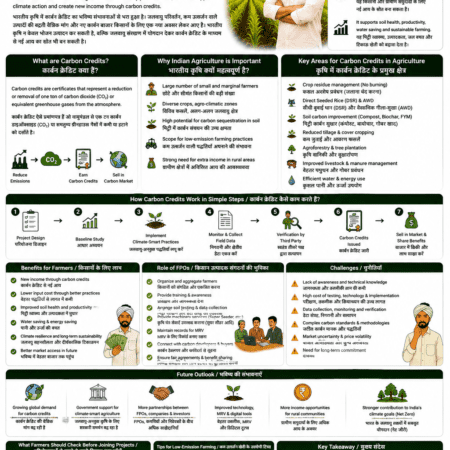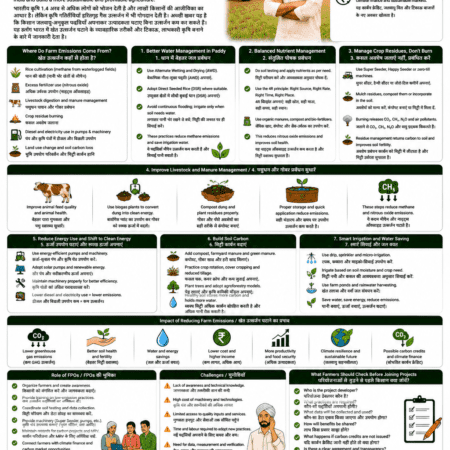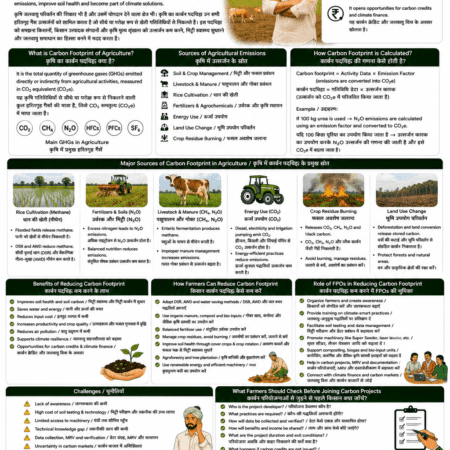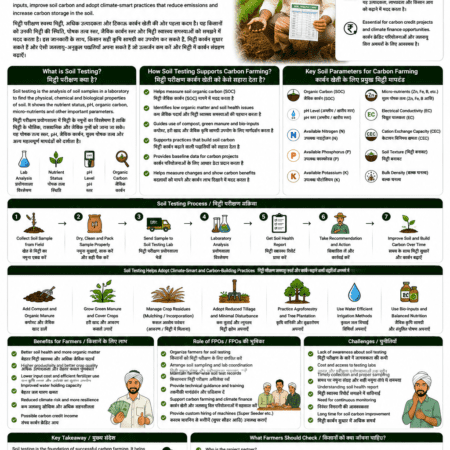
कृषि में कार्बन क्रेडिट प्रमाणन प्रक्रिया
Introduction / परिचय
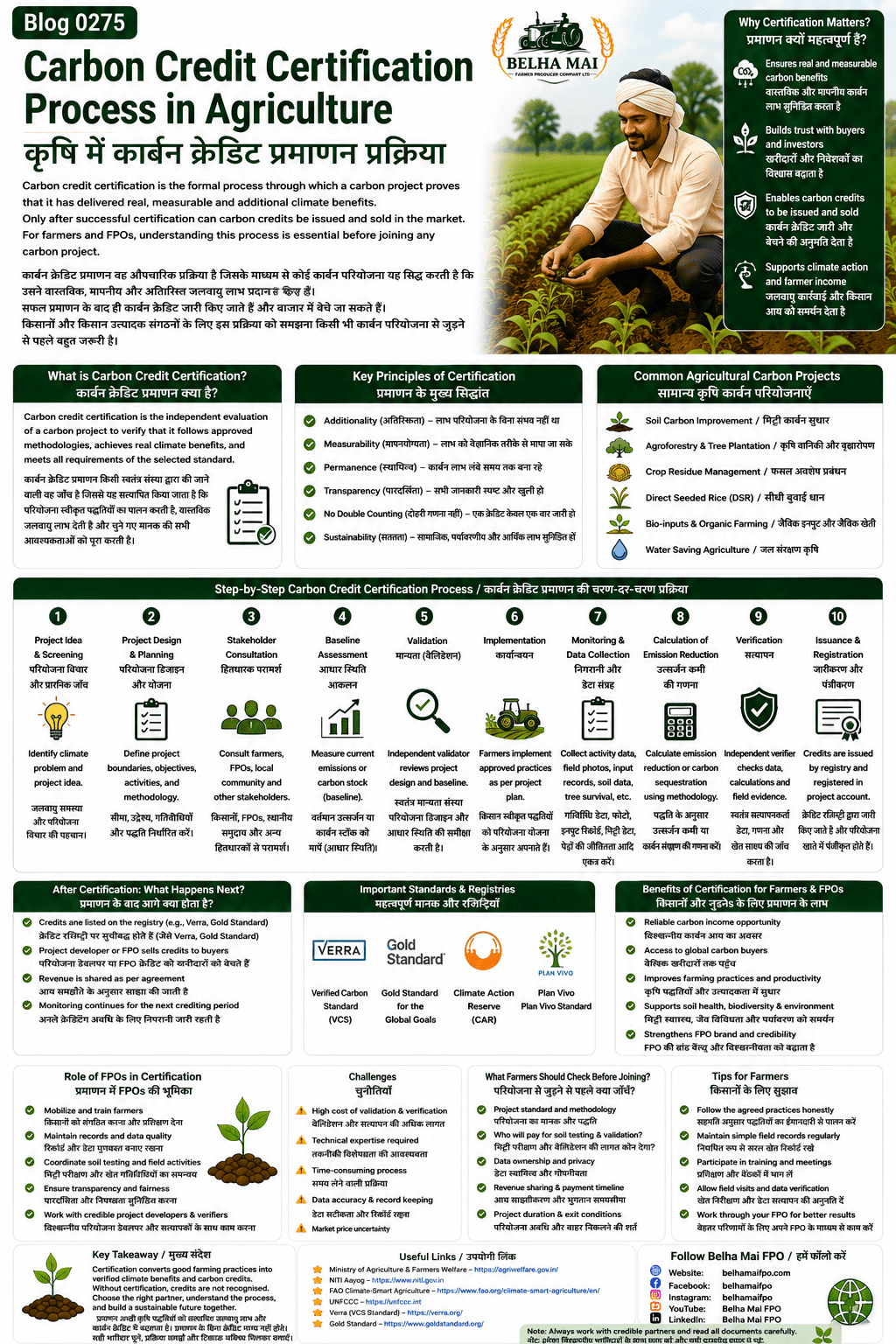
Carbon credit certification process in agriculture is the formal process through which an agricultural carbon project proves that it has created real, measurable, additional, and verified climate benefits. Farmers may adopt practices like tree plantation, agroforestry, crop residue management, Direct Seeded Rice, soil carbon improvement, organic farming, natural farming, bio-inputs, composting, and water-saving agriculture, but carbon credits can be issued only when these benefits are certified under a recognised system.
कृषि में कार्बन क्रेडिट प्रमाणन प्रक्रिया वह औपचारिक प्रक्रिया है जिसके माध्यम से कृषि आधारित कार्बन परियोजना यह सिद्ध करती है कि उसने वास्तविक, मापने योग्य, अतिरिक्त और सत्यापित जलवायु लाभ बनाए हैं। किसान वृक्षारोपण, कृषि वानिकी, फसल अवशेष प्रबंधन, सीधी बुवाई धान, मिट्टी कार्बन सुधार, जैविक खेती, प्राकृतिक खेती, जैविक कृषि सामग्री, कंपोस्ट और जल बचत कृषि जैसी पद्धतियाँ अपना सकते हैं, लेकिन कार्बन क्रेडिट तभी जारी होते हैं जब इन लाभों को मान्यता प्राप्त व्यवस्था के अंतर्गत प्रमाणित किया जाता है।
The reason Carbon credit certification process in agriculture is important for farmers and FPOs is that certification converts sustainable farming actions into trusted carbon credits. Without certification, buyers cannot trust the climate benefit, and farmers cannot receive verified carbon income. Therefore, before joining any carbon project, farmers and Farmer Producer Organizations must understand how certification works, who verifies the project, what documents are needed, and how revenue sharing will happen.
कृषि में कार्बन क्रेडिट प्रमाणन प्रक्रिया किसानों और किसान उत्पादक संगठनों के लिए इसलिए महत्वपूर्ण है क्योंकि प्रमाणन टिकाऊ खेती के कार्यों को विश्वसनीय कार्बन क्रेडिट में बदलता है। प्रमाणन के बिना खरीदार जलवायु लाभ पर भरोसा नहीं कर सकते और किसानों को सत्यापित कार्बन आय नहीं मिल सकती। इसलिए किसी भी कार्बन परियोजना से जुड़ने से पहले किसानों और किसान उत्पादक संगठनों को यह समझना चाहिए कि प्रमाणन कैसे होता है, परियोजना का सत्यापन कौन करता है, कौन से दस्तावेज़ चाहिए और आय का बँटवारा कैसे होगा।
What is Carbon Credit Certification? / कार्बन क्रेडिट प्रमाणन क्या है?
Carbon credit certification is the process of checking, validating, monitoring, verifying, and approving a carbon project so that carbon credits can be issued. In agriculture, certification confirms that farmers have adopted approved climate-friendly practices and that these practices have created measurable emission reduction or carbon storage.
कार्बन क्रेडिट प्रमाणन वह प्रक्रिया है जिसमें किसी कार्बन परियोजना की जाँच, मान्यता, निगरानी, सत्यापन और स्वीकृति की जाती है, ताकि कार्बन क्रेडिट जारी किए जा सकें। कृषि में प्रमाणन यह पुष्टि करता है कि किसानों ने स्वीकृत जलवायु-अनुकूल पद्धतियाँ अपनाई हैं और इन पद्धतियों से मापने योग्य उत्सर्जन कमी या कार्बन संग्रहण बना है।
In simple words, Carbon credit certification process in agriculture is the proof system behind carbon credits. It ensures that carbon credits are not created through claims or promises, but through proper data, recognised methods, third-party verification, and accepted standards.
सरल शब्दों में, कृषि में कार्बन क्रेडिट प्रमाणन प्रक्रिया कार्बन क्रेडिट के पीछे की प्रमाण व्यवस्था है। यह सुनिश्चित करती है कि कार्बन क्रेडिट दावों या वादों से नहीं, बल्कि सही आँकड़ों, मान्यता प्राप्त पद्धतियों, स्वतंत्र सत्यापन और स्वीकार्य मानकों से बनें।
Why Certification Matters / प्रमाणन क्यों महत्वपूर्ण है
Certification matters because carbon credits represent verified climate benefits. A buyer pays for carbon credits only when there is confidence that the project has genuinely reduced emissions or increased carbon storage. Certification builds trust between farmers, FPOs, project developers, carbon standards, verification agencies, and buyers.
प्रमाणन इसलिए महत्वपूर्ण है क्योंकि कार्बन क्रेडिट सत्यापित जलवायु लाभों का प्रतिनिधित्व करते हैं। खरीदार कार्बन क्रेडिट के लिए भुगतान तभी करता है जब उसे विश्वास हो कि परियोजना ने वास्तव में उत्सर्जन कम किया है या कार्बन संग्रहण बढ़ाया है। प्रमाणन किसानों, किसान उत्पादक संगठनों, परियोजना विकासकर्ताओं, कार्बन मानकों, सत्यापन संस्थाओं और खरीदारों के बीच विश्वास बनाता है।
For farmers, Carbon credit certification process in agriculture is also a protection mechanism. If a project is not certified properly, credits may not be issued and income may not come. Certification helps prevent false promises and ensures that the project follows a recognised process.
किसानों के लिए कृषि में कार्बन क्रेडिट प्रमाणन प्रक्रिया सुरक्षा व्यवस्था भी है। यदि परियोजना का सही प्रमाणन नहीं होता, तो क्रेडिट जारी नहीं हो सकते और आय नहीं आ सकती। प्रमाणन झूठे वादों से बचाने में मदद करता है और यह सुनिश्चित करता है कि परियोजना मान्यता प्राप्त प्रक्रिया का पालन करे।
Key Principles of Carbon Credit Certification / कार्बन क्रेडिट प्रमाणन के मुख्य सिद्धांत
The first principle is additionality. Additionality means that the climate benefit should be extra and should not have happened without the carbon project. For example, if farmers were already planting trees or avoiding residue burning before the project, the project must clearly prove what additional improvement has happened because of the project.
पहला सिद्धांत अतिरिक्तता है। अतिरिक्तता का अर्थ है कि जलवायु लाभ अतिरिक्त होना चाहिए और कार्बन परियोजना के बिना नहीं हुआ होता। उदाहरण के लिए, यदि किसान परियोजना से पहले ही पेड़ लगा रहे थे या फसल अवशेष नहीं जला रहे थे, तो परियोजना को स्पष्ट रूप से सिद्ध करना होगा कि परियोजना के कारण कौन सा अतिरिक्त सुधार हुआ है।
The second principle is measurability. Carbon benefits must be measured through accepted methods. Soil carbon, tree biomass, methane reduction, residue management, water use, and input efficiency must be recorded properly. This is why Carbon credit certification process in agriculture depends heavily on data.
दूसरा सिद्धांत मापनीयता है। कार्बन लाभों को स्वीकृत तरीकों से मापा जाना चाहिए। मिट्टी कार्बन, पेड़ जैवभार, मीथेन कमी, फसल अवशेष प्रबंधन, जल उपयोग और कृषि सामग्री उपयोग क्षमता को सही तरीके से दर्ज करना होता है। इसलिए कृषि में कार्बन क्रेडिट प्रमाणन प्रक्रिया आँकड़ों पर बहुत अधिक निर्भर करती है।
The third principle is permanence. Carbon stored in trees or soil should remain stored for the required period. If trees die or soil carbon is lost due to poor management, the project result becomes weak. Long-term monitoring is therefore important.
तीसरा सिद्धांत स्थायित्व है। पेड़ों या मिट्टी में संग्रहित कार्बन आवश्यक अवधि तक संग्रहित रहना चाहिए। यदि पेड़ मर जाते हैं या खराब प्रबंधन से मिट्टी कार्बन घट जाता है, तो परियोजना परिणाम कमजोर हो जाता है। इसलिए दीर्घकालिक निगरानी महत्वपूर्ण है।
The fourth principle is no double counting. One carbon benefit should not be claimed by two different parties. If a farmer, FPO, project developer, or buyer claims the same carbon credit twice, the credibility of the project is damaged.
चौथा सिद्धांत दोहरी गिनती से बचाव है। एक ही कार्बन लाभ का दावा दो अलग-अलग पक्षों द्वारा नहीं किया जाना चाहिए। यदि किसान, किसान उत्पादक संगठन, परियोजना विकासकर्ता या खरीदार एक ही कार्बन क्रेडिट का दो बार दावा करते हैं, तो परियोजना की विश्वसनीयता को नुकसान पहुँचता है।
Step 1: Project Idea and Screening / चरण 1: परियोजना विचार और प्रारंभिक जाँच
The first step in the Carbon credit certification process in agriculture is identifying the project idea. The project developer, FPO, cooperative, or implementing agency checks whether there is a real climate problem and whether farmers can adopt practices that reduce emissions or increase carbon storage. The project may focus on soil carbon, tree plantation, agroforestry, residue management, DSR, composting, organic farming, natural farming, or water-saving agriculture.
कृषि में कार्बन क्रेडिट प्रमाणन प्रक्रिया का पहला चरण परियोजना विचार की पहचान है। परियोजना विकासकर्ता, किसान उत्पादक संगठन, सहकारी संस्था या क्रियान्वयन संस्था यह जाँचती है कि क्या कोई वास्तविक जलवायु समस्या है और क्या किसान ऐसी पद्धतियाँ अपना सकते हैं जो उत्सर्जन घटाएँ या कार्बन संग्रहण बढ़ाएँ। परियोजना मिट्टी कार्बन, वृक्षारोपण, कृषि वानिकी, फसल अवशेष प्रबंधन, सीधी बुवाई धान, कंपोस्ट, जैविक खेती, प्राकृतिक खेती या जल बचत कृषि पर केंद्रित हो सकती है।
At this stage, the project team checks whether the project is practical, measurable, and suitable for farmers. If the idea is not measurable or farmers cannot implement it properly, certification may become difficult later.
इस चरण में परियोजना दल जाँचता है कि परियोजना व्यावहारिक, मापने योग्य और किसानों के लिए उपयुक्त है या नहीं। यदि विचार मापने योग्य नहीं है या किसान उसे सही तरीके से लागू नहीं कर सकते, तो आगे प्रमाणन कठिन हो सकता है।
Step 2: Project Design and Planning / चरण 2: परियोजना रूपरेखा और योजना
After screening, the project design is prepared. This includes defining project area, farmer groups, villages, crops, practices, project duration, expected carbon benefits, monitoring plan, revenue-sharing model, and responsibilities of each stakeholder. The project must also select a suitable carbon standard and methodology.
प्रारंभिक जाँच के बाद परियोजना रूपरेखा तैयार की जाती है। इसमें परियोजना क्षेत्र, किसान समूह, गाँव, फसलें, पद्धतियाँ, परियोजना अवधि, अपेक्षित कार्बन लाभ, निगरानी योजना, आय बँटवारा मॉडल और प्रत्येक पक्ष की जिम्मेदारियाँ तय की जाती हैं। परियोजना को उपयुक्त कार्बन मानक और पद्धति भी चुननी होती है।
For FPOs, this stage is very important. The FPO should not agree to vague promises. It should ask the project partner about methodology, farmer agreement, carbon rights, data ownership, payment timeline, cost deductions, verification process, and buyer linkage.
किसान उत्पादक संगठनों के लिए यह चरण बहुत महत्वपूर्ण है। संगठन को अस्पष्ट वादों पर सहमति नहीं देनी चाहिए। उसे परियोजना भागीदार से पद्धति, किसान समझौता, कार्बन अधिकार, आँकड़ा स्वामित्व, भुगतान समय-सीमा, लागत कटौती, सत्यापन प्रक्रिया और खरीदार से जुड़ाव के बारे में पूछना चाहिए।
Step 3: Stakeholder Consultation / चरण 3: हितधारक परामर्श
Stakeholder consultation means discussing the project with farmers, FPOs, local institutions, community representatives, technical partners, and other affected groups. Farmers must understand what the project requires, what benefits may come, what risks exist, and what responsibilities they will have.
हितधारक परामर्श का अर्थ है किसानों, किसान उत्पादक संगठनों, स्थानीय संस्थाओं, समुदाय प्रतिनिधियों, तकनीकी भागीदारों और अन्य प्रभावित समूहों से परियोजना पर चर्चा करना। किसानों को समझना चाहिए कि परियोजना में क्या आवश्यक है, कौन से लाभ मिल सकते हैं, क्या जोखिम हैं और उनकी क्या जिम्मेदारियाँ होंगी।
In the Carbon credit certification process in agriculture, consultation is important because carbon projects require long-term farmer participation. If farmers join without understanding the conditions, disputes may arise later. Clear communication creates trust and improves project success.
कृषि में कार्बन क्रेडिट प्रमाणन प्रक्रिया में परामर्श महत्वपूर्ण है क्योंकि कार्बन परियोजनाओं में दीर्घकालिक किसान भागीदारी की आवश्यकता होती है। यदि किसान शर्तें समझे बिना जुड़ते हैं, तो बाद में विवाद हो सकते हैं। स्पष्ट संवाद विश्वास बनाता है और परियोजना सफलता को बढ़ाता है।
Step 4: Baseline Assessment / चरण 4: आधार स्थिति आकलन
Baseline assessment records the situation before the project starts. It may include current farming practices, land area, crop pattern, irrigation method, fertilizer use, residue burning, tillage practice, soil condition, tree cover, manure management, and existing carbon storage. Baseline is needed to compare future improvement.
आधार स्थिति आकलन परियोजना शुरू होने से पहले की स्थिति को दर्ज करता है। इसमें वर्तमान कृषि पद्धतियाँ, भूमि क्षेत्र, फसल पद्धति, सिंचाई तरीका, उर्वरक उपयोग, फसल अवशेष जलाना, जुताई पद्धति, मिट्टी स्थिति, वृक्ष आवरण, गोबर प्रबंधन और मौजूदा कार्बन संग्रहण शामिल हो सकते हैं। भविष्य के सुधार की तुलना के लिए आधार स्थिति आवश्यक होती है।
Without baseline, Carbon credit certification process in agriculture cannot prove additional climate benefit. For example, if a project claims that farmers reduced residue burning, it must show what farmers were doing earlier and what changed after the project.
आधार स्थिति के बिना कृषि में कार्बन क्रेडिट प्रमाणन प्रक्रिया अतिरिक्त जलवायु लाभ सिद्ध नहीं कर सकती। उदाहरण के लिए, यदि परियोजना दावा करती है कि किसानों ने फसल अवशेष जलाना कम किया, तो उसे दिखाना होगा कि किसान पहले क्या कर रहे थे और परियोजना के बाद क्या बदलाव हुआ।
Step 5: Validation / चरण 5: मान्यता
Validation is the review of the project design before full implementation or credit issuance. An independent validator checks whether the project design, baseline, methodology, monitoring plan, and expected benefits are reasonable and aligned with the selected carbon standard.
मान्यता वह समीक्षा है जो परियोजना के पूर्ण क्रियान्वयन या क्रेडिट जारी होने से पहले की जाती है। स्वतंत्र मान्यता संस्था यह जाँचती है कि परियोजना रूपरेखा, आधार स्थिति, पद्धति, निगरानी योजना और अपेक्षित लाभ चयनित कार्बन मानक के अनुरूप और उचित हैं या नहीं।
In the Carbon credit certification process in agriculture, validation reduces risk. It helps confirm that the project is designed correctly before farmers invest time, effort, and resources. If validation finds weaknesses, the project may need corrections.
कृषि में कार्बन क्रेडिट प्रमाणन प्रक्रिया में मान्यता जोखिम कम करती है। यह पुष्टि करने में मदद करती है कि किसानों के समय, मेहनत और संसाधन लगाने से पहले परियोजना सही तरीके से बनाई गई है। यदि मान्यता में कमियाँ मिलती हैं, तो परियोजना में सुधार करना पड़ सकता है।
Step 6: Implementation of Approved Practices / चरण 6: स्वीकृत पद्धतियों का क्रियान्वयन
After project design and validation, farmers implement approved practices. These may include tree plantation, reduced tillage, residue management, Direct Seeded Rice, composting, organic farming, natural farming, bio-inputs, agroforestry, water-saving irrigation, or soil health improvement. Implementation must follow the project plan.
परियोजना रूपरेखा और मान्यता के बाद किसान स्वीकृत पद्धतियाँ अपनाते हैं। इनमें वृक्षारोपण, कम जुताई, फसल अवशेष प्रबंधन, सीधी बुवाई धान, कंपोस्ट, जैविक खेती, प्राकृतिक खेती, जैविक कृषि सामग्री, कृषि वानिकी, जल बचत सिंचाई या मिट्टी स्वास्थ्य सुधार शामिल हो सकते हैं। क्रियान्वयन परियोजना योजना के अनुसार होना चाहिए।
This stage is practical and farmer-facing. If farmers do not adopt the practices properly, certification may fail. Therefore, training, field demonstrations, machinery support, input quality, and regular follow-up are very important.
यह चरण व्यावहारिक और किसान केंद्रित होता है। यदि किसान पद्धतियों को सही तरीके से नहीं अपनाते, तो प्रमाणन असफल हो सकता है। इसलिए प्रशिक्षण, खेत प्रदर्शन, कृषि यंत्र सहायता, सामग्री गुणवत्ता और नियमित मार्गदर्शन बहुत महत्वपूर्ण हैं।
Step 7: Monitoring and Data Collection / चरण 7: निगरानी और आँकड़ा संग्रह
Monitoring means regularly checking whether farmers are following the required practices and whether the expected climate benefits are being created. Data collection may include farmer records, field photographs, location details, soil testing, tree survival counts, crop data, input use, irrigation details, residue management records, and yield information.
निगरानी का अर्थ है नियमित रूप से यह जाँचना कि किसान आवश्यक पद्धतियों का पालन कर रहे हैं या नहीं और अपेक्षित जलवायु लाभ बन रहे हैं या नहीं। आँकड़ा संग्रह में किसान अभिलेख, खेत चित्र, स्थान विवरण, मिट्टी परीक्षण, जीवित पेड़ों की गणना, फसल आँकड़े, कृषि सामग्री उपयोग, सिंचाई विवरण, फसल अवशेष प्रबंधन अभिलेख और उत्पादन जानकारी शामिल हो सकते हैं।
Monitoring is the heart of the Carbon credit certification process in agriculture. If data is weak, incomplete, or unreliable, the project may not pass verification. FPOs can help by maintaining farmer-wise records and coordinating field-level data collection.
निगरानी कृषि में कार्बन क्रेडिट प्रमाणन प्रक्रिया का केंद्र है। यदि आँकड़े कमजोर, अधूरे या अविश्वसनीय हैं, तो परियोजना सत्यापन में सफल नहीं हो सकती। किसान उत्पादक संगठन किसानवार अभिलेख रखकर और खेत स्तर आँकड़ा संग्रह का समन्वय करके मदद कर सकते हैं।
Step 8: Calculation of Emission Reduction or Carbon Storage / चरण 8: उत्सर्जन कमी या कार्बन संग्रहण की गणना
After data collection, the project calculates emission reduction or carbon storage using the approved methodology. For example, a rice project may calculate methane reduction, a tree plantation project may calculate biomass carbon, and a soil carbon project may calculate soil organic carbon change.
आँकड़ा संग्रह के बाद परियोजना स्वीकृत पद्धति का उपयोग करके उत्सर्जन कमी या कार्बन संग्रहण की गणना करती है। उदाहरण के लिए, धान परियोजना मीथेन कमी की गणना कर सकती है, वृक्षारोपण परियोजना जैवभार कार्बन की गणना कर सकती है और मिट्टी कार्बन परियोजना मिट्टी जैविक कार्बन परिवर्तन की गणना कर सकती है।
Farmers do not need to do these technical calculations themselves, but they should understand that credits are based on verified calculations, not general claims. This is a key lesson in Carbon credit certification process in agriculture.
किसानों को ये तकनीकी गणनाएँ स्वयं करने की आवश्यकता नहीं होती, लेकिन उन्हें समझना चाहिए कि क्रेडिट सामान्य दावों पर नहीं, बल्कि सत्यापित गणनाओं पर आधारित होते हैं। यह कृषि में कार्बन क्रेडिट प्रमाणन प्रक्रिया का मुख्य पाठ है।
Step 9: Verification / चरण 9: सत्यापन
Verification is done by an independent third-party verifier. The verifier checks documents, data, calculations, field evidence, project rules, farmer records, and monitoring results. The purpose is to confirm that the claimed climate benefit is real, measurable, additional, and valid.
सत्यापन स्वतंत्र तीसरे पक्ष द्वारा किया जाता है। सत्यापन संस्था दस्तावेज़, आँकड़े, गणनाएँ, खेत प्रमाण, परियोजना नियम, किसान अभिलेख और निगरानी परिणाम जाँचती है। उद्देश्य यह पुष्टि करना है कि दावा किया गया जलवायु लाभ वास्तविक, मापने योग्य, अतिरिक्त और मान्य है।
Verification is one of the most important stages in the Carbon credit certification process in agriculture. If verification is successful, credits may move toward issuance. If verification fails, credits may not be issued, or the project may need corrections and additional evidence.
सत्यापन कृषि में कार्बन क्रेडिट प्रमाणन प्रक्रिया के सबसे महत्वपूर्ण चरणों में से एक है। यदि सत्यापन सफल होता है, तो क्रेडिट जारी होने की ओर बढ़ सकते हैं। यदि सत्यापन असफल होता है, तो क्रेडिट जारी नहीं हो सकते या परियोजना को सुधार और अतिरिक्त प्रमाण की आवश्यकता हो सकती है।
Step 10: Issuance and Registration of Carbon Credits / चरण 10: कार्बन क्रेडिट जारी होना और पंजीकरण
After successful verification, the carbon credits may be issued and registered in a recognised registry or platform. Each credit is usually linked with a project, vintage year, quantity of verified benefit, and unique identification. Registration helps prevent double counting and builds buyer trust.
सफल सत्यापन के बाद कार्बन क्रेडिट मान्यता प्राप्त पंजीकरण प्रणाली या मंच पर जारी और पंजीकृत किए जा सकते हैं। प्रत्येक क्रेडिट सामान्यतः परियोजना, वर्ष, सत्यापित लाभ की मात्रा और विशिष्ट पहचान से जुड़ा होता है। पंजीकरण दोहरी गिनती को रोकने और खरीदार विश्वास बनाने में मदद करता है।
This stage completes the core Carbon credit certification process in agriculture. However, credit issuance does not automatically mean farmers receive payment immediately. Credits still need to be sold, and revenue must be distributed according to the agreement.
यह चरण मुख्य कृषि में कार्बन क्रेडिट प्रमाणन प्रक्रिया को पूरा करता है। हालाँकि क्रेडिट जारी होना यह नहीं बताता कि किसानों को तुरंत भुगतान मिल जाएगा। क्रेडिट को अभी बेचना होता है और आय समझौते के अनुसार बाँटनी होती है।
After Certification: What Happens Next? / प्रमाणन के बाद क्या होता है?
After certification and credit issuance, the project developer or authorised seller may sell the credits to buyers. Buyers may include companies, institutions, investors, brands, or organisations looking to meet climate, sustainability, CSR, ESG, or net-zero commitments. The price depends on project quality, buyer demand, standard, verification strength, and market conditions.
प्रमाणन और क्रेडिट जारी होने के बाद परियोजना विकासकर्ता या अधिकृत विक्रेता क्रेडिट को खरीदारों को बेच सकता है। खरीदारों में कंपनियाँ, संस्थाएँ, निवेशक, ब्रांड या ऐसे संगठन शामिल हो सकते हैं जो जलवायु, टिकाऊपन, सामाजिक उत्तरदायित्व, सामाजिक-पर्यावरणीय प्रतिबद्धता या शून्य-उत्सर्जन लक्ष्यों को पूरा करना चाहते हैं। कीमत परियोजना गुणवत्ता, खरीदार मांग, मानक, सत्यापन की मजबूती और बाज़ार स्थिति पर निर्भर करती है।
After sale, revenue sharing should happen according to the written agreement. Farmers should know their share, FPO share, project developer share, cost deductions, payment mode, and expected timeline. Transparency after certification is just as important as certification itself.
बिक्री के बाद आय का बँटवारा लिखित समझौते के अनुसार होना चाहिए। किसानों को अपना हिस्सा, किसान उत्पादक संगठन का हिस्सा, परियोजना विकासकर्ता का हिस्सा, लागत कटौती, भुगतान माध्यम और अपेक्षित समय-सीमा पता होनी चाहिए। प्रमाणन के बाद पारदर्शिता उतनी ही महत्वपूर्ण है जितना स्वयं प्रमाणन।
Role of FPOs in Certification / प्रमाणन में किसान उत्पादक संगठनों की भूमिका
FPOs can play a strong role in the Carbon credit certification process in agriculture because small farmers usually cannot manage the process alone. FPOs can mobilise farmers, collect land records, maintain farm data, organise training, coordinate soil testing, support implementation, monitor field activities, and communicate with project developers.
किसान उत्पादक संगठन कृषि में कार्बन क्रेडिट प्रमाणन प्रक्रिया में मजबूत भूमिका निभा सकते हैं, क्योंकि छोटे किसान सामान्यतः इस प्रक्रिया को अकेले संभाल नहीं सकते। किसान उत्पादक संगठन किसानों को संगठित कर सकते हैं, भूमि अभिलेख एकत्र कर सकते हैं, खेत आँकड़े रख सकते हैं, प्रशिक्षण आयोजित कर सकते हैं, मिट्टी परीक्षण का समन्वय कर सकते हैं, क्रियान्वयन में सहायता कर सकते हैं, खेत गतिविधियों की निगरानी कर सकते हैं और परियोजना विकासकर्ताओं से संवाद कर सकते हैं।
FPOs can also protect farmer interest by checking agreements before farmers join. They should ask about certification standard, methodology, validation, verification, payment timeline, revenue sharing, carbon rights, data ownership, cost deductions, and exit conditions.
किसान उत्पादक संगठन किसानों के जुड़ने से पहले समझौतों की जाँच करके किसान हित की रक्षा भी कर सकते हैं। उन्हें प्रमाणन मानक, पद्धति, मान्यता, सत्यापन, भुगतान समय-सीमा, आय बँटवारा, कार्बन अधिकार, आँकड़ा स्वामित्व, लागत कटौती और बाहर निकलने की शर्तों के बारे में पूछना चाहिए।
Common Challenges in Certification / प्रमाणन की सामान्य चुनौतियाँ
The first challenge is high cost. Validation, monitoring, soil testing, digital tools, verification, and registration can be expensive. This is why individual small farmers usually need FPOs or project aggregators to reduce per-farmer cost.
पहली चुनौती अधिक लागत है। मान्यता, निगरानी, मिट्टी परीक्षण, डिजिटल साधन, सत्यापन और पंजीकरण महंगे हो सकते हैं। इसलिए व्यक्तिगत छोटे किसानों को सामान्यतः प्रति किसान लागत घटाने के लिए किसान उत्पादक संगठनों या परियोजना समूहकर्ताओं की आवश्यकता होती है।
The second challenge is technical complexity. The Carbon credit certification process in agriculture involves methodology, baseline, additionality, MRV, verification, registries, and revenue sharing. Farmers may need training and support to understand these terms.
दूसरी चुनौती तकनीकी जटिलता है। कृषि में कार्बन क्रेडिट प्रमाणन प्रक्रिया में पद्धति, आधार स्थिति, अतिरिक्तता, मापन-प्रतिवेदन-सत्यापन, सत्यापन, पंजीकरण और आय बँटवारा शामिल हैं। किसानों को इन बातों को समझने के लिए प्रशिक्षण और सहायता की आवश्यकता हो सकती है।
The third challenge is time. Certification may take months or years depending on the project type. Soil carbon and tree-based projects may require long monitoring periods. Farmers should not expect immediate payment.
तीसरी चुनौती समय है। परियोजना के प्रकार के अनुसार प्रमाणन में महीनों या वर्षों का समय लग सकता है। मिट्टी कार्बन और पेड़ आधारित परियोजनाओं में लंबी निगरानी अवधि लग सकती है। किसानों को तुरंत भुगतान की उम्मीद नहीं करनी चाहिए।
The fourth challenge is data quality. If farmers do not maintain records or if project data is incomplete, verification may fail. Good data collection is essential for successful certification.
चौथी चुनौती आँकड़ा गुणवत्ता है। यदि किसान अभिलेख नहीं रखते या परियोजना आँकड़े अधूरे हैं, तो सत्यापन असफल हो सकता है। सफल प्रमाणन के लिए अच्छा आँकड़ा संग्रह आवश्यक है।
What Farmers Should Check Before Joining / जुड़ने से पहले किसानों को क्या जाँचना चाहिए
Before joining a carbon project, farmers should ask which carbon standard will be used, which methodology will apply, who will validate and verify the project, what data will be collected, who will pay certification costs, and how long the process may take.
कार्बन परियोजना से जुड़ने से पहले किसानों को पूछना चाहिए कि कौन सा कार्बन मानक उपयोग होगा, कौन सी पद्धति लागू होगी, परियोजना की मान्यता और सत्यापन कौन करेगा, कौन से आँकड़े एकत्र होंगे, प्रमाणन लागत कौन देगा और प्रक्रिया में कितना समय लग सकता है।
Farmers should also ask about carbon rights, data ownership, revenue sharing, payment timeline, cost deductions, responsibilities, and exit conditions. Since Carbon credit certification process in agriculture involves long-term commitments, farmers should not sign unclear documents.
किसानों को कार्बन अधिकार, आँकड़ा स्वामित्व, आय बँटवारा, भुगतान समय-सीमा, लागत कटौती, जिम्मेदारियाँ और बाहर निकलने की शर्तें भी पूछनी चाहिए। क्योंकि कृषि में कार्बन क्रेडिट प्रमाणन प्रक्रिया में दीर्घकालिक प्रतिबद्धताएँ शामिल होती हैं, किसानों को अस्पष्ट दस्तावेज़ों पर हस्ताक्षर नहीं करने चाहिए।
Practical Model for Indian FPOs / भारतीय किसान उत्पादक संगठनों के लिए व्यावहारिक मॉडल
A practical model can begin with a pilot project of 500 to 1,000 farmers. The FPO can identify suitable villages, collect farmer data, document baseline practices, organise training, coordinate soil testing, promote approved practices, and maintain records. This creates a strong foundation for certification.
एक व्यावहारिक मॉडल पाँच सौ से एक हजार किसानों की प्रायोगिक परियोजना से शुरू हो सकता है। किसान उत्पादक संगठन उपयुक्त गाँवों की पहचान कर सकता है, किसान आँकड़े एकत्र कर सकता है, आधार पद्धतियाँ दर्ज कर सकता है, प्रशिक्षण आयोजित कर सकता है, मिट्टी परीक्षण का समन्वय कर सकता है, स्वीकृत पद्धतियों को बढ़ावा दे सकता है और अभिलेख रख सकता है। इससे प्रमाणन के लिए मजबूत आधार बनता है।
The FPO can then partner with a credible carbon project developer that understands standards, methodology, MRV, validation, verification, registry, and buyer linkage. In this model, the FPO handles farmer trust and local implementation, while the technical partner handles certification and carbon market requirements.
इसके बाद किसान उत्पादक संगठन ऐसे विश्वसनीय कार्बन परियोजना विकासकर्ता से साझेदारी कर सकता है जो मानक, पद्धति, मापन-प्रतिवेदन-सत्यापन, मान्यता, सत्यापन, पंजीकरण और खरीदार से जुड़ाव को समझता हो। इस मॉडल में संगठन किसान विश्वास और स्थानीय क्रियान्वयन संभालता है, जबकि तकनीकी भागीदार प्रमाणन और कार्बन बाज़ार आवश्यकताओं को संभालता है।
Benefits of Certification for Farmers and FPOs / किसानों और किसान उत्पादक संगठनों के लिए प्रमाणन के लाभ
Certification creates trust and credibility. Certified carbon credits have a better chance of being accepted by buyers. For farmers, certification may create additional income opportunities if credits are sold successfully. It can also encourage better farming practices that improve soil health, water use, biodiversity, and long-term resilience.
प्रमाणन विश्वास और विश्वसनीयता बनाता है। प्रमाणित कार्बन क्रेडिट को खरीदारों द्वारा स्वीकार किए जाने की संभावना अधिक होती है। किसानों के लिए प्रमाणन अतिरिक्त आय अवसर बना सकता है, यदि क्रेडिट सफलतापूर्वक बेचे जाते हैं। यह बेहतर कृषि पद्धतियों को भी बढ़ावा दे सकता है, जो मिट्टी स्वास्थ्य, जल उपयोग, जैव विविधता और दीर्घकालिक सहनशीलता सुधारती हैं।
For FPOs, the Carbon credit certification process in agriculture can strengthen institutional capacity. It can help FPOs build farmer data systems, improve training models, develop climate finance partnerships, and position themselves as serious local implementation partners.
किसान उत्पादक संगठनों के लिए कृषि में कार्बन क्रेडिट प्रमाणन प्रक्रिया संस्थागत क्षमता को मजबूत कर सकती है। यह संगठन को किसान आँकड़ा व्यवस्था बनाने, प्रशिक्षण मॉडल सुधारने, जलवायु वित्त साझेदारी विकसित करने और स्वयं को गंभीर स्थानीय क्रियान्वयन भागीदार के रूप में स्थापित करने में मदद कर सकती है।
Conclusion / निष्कर्ष
Carbon credit certification process in agriculture is the pathway that converts sustainable farming actions into recognised and tradable carbon credits. It includes project screening, project design, stakeholder consultation, baseline assessment, validation, implementation, monitoring, calculation, verification, issuance, registration, sale, and revenue sharing.
कृषि में कार्बन क्रेडिट प्रमाणन प्रक्रिया वह मार्ग है जो टिकाऊ खेती के कार्यों को मान्यता प्राप्त और व्यापार योग्य कार्बन क्रेडिट में बदलता है। इसमें परियोजना जाँच, परियोजना रूपरेखा, हितधारक परामर्श, आधार स्थिति आकलन, मान्यता, क्रियान्वयन, निगरानी, गणना, सत्यापन, क्रेडिट जारी होना, पंजीकरण, बिक्री और आय बँटवारा शामिल है।
For farmers, certification means proof, patience, records, and transparency. For FPOs, certification creates an opportunity to organise farmers, protect farmer interests, build strong data systems, and connect agriculture with climate finance. Carbon credit income is possible, but only when the project is credible, certified, verified, and transparently managed.
किसानों के लिए प्रमाणन का अर्थ प्रमाण, धैर्य, अभिलेख और पारदर्शिता है। किसान उत्पादक संगठनों के लिए प्रमाणन किसानों को संगठित करने, किसान हितों की रक्षा करने, मजबूत आँकड़ा व्यवस्था बनाने और कृषि को जलवायु वित्त से जोड़ने का अवसर देता है। कार्बन क्रेडिट आय संभव है, लेकिन तभी जब परियोजना विश्वसनीय, प्रमाणित, सत्यापित और पारदर्शी रूप से संचालित हो।
Frequently Asked Questions (FAQs) / अक्सर पूछे जाने वाले प्रश्न
1. What is the Carbon credit certification process in agriculture?
Carbon credit certification process in agriculture is the formal process through which agricultural carbon projects are validated, monitored, verified, and approved so that carbon credits can be issued and sold.
1. कृषि में कार्बन क्रेडिट प्रमाणन प्रक्रिया क्या है?
कृषि में कार्बन क्रेडिट प्रमाणन प्रक्रिया वह औपचारिक प्रक्रिया है जिसके माध्यम से कृषि कार्बन परियोजनाओं की मान्यता, निगरानी, सत्यापन और स्वीकृति होती है, ताकि कार्बन क्रेडिट जारी और बेचे जा सकें।
2. Can farmers get carbon credits without certification?
No, farmers cannot receive recognised carbon credits without proper certification, monitoring, verification, and credit issuance under an accepted system.
2. क्या किसान प्रमाणन के बिना कार्बन क्रेडिट प्राप्त कर सकते हैं?
नहीं, किसान सही प्रमाणन, निगरानी, सत्यापन और मान्यता प्राप्त व्यवस्था के अंतर्गत क्रेडिट जारी हुए बिना मान्यता प्राप्त कार्बन क्रेडिट प्राप्त नहीं कर सकते।
3. Who verifies agricultural carbon projects?
Agricultural carbon projects are usually verified by independent third-party verification agencies approved or accepted by the selected carbon standard or registry.
3. कृषि कार्बन परियोजनाओं का सत्यापन कौन करता है?
कृषि कार्बन परियोजनाओं का सत्यापन सामान्यतः स्वतंत्र तीसरे पक्ष की सत्यापन संस्थाएँ करती हैं, जिन्हें चयनित कार्बन मानक या पंजीकरण व्यवस्था द्वारा स्वीकार या स्वीकृत किया जाता है।
4. How long does certification take?
Certification may take months or years depending on the project type, data quality, monitoring period, verification process, and carbon standard requirements.
4. प्रमाणन में कितना समय लगता है?
प्रमाणन में परियोजना के प्रकार, आँकड़ा गुणवत्ता, निगरानी अवधि, सत्यापन प्रक्रिया और कार्बन मानक आवश्यकताओं के आधार पर महीनों या वर्षों का समय लग सकता है।
5. How can FPOs help in certification?
FPOs can help by mobilising farmers, collecting data, maintaining records, coordinating training, supporting implementation, monitoring practices, and working with credible carbon project developers.
5. किसान उत्पादक संगठन प्रमाणन में कैसे मदद कर सकते हैं?
किसान उत्पादक संगठन किसानों को संगठित करके, आँकड़े एकत्र करके, अभिलेख रखकर, प्रशिक्षण का समन्वय करके, क्रियान्वयन में सहायता करके, पद्धतियों की निगरानी करके और विश्वसनीय कार्बन परियोजना विकासकर्ताओं के साथ काम करके मदद कर सकते हैं।
Internal Links / आंतरिक लिंक
👉 Compliance Carbon Market vs Voluntary Carbon Market — https://belhamaifpo.com/agriculture/compliance-carbon-market-vs-voluntary-carbon-market/
👉 MRV in Carbon Credit Projects: What Farmers Should Know — https://belhamaifpo.com/agriculture/mrv-in-carbon-credit-projects-what-farmers-should-know/
👉 How to Measure Carbon Reduction on Farms —https://belhamaifpo.com/agriculture/how-to-measure-carbon-reduction-on-farms/
👉 Carbon Farming in India: Complete Guide —https://belhamaifpo.com/agriculture/carbon-farming-in-india-complete-guide/
👉 Carbon Credit Opportunities in Indian Agriculture —https://belhamaifpo.com/agriculture/carbon-credit-opportunities-in-indian-agriculture/
👉 Role of FPOs in Carbon Credit Projects — https://belhamaifpo.com/agriculture/role-of-fpos-in-carbon-credit-projects/
👉 Can Small Farmers Earn from Carbon Credits? — https://belhamaifpo.com/agriculture/can-small-farmers-earn-from-carbon-credits/
👉 Farmer Producer Organizations Complete Guide —https://belhamaifpo.com/farmer-producer-organisation/farmer-producer-organizations-fpos/
👉 SDGs & Our FPO — https://belhamaifpo.com/sdg-goals/
External Authority Links / बाहरी प्राधिकरण लिंक
👉 Ministry of Agriculture & Farmers Welfare — https://agriwelfare.gov.in/
👉 NITI Aayog — https://www.niti.gov.in/
👉 UNFCCC — https://unfccc.int/
👉 FAO Climate-Smart Agriculture — https://www.fao.org/climate-smart-agriculture/en/
👉 World Bank Climate-Smart Agriculture — https://www.worldbank.org/en/topic/climate-smart-agriculture
👉 Verra Verified Carbon Standard — https://verra.org/programs/verified-carbon-standard/
👉 Gold Standard — https://www.goldstandard.org/
Follow Belha Mai FPO for More Updates / अधिक अपडेट के लिए Belha Mai FPO को फॉलो करें
👉 Website — https://belhamaifpo.com/
👉 Facebook — https://www.facebook.com/profile.php?id=61561043486818
👉 Instagram — https://instagram.com/belhamaifpo
👉 LinkedIn — https://www.linkedin.com/in/abhay-singh-ab5568280/
👉 YouTube — https://www.youtube.com/channel/UC9ZvojoTMCa7mU1-Q_Bh60A