क्या छोटे किसान कार्बन क्रेडिट से आय कमा सकते हैं?
Introduction / परिचय
Can Small Farmers Earn from Carbon Credits,Yes, but the answer is not as simple as many people think. Carbon credit income is possible only when farmers adopt climate-friendly practices, the environmental benefits are measured properly, the project is verified, credits are issued, and those credits are sold in the carbon market. For small farmers, this process is difficult to manage alone because it requires scale, records, technical knowledge, verification, and market linkage. Therefore, small farmers usually need support from Farmer Producer Organizations, cooperatives, project developers, climate-tech companies, or credible implementing agencies.
हाँ, छोटे किसान कार्बन क्रेडिट से आय कमा सकते हैं, लेकिन इसका उत्तर उतना सरल नहीं है जितना बहुत लोग समझते हैं। कार्बन क्रेडिट से आय तभी संभव होती है जब किसान जलवायु-अनुकूल कृषि पद्धतियाँ अपनाते हैं, पर्यावरणीय लाभों को सही तरीके से मापा जाता है, परियोजना का सत्यापन होता है, क्रेडिट जारी होते हैं और फिर उन क्रेडिटों को कार्बन बाज़ार में बेचा जाता है। छोटे किसानों के लिए इस पूरी प्रक्रिया को अकेले संभालना कठिन होता है, क्योंकि इसमें बड़े स्तर पर किसानों का समूह, अभिलेख, तकनीकी जानकारी, सत्यापन और बाज़ार से जुड़ाव आवश्यक होता है। इसलिए छोटे किसानों को सामान्यतः किसान उत्पादक संगठन, सहकारी संस्थाओं, परियोजना विकासकर्ताओं, जलवायु तकनीक कंपनियों या विश्वसनीय क्रियान्वयन संस्थाओं की सहायता की आवश्यकता होती है।
The biggest issue today is that many farmers and FPOs have heard about carbon credits, but they do not know how to access the opportunity. They do not know which company to approach, what documents are needed, how income will be calculated, who will verify the project, or when payment may come. Some startups are working in this space, but ground-level implementation with small farmers is still difficult. This is why small farmers should not see carbon credits as quick money. They should see it as a long-term opportunity linked with organised sustainable farming.
आज सबसे बड़ी समस्या यह है कि बहुत से किसान और किसान उत्पादक संगठन कार्बन क्रेडिट के बारे में सुन चुके हैं, लेकिन उन्हें यह नहीं पता कि इस अवसर तक पहुँचना कैसे है। उन्हें यह जानकारी नहीं होती कि किस कंपनी से संपर्क करना है, कौन से दस्तावेज़ चाहिए, आय की गणना कैसे होगी, परियोजना का सत्यापन कौन करेगा और भुगतान कब मिल सकता है। कुछ नवाचार आधारित कृषि कंपनियाँ इस क्षेत्र में काम कर रही हैं, लेकिन छोटे किसानों के साथ जमीनी स्तर पर क्रियान्वयन अभी भी कठिन है। इसलिए छोटे किसानों को कार्बन क्रेडिट को त्वरित पैसा नहीं समझना चाहिए। उन्हें इसे संगठित टिकाऊ खेती से जुड़ा एक दीर्घकालिक अवसर मानना चाहिए।
What Does Carbon Credit Income Mean for Small Farmers? / छोटे किसानों के लिए कार्बन क्रेडिट आय का क्या अर्थ है?
Carbon credit income means additional income that may come when a farmer’s climate-friendly farming action creates a verified environmental benefit. For example, if a farmer stops burning crop residue, uses a Super Seeder, adopts Direct Seeded Rice, plants trees, improves soil organic matter, saves water, or uses better nutrient management, these practices may reduce emissions or increase carbon storage. If these benefits are measured and verified under a recognised project, they may become carbon credits.
कार्बन क्रेडिट आय का अर्थ ऐसी अतिरिक्त आय से है जो किसान की जलवायु-अनुकूल कृषि गतिविधि से सत्यापित पर्यावरणीय लाभ बनने पर प्राप्त हो सकती है। उदाहरण के लिए, यदि किसान फसल अवशेष जलाना बंद करता है, सुपर सीडर का उपयोग करता है, सीधी बुवाई धान अपनाता है, पेड़ लगाता है, मिट्टी में जैविक पदार्थ बढ़ाता है, पानी बचाता है या बेहतर पोषक तत्व प्रबंधन करता है, तो इन पद्धतियों से उत्सर्जन कम हो सकता है या कार्बन संग्रहण बढ़ सकता है। यदि इन लाभों को किसी मान्यता प्राप्त परियोजना के अंतर्गत मापा और सत्यापित किया जाता है, तो वे कार्बन क्रेडिट में बदल सकते हैं।
However, carbon credit income is different from normal farming income. In normal farming, the farmer grows a crop and sells it in the market. In carbon credit projects, the farmer’s environmental benefit must first be measured, recorded, verified, converted into credits, sold to buyers, and then revenue is shared as per the agreement. This makes the process longer and more technical.
हालाँकि, कार्बन क्रेडिट आय सामान्य कृषि आय से अलग होती है। सामान्य खेती में किसान फसल उगाता है और उसे बाज़ार में बेचता है। कार्बन क्रेडिट परियोजनाओं में किसान के पर्यावरणीय लाभ को पहले मापा जाता है, दर्ज किया जाता है, सत्यापित किया जाता है, क्रेडिट में बदला जाता है, खरीदारों को बेचा जाता है और फिर समझौते के अनुसार आय का बँटवारा होता है। इसी कारण यह प्रक्रिया लंबी और अधिक तकनीकी होती है।
Can Individual Small Farmers Earn Directly? / क्या छोटे किसान अकेले सीधे आय कमा सकते हैं?
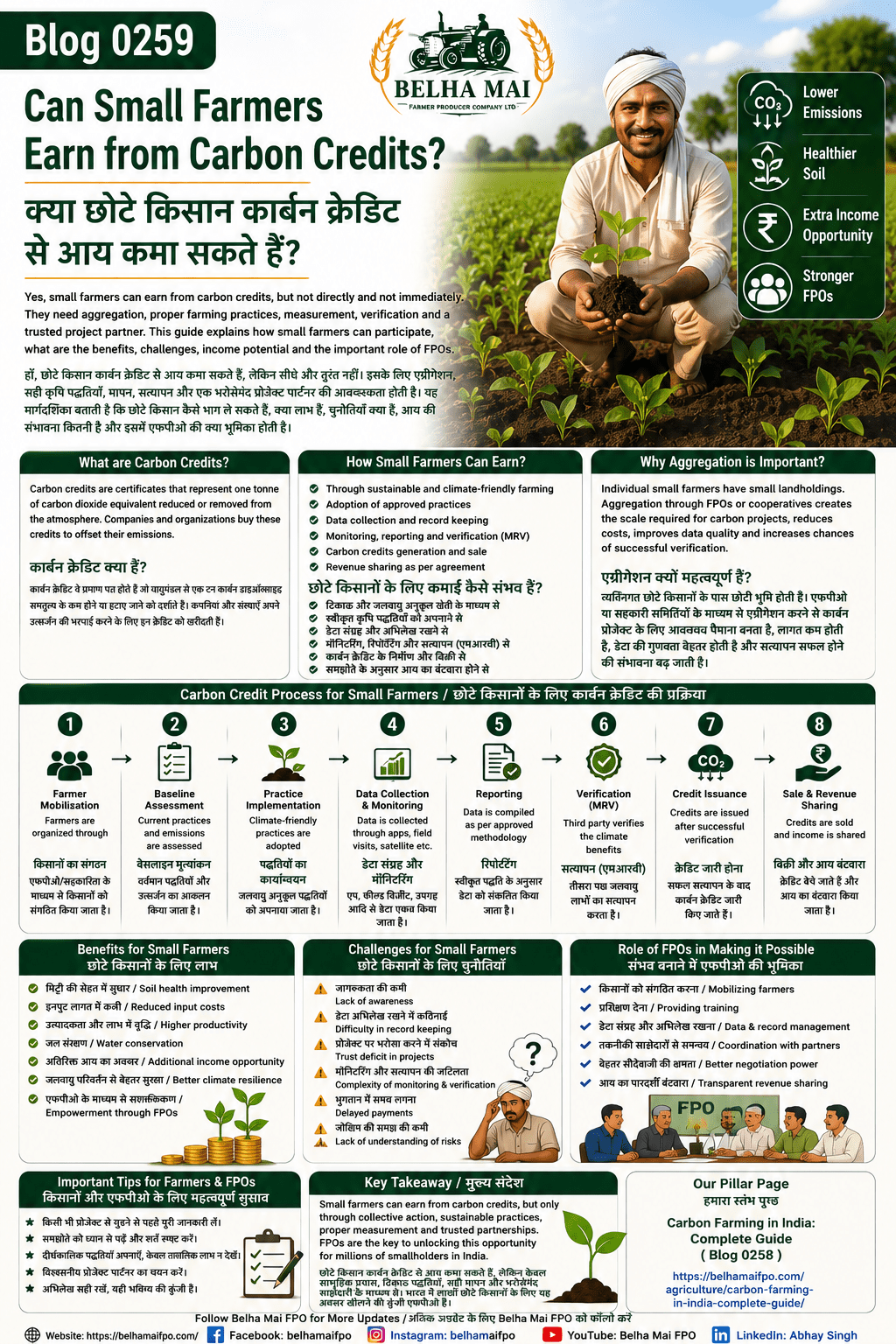
In most cases, individual small farmers cannot practically earn directly from carbon credits. This is because carbon projects require scale. A small farm may generate limited carbon benefit, and the cost of measurement, monitoring, verification, and certification may be too high for one farmer. Buyers and project developers also prefer organised projects where many farmers are included under one programme.
अधिकांश मामलों में छोटे किसान अकेले सीधे कार्बन क्रेडिट से आय व्यावहारिक रूप से नहीं कमा सकते। इसका कारण यह है कि कार्बन परियोजनाओं के लिए बड़े स्तर की आवश्यकता होती है। छोटे खेत से सीमित कार्बन लाभ बन सकता है, और एक किसान के लिए मापन, निगरानी, सत्यापन और प्रमाणन की लागत बहुत अधिक हो सकती है। खरीदार और परियोजना विकासकर्ता भी ऐसी संगठित परियोजनाओं को प्राथमिकता देते हैं जिनमें अनेक किसान एक ही कार्यक्रम के अंतर्गत शामिल हों।
This is why aggregation is important. When hundreds or thousands of small farmers come together through an FPO or cooperative, the project becomes large enough to attract a project developer and buyer interest. Aggregation also reduces per-farmer cost and improves record-keeping, training, monitoring, and implementation.
इसीलिए किसानों का समूह बनाना महत्वपूर्ण है। जब सैकड़ों या हजारों छोटे किसान किसान उत्पादक संगठन या सहकारी संस्था के माध्यम से एक साथ आते हैं, तो परियोजना इतनी बड़ी हो जाती है कि परियोजना विकासकर्ता और खरीदार उसमें रुचि ले सकें। समूह के माध्यम से प्रति किसान लागत कम होती है और अभिलेख प्रबंधन, प्रशिक्षण, निगरानी तथा क्रियान्वयन भी बेहतर होता है।
Why FPOs Are Important for Small Farmers / छोटे किसानों के लिए किसान उत्पादक संगठन क्यों महत्वपूर्ण हैं
Farmer Producer Organizations can become the most practical bridge between small farmers and the carbon credit market. Small farmers usually lack technical knowledge, documentation capacity, direct buyer access, and bargaining power. An FPO can organise farmers, collect land and crop data, maintain records, coordinate training, support sustainable practice adoption, and negotiate with project developers.
किसान उत्पादक संगठन छोटे किसानों और कार्बन क्रेडिट बाज़ार के बीच सबसे व्यावहारिक पुल बन सकते हैं। छोटे किसानों के पास सामान्यतः तकनीकी जानकारी, दस्तावेज़ प्रबंधन क्षमता, खरीदारों तक सीधी पहुँच और सौदेबाज़ी की शक्ति कम होती है। किसान उत्पादक संगठन किसानों को संगठित कर सकता है, भूमि और फसल से जुड़ी जानकारी एकत्र कर सकता है, अभिलेख रख सकता है, प्रशिक्षण का समन्वय कर सकता है, टिकाऊ कृषि पद्धतियों को अपनाने में सहायता कर सकता है और परियोजना विकासकर्ताओं से बातचीत कर सकता है।
For an FPO, carbon credit projects can also become a way to strengthen its institution. The FPO can work as a local implementation partner, support farmer mobilisation, maintain field-level data, and help ensure transparent revenue sharing. This makes the FPO more valuable for farmers, companies, development agencies, and climate finance programmes.
किसान उत्पादक संगठन के लिए कार्बन क्रेडिट परियोजनाएँ संस्था को मजबूत करने का माध्यम भी बन सकती हैं। संगठन स्थानीय क्रियान्वयन भागीदार के रूप में काम कर सकता है, किसानों को जोड़ने में सहायता कर सकता है, खेत स्तर का आँकड़ा रख सकता है और पारदर्शी आय बँटवारे को सुनिश्चित करने में मदद कर सकता है। इससे किसान उत्पादक संगठन किसानों, कंपनियों, विकास संस्थाओं और जलवायु वित्त कार्यक्रमों के लिए अधिक उपयोगी बन जाता है।
How Small Farmers Can Earn from Carbon Credits / छोटे किसान कार्बन क्रेडिट से आय कैसे कमा सकते हैं
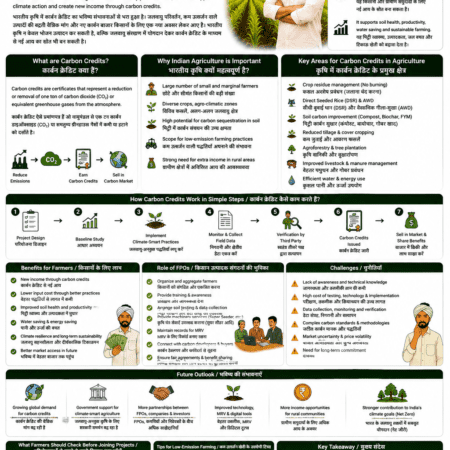
Small farmers can earn from carbon credits by joining an organised project. The first step is farmer mobilisation through an FPO, cooperative, or credible project partner. After this, the project team records the current farming practices of the farmers. This is called the baseline. The baseline helps compare what farmers were doing before the project and what improvement happens after the project begins.
छोटे किसान किसी संगठित परियोजना से जुड़कर कार्बन क्रेडिट से आय कमा सकते हैं। पहला चरण किसान उत्पादक संगठन, सहकारी संस्था या विश्वसनीय परियोजना भागीदार के माध्यम से किसानों को जोड़ना होता है। इसके बाद परियोजना दल किसानों की वर्तमान कृषि पद्धतियों को दर्ज करता है। इसे आधार स्थिति कहा जाता है। आधार स्थिति से यह तुलना करने में मदद मिलती है कि परियोजना से पहले किसान क्या कर रहे थे और परियोजना शुरू होने के बाद क्या सुधार हुआ।
The second step is adopting approved climate-friendly farming practices. These practices may include crop residue management, reduced tillage, Direct Seeded Rice, water-saving irrigation, agroforestry, tree plantation, composting, bio-inputs, and soil health improvement. The third step is data collection and monitoring. The fourth step is reporting and verification. If the environmental benefit is accepted, carbon credits may be issued and sold. After sale, income is shared according to the project agreement.
दूसरा चरण स्वीकृत जलवायु-अनुकूल कृषि पद्धतियों को अपनाना होता है। इनमें फसल अवशेष प्रबंधन, कम जुताई, सीधी बुवाई धान, जल बचत सिंचाई, कृषि वानिकी, वृक्षारोपण, कंपोस्ट, जैविक कृषि सामग्री और मिट्टी स्वास्थ्य सुधार जैसी पद्धतियाँ शामिल हो सकती हैं। तीसरा चरण आँकड़ा संग्रह और निगरानी है। चौथा चरण प्रतिवेदन और सत्यापन है। यदि पर्यावरणीय लाभ स्वीकार हो जाता है, तो कार्बन क्रेडिट जारी हो सकते हैं और बेचे जा सकते हैं। बिक्री के बाद आय का बँटवारा परियोजना समझौते के अनुसार होता है।
Which Farming Practices Can Help Small Farmers? / कौन-सी कृषि पद्धतियाँ छोटे किसानों की मदद कर सकती हैं
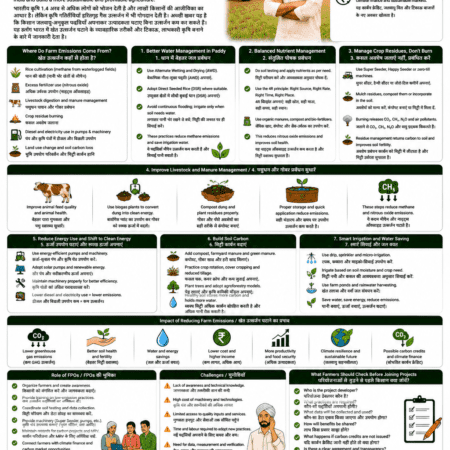
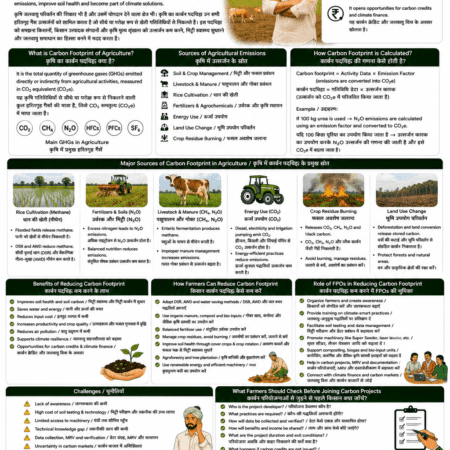
Crop residue management can help small farmers by reducing burning and improving soil organic matter. Instead of burning crop residue, farmers can use Super Seeder, mulching, composting, or residue incorporation. This practice can reduce pollution, improve soil structure, and support carbon storage.
फसल अवशेष प्रबंधन छोटे किसानों की मदद कर सकता है क्योंकि इससे अवशेष जलाने की समस्या कम होती है और मिट्टी में जैविक पदार्थ बढ़ता है। फसल अवशेष जलाने के बजाय किसान सुपर सीडर, आच्छादन, कंपोस्ट या अवशेष मिलाने की पद्धति अपना सकते हैं। इससे प्रदूषण कम होता है, मिट्टी की बनावट सुधरती है और कार्बन संग्रहण को सहायता मिलती है।
Direct Seeded Rice may help in suitable paddy-growing areas by reducing water use and supporting lower-emission rice cultivation. However, it requires proper weed management, training, and local suitability. Farmers should not adopt it blindly without technical guidance.
सीधी बुवाई धान उपयुक्त धान क्षेत्रों में पानी की बचत कर सकती है और कम उत्सर्जन वाली धान खेती को बढ़ावा दे सकती है। हालाँकि, इसके लिए खरपतवार प्रबंधन, प्रशिक्षण और स्थानीय अनुकूलता आवश्यक है। किसानों को तकनीकी मार्गदर्शन के बिना इसे अंधाधुंध नहीं अपनाना चाहिए।
Agroforestry and tree plantation can help store carbon in trees and biomass. They can also provide shade, fruit, fodder, timber, biodiversity, and long-term resilience. However, tree-based projects require careful planning because survival rate, species selection, spacing, and long-term monitoring are very important.
कृषि वानिकी और वृक्षारोपण पेड़ों तथा जैवभार में कार्बन संग्रहित करने में मदद कर सकते हैं। ये छाया, फल, चारा, लकड़ी, जैव विविधता और दीर्घकालिक मजबूती भी प्रदान कर सकते हैं। हालाँकि, वृक्ष आधारित परियोजनाओं में सावधानीपूर्वक योजना आवश्यक होती है क्योंकि जीवित रहने की दर, प्रजाति चयन, दूरी और दीर्घकालिक निगरानी बहुत महत्वपूर्ण हैं।
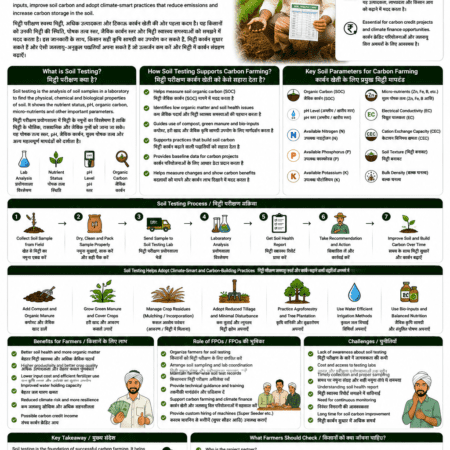
Bio-inputs, composting, and soil testing-based nutrient management can support healthier soil and better input efficiency. When soil health improves, farmers may reduce wasteful input use and improve long-term productivity. These practices may support carbon farming when they are properly measured and documented.
जैविक कृषि सामग्री, कंपोस्ट और मिट्टी परीक्षण आधारित पोषक तत्व प्रबंधन स्वस्थ मिट्टी और बेहतर कृषि सामग्री उपयोग क्षमता को बढ़ावा दे सकते हैं। जब मिट्टी का स्वास्थ्य सुधरता है, तो किसान अनावश्यक खर्च कम कर सकते हैं और दीर्घकालिक उत्पादकता बढ़ा सकते हैं। जब इन पद्धतियों को सही तरीके से मापा और दर्ज किया जाता है, तो वे कार्बन खेती को सहारा दे सकती हैं।
Is Carbon Credit Income Guaranteed? / क्या कार्बन क्रेडिट आय निश्चित है?
No, carbon credit income is not guaranteed for small farmers. It depends on the project design, farmer participation, practice adoption, data quality, verification success, buyer demand, carbon credit price, and revenue-sharing agreement. Farmers should be very careful if any company promises fixed and quick carbon credit income without explaining the complete process.
नहीं, छोटे किसानों के लिए कार्बन क्रेडिट आय निश्चित नहीं होती। यह परियोजना की रूपरेखा, किसान भागीदारी, पद्धति अपनाने की गुणवत्ता, आँकड़ों की विश्वसनीयता, सत्यापन की सफलता, खरीदार की मांग, कार्बन क्रेडिट मूल्य और आय बँटवारे के समझौते पर निर्भर करती है। यदि कोई कंपनी पूरी प्रक्रिया समझाए बिना निश्चित और त्वरित कार्बन क्रेडिट आय का वादा करे, तो किसानों को बहुत सावधान रहना चाहिए।
Carbon credit income may take one or more years because the project must pass several stages before payment. Farmers should understand the timeline clearly before joining. They should also ask whether they will receive cash payment, input support, service support, group-level benefit, or a combination of these benefits.
कार्बन क्रेडिट आय आने में एक या अधिक वर्ष लग सकते हैं, क्योंकि भुगतान से पहले परियोजना को कई चरणों से गुजरना पड़ता है। किसानों को जुड़ने से पहले समय-सीमा को स्पष्ट रूप से समझना चाहिए। उन्हें यह भी पूछना चाहिए कि उन्हें नकद भुगतान मिलेगा, कृषि सामग्री सहायता मिलेगी, सेवा सहायता मिलेगी, समूह स्तर का लाभ मिलेगा या इन लाभों का मिश्रण मिलेगा।
What Should Small Farmers Check Before Joining? / जुड़ने से पहले छोटे किसानों को क्या जाँचना चाहिए
Small farmers should first check who is implementing the project. They should know whether the company or agency has real experience in agricultural carbon projects. They should ask what farming practices are required, whether any cost has to be paid, what documents are needed, how long the contract will continue, and when payment may come.
छोटे किसानों को सबसे पहले यह जाँचना चाहिए कि परियोजना को कौन लागू कर रहा है। उन्हें यह जानना चाहिए कि कंपनी या संस्था को कृषि कार्बन परियोजनाओं का वास्तविक अनुभव है या नहीं। उन्हें पूछना चाहिए कि कौन-सी कृषि पद्धतियाँ आवश्यक हैं, क्या कोई लागत देनी होगी, कौन से दस्तावेज़ चाहिए, समझौता कितने समय तक चलेगा और भुगतान कब मिल सकता है।
Farmers should also understand who owns the carbon rights. Carbon rights mean the right to claim the environmental benefit created from the farming practice. If this point is not clear, disputes may arise later. Farmers should never sign unclear documents without understanding revenue sharing, risk sharing, data use, and exit conditions.
किसानों को यह भी समझना चाहिए कि कार्बन अधिकार किसके पास होंगे। कार्बन अधिकार का अर्थ उस पर्यावरणीय लाभ पर दावा करने का अधिकार है जो कृषि पद्धति से बनता है। यदि यह बात स्पष्ट नहीं होगी, तो आगे चलकर विवाद हो सकते हैं। किसानों को आय बँटवारा, जोखिम बँटवारा, आँकड़ों का उपयोग और बाहर निकलने की शर्तें समझे बिना अस्पष्ट दस्तावेज़ों पर हस्ताक्षर नहीं करने चाहिए।
What Should FPOs Check Before Partnering? / साझेदारी से पहले किसान उत्पादक संगठनों को क्या जाँचना चाहिए
An FPO should not join a carbon credit project only because the idea sounds attractive. The FPO should ask the project partner about methodology, monitoring system, verification agency, buyer linkage, payment timeline, farmer agreement, revenue sharing, and data ownership. A serious project partner should be able to explain these points clearly.
किसान उत्पादक संगठन को केवल इस कारण कार्बन क्रेडिट परियोजना से नहीं जुड़ना चाहिए कि विचार आकर्षक लग रहा है। संगठन को परियोजना भागीदार से पद्धति, निगरानी व्यवस्था, सत्यापन संस्था, खरीदार से जुड़ाव, भुगतान समय-सीमा, किसान समझौता, आय बँटवारा और आँकड़ा स्वामित्व के बारे में पूछना चाहिए। एक गंभीर परियोजना भागीदार इन सभी बातों को स्पष्ट रूप से समझा सकेगा।
The FPO should also protect farmer interest. It should ensure that farmers are not forced into long-term contracts without understanding the terms. It should check whether the project supports sustainable farming and whether the income model is realistic. The FPO should act as a guardian of farmer trust, not only as a mobilisation agency.
किसान उत्पादक संगठन को किसान हित की रक्षा भी करनी चाहिए। उसे सुनिश्चित करना चाहिए कि किसानों को शर्तें समझे बिना दीर्घकालिक समझौतों में बाध्य न किया जाए। उसे यह जाँचना चाहिए कि परियोजना टिकाऊ खेती को समर्थन देती है या नहीं और आय का मॉडल व्यावहारिक है या नहीं। संगठन को केवल किसानों को जोड़ने वाली संस्था नहीं, बल्कि किसान विश्वास के संरक्षक के रूप में काम करना चाहिए।
How Much Can Small Farmers Earn? / छोटे किसान कितनी आय कमा सकते हैं
There is no fixed amount that every small farmer can earn from carbon credits. Income depends on the size of land, type of practice, actual emission reduction or carbon storage, verification success, market price, project cost, and revenue-sharing model. In some projects, farmers may receive direct cash incentives. In others, they may receive input support, training, services, or group benefits.
कार्बन क्रेडिट से हर छोटे किसान की आय की कोई निश्चित राशि नहीं होती। आय भूमि के आकार, अपनाई गई पद्धति, वास्तविक उत्सर्जन कमी या कार्बन संग्रहण, सत्यापन की सफलता, बाज़ार मूल्य, परियोजना लागत और आय बँटवारे के मॉडल पर निर्भर करती है। कुछ परियोजनाओं में किसानों को सीधे नकद प्रोत्साहन मिल सकता है। अन्य परियोजनाओं में कृषि सामग्री सहायता, प्रशिक्षण, सेवाएँ या समूह लाभ मिल सकते हैं।
Small farmers should focus first on improving soil health, reducing input waste, saving water, and adopting better farming practices. These benefits may come even before carbon credit income. If carbon credits are successfully generated later, that income can become an additional benefit. This is a safer and more practical way to look at carbon farming.
छोटे किसानों को सबसे पहले मिट्टी स्वास्थ्य सुधार, अनावश्यक कृषि खर्च कम करने, पानी बचाने और बेहतर कृषि पद्धतियाँ अपनाने पर ध्यान देना चाहिए। ये लाभ कार्बन क्रेडिट आय से पहले भी मिल सकते हैं। यदि बाद में कार्बन क्रेडिट सफलतापूर्वक बनते हैं, तो वह आय एक अतिरिक्त लाभ बन सकती है। कार्बन खेती को देखने का यह अधिक सुरक्षित और व्यावहारिक तरीका है।
Practical Model for Small Farmers / छोटे किसानों के लिए व्यावहारिक मॉडल
A practical model can begin with an FPO selecting 500 to 1,000 farmers from nearby villages. The FPO can collect basic land details, crop details, current farming practices, irrigation details, residue management habits, and soil testing information. Then the FPO can work with a credible carbon project developer to identify suitable practices.
एक व्यावहारिक मॉडल की शुरुआत किसान उत्पादक संगठन द्वारा आस-पास के गाँवों से पाँच सौ से एक हजार किसानों के चयन से हो सकती है। संगठन भूमि विवरण, फसल विवरण, वर्तमान कृषि पद्धतियाँ, सिंचाई विवरण, फसल अवशेष प्रबंधन की स्थिति और मिट्टी परीक्षण जानकारी एकत्र कर सकता है। इसके बाद संगठन किसी विश्वसनीय कार्बन परियोजना विकासकर्ता के साथ मिलकर उपयुक्त पद्धतियों की पहचान कर सकता है।
The project may focus on practices such as Super Seeder use, Direct Seeded Rice, residue management, bio-inputs, soil health improvement, water-saving irrigation, and tree plantation. The FPO can support training and record-keeping, while the project partner manages technical methodology, verification, and buyer linkage. This model is more practical than expecting small farmers to enter the carbon market alone.
परियोजना सुपर सीडर उपयोग, सीधी बुवाई धान, फसल अवशेष प्रबंधन, जैविक कृषि सामग्री, मिट्टी स्वास्थ्य सुधार, जल बचत सिंचाई और वृक्षारोपण जैसी पद्धतियों पर केंद्रित हो सकती है। किसान उत्पादक संगठन प्रशिक्षण और अभिलेख प्रबंधन में सहायता कर सकता है, जबकि परियोजना भागीदार तकनीकी पद्धति, सत्यापन और खरीदार से जुड़ाव को संभाल सकता है। यह मॉडल छोटे किसानों से अकेले कार्बन बाज़ार में प्रवेश की अपेक्षा करने से अधिक व्यावहारिक है।
Benefits Beyond Carbon Credit Income / कार्बन क्रेडिट आय से आगे के लाभ
Even if carbon credit income takes time, small farmers may still benefit from carbon farming practices. Improved soil health can increase long-term productivity. Reduced residue burning can improve air quality and soil structure. Water-saving methods can reduce irrigation pressure. Better nutrient management can reduce unnecessary input cost. Tree plantation and agroforestry can create long-term farm resilience.
भले ही कार्बन क्रेडिट आय आने में समय लगे, छोटे किसान कार्बन खेती की पद्धतियों से फिर भी लाभ प्राप्त कर सकते हैं। बेहतर मिट्टी स्वास्थ्य दीर्घकालिक उत्पादकता बढ़ा सकता है। फसल अवशेष न जलाने से वायु गुणवत्ता और मिट्टी की बनावट सुधर सकती है। जल बचत पद्धतियाँ सिंचाई दबाव कम कर सकती हैं। बेहतर पोषक तत्व प्रबंधन अनावश्यक कृषि खर्च घटा सकता है। वृक्षारोपण और कृषि वानिकी खेत की दीर्घकालिक मजबूती बढ़ा सकते हैं।
This is why carbon farming should not be promoted only as income from carbon credits. It should be promoted as better farming for soil, water, climate, productivity, and future income opportunities. Carbon credit income should be presented as a possible additional benefit, not as the only benefit.
इसीलिए कार्बन खेती को केवल कार्बन क्रेडिट से आय के रूप में प्रचारित नहीं करना चाहिए। इसे मिट्टी, पानी, जलवायु, उत्पादकता और भविष्य की आय संभावनाओं के लिए बेहतर खेती के रूप में बढ़ावा देना चाहिए। कार्बन क्रेडिट आय को संभावित अतिरिक्त लाभ के रूप में प्रस्तुत करना चाहिए, न कि एकमात्र लाभ के रूप में।
Conclusion / निष्कर्ष
Small farmers can earn from carbon credits, but only through a proper, organised, and verified process. They cannot usually access this opportunity alone because carbon projects require aggregation, documentation, monitoring, verification, and market linkage. FPOs, cooperatives, and credible project partners can help small farmers participate in carbon credit projects in a practical way.
छोटे किसान कार्बन क्रेडिट से आय कमा सकते हैं, लेकिन केवल सही, संगठित और सत्यापित प्रक्रिया के माध्यम से। वे सामान्यतः इस अवसर तक अकेले नहीं पहुँच सकते, क्योंकि कार्बन परियोजनाओं के लिए किसानों का समूह, दस्तावेज़, निगरानी, सत्यापन और बाज़ार से जुड़ाव आवश्यक होता है। किसान उत्पादक संगठन, सहकारी संस्थाएँ और विश्वसनीय परियोजना भागीदार छोटे किसानों को व्यावहारिक तरीके से कार्बन क्रेडिट परियोजनाओं में भाग लेने में मदद कर सकते हैं।
For small farmers, the safest approach is to first adopt sustainable farming practices that improve soil health, save water, reduce residue burning, and lower unnecessary input use. If these practices are properly measured and verified under a credible project, carbon credit income may become an additional opportunity. The future is promising, but farmers and FPOs must move with awareness, patience, transparency, and strong agreements.
छोटे किसानों के लिए सबसे सुरक्षित तरीका यह है कि वे पहले ऐसी टिकाऊ कृषि पद्धतियाँ अपनाएँ जो मिट्टी स्वास्थ्य सुधारें, पानी बचाएँ, फसल अवशेष जलाने की समस्या कम करें और अनावश्यक कृषि खर्च घटाएँ। यदि इन पद्धतियों को किसी विश्वसनीय परियोजना के अंतर्गत सही तरीके से मापा और सत्यापित किया जाता है, तो कार्बन क्रेडिट आय एक अतिरिक्त अवसर बन सकती है। भविष्य आशाजनक है, लेकिन किसानों और किसान उत्पादक संगठनों को जागरूकता, धैर्य, पारदर्शिता और मजबूत समझौतों के साथ आगे बढ़ना होगा।
Frequently Asked Questions (FAQs) / अक्सर पूछे जाने वाले प्रश्न
1. Can small farmers earn from carbon credits?
Yes, small farmers can earn from carbon credits, but usually through FPOs, cooperatives, or project aggregators because individual participation is difficult.
1. क्या छोटे किसान कार्बन क्रेडिट से आय कमा सकते हैं?
हाँ, छोटे किसान कार्बन क्रेडिट से आय कमा सकते हैं, लेकिन सामान्यतः किसान उत्पादक संगठनों, सहकारी संस्थाओं या परियोजना समूहकर्ताओं के माध्यम से, क्योंकि व्यक्तिगत भागीदारी कठिन होती है।
2. Is carbon credit income guaranteed for small farmers?
No, carbon credit income is not guaranteed. It depends on project success, verification, buyer demand, market price, and revenue-sharing agreement.
2. क्या छोटे किसानों के लिए कार्बन क्रेडिट आय निश्चित होती है?
नहीं, कार्बन क्रेडिट आय निश्चित नहीं होती। यह परियोजना की सफलता, सत्यापन, खरीदार की मांग, बाज़ार मूल्य और आय बँटवारे के समझौते पर निर्भर करती है।
3. Why do small farmers need FPOs for carbon credits?
Small farmers need FPOs because FPOs aggregate farmers, maintain records, coordinate training, support implementation, and connect farmers with project developers.
3. छोटे किसानों को कार्बन क्रेडिट के लिए किसान उत्पादक संगठन की आवश्यकता क्यों होती है?
छोटे किसानों को किसान उत्पादक संगठन की आवश्यकता होती है क्योंकि संगठन किसानों को जोड़ते हैं, अभिलेख रखते हैं, प्रशिक्षण का समन्वय करते हैं, क्रियान्वयन में सहायता करते हैं और किसानों को परियोजना विकासकर्ताओं से जोड़ते हैं।
4. How long does it take to receive carbon credit income?
It may take one or more years because monitoring, reporting, verification, credit issuance, and sale must be completed before payment.
4. कार्बन क्रेडिट आय मिलने में कितना समय लगता है?
इसमें एक या अधिक वर्ष लग सकते हैं, क्योंकि भुगतान से पहले निगरानी, प्रतिवेदन, सत्यापन, क्रेडिट जारी होना और बिक्री पूरी होनी आवश्यक होती है।
5. What should farmers check before joining a carbon credit project?
Farmers should check the implementing agency, required practices, contract period, carbon rights, payment timeline, revenue sharing, and exit conditions.
5. कार्बन क्रेडिट परियोजना से जुड़ने से पहले किसानों को क्या जाँचना चाहिए?
किसानों को क्रियान्वयन संस्था, आवश्यक कृषि पद्धतियाँ, समझौते की अवधि, कार्बन अधिकार, भुगतान समय-सीमा, आय बँटवारा और बाहर निकलने की शर्तें जाँचनी चाहिए।
Internal Links / आंतरिक लिंक
👉 Carbon Farming in India: Complete Guide — https://belhamaifpo.com/agriculture/carbon-farming-in-india-complete-guide/
👉 What is Carbon Credit in Agriculture? — https://belhamaifpo.com/agriculture/what-is-carbon-credit-in-agriculture/
👉 How Carbon Credits Work for Farmers — https://belhamaifpo.com/agriculture/how-carbon-credits-work-for-farmers/
👉 Farmer Producer Organizations Complete Guide — https://belhamaifpo.com/farmer-producer-organisation/farmer-producer-organizations-fpos/
👉 Why Small Farmers Struggle in India — https://belhamaifpo.com/agriculture/why-small-farmers-struggle-in-india/
👉 SDGs & Our FPO — https://belhamaifpo.com/sdg-goals/
External Authority Links / बाहरी प्राधिकरण लिंक
👉 Ministry of Agriculture & Farmers Welfare — https://agriwelfare.gov.in/
👉 NITI Aayog — https://www.niti.gov.in/
👉 FAO Climate-Smart Agriculture — https://www.fao.org/climate-smart-agriculture/en/
👉 UNFCCC — https://unfccc.int/
👉 World Bank Climate-Smart Agriculture — https://www.worldbank.org/en/topic/climate-smart-agriculture
Follow Belha Mai FPO for More Updates / अधिक अपडेट के लिए Belha Mai FPO को फॉलो करें
👉 Website — https://belhamaifpo.com/
👉 Facebook — https://www.facebook.com/profile.php?id=61561043486818
👉 Instagram — https://instagram.com/belhamaifpo
👉 LinkedIn — https://www.linkedin.com/in/abhay-singh-ab5568280/
👉 YouTube — https://www.youtube.com/channel/UC9ZvojoTMCa7mU1-Q_Bh60A