जलवायु-स्मार्ट कृषि और कार्बन खेती
Introduction / परिचय
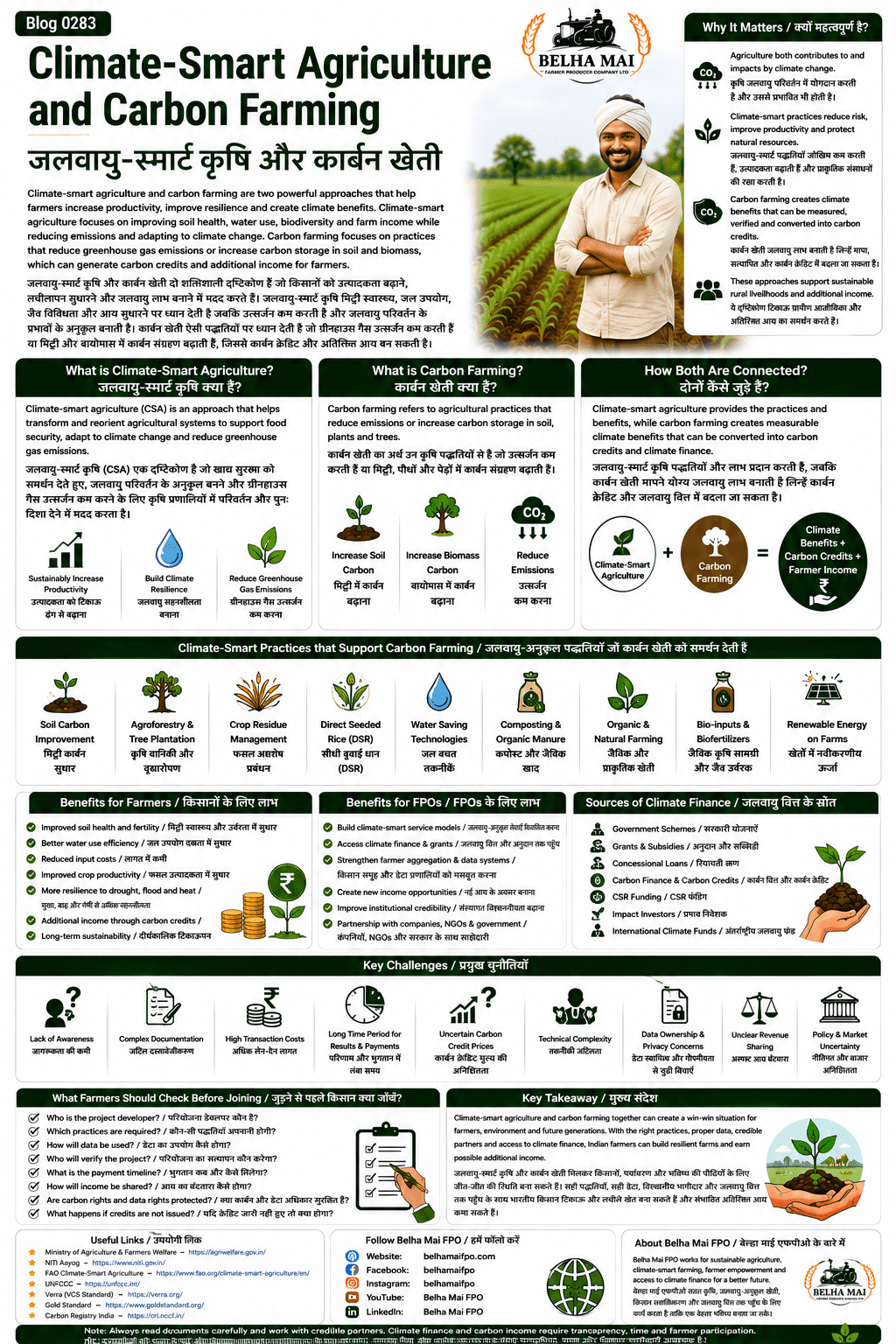
Climate-smart agriculture and carbon farming are two important approaches that can help Indian farmers improve productivity, reduce climate risk, protect natural resources, and create future climate finance opportunities. Climate-smart agriculture focuses on increasing farm productivity, adapting to climate change, and reducing greenhouse gas emissions. Carbon farming focuses on farming practices that reduce emissions or increase carbon storage in soil, trees, roots, and biomass.
जलवायु-स्मार्ट कृषि और कार्बन खेती दो महत्वपूर्ण दृष्टिकोण हैं, जो भारतीय किसानों को उत्पादकता बढ़ाने, जलवायु जोखिम कम करने, प्राकृतिक संसाधनों की रक्षा करने और भविष्य में जलवायु वित्त के अवसर बनाने में मदद कर सकते हैं। जलवायु-स्मार्ट कृषि का उद्देश्य कृषि उत्पादकता बढ़ाना, जलवायु परिवर्तन के अनुकूल बनना और हरितगृह गैस उत्सर्जन कम करना है। कार्बन खेती का उद्देश्य ऐसी कृषि पद्धतियाँ अपनाना है जो उत्सर्जन कम करें या मिट्टी, पेड़ों, जड़ों और जैवभार में कार्बन संग्रहण बढ़ाएँ।
The topic Climate-smart agriculture and carbon farming is important for farmers and FPOs because agriculture is both affected by climate change and can also become part of the climate solution. Drought, heat waves, irregular rainfall, water scarcity, pest pressure, and soil degradation are increasing risks for farmers. At the same time, better farming practices can improve soil health, save water, reduce emissions, and support possible carbon credit income if benefits are properly measured and verified.
जलवायु-स्मार्ट कृषि और कार्बन खेती किसानों और किसान उत्पादक संगठनों के लिए महत्वपूर्ण विषय है, क्योंकि कृषि जलवायु परिवर्तन से प्रभावित भी होती है और जलवायु समाधान का हिस्सा भी बन सकती है। सूखा, गर्मी की लहरें, अनियमित वर्षा, जल संकट, कीट दबाव और मिट्टी क्षरण किसानों के लिए बढ़ते जोखिम हैं। साथ ही बेहतर कृषि पद्धतियाँ मिट्टी स्वास्थ्य सुधार सकती हैं, पानी बचा सकती हैं, उत्सर्जन कम कर सकती हैं और यदि लाभों को सही तरीके से मापा और सत्यापित किया जाए, तो संभावित कार्बन क्रेडिट आय को भी सहारा दे सकती हैं।
What is Climate-Smart Agriculture? / जलवायु-स्मार्ट कृषि क्या है?
Climate-smart agriculture is an approach that helps farmers increase productivity, adapt to climate change, and reduce emissions wherever possible. It is not a single technology or one fixed method. It is a practical farming approach that combines soil health, water conservation, crop diversification, improved seed, efficient nutrient use, weather awareness, and risk reduction.
जलवायु-स्मार्ट कृषि ऐसा दृष्टिकोण है जो किसानों को उत्पादकता बढ़ाने, जलवायु परिवर्तन के अनुकूल बनने और जहाँ संभव हो वहाँ उत्सर्जन कम करने में मदद करता है। यह कोई एक तकनीक या एक निश्चित तरीका नहीं है। यह व्यावहारिक कृषि दृष्टिकोण है जो मिट्टी स्वास्थ्य, जल संरक्षण, फसल विविधीकरण, बेहतर बीज, पोषक तत्वों के कुशल उपयोग, मौसम जानकारी और जोखिम कम करने को जोड़ता है।
In the context of Climate-smart agriculture and carbon farming, climate-smart agriculture helps farmers become more resilient. For example, if a farmer improves soil organic matter, the soil can hold more water and support crops during dry periods. If a farmer adopts water-saving rice methods, the farm may use less water and reduce emissions. These practices help both the farmer and the climate.
जलवायु-स्मार्ट कृषि और कार्बन खेती के संदर्भ में जलवायु-स्मार्ट कृषि किसानों को अधिक सहनशील बनाती है। उदाहरण के लिए, यदि किसान मिट्टी में जैविक पदार्थ बढ़ाता है, तो मिट्टी अधिक पानी रोक सकती है और सूखे समय में फसलों को सहारा दे सकती है। यदि किसान धान में जल बचत पद्धतियाँ अपनाता है, तो खेत में कम पानी लगेगा और उत्सर्जन भी घट सकता है। ये पद्धतियाँ किसान और जलवायु दोनों के लिए लाभकारी हैं।
What is Carbon Farming? / कार्बन खेती क्या है?
Carbon farming means adopting agricultural practices that reduce greenhouse gas emissions or increase carbon storage in soil, trees, roots, and farm biomass. It includes practices such as composting, crop residue management, agroforestry, tree plantation, reduced tillage, soil carbon improvement, Direct Seeded Rice, water-saving farming, organic farming, natural farming, and regenerative agriculture.
कार्बन खेती का अर्थ ऐसी कृषि पद्धतियाँ अपनाना है जो हरितगृह गैस उत्सर्जन कम करें या मिट्टी, पेड़ों, जड़ों और खेत के जैवभार में कार्बन संग्रहण बढ़ाएँ। इसमें कंपोस्ट, फसल अवशेष प्रबंधन, कृषि वानिकी, वृक्षारोपण, कम जुताई, मिट्टी कार्बन सुधार, सीधी बुवाई धान, जल बचत खेती, जैविक खेती, प्राकृतिक खेती और पुनर्योजी कृषि जैसी पद्धतियाँ शामिल हैं।
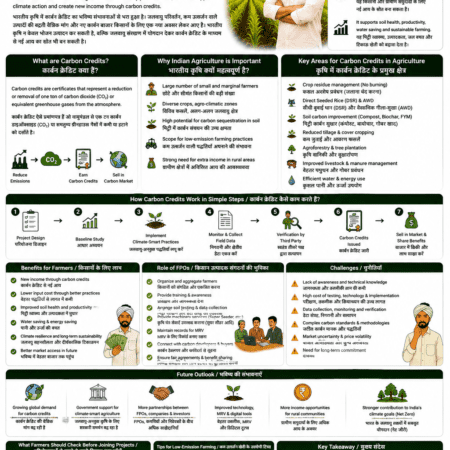
Climate-smart agriculture and carbon farming are closely connected because climate-smart agriculture provides the farming practices, and carbon farming converts measurable climate benefits into possible carbon credit opportunities. However, carbon credits are not automatic. Benefits must be measured, reported, verified, certified, and sold before income can be generated.
जलवायु-स्मार्ट कृषि और कार्बन खेती आपस में गहराई से जुड़े हैं, क्योंकि जलवायु-स्मार्ट कृषि बेहतर कृषि पद्धतियाँ देती है और कार्बन खेती मापने योग्य जलवायु लाभों को संभावित कार्बन क्रेडिट अवसरों में बदलती है। हालाँकि कार्बन क्रेडिट अपने आप नहीं बनते। आय बनने से पहले लाभों का मापन, प्रतिवेदन, सत्यापन, प्रमाणन और बिक्री आवश्यक है।
How Climate-Smart Agriculture and Carbon Farming Are Connected / जलवायु-स्मार्ट कृषि और कार्बन खेती कैसे जुड़ी हैं
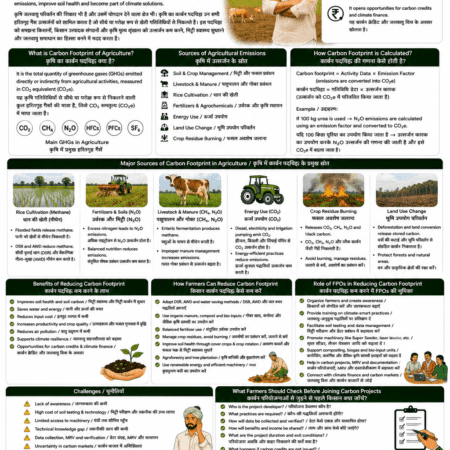
Climate-smart agriculture focuses on making farming more productive, resilient, and low-emission. Carbon farming focuses on measuring the climate benefits created by these practices. For example, when farmers stop burning crop residues and use residues as mulch or compost, the farm becomes more climate-smart and may also support carbon benefit measurement.
जलवायु-स्मार्ट कृषि खेती को अधिक उत्पादक, सहनशील और कम उत्सर्जन वाली बनाने पर ध्यान देती है। कार्बन खेती इन पद्धतियों से बने जलवायु लाभों को मापने पर ध्यान देती है। उदाहरण के लिए, जब किसान फसल अवशेष जलाने के बजाय उन्हें आच्छादन या कंपोस्ट के रूप में उपयोग करते हैं, तो खेत अधिक जलवायु-अनुकूल बनता है और कार्बन लाभ मापन को भी सहारा मिल सकता है।
This connection makes Climate-smart agriculture and carbon farming powerful for FPOs. FPOs can organise farmers, promote climate-smart practices, maintain records, support monitoring, and work with technical partners for carbon project development. This can create both farm-level benefits and possible climate finance opportunities.
यह संबंध जलवायु-स्मार्ट कृषि और कार्बन खेती को किसान उत्पादक संगठनों के लिए बहुत उपयोगी बनाता है। किसान उत्पादक संगठन किसानों को संगठित कर सकते हैं, जलवायु-अनुकूल पद्धतियाँ बढ़ावा दे सकते हैं, अभिलेख रख सकते हैं, निगरानी में सहायता कर सकते हैं और कार्बन परियोजना विकास के लिए तकनीकी भागीदारों के साथ काम कर सकते हैं। इससे खेत स्तर पर लाभ और संभावित जलवायु वित्त अवसर दोनों बन सकते हैं।
Climate-Smart Practice 1: Soil Carbon Improvement / जलवायु-स्मार्ट पद्धति 1: मिट्टी कार्बन सुधार
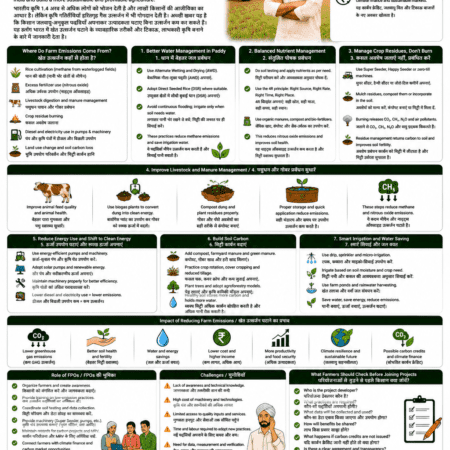
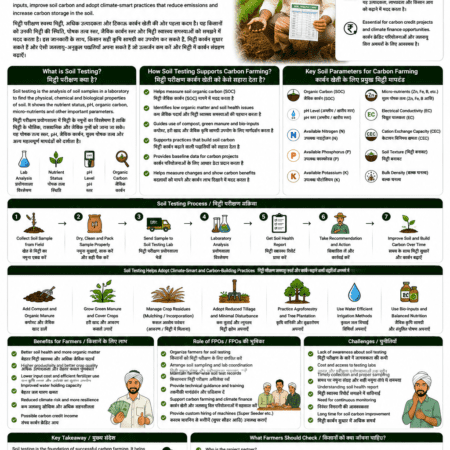
Soil carbon improvement is one of the most important practices in Climate-smart agriculture and carbon farming. Farmers can improve soil carbon by adding compost, using green manure, returning crop residues to the soil, reducing excessive tillage, adopting crop rotation, and increasing organic matter. Healthy soil stores more carbon and supports better crop growth.
मिट्टी कार्बन सुधार जलवायु-स्मार्ट कृषि और कार्बन खेती की सबसे महत्वपूर्ण पद्धतियों में से एक है। किसान कंपोस्ट जोड़कर, हरी खाद उपयोग करके, फसल अवशेषों को मिट्टी में लौटाकर, अत्यधिक जुताई कम करके, फसल चक्र अपनाकर और जैविक पदार्थ बढ़ाकर मिट्टी कार्बन सुधार सकते हैं। स्वस्थ मिट्टी अधिक कार्बन संग्रहित करती है और बेहतर फसल वृद्धि को सहारा देती है।
Soil carbon improvement also helps farmers directly. It improves soil structure, water holding capacity, nutrient cycling, microbial activity, and crop resilience. Even if carbon credit income takes time, better soil health can give farmers practical benefits.
मिट्टी कार्बन सुधार किसानों को सीधे लाभ भी देता है। यह मिट्टी की बनावट, जल धारण क्षमता, पोषक तत्व चक्र, सूक्ष्मजीव गतिविधि और फसल सहनशीलता को सुधारता है। भले ही कार्बन क्रेडिट आय आने में समय लगे, बेहतर मिट्टी स्वास्थ्य किसानों को व्यावहारिक लाभ दे सकता है।
Climate-Smart Practice 2: Agroforestry and Tree Plantation / जलवायु-स्मार्ट पद्धति 2: कृषि वानिकी और वृक्षारोपण
Agroforestry and tree plantation are strong carbon farming practices because trees store carbon in trunks, branches, leaves, roots, and soil. Farmers can plant trees on field boundaries, bunds, degraded land, orchards, and suitable farm areas. Trees can also provide fruit, fodder, timber, shade, biodiversity, and long-term income.
कृषि वानिकी और वृक्षारोपण मजबूत कार्बन खेती पद्धतियाँ हैं क्योंकि पेड़ तने, शाखाओं, पत्तियों, जड़ों और मिट्टी में कार्बन संग्रहित करते हैं। किसान खेत की मेड़ों, सीमाओं, कमजोर भूमि, बागों और उपयुक्त कृषि क्षेत्रों में पेड़ लगा सकते हैं। पेड़ फल, चारा, लकड़ी, छाया, जैव विविधता और दीर्घकालिक आय भी दे सकते हैं।
In Climate-smart agriculture and carbon farming, tree plantation projects must be planned carefully. Species selection, spacing, survival rate, protection, water availability, and farmer interest are very important. Carbon benefits from trees require long-term monitoring and verification.
जलवायु-स्मार्ट कृषि और कार्बन खेती में वृक्षारोपण परियोजनाओं की सावधानी से योजना बनानी चाहिए। प्रजाति चयन, दूरी, जीवित रहने की दर, सुरक्षा, जल उपलब्धता और किसान रुचि बहुत महत्वपूर्ण हैं। पेड़ों से कार्बन लाभ के लिए दीर्घकालिक निगरानी और सत्यापन आवश्यक है।
Climate-Smart Practice 3: Crop Residue Management / जलवायु-स्मार्ट पद्धति 3: फसल अवशेष प्रबंधन
Crop residue management is important because burning residues creates pollution and greenhouse gas emissions. Instead of burning, farmers can use residues for mulching, composting, soil incorporation, animal bedding, or machinery-based sowing. This improves soil organic matter and reduces environmental damage.
फसल अवशेष प्रबंधन महत्वपूर्ण है क्योंकि अवशेष जलाने से प्रदूषण और हरितगृह गैस उत्सर्जन होता है। जलाने के बजाय किसान अवशेषों को आच्छादन, कंपोस्ट, मिट्टी में मिलाने, पशु बिछावन या कृषि यंत्र आधारित बुवाई में उपयोग कर सकते हैं। इससे मिट्टी जैविक पदार्थ बढ़ता है और पर्यावरणीय नुकसान कम होता है।
For FPOs, crop residue management can become a practical service under Climate-smart agriculture and carbon farming. If an FPO has access to machines such as Super Seeder, it can help farmers manage residues, reduce burning, improve soil, and create records for future carbon projects.
किसान उत्पादक संगठनों के लिए फसल अवशेष प्रबंधन जलवायु-स्मार्ट कृषि और कार्बन खेती के अंतर्गत व्यावहारिक सेवा बन सकता है। यदि किसान उत्पादक संगठन के पास सुपर सीडर जैसे यंत्र उपलब्ध हैं, तो वह किसानों को अवशेष प्रबंधन, जलाने में कमी, मिट्टी सुधार और भविष्य की कार्बन परियोजनाओं के लिए अभिलेख बनाने में मदद कर सकता है।
Climate-Smart Practice 4: Direct Seeded Rice / जलवायु-स्मार्ट पद्धति 4: सीधी बुवाई धान
Direct Seeded Rice is a water-saving paddy cultivation method where rice is sown directly instead of transplanting seedlings into flooded fields. It can reduce water use, labour requirement, and methane emissions if managed properly. It is especially useful in areas facing water stress and labour shortage.
सीधी बुवाई धान जल बचत वाली धान खेती पद्धति है, जिसमें रोपाई के बजाय धान की सीधी बुवाई की जाती है। सही प्रबंधन होने पर यह पानी की खपत, श्रम आवश्यकता और मीथेन उत्सर्जन घटा सकती है। यह जल संकट और श्रम कमी वाले क्षेत्रों में विशेष रूप से उपयोगी हो सकती है।
In Climate-smart agriculture and carbon farming, Direct Seeded Rice may support carbon credit projects because it can reduce methane emissions from continuously flooded rice fields. However, farmers need proper training in seed rate, weed control, irrigation scheduling, and field preparation.
जलवायु-स्मार्ट कृषि और कार्बन खेती में सीधी बुवाई धान कार्बन क्रेडिट परियोजनाओं को सहारा दे सकती है क्योंकि यह लगातार पानी भरे धान खेतों से होने वाले मीथेन उत्सर्जन को कम कर सकती है। हालाँकि किसानों को बीज दर, खरपतवार नियंत्रण, सिंचाई समय और खेत तैयारी में सही प्रशिक्षण चाहिए।
Climate-Smart Practice 5: Water-Saving Agriculture / जलवायु-स्मार्ट पद्धति 5: जल बचत कृषि
Water-saving agriculture includes practices such as drip irrigation, sprinkler irrigation, alternate wetting and drying in rice, mulching, farm ponds, rainwater harvesting, and soil moisture conservation. These practices reduce water stress and help crops survive during dry periods.
जल बचत कृषि में टपक सिंचाई, फव्वारा सिंचाई, धान में वैकल्पिक गीला-सूखा प्रबंधन, आच्छादन, खेत तालाब, वर्षा जल संग्रहण और मिट्टी नमी संरक्षण जैसी पद्धतियाँ शामिल हैं। ये पद्धतियाँ जल संकट कम करती हैं और सूखे समय में फसलों को टिकने में मदद करती हैं।
Water-saving agriculture is an important part of Climate-smart agriculture and carbon farming because water use and energy use are closely connected. Efficient irrigation can reduce pumping energy, improve productivity, and support climate resilience. In some cases, water-saving practices may also support carbon benefit calculations.
जल बचत कृषि जलवायु-स्मार्ट कृषि और कार्बन खेती का महत्वपूर्ण हिस्सा है क्योंकि जल उपयोग और ऊर्जा उपयोग आपस में जुड़े हैं। कुशल सिंचाई पंपिंग ऊर्जा घटा सकती है, उत्पादकता सुधार सकती है और जलवायु सहनशीलता को सहारा दे सकती है। कुछ स्थितियों में जल बचत पद्धतियाँ कार्बन लाभ गणना को भी सहारा दे सकती हैं।
Climate-Smart Practice 6: Bio-inputs and Composting / जलवायु-स्मार्ट पद्धति 6: जैविक कृषि सामग्री और कंपोस्ट
Bio-inputs and composting can improve soil health and reduce unnecessary chemical dependency. Compost adds organic matter to soil, supports microorganisms, improves soil structure, and helps build soil carbon. Bio-inputs can support nutrient cycling and plant health when used correctly.
जैविक कृषि सामग्री और कंपोस्ट मिट्टी स्वास्थ्य सुधार सकते हैं और अनावश्यक रासायनिक निर्भरता कम कर सकते हैं। कंपोस्ट मिट्टी में जैविक पदार्थ जोड़ता है, सूक्ष्मजीवों को सहारा देता है, मिट्टी की बनावट सुधारता है और मिट्टी कार्बन बनाने में मदद करता है। जैविक कृषि सामग्री सही उपयोग होने पर पोषक तत्व चक्र और पौध स्वास्थ्य को सहारा दे सकती है।
In Climate-smart agriculture and carbon farming, these practices are useful because they improve soil carbon and reduce input waste. However, farmers should use quality products and proper guidance. Poor-quality bio-inputs or wrong application methods may not give expected results.
जलवायु-स्मार्ट कृषि और कार्बन खेती में ये पद्धतियाँ उपयोगी हैं क्योंकि वे मिट्टी कार्बन सुधारती हैं और कृषि सामग्री की बर्बादी कम करती हैं। हालाँकि किसानों को गुणवत्तापूर्ण उत्पाद और सही मार्गदर्शन का उपयोग करना चाहिए। खराब गुणवत्ता वाली जैविक सामग्री या गलत उपयोग विधि अपेक्षित परिणाम नहीं दे सकती।
Benefits for Farmers / किसानों के लिए लाभ
Farmers can benefit from Climate-smart agriculture and carbon farming through improved soil health, better water efficiency, reduced input waste, improved crop resilience, lower climate risk, and possible additional income through carbon credits. These benefits can make farming more stable and sustainable.
किसानों को जलवायु-स्मार्ट कृषि और कार्बन खेती से बेहतर मिट्टी स्वास्थ्य, बेहतर जल उपयोग क्षमता, कृषि सामग्री की कम बर्बादी, अधिक फसल सहनशीलता, कम जलवायु जोखिम और कार्बन क्रेडिट से संभावित अतिरिक्त आय के रूप में लाभ मिल सकता है। ये लाभ खेती को अधिक स्थिर और टिकाऊ बना सकते हैं।
The most important point for farmers is that carbon income should not be treated as guaranteed income. The first goal should be better farming, lower risk, and stronger soil. Carbon credit income should be seen as a possible additional benefit if the project is properly measured, verified, certified, and sold.
किसानों के लिए सबसे महत्वपूर्ण बात यह है कि कार्बन आय को निश्चित आय नहीं मानना चाहिए। पहला लक्ष्य बेहतर खेती, कम जोखिम और मजबूत मिट्टी होना चाहिए। कार्बन क्रेडिट आय को संभावित अतिरिक्त लाभ के रूप में देखना चाहिए, यदि परियोजना का सही मापन, सत्यापन, प्रमाणन और बिक्री हो।
Benefits for FPOs / किसान उत्पादक संगठनों के लिए लाभ
FPOs can benefit by creating climate-smart service models. They can offer soil testing, composting support, bio-input supply, farm machinery services, tree plantation support, farmer training, data collection, and carbon project aggregation. These services can strengthen member engagement and create new income opportunities for the FPO.
किसान उत्पादक संगठन जलवायु-स्मार्ट सेवा मॉडल बनाकर लाभ उठा सकते हैं। वे मिट्टी परीक्षण, कंपोस्ट सहायता, जैविक कृषि सामग्री आपूर्ति, कृषि यंत्र सेवा, वृक्षारोपण सहायता, किसान प्रशिक्षण, आँकड़ा संग्रह और कार्बन परियोजना समूह जैसी सेवाएँ दे सकते हैं। ये सेवाएँ सदस्य जुड़ाव मजबूत कर सकती हैं और संगठन के लिए नए आय अवसर बना सकती हैं।
In Climate-smart agriculture and carbon farming, FPOs can become local climate action institutions. They can work with carbon project developers, climate finance institutions, CSR partners, government schemes, and technical agencies to bring better resources to farmers.
जलवायु-स्मार्ट कृषि और कार्बन खेती में किसान उत्पादक संगठन स्थानीय जलवायु कार्रवाई संस्थान बन सकते हैं। वे कार्बन परियोजना विकासकर्ताओं, जलवायु वित्त संस्थाओं, सामाजिक उत्तरदायित्व भागीदारों, सरकारी योजनाओं और तकनीकी संस्थाओं के साथ काम करके किसानों तक बेहतर संसाधन पहुँचा सकते हैं।
Climate Finance Opportunities / जलवायु वित्त अवसर
Climate-smart agriculture can attract climate finance when it creates measurable benefits. Finance may come through grants, concessional loans, blended finance, CSR support, carbon finance, impact investment, insurance support, government schemes, and project-based funding. These funds can support training, inputs, equipment, soil testing, data systems, and monitoring.
जब जलवायु-स्मार्ट कृषि मापने योग्य लाभ बनाती है, तो वह जलवायु वित्त आकर्षित कर सकती है। वित्त अनुदान, रियायती ऋण, मिश्रित वित्त, सामाजिक उत्तरदायित्व सहायता, कार्बन वित्त, प्रभाव निवेश, बीमा सहायता, सरकारी योजनाओं और परियोजना आधारित धन से आ सकता है। यह धन प्रशिक्षण, कृषि सामग्री, उपकरण, मिट्टी परीक्षण, आँकड़ा व्यवस्था और निगरानी को सहारा दे सकता है।
Climate-smart agriculture and carbon farming can help FPOs prepare stronger proposals for funders. A project with clear farmer data, baseline condition, measurable activities, monitoring plan, and farmer benefit model is more likely to attract support than a general idea without documentation.
जलवायु-स्मार्ट कृषि और कार्बन खेती किसान उत्पादक संगठनों को वित्तदाताओं के लिए मजबूत प्रस्ताव तैयार करने में मदद कर सकती है। स्पष्ट किसान आँकड़ों, आधार स्थिति, मापने योग्य गतिविधियों, निगरानी योजना और किसान लाभ मॉडल वाली परियोजना सामान्य विचार की तुलना में सहायता आकर्षित करने की अधिक संभावना रखती है।
Challenges in Climate-Smart Agriculture and Carbon Farming / जलवायु-स्मार्ट कृषि और कार्बन खेती की चुनौतियाँ
The first challenge is lack of awareness. Many farmers do not understand climate-smart agriculture, carbon farming, MRV, carbon credits, certification, and revenue sharing. Without proper awareness, farmers may either ignore the opportunity or join projects with wrong expectations.
पहली चुनौती जागरूकता की कमी है। बहुत से किसान जलवायु-स्मार्ट कृषि, कार्बन खेती, मापन-प्रतिवेदन-सत्यापन, कार्बन क्रेडिट, प्रमाणन और आय बँटवारा नहीं समझते। सही जागरूकता के बिना किसान या तो अवसर को अनदेखा कर सकते हैं या गलत अपेक्षाओं के साथ परियोजनाओं से जुड़ सकते हैं।
The second challenge is documentation. Carbon farming needs records, soil data, photographs, location details, practice monitoring, and verification. The third challenge is cost. Soil testing, monitoring, verification, certification, and technical services can be expensive for small farmers.
दूसरी चुनौती दस्तावेज़ीकरण है। कार्बन खेती में अभिलेख, मिट्टी आँकड़े, चित्र, स्थान विवरण, पद्धति निगरानी और सत्यापन की आवश्यकता होती है। तीसरी चुनौती लागत है। मिट्टी परीक्षण, निगरानी, सत्यापन, प्रमाणन और तकनीकी सेवाएँ छोटे किसानों के लिए महंगी हो सकती हैं।
The fourth challenge is long timeline. Results may take months or years. The fifth challenge is market uncertainty. Carbon credit prices and buyer demand can change. This is why Climate-smart agriculture and carbon farming should be promoted with realistic expectations.
चौथी चुनौती लंबी समय-सीमा है। परिणाम आने में महीनों या वर्षों का समय लग सकता है। पाँचवीं चुनौती बाज़ार अनिश्चितता है। कार्बन क्रेडिट मूल्य और खरीदार मांग बदल सकते हैं। इसलिए जलवायु-स्मार्ट कृषि और कार्बन खेती को वास्तविक अपेक्षाओं के साथ बढ़ावा देना चाहिए।
What Farmers Should Check Before Joining / जुड़ने से पहले किसान क्या जाँचें
Before joining any carbon farming or climate-smart agriculture project, farmers should ask what practices they must adopt, how long the project will continue, what data will be collected, who will verify the project, which standard will be used, and when payment or support may come.
किसी भी कार्बन खेती या जलवायु-स्मार्ट कृषि परियोजना से जुड़ने से पहले किसानों को पूछना चाहिए कि उन्हें कौन-सी पद्धतियाँ अपनानी होंगी, परियोजना कितने समय तक चलेगी, कौन से आँकड़े एकत्र होंगे, परियोजना का सत्यापन कौन करेगा, कौन सा मानक उपयोग होगा और भुगतान या सहायता कब आ सकती है।
Farmers should also ask about carbon rights, data ownership, cost deductions, revenue sharing, buyer linkage, project duration, exit conditions, and dispute resolution. These questions protect farmers and make Climate-smart agriculture and carbon farming more transparent.
किसानों को कार्बन अधिकार, आँकड़ा स्वामित्व, लागत कटौती, आय बँटवारा, खरीदार जुड़ाव, परियोजना अवधि, बाहर निकलने की शर्तें और विवाद समाधान के बारे में भी पूछना चाहिए। ये प्रश्न किसानों की रक्षा करते हैं और जलवायु-स्मार्ट कृषि और कार्बन खेती को अधिक पारदर्शी बनाते हैं।
Practical Model for Indian FPOs / भारतीय किसान उत्पादक संगठनों के लिए व्यावहारिक मॉडल
A practical model can begin with a pilot group of 500 to 1,000 farmers. The FPO can choose one or two measurable practices such as crop residue management, soil carbon improvement, tree plantation, Direct Seeded Rice, or water-saving agriculture. Starting small allows the FPO to test farmer adoption, data systems, technical support, and project costs.
एक व्यावहारिक मॉडल पाँच सौ से एक हजार किसानों के प्रायोगिक समूह से शुरू हो सकता है। किसान उत्पादक संगठन फसल अवशेष प्रबंधन, मिट्टी कार्बन सुधार, वृक्षारोपण, सीधी बुवाई धान या जल बचत कृषि जैसी एक या दो मापने योग्य पद्धतियाँ चुन सकता है। छोटी शुरुआत संगठन को किसान भागीदारी, आँकड़ा व्यवस्था, तकनीकी सहायता और परियोजना लागत की जाँच करने का अवसर देती है।
The FPO should collect baseline data, organise awareness meetings, create farmer consent records, arrange training, maintain monitoring records, and work with a credible technical partner. If the pilot works well, the model can be expanded to more farmers and linked with climate finance or carbon credit opportunities.
किसान उत्पादक संगठन को आधार आँकड़े एकत्र करने चाहिए, जागरूकता बैठकें आयोजित करनी चाहिए, किसान सहमति अभिलेख बनाने चाहिए, प्रशिक्षण की व्यवस्था करनी चाहिए, निगरानी अभिलेख रखने चाहिए और विश्वसनीय तकनीकी भागीदार के साथ काम करना चाहिए। यदि प्रायोगिक परियोजना सफल होती है, तो मॉडल को अधिक किसानों तक बढ़ाया जा सकता है और जलवायु वित्त या कार्बन क्रेडिट अवसरों से जोड़ा जा सकता है।
Conclusion / निष्कर्ष
Climate-smart agriculture and carbon farming can create a win-win opportunity for farmers, FPOs, and the environment. Climate-smart agriculture helps farmers improve productivity, reduce risk, conserve resources, and adapt to climate change. Carbon farming helps measure climate benefits and may convert them into carbon credit opportunities.
जलवायु-स्मार्ट कृषि और कार्बन खेती किसानों, किसान उत्पादक संगठनों और पर्यावरण के लिए लाभकारी अवसर बना सकती है। जलवायु-स्मार्ट कृषि किसानों को उत्पादकता सुधारने, जोखिम कम करने, संसाधन बचाने और जलवायु परिवर्तन के अनुकूल बनने में मदद करती है। कार्बन खेती जलवायु लाभों को मापने और उन्हें कार्बन क्रेडिट अवसरों में बदलने में सहायता करती है।
For farmers, the first priority should be better soil, better water use, lower risk, and sustainable productivity. Carbon credit income should be treated as possible additional income, not guaranteed income. For FPOs, Climate-smart agriculture and carbon farming can become a long-term service and partnership model for rural climate action.
किसानों के लिए पहली प्राथमिकता बेहतर मिट्टी, बेहतर जल उपयोग, कम जोखिम और टिकाऊ उत्पादकता होनी चाहिए। कार्बन क्रेडिट आय को संभावित अतिरिक्त आय के रूप में देखना चाहिए, निश्चित आय के रूप में नहीं। किसान उत्पादक संगठनों के लिए जलवायु-स्मार्ट कृषि और कार्बन खेती ग्रामीण जलवायु कार्रवाई के लिए दीर्घकालिक सेवा और साझेदारी मॉडल बन सकती है।
Frequently Asked Questions (FAQs) / अक्सर पूछे जाने वाले प्रश्न
1. What is Climate-smart agriculture and carbon farming?
Climate-smart agriculture and carbon farming means using farming practices that improve productivity, build climate resilience, reduce emissions, increase carbon storage, and support possible carbon credit opportunities.
1. जलवायु-स्मार्ट कृषि और कार्बन खेती क्या है?
जलवायु-स्मार्ट कृषि और कार्बन खेती का अर्थ ऐसी कृषि पद्धतियों का उपयोग है जो उत्पादकता सुधारती हैं, जलवायु सहनशीलता बनाती हैं, उत्सर्जन कम करती हैं, कार्बन संग्रहण बढ़ाती हैं और संभावित कार्बन क्रेडिट अवसरों को सहारा देती हैं।
2. How does climate-smart agriculture help farmers?
Climate-smart agriculture helps farmers improve soil health, save water, reduce input waste, increase resilience, reduce climate risk, and maintain long-term productivity.
2. जलवायु-स्मार्ट कृषि किसानों की कैसे मदद करती है?
जलवायु-स्मार्ट कृषि किसानों को मिट्टी स्वास्थ्य सुधारने, पानी बचाने, कृषि सामग्री की बर्बादी कम करने, सहनशीलता बढ़ाने, जलवायु जोखिम घटाने और दीर्घकालिक उत्पादकता बनाए रखने में मदद करती है।
3. Can carbon farming generate carbon credits?
Yes, carbon farming can support carbon credits if emission reduction or carbon storage is properly measured, reported, verified, certified, issued, and sold.
3. क्या कार्बन खेती से कार्बन क्रेडिट बन सकते हैं?
हाँ, कार्बन खेती कार्बन क्रेडिट को सहारा दे सकती है यदि उत्सर्जन कमी या कार्बन संग्रहण का सही मापन, प्रतिवेदन, सत्यापन, प्रमाणन, जारी होना और बिक्री हो।
4. Which practices are useful for climate-smart agriculture and carbon farming?
Useful practices include soil carbon improvement, agroforestry, tree plantation, crop residue management, Direct Seeded Rice, water-saving irrigation, composting, organic farming, natural farming, bio-inputs, and reduced tillage.
4. जलवायु-स्मार्ट कृषि और कार्बन खेती के लिए कौन-सी पद्धतियाँ उपयोगी हैं?
उपयोगी पद्धतियों में मिट्टी कार्बन सुधार, कृषि वानिकी, वृक्षारोपण, फसल अवशेष प्रबंधन, सीधी बुवाई धान, जल बचत सिंचाई, कंपोस्ट, जैविक खेती, प्राकृतिक खेती, जैविक कृषि सामग्री और कम जुताई शामिल हैं।
5. How can FPOs support climate-smart agriculture and carbon farming?
FPOs can aggregate farmers, organise training, maintain records, coordinate soil testing, support monitoring, work with technical partners, and connect farmers with climate finance and carbon credit opportunities.
5. किसान उत्पादक संगठन जलवायु-स्मार्ट कृषि और कार्बन खेती में कैसे सहायता कर सकते हैं?
किसान उत्पादक संगठन किसानों को संगठित कर सकते हैं, प्रशिक्षण आयोजित कर सकते हैं, अभिलेख रख सकते हैं, मिट्टी परीक्षण का समन्वय कर सकते हैं, निगरानी में सहायता कर सकते हैं, तकनीकी भागीदारों के साथ काम कर सकते हैं और किसानों को जलवायु वित्त तथा कार्बन क्रेडिट अवसरों से जोड़ सकते हैं।
Internal Links / आंतरिक लिंक
👉 Sustainable Agriculture and Climate Finance — https://belhamaifpo.com/agriculture/sustainable-agriculture-and-climate-finance/
👉 Is Carbon Credit Income Real for Indian Farmers? — https://belhamaifpo.com/agriculture/is-carbon-credit-income-real-for-indian-farmers/
👉 Challenges in Carbon Credit Projects for Small Farmers — https://belhamaifpo.com/agriculture/challenges-in-carbon-credit-projects-for-small-farmers/
👉 Carbon Credit Business Model for Farmer Producer Organizations — https://belhamaifpo.com/agriculture/carbon-credit-business-model-for-farmer-producer-organizations/
👉 Can FPOs Aggregate Farmers for Carbon Credits? — https://belhamaifpo.com/agriculture/can-fpos-aggregate-farmers-for-carbon-credits/
👉 Carbon Credit Companies in India and How They Work — https://belhamaifpo.com/agriculture/carbon-credit-companies-in-india-and-how-they-work/
👉 Who Buys Agricultural Carbon Credits? — https://belhamaifpo.com/agriculture/who-buys-agricultural-carbon-credits/
👉 Carbon Credit Certification Process in Agriculture — https://belhamaifpo.com/agriculture/carbon-credit-certification-process-in-agriculture/
👉 MRV in Carbon Credit Projects: What Farmers Should Know — https://belhamaifpo.com/agriculture/mrv-in-carbon-credit-projects-what-farmers-should-know/
👉 Carbon Farming in India: Complete Guide — https://belhamaifpo.com/agriculture/carbon-farming-in-india-complete-guide/
👉 Carbon Credit Opportunities in Indian Agriculture — https://belhamaifpo.com/agriculture/carbon-credit-opportunities-in-indian-agriculture/
👉 Role of FPOs in Carbon Credit Projects — https://belhamaifpo.com/agriculture/role-of-fpos-in-carbon-credit-projects/
👉 Farmer Producer Organizations Complete Guide — https://belhamaifpo.com/farmer-producer-organisation/farmer-producer-organizations-fpos/
👉 SDGs & Our FPO — https://belhamaifpo.com/sdg-goals/
External Authority Links / बाहरी प्राधिकरण लिंक
👉 Ministry of Agriculture & Farmers Welfare — https://agriwelfare.gov.in/
👉 NITI Aayog — https://www.niti.gov.in/
👉 FAO Climate-Smart Agriculture — https://www.fao.org/climate-smart-agriculture/en/
👉 FAO Agroecology Knowledge Hub — https://www.fao.org/agroecology/overview/en/
👉 UNFCCC — https://unfccc.int/
👉 World Bank Climate-Smart Agriculture — https://www.worldbank.org/en/topic/climate-smart-agriculture
👉 Verra Verified Carbon Standard — https://verra.org/programs/verified-carbon-standard/
👉 Gold Standard — https://www.goldstandard.org/
👉 Carbon Registry-India — https://cri.nccf.in/
Follow Belha Mai FPO for More Updates / अधिक अपडेट के लिए Belha Mai FPO को फॉलो करें
👉 Website — https://belhamaifpo.com/
👉 Facebook — https://www.facebook.com/profile.php?id=61561043486818
👉 Instagram — https://instagram.com/belhamaifpo
👉 LinkedIn — https://www.linkedin.com/in/abhay-singh-ab5568280/
👉 YouTube — https://www.youtube.com/channel/UC9ZvojoTMCa7mU1-Q_Bh60A