टिकाऊ कृषि और जलवायु वित्त
Introduction / परिचय
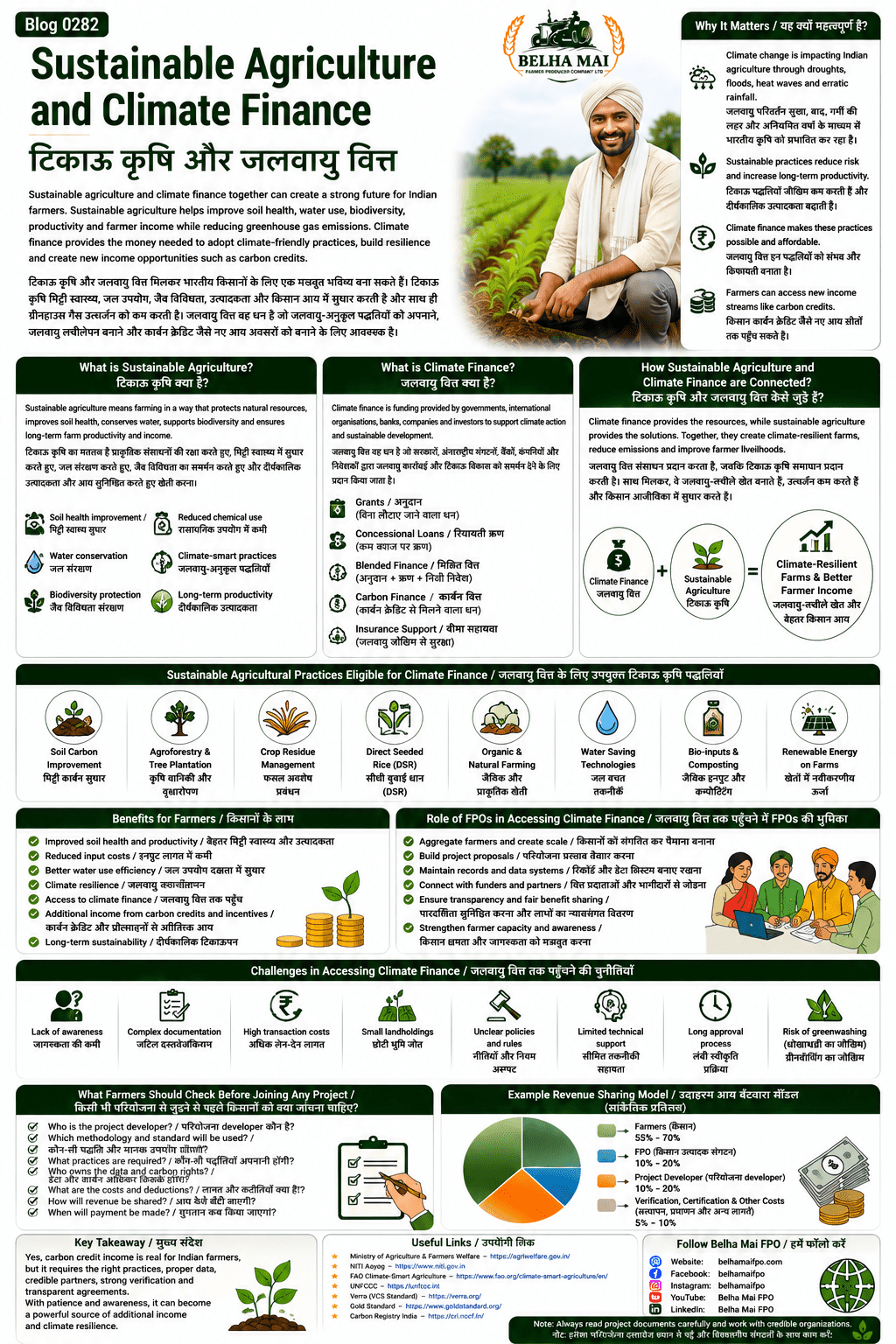
Sustainable agriculture and climate finance are becoming very important for Indian farmers because agriculture is directly affected by climate change, rising input costs, water stress, soil degradation, and uncertain markets. Sustainable agriculture helps farmers protect soil, conserve water, reduce unnecessary chemical dependency, improve biodiversity, and build long-term productivity. Climate finance can support these practices by providing funding, incentives, grants, loans, carbon credit opportunities, insurance support, and project-based investment.
टिकाऊ कृषि और जलवायु वित्त भारतीय किसानों के लिए बहुत महत्वपूर्ण होते जा रहे हैं, क्योंकि कृषि सीधे जलवायु परिवर्तन, बढ़ती लागत, जल संकट, मिट्टी क्षरण और अनिश्चित बाज़ारों से प्रभावित होती है। टिकाऊ कृषि किसानों को मिट्टी की रक्षा करने, पानी बचाने, अनावश्यक रासायनिक निर्भरता कम करने, जैव विविधता सुधारने और दीर्घकालिक उत्पादकता बनाने में मदद करती है। जलवायु वित्त इन पद्धतियों को धन, प्रोत्साहन, अनुदान, ऋण, कार्बन क्रेडिट अवसर, बीमा सहायता और परियोजना आधारित निवेश के माध्यम से सहारा दे सकता है।
The topic Sustainable agriculture and climate finance is especially important for FPOs because small farmers often cannot invest in climate-smart practices on their own. Practices like soil testing, composting, Direct Seeded Rice, crop residue management, water-saving irrigation, tree plantation, agroforestry, bio-inputs, and renewable energy need training, equipment, data systems, and initial investment. FPOs can aggregate farmers and connect them with climate finance opportunities.
टिकाऊ कृषि और जलवायु वित्त विषय किसान उत्पादक संगठनों के लिए विशेष रूप से महत्वपूर्ण है, क्योंकि छोटे किसान अक्सर अपने दम पर जलवायु-अनुकूल पद्धतियों में निवेश नहीं कर सकते। मिट्टी परीक्षण, कंपोस्ट, सीधी बुवाई धान, फसल अवशेष प्रबंधन, जल बचत सिंचाई, वृक्षारोपण, कृषि वानिकी, जैविक कृषि सामग्री और नवीकरणीय ऊर्जा जैसी पद्धतियों के लिए प्रशिक्षण, उपकरण, आँकड़ा व्यवस्था और प्रारंभिक निवेश की आवश्यकता होती है। किसान उत्पादक संगठन किसानों को संगठित करके उन्हें जलवायु वित्त अवसरों से जोड़ सकते हैं।
What is Sustainable Agriculture? / टिकाऊ कृषि क्या है?
Sustainable agriculture means farming in a way that protects natural resources, improves soil health, conserves water, supports biodiversity, reduces waste, and maintains productivity for the long term. It is not only about producing crops today, but also about ensuring that land, water, soil, and farming systems remain healthy for future generations.
टिकाऊ कृषि का अर्थ है ऐसी खेती करना जो प्राकृतिक संसाधनों की रक्षा करे, मिट्टी स्वास्थ्य सुधार करे, पानी बचाए, जैव विविधता को सहारा दे, बर्बादी कम करे और दीर्घकालिक उत्पादकता बनाए रखे। यह केवल आज फसल उत्पादन करने के बारे में नहीं है, बल्कि यह सुनिश्चित करने के बारे में है कि भूमि, जल, मिट्टी और खेती व्यवस्था भविष्य की पीढ़ियों के लिए भी स्वस्थ रहें।
In the context of Sustainable agriculture and climate finance, sustainable agriculture includes practices such as soil carbon improvement, crop rotation, composting, residue management, agroforestry, water-saving irrigation, integrated nutrient management, bio-inputs, organic farming, natural farming, and regenerative agriculture. These practices can reduce climate risk and improve farmer resilience.
टिकाऊ कृषि और जलवायु वित्त के संदर्भ में टिकाऊ कृषि में मिट्टी कार्बन सुधार, फसल चक्र, कंपोस्ट, फसल अवशेष प्रबंधन, कृषि वानिकी, जल बचत सिंचाई, एकीकृत पोषक प्रबंधन, जैविक कृषि सामग्री, जैविक खेती, प्राकृतिक खेती और पुनर्योजी कृषि जैसी पद्धतियाँ शामिल हैं। ये पद्धतियाँ जलवायु जोखिम कम कर सकती हैं और किसान सहनशीलता बढ़ा सकती हैं।
What is Climate Finance? / जलवायु वित्त क्या है?
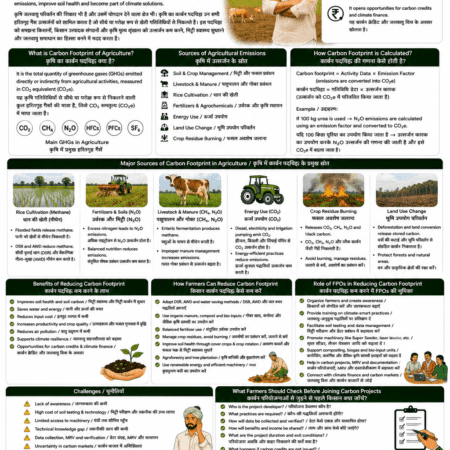
Climate finance means money or financial support provided to activities that reduce climate change impact or help people adapt to climate risks. In agriculture, climate finance can support farmers in adopting practices that reduce emissions, store carbon, conserve water, protect soil, increase biodiversity, and improve resilience against drought, heat, flood, and irregular rainfall.
जलवायु वित्त का अर्थ ऐसी गतिविधियों के लिए धन या वित्तीय सहायता है जो जलवायु परिवर्तन के प्रभाव को कम करें या लोगों को जलवायु जोखिमों के अनुकूल बनने में मदद करें। कृषि में जलवायु वित्त किसानों को ऐसी पद्धतियाँ अपनाने में सहायता दे सकता है जो उत्सर्जन घटाएँ, कार्बन संग्रहित करें, पानी बचाएँ, मिट्टी की रक्षा करें, जैव विविधता बढ़ाएँ और सूखा, गर्मी, बाढ़ तथा अनियमित वर्षा के प्रति सहनशीलता सुधारें।
Sustainable agriculture and climate finance are closely connected because sustainable agriculture creates climate benefits, and climate finance provides the resources needed to implement those practices. Without finance, many small farmers may want to adopt better practices but may not be able to afford them.
टिकाऊ कृषि और जलवायु वित्त आपस में गहराई से जुड़े हैं, क्योंकि टिकाऊ कृषि जलवायु लाभ बनाती है और जलवायु वित्त उन पद्धतियों को लागू करने के लिए आवश्यक संसाधन उपलब्ध कराता है। वित्तीय सहायता के बिना कई छोटे किसान बेहतर पद्धतियाँ अपनाना चाहते हुए भी उन्हें वहन नहीं कर पाते।
Why Sustainable Agriculture Needs Climate Finance / टिकाऊ कृषि को जलवायु वित्त की आवश्यकता क्यों है
Sustainable agriculture often needs initial investment. Farmers may need better seeds, bio-inputs, composting units, irrigation systems, farm machinery, soil testing, tree saplings, training, data systems, and technical support. These investments may reduce long-term cost and risk, but small farmers may not have the money to invest at the beginning.
टिकाऊ कृषि में अक्सर प्रारंभिक निवेश की आवश्यकता होती है। किसानों को बेहतर बीज, जैविक कृषि सामग्री, कंपोस्ट इकाई, सिंचाई व्यवस्था, कृषि यंत्र, मिट्टी परीक्षण, पौधे, प्रशिक्षण, आँकड़ा व्यवस्था और तकनीकी सहायता की आवश्यकता हो सकती है। ये निवेश दीर्घकालिक लागत और जोखिम कम कर सकते हैं, लेकिन छोटे किसानों के पास शुरुआत में निवेश के लिए धन नहीं होता।
This is why Sustainable agriculture and climate finance must be planned together. If farmers are expected to shift to climate-smart farming without financial support, adoption may remain slow. Climate finance can reduce the burden and make sustainable practices more affordable and practical.
इसीलिए टिकाऊ कृषि और जलवायु वित्त की योजना साथ-साथ बनानी चाहिए। यदि किसानों से बिना वित्तीय सहायता के जलवायु-अनुकूल खेती अपनाने की अपेक्षा की जाती है, तो अपनाने की गति धीमी रह सकती है। जलवायु वित्त बोझ कम कर सकता है और टिकाऊ पद्धतियों को अधिक किफायती तथा व्यावहारिक बना सकता है।
Types of Climate Finance for Agriculture / कृषि के लिए जलवायु वित्त के प्रकार
Climate finance can come in many forms. Grants can support training, demonstrations, farmer awareness, pilot projects, and capacity building. Concessional loans can help farmers and FPOs invest in equipment, irrigation, processing, renewable energy, and climate-smart infrastructure. Blended finance can combine grant, loan, and private investment to reduce risk.
जलवायु वित्त कई रूपों में आ सकता है। अनुदान प्रशिक्षण, प्रदर्शन, किसान जागरूकता, प्रायोगिक परियोजनाओं और क्षमता निर्माण को सहारा दे सकता है। रियायती ऋण किसानों और किसान उत्पादक संगठनों को उपकरण, सिंचाई, प्रसंस्करण, नवीकरणीय ऊर्जा और जलवायु-अनुकूल ढाँचे में निवेश करने में मदद कर सकता है। मिश्रित वित्त अनुदान, ऋण और निजी निवेश को मिलाकर जोखिम कम कर सकता है।
Carbon finance is another important part of Sustainable agriculture and climate finance. If farmers reduce emissions or increase carbon storage through verified projects, carbon credits may be generated and sold. Insurance support, risk guarantees, CSR funding, impact investment, and government schemes can also support sustainable agriculture.
कार्बन वित्त टिकाऊ कृषि और जलवायु वित्त का एक और महत्वपूर्ण भाग है। यदि किसान सत्यापित परियोजनाओं के माध्यम से उत्सर्जन घटाते हैं या कार्बन संग्रहण बढ़ाते हैं, तो कार्बन क्रेडिट बनाकर बेचे जा सकते हैं। बीमा सहायता, जोखिम गारंटी, सामाजिक उत्तरदायित्व वित्त, प्रभाव निवेश और सरकारी योजनाएँ भी टिकाऊ कृषि को सहारा दे सकती हैं।
How Climate Finance Supports Farmers / जलवायु वित्त किसानों की कैसे मदद करता है
Climate finance can help farmers reduce the cost of adopting sustainable practices. For example, it can support soil testing, composting, bio-inputs, drip irrigation, farm ponds, water-saving tools, tree plantation, residue management machinery, and training. This support can make climate-smart agriculture easier for small farmers.
जलवायु वित्त किसानों को टिकाऊ पद्धतियाँ अपनाने की लागत कम करने में मदद कर सकता है। उदाहरण के लिए, यह मिट्टी परीक्षण, कंपोस्ट, जैविक कृषि सामग्री, टपक सिंचाई, खेत तालाब, जल बचत साधन, वृक्षारोपण, फसल अवशेष प्रबंधन यंत्र और प्रशिक्षण को सहारा दे सकता है। यह सहायता छोटे किसानों के लिए जलवायु-अनुकूल कृषि को आसान बना सकती है।
In Sustainable agriculture and climate finance, the goal is not only to give money, but to create a better farming system. Farmers can benefit through lower input cost, better soil health, higher water efficiency, reduced risk, better productivity, and possible additional income through carbon credits or sustainability-linked markets.
टिकाऊ कृषि और जलवायु वित्त में लक्ष्य केवल धन देना नहीं है, बल्कि बेहतर खेती व्यवस्था बनाना है। किसानों को कम लागत, बेहतर मिट्टी स्वास्थ्य, अधिक जल उपयोग क्षमता, कम जोखिम, बेहतर उत्पादकता और कार्बन क्रेडिट या टिकाऊपन आधारित बाज़ारों से संभावित अतिरिक्त आय के रूप में लाभ मिल सकता है।
Climate Finance and Carbon Credits / जलवायु वित्त और कार्बन क्रेडिट
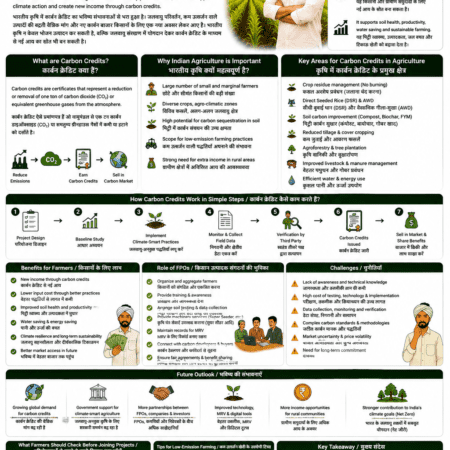
Carbon credits are one form of climate finance. When farmers adopt practices that reduce emissions or store carbon, a carbon project may measure and verify the climate benefit. If the benefit is accepted under a recognised standard, carbon credits may be issued and sold to buyers. After sale, income can be shared with farmers and project partners.
कार्बन क्रेडिट जलवायु वित्त का एक रूप हैं। जब किसान ऐसी पद्धतियाँ अपनाते हैं जो उत्सर्जन घटाती हैं या कार्बन संग्रहित करती हैं, तो कार्बन परियोजना जलवायु लाभ को माप और सत्यापित कर सकती है। यदि लाभ मान्यता प्राप्त मानक के अंतर्गत स्वीकार होता है, तो कार्बन क्रेडिट जारी और खरीदारों को बेचे जा सकते हैं। बिक्री के बाद आय किसानों और परियोजना भागीदारों में बाँटी जा सकती है।
However, Sustainable agriculture and climate finance should not be limited only to carbon credits. Carbon credits are possible, but they take time and are not guaranteed. Climate finance can also include grants, loans, subsidies, CSR projects, impact investment, and risk support that help farmers adopt sustainable practices even before carbon income arrives.
हालाँकि टिकाऊ कृषि और जलवायु वित्त को केवल कार्बन क्रेडिट तक सीमित नहीं रखना चाहिए। कार्बन क्रेडिट संभव हैं, लेकिन वे समय लेते हैं और निश्चित नहीं होते। जलवायु वित्त में अनुदान, ऋण, सब्सिडी, सामाजिक उत्तरदायित्व परियोजनाएँ, प्रभाव निवेश और जोखिम सहायता भी शामिल हो सकते हैं, जो कार्बन आय आने से पहले भी किसानों को टिकाऊ पद्धतियाँ अपनाने में मदद करते हैं।
Sustainable Practices Eligible for Climate Finance / जलवायु वित्त के लिए उपयुक्त टिकाऊ पद्धतियाँ
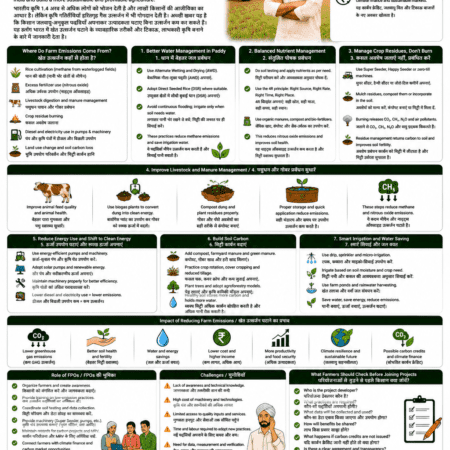
Soil carbon improvement is one of the most important practices. Farmers can improve soil carbon through composting, residue management, green manure, reduced tillage, crop rotation, and organic matter addition. These practices improve soil fertility, water holding capacity, and climate resilience.
मिट्टी कार्बन सुधार सबसे महत्वपूर्ण पद्धतियों में से एक है। किसान कंपोस्ट, फसल अवशेष प्रबंधन, हरी खाद, कम जुताई, फसल चक्र और जैविक पदार्थ जोड़कर मिट्टी कार्बन सुधार सकते हैं। ये पद्धतियाँ मिट्टी उर्वरता, जल धारण क्षमता और जलवायु सहनशीलता सुधारती हैं।
Agroforestry and tree plantation are also important under Sustainable agriculture and climate finance. Trees store carbon, reduce heat stress, protect soil, improve biodiversity, and may provide fruit, fodder, timber, or other income. Climate finance can support saplings, plantation planning, survival monitoring, and farmer training.
कृषि वानिकी और वृक्षारोपण भी टिकाऊ कृषि और जलवायु वित्त के अंतर्गत महत्वपूर्ण हैं। पेड़ कार्बन संग्रहित करते हैं, गर्मी के तनाव को कम करते हैं, मिट्टी की रक्षा करते हैं, जैव विविधता सुधारते हैं और फल, चारा, लकड़ी या अन्य आय दे सकते हैं। जलवायु वित्त पौधों, वृक्षारोपण योजना, जीवित रहने की निगरानी और किसान प्रशिक्षण को सहारा दे सकता है।
Crop residue management, Direct Seeded Rice, water-saving irrigation, bio-inputs, composting, organic farming, natural farming, renewable energy on farms, and climate-resilient seed systems can also be supported through climate finance when they create measurable sustainability benefits.
फसल अवशेष प्रबंधन, सीधी बुवाई धान, जल बचत सिंचाई, जैविक कृषि सामग्री, कंपोस्ट, जैविक खेती, प्राकृतिक खेती, खेतों पर नवीकरणीय ऊर्जा और जलवायु-सहनशील बीज व्यवस्था को भी जलवायु वित्त से सहारा मिल सकता है, यदि वे मापने योग्य टिकाऊ लाभ बनाते हैं।
Role of FPOs in Accessing Climate Finance / जलवायु वित्त तक पहुँच में FPOs की भूमिका
FPOs can play a major role in connecting farmers with climate finance. They can aggregate farmers, prepare project proposals, collect farmer data, maintain records, organise training, coordinate soil testing, implement climate-smart practices, and work with funders or project developers.
किसान उत्पादक संगठन किसानों को जलवायु वित्त से जोड़ने में बड़ी भूमिका निभा सकते हैं। वे किसानों को संगठित कर सकते हैं, परियोजना प्रस्ताव तैयार कर सकते हैं, किसान आँकड़े एकत्र कर सकते हैं, अभिलेख रख सकते हैं, प्रशिक्षण आयोजित कर सकते हैं, मिट्टी परीक्षण का समन्वय कर सकते हैं, जलवायु-अनुकूल पद्धतियाँ लागू कर सकते हैं और वित्तदाताओं या परियोजना विकासकर्ताओं के साथ काम कर सकते हैं।
In Sustainable agriculture and climate finance, FPOs are important because funders usually prefer organised groups with clear data and implementation capacity. A single farmer may not be able to access climate finance, but an FPO with hundreds or thousands of farmers can create a stronger project.
टिकाऊ कृषि और जलवायु वित्त में किसान उत्पादक संगठन महत्वपूर्ण हैं, क्योंकि वित्तदाता सामान्यतः स्पष्ट आँकड़ों और क्रियान्वयन क्षमता वाले संगठित समूहों को प्राथमिकता देते हैं। एक अकेला किसान जलवायु वित्त तक नहीं पहुँच सकता, लेकिन सैकड़ों या हजारों किसानों वाला किसान उत्पादक संगठन मजबूत परियोजना बना सकता है।
How FPOs Can Build a Climate Finance Project / FPOs जलवायु वित्त परियोजना कैसे बना सकते हैं
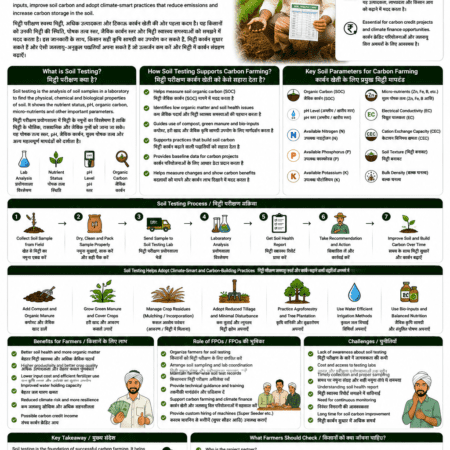
The first step is identifying the local climate problem. The FPO should study whether farmers are facing soil degradation, water scarcity, residue burning, high input cost, heat stress, drought, flood, or declining productivity. The second step is selecting suitable sustainable practices that can solve these problems.
पहला चरण स्थानीय जलवायु समस्या की पहचान है। किसान उत्पादक संगठन को यह देखना चाहिए कि किसान मिट्टी क्षरण, जल संकट, फसल अवशेष जलाने, अधिक लागत, गर्मी तनाव, सूखा, बाढ़ या घटती उत्पादकता का सामना कर रहे हैं या नहीं। दूसरा चरण ऐसी उपयुक्त टिकाऊ पद्धतियाँ चुनना है जो इन समस्याओं का समाधान कर सकें।
The third step is preparing baseline data. The FPO should collect farmer details, land area, crop pattern, soil condition, input use, water use, and current farming practices. The fourth step is preparing a proposal for funders, companies, CSR partners, carbon project developers, or climate finance institutions.
तीसरा चरण आधार आँकड़े तैयार करना है। किसान उत्पादक संगठन को किसान विवरण, भूमि क्षेत्र, फसल पद्धति, मिट्टी स्थिति, कृषि सामग्री उपयोग, जल उपयोग और वर्तमान खेती पद्धतियाँ एकत्र करनी चाहिए। चौथा चरण वित्तदाताओं, कंपनियों, सामाजिक उत्तरदायित्व भागीदारों, कार्बन परियोजना विकासकर्ताओं या जलवायु वित्त संस्थाओं के लिए प्रस्ताव तैयार करना है।
The fifth step is implementation and monitoring. The FPO should train farmers, implement practices, collect data, track results, and maintain transparency. This makes Sustainable agriculture and climate finance practical for farmers and credible for funders.
पाँचवाँ चरण क्रियान्वयन और निगरानी है। किसान उत्पादक संगठन को किसानों को प्रशिक्षण देना चाहिए, पद्धतियाँ लागू करनी चाहिए, आँकड़े एकत्र करने चाहिए, परिणामों का अनुसरण करना चाहिए और पारदर्शिता बनाए रखनी चाहिए। इससे टिकाऊ कृषि और जलवायु वित्त किसानों के लिए व्यावहारिक और वित्तदाताओं के लिए विश्वसनीय बनता है।
Benefits of Sustainable Agriculture and Climate Finance for Farmers / किसानों के लिए टिकाऊ कृषि और जलवायु वित्त के लाभ
Farmers can benefit through better soil health, reduced input cost, improved water efficiency, better crop resilience, reduced climate risk, improved biodiversity, and possible additional income through carbon credits or sustainability-linked projects. These benefits can improve both farm productivity and long-term income security.
किसानों को बेहतर मिट्टी स्वास्थ्य, कम कृषि लागत, बेहतर जल उपयोग क्षमता, अधिक फसल सहनशीलता, कम जलवायु जोखिम, बेहतर जैव विविधता और कार्बन क्रेडिट या टिकाऊपन आधारित परियोजनाओं से संभावित अतिरिक्त आय के रूप में लाभ मिल सकता है। ये लाभ खेत उत्पादकता और दीर्घकालिक आय सुरक्षा दोनों सुधार सकते हैं।
Sustainable agriculture and climate finance can also reduce farmer vulnerability. When farms have healthier soil, more water retention, more trees, better crop diversity, and lower dependency on costly inputs, farmers become better prepared to face drought, heat, irregular rainfall, and market shocks.
टिकाऊ कृषि और जलवायु वित्त किसान जोखिम को भी कम कर सकते हैं। जब खेतों में स्वस्थ मिट्टी, अधिक जल धारण क्षमता, अधिक पेड़, बेहतर फसल विविधता और महंगी कृषि सामग्री पर कम निर्भरता होती है, तो किसान सूखा, गर्मी, अनियमित वर्षा और बाज़ार झटकों का सामना बेहतर ढंग से कर सकते हैं।
Benefits for FPOs / FPOs के लिए लाभ
FPOs can benefit by becoming local climate action institutions. They can build new service models around soil testing, composting, bio-inputs, farm machinery, tree plantation, water-saving technologies, carbon project aggregation, farmer data systems, and climate-smart advisory.
किसान उत्पादक संगठन स्थानीय जलवायु कार्रवाई संस्थान बनकर लाभ उठा सकते हैं। वे मिट्टी परीक्षण, कंपोस्ट, जैविक कृषि सामग्री, कृषि यंत्र, वृक्षारोपण, जल बचत तकनीक, कार्बन परियोजना समूह, किसान आँकड़ा व्यवस्था और जलवायु-अनुकूल सलाह के आसपास नए सेवा मॉडल बना सकते हैं।
In Sustainable agriculture and climate finance, FPOs can also attract partnerships, grants, CSR support, technical collaborations, and impact investment. A strong FPO can show that it is not only a business organisation but also a rural climate solution platform.
टिकाऊ कृषि और जलवायु वित्त में किसान उत्पादक संगठन साझेदारी, अनुदान, सामाजिक उत्तरदायित्व सहायता, तकनीकी सहयोग और प्रभाव निवेश भी आकर्षित कर सकते हैं। मजबूत किसान उत्पादक संगठन यह दिखा सकता है कि वह केवल व्यवसायिक संगठन नहीं, बल्कि ग्रामीण जलवायु समाधान मंच भी है।
Challenges in Accessing Climate Finance / जलवायु वित्त तक पहुँच की चुनौतियाँ
The first challenge is lack of awareness. Many farmers and FPOs do not know where climate finance comes from or how to apply for it. The second challenge is documentation. Funders and project partners need proper data, proposals, farmer records, and impact tracking.
पहली चुनौती जागरूकता की कमी है। कई किसान और किसान उत्पादक संगठन नहीं जानते कि जलवायु वित्त कहाँ से आता है या उसके लिए आवेदन कैसे किया जाता है। दूसरी चुनौती दस्तावेज़ीकरण है। वित्तदाताओं और परियोजना भागीदारों को सही आँकड़े, प्रस्ताव, किसान अभिलेख और प्रभाव निगरानी चाहिए।
The third challenge is high transaction cost. Small farmer projects may be expensive to monitor and manage unless farmers are aggregated through FPOs. The fourth challenge is technical complexity. Climate finance often requires understanding of carbon, emissions, sustainability indicators, MRV, and project reporting.
तीसरी चुनौती अधिक लेन-देन लागत है। छोटे किसान परियोजनाओं की निगरानी और प्रबंधन महंगा हो सकता है, जब तक किसानों को किसान उत्पादक संगठनों के माध्यम से संगठित न किया जाए। चौथी चुनौती तकनीकी जटिलता है। जलवायु वित्त में अक्सर कार्बन, उत्सर्जन, टिकाऊ संकेतक, मापन-प्रतिवेदन-सत्यापन और परियोजना प्रतिवेदन की समझ चाहिए।
The fifth challenge is greenwashing risk. Some projects may claim climate benefits without real impact. Therefore, Sustainable agriculture and climate finance must be based on credible data, transparent reporting, and real farmer benefits.
पाँचवीं चुनौती केवल दिखावे वाले पर्यावरणीय दावों का जोखिम है। कुछ परियोजनाएँ वास्तविक प्रभाव के बिना जलवायु लाभ का दावा कर सकती हैं। इसलिए टिकाऊ कृषि और जलवायु वित्त विश्वसनीय आँकड़ों, पारदर्शी प्रतिवेदन और वास्तविक किसान लाभों पर आधारित होना चाहिए।
What Farmers Should Check Before Joining / जुड़ने से पहले किसान क्या जाँचें
Before joining any climate finance or carbon project, farmers should ask who the project developer is, what practices they must follow, what data will be collected, who will pay the cost, who will verify the project, how benefits will be shared, and when payment or support may come.
किसी भी जलवायु वित्त या कार्बन परियोजना से जुड़ने से पहले किसानों को पूछना चाहिए कि परियोजना विकासकर्ता कौन है, उन्हें कौन-सी पद्धतियाँ अपनानी होंगी, कौन से आँकड़े एकत्र होंगे, लागत कौन देगा, परियोजना का सत्यापन कौन करेगा, लाभ कैसे बाँटे जाएँगे और भुगतान या सहायता कब आ सकती है।
Farmers should also ask about data ownership, carbon rights, project duration, cost deductions, buyer linkage, exit conditions, and dispute resolution. These questions make Sustainable agriculture and climate finance safer and more transparent for farmers.
किसानों को आँकड़ा स्वामित्व, कार्बन अधिकार, परियोजना अवधि, लागत कटौती, खरीदार जुड़ाव, बाहर निकलने की शर्तें और विवाद समाधान के बारे में भी पूछना चाहिए। ये प्रश्न टिकाऊ कृषि और जलवायु वित्त को किसानों के लिए अधिक सुरक्षित और पारदर्शी बनाते हैं।
Practical Model for Indian FPOs / भारतीय किसान उत्पादक संगठनों के लिए व्यावहारिक मॉडल
A practical model can begin with a climate-smart village or climate-smart farmer group. The FPO can select 500 to 1,000 farmers and focus on one or two measurable activities such as soil carbon improvement, crop residue management, tree plantation, Direct Seeded Rice, or water-saving irrigation. This makes the project manageable and measurable.
एक व्यावहारिक मॉडल जलवायु-अनुकूल गाँव या जलवायु-अनुकूल किसान समूह से शुरू हो सकता है। किसान उत्पादक संगठन पाँच सौ से एक हजार किसानों का चयन करके मिट्टी कार्बन सुधार, फसल अवशेष प्रबंधन, वृक्षारोपण, सीधी बुवाई धान या जल बचत सिंचाई जैसी एक या दो मापने योग्य गतिविधियों पर ध्यान दे सकता है। इससे परियोजना प्रबंधनीय और मापने योग्य बनती है।
The FPO can prepare baseline data, organise farmer training, arrange technical support, maintain field records, and approach CSR partners, development agencies, government schemes, carbon project developers, banks, or climate finance institutions. This practical approach connects Sustainable agriculture and climate finance with real farmer needs.
किसान उत्पादक संगठन आधार आँकड़े तैयार कर सकता है, किसान प्रशिक्षण आयोजित कर सकता है, तकनीकी सहायता की व्यवस्था कर सकता है, खेत अभिलेख रख सकता है और सामाजिक उत्तरदायित्व भागीदारों, विकास एजेंसियों, सरकारी योजनाओं, कार्बन परियोजना विकासकर्ताओं, बैंकों या जलवायु वित्त संस्थाओं से संपर्क कर सकता है। यह व्यावहारिक तरीका टिकाऊ कृषि और जलवायु वित्त को वास्तविक किसान आवश्यकताओं से जोड़ता है।
Conclusion / निष्कर्ष
Sustainable agriculture and climate finance can create a strong future for Indian farmers if implemented with proper planning, credible partners, transparent agreements, and farmer-first benefits. Sustainable agriculture improves soil, water, biodiversity, productivity, and resilience. Climate finance provides the financial support needed to make these practices affordable and scalable.
टिकाऊ कृषि और जलवायु वित्त भारतीय किसानों के लिए मजबूत भविष्य बना सकते हैं, यदि इन्हें सही योजना, विश्वसनीय भागीदारों, पारदर्शी समझौतों और किसान हितों को प्राथमिकता देकर लागू किया जाए। टिकाऊ कृषि मिट्टी, पानी, जैव विविधता, उत्पादकता और सहनशीलता सुधारती है। जलवायु वित्त इन पद्धतियों को किफायती और विस्तार योग्य बनाने के लिए आवश्यक वित्तीय सहायता देता है।
For farmers, climate finance should be seen as support for better farming, not only as carbon credit income. For FPOs, Sustainable agriculture and climate finance create an opportunity to aggregate farmers, build climate-smart agriculture services, attract partnerships, and connect rural India with future climate economy opportunities.
किसानों के लिए जलवायु वित्त को केवल कार्बन क्रेडिट आय नहीं, बल्कि बेहतर खेती के सहारे के रूप में देखना चाहिए। किसान उत्पादक संगठनों के लिए टिकाऊ कृषि और जलवायु वित्त किसानों को संगठित करने, जलवायु-अनुकूल कृषि सेवाएँ बनाने, साझेदारी आकर्षित करने और ग्रामीण भारत को भविष्य की जलवायु अर्थव्यवस्था से जोड़ने का अवसर बनाते हैं।
Frequently Asked Questions (FAQs) / अक्सर पूछे जाने वाले प्रश्न
1. What is Sustainable agriculture and climate finance?
Sustainable agriculture and climate finance means connecting climate-friendly farming practices with financial support such as grants, loans, carbon finance, insurance, CSR funding, and impact investment.
1. टिकाऊ कृषि और जलवायु वित्त क्या है?
टिकाऊ कृषि और जलवायु वित्त का अर्थ जलवायु-अनुकूल कृषि पद्धतियों को अनुदान, ऋण, कार्बन वित्त, बीमा, सामाजिक उत्तरदायित्व वित्त और प्रभाव निवेश जैसी वित्तीय सहायता से जोड़ना है।
2. How does climate finance help farmers?
Climate finance helps farmers adopt sustainable practices by supporting soil testing, composting, irrigation, tree plantation, bio-inputs, residue management, training, and climate-smart infrastructure.
2. जलवायु वित्त किसानों की कैसे मदद करता है?
जलवायु वित्त मिट्टी परीक्षण, कंपोस्ट, सिंचाई, वृक्षारोपण, जैविक कृषि सामग्री, फसल अवशेष प्रबंधन, प्रशिक्षण और जलवायु-अनुकूल ढाँचे को सहारा देकर किसानों को टिकाऊ पद्धतियाँ अपनाने में मदद करता है।
3. Are carbon credits part of climate finance?
Yes, carbon credits are one form of climate finance, but climate finance also includes grants, loans, CSR support, insurance, subsidies, and impact investment.
3. क्या कार्बन क्रेडिट जलवायु वित्त का हिस्सा हैं?
हाँ, कार्बन क्रेडिट जलवायु वित्त का एक रूप हैं, लेकिन जलवायु वित्त में अनुदान, ऋण, सामाजिक उत्तरदायित्व सहायता, बीमा, सब्सिडी और प्रभाव निवेश भी शामिल हैं।
4. How can FPOs access climate finance?
FPOs can access climate finance by aggregating farmers, preparing project proposals, collecting baseline data, partnering with credible technical organisations, and approaching funders, CSR partners, banks, or carbon project developers.
4. किसान उत्पादक संगठन जलवायु वित्त तक कैसे पहुँच सकते हैं?
किसान उत्पादक संगठन किसानों को संगठित करके, परियोजना प्रस्ताव तैयार करके, आधार आँकड़े एकत्र करके, विश्वसनीय तकनीकी संस्थाओं से साझेदारी करके और वित्तदाताओं, सामाजिक उत्तरदायित्व भागीदारों, बैंकों या कार्बन परियोजना विकासकर्ताओं से संपर्क करके जलवायु वित्त तक पहुँच सकते हैं।
5. Is climate finance guaranteed for every farmer?
No, climate finance is not guaranteed for every farmer. It depends on project quality, eligibility, documentation, funder interest, measurable impact, and transparent implementation.
5. क्या हर किसान के लिए जलवायु वित्त निश्चित होता है?
नहीं, हर किसान के लिए जलवायु वित्त निश्चित नहीं होता। यह परियोजना गुणवत्ता, पात्रता, दस्तावेज़ीकरण, वित्तदाता रुचि, मापने योग्य प्रभाव और पारदर्शी क्रियान्वयन पर निर्भर करता है।
Internal Links / आंतरिक लिंक
👉 Is Carbon Credit Income Real for Indian Farmers? — https://belhamaifpo.com/agriculture/is-carbon-credit-income-real-for-indian-farmers/
👉 Challenges in Carbon Credit Projects for Small Farmers — https://belhamaifpo.com/agriculture/challenges-in-carbon-credit-projects-for-small-farmers/
👉 Carbon Credit Business Model for Farmer Producer Organizations — https://belhamaifpo.com/agriculture/carbon-credit-business-model-for-farmer-producer-organizations/
👉 Can FPOs Aggregate Farmers for Carbon Credits? — https://belhamaifpo.com/agriculture/can-fpos-aggregate-farmers-for-carbon-credits/
👉 Carbon Credit Companies in India and How They Work — https://belhamaifpo.com/agriculture/carbon-credit-companies-in-india-and-how-they-work/
👉 Who Buys Agricultural Carbon Credits? — https://belhamaifpo.com/agriculture/who-buys-agricultural-carbon-credits/
👉 Carbon Credit Certification Process in Agriculture — https://belhamaifpo.com/agriculture/carbon-credit-certification-process-in-agriculture/
👉 MRV in Carbon Credit Projects: What Farmers Should Know — https://belhamaifpo.com/agriculture/mrv-in-carbon-credit-projects-what-farmers-should-know/
👉 Carbon Farming in India: Complete Guide — https://belhamaifpo.com/agriculture/carbon-farming-in-india-complete-guide/
👉 Carbon Credit Opportunities in Indian Agriculture — https://belhamaifpo.com/agriculture/carbon-credit-opportunities-in-indian-agriculture/
👉 Role of FPOs in Carbon Credit Projects — https://belhamaifpo.com/agriculture/role-of-fpos-in-carbon-credit-projects/
👉 Farmer Producer Organizations Complete Guide — https://belhamaifpo.com/farmer-producer-organisation/farmer-producer-organizations-fpos/
👉 SDGs & Our FPO — https://belhamaifpo.com/sdg-goals/
External Authority Links / बाहरी प्राधिकरण लिंक
👉 Ministry of Agriculture & Farmers Welfare — https://agriwelfare.gov.in/
👉 NITI Aayog — https://www.niti.gov.in/
👉 UNFCCC — https://unfccc.int/
👉 FAO Climate-Smart Agriculture — https://www.fao.org/climate-smart-agriculture/en/
👉 World Bank Climate-Smart Agriculture — https://www.worldbank.org/en/topic/climate-smart-agriculture
👉 Verra Verified Carbon Standard — https://verra.org/programs/verified-carbon-standard/
👉 Gold Standard — https://www.goldstandard.org/
👉 Carbon Registry-India — https://cri.nccf.in/
Follow Belha Mai FPO for More Updates / अधिक अपडेट के लिए Belha Mai FPO को फॉलो करें
👉 Website — https://belhamaifpo.com/
👉 Facebook — https://www.facebook.com/profile.php?id=61561043486818
👉 Instagram — https://instagram.com/belhamaifpo
👉 LinkedIn — https://www.linkedin.com/in/abhay-singh-ab5568280/
👉 YouTube — https://www.youtube.com/channel/UC9ZvojoTMCa7mU1-Q_Bh60A