Voluntary carbon market explained for farmers means understanding how farmers can earn income by adopting farming practices that reduce greenhouse gas emissions or store more carbon in soil, trees and crops. In simple words, when a farmer shifts from harmful or high-emission practices to climate-friendly agriculture, that positive environmental impact can sometimes be measured, verified and converted into carbon credits. Companies that want to support climate action may buy these credits through a voluntary carbon market.
किसानों के लिए voluntary carbon market explained का अर्थ है यह समझना कि किसान ऐसी खेती अपनाकर अतिरिक्त आय कैसे कमा सकते हैं, जिससे greenhouse gas emissions कम हों या मिट्टी, पेड़ों और फसलों में अधिक carbon संचित हो। सरल भाषा में, जब किसान अधिक प्रदूषणकारी या संसाधन-खपत वाली खेती से climate-friendly agriculture की ओर बढ़ता है, तो उस सकारात्मक पर्यावरणीय प्रभाव को कई बार मापा, सत्यापित किया और carbon credits में बदला जा सकता है। जो कंपनियाँ climate action को समर्थन देना चाहती हैं, वे voluntary carbon market के माध्यम से इन credits को खरीद सकती हैं।
What Is the Voluntary Carbon Market?
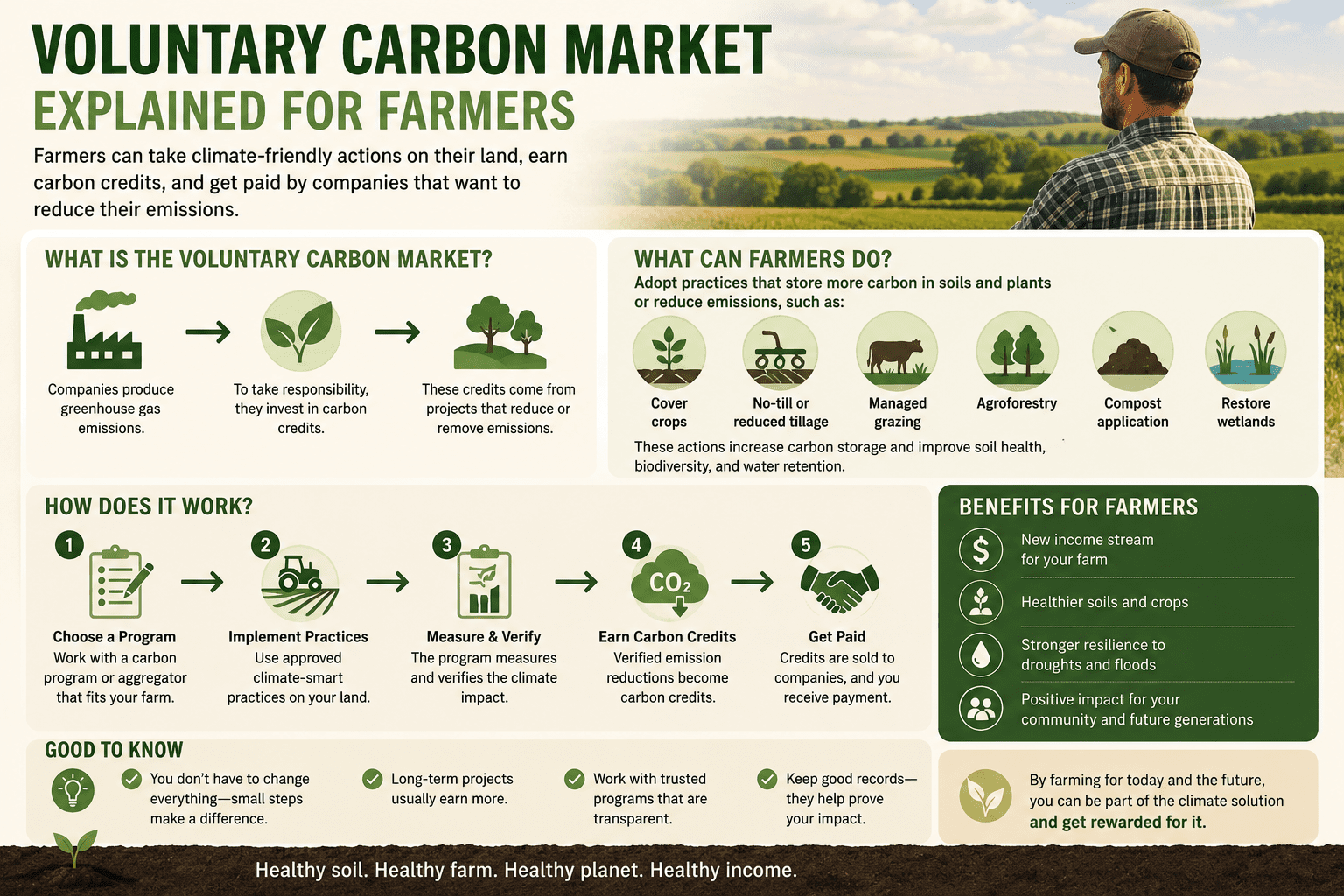
The voluntary carbon market is a market where companies, institutions or individuals voluntarily buy carbon credits to support projects that reduce or remove carbon dioxide and other greenhouse gases from the atmosphere. Unlike mandatory carbon markets, voluntary markets are not always driven by direct legal obligation. They are generally driven by corporate climate goals, sustainability commitments, ESG reporting, net-zero targets and environmental responsibility. In agriculture, this market can open new income opportunities for farmers when projects are designed transparently and benefits are shared fairly.
Voluntary carbon market एक ऐसा बाजार है जहाँ कंपनियाँ, संस्थाएँ या व्यक्ति स्वेच्छा से carbon credits खरीदते हैं, ताकि वे ऐसे projects को समर्थन दे सकें जो वातावरण से carbon dioxide और अन्य greenhouse gases को कम करें या हटाएँ। अनिवार्य carbon markets के विपरीत, voluntary markets हमेशा सीधे कानूनी दायित्व से नहीं चलते। ये सामान्यतः corporate climate goals, sustainability commitments, ESG reporting, net-zero targets और environmental responsibility से जुड़े होते हैं। कृषि में, यदि projects पारदर्शी ढंग से बनाए जाएँ और लाभ किसानों तक उचित रूप से पहुँचाया जाए, तो यह बाजार किसानों के लिए नई आय का अवसर खोल सकता है।
Why Farmers Are Important in the Carbon Market
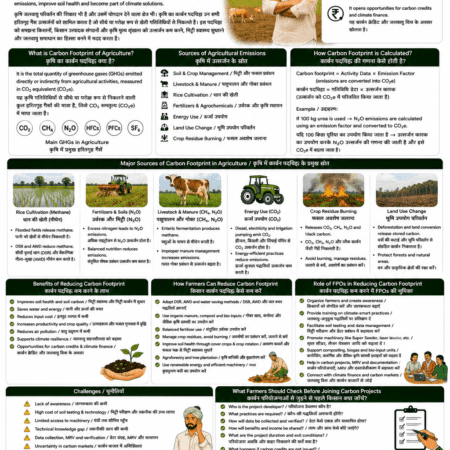
Farmers are important in the voluntary carbon market because agriculture is directly connected with soil, water, trees, biomass, crop residue, livestock and land-use practices. Healthy soils can store carbon, trees can absorb carbon dioxide, and better farm management can reduce emissions from burning, excessive fertilizer use and inefficient water practices. This is why voluntary carbon market explained for farmers is becoming an important topic for FPOs, farmer groups, agribusinesses and climate-focused institutions.
Voluntary carbon market में किसान इसलिए महत्वपूर्ण हैं क्योंकि कृषि सीधे मिट्टी, पानी, पेड़ों, biomass, फसल अवशेष, पशुधन और land-use practices से जुड़ी होती है। स्वस्थ मिट्टी carbon को संचित कर सकती है, पेड़ carbon dioxide को अवशोषित कर सकते हैं, और बेहतर farm management से फसल अवशेष जलाने, अधिक fertilizer उपयोग और असक्षम जल प्रबंधन से होने वाले emissions को कम किया जा सकता है। इसी कारण voluntary carbon market explained for farmers FPOs, किसान समूहों, agribusinesses और climate-focused institutions के लिए एक महत्वपूर्ण विषय बन रहा है।
What Is a Carbon Credit?
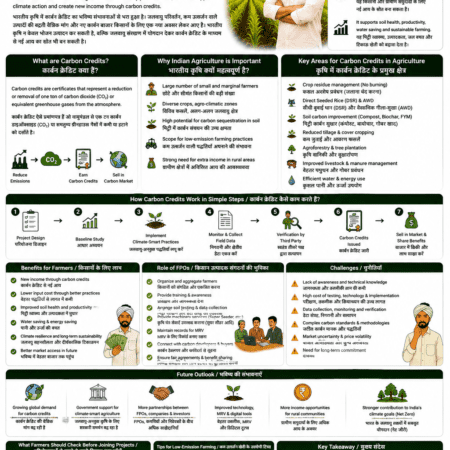
One carbon credit generally represents one tonne of carbon dioxide equivalent that has been reduced, avoided or removed through an approved project activity. In farming, this may come from improved soil carbon, reduced methane or nitrous oxide emissions, agroforestry, residue management, composting, water-saving practices or low-emission agriculture. However, a carbon credit is not created just by claiming that a farmer has changed a practice. It must be measured, documented, verified and approved under a recognized carbon standard or program.
एक carbon credit सामान्यतः एक tonne carbon dioxide equivalent का प्रतिनिधित्व करता है, जिसे किसी approved project activity के माध्यम से कम किया गया, रोका गया या वातावरण से हटाया गया हो। खेती में यह improved soil carbon, methane या nitrous oxide emissions में कमी, agroforestry, residue management, composting, water-saving practices या low-emission agriculture से आ सकता है। लेकिन केवल यह कह देने से carbon credit नहीं बनता कि किसान ने अपनी खेती का तरीका बदल दिया है। इसके लिए measurement, documentation, verification और recognized carbon standard या program के तहत approval आवश्यक होता है।
How Does the Voluntary Carbon Market Work for Farmers?
Voluntary carbon market explained for farmers can be understood in five simple steps. First, farmers join a carbon farming project through an FPO, aggregator, company, NGO or project developer. Second, farmers adopt approved practices such as reduced tillage, cover crops, agroforestry or residue management. Third, data is collected through farm records, satellite monitoring, soil testing, photographs, field visits and digital tools. Fourth, the project impact is verified by an independent body. Fifth, carbon credits are issued and sold to buyers, after which farmers may receive payment as per the agreed benefit-sharing model.
किसानों के लिए voluntary carbon market explained को पाँच सरल चरणों में समझा जा सकता है। पहला, किसान FPO, aggregator, company, NGO या project developer के माध्यम से carbon farming project से जुड़ते हैं। दूसरा, किसान reduced tillage, cover crops, agroforestry या residue management जैसी approved practices अपनाते हैं। तीसरा, farm records, satellite monitoring, soil testing, photographs, field visits और digital tools के माध्यम से data collect किया जाता है। चौथा, project impact को independent body द्वारा verify किया जाता है। पाँचवाँ, carbon credits issue होते हैं और buyers को बेचे जाते हैं, जिसके बाद agreed benefit-sharing model के अनुसार किसानों को payment मिल सकता है।
Farming Practices That Can Generate Carbon Credits
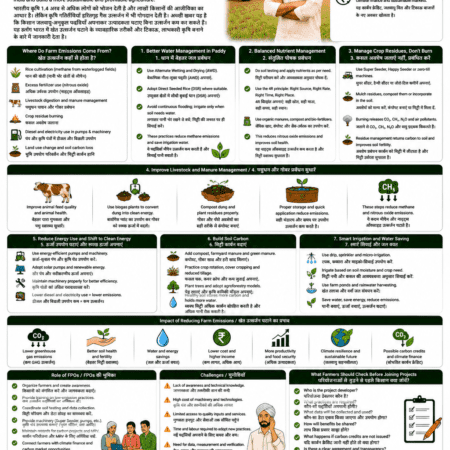
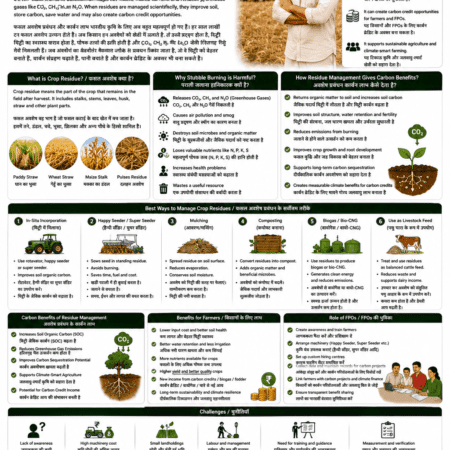
Several climate-friendly practices may support carbon credit generation in agriculture, depending on the methodology used by the project. These practices include reduced tillage, direct seeded rice, crop residue management, compost application, bio-input use, agroforestry, tree plantation, cover cropping, crop rotation, efficient fertilizer management, improved irrigation, methane reduction in paddy cultivation and soil organic carbon improvement. Not every practice automatically generates carbon credits, but these practices can improve the climate value of agriculture when properly measured and verified.
कृषि में कई climate-friendly practices carbon credit generation को समर्थन दे सकती हैं, यह इस बात पर निर्भर करता है कि project किस methodology का उपयोग कर रहा है। इन practices में reduced tillage, direct seeded rice, crop residue management, compost application, bio-input use, agroforestry, tree plantation, cover cropping, crop rotation, efficient fertilizer management, improved irrigation, paddy cultivation में methane reduction और soil organic carbon improvement शामिल हो सकते हैं। हर practice अपने-आप carbon credits नहीं बनाती, लेकिन सही measurement और verification के साथ ये practices कृषि के climate value को बढ़ा सकती हैं।
Role of FPOs in the Voluntary Carbon Market
FPOs can play a very important role in the voluntary carbon market because individual small farmers usually do not have enough land, data capacity, technical knowledge or bargaining power to enter carbon markets alone. An FPO can aggregate farmers, organize training, maintain records, coordinate with project developers, support MRV activities and negotiate fair benefit-sharing. This is why voluntary carbon market explained for farmers should not be seen only as an individual farmer opportunity, but also as a collective opportunity for Farmer Producer Organisations.
FPOs voluntary carbon market में बहुत महत्वपूर्ण भूमिका निभा सकते हैं क्योंकि छोटे किसान सामान्यतः अकेले carbon market में प्रवेश करने के लिए पर्याप्त land area, data capacity, technical knowledge या bargaining power नहीं रखते। एक FPO किसानों को aggregate कर सकता है, training organize कर सकता है, records maintain कर सकता है, project developers के साथ coordination कर सकता है, MRV activities को support कर सकता है और fair benefit-sharing के लिए बातचीत कर सकता है। इसलिए voluntary carbon market explained for farmers को केवल individual farmer opportunity नहीं, बल्कि Farmer Producer Organisations के लिए collective opportunity के रूप में भी देखना चाहिए।
What Is MRV in Carbon Farming?
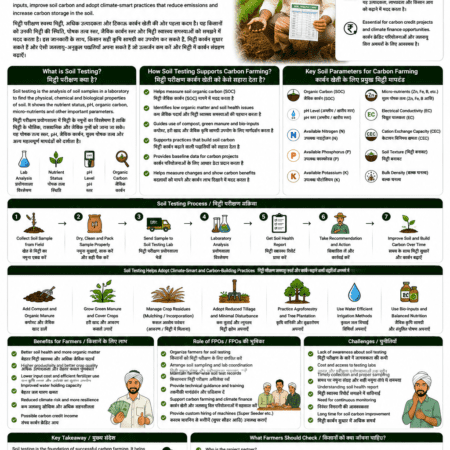
MRV means Measurement, Reporting and Verification. It is the backbone of carbon credit projects because buyers want proof that real climate benefits have happened. Measurement means calculating emission reductions or carbon storage. Reporting means preparing proper project documents and farmer-level records. Verification means checking the claims through an independent process. Without strong MRV, carbon credits may not be trusted in the market.
MRV का अर्थ है Measurement, Reporting and Verification। यह carbon credit projects की रीढ़ है क्योंकि buyers को यह प्रमाण चाहिए कि वास्तविक climate benefits हुए हैं। Measurement का अर्थ है emission reductions या carbon storage की गणना करना। Reporting का अर्थ है proper project documents और farmer-level records तैयार करना। Verification का अर्थ है claims को independent process के माध्यम से जाँचना। मजबूत MRV के बिना carbon credits पर market में भरोसा नहीं बनता।
Benefits of the Voluntary Carbon Market for Farmers
The biggest benefit of the voluntary carbon market for farmers is the possibility of additional income from sustainable farming. Apart from carbon payment, farmers may also gain healthier soil, better water retention, reduced input cost, improved biodiversity, higher resilience against drought and flood, and better market positioning for climate-friendly produce. For FPOs, carbon farming can also support institutional credibility, CSR partnerships, climate finance and sustainable agriculture branding.
किसानों के लिए voluntary carbon market का सबसे बड़ा लाभ sustainable farming से additional income की संभावना है। Carbon payment के अलावा किसानों को healthier soil, बेहतर water retention, reduced input cost, improved biodiversity, drought और flood के प्रति higher resilience, और climate-friendly produce के लिए बेहतर market positioning भी मिल सकती है। FPOs के लिए carbon farming institutional credibility, CSR partnerships, climate finance और sustainable agriculture branding को भी मजबूत कर सकती है।
Risks and Challenges Farmers Must Understand
Voluntary carbon market explained for farmers must also include risks and challenges. Carbon projects may take time to generate income because measurement, verification and credit issuance are lengthy processes. Payments may not come immediately. Farmers must carefully understand contract terms, data ownership, payment formula, project duration, liability, land-use restrictions and exit conditions. Farmers should avoid projects that promise very high guaranteed income without explaining methodology, MRV, buyer arrangement and benefit-sharing clearly.
किसानों के लिए voluntary carbon market explained में risks और challenges को भी शामिल करना आवश्यक है। Carbon projects से income आने में समय लग सकता है क्योंकि measurement, verification और credit issuance लंबी प्रक्रियाएँ हैं। Payments तुरंत नहीं आ सकते। किसानों को contract terms, data ownership, payment formula, project duration, liability, land-use restrictions और exit conditions को सावधानी से समझना चाहिए। किसानों को ऐसे projects से बचना चाहिए जो methodology, MRV, buyer arrangement और benefit-sharing को स्पष्ट किए बिना बहुत अधिक guaranteed income का वादा करते हों।
Why Transparency Is Important
Transparency is extremely important in carbon farming because the value of carbon credits depends on trust. Farmers should know who is developing the project, which carbon standard is being used, how carbon benefits are calculated, who buys the credits, how much revenue is generated and how much share reaches farmers. FPOs should maintain written agreements, farmer consent forms, baseline data, training records and payment records to protect farmers from confusion or exploitation.
Carbon farming में transparency अत्यंत महत्वपूर्ण है क्योंकि carbon credits की value trust पर निर्भर करती है। किसानों को यह पता होना चाहिए कि project कौन develop कर रहा है, कौन-सा carbon standard use हो रहा है, carbon benefits कैसे calculate हो रहे हैं, credits कौन खरीद रहा है, कितना revenue generate हो रहा है और किसानों तक कितना हिस्सा पहुँच रहा है। FPOs को किसानों को confusion या exploitation से बचाने के लिए written agreements, farmer consent forms, baseline data, training records और payment records maintain करने चाहिए।
Voluntary Carbon Market and Indian Agriculture
In India, agriculture has strong potential for carbon farming because millions of small farmers are already connected with soil, trees, crop residue, livestock and natural resource management. However, Indian agriculture also faces challenges such as small landholdings, fragmented records, limited digital data, low awareness and high MRV cost. For this reason, FPOs, cooperatives, carbon project developers, research institutions and government agencies will need to work together to make carbon markets farmer-friendly and transparent.
भारत में agriculture के पास carbon farming की मजबूत संभावना है क्योंकि लाखों छोटे किसान पहले से ही मिट्टी, पेड़ों, crop residue, livestock और natural resource management से जुड़े हैं। लेकिन Indian agriculture के सामने small landholdings, fragmented records, limited digital data, low awareness और high MRV cost जैसी चुनौतियाँ भी हैं। इसी कारण carbon markets को farmer-friendly और transparent बनाने के लिए FPOs, cooperatives, carbon project developers, research institutions और government agencies को मिलकर काम करना होगा।
How Belha Mai FPO Can Connect Farmers with Carbon Opportunities
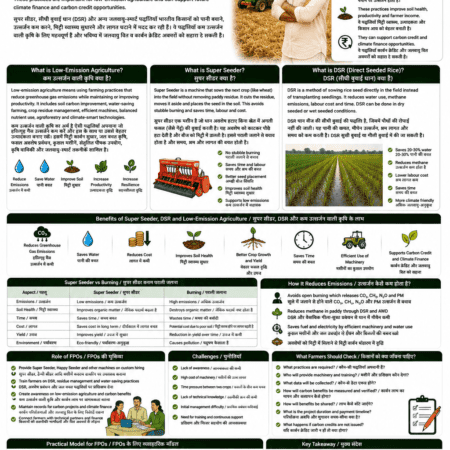
Belha Mai Farmers Producer Company Ltd. is already working in areas that are closely connected with climate-smart agriculture, such as farm machinery support, stubble burning reduction through Super Seeder use, sustainable horticulture, bio-input promotion, agroforestry planning, soil health improvement and farmer awareness. These activities can become the foundation for future carbon farming projects if they are documented properly and connected with credible MRV systems and transparent carbon market partners.
Belha Mai Farmers Producer Company Ltd. पहले से ही climate-smart agriculture से जुड़े क्षेत्रों में काम कर रहा है, जैसे farm machinery support, Super Seeder के उपयोग से stubble burning reduction, sustainable horticulture, bio-input promotion, agroforestry planning, soil health improvement और farmer awareness। यदि इन activities को सही तरीके से document किया जाए और credible MRV systems तथा transparent carbon market partners से जोड़ा जाए, तो ये future carbon farming projects की मजबूत foundation बन सकती हैं।
Practical Steps for Farmers Before Joining a Carbon Project
Before joining any carbon project, farmers should ask some important questions. What practice needs to be adopted? How long is the project period? Will the farmer receive training and technical support? Who will collect farm data? Who owns the carbon rights? How will payment be calculated? When will payment be made? What happens if crop failure, flood, drought or land change occurs? These questions protect farmers and help them enter the voluntary carbon market with clarity.
किसी भी carbon project से जुड़ने से पहले किसानों को कुछ महत्वपूर्ण प्रश्न पूछने चाहिए। कौन-सी practice अपनानी होगी? Project period कितना लंबा होगा? क्या किसान को training और technical support मिलेगा? Farm data कौन collect करेगा? Carbon rights किसके पास होंगे? Payment कैसे calculate होगा? Payment कब मिलेगा? Crop failure, flood, drought या land change होने पर क्या होगा? ये प्रश्न किसानों की सुरक्षा करते हैं और उन्हें clarity के साथ voluntary carbon market में प्रवेश करने में मदद करते हैं।
Conclusion
Voluntary carbon market explained for farmers is not just about selling carbon credits. It is about building a new relationship between farming, climate action and farmer income. If designed properly, the voluntary carbon market can reward farmers for improving soil health, reducing emissions, planting trees, conserving resources and adopting sustainable agriculture. But farmers and FPOs must move carefully, understand contracts, demand transparency and work only with credible partners. Carbon farming should not become another complicated system where farmers do the work and others take the benefit. It should become a fair, transparent and farmer-first opportunity.
किसानों के लिए voluntary carbon market explained केवल carbon credits बेचने की बात नहीं है। यह farming, climate action और farmer income के बीच एक नया संबंध बनाने की बात है। यदि इसे सही तरीके से design किया जाए, तो voluntary carbon market किसानों को soil health सुधारने, emissions कम करने, पेड़ लगाने, resources conserve करने और sustainable agriculture अपनाने के लिए reward कर सकता है। लेकिन किसानों और FPOs को सावधानी से आगे बढ़ना चाहिए, contracts समझने चाहिए, transparency की मांग करनी चाहिए और केवल credible partners के साथ काम करना चाहिए। Carbon farming ऐसी जटिल व्यवस्था नहीं बननी चाहिए जहाँ काम किसान करे और लाभ कोई और ले जाए। यह fair, transparent और farmer-first opportunity बननी चाहिए।
FAQs
1. What is the voluntary carbon market for farmers?
The voluntary carbon market for farmers is a system where farmers can participate in projects that reduce emissions or store carbon, and these climate benefits may be converted into carbon credits after proper measurement and verification.
किसानों के लिए voluntary carbon market एक ऐसी व्यवस्था है जिसमें किसान emissions कम करने या carbon store करने वाले projects में भाग लेते हैं, और सही measurement तथा verification के बाद इन climate benefits को carbon credits में बदला जा सकता है।
2. Can small farmers earn from carbon credits?
Yes, small farmers can earn from carbon credits, but usually they need to participate through an FPO, cooperative, aggregator or project developer because individual small farms may not have enough scale for carbon market participation.
हाँ, छोटे किसान carbon credits से आय कमा सकते हैं, लेकिन सामान्यतः उन्हें FPO, cooperative, aggregator या project developer के माध्यम से भाग लेना पड़ता है क्योंकि individual small farms के पास carbon market participation के लिए पर्याप्त scale नहीं होता।
3. Which farming practices help in carbon credit generation?
Practices such as reduced tillage, crop residue management, composting, agroforestry, cover cropping, efficient fertilizer use, direct seeded rice and soil organic carbon improvement may help in carbon credit generation depending on the project methodology.
Reduced tillage, crop residue management, composting, agroforestry, cover cropping, efficient fertilizer use, direct seeded rice और soil organic carbon improvement जैसी practices project methodology के अनुसार carbon credit generation में मदद कर सकती हैं।
4. Do farmers get payment immediately?
No, farmers usually do not get payment immediately. Carbon projects require data collection, monitoring, verification, credit issuance and sale of credits before payments are distributed according to the agreement.
नहीं, किसानों को सामान्यतः तुरंत payment नहीं मिलता। Carbon projects में agreement के अनुसार payment distribution से पहले data collection, monitoring, verification, credit issuance और credits की sale की प्रक्रिया होती है।
5. What should farmers check before signing a carbon project agreement?
Farmers should check project duration, payment terms, data ownership, carbon rights, responsibilities, risks, exit conditions, verification process and benefit-sharing formula before signing any carbon project agreement.
किसानों को किसी भी carbon project agreement पर signing करने से पहले project duration, payment terms, data ownership, carbon rights, responsibilities, risks, exit conditions, verification process और benefit-sharing formula को अवश्य जाँचना चाहिए।
Internal Links Section
Internal Links / आंतरिक लिंक
👉 Voluntary Carbon Market Explained for Farmers — https://belhamaifpo.com/agriculture/voluntary-carbon-market-explained-for-farmers/
👉 MRV in Carbon Credit Projects: What Farmers Should Know —https://belhamaifpo.com/agriculture/mrv-in-carbon-credit-projects-what-farmers-should-know/
👉 How to Measure Carbon Reduction on Farms —https://belhamaifpo.com/agriculture/how-to-measure-carbon-reduction-on-farms/
👉 Carbon Farming in India: Complete Guide — https://belhamaifpo.com/agriculture/carbon-farming-in-india-complete-guide/
👉 Carbon Credit Opportunities in Indian Agriculture — https://belhamaifpo.com/agriculture/carbon-credit-opportunities-in-indian-agriculture/
👉 Role of FPOs in Carbon Credit Projects — https://belhamaifpo.com/agriculture/role-of-fpos-in-carbon-credit-projects/
👉 Can Small Farmers Earn from Carbon Credits? — https://belhamaifpo.com/agriculture/can-small-farmers-earn-from-carbon-credits/
👉 Farmer Producer Organizations Complete Guide — https://belhamaifpo.com/farmer-producer-organisation/farmer-producer-organizations-fpos/
👉 SDGs & Our FPO — https://belhamaifpo.com/sdg-goals/
👉 Food Processing Industry in India: Complete Guide — https://belhamaifpo.com/agriculture/food-processing-industry-in-india/
👉 SDG Goals & Our FPO — https://belhamaifpo.com/sdg-goals/
👉 Latest Projects of Belha Mai FPO — https://belhamaifpo.com/latest-projects/
👉 About Belha Mai Farmers Producer Company Ltd — https://belhamaifpo.com/about-belha-mai-farmers-producer-company-ltd/
👉 Belha Mai FPO Home Page — https://belhamaifpo.com/
External Authority Links
👉 ICVCM Core Carbon Principles — https://icvcm.org/core-carbon-principles/
👉 Verra VM0042 Improved Agricultural Land Management Methodology — https://verra.org/methodologies/vm0042-improved-agricultural-land-management-v2-2/
👉 Government of India PIB: Carbon Credit Trading Scheme — https://www.pib.gov.in/PressReleseDetailm.aspx?PRID=2223703
👉 ICAR-CRIDA Policy Paper on Voluntary Carbon Market in Indian Agriculture — https://www.icar-crida.res.in/assets_c/img/Policypapers/VCM-Policy_paper-2025.pdf
Follow Belha Mai FPO for More Updates
Belha Mai Farmers Producer Company Ltd. is working to empower farmers through sustainable agriculture, value addition, climate-smart farming, digital tools and farmer-led rural transformation.
Belha Mai Farmers Producer Company Ltd. sustainable agriculture, value addition, climate-smart farming, digital tools और farmer-led rural transformation के माध्यम से किसानों को सशक्त बनाने के लिए कार्य कर रहा है।
👉 Website — https://belhamaifpo.com/
👉 Facebook — https://www.facebook.com/profile.php?id=61561043486818
👉 LinkedIn —https://www.linkedin.com/in/abhay-singh-ab5568280/
👉 Instagram — https://instagram.com/belhamaifpo
👉 YouTube — https://www.youtube.com/channel/UC9ZvojoTMCa7mU1-Q_Bh60A
Reference basis used: ICVCM defines the Core Carbon Principles as science-based principles for high-quality, verifiable carbon credits; Verra’s VM0042 methodology covers improved agricultural land management practices including soil organic carbon and emission reductions; India’s Carbon Credit Trading Scheme has been notified to price emission reduction, removal or avoidance through Carbon Credit Certificates; and ICAR-CRIDA has discussed VCM opportunities and challenges in Indian agriculture.