किसानों के लिए वृक्षारोपण और कार्बन खेती
Introduction / परिचय
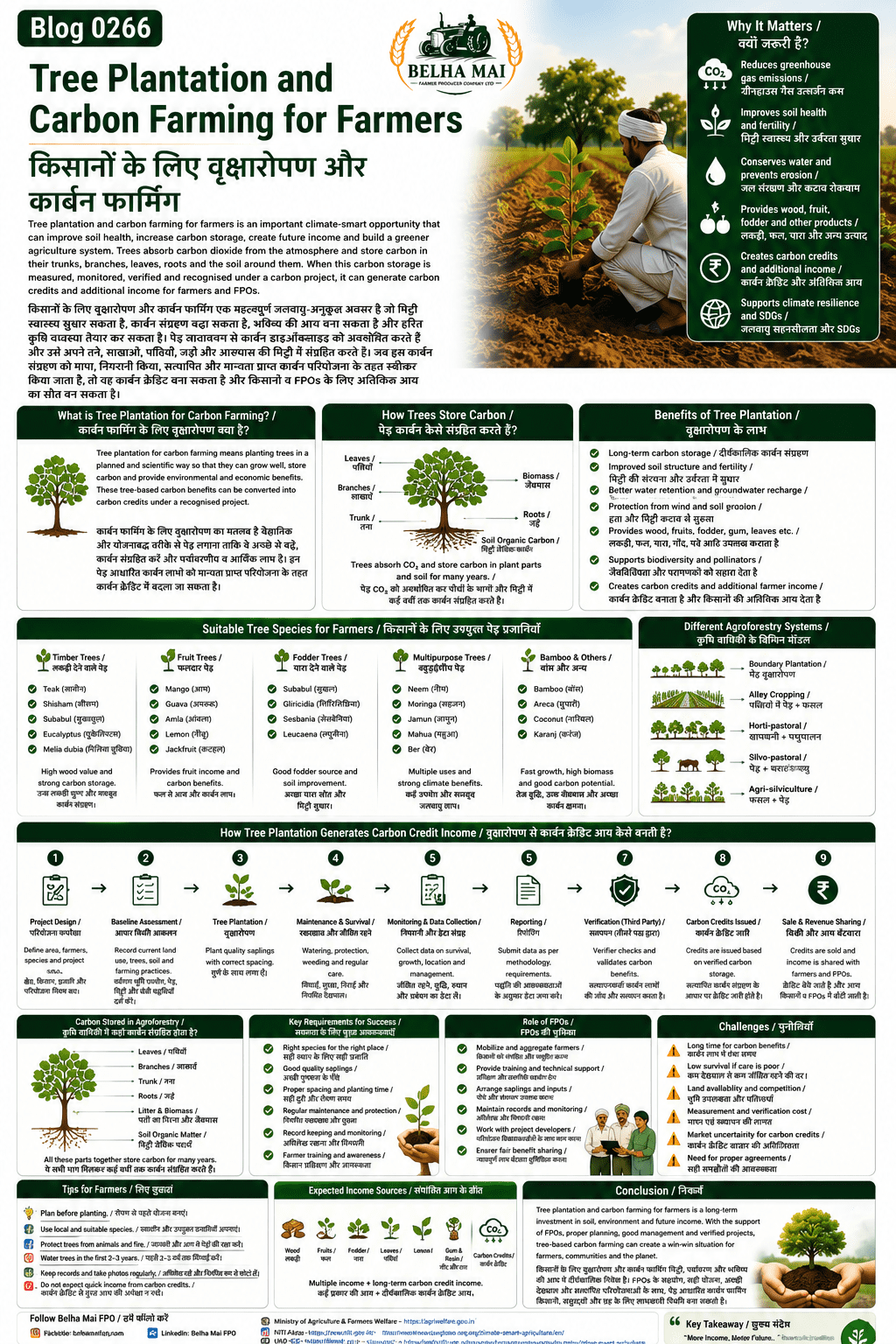
Tree plantation and carbon farming for farmers is an important subject because trees can support soil health, biodiversity, climate resilience, and future income opportunities. When farmers plant suitable trees on farm boundaries, wasteland, orchard areas, agroforestry systems, or community lands, those trees absorb carbon dioxide from the atmosphere and store carbon in trunks, branches, leaves, roots, and soil. If this carbon storage is properly measured, monitored, reported, and verified under a recognised carbon project, it may create carbon credits and possible additional income for farmers.
किसानों के लिए वृक्षारोपण और कार्बन खेती एक महत्वपूर्ण विषय है, क्योंकि पेड़ मिट्टी स्वास्थ्य, जैव विविधता, जलवायु सहनशीलता और भविष्य की आय संभावनाओं को सहारा दे सकते हैं। जब किसान खेत की मेड़ों, खाली भूमि, बागवानी क्षेत्रों, कृषि वानिकी प्रणालियों या सामुदायिक भूमि पर उपयुक्त पेड़ लगाते हैं, तो वे पेड़ वायुमंडल से कार्बन डाइऑक्साइड ग्रहण करते हैं और कार्बन को तने, शाखाओं, पत्तियों, जड़ों और मिट्टी में संग्रहित करते हैं। यदि इस कार्बन संग्रहण को किसी मान्यता प्राप्त कार्बन परियोजना के अंतर्गत सही तरीके से मापा, निगरानी किया, प्रतिवेदित और सत्यापित किया जाए, तो इससे कार्बन क्रेडिट और किसानों के लिए संभावित अतिरिक्त आय बन सकती है।
The reason Tree plantation and carbon farming for farmers is becoming popular is that tree growth is visible, measurable, and useful for long-term land improvement. Farmers can benefit from shade, fruit, fodder, timber, leaves, soil protection, water conservation, and biodiversity support. However, carbon credit income from tree plantation is not immediate or guaranteed. It depends on tree survival, species selection, project design, verification, market sale, and revenue-sharing agreements.
किसानों के लिए वृक्षारोपण और कार्बन खेती इसलिए लोकप्रिय हो रही है क्योंकि पेड़ों की वृद्धि दिखाई देती है, मापी जा सकती है और भूमि सुधार के लिए उपयोगी होती है। किसानों को छाया, फल, चारा, लकड़ी, पत्तियाँ, मिट्टी संरक्षण, जल संरक्षण और जैव विविधता का लाभ मिल सकता है। हालाँकि वृक्षारोपण से कार्बन क्रेडिट आय तुरंत या निश्चित नहीं होती। यह पेड़ों के जीवित रहने, प्रजाति चयन, परियोजना रूपरेखा, सत्यापन, बाज़ार बिक्री और आय बँटवारे के समझौते पर निर्भर करती है।
What is Tree Plantation for Carbon Farming? / कार्बन खेती के लिए वृक्षारोपण क्या है?
Tree plantation for carbon farming means planting trees in a planned and scientific way so that they store carbon, improve the environment, and provide farm-level benefits. It is not just about planting saplings for one event. It requires proper species selection, spacing, protection, watering, survival monitoring, and long-term care. Trees must survive and grow for many years to create meaningful carbon storage.
कार्बन खेती के लिए वृक्षारोपण का अर्थ है पेड़ों को योजनाबद्ध और वैज्ञानिक तरीके से लगाना, ताकि वे कार्बन संग्रहित करें, पर्यावरण को सुधारें और खेत स्तर पर लाभ दें। यह केवल एक कार्यक्रम के लिए पौधे लगाने का काम नहीं है। इसके लिए सही प्रजाति चयन, उचित दूरी, सुरक्षा, सिंचाई, जीवित रहने की निगरानी और दीर्घकालिक देखभाल आवश्यक है। महत्वपूर्ण कार्बन संग्रहण बनाने के लिए पेड़ों का कई वर्षों तक जीवित रहना और बढ़ना आवश्यक है।
To understand Tree plantation and carbon farming for farmers, farmers must know that planting trees is only the beginning. Carbon farming requires proof that trees have actually grown and stored additional carbon. Therefore, records, photographs, location details, survival counts, and periodic monitoring are very important.
किसानों के लिए वृक्षारोपण और कार्बन खेती को समझने के लिए किसानों को यह जानना चाहिए कि पेड़ लगाना केवल शुरुआत है। कार्बन खेती में यह प्रमाण आवश्यक होता है कि पेड़ वास्तव में बढ़े हैं और अतिरिक्त कार्बन संग्रहित किया है। इसलिए अभिलेख, चित्र, स्थान विवरण, जीवित पेड़ों की गणना और समय-समय पर निगरानी बहुत महत्वपूर्ण हैं।
How Trees Store Carbon / पेड़ कार्बन कैसे संग्रहित करते हैं
Trees absorb carbon dioxide from the atmosphere through photosynthesis. They use this carbon to grow trunks, branches, leaves, roots, and biomass. Some carbon also enters the soil through leaf litter, root decay, and organic matter formation. This makes tree plantation one of the most visible ways of supporting carbon farming.
पेड़ प्रकाश संश्लेषण के माध्यम से वायुमंडल से कार्बन डाइऑक्साइड ग्रहण करते हैं। वे इस कार्बन का उपयोग तना, शाखाएँ, पत्तियाँ, जड़ें और जैवभार बढ़ाने में करते हैं। कुछ कार्बन गिरी हुई पत्तियों, जड़ों के गलने और जैविक पदार्थ बनने के माध्यम से मिट्टी में भी पहुँचता है। इस प्रकार वृक्षारोपण कार्बन खेती को सहारा देने के सबसे स्पष्ट तरीकों में से एक है।
This is the basic science behind Tree plantation and carbon farming for farmers. The more trees survive and grow, the more biomass they create. More biomass generally means more carbon storage. But carbon projects do not accept only assumptions. They require measurement, monitoring, and verification before carbon credits can be issued.
यही किसानों के लिए वृक्षारोपण और कार्बन खेती का मूल विज्ञान है। जितने अधिक पेड़ जीवित रहते हैं और बढ़ते हैं, उतना अधिक जैवभार बनता है। अधिक जैवभार का अर्थ सामान्यतः अधिक कार्बन संग्रहण होता है। लेकिन कार्बन परियोजनाएँ केवल अनुमान स्वीकार नहीं करतीं। कार्बन क्रेडिट जारी करने से पहले मापन, निगरानी और सत्यापन आवश्यक होता है।
Why Tree Plantation Matters for Farmers / किसानों के लिए वृक्षारोपण क्यों महत्वपूर्ण है
Tree plantation matters because it provides multiple benefits to farmers. Trees can reduce soil erosion, improve moisture retention, increase organic matter, provide shade, protect fields from wind, improve biodiversity, and support long-term farm resilience. Some trees also provide fruit, fodder, timber, fuelwood, gum, leaves, flowers, or medicinal value.
वृक्षारोपण इसलिए महत्वपूर्ण है क्योंकि यह किसानों को कई प्रकार के लाभ देता है। पेड़ मिट्टी कटाव कम कर सकते हैं, नमी संरक्षण बढ़ा सकते हैं, जैविक पदार्थ बढ़ा सकते हैं, छाया दे सकते हैं, खेतों को तेज हवा से बचा सकते हैं, जैव विविधता सुधार सकते हैं और खेत की दीर्घकालिक सहनशीलता बढ़ा सकते हैं। कुछ पेड़ फल, चारा, लकड़ी, ईंधन लकड़ी, गोंद, पत्तियाँ, फूल या औषधीय मूल्य भी देते हैं।
The importance of Tree plantation and carbon farming for farmers goes beyond carbon credit income. Farmers should first select trees that are useful for their farm, family, animals, soil, and local market. Carbon credit income should be treated as a possible additional benefit after proper verification and sale.
किसानों के लिए वृक्षारोपण और कार्बन खेती का महत्व कार्बन क्रेडिट आय से आगे है। किसानों को पहले ऐसे पेड़ चुनने चाहिए जो खेत, परिवार, पशुओं, मिट्टी और स्थानीय बाज़ार के लिए उपयोगी हों। कार्बन क्रेडिट आय को सही सत्यापन और बिक्री के बाद संभावित अतिरिक्त लाभ के रूप में देखना चाहिए।
Suitable Places for Tree Plantation / वृक्षारोपण के लिए उपयुक्त स्थान
Farm boundaries are one of the best places for tree plantation. Boundary trees can protect fields, reduce wind speed, provide shade, and create biomass without taking too much crop area. Farmers can also plant trees on bunds, field corners, unused land, degraded land, pond edges, canal sides, orchard areas, and community lands where suitable.
खेत की मेड़ वृक्षारोपण के लिए सबसे अच्छे स्थानों में से एक है। मेड़ के पेड़ खेत की रक्षा कर सकते हैं, हवा की गति कम कर सकते हैं, छाया दे सकते हैं और अधिक फसल क्षेत्र लिए बिना जैवभार बना सकते हैं। किसान उपयुक्त स्थिति में मेड़ों, खेत के कोनों, खाली भूमि, कमजोर भूमि, तालाब किनारे, नहर किनारे, बागवानी क्षेत्रों और सामुदायिक भूमि पर भी पेड़ लगा सकते हैं।
For Tree plantation and carbon farming for farmers, location selection is very important. Trees should not create problems for crops by blocking sunlight, competing for water, or damaging field operations. Proper spacing and species selection help balance tree benefits and crop productivity.
किसानों के लिए वृक्षारोपण और कार्बन खेती में स्थान चयन बहुत महत्वपूर्ण है। पेड़ों से फसलों को धूप की कमी, पानी की प्रतिस्पर्धा या खेत कार्यों में बाधा जैसी समस्या नहीं होनी चाहिए। उचित दूरी और सही प्रजाति चयन पेड़ों के लाभ और फसल उत्पादकता में संतुलन बनाते हैं।
Suitable Tree Species for Farmers / किसानों के लिए उपयुक्त वृक्ष प्रजातियाँ
Suitable tree species depend on local climate, soil, rainfall, water availability, farmer objective, and market demand. Fruit trees such as mango, guava, amla, lemon, drumstick, jackfruit, ber, and jamun may be useful in many areas. These trees can provide fruit income along with carbon storage and environmental benefits.
उपयुक्त वृक्ष प्रजातियाँ स्थानीय जलवायु, मिट्टी, वर्षा, पानी की उपलब्धता, किसान उद्देश्य और बाज़ार मांग पर निर्भर करती हैं। आम, अमरूद, आँवला, नींबू, सहजन, कटहल, बेर और जामुन जैसे फलदार पेड़ कई क्षेत्रों में उपयोगी हो सकते हैं। ये पेड़ कार्बन संग्रहण और पर्यावरणीय लाभ के साथ फल आय भी दे सकते हैं।
Timber and multipurpose trees such as teak, shisham, bamboo, neem, mahua, subabul, gliricidia, moringa, and locally suitable species may also be considered where legal rules, land suitability, and water availability allow. Farmers should take local expert advice before large-scale plantation.
सागौन, शीशम, बाँस, नीम, महुआ, सुबबूल, ग्लिरिसिडिया, सहजन और स्थानीय रूप से उपयुक्त बहुउद्देशीय प्रजातियों पर भी वहाँ विचार किया जा सकता है जहाँ कानूनी नियम, भूमि अनुकूलता और पानी की उपलब्धता अनुमति दें। बड़े स्तर पर वृक्षारोपण से पहले किसानों को स्थानीय विशेषज्ञ सलाह लेनी चाहिए।
For Tree plantation and carbon farming for farmers, fast growth alone should not decide the species. Survival rate, usefulness, water need, crop compatibility, local acceptance, market value, and long-term management are equally important.
किसानों के लिए वृक्षारोपण और कार्बन खेती में केवल तेज़ वृद्धि के आधार पर प्रजाति नहीं चुननी चाहिए। जीवित रहने की दर, उपयोगिता, पानी की आवश्यकता, फसल अनुकूलता, स्थानीय स्वीकार्यता, बाज़ार मूल्य और दीर्घकालिक प्रबंधन भी उतने ही महत्वपूर्ण हैं।
Tree Plantation and Soil Health / वृक्षारोपण और मिट्टी स्वास्थ्य
Trees improve soil health by adding leaf litter, root biomass, organic matter, and microbial activity. Their roots help bind soil, reduce erosion, and improve soil structure. Tree shade can also reduce extreme soil temperature and help conserve moisture.
पेड़ पत्ती कचरे, जड़ जैवभार, जैविक पदार्थ और सूक्ष्मजीव गतिविधि को बढ़ाकर मिट्टी स्वास्थ्य सुधारते हैं। उनकी जड़ें मिट्टी को बाँधने, कटाव कम करने और मिट्टी की बनावट सुधारने में मदद करती हैं। पेड़ों की छाया मिट्टी के अत्यधिक ताप को कम कर सकती है और नमी बचाने में मदद करती है।
This connection makes Tree plantation and carbon farming for farmers useful for long-term sustainable agriculture. Healthy soil can support better crop growth, water retention, nutrient cycling, and farm resilience. Therefore, tree plantation should be planned as part of soil health improvement, not only carbon credit generation.
यह संबंध किसानों के लिए वृक्षारोपण और कार्बन खेती को दीर्घकालिक टिकाऊ कृषि के लिए उपयोगी बनाता है। स्वस्थ मिट्टी बेहतर फसल वृद्धि, जल धारण क्षमता, पोषक तत्व चक्र और खेत सहनशीलता को सहारा देती है। इसलिए वृक्षारोपण की योजना केवल कार्बन क्रेडिट निर्माण के लिए नहीं, बल्कि मिट्टी स्वास्थ्य सुधार के हिस्से के रूप में बनानी चाहिए।
How Tree Plantation Generates Carbon Credit Income / वृक्षारोपण से कार्बन क्रेडिट आय कैसे बनती है
The first step is project design. A project developer or FPO identifies the area, farmers, tree species, planting model, and project period. The second step is baseline assessment, where the current condition of land and existing tree cover is recorded. This helps prove that new tree plantation has created additional carbon storage.
पहला चरण परियोजना रूपरेखा है। परियोजना विकासकर्ता या किसान उत्पादक संगठन क्षेत्र, किसान, वृक्ष प्रजाति, रोपण मॉडल और परियोजना अवधि की पहचान करता है। दूसरा चरण आधार स्थिति आकलन है, जिसमें भूमि की वर्तमान स्थिति और मौजूदा वृक्ष आवरण को दर्ज किया जाता है। इससे यह सिद्ध करने में मदद मिलती है कि नए वृक्षारोपण से अतिरिक्त कार्बन संग्रहण बना है।
The third step is tree plantation and maintenance. Farmers plant saplings, protect them, water them, and maintain them properly. The fourth step is monitoring and data collection. Tree survival, growth, location, photographs, and farmer records are collected. The fifth step is verification. If the carbon storage is accepted, carbon credits may be issued and sold.
तीसरा चरण वृक्षारोपण और रखरखाव है। किसान पौधे लगाते हैं, उनकी रक्षा करते हैं, पानी देते हैं और सही देखभाल करते हैं। चौथा चरण निगरानी और आँकड़ा संग्रह है। पेड़ों के जीवित रहने, वृद्धि, स्थान, चित्र और किसान अभिलेख एकत्र किए जाते हैं। पाँचवाँ चरण सत्यापन है। यदि कार्बन संग्रहण स्वीकार होता है, तो कार्बन क्रेडिट जारी और बेचे जा सकते हैं।
This is how Tree plantation and carbon farming for farmers may create carbon credit income. After credits are sold, income is shared according to the agreement among farmers, FPOs, project developers, technical partners, and other stakeholders.
इसी प्रकार किसानों के लिए वृक्षारोपण और कार्बन खेती से कार्बन क्रेडिट आय बन सकती है। क्रेडिट बिकने के बाद किसानों, किसान उत्पादक संगठनों, परियोजना विकासकर्ताओं, तकनीकी भागीदारों और अन्य पक्षों के बीच समझौते के अनुसार आय बाँटी जाती है।
Role of FPOs in Tree Plantation Carbon Farming / वृक्षारोपण कार्बन खेती में किसान उत्पादक संगठनों की भूमिका
FPOs can play a major role in Tree plantation and carbon farming for farmers because individual small farmers may not have enough scale, records, or access to carbon project developers. An FPO can aggregate farmers, identify suitable land, coordinate planting material, conduct training, maintain records, and monitor tree survival.
किसान उत्पादक संगठन किसानों के लिए वृक्षारोपण और कार्बन खेती में बड़ी भूमिका निभा सकते हैं, क्योंकि व्यक्तिगत छोटे किसानों के पास पर्याप्त स्तर, अभिलेख या कार्बन परियोजना विकासकर्ताओं तक पहुँच नहीं हो सकती। किसान उत्पादक संगठन किसानों को संगठित कर सकता है, उपयुक्त भूमि की पहचान कर सकता है, रोपण सामग्री का समन्वय कर सकता है, प्रशिक्षण दे सकता है, अभिलेख रख सकता है और पेड़ों के जीवित रहने की निगरानी कर सकता है।
FPOs can also negotiate with project developers and protect farmers from unclear agreements. They can ask about carbon rights, payment timeline, revenue sharing, project duration, data ownership, monitoring cost, and responsibilities if trees die. This makes the project safer and more transparent for farmers.
किसान उत्पादक संगठन परियोजना विकासकर्ताओं से बातचीत करके किसानों को अस्पष्ट समझौतों से भी बचा सकते हैं। वे कार्बन अधिकार, भुगतान समय-सीमा, आय बँटवारा, परियोजना अवधि, आँकड़ा स्वामित्व, निगरानी लागत और पेड़ मरने की स्थिति में जिम्मेदारी के बारे में पूछ सकते हैं। इससे परियोजना किसानों के लिए अधिक सुरक्षित और पारदर्शी बनती है।
Challenges in Tree Plantation Carbon Farming / वृक्षारोपण कार्बन खेती की चुनौतियाँ
The first challenge is tree survival. If saplings are planted but not protected from grazing, drought, pests, fire, or poor management, survival may be low. Low survival reduces carbon storage and weakens the project. Farmers need proper support after plantation.
पहली चुनौती पेड़ों का जीवित रहना है। यदि पौधे लगाए जाएँ लेकिन उन्हें चराई, सूखा, कीट, आग या खराब प्रबंधन से न बचाया जाए, तो जीवित रहने की दर कम हो सकती है। कम जीवित पेड़ों से कार्बन संग्रहण घटता है और परियोजना कमजोर होती है। वृक्षारोपण के बाद किसानों को सही सहायता चाहिए।
The second challenge is time. Trees need years to grow and store carbon. Farmers should not expect immediate income. Tree plantation and carbon farming for farmers should be explained as a long-term opportunity linked with land improvement and future benefits.
दूसरी चुनौती समय है। पेड़ों को बढ़ने और कार्बन संग्रहित करने में वर्षों लगते हैं। किसानों को तुरंत आय की उम्मीद नहीं करनी चाहिए। किसानों के लिए वृक्षारोपण और कार्बन खेती को भूमि सुधार और भविष्य के लाभ से जुड़े दीर्घकालिक अवसर के रूप में समझाना चाहिए।
The third challenge is measurement and verification. Carbon storage must be calculated through approved methods. This requires accurate data, field monitoring, photographs, location details, and technical support. Without verification, carbon credits cannot be issued.
तीसरी चुनौती मापन और सत्यापन है। कार्बन संग्रहण की गणना स्वीकृत तरीकों से करनी होती है। इसके लिए सही आँकड़े, खेत निगरानी, चित्र, स्थान विवरण और तकनीकी सहायता आवश्यक हैं। सत्यापन के बिना कार्बन क्रेडिट जारी नहीं हो सकते।
What Farmers Should Check Before Joining / जुड़ने से पहले किसानों को क्या जाँचना चाहिए
Before joining a tree plantation carbon project, farmers should ask which trees will be planted, who will provide saplings, who will pay planting and maintenance costs, how long the project will continue, and whether they can use the tree products. They should also ask who owns the carbon rights and how income will be shared.
वृक्षारोपण कार्बन परियोजना से जुड़ने से पहले किसानों को पूछना चाहिए कि कौन से पेड़ लगाए जाएँगे, पौधे कौन देगा, रोपण और रखरखाव लागत कौन देगा, परियोजना कितने समय तक चलेगी और क्या वे पेड़ से मिलने वाले उत्पादों का उपयोग कर सकेंगे। उन्हें यह भी पूछना चाहिए कि कार्बन अधिकार किसके पास होंगे और आय कैसे बाँटी जाएगी।
Farmers should never sign unclear documents. Since Tree plantation and carbon farming for farmers involves long-term commitments, every condition should be explained in simple language. The agreement should clearly mention responsibilities, benefits, risks, and exit conditions.
किसानों को अस्पष्ट दस्तावेज़ों पर कभी हस्ताक्षर नहीं करना चाहिए। क्योंकि किसानों के लिए वृक्षारोपण और कार्बन खेती में दीर्घकालिक प्रतिबद्धताएँ शामिल होती हैं, इसलिए हर शर्त सरल भाषा में समझाई जानी चाहिए। समझौते में जिम्मेदारियाँ, लाभ, जोखिम और बाहर निकलने की शर्तें स्पष्ट रूप से लिखी होनी चाहिए।
Practical Model for Farmers and FPOs / किसानों और किसान उत्पादक संगठनों के लिए व्यावहारिक मॉडल
A practical model can begin with a pilot project of 500 to 1,000 farmers. The FPO can select villages, identify farmers, map suitable land, choose tree species, coordinate sapling supply, conduct plantation training, and maintain farmer-wise records. The project may focus on boundary plantation, fruit-based agroforestry, community plantation, or mixed tree-crop systems.
एक व्यावहारिक मॉडल पाँच सौ से एक हजार किसानों की प्रायोगिक परियोजना से शुरू हो सकता है। किसान उत्पादक संगठन गाँवों का चयन कर सकता है, किसानों की पहचान कर सकता है, उपयुक्त भूमि का मानचित्रण कर सकता है, वृक्ष प्रजातियाँ चुन सकता है, पौध आपूर्ति का समन्वय कर सकता है, वृक्षारोपण प्रशिक्षण दे सकता है और किसानवार अभिलेख रख सकता है। परियोजना मेड़ वृक्षारोपण, फल आधारित कृषि वानिकी, सामुदायिक वृक्षारोपण या मिश्रित पेड़-फसल प्रणाली पर केंद्रित हो सकती है।
The FPO can then partner with a credible carbon project developer. The FPO handles farmer mobilisation and local implementation, while the technical partner handles methodology, monitoring, verification, certification, and buyer linkage. This makes Tree plantation and carbon farming for farmers practical for small and marginal farmers.
इसके बाद किसान उत्पादक संगठन किसी विश्वसनीय कार्बन परियोजना विकासकर्ता से साझेदारी कर सकता है। संगठन किसान समन्वय और स्थानीय क्रियान्वयन संभालता है, जबकि तकनीकी भागीदार पद्धति, निगरानी, सत्यापन, प्रमाणन और खरीदार से जुड़ाव संभालता है। इससे किसानों के लिए वृक्षारोपण और कार्बन खेती छोटे और सीमांत किसानों के लिए व्यावहारिक बनती है।
Benefits Beyond Carbon Credit Income / कार्बन क्रेडिट आय से आगे के लाभ
Even if carbon credit income takes time, farmers can still benefit from tree plantation. Trees can provide fruit, fodder, fuelwood, timber, leaves, shade, wind protection, soil improvement, and biodiversity support. These benefits may come before carbon credit income and can improve farm resilience.
भले ही कार्बन क्रेडिट आय आने में समय लगे, किसान वृक्षारोपण से फिर भी लाभ उठा सकते हैं। पेड़ फल, चारा, ईंधन लकड़ी, लकड़ी, पत्तियाँ, छाया, हवा से सुरक्षा, मिट्टी सुधार और जैव विविधता का सहारा दे सकते हैं। ये लाभ कार्बन क्रेडिट आय से पहले मिल सकते हैं और खेत की सहनशीलता बढ़ा सकते हैं।
This is why Tree plantation and carbon farming for farmers should not be promoted only as a payment opportunity. It should be promoted as a long-term farming improvement strategy. Carbon credits should be treated as a future additional benefit if the project is properly verified and sold.
इसीलिए किसानों के लिए वृक्षारोपण और कार्बन खेती को केवल भुगतान अवसर के रूप में प्रचारित नहीं करना चाहिए। इसे दीर्घकालिक कृषि सुधार रणनीति के रूप में बढ़ावा देना चाहिए। यदि परियोजना सही तरीके से सत्यापित और बेची जाती है, तो कार्बन क्रेडिट को भविष्य के अतिरिक्त लाभ के रूप में देखना चाहिए।
Conclusion / निष्कर्ष
Tree plantation and carbon farming for farmers can become a strong opportunity for Indian agriculture when implemented with proper planning, suitable species, strong survival monitoring, transparent agreements, and credible project partners. Trees can store carbon, improve soil health, conserve water, support biodiversity, and create multiple long-term farm benefits.
किसानों के लिए वृक्षारोपण और कार्बन खेती भारतीय कृषि के लिए मजबूत अवसर बन सकती है, यदि इसे सही योजना, उपयुक्त प्रजातियों, मजबूत जीवित रहने की निगरानी, पारदर्शी समझौतों और विश्वसनीय परियोजना भागीदारों के साथ लागू किया जाए। पेड़ कार्बन संग्रहित कर सकते हैं, मिट्टी स्वास्थ्य सुधार सकते हैं, पानी बचा सकते हैं, जैव विविधता को सहारा दे सकते हैं और खेत के लिए अनेक दीर्घकालिक लाभ बना सकते हैं।
For farmers, the safest approach is to plant trees that are locally suitable and useful for the farm. Carbon credit income should be treated as a possible additional benefit, not a guaranteed promise. For FPOs, Tree plantation and carbon farming for farmers offers a strong opportunity to aggregate farmers, build climate projects, promote sustainable farming, and connect rural communities with future climate finance.
किसानों के लिए सबसे सुरक्षित तरीका यह है कि वे स्थानीय रूप से उपयुक्त और खेत के लिए उपयोगी पेड़ लगाएँ। कार्बन क्रेडिट आय को संभावित अतिरिक्त लाभ के रूप में देखना चाहिए, निश्चित वादा नहीं। किसान उत्पादक संगठनों के लिए किसानों के लिए वृक्षारोपण और कार्बन खेती किसानों को संगठित करने, जलवायु परियोजनाएँ बनाने, टिकाऊ खेती को बढ़ावा देने और ग्रामीण समुदायों को भविष्य के जलवायु वित्त से जोड़ने का मजबूत अवसर देती है।
Frequently Asked Questions (FAQs) / अक्सर पूछे जाने वाले प्रश्न
1. What is Tree plantation and carbon farming for farmers?
Tree plantation and carbon farming for farmers means planting suitable trees in a planned way so that they store carbon, improve soil health, support climate action, and may generate carbon credits under verified projects.
1. किसानों के लिए वृक्षारोपण और कार्बन खेती क्या है?
किसानों के लिए वृक्षारोपण और कार्बन खेती का अर्थ है उपयुक्त पेड़ों को योजनाबद्ध तरीके से लगाना, ताकि वे कार्बन संग्रहित करें, मिट्टी स्वास्थ्य सुधारें, जलवायु कार्रवाई को सहारा दें और सत्यापित परियोजनाओं के अंतर्गत कार्बन क्रेडिट बना सकें।
2. Can farmers earn carbon credit income from tree plantation?
Yes, farmers may earn carbon credit income from tree plantation if the carbon storage is measured, verified, credits are issued, and those credits are sold in the carbon market.
2. क्या किसान वृक्षारोपण से कार्बन क्रेडिट आय कमा सकते हैं?
हाँ, यदि कार्बन संग्रहण को मापा और सत्यापित किया जाए, क्रेडिट जारी हों और वे कार्बन बाज़ार में बेचे जाएँ, तो किसान वृक्षारोपण से कार्बन क्रेडिट आय कमा सकते हैं।
3. Is tree plantation carbon income guaranteed?
No, tree plantation carbon income is not guaranteed. It depends on tree survival, project design, verification, buyer demand, market price, and revenue-sharing agreement.
3. क्या वृक्षारोपण से कार्बन आय निश्चित होती है?
नहीं, वृक्षारोपण से कार्बन आय निश्चित नहीं होती। यह पेड़ों के जीवित रहने, परियोजना रूपरेखा, सत्यापन, खरीदार मांग, बाज़ार मूल्य और आय बँटवारा समझौते पर निर्भर करती है।
4. Which trees are suitable for carbon farming?
Suitable trees depend on local climate, soil, water, farmer objective, and market demand. Fruit trees, timber trees, fodder trees, bamboo, neem, amla, mango, guava, and other local species may be considered.
4. कार्बन खेती के लिए कौन से पेड़ उपयुक्त हैं?
उपयुक्त पेड़ स्थानीय जलवायु, मिट्टी, पानी, किसान उद्देश्य और बाज़ार मांग पर निर्भर करते हैं। फलदार पेड़, लकड़ी वाले पेड़, चारा देने वाले पेड़, बाँस, नीम, आँवला, आम, अमरूद और अन्य स्थानीय प्रजातियों पर विचार किया जा सकता है।
5. How can FPOs support tree plantation carbon farming?
FPOs can aggregate farmers, arrange saplings, conduct training, maintain records, monitor tree survival, coordinate with project developers, and ensure transparent benefit sharing.
5. किसान उत्पादक संगठन वृक्षारोपण कार्बन खेती में कैसे मदद कर सकते हैं?
किसान उत्पादक संगठन किसानों को संगठित कर सकते हैं, पौध व्यवस्था कर सकते हैं, प्रशिक्षण दे सकते हैं, अभिलेख रख सकते हैं, पेड़ों के जीवित रहने की निगरानी कर सकते हैं, परियोजना विकासकर्ताओं से समन्वय कर सकते हैं और पारदर्शी लाभ बँटवारा सुनिश्चित कर सकते हैं।
Internal Links / आंतरिक लिंक
👉 Carbon Farming in India: Complete Guide —https://belhamaifpo.com/agriculture/carbon-farming-in-india-complete-guide/
👉 Agroforestry and Carbon Credit Income —
👉 Direct Seeded Rice and Carbon Credit Potential — https://belhamaifpo.com/agriculture/direct-seeded-rice-and-carbon-credit-potential/
👉 How Regenerative Agriculture Supports Carbon Credits — https://belhamaifpo.com/agriculture/how-regenerative-agriculture-supports-carbon-credits/
👉 Soil Carbon and Sustainable Farming — https://belhamaifpo.com/agriculture/soil-carbon-and-sustainable-farming/
👉 Carbon Credit Opportunities in Indian Agriculture —https://belhamaifpo.com/agriculture/carbon-credit-opportunities-in-indian-agriculture/
👉 Role of FPOs in Carbon Credit Projects — https://belhamaifpo.com/agriculture/role-of-fpos-in-carbon-credit-projects/
👉 Farmer Producer Organizations Complete Guide — https://belhamaifpo.com/farmer-producer-organisation/farmer-producer-organizations-fpos/
👉 SDGs & Our FPO — https://belhamaifpo.com/sdg-goals/
External Authority Links / बाहरी प्राधिकरण लिंक
👉 Ministry of Agriculture & Farmers Welfare — https://agriwelfare.gov.in/
👉 NITI Aayog — https://www.niti.gov.in/
👉 FAO Agroforestry — https://www.fao.org/forestry/agroforestry/en/
👉 FAO Climate-Smart Agriculture — https://www.fao.org/climate-smart-agriculture/en/
👉 UNFCCC — https://unfccc.int/
👉 World Bank Climate-Smart Agriculture — https://www.worldbank.org/en/topic/climate-smart-agriculture
Follow Belha Mai FPO for More Updates / अधिक अपडेट के लिए Belha Mai FPO को फॉलो करें
👉 Website — https://belhamaifpo.com/
👉 Facebook —https://www.facebook.com/profile.php?id=61561043486818
👉 Instagram — https://instagram.com/belhamaifpo
👉 LinkedIn — https://www.linkedin.com/in/abhay-singh-ab5568280/
👉 YouTube — https://www.youtube.com/channel/UC9ZvojoTMCa7mU1-Q_Bh60A