Introduction
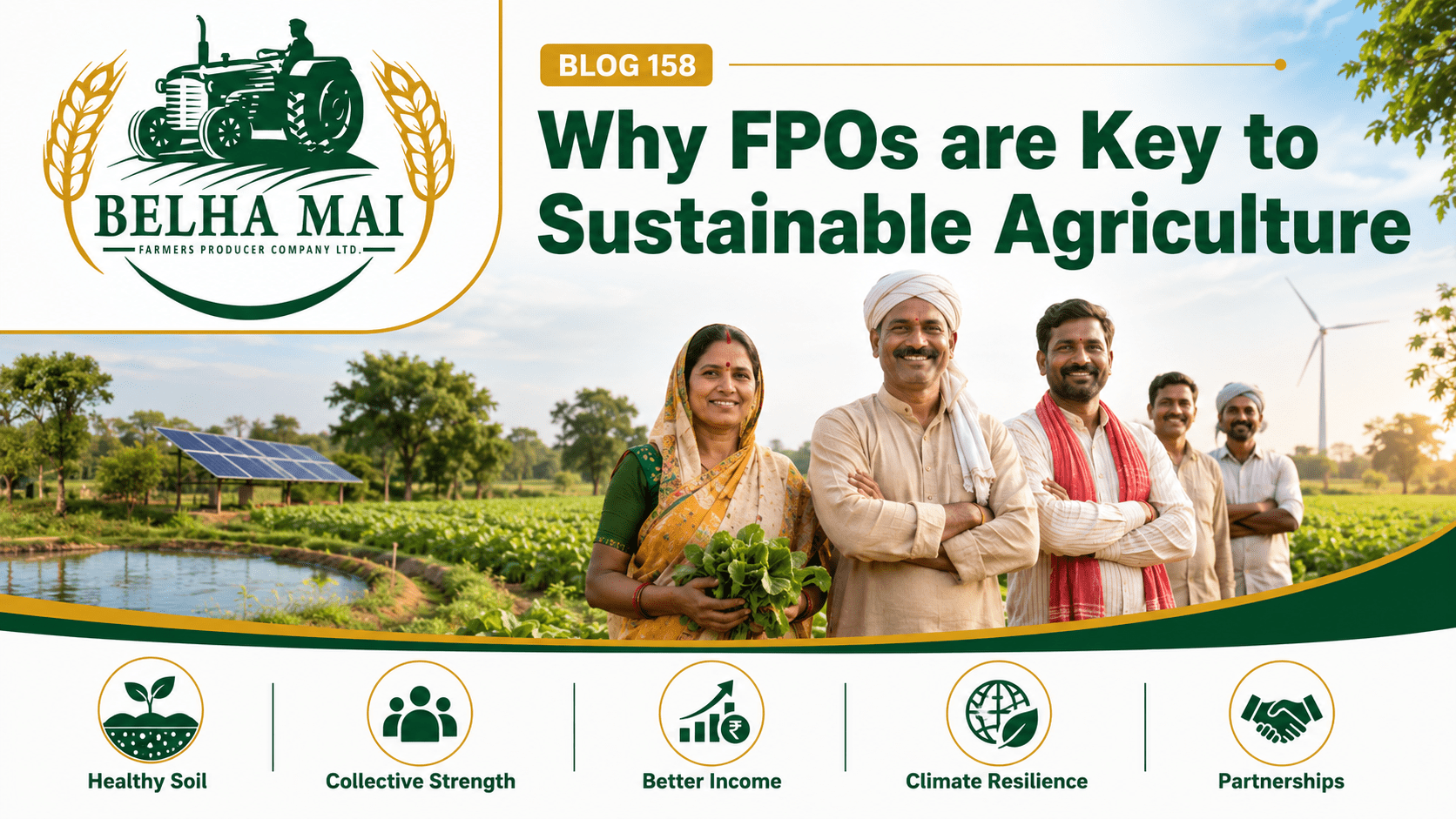
Why FPOs are Key to Sustainable Agriculture is an important subject for rural India, climate action, farmer income, and long-term food security. Agriculture cannot remain sustainable if farmers face low income, rising input costs, soil degradation, water stress, climate uncertainty, and weak market access. Farmer Producer Organizations, also known as FPOs, can help solve these challenges through collective action.
Sustainable agriculture is not only about using fewer chemicals or adopting organic farming. It is about creating a farming system that protects soil, conserves water, improves farmer income, reduces waste, supports biodiversity, creates rural employment, and prepares farmers for climate risks. For small and marginal farmers, this transition is difficult without institutional support.
FPOs are key to sustainable agriculture because they bring farmers together and help them access knowledge, inputs, technology, machinery, finance, markets, processing, and partnerships. When farmers work collectively, sustainable practices become more practical, affordable, and scalable.
Why FPOs are Key to Sustainable Agriculture for Small Farmers
Why FPOs are Key to Sustainable Agriculture becomes clear when we look at the condition of small and marginal farmers. Most small farmers do not have enough land, capital, machinery, storage, technical support, or market power to independently adopt sustainable farming practices.
A farmer may understand the importance of soil health, organic inputs, crop diversification, water conservation, or natural farming, but adoption becomes difficult if the farmer has no guidance, no market premium, no working capital, and no support system. This is where FPOs become important.
FPOs provide a collective structure through which small farmers can receive training, purchase inputs together, access farm machinery, reduce costs, aggregate produce, and connect with better markets. This makes sustainable agriculture more achievable for small farmers.
Why FPOs are Key to Sustainable Agriculture Through Soil Health
Soil health is the foundation of sustainable agriculture. If soil becomes weak, farming becomes expensive, productivity declines, and farmers become more dependent on external inputs. Soil degradation is one of the biggest long-term threats to agriculture.
FPOs can promote soil health by encouraging soil testing, balanced fertilizer use, organic matter improvement, composting, crop rotation, green manure, bio-inputs, natural farming practices, and reduced misuse of chemicals. They can organize awareness sessions and connect farmers with soil testing services.
When FPOs work on soil health collectively, farmers begin to understand that soil is not just a medium for crop growth. It is a living resource that must be protected. Healthy soil improves productivity, reduces input dependency, and supports long-term farmer prosperity.
Why FPOs are Key to Sustainable Agriculture Through Natural Farming
Natural farming and low-input farming practices are becoming important for reducing cost and improving ecological balance. However, farmers need proper knowledge, demonstration, and market confidence before shifting from conventional methods.
FPOs can support natural farming by creating farmer training programs, demonstration plots, peer learning groups, bio-input production units, and market linkages for naturally grown produce. This helps farmers understand practical methods instead of depending only on theory.
When natural farming is promoted through an FPO, farmers do not feel isolated. They receive guidance, community support, and possible market access. This makes the transition toward sustainable agriculture smoother and more reliable.
Why FPOs are Key to Sustainable Agriculture Through Reduced Input Costs
High input costs are one of the biggest problems in Indian agriculture. Farmers spend heavily on seeds, fertilizers, pesticides, herbicides, irrigation, labour, and machinery. If input costs continue to rise, farmer income becomes unstable.
FPOs can help reduce input costs through bulk procurement, quality input supply, balanced usage advisory, organic input promotion, and access to shared machinery. Lower input cost directly improves farmer profitability.
Sustainable agriculture must also be economically sustainable. A farming practice cannot succeed if it increases the burden on farmers. FPOs help balance environmental sustainability with farmer income sustainability.
Why FPOs are Key to Sustainable Agriculture Through Water Conservation
Water is becoming one of the most critical resources in agriculture. Many regions face groundwater depletion, irregular rainfall, poor irrigation efficiency, and climate-related water stress. Sustainable agriculture must focus on better water management.
FPOs can promote water conservation through awareness, crop planning, micro-irrigation guidance, mulching, farm ponds, drought-resilient crops, direct seeded rice, efficient irrigation scheduling, and community-level resource planning.
When water conservation is promoted individually, adoption may remain limited. But when an FPO works with a group of farmers, the impact can be larger. Collective planning can protect local water resources and reduce farming risk.
Why FPOs are Key to Sustainable Agriculture Through Climate Resilience
Climate change is already affecting farmers through heat waves, irregular rainfall, pest outbreaks, droughts, floods, and crop cycle changes. Small farmers are highly vulnerable because they have limited savings and limited ability to recover from crop losses.
FPOs can support climate resilience by providing weather information, crop advisory, climate-smart practices, crop diversification, soil health improvement, water conservation, farm machinery access, and risk awareness.
Climate-resilient agriculture requires coordination, training, and long-term planning. FPOs can become the local institution that helps farmers prepare for climate shocks and reduce vulnerability.
Why FPOs are Key to Sustainable Agriculture Through Crop Diversification
Many farmers depend on limited crops because of tradition, market habits, or lack of knowledge. This increases risk. If one crop fails or market prices fall, farmer income suffers.
FPOs can encourage crop diversification by helping farmers explore horticulture, pulses, millets, oilseeds, vegetables, medicinal plants, agroforestry, beekeeping, and value-added crops. Diversification can improve income stability and reduce environmental pressure.
Crop diversification also supports nutrition, biodiversity, and market flexibility. When FPOs guide farmers toward suitable diversification, sustainable agriculture becomes stronger and more profitable.
Why FPOs are Key to Sustainable Agriculture Through Biodiversity Protection
Biodiversity is essential for healthy farming systems. Pollinators, trees, beneficial insects, soil microbes, mixed crops, and local plant diversity all support agricultural resilience. Loss of biodiversity can increase pest pressure and reduce ecological balance.
FPOs can promote biodiversity-friendly practices such as agroforestry, mixed cropping, natural farming, pollinator protection, tree plantation, reduced chemical misuse, and local seed conservation. These practices protect the farming ecosystem.
Sustainable agriculture should not destroy the natural systems that support farming. FPOs can help farmers understand biodiversity as an asset, not as a separate environmental issue.
Why FPOs are Key to Sustainable Agriculture Through Farm Machinery Access
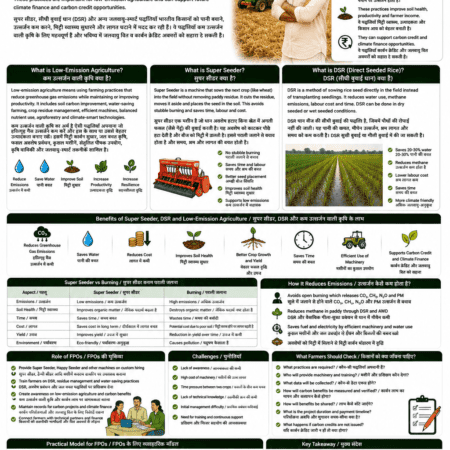
Farm machinery can support sustainable agriculture when used properly. Machines such as Super Seeders, Direct Seeded Rice machines, seed drills, rotavators, sprayers, and other equipment can improve efficiency, reduce labour burden, and support better crop management.
Small farmers cannot always buy such machines individually. FPOs can create shared machinery services through a Farm Machinery Bank. This helps farmers access modern equipment at affordable rates.
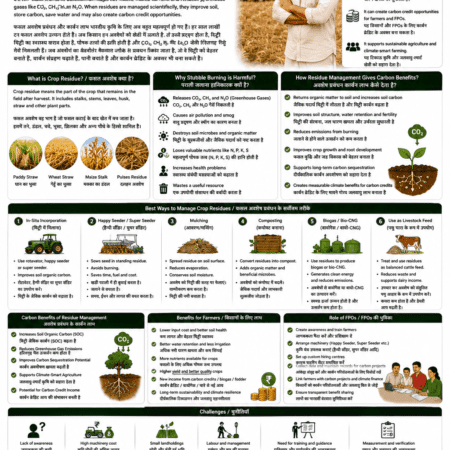
Mechanisation can also support sustainability by improving timely sowing, reducing residue burning, saving water, reducing labour stress, and improving productivity. FPO-led machinery services can make technology available to small farmers.
Why FPOs are Key to Sustainable Agriculture Through Value Addition
Sustainable agriculture is not complete if farmers remain poor. Farmers must earn enough income to continue farming responsibly. Value addition helps farmers earn more from the same produce.
FPOs can support value addition through cleaning, grading, sorting, packaging, milling, processing, branding, and marketing. This helps farmers move beyond raw produce and capture more value in the supply chain.
When value addition happens locally, rural employment also increases. Women, youth, machine operators, packaging workers, logistics teams, and marketing teams can all benefit. This makes sustainable agriculture both ecological and economic.
Why FPOs are Key to Sustainable Agriculture Through Market Linkage
Farmers are more likely to adopt sustainable practices when they can access better markets. If sustainable produce is sold at the same price as ordinary produce, farmers may not feel encouraged to continue.
FPOs can connect farmers with buyers who value quality, traceability, responsible farming, organic produce, natural products, institutional supply, retail markets, food processors, and export-oriented opportunities.
Market linkage gives sustainable agriculture a business foundation. Farmers need both ecological awareness and economic reward. FPOs can help create this connection.
Why FPOs are Key to Sustainable Agriculture Through Farmer Training
Training is essential for sustainable agriculture. Farmers need practical knowledge on soil health, water conservation, pest management, organic inputs, natural farming, climate resilience, crop diversification, and post-harvest handling.
FPOs can organize training programs, field demonstrations, exposure visits, expert sessions, digital advisories, and peer learning. Farmers often trust learning more when they see results in nearby fields.
Through regular training, FPOs can create long-term behaviour change. Sustainable agriculture grows when farmers understand both the method and the benefit.
Why FPOs are Key to Sustainable Agriculture Through Responsible Chemical Use
Chemical fertilizers and pesticides are often used without proper guidance. Overuse or misuse can damage soil, water, biodiversity, human health, and farmer profitability. Sustainable agriculture requires responsible input use.
FPOs can promote balanced fertilizer application, integrated pest management, safer pesticide use, organic alternatives, biofertilizers, biopesticides, and soil-based recommendations. This reduces unnecessary cost and environmental damage.
The goal is not only to reject chemicals blindly, but to use inputs responsibly and scientifically. FPOs can guide farmers toward balanced and sustainable decision-making.
Why FPOs are Key to Sustainable Agriculture Through Rural Employment
Sustainable agriculture must also create sustainable livelihoods. FPOs can generate rural employment through input supply, farm machinery services, aggregation, storage, processing, packaging, quality control, digital marketing, and logistics.
Rural employment reduces poverty and migration pressure. It gives youth and women opportunities within the village economy. This strengthens the social foundation of sustainable agriculture.
When farming is connected with enterprise and employment, rural communities become more resilient. FPOs can create this connection more effectively than individual farmers.
Why FPOs are Key to Sustainable Agriculture Through Women Participation
Women play a major role in agriculture, but their work is often under-recognized. Sustainable agriculture becomes stronger when women are included in training, leadership, income activities, processing, and decision-making.
FPOs can involve women as shareholders, board members, group leaders, processing workers, entrepreneurs, and trainers. Women-led farming and value addition can create strong rural livelihood models.
Women’s participation improves household welfare and community development. This makes FPOs important not only for sustainable agriculture, but also for inclusive rural transformation.
Why FPOs are Key to Sustainable Agriculture Through Partnerships
FPOs need partnerships to scale sustainable agriculture. Government departments, CSR organizations, NGOs, banks, NABARD, SFAC, research institutions, universities, technology providers, processors, exporters, and buyers can all support FPO-led sustainability.
Partnerships can bring finance, infrastructure, training, technology, market access, machinery, climate solutions, and value chain development. A strong FPO can become a practical grassroots partner for sustainable agriculture projects.
This is why FPOs are important for CSR and development organizations. They provide a direct link to farmers and villages, making sustainability projects more grounded and measurable.
Why FPOs are Key to Sustainable Agriculture and SDGs
Sustainable agriculture is closely linked with Sustainable Development Goals. It supports poverty reduction, food security, gender equality, decent work, climate action, life on land, responsible production, and partnerships.
FPOs contribute to these goals by creating farmer institutions that can implement change at the grassroots level. They help connect local agriculture with national and global sustainability priorities.
This makes FPOs important not only for farmers, but also for government agencies, CSR teams, NGOs, grant organizations, and development partners working on SDG-based rural transformation.
Belha Mai FPO and Sustainable Agriculture
Belha Mai Farmers Producer Company Ltd. is working to support farmers through input services, farm machinery, market linkage, value addition, digital outreach, women participation, and sustainable rural development.
The organization’s work is connected with the larger idea of sustainable agriculture because it focuses on collective farmer strength, better services, rural enterprise, climate-conscious farming, and partnerships. Such an approach can help farmers move toward long-term prosperity.
For Belha Mai FPO, sustainable agriculture is not only an environmental subject. It is a complete rural development approach that includes farmer income, soil health, climate resilience, women empowerment, rural employment, and institutional collaboration.
Why FPOs are Key to Sustainable Agriculture for India’s Future
India’s future agriculture must be productive, profitable, inclusive, and environmentally responsible. Farmers need better income, but farming systems also need healthy soil, clean water, biodiversity, climate resilience, and sustainable markets.
FPOs can bring all these elements together. They can organize farmers, improve knowledge, reduce costs, support sustainable practices, build local enterprises, and connect farmers with better opportunities.
This is why FPOs are key to sustainable agriculture. They are one of the most practical institutions for turning sustainability from an idea into action at the village level.
Conclusion
Why FPOs are Key to Sustainable Agriculture can be understood through one clear point: sustainable farming needs collective support. Individual farmers cannot easily face rising input costs, climate change, soil degradation, water stress, weak markets, and technology gaps alone.
FPOs help farmers work together, adopt better practices, protect soil, conserve resources, build climate resilience, access machinery, create value addition, improve income, and connect with partners.
For India, strong FPOs can become the foundation of sustainable agriculture and rural transformation. For Belha Mai Farmers Producer Company Ltd., this vision represents a future where farmers, communities, agriculture, and the environment grow together.
FAQ
Why FPOs are Key to Sustainable Agriculture?
FPOs are key to sustainable agriculture because they help farmers work collectively, improve soil health, reduce input costs, conserve water, adopt climate-resilient practices, access better markets, and build long-term rural livelihoods.
How do FPOs support soil health?
FPOs support soil health by promoting soil testing, balanced fertilizer use, organic inputs, composting, natural farming, crop rotation, and farmer awareness about responsible input use.
Can FPOs help farmers adopt natural farming?
Yes. FPOs can help farmers adopt natural farming through training, demonstration plots, bio-input support, peer learning, and market linkage for naturally grown produce.
How do FPOs support climate resilience?
FPOs support climate resilience by providing weather information, crop advisory, water conservation guidance, crop diversification, farm machinery access, and climate-smart farming practices.
Why are FPOs important for sustainable farmer income?
FPOs improve sustainable farmer income by reducing input costs, improving productivity, creating value addition, building market linkages, reducing wastage, and helping farmers access better buyers.
Why should CSR organizations support FPO-led sustainable agriculture?
CSR organizations should support FPO-led sustainable agriculture because FPOs work directly with farmer communities and can implement projects related to soil health, climate action, livelihoods, women empowerment, water conservation, and rural enterprise development.
Internal Links Section
👉 SDG Goals — https://belhamaifpo.com/sdg-goals/
👉 Farmer Producer Organizations Complete Guide — https://belhamaifpo.com/farmer-producer-organisation/farmer-producer-organizations-fpos/
👉 How Farmer Producer Organizations Contribute to Sustainable Development Goals —https://belhamaifpo.com/sdg-goals/how-farmer-producer-organizations-contribute-to-sustainable-development-goals/
👉 Role of FPOs in Achieving Rural Development in India — https://belhamaifpo.com/sdg-goals/role-of-fpos-in-achieving-rural-development-in-india/
👉 How FPOs Reduce Poverty in Rural India — https://belhamaifpo.com/sdg-goals/how-fpos-reduce-poverty-in-rural-india/
👉 Belha Mai FPO — https://belhamaifpo.com/
External Authority Links
👉 United Nations Sustainable Development Goals — https://sdgs.un.org/goals
👉 NITI Aayog SDG India Index — https://www.niti.gov.in/sdg-india-index
👉 Ministry of Agriculture and Farmers Welfare — https://agriwelfare.gov.in/
👉 Small Farmers’ Agribusiness Consortium — https://sfacindia.com/
👉 National Bank for Agriculture and Rural Development — https://www.nabard.org/
Follow Belha Mai FPO for More Updates
Website: https://belhamaifpo.com/
Facebook: https://www.facebook.com/profile.php?id=61561043486818
YouTube: https://www.youtube.com/channel/UC9ZvojoTMCa7mU1-Q_Bh60A
LinkedIn: https://www.linkedin.com/in/abhay-singh-ab5568280/
Instagram: https://instagram.com/belhamaifpo
Belha Mai Farmers Producer Company Ltd. supports farmers through better information, technology, market linkage, value addition, FPO awareness, rural development, and sustainable agriculture.