Introduction
Pest and Disease Management in Mango Farming is one of the most important parts of mango farming. A mango orchard may have good flowering and good fruit setting, but if pests and diseases are not managed properly, fruit quality, yield and market value can reduce sharply.
Mango is affected by several insects and diseases during different stages such as new flush, flowering, fruit setting, fruit development, harvesting and storage. Some pests damage flowers, some damage leaves, some attack fruits and some create serious problems during marketing and export.
Farmers should not depend only on chemical pesticides. The best approach is Integrated Pest Management, also known as IPM. IPM combines regular monitoring, orchard sanitation, pheromone traps, lures, sticky traps, UV or light traps, biological control, need-based spraying and farmer training.
आम की खेती में कीट और रोग प्रबंधन
आम की खेती में कीट और रोग प्रबंधन बहुत महत्वपूर्ण है। आम के बाग में फूल अच्छे आ सकते हैं और फल भी लग सकते हैं, लेकिन यदि कीट और रोग का सही प्रबंधन न हो, तो उत्पादन, गुणवत्ता और बाजार मूल्य कम हो सकते हैं।
आम में नई कोपल, फूल, फल लगना, फल विकास, तुड़ाई और भंडारण की अवस्था में अलग-अलग कीट और रोग लग सकते हैं। कुछ कीट फूलों को नुकसान पहुंचाते हैं, कुछ पत्तियों को, कुछ फलों को और कुछ बाजार व निर्यात में समस्या पैदा करते हैं।
किसानों को केवल रासायनिक कीटनाशकों पर निर्भर नहीं रहना चाहिए। सबसे अच्छा तरीका समेकित कीट प्रबंधन यानी IPM है। IPM में नियमित निगरानी, बाग की सफाई, फेरोमोन ट्रैप, ल्योर, स्टिकी ट्रैप, UV या लाइट ट्रैप, जैविक उपाय, जरूरत आधारित छिड़काव और किसान प्रशिक्षण शामिल होते हैं।
Why Pest and Disease Management Is Important
Pests and diseases reduce mango farmer income in many ways. They damage flowers, reduce fruit setting, cause fruit drop, create spots on fruit skin, reduce shelf life and make fruits unsuitable for premium markets.
If fruit quality is poor, farmers are forced to sell mangoes at lower rates. For export markets, pest damage and pesticide residue are even more serious issues. Export buyers demand clean, properly graded and residue-conscious fruits.
Good pest and disease management helps farmers achieve:
better flowering,
better fruit setting,
less fruit drop,
better fruit size,
cleaner fruits,
lower pesticide cost,
better grading,
higher market price,
and better export readiness.
कीट और रोग प्रबंधन क्यों जरूरी है?
कीट और रोग आम किसानों की आय को कई तरीकों से कम करते हैं। ये फूलों को नुकसान पहुंचाते हैं, फल लगना कम करते हैं, फल झड़ना बढ़ाते हैं, फल की त्वचा पर दाग बनाते हैं, भंडारण क्षमता घटाते हैं और फलों को प्रीमियम बाजार के लिए कमजोर बना देते हैं।
यदि फल की गुणवत्ता खराब होती है, तो किसान को कम भाव पर आम बेचना पड़ता है। निर्यात बाजार में कीट नुकसान और कीटनाशक अवशेष और भी गंभीर विषय हैं। निर्यात खरीदार साफ, सही ग्रेड वाले और कम अवशेष वाले फलों को प्राथमिकता देते हैं।
अच्छे कीट और रोग प्रबंधन से किसानों को ये लाभ मिलते हैं:
बेहतर फूल,
बेहतर फल लगना,
कम फल झड़ना,
बेहतर फल आकार,
साफ फल,
कम कीटनाशक खर्च,
बेहतर ग्रेडिंग,
अधिक बाजार भाव,
और निर्यात तैयारी।
Major Mango Pests
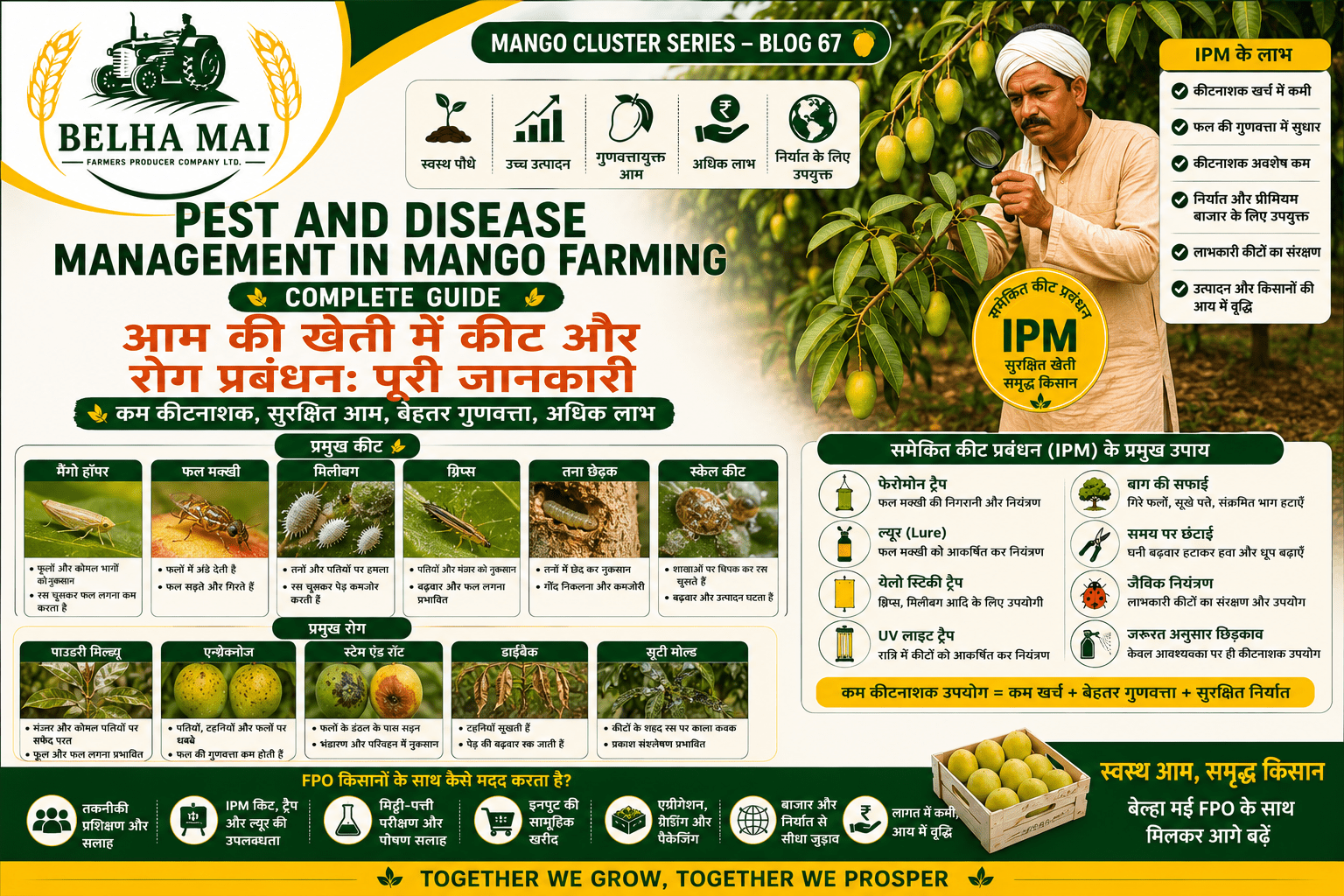
Mango orchards are affected by many pests. The most important pests include mango hopper, fruit fly, mealy bug, thrips, stem borer, leaf webber and scale insects.
Farmers should identify pests at the correct stage. Wrong identification leads to wrong treatment and unnecessary pesticide cost. Regular monitoring is very important because pest attack often starts slowly and becomes serious if ignored.
आम के प्रमुख कीट
आम के बाग में कई प्रकार के कीट लगते हैं। प्रमुख कीटों में मैंगो हॉपर, फल मक्खी, मिलीबग, थ्रिप्स, तना छेदक, लीफ वेबर और स्केल कीट शामिल हैं।
किसानों को सही अवस्था में कीट की पहचान करनी चाहिए। गलत पहचान से गलत उपचार होता है और कीटनाशक खर्च बढ़ता है। नियमित निगरानी बहुत जरूरी है क्योंकि कीट का हमला धीरे-धीरे शुरू होता है और यदि समय पर ध्यान न दिया जाए, तो नुकसान बढ़ सकता है।
Mango Hopper
Mango hopper is one of the most serious pests during flowering. It sucks sap from tender shoots, panicles and flowers. Heavy infestation can reduce flowering, fruit setting and final yield.
Symptoms of mango hopper attack include:
small insects on panicles,
drying of flowers,
sticky honeydew,
black sooty mould,
and poor fruit setting.
Farmers should monitor mango hoppers during flowering. Dense and unmanaged orchards can increase pest pressure because air circulation is poor. Proper pruning, canopy management and need-based pest control help reduce hopper damage.
मैंगो हॉपर
मैंगो हॉपर फूल आने के समय आम का एक गंभीर कीट है। यह नई टहनियों, मंजर और फूलों का रस चूसता है। ज्यादा प्रकोप होने पर फूल सूख सकते हैं और फल लगना कम हो सकता है।
मैंगो हॉपर के लक्षण:
मंजर पर छोटे कीट दिखना,
फूलों का सूखना,
चिपचिपा पदार्थ,
काली फफूंद जैसा जमाव,
और फल लगने में कमी।
किसानों को फूल आने के समय मैंगो हॉपर की निगरानी करनी चाहिए। बहुत घने और बिना प्रबंधन वाले बाग में कीट का प्रकोप बढ़ सकता है। सही कटाई-छंटाई, कैनोपी प्रबंधन और जरूरत आधारित नियंत्रण से नुकसान कम किया जा सकता है।
Fruit Fly in Mango
Fruit fly is one of the most important pests in mango because it directly damages fruits. Female fruit flies lay eggs inside the fruit. Later, larvae damage the pulp and the fruit becomes unsuitable for sale.
Fruit fly is also important for export markets because many countries are strict about fruit fly infestation. If fruit fly damage is high, mangoes may be rejected by premium buyers.
Important fruit fly management practices include:
pheromone traps,
methyl eugenol traps,
fruit fly lures,
collection of fallen fruits,
destruction of infested fruits,
orchard sanitation,
and cluster-level monitoring.
FPOs should promote fruit fly management at cluster level because one farmer’s orchard cannot remain fully protected if nearby orchards are unmanaged.
आम में फल मक्खी
फल मक्खी आम का बहुत महत्वपूर्ण कीट है क्योंकि यह सीधे फल को नुकसान पहुंचाती है। मादा फल मक्खी फल के अंदर अंडे देती है। बाद में लार्वा गूदे को खराब कर देता है और फल बाजार में बेचने योग्य नहीं रहता।
फल मक्खी निर्यात बाजार के लिए भी बहुत महत्वपूर्ण है क्योंकि कई देश फल मक्खी संक्रमण को लेकर सख्त होते हैं। यदि फल मक्खी का नुकसान ज्यादा है, तो आम प्रीमियम खरीदारों द्वारा अस्वीकार किए जा सकते हैं।
फल मक्खी प्रबंधन के महत्वपूर्ण उपाय:
फेरोमोन ट्रैप,
मिथाइल यूजेनॉल ट्रैप,
फ्रूट फ्लाई ल्योर,
गिरे हुए फलों को इकट्ठा करना,
संक्रमित फलों को नष्ट करना,
बाग की सफाई,
और क्लस्टर स्तर पर निगरानी।
FPO को फल मक्खी प्रबंधन क्लस्टर स्तर पर करना चाहिए क्योंकि यदि आसपास के बाग unmanaged हैं, तो एक किसान का बाग पूरी तरह सुरक्षित नहीं रह सकता।
Mealy Bug
Mealy bug is another important pest of mango. It sucks sap from leaves, shoots and panicles. It can weaken the plant and reduce fruit quality. Mealy bug infestation may also lead to sticky honeydew and black sooty mould.
Management practices include:
orchard sanitation,
removal of weeds,
monitoring tree trunks,
banding where recommended,
and need-based treatment.
Farmers should not allow weeds and debris to remain around tree basins because these can support pest survival.
मिलीबग
मिलीबग आम का एक महत्वपूर्ण कीट है। यह पत्तियों, टहनियों और मंजर से रस चूसता है। इससे पौधा कमजोर हो सकता है और फल गुणवत्ता प्रभावित हो सकती है। मिलीबग से चिपचिपा पदार्थ और काली फफूंद भी दिख सकती है।
मिलीबग प्रबंधन के उपाय:
बाग की सफाई,
खरपतवार हटाना,
पेड़ के तने की निगरानी,
जहां सलाह हो वहां बैंडिंग,
और जरूरत आधारित उपचार।
किसानों को पेड़ के आसपास खरपतवार और कचरा नहीं रहने देना चाहिए क्योंकि इससे कीटों को छिपने और बढ़ने का अवसर मिलता है।
Thrips
Thrips are small insects that can damage tender leaves, flowers and young fruits. They scrape plant tissues and may cause scarring, discoloration or poor fruit appearance.
Thrips are especially important where fruits are grown for premium markets because even surface damage can reduce value. Regular monitoring during flowering and fruit development is important.
थ्रिप्स
थ्रिप्स छोटे कीट होते हैं जो नई पत्तियों, फूलों और छोटे फलों को नुकसान पहुंचा सकते हैं। ये पौधे की सतह को खुरचते हैं, जिससे दाग, रंग परिवर्तन या खराब फल दिखावट हो सकती है।
थ्रिप्स प्रीमियम बाजार के लिए महत्वपूर्ण हैं क्योंकि फल की सतह पर हल्का नुकसान भी दाम कम कर सकता है। फूल और फल विकास की अवस्था में नियमित निगरानी जरूरी है।
Stem Borer and Leaf Webber
Stem borer damages branches and stems by boring inside plant tissues. Leaf webber damages leaves by webbing and feeding. These pests reduce plant health and can weaken the orchard over time.
Farmers should inspect trees regularly and remove damaged branches where required. Pruning and orchard sanitation reduce pest build-up.
तना छेदक और लीफ वेबर
तना छेदक पेड़ की शाखाओं और तने के अंदर छेद करके नुकसान करता है। लीफ वेबर पत्तियों को जाल की तरह जोड़कर खाता है। ये कीट पेड़ की सेहत को कमजोर कर सकते हैं।
किसानों को नियमित रूप से पेड़ों की जांच करनी चाहिए और जरूरत होने पर खराब शाखाएं हटानी चाहिए। कटाई-छंटाई और बाग की सफाई से कीट प्रकोप कम होता है।
Major Mango Diseases
Mango is affected by several diseases during flowering, fruit development, harvesting and storage. Important diseases include powdery mildew, anthracnose, stem-end rot, dieback and sooty mould.
Disease management should not start only after heavy infection. Prevention, orchard hygiene, proper pruning, airflow, balanced nutrition and careful harvesting are very important.
आम के प्रमुख रोग
आम में फूल, फल विकास, तुड़ाई और भंडारण के दौरान कई रोग लग सकते हैं। प्रमुख रोगों में पाउडरी मिल्ड्यू, एन्थ्रेक्नोज, स्टेम एंड रॉट, डाइबैक और सूटी मोल्ड शामिल हैं।
रोग प्रबंधन केवल ज्यादा संक्रमण होने के बाद शुरू नहीं करना चाहिए। रोकथाम, बाग की सफाई, सही कटाई-छंटाई, हवा का संचार, संतुलित पोषण और सावधानीपूर्वक तुड़ाई बहुत जरूरी है।
Powdery Mildew
Powdery mildew is common during flowering. It appears as white powder-like growth on panicles, flowers and young fruits. It can reduce fruit setting and cause flower drop.
Management includes:
proper canopy management,
good air circulation,
regular monitoring during flowering,
removal of infected parts where possible,
and need-based treatment under expert advice.
पाउडरी मिल्ड्यू
पाउडरी मिल्ड्यू फूल आने के समय आम का सामान्य रोग है। इसमें मंजर, फूल और छोटे फलों पर सफेद पाउडर जैसा जमाव दिखाई देता है। इससे फूल झड़ सकते हैं और फल लगना कम हो सकता है।
प्रबंधन उपाय:
सही कैनोपी प्रबंधन,
अच्छा हवा संचार,
फूल अवस्था में नियमित निगरानी,
संक्रमित भाग हटाना जहां संभव हो,
और विशेषज्ञ सलाह पर जरूरत आधारित उपचार।
Anthracnose
Anthracnose is one of the important diseases of mango. It can affect leaves, flowers and fruits. On fruits, it may appear as black spots, which reduce market value. Disease development is more serious under humid and rainy conditions.
Good pruning, orchard sanitation, proper spacing, careful harvesting and proper post-harvest handling help reduce anthracnose problems.
एन्थ्रेक्नोज
एन्थ्रेक्नोज आम का एक महत्वपूर्ण रोग है। यह पत्तियों, फूलों और फलों को प्रभावित कर सकता है। फलों पर यह काले धब्बों के रूप में दिखाई दे सकता है, जिससे बाजार मूल्य कम होता है। अधिक नमी और बारिश में इसका प्रकोप बढ़ सकता है।
सही कटाई-छंटाई, बाग की सफाई, उचित दूरी, सावधानीपूर्वक तुड़ाई और सही पोस्ट-हार्वेस्ट हैंडलिंग से एन्थ्रेक्नोज की समस्या कम की जा सकती है।
Stem-End Rot
Stem-end rot usually appears after harvesting or during ripening and storage. It causes rotting near the stem end of the fruit. Poor handling, injury, high humidity and infected orchard conditions can increase the problem.
Farmers and FPOs should focus on careful harvesting, de-sapping, sorting, grading and clean packaging to reduce post-harvest disease losses.
स्टेम एंड रॉट
स्टेम एंड रॉट आम में अक्सर तुड़ाई के बाद या पकने और भंडारण के दौरान दिखाई देता है। इसमें फल के डंठल वाले हिस्से के पास सड़न शुरू होती है। खराब हैंडलिंग, चोट, अधिक नमी और संक्रमित बाग की स्थिति से यह समस्या बढ़ सकती है।
किसानों और FPO को सावधानीपूर्वक तुड़ाई, डी-सैपिंग, छंटाई, ग्रेडिंग और साफ पैकेजिंग पर ध्यान देना चाहिए।
Sooty Mould
Sooty mould appears as black coating on leaves and fruits. It often develops where sap-sucking insects such as hoppers, mealy bugs or scale insects produce honeydew.
The main control is to manage the insects that produce honeydew. Good orchard hygiene and canopy management also help.
सूटी मोल्ड
सूटी मोल्ड पत्तियों और फलों पर काली परत के रूप में दिखाई देता है। यह अक्सर उन जगहों पर होता है जहां रस चूसने वाले कीट जैसे हॉपर, मिलीबग या स्केल कीट चिपचिपा पदार्थ छोड़ते हैं।
इसका मुख्य नियंत्रण उन कीटों का प्रबंधन है जो चिपचिपा पदार्थ बनाते हैं। बाग की सफाई और कैनोपी प्रबंधन भी मदद करते हैं।
Integrated Pest Management in Mango
Integrated Pest Management is the best long-term approach for mango pest and disease management. IPM does not mean zero pesticide. It means using pesticides only when required and combining them with safer and smarter practices.
Important IPM tools in mango farming include:
regular orchard monitoring,
pheromone traps,
methyl eugenol traps,
fruit fly lures,
yellow sticky traps,
blue sticky traps where suitable,
UV or light traps where suitable,
orchard sanitation,
removal of fallen fruits,
biological control,
proper pruning,
need-based spraying,
and farmer training.
IPM helps farmers reduce unnecessary pesticide use. This saves money and improves fruit quality. It also supports premium and export markets where buyers prefer safer and cleaner produce.
आम में समेकित कीट प्रबंधन
समेकित कीट प्रबंधन यानी IPM आम में कीट और रोग प्रबंधन का सबसे अच्छा दीर्घकालिक तरीका है। IPM का मतलब यह नहीं है कि कोई कीटनाशक उपयोग नहीं होगा। इसका मतलब है कि कीटनाशक केवल जरूरत होने पर और सही तरीके से उपयोग किए जाएं, साथ में सुरक्षित और समझदार उपाय अपनाए जाएं।
आम की खेती में IPM के महत्वपूर्ण उपकरण:
नियमित बाग निगरानी,
फेरोमोन ट्रैप,
मिथाइल यूजेनॉल ट्रैप,
फ्रूट फ्लाई ल्योर,
येलो स्टिकी ट्रैप,
जहां उपयुक्त हो ब्लू स्टिकी ट्रैप,
जहां उपयुक्त हो UV या लाइट ट्रैप,
बाग की सफाई,
गिरे हुए फलों को हटाना,
जैविक नियंत्रण,
सही कटाई-छंटाई,
जरूरत आधारित छिड़काव,
और किसान प्रशिक्षण।
IPM से अनावश्यक कीटनाशक उपयोग कम होता है। इससे किसानों का खर्च बचता है और फल की गुणवत्ता सुधरती है। यह प्रीमियम और निर्यात बाजार के लिए भी उपयोगी है।
Pheromone Traps, Lures and UV Light Traps
Pheromone traps and lures are very useful for monitoring and managing pests. In mango, methyl eugenol traps are commonly used for fruit fly management. These traps attract male fruit flies and help reduce the pest population.
Yellow sticky traps can help monitor small flying insects. UV or light traps can attract night-flying insects where suitable, but they should be used carefully and as part of a complete IPM plan.
Farmers should remember that traps are not magic solutions. They work best when combined with orchard sanitation, fallen fruit collection, pruning, monitoring and need-based advisory.
फेरोमोन ट्रैप, ल्योर और UV लाइट ट्रैप
फेरोमोन ट्रैप और ल्योर कीटों की निगरानी और नियंत्रण में बहुत उपयोगी हैं। आम में फल मक्खी प्रबंधन के लिए मिथाइल यूजेनॉल ट्रैप का उपयोग किया जाता है। ये ट्रैप नर फल मक्खियों को आकर्षित करते हैं और कीट आबादी कम करने में मदद करते हैं।
येलो स्टिकी ट्रैप छोटे उड़ने वाले कीटों की निगरानी में मदद कर सकते हैं। UV या लाइट ट्रैप रात में उड़ने वाले कीटों को आकर्षित कर सकते हैं, जहां यह उपयुक्त हो। लेकिन इन्हें पूरे IPM प्लान के हिस्से के रूप में उपयोग करना चाहिए।
किसानों को समझना चाहिए कि ट्रैप कोई जादुई समाधान नहीं हैं। ये बाग की सफाई, गिरे हुए फल हटाने, कटाई-छंटाई, निगरानी और विशेषज्ञ सलाह के साथ सबसे अच्छा काम करते हैं।
Need-Based Spraying
One of the biggest mistakes in mango farming is blind spraying. Some farmers spray chemicals without checking pest level or disease stage. This increases cost, may harm beneficial insects and can create residue problems.
Need-based spraying means spraying only when required, at the right time, with the right product, correct dose and proper safety precautions. Farmers should always follow expert advisory and label instructions.
जरूरत आधारित छिड़काव
आम की खेती में एक बड़ी गलती बिना जांच के छिड़काव करना है। कई किसान कीट या रोग की स्थिति देखे बिना रसायन छिड़क देते हैं। इससे लागत बढ़ती है, लाभकारी कीटों को नुकसान हो सकता है और अवशेष की समस्या बन सकती है।
जरूरत आधारित छिड़काव का मतलब है कि छिड़काव केवल जरूरत होने पर, सही समय पर, सही उत्पाद, सही मात्रा और सुरक्षा सावधानी के साथ किया जाए। किसानों को हमेशा विशेषज्ञ सलाह और लेबल निर्देश का पालन करना चाहिए।
Orchard Sanitation for Pest and Disease Control
Orchard sanitation is a simple but powerful practice. Farmers should remove fallen fruits, infected fruits, dry branches, diseased leaves and unwanted weeds. Fallen and rotten fruits can become breeding points for fruit fly and disease organisms.
A clean orchard reduces pest and disease pressure. It also improves the appearance of the orchard and builds confidence among buyers, processors and exporters.
कीट और रोग नियंत्रण के लिए बाग की सफाई
बाग की सफाई सरल लेकिन बहुत प्रभावी उपाय है। किसानों को गिरे हुए फल, संक्रमित फल, सूखी शाखाएं, रोगी पत्तियां और अनावश्यक खरपतवार हटाने चाहिए। गिरे और सड़े हुए फल फल मक्खी और रोगों के लिए प्रजनन स्थल बन सकते हैं।
साफ बाग में कीट और रोग का दबाव कम होता है। इससे बाग की स्थिति बेहतर दिखती है और खरीदारों, प्रोसेसर और निर्यातकों का भरोसा बढ़ता है।
Why IPM Improves Export Readiness
Export markets require better quality, clean fruit and proper pest management. If farmers use chemicals carelessly, pesticide residue can become a serious problem. If fruit fly or disease damage is visible, fruits may be rejected.
IPM improves export readiness because it helps farmers produce fruits with:
less pest damage,
cleaner appearance,
lower unnecessary pesticide use,
better grading quality,
better shelf life,
and stronger buyer confidence.
For FPOs, export readiness should begin at orchard level, not at the packhouse only.
IPM निर्यात तैयारी को कैसे बेहतर बनाता है?
निर्यात बाजार में बेहतर गुणवत्ता, साफ फल और सही कीट प्रबंधन की जरूरत होती है। यदि किसान रसायनों का गलत उपयोग करते हैं, तो कीटनाशक अवशेष गंभीर समस्या बन सकते हैं। यदि फल मक्खी या रोग का नुकसान दिखता है, तो फल अस्वीकार हो सकते हैं।
IPM निर्यात तैयारी को बेहतर बनाता है क्योंकि इससे किसान ऐसे फल पैदा कर सकते हैं:
कम कीट नुकसान वाले,
साफ दिखने वाले,
कम अनावश्यक कीटनाशक उपयोग वाले,
बेहतर ग्रेडिंग योग्य,
अच्छी शेल्फ लाइफ वाले,
और खरीदारों के लिए भरोसेमंद।
FPO के लिए निर्यात तैयारी केवल पैकहाउस से नहीं, बल्कि बाग स्तर से शुरू होनी चाहिए।
Role of FPOs in Mango Pest and Disease Management
FPOs can play a major role in mango pest and disease management. Individual small farmers may not be able to buy traps, lures, sprayers, advisory services or expert training. But through FPO, these services can be provided collectively.
An FPO can support farmers through:
IPM training,
pest identification camps,
soil and plant health advisory,
bulk purchase of traps and lures,
pheromone trap installation drives,
UV or light trap demonstration,
orchard sanitation campaigns,
need-based spray advisory,
aggregation of clean fruits,
grading and packaging,
and buyer linkage.
For Belha Mai Farmers Producer Company Ltd., IPM-based mango farming can become a strong service model under the Mango Cluster. It can reduce pesticide expenses, improve fruit quality and help farmers connect with premium and export-oriented markets.
आम कीट और रोग प्रबंधन में FPO की भूमिका
FPO आम कीट और रोग प्रबंधन में बड़ी भूमिका निभा सकता है। छोटे किसान अकेले ट्रैप, ल्योर, स्प्रेयर, सलाह सेवा या विशेषज्ञ ट्रेनिंग आसानी से नहीं ले पाते। लेकिन FPO के माध्यम से ये सेवाएं सामूहिक रूप से उपलब्ध कराई जा सकती हैं।
FPO किसानों की मदद कर सकता है:
IPM ट्रेनिंग,
कीट पहचान शिविर,
मिट्टी और पौध स्वास्थ्य सलाह,
ट्रैप और ल्योर की सामूहिक खरीद,
फेरोमोन ट्रैप स्थापना अभियान,
UV या लाइट ट्रैप डेमो,
बाग सफाई अभियान,
जरूरत आधारित छिड़काव सलाह,
साफ फलों का एग्रीगेशन,
ग्रेडिंग और पैकेजिंग,
और खरीदार संपर्क।
Belha Mai Farmers Producer Company Ltd. के लिए IPM आधारित आम खेती Mango Cluster के तहत एक मजबूत किसान सेवा मॉडल बन सकती है।
Conclusion
Pest and disease management in mango farming is essential for better yield, better quality and better farmer income. Farmers should not depend only on repeated chemical spraying. A smart IPM-based approach can reduce pesticide cost, protect beneficial insects, improve fruit quality and prepare mangoes for premium and export markets.
For small farmers, FPO-led pest and disease management can make a big difference. Collective IPM training, pheromone traps, lures, UV light traps, orchard sanitation, grading and market linkage can help farmers reduce losses and earn better prices.
निष्कर्ष
आम की खेती में कीट और रोग प्रबंधन बेहतर उत्पादन, बेहतर गुणवत्ता और बेहतर किसान आय के लिए जरूरी है। किसानों को बार-बार रासायनिक छिड़काव पर निर्भर नहीं रहना चाहिए। IPM आधारित समझदार तरीका कीटनाशक खर्च कम कर सकता है, लाभकारी कीटों को सुरक्षित रख सकता है, फल गुणवत्ता सुधार सकता है और आम को प्रीमियम व निर्यात बाजार के लिए तैयार कर सकता है।
छोटे किसानों के लिए FPO आधारित कीट और रोग प्रबंधन बड़ा बदलाव ला सकता है। सामूहिक IPM ट्रेनिंग, फेरोमोन ट्रैप, ल्योर, UV लाइट ट्रैप, बाग सफाई, ग्रेडिंग और बाजार संपर्क से किसान नुकसान कम कर सकते हैं और बेहतर दाम पा सकते हैं।
15. FAQ in English + Hindi
FAQ 1: What are the major pests in mango farming?
Major mango pests include mango hopper, fruit fly, mealy bug, thrips, stem borer, leaf webber and scale insects. These pests can damage flowers, leaves, shoots and fruits.
प्रश्न 1: आम की खेती में प्रमुख कीट कौन-कौन से हैं?
आम की खेती में प्रमुख कीट हैं मैंगो हॉपर, फल मक्खी, मिलीबग, थ्रिप्स, तना छेदक, लीफ वेबर और स्केल कीट। ये फूल, पत्तियां, टहनियां और फल को नुकसान पहुंचा सकते हैं।
FAQ 2: What are the major diseases of mango?
Major mango diseases include powdery mildew, anthracnose, stem-end rot, dieback and sooty mould. These diseases can reduce flowering, fruit quality, shelf life and market value.
प्रश्न 2: आम के प्रमुख रोग कौन-कौन से हैं?
आम के प्रमुख रोगों में पाउडरी मिल्ड्यू, एन्थ्रेक्नोज, स्टेम एंड रॉट, डाइबैक और सूटी मोल्ड शामिल हैं। ये फूल, फल गुणवत्ता, भंडारण क्षमता और बाजार मूल्य को प्रभावित कर सकते हैं।
FAQ 3: What is IPM in mango farming?
IPM means Integrated Pest Management. It uses monitoring, pheromone traps, lures, sticky traps, UV or light traps, orchard sanitation, biological control and need-based spraying to reduce unnecessary pesticide use.
प्रश्न 3: आम की खेती में IPM क्या है?
IPM का अर्थ है समेकित कीट प्रबंधन। इसमें निगरानी, फेरोमोन ट्रैप, ल्योर, स्टिकी ट्रैप, UV या लाइट ट्रैप, बाग सफाई, जैविक नियंत्रण और जरूरत आधारित छिड़काव शामिल होते हैं।
FAQ 4: How do pheromone traps help in mango farming?
Pheromone traps help monitor and manage pests such as fruit fly. Methyl eugenol traps attract male fruit flies and help reduce pest population when used properly with sanitation and monitoring.
प्रश्न 4: फेरोमोन ट्रैप आम की खेती में कैसे मदद करते हैं?
फेरोमोन ट्रैप फल मक्खी जैसे कीटों की निगरानी और नियंत्रण में मदद करते हैं। मिथाइल यूजेनॉल ट्रैप नर फल मक्खियों को आकर्षित करते हैं और सही उपयोग से कीट आबादी कम करने में मदद करते हैं।
FAQ 5: Can IPM reduce pesticide cost?
Yes, IPM can reduce pesticide cost because it avoids unnecessary spraying and uses traps, lures, monitoring, sanitation and need-based treatment. It also improves fruit quality.
प्रश्न 5: क्या IPM से कीटनाशक खर्च कम हो सकता है?
हां, IPM अनावश्यक छिड़काव को कम करता है और ट्रैप, ल्योर, निगरानी, सफाई और जरूरत आधारित उपचार का उपयोग करता है। इससे कीटनाशक खर्च कम होता है और फल गुणवत्ता बेहतर होती है।
FAQ 6: How can FPOs help in mango pest and disease management?
FPOs can help through IPM training, bulk purchase of traps and lures, pest monitoring, expert advisory, orchard sanitation campaigns, grading, packaging and direct buyer linkage.
प्रश्न 6: FPO आम कीट और रोग प्रबंधन में कैसे मदद कर सकता है?
FPO IPM ट्रेनिंग, ट्रैप और ल्योर की सामूहिक खरीद, कीट निगरानी, विशेषज्ञ सलाह, बाग सफाई अभियान, ग्रेडिंग, पैकेजिंग और सीधे खरीदार संपर्क के माध्यम से मदद कर सकता है।
16. Internal Links Section
Related Mango Cluster Blogs
👉 Mango Farming in India: Complete Guide
https://belhamaifpo.com/agriculture/mango-farming-in-india/
👉 Profit per Acre in Mango Farming
https://belhamaifpo.com/agriculture/profit-per-acre-in-mango-farming/
👉 Best Mango Varieties in Indiahttps://belhamaifpo.com/agriculture/best-mango-varieties-in-india/
👉 Cultivation of Langra Mango: Complete Guide
https://belhamaifpo.com/agriculture/cultivation-of-langra-mango/
👉 Cultivation of Dasheri Mango: Complete Guide
https://belhamaifpo.com/agriculture/cultivation-of-dasheri-mango/
👉 Mango Orchard Management Practices
https://belhamaifpo.com/agriculture/mango-orchard-management-practices/
👉 Mango Flowering and Fruiting Cycle Explained
https://belhamaifpo.com/agriculture/mango-flowering-and-fruiting-cycle/
हिंदी में संबंधित आम क्लस्टर ब्लॉग
👉 भारत में आम की खेती: पूरी जानकारी
https://belhamaifpo.com/agriculture/mango-farming-in-india/
👉 आम की खेती में प्रति एकड़ लाभ
https://belhamaifpo.com/agriculture/profit-per-acre-in-mango-farming/
👉 भारत की प्रमुख आम किस्में
https://belhamaifpo.com/agriculture/best-mango-varieties-in-india/
👉 लंगड़ा आम की खेती: पूरी जानकारी
https://belhamaifpo.com/agriculture/cultivation-of-langra-mango/
👉 दशहरी आम की खेती: पूरी जानकारी
https://belhamaifpo.com/agriculture/cultivation-of-dasheri-mango/
👉 आम बाग प्रबंधन: पूरी जानकारी
https://belhamaifpo.com/agriculture/mango-orchard-management-practices/
👉 आम में फूल और फल बनने की प्रक्रिया
https://belhamaifpo.com/agriculture/mango-flowering-and-fruiting-cycle/
17. External Authority Links
👉 PPQS IPM Package of Practices for Mango
https://ppqs.gov.in/sites/default/files/mango_pop_final_-08.12.2022.pdf
👉 NHB Mango Cultivation Guide
https://nhb.gov.in/report_files/mango/mango.htm
👉 ICAR-CISH Lucknow
https://www.cish.org.in/
👉 TNAU Mango Crop Information
https://agritech.tnau.ac.in/govt_schemes_services/aas/mango.html
👉 APEDA Mango Export Information
https://apeda.gov.in/Mango