
Introduction
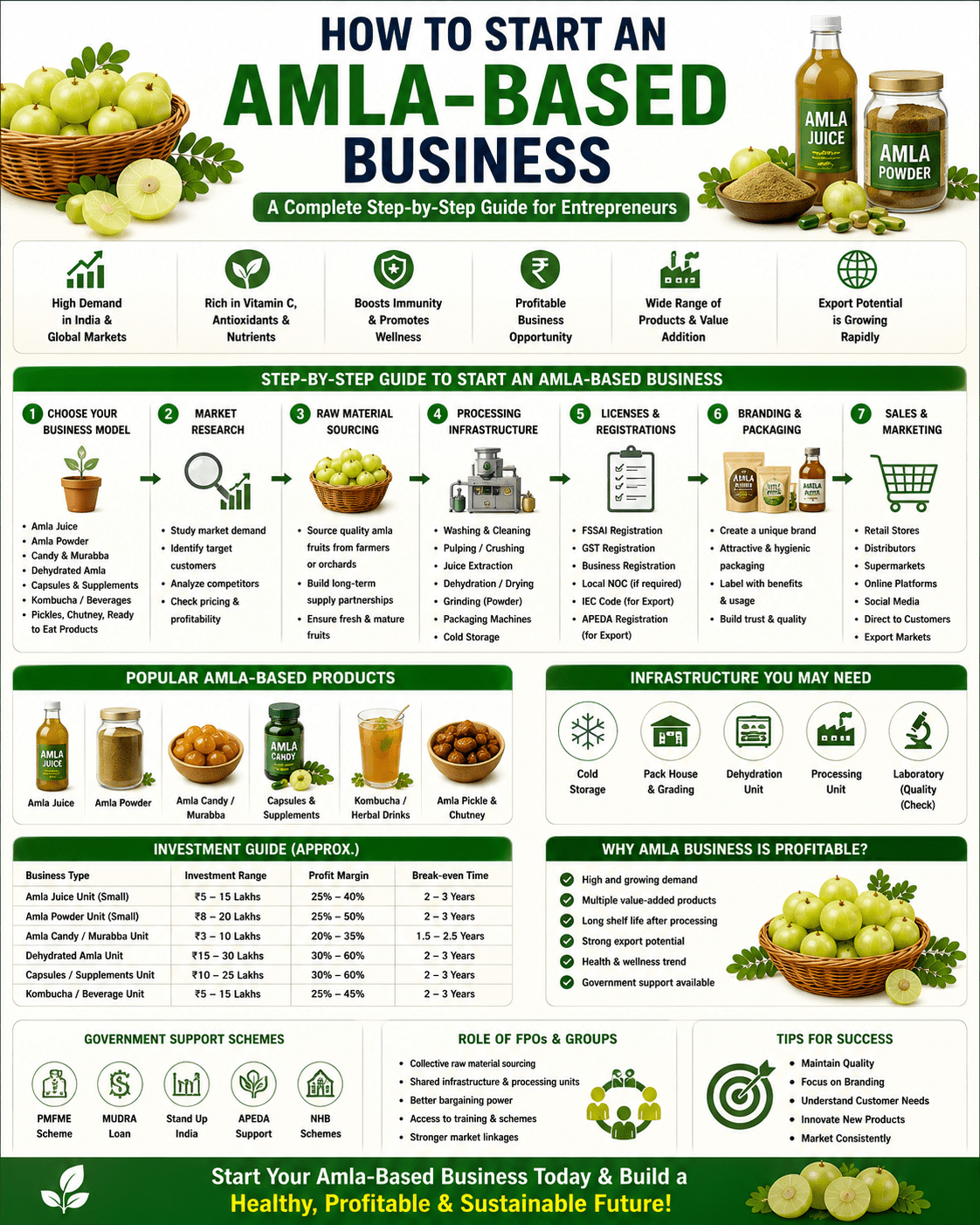
How to start an amla-based business is becoming an important topic as demand for:
- herbal wellness products,
- nutraceuticals,
- immunity boosters,
- functional foods,
- and natural healthcare products
continues to rise across India and international markets.
Amla (Indian Gooseberry) is one of India’s most valuable horticultural and medicinal crops because of its:
- exceptionally high Vitamin C content,
- antioxidant properties,
- Ayurvedic importance,
- and huge processing potential.
Today, consumers are increasingly shifting toward:
- natural wellness,
- low-sugar nutrition,
- preventive healthcare,
- and herbal products.
This creates major opportunities in:
- food processing,
- nutraceuticals,
- wellness beverages,
- organic products,
- dehydration,
- and export-oriented businesses.
In this blog, we will understand:
- how to start an amla-based business,
- investment opportunities,
- processing models,
- infrastructure requirements,
- marketing strategies,
- government support,
- and the role of FPOs in building sustainable amla enterprises.
Why How to Start an Amla-Based Business Is Important
One of the biggest reasons behind growing interest in how to start an amla-based business is the rapid expansion of:
- wellness industries,
- herbal healthcare,
- nutraceutical markets,
- and functional food sectors.
Amla-based businesses have huge potential because:
- raw material is available in India,
- processing possibilities are diverse,
- and global demand for herbal products is increasing.
Major Business Opportunities in Amla Sector
1. Amla Juice Business
Amla juice is one of the most popular wellness products in the market.
Demand is increasing because consumers associate it with:
- immunity,
- digestion,
- detoxification,
- and overall wellness.
2. Amla Powder Manufacturing
Amla powder has huge demand in:
- nutraceutical industries,
- herbal medicine,
- cosmetic products,
- and wellness supplements.
Powder products also have:
- longer shelf life,
- easier transportation,
- and export potential.
3. Amla Candy and Murabba
Traditional products like:
- candy,
- murabba,
- pickles,
- and sweet preserves
still have strong domestic demand.
However, future growth may increasingly favor:
- low-sugar,
- healthier,
- and wellness-oriented alternatives.
4. Herbal Wellness Products
Amla is widely used in:
- herbal capsules,
- immunity products,
- nutraceutical blends,
- and Ayurvedic formulations.
This is one of the fastest-growing business segments.
5. Dehydrated Amla Products
Dry amla products have strong potential because they:
- store easily,
- reduce transportation cost,
- and suit export markets.
Dehydration infrastructure remains limited in many amla-growing clusters, creating huge business opportunities.
👉 To Learn more on this topic Amla powder benefits and uses : https://belhamaifpo.com/agriculture/amla-powder-benefits-and-uses/
6. Probiotic and Kombucha Beverages
Global consumers increasingly prefer:
- probiotic drinks,
- gut-health beverages,
- and functional wellness products.
Amla-based kombucha and herbal beverages can become major future business opportunities.
Step-by-Step Guide on How to Start an Amla-Based Business
1. Choose Your Business Model
The first step in how to start an amla-based business is selecting a suitable business model.
Possible business models include:
- fresh fruit trading,
- processing,
- juice manufacturing,
- powder production,
- dehydration,
- nutraceutical products,
- or export-oriented businesses.
👉 To Learn more on Amla farming in India: complete guide for Farmers, Processing & Business Opportunities : https://belhamaifpo.com/farmer-producer-organisation/amla-farming-in-india/
2. Conduct Market Research
Study:
- consumer demand,
- competitors,
- pricing,
- product trends,
- and target customers.
Market research helps identify:
- profitable products,
- demand gaps,
- and branding opportunities.
3. Arrange Raw Material Supply
Reliable raw material sourcing is extremely important.
You can source amla through:
- orchards,
- farmer networks,
- aggregators,
- or FPO partnerships.
Long-term supply linkage improves business stability.
4. Select Processing Infrastructure
Infrastructure requirements depend on the product type.
Common infrastructure includes:
- washing systems,
- grading lines,
- pulping machines,
- dehydration units,
- packaging systems,
- and cold storage.
5. Obtain Licenses and Registrations
Food businesses generally require:
- FSSAI registration,
- GST registration,
- business registration,
- and packaging compliance.
Export businesses may also require:
- IEC code,
- APEDA registration,
- and export certifications.
6. Focus on Packaging and Branding
Modern consumers increasingly prefer:
- attractive packaging,
- hygienic products,
- and traceable brands.
Good branding significantly improves:
- customer trust,
- retail acceptance,
- and export competitiveness.
👉 To have more ideas on Packaging solutions for amla products: https://belhamaifpo.com/agriculture/packaging-solutions-for-amla-products5/
7. Build Sales Channels
Products can be sold through:
- retail shops,
- supermarkets,
- distributors,
- ecommerce platforms,
- wellness stores,
- and export markets.
Digital marketing is becoming increasingly important.
8. Develop Online Presence
Businesses should build:
- websites,
- social media pages,
- YouTube channels,
- and ecommerce systems.
Digital branding helps:
- improve visibility,
- attract customers,
- and strengthen trust.
Importance of Cold Storage and Pack Houses
One of the biggest challenges in India’s amla sector is weak post-harvest infrastructure.
Most clusters still lack:
- cold storage,
- grading systems,
- pack houses,
- and dehydration facilities.
As a result:
- post-harvest losses remain high,
- and farmers are forced into distress selling.
Infrastructure investment can significantly improve profitability.
Why Value Addition Is the Future
Selling raw fruits generates limited margins.
However, value-added products like:
- powder,
- juice,
- nutraceuticals,
- kombucha,
- and wellness beverages
can generate significantly higher returns.
Global markets increasingly demand:
- low-sugar,
- functional,
- and wellness-oriented products.
Challenges in Starting an Amla-Based Business
1. Infrastructure Cost
Processing infrastructure requires investment in:
- machinery,
- storage,
- packaging,
- and processing systems.
2. Market Competition
The herbal wellness industry is becoming increasingly competitive.
Strong branding and quality are essential.
3. Lack of Post-Harvest Infrastructure
Weak infrastructure increases:
- wastage,
- spoilage,
- and supply instability.
4. Quality Standardization
Export and premium markets demand:
- quality consistency,
- hygiene,
- and scientific processing.
👉 Learn more on Amla demand in domestic vs international markets : https://belhamaifpo.com/agriculture/amla-demand-in-domestic-vs-international-marketss/
Government Support and Subsidies
Government schemes supporting:
- food processing,
- horticulture,
- FPOs,
- MSMEs,
- and post-harvest infrastructure
can significantly help entrepreneurs.
Programs under:
- PMFME,
- MIDH,
- NHB,
- and Agricultural Infrastructure Fund
are highly important.
👉 Get more ideas on Government subsidies for amla farming : https://belhamaifpo.com/uncategorized/government-subsidies-for-amla-farming/
Role of FPOs in Amla-Based Business Development
Farmer Producer Organizations (FPOs) can play a transformational role in business development.
Collective Raw Material Supply
FPOs help ensure:
- bulk supply,
- quality consistency,
- and farmer linkage.
Infrastructure Development
FPOs can establish:
- cold storage,
- pack houses,
- dehydration units,
- grading systems,
- and processing facilities.
👉 To learn more on Challenges in amla farming and solutions : https://belhamaifpo.com/uncategorized/amla-farming-challenges-solutions/
Farmer-Owned Brands
FPOs can create:
- regional brands,
- wellness products,
- and direct-to-consumer businesses.
This allows farmers to participate in:
- processing,
- branding,
- and value addition profits.
Pratapgarh’s Emerging Role in Amla Processing
Pratapgarh is widely recognized as one of India’s most important amla-growing regions and is often called the traditional Amla Capital of India.
The district is recognized:
- under SFURTI Yojana by MSME as an Amla Cluster,
- and under NHB cluster development initiatives.
This creates huge opportunities for:
- processing,
- dehydration,
- wellness products,
- and export-oriented value addition.
Belha Mai Farmer Producer Company’s Initiative
Belha Mai Farmer Producer Company is actively working toward:
- cold storage,
- grading systems,
- pack houses,
- dehydration units,
- and integrated value-chain infrastructure.
The organization currently has:
- 176 amla orchard owners as shareholders.
This initiative has the potential to significantly improve:
- processing opportunities,
- farmer income,
- and value addition ecosystems.
Conclusion
How to start an amla-based business is becoming increasingly relevant because of rising global demand for:
- herbal wellness,
- nutraceuticals,
- immunity products,
- and functional foods.
India already has:
- strong raw material availability,
- traditional Ayurvedic knowledge,
- and growing consumer awareness.
However, long-term success depends on:
- scientific processing,
- strong branding,
- modern packaging,
- infrastructure development,
- and direct market linkage.
FPO-led infrastructure, farmer-owned processing, and export-oriented value addition can significantly strengthen India’s amla business ecosystem and improve farmer profitability.
The work being undertaken in Pratapgarh by Belha Mai Farmer Producer Company represents an important step toward building a modern and farmer-led amla processing ecosystem in India.
Some important Links