Introduction
Mango orchard management Practices is one of the most important factors behind successful mango farming. Many farmers plant mango orchards but do not manage them properly after planting. As a result, trees become too dense, flowering becomes irregular, pest and disease incidence increases, fruit quality declines and market price goes down.
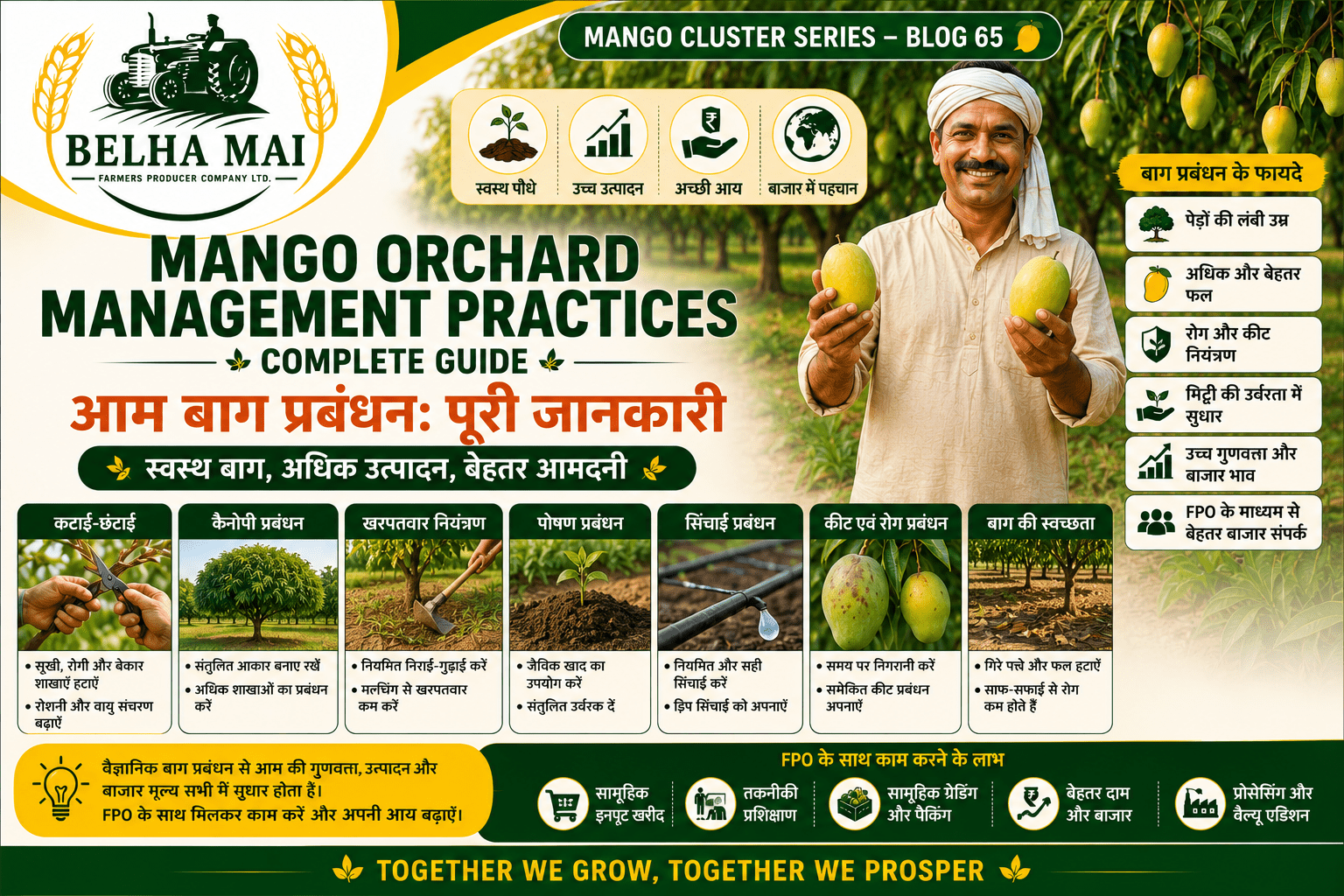
A mango orchard should be managed like a long-term business asset. Proper orchard management includes pruning, canopy management, irrigation, nutrition, soil health, weed control, mulching, pest and disease monitoring, harvesting, grading, packaging and market linkage.
TNAU’s canopy management guide explains that canopy management means manipulating the tree canopy to optimize production of quality fruits, and it includes training and pruning practices.
आम बाग प्रबंधन: पूरी जानकारी
आम बाग प्रबंधन सफल आम खेती का सबसे महत्वपूर्ण हिस्सा है। कई किसान आम का बाग तो लगा देते हैं, लेकिन बाद में उसका सही प्रबंधन नहीं करते। इसके कारण पेड़ बहुत घने हो जाते हैं, फूल कम आते हैं, कीट और रोग बढ़ते हैं, फल की गुणवत्ता कम होती है और बाजार भाव घट जाता है।
आम का बाग एक लंबी अवधि की व्यवसायिक संपत्ति की तरह प्रबंधित करना चाहिए। सही बाग प्रबंधन में कटाई-छंटाई, कैनोपी प्रबंधन, सिंचाई, पोषण, मिट्टी की सेहत, खरपतवार नियंत्रण, मल्चिंग, कीट और रोग निगरानी, तुड़ाई, ग्रेडिंग, पैकिंग और बाजार संपर्क शामिल हैं।
Importance of Mango Orchard Management
A well-managed mango orchard gives better fruit size, better colour, better quality and better market value. Poorly managed orchards often produce mixed-quality fruits. Such fruits are difficult to sell at premium rates.
Good orchard management helps farmers in many ways:
better flowering,
better fruit setting,
reduced pest and disease pressure,
improved fruit size,
better air circulation,
lower post-harvest loss,
higher market price,
and better suitability for processing and export markets.
ICAR-linked mango canopy management information notes that dense and compact canopies encourage more pest and disease incidence, while optimum canopy cover and central opening improve sunlight penetration and help reduce pest and disease pressure with minimum pesticide use.
आम बाग प्रबंधन का महत्व
अच्छा प्रबंधित आम बाग बेहतर फल आकार, बेहतर रंग, बेहतर गुणवत्ता और बेहतर बाजार भाव देता है। बिना प्रबंधन वाले बागों में अक्सर मिले-जुले और कम गुणवत्ता वाले फल मिलते हैं, जिन्हें प्रीमियम भाव पर बेचना मुश्किल होता है।
अच्छे बाग प्रबंधन से किसानों को ये लाभ मिलते हैं:
बेहतर फूल,
बेहतर फल लगना,
कीट और रोग का कम दबाव,
बेहतर फल आकार,
हवा और धूप का बेहतर प्रवेश,
कटाई के बाद कम नुकसान,
बेहतर बाजार भाव,
और प्रोसेसिंग व निर्यात बाजार के लिए बेहतर गुणवत्ता।
Pruning in Mango Orchard
Pruning is an important practice in mango orchard management. It helps remove dead, diseased, broken, overcrowded and unwanted branches. Regular pruning improves sunlight penetration and air circulation inside the canopy.
Farmers should remove:
dry branches,
diseased branches,
crossing branches,
branches touching the ground,
unwanted shoots,
and overcrowded growth.
Pruning should be done carefully and preferably after harvesting. Heavy pruning without technical guidance can damage tree health, so farmers should take expert advice before major pruning or rejuvenation work.
आम बाग में कटाई-छंटाई
कटाई-छंटाई आम बाग प्रबंधन की महत्वपूर्ण तकनीक है। इससे सूखी, रोगी, टूटी, बहुत घनी और अनावश्यक शाखाओं को हटाया जाता है। नियमित कटाई-छंटाई से पेड़ के अंदर धूप और हवा का प्रवेश बेहतर होता है।
किसान इन शाखाओं को हटाएं:
सूखी शाखाएं,
रोगी शाखाएं,
आपस में रगड़ खाने वाली शाखाएं,
जमीन को छूने वाली शाखाएं,
अनावश्यक नई टहनियां,
और बहुत घनी बढ़वार।
कटाई-छंटाई सामान्य रूप से तुड़ाई के बाद करनी चाहिए। बहुत ज्यादा कटाई-छंटाई बिना तकनीकी सलाह के नहीं करनी चाहिए।
Canopy Management
Canopy management means keeping the tree structure balanced, open and productive. In old mango orchards, trees often become very tall and dense. This makes spraying, harvesting and pest monitoring difficult.
A good canopy should allow:
sunlight penetration,
air circulation,
easy harvesting,
easy spraying,
healthy flowering,
and reduced pest and disease incidence.
Canopy management is especially important in high-density mango orchards. In such orchards, trees are planted closer, so regular pruning and shape control are necessary.
कैनोपी प्रबंधन
कैनोपी प्रबंधन का अर्थ है पेड़ के आकार और फैलाव को संतुलित, खुला और उत्पादक बनाए रखना। पुराने आम बागों में पेड़ बहुत ऊंचे और घने हो जाते हैं। इससे छिड़काव, तुड़ाई और कीट निगरानी कठिन हो जाती है।
अच्छी कैनोपी से ये लाभ मिलते हैं:
धूप का बेहतर प्रवेश,
हवा का अच्छा संचार,
तुड़ाई में आसानी,
छिड़काव में सुविधा,
स्वस्थ फूल,
और कीट-रोग का कम दबाव।
हाई डेंसिटी आम बागों में कैनोपी प्रबंधन और भी महत्वपूर्ण हो जाता है।
Soil Health and Nutrition Management
Soil health is the foundation of a productive mango orchard. Farmers should not apply fertilizers blindly. Soil testing should be done to understand organic carbon, pH, macro-nutrients and micro-nutrients.
Mango orchards need balanced nutrition. Organic manure, compost, farmyard manure, bio-inputs, micronutrients and need-based fertilizers can improve tree health and fruit quality. Excessive or imbalanced fertilizer use can harm soil health and increase cost.
NHB’s mango guidance also highlights that intercropping can be taken up until mango trees develop canopy, and leguminous crops can be useful in young orchards.
मिट्टी की सेहत और पोषण प्रबंधन
मिट्टी की सेहत अच्छे आम बाग की नींव है। किसानों को बिना जांच के उर्वरक नहीं डालना चाहिए। मिट्टी परीक्षण से pH, जैविक कार्बन, मुख्य पोषक तत्व और सूक्ष्म पोषक तत्वों की जानकारी मिलती है।
आम बाग में संतुलित पोषण जरूरी है। जैविक खाद, कम्पोस्ट, गोबर की खाद, जैविक इनपुट, सूक्ष्म पोषक तत्व और जरूरत आधारित उर्वरक पेड़ की सेहत और फल गुणवत्ता सुधारते हैं।
अधिक या असंतुलित उर्वरक उपयोग से लागत बढ़ती है और मिट्टी की सेहत खराब हो सकती है।
Irrigation and Water Management
Mango trees are hardy, but proper irrigation is still important, especially in young orchards, flowering stages and fruit development stages. Water stress can affect plant growth and fruit size. At the same time, excess water can damage roots and increase disease problems.
Farmers should follow local horticulture advisory for irrigation scheduling. Drip irrigation can help save water and deliver moisture directly to the root zone. Mulching can also reduce evaporation and conserve soil moisture.
सिंचाई और जल प्रबंधन
आम के पेड़ मजबूत होते हैं, लेकिन सही सिंचाई फिर भी जरूरी है, खासकर नए बागों, फूल आने और फल बढ़ने की अवस्था में। पानी की कमी से पौधे की बढ़वार और फल आकार प्रभावित हो सकता है। दूसरी ओर, अधिक पानी से जड़ों को नुकसान और रोग की समस्या बढ़ सकती है।
किसानों को स्थानीय बागवानी सलाह के अनुसार सिंचाई करनी चाहिए। ड्रिप सिंचाई से पानी की बचत होती है और नमी सीधे जड़ों तक पहुंचती है। मल्चिंग से मिट्टी की नमी बचती है।
Weed Control and Mulching
Weeds compete with mango plants for nutrients, water and space. In young orchards, weed control is very important because small plants are more sensitive to competition.
Mulching helps in:
moisture conservation,
weed reduction,
soil temperature control,
organic matter improvement,
and better root growth.
Farmers can use dry leaves, straw, crop residue or suitable organic mulch around the basin, but mulch should not touch the trunk directly.
खरपतवार नियंत्रण और मल्चिंग
खरपतवार आम के पौधों से पानी, पोषण और जगह के लिए प्रतिस्पर्धा करते हैं। नए बागों में खरपतवार नियंत्रण बहुत जरूरी है क्योंकि छोटे पौधे अधिक संवेदनशील होते हैं।
मल्चिंग से ये लाभ मिलते हैं:
मिट्टी की नमी बचती है,
खरपतवार कम होते हैं,
मिट्टी का तापमान संतुलित रहता है,
जैविक पदार्थ बढ़ता है,
और जड़ों की बढ़वार बेहतर होती है।
किसान सूखी पत्तियां, भूसा, फसल अवशेष या अन्य जैविक मल्च का उपयोग कर सकते हैं।
Integrated Pest Management in Mango Orchard
Integrated Pest Management, or IPM, is one of the most important practices in mango orchard management. Mango farmers often spend a large amount of money on pesticides, but repeated chemical spraying increases cost and may affect fruit quality. IPM helps farmers reduce unnecessary pesticide use by combining monitoring, traps, lures, orchard sanitation, biological methods and need-based spraying.
In mango orchards, fruit fly is a major pest because it damages fruits and can also create problems for export markets. The Directorate of Plant Protection, Quarantine & Storage recommends installing Methyl Eugenol pheromone traps for fruit fly at 4–5 traps per acre, fixed at mid-canopy height.
Farmers can use:
pheromone traps,
fruit fly lures,
methyl eugenol traps,
yellow sticky traps,
light traps or UV traps where suitable,
orchard sanitation,
collection and destruction of fallen fruits,
timely pruning,
and need-based spraying only when required.
ICAR’s eco-friendly mango fruit fly management reference recommends methyl eugenol plywood traps during fruit development till final harvest, with minimal chemical insecticide use if necessary.
IPM reduces pesticide expenses and protects beneficial insects. It also helps produce cleaner and safer mangoes, which is important for premium, institutional and export markets. For export-oriented supply chains, lower pesticide residue and better fruit quality are very important.
आम बाग में समेकित कीट प्रबंधन
समेकित कीट प्रबंधन, यानी IPM, आम बाग प्रबंधन की सबसे महत्वपूर्ण तकनीकों में से एक है। आम किसान अक्सर कीटनाशकों पर बहुत खर्च करते हैं। बार-बार रासायनिक छिड़काव करने से लागत बढ़ती है और फल की गुणवत्ता पर भी असर पड़ सकता है।
IPM किसानों को अनावश्यक कीटनाशक उपयोग कम करने में मदद करता है। इसमें निगरानी, ट्रैप, ल्योर, बाग की सफाई, जैविक उपाय और जरूरत आधारित छिड़काव शामिल होते हैं।
आम में फल मक्खी एक बड़ा कीट है क्योंकि यह फल को खराब करती है और निर्यात बाजार में भी समस्या पैदा कर सकती है। आम बाग में किसान इन उपायों का उपयोग कर सकते हैं:
फेरोमोन ट्रैप,
फ्रूट फ्लाई ल्योर,
मिथाइल यूजेनॉल ट्रैप,
येलो स्टिकी ट्रैप,
लाइट ट्रैप या UV ट्रैप जहां उपयुक्त हो,
बाग की सफाई,
गिरे हुए फलों को इकट्ठा करके नष्ट करना,
समय पर कटाई-छंटाई,
और जरूरत पड़ने पर ही छिड़काव।
IPM से कीटनाशक खर्च कम होता है, लाभकारी कीट सुरक्षित रहते हैं और आम की गुणवत्ता बेहतर होती है। इससे फल प्रीमियम, संस्थागत और निर्यात बाजार के लिए अधिक उपयुक्त बनते हैं।
Why IPM Is Important for Export-Quality Mangoes
Export markets are very strict about fruit quality, pest damage and pesticide residues. If farmers use pesticides without proper guidance, residue problems can arise. This may reduce the chance of entering premium or export markets.
IPM helps farmers produce mangoes that are:
cleaner,
safer,
less damaged,
better graded,
more acceptable to buyers,
and more suitable for export-oriented value chains.
For FPOs, IPM should be implemented at cluster level. If only one farmer uses traps, the impact may be limited. But if many farmers in one mango cluster use pheromone traps, lures, orchard sanitation and monitoring together, pest control becomes more effective and pesticide use can be reduced in a big way.
निर्यात गुणवत्ता वाले आम के लिए IPM क्यों जरूरी है?
निर्यात बाजार में फल की गुणवत्ता, कीट नुकसान और कीटनाशक अवशेषों पर बहुत ध्यान दिया जाता है। यदि किसान बिना सलाह के ज्यादा कीटनाशक इस्तेमाल करते हैं, तो अवशेष की समस्या हो सकती है। इससे प्रीमियम और निर्यात बाजार में प्रवेश कठिन हो सकता है।
IPM से किसान ऐसे आम पैदा कर सकते हैं जो:
ज्यादा साफ हों,
सुरक्षित हों,
कम खराब हों,
अच्छी ग्रेडिंग के योग्य हों,
खरीदारों को अधिक स्वीकार्य हों,
और निर्यात आधारित वैल्यू चेन के लिए उपयुक्त हों।
FPO को IPM पूरे क्लस्टर स्तर पर लागू करना चाहिए। यदि एक किसान ट्रैप लगाता है तो लाभ सीमित हो सकता है। लेकिन यदि कई किसान मिलकर फेरोमोन ट्रैप, ल्योर, बाग सफाई और निगरानी अपनाते हैं, तो कीट नियंत्रण ज्यादा प्रभावी होता है और कीटनाशक उपयोग बड़े स्तर पर कम हो सकता है।
Orchard Sanitation
Orchard sanitation is a simple but powerful practice. Farmers should regularly remove fallen fruits, diseased fruits, infected leaves and dry branches. Fallen fruits can become a breeding ground for pests such as fruit flies.
Clean orchards reduce pest pressure and disease spread. Sanitation is also important for quality certification, buyer confidence and export readiness.
बाग की सफाई
बाग की सफाई एक सरल लेकिन बहुत प्रभावी अभ्यास है। किसानों को गिरे हुए फल, रोगग्रस्त फल, संक्रमित पत्तियां और सूखी शाखाएं नियमित रूप से हटानी चाहिए। गिरे हुए फल फल मक्खी जैसे कीटों के लिए प्रजनन स्थल बन सकते हैं।
साफ बाग में कीट और रोग का दबाव कम होता है। बाग की सफाई गुणवत्ता, खरीदार भरोसा और निर्यात तैयारी के लिए भी जरूरी है।
Harvesting and Handling
Mangoes should be harvested at the right maturity stage. Early harvesting reduces taste and ripening quality. Late harvesting increases softness and damage during transport.
Farmers should avoid dropping mangoes on the ground. Fruits should be harvested carefully, kept in shade and handled gently. Proper harvesting reduces bruising and improves market value.
तुड़ाई और हैंडलिंग
आम की तुड़ाई सही परिपक्व अवस्था में करनी चाहिए। जल्दी तुड़ाई करने से स्वाद और पकने की गुणवत्ता प्रभावित होती है। देर से तुड़ाई करने पर फल नरम हो जाते हैं और परिवहन में नुकसान बढ़ता है।
किसानों को आम जमीन पर नहीं गिरने देना चाहिए। फल सावधानी से तोड़ें, छाया में रखें और धीरे से हैंडल करें। सही तुड़ाई से फल की गुणवत्ता और बाजार मूल्य बेहतर होता है।
Grading, Sorting and Packaging
After harvesting, mangoes should be sorted and graded according to size, maturity, colour, damage and quality. Mixed-quality fruits often get lower prices. Grading helps farmers sell premium fruits separately and processing-grade fruits separately.
Good packaging reduces damage during transport. It also improves buyer confidence. FPOs can set up common grading and packaging systems so small farmers can access better markets.
ग्रेडिंग, छंटाई और पैकेजिंग
तुड़ाई के बाद आम की छंटाई और ग्रेडिंग आकार, परिपक्वता, रंग, नुकसान और गुणवत्ता के आधार पर करनी चाहिए। मिले-जुले फल अक्सर कम दाम पर बिकते हैं।
ग्रेडिंग से प्रीमियम फल अलग और प्रोसेसिंग ग्रेड फल अलग बेचे जा सकते हैं। अच्छी पैकेजिंग से परिवहन में नुकसान कम होता है और खरीदार का भरोसा बढ़ता है।
FPO छोटे किसानों के लिए सामूहिक ग्रेडिंग और पैकेजिंग व्यवस्था बना सकता है।
Role of FPOs in Mango Orchard Management
FPOs can play a major role in improving mango orchard management. Small farmers often lack technical knowledge, quality inputs, soil testing, pest monitoring tools, traps, grading systems and direct market linkage. An FPO can provide these services collectively.
An FPO can support mango farmers through:
training on pruning and canopy management,
soil testing,
bulk input purchase,
IPM kits,
pheromone traps and lures,
UV or light traps where suitable,
orchard advisory,
aggregation,
grading and packaging,
processing support,
and direct buyer linkage.
For Belha Mai Farmers Producer Company Ltd., mango orchard management can become a strong farmer service model under the Mango Cluster. It can reduce farmer cost, improve fruit quality and increase income through better markets.
आम बाग प्रबंधन में FPO की भूमिका
FPO आम बाग प्रबंधन में बड़ी भूमिका निभा सकता है। छोटे किसानों के पास अक्सर तकनीकी जानकारी, अच्छे इनपुट, मिट्टी परीक्षण, कीट निगरानी उपकरण, ट्रैप, ग्रेडिंग व्यवस्था और सीधे बाजार संपर्क की कमी होती है।
FPO किसानों को ये सेवाएं दे सकता है:
कटाई-छंटाई और कैनोपी प्रबंधन की ट्रेनिंग,
मिट्टी परीक्षण,
सामूहिक इनपुट खरीद,
IPM किट,
फेरोमोन ट्रैप और ल्योर,
जहां उपयुक्त हो वहां UV या लाइट ट्रैप,
बाग सलाह,
एग्रीगेशन,
ग्रेडिंग और पैकिंग,
प्रोसेसिंग सहायता,
और सीधे खरीदार से संपर्क।
Belha Mai Farmers Producer Company Ltd. के लिए Mango Cluster के तहत आम बाग प्रबंधन एक मजबूत किसान सेवा मॉडल बन सकता है।
Conclusion
Mango orchard management is the difference between ordinary mango farming and profitable mango farming. Farmers who manage pruning, canopy, soil health, irrigation, nutrition, IPM, sanitation, harvesting and grading properly can produce better quality fruits and earn better prices.
Integrated Pest Management is especially important because it reduces pesticide cost, improves fruit quality and prepares farmers for premium and export markets. For small farmers, FPO-led mango orchard management can reduce expenses, improve quality and create stronger market linkage.
निष्कर्ष
आम बाग प्रबंधन सामान्य आम खेती और लाभदायक आम खेती के बीच का अंतर है। जो किसान कटाई-छंटाई, कैनोपी, मिट्टी की सेहत, सिंचाई, पोषण, IPM, बाग सफाई, तुड़ाई और ग्रेडिंग का सही प्रबंधन करते हैं, वे बेहतर गुणवत्ता वाले फल पैदा कर सकते हैं और बेहतर दाम पा सकते हैं।
समेकित कीट प्रबंधन विशेष रूप से महत्वपूर्ण है क्योंकि इससे कीटनाशक खर्च कम होता है, फल की गुणवत्ता सुधरती है और किसान प्रीमियम व निर्यात बाजार के लिए तैयार होते हैं। छोटे किसानों के लिए FPO आधारित आम बाग प्रबंधन खर्च कम करने, गुणवत्ता सुधारने और बाजार संपर्क मजबूत करने का अच्छा तरीका है।
15. FAQ in English + Hindi
FAQ 1: What are the most important mango orchard management practices?
The most important mango orchard management practices are pruning, canopy management, soil testing, balanced nutrition, irrigation, weed control, mulching, pest and disease monitoring, IPM, harvesting, grading and packaging.
प्रश्न 1: आम बाग प्रबंधन की सबसे महत्वपूर्ण तकनीकें कौन सी हैं?
आम बाग प्रबंधन की सबसे महत्वपूर्ण तकनीकें हैं कटाई-छंटाई, कैनोपी प्रबंधन, मिट्टी परीक्षण, संतुलित पोषण, सिंचाई, खरपतवार नियंत्रण, मल्चिंग, कीट-रोग निगरानी, IPM, तुड़ाई, ग्रेडिंग और पैकेजिंग।
FAQ 2: Why is pruning important in mango orchards?
Pruning removes dry, diseased and unwanted branches. It improves sunlight, air circulation, spraying efficiency, harvesting convenience and fruit quality.
प्रश्न 2: आम बाग में कटाई-छंटाई क्यों जरूरी है?
कटाई-छंटाई से सूखी, रोगी और अनावश्यक शाखाएं हटती हैं। इससे धूप, हवा, छिड़काव, तुड़ाई और फल गुणवत्ता बेहतर होती है।
FAQ 3: What is IPM in mango farming?
IPM means Integrated Pest Management. It uses monitoring, pheromone traps, lures, sticky traps, UV or light traps, orchard sanitation, biological methods and need-based spraying to reduce pesticide use.
प्रश्न 3: आम की खेती में IPM क्या है?
IPM का अर्थ है समेकित कीट प्रबंधन। इसमें निगरानी, फेरोमोन ट्रैप, ल्योर, स्टिकी ट्रैप, UV या लाइट ट्रैप, बाग सफाई, जैविक उपाय और जरूरत आधारित छिड़काव का उपयोग होता है।
FAQ 4: How many pheromone traps are used for mango fruit fly?
Official IPM guidance recommends Methyl Eugenol pheromone traps for fruit fly at about 4–5 traps per acre, fixed at mid-canopy height. Farmers should follow local expert advisory for exact use.
प्रश्न 4: आम फल मक्खी के लिए कितने फेरोमोन ट्रैप लगाए जाते हैं?
आम फल मक्खी के लिए आधिकारिक IPM सलाह में मिथाइल यूजेनॉल फेरोमोन ट्रैप लगभग 4–5 प्रति एकड़ लगाने की बात कही गई है। किसान स्थानीय विशेषज्ञ सलाह के अनुसार उपयोग करें।
FAQ 5: Can IPM reduce pesticide cost in mango farming?
Yes, IPM can reduce pesticide cost because it avoids unnecessary spraying and uses traps, lures, monitoring and sanitation. It also improves fruit quality and export readiness.
प्रश्न 5: क्या IPM आम की खेती में कीटनाशक खर्च कम कर सकता है?
हां, IPM अनावश्यक छिड़काव को कम करता है और ट्रैप, ल्योर, निगरानी और बाग सफाई का उपयोग करता है। इससे कीटनाशक खर्च कम होता है और फल की गुणवत्ता बेहतर होती है।
16. Internal Links Section
Related Mango Cluster Blogs
👉 Mango Farming in India: Complete Guide
https://belhamaifpo.com/agriculture/mango-farming-in-india/
👉 Profit per Acre in Mango Farming
https://belhamaifpo.com/agriculture/profit-per-acre-in-mango-farming/
👉 Best Mango Varieties in India
https://belhamaifpo.com/agriculture/best-mango-varieties-in-india/
👉 Cultivation of Langra Mango: Complete Guide
https://belhamaifpo.com/agriculture/cultivation-of-langra-mango/
👉 Cultivation of Dasheri Mango: Complete Guide
https://belhamaifpo.com/agriculture/cultivation-of-dasheri-mango/
हिंदी में संबंधित आम क्लस्टर ब्लॉग
👉 भारत में आम की खेती: पूरी जानकारी
https://belhamaifpo.com/agriculture/mango-farming-in-india/
👉 आम की खेती में प्रति एकड़ लाभ
https://belhamaifpo.com/agriculture/profit-per-acre-in-mango-farming/
👉 भारत की प्रमुख आम किस्में
https://belhamaifpo.com/agriculture/best-mango-varieties-in-india/
👉 लंगड़ा आम की खेती: पूरी जानकारी
https://belhamaifpo.com/agriculture/cultivation-of-langra-mango/
👉 दशहरी आम की खेती: पूरी जानकारी
https://belhamaifpo.com/agriculture/cultivation-of-dasheri-mango/
17. External Authority Links
👉 TNAU Canopy Management in Mango
https://agritech.tnau.ac.in/horticulture/cm-mango-eng.pdf
👉 NHB Mango Cultivation Guide
https://nhb.gov.in/report_files/mango/mango.htm
👉 PPQS IPM Package of Practices for Mango
https://ppqs.gov.in/sites/default/files/mango_pop_final_-08.12.2022.pdf
👉 ICAR Eco-Friendly Management of Fruit Fly in Mango
https://epubs.icar.org.in/index.php/IndHort/article/download/124866/47064/472878
👉 ICAR-CISH Lucknow
https://www.cish.org.in/