कृषि में छंटाई और ग्रेडिंग की पूरी जानकारी
Introduction
Sorting and grading in agriculture are important post-harvest practices that help farmers improve the quality, value and market acceptance of their produce. After harvesting, fruits, vegetables, grains and other agricultural products are not always of the same size, colour, maturity or quality. If everything is sold together without sorting and grading, good produce and poor produce get mixed, and farmers often receive a lower price. Sorting and grading help separate produce properly so that farmers can sell better quality at better prices.
कृषि में छंटाई और ग्रेडिंग महत्वपूर्ण कटाई-बाद पद्धतियां हैं, जो किसानों को अपने उत्पादन की गुणवत्ता, मूल्य और बाजार स्वीकार्यता सुधारने में मदद करती हैं। कटाई के बाद फल, सब्जियां, अनाज और अन्य कृषि उत्पाद हमेशा एक जैसे आकार, रंग, परिपक्वता या गुणवत्ता के नहीं होते। यदि बिना छंटाई और ग्रेडिंग के सब कुछ एक साथ बेच दिया जाए, तो अच्छा और खराब उत्पादन मिल जाता है और किसानों को अक्सर कम कीमत मिलती है। छंटाई और ग्रेडिंग उत्पादन को सही तरीके से अलग करने में मदद करती हैं, जिससे किसान बेहतर गुणवत्ता को बेहतर कीमत पर बेच सकते हैं।
Meaning of Sorting in Agriculture
Sorting in agriculture means separating produce by removing damaged, diseased, rotten, immature, overripe, broken or unsuitable items from the harvested lot. Sorting is the first step after harvesting and cleaning. It helps ensure that only marketable produce moves forward for grading, packing, storage or processing. Sorting and grading in agriculture start with this basic but very important quality control step.
कृषि में छंटाई का अर्थ है कटाई किए गए उत्पादन से क्षतिग्रस्त, रोगग्रस्त, सड़े हुए, अपरिपक्व, अधिक पके, टूटे हुए या अनुपयुक्त उत्पादों को अलग करना। छंटाई कटाई और सफाई के बाद पहला कदम है। यह सुनिश्चित करती है कि केवल बाजार योग्य उत्पादन ही ग्रेडिंग, पैकिंग, भंडारण या प्रोसेसिंग के लिए आगे जाए। कृषि में छंटाई और ग्रेडिंग इसी सरल लेकिन बहुत महत्वपूर्ण गुणवत्ता नियंत्रण कदम से शुरू होती है।
Meaning of Grading in Agriculture
Grading in agriculture means classifying produce into different categories based on size, colour, shape, maturity, weight, variety, quality or buyer requirement. For example, mangoes may be graded into large, medium and small sizes, or into premium and regular quality. Vegetables may be graded according to freshness, size and appearance. Sorting removes unsuitable produce, while grading organizes good produce into quality groups.
कृषि में ग्रेडिंग का अर्थ है उत्पादन को आकार, रंग, आकृति, परिपक्वता, वजन, किस्म, गुणवत्ता या खरीदार की आवश्यकता के आधार पर अलग-अलग श्रेणियों में बांटना। उदाहरण के लिए, आम को बड़े, मध्यम और छोटे आकार में या premium और regular quality में बांटा जा सकता है। सब्जियों को ताजगी, आकार और रूप के अनुसार ग्रेड किया जा सकता है। छंटाई अनुपयुक्त उत्पादन हटाती है, जबकि ग्रेडिंग अच्छे उत्पादन को गुणवत्ता समूहों में व्यवस्थित करती है।
Difference Between Sorting and Grading
Sorting and grading in agriculture are connected, but they are not the same. Sorting means removing unwanted or defective produce from the lot. Grading means classifying acceptable produce into different quality levels. Sorting is usually done first, and grading is done after sorting. Together, both practices improve produce quality, reduce wastage and make marketing easier for farmers and FPOs.
कृषि में छंटाई और ग्रेडिंग जुड़ी हुई हैं, लेकिन दोनों एक जैसी नहीं हैं। छंटाई का अर्थ है उत्पादन से खराब या अनुपयुक्त वस्तुओं को हटाना। ग्रेडिंग का अर्थ है स्वीकार योग्य उत्पादन को अलग-अलग गुणवत्ता स्तरों में बांटना। सामान्यतः पहले छंटाई की जाती है और उसके बाद ग्रेडिंग होती है। दोनों पद्धतियां मिलकर उत्पादन गुणवत्ता सुधारती हैं, बर्बादी कम करती हैं और किसानों तथा FPOs के लिए विपणन आसान बनाती हैं।
Why Sorting and Grading are Important
Sorting and grading in agriculture are important because buyers pay better prices for clean, uniform and quality produce. If damaged produce is mixed with good produce, the entire lot may be rejected or sold at a lower price. Sorting and grading help farmers present their produce professionally. They also help reduce losses during storage and transport because poor-quality produce is separated before it spoils the whole batch.
कृषि में छंटाई और ग्रेडिंग इसलिए महत्वपूर्ण हैं क्योंकि खरीदार साफ, समान और गुणवत्तापूर्ण उत्पादन के लिए बेहतर कीमत देते हैं। यदि क्षतिग्रस्त उत्पादन अच्छे उत्पादन के साथ मिल जाए, तो पूरा लॉट अस्वीकार हो सकता है या कम कीमत पर बिक सकता है। छंटाई और ग्रेडिंग किसानों को अपना उत्पादन पेशेवर तरीके से प्रस्तुत करने में मदद करती हैं। ये भंडारण और परिवहन के दौरान नुकसान भी कम करती हैं क्योंकि खराब गुणवत्ता वाला उत्पादन पूरे बैच को खराब करने से पहले अलग कर दिया जाता है।
Improving Product Quality
Sorting and grading in agriculture improve product quality by removing defective produce and organizing good produce into standard categories. Consumers prefer fruits and vegetables that look fresh, clean and uniform. Traders, retailers, processors and exporters also prefer produce that is sorted and graded properly. Better quality presentation increases buyer confidence and improves the chances of repeat business.
कृषि में छंटाई और ग्रेडिंग खराब उत्पादन हटाकर और अच्छे उत्पादन को मानक श्रेणियों में व्यवस्थित करके उत्पाद गुणवत्ता सुधारती हैं। उपभोक्ता ताजा, साफ और समान दिखने वाले फल और सब्जियां पसंद करते हैं। व्यापारी, रिटेलर, प्रोसेसर और निर्यातक भी सही तरीके से छांटे और ग्रेड किए गए उत्पादन को पसंद करते हैं। बेहतर गुणवत्ता प्रस्तुति खरीदार का विश्वास बढ़ाती है और दोबारा व्यापार की संभावना सुधारती है।
Better Market Price
One of the biggest benefits of sorting and grading in agriculture is better market price. When farmers sell mixed-quality produce, buyers usually offer one average or low price. But when produce is graded into premium, medium and lower grades, farmers can sell premium quality at a higher price. Even lower-grade produce can be directed to processing or local markets instead of reducing the value of the whole lot.
कृषि में छंटाई और ग्रेडिंग का सबसे बड़ा लाभ बेहतर बाजार मूल्य है। जब किसान मिश्रित गुणवत्ता वाला उत्पादन बेचते हैं, तो खरीदार सामान्यतः औसत या कम कीमत देते हैं। लेकिन जब उत्पादन को premium, medium और lower grades में बांटा जाता है, तो किसान premium quality को अधिक कीमत पर बेच सकते हैं। lower-grade उत्पादन को पूरे लॉट का मूल्य घटाने के बजाय प्रोसेसिंग या स्थानीय बाजारों में भेजा जा सकता है।
Reducing Post-Harvest Losses
Sorting and grading in agriculture help reduce post-harvest losses. Rotten, diseased or damaged fruits and vegetables can spread spoilage to healthy produce if not removed early. Sorting separates such items before storage, transport or packing. Grading also helps decide which produce should be sold immediately, which can be stored, and which should go for processing. This reduces wastage and protects farmer income.
कृषि में छंटाई और ग्रेडिंग कटाई-बाद नुकसान कम करने में मदद करती हैं। यदि सड़े, रोगग्रस्त या क्षतिग्रस्त फल और सब्जियां समय पर अलग न की जाएं, तो वे स्वस्थ उत्पादन को भी खराब कर सकते हैं। छंटाई ऐसे उत्पादों को भंडारण, परिवहन या पैकिंग से पहले अलग करती है। ग्रेडिंग यह तय करने में भी मदद करती है कि कौन सा उत्पादन तुरंत बेचना है, कौन सा भंडारित किया जा सकता है और कौन सा प्रोसेसिंग के लिए भेजना है। इससे बर्बादी कम होती है और किसान आय सुरक्षित रहती है।
Meeting Buyer Requirements
Sorting and grading in agriculture help farmers meet buyer requirements. Different buyers have different needs. Retail buyers may prefer attractive and uniform produce, processors may accept smaller or less attractive produce, and exporters may require strict quality standards. When farmers grade produce properly, they can supply the right product to the right buyer. This improves market access and reduces rejection.
कृषि में छंटाई और ग्रेडिंग किसानों को खरीदारों की आवश्यकताओं को पूरा करने में मदद करती हैं। अलग-अलग खरीदारों की जरूरत अलग होती है। रिटेल खरीदार आकर्षक और समान उत्पादन पसंद कर सकते हैं, प्रोसेसर छोटे या कम आकर्षक उत्पादन को स्वीकार कर सकते हैं, और निर्यातकों को सख्त गुणवत्ता मानक चाहिए हो सकते हैं। जब किसान उत्पादन को सही तरीके से ग्रेड करते हैं, तो वे सही उत्पाद सही खरीदार को दे सकते हैं। इससे बाजार पहुंच सुधरती है और rejection कम होता है।
Better Packing and Handling
Sorting and grading in agriculture make packing and handling easier. Uniform produce can be packed properly in crates, boxes or bags without damage. Mixed-size produce is difficult to pack and may get damaged during transport. Grading helps choose the right packaging for each category. Better packing protects produce quality, improves shelf life and makes the product more attractive in the market.
कृषि में छंटाई और ग्रेडिंग पैकिंग और handling को आसान बनाती हैं। समान उत्पादन को crates, boxes या bags में बिना नुकसान के सही तरीके से पैक किया जा सकता है। मिश्रित आकार का उत्पादन पैक करना कठिन होता है और परिवहन के दौरान क्षतिग्रस्त हो सकता है। ग्रेडिंग प्रत्येक श्रेणी के लिए सही पैकेजिंग चुनने में मदद करती है। बेहतर पैकिंग उत्पादन गुणवत्ता की रक्षा करती है, शेल्फ लाइफ सुधारती है और उत्पाद को बाजार में अधिक आकर्षक बनाती है।
Better Storage and Cold Chain Management
Sorting and grading in agriculture support better storage and cold chain management. Damaged or overripe produce should not be stored with fresh and healthy produce. Grading helps identify which produce is suitable for cold storage, ripening chamber, processing or immediate sale. When produce is properly sorted and graded, cold storage and transport become more efficient and losses are reduced.
कृषि में छंटाई और ग्रेडिंग बेहतर भंडारण और कोल्ड चेन प्रबंधन को समर्थन देती हैं। क्षतिग्रस्त या अधिक पका उत्पादन ताजा और स्वस्थ उत्पादन के साथ भंडारित नहीं करना चाहिए। ग्रेडिंग यह पहचानने में मदद करती है कि कौन सा उत्पादन cold storage, ripening chamber, processing या immediate sale के लिए उपयुक्त है। जब उत्पादन सही तरीके से छांटा और ग्रेड किया जाता है, तो cold storage और transport अधिक प्रभावी होते हैं और नुकसान कम होता है।
Sorting and Grading for Fruits
Sorting and grading in agriculture are especially important for fruits such as mango, amla, guava, banana, papaya, apple and citrus. Fruits can be graded according to size, maturity, colour, sweetness, firmness and damage level. Premium fruits can be sold in fresh markets, medium-grade fruits can be sold in regular markets, and lower-grade fruits can be used for processing. This helps farmers get maximum value from the total harvest.
कृषि में छंटाई और ग्रेडिंग आम, आंवला, अमरूद, केला, पपीता, सेब और साइट्रस जैसे फलों के लिए विशेष रूप से महत्वपूर्ण है। फलों को आकार, परिपक्वता, रंग, मिठास, firmness और damage level के आधार पर ग्रेड किया जा सकता है। premium fruits को fresh markets में बेचा जा सकता है, medium-grade fruits को regular markets में और lower-grade fruits को processing में उपयोग किया जा सकता है। इससे किसान कुल उत्पादन से अधिकतम मूल्य प्राप्त कर सकते हैं।
Sorting and Grading for Vegetables
Vegetables such as tomato, chilli, brinjal, potato, onion, cauliflower, cabbage, cucumber and capsicum also need sorting and grading. Freshness, size, shape, colour, cleanliness and damage level are important factors. Proper grading makes vegetables more attractive to buyers and reduces rejection. It also helps farmers supply hotels, retailers, supermarkets, processors and institutional buyers more effectively.
टमाटर, मिर्च, बैंगन, आलू, प्याज, फूलगोभी, पत्ता गोभी, खीरा और शिमला मिर्च जैसी सब्जियों को भी छंटाई और ग्रेडिंग की जरूरत होती है। ताजगी, आकार, आकृति, रंग, सफाई और damage level महत्वपूर्ण कारक हैं। सही ग्रेडिंग सब्जियों को खरीदारों के लिए अधिक आकर्षक बनाती है और rejection कम करती है। यह किसानों को hotels, retailers, supermarkets, processors और institutional buyers को अधिक प्रभावी तरीके से सप्लाई करने में मदद करती है।
Sorting and Grading for Grains
Sorting and grading in agriculture are also useful for grains, pulses and seeds. In grains, grading may include cleaning, removing stones, broken grains, dust, foreign matter and damaged grains. Good grading improves quality, storage life and market value. For seed production, grading is even more important because seed size, purity, germination and health affect future crop performance.
कृषि में छंटाई और ग्रेडिंग अनाज, दलहन और बीजों के लिए भी उपयोगी है। अनाज में ग्रेडिंग के अंतर्गत सफाई, पत्थर, टूटे दाने, धूल, बाहरी पदार्थ और खराब दाने हटाना शामिल हो सकता है। अच्छी ग्रेडिंग गुणवत्ता, भंडारण क्षमता और बाजार मूल्य सुधारती है। बीज उत्पादन में ग्रेडिंग और भी महत्वपूर्ण है क्योंकि बीज का आकार, शुद्धता, अंकुरण और स्वास्थ्य भविष्य की फसल के प्रदर्शन को प्रभावित करते हैं।
Step-by-Step Process of Sorting and Grading
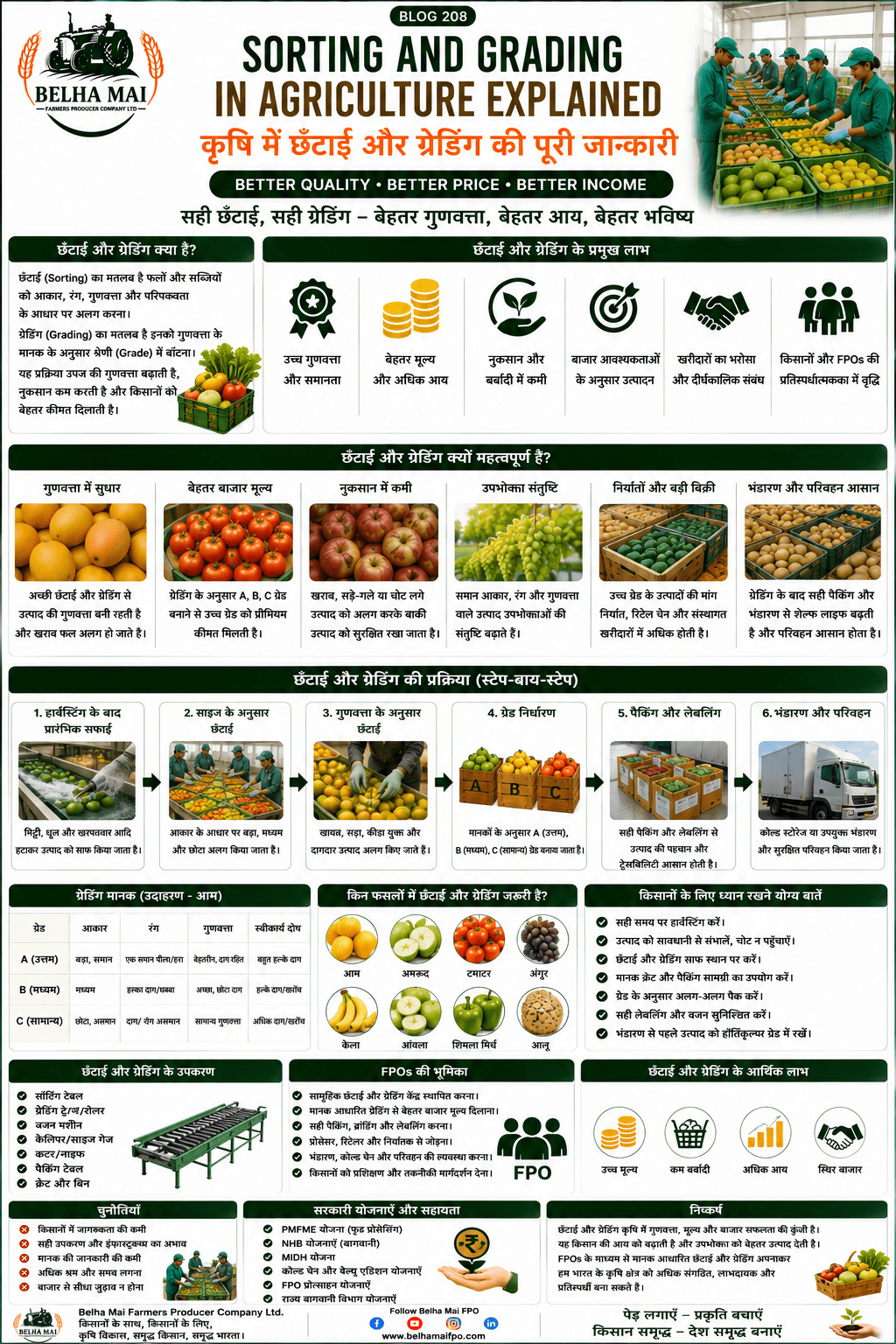
Sorting and grading in agriculture usually start with harvesting at the right maturity stage. After harvest, produce is cleaned to remove soil, dust and unwanted material. Then damaged, diseased and unsuitable produce is removed during sorting. After sorting, the remaining produce is graded according to size, colour, maturity, weight or buyer requirement. Finally, the graded produce is packed, labelled and sent for storage, processing or sale.
कृषि में छंटाई और ग्रेडिंग सामान्यतः सही maturity stage पर कटाई से शुरू होती है। कटाई के बाद उत्पादन को मिट्टी, धूल और अनुपयुक्त पदार्थ हटाने के लिए साफ किया जाता है। फिर sorting के दौरान क्षतिग्रस्त, रोगग्रस्त और अनुपयुक्त उत्पादन अलग किया जाता है। sorting के बाद बाकी उत्पादन को आकार, रंग, परिपक्वता, वजन या खरीदार आवश्यकता के अनुसार ग्रेड किया जाता है। अंत में graded produce को pack, label करके storage, processing या sale के लिए भेजा जाता है।
Manual Sorting and Grading
Manual sorting and grading in agriculture are done by trained workers using visual inspection and hand selection. This method is common among small farmers and FPOs because it needs less machinery. Workers separate produce based on size, colour, damage and quality. Manual grading can be effective if workers are trained properly and follow consistent standards. However, it can be slow and labour-intensive for large volumes.
कृषि में manual sorting and grading प्रशिक्षित मजदूरों द्वारा visual inspection और hand selection से की जाती है। यह विधि छोटे किसानों और FPOs में सामान्य है क्योंकि इसमें कम मशीनरी की जरूरत होती है। मजदूर आकार, रंग, damage और quality के आधार पर उत्पादन अलग करते हैं। यदि मजदूरों को सही प्रशिक्षण मिले और वे समान मानक अपनाएं, तो manual grading प्रभावी हो सकती है। हालांकि बड़े volumes के लिए यह धीमी और श्रम-प्रधान हो सकती है।
Mechanical Sorting and Grading
Mechanical sorting and grading in agriculture use machines such as graders, conveyors, sieves, rollers, size graders, weight graders and optical sorting systems. These machines help handle larger quantities quickly and uniformly. Mechanical grading is useful for FPOs, packhouses, processing units and exporters. The investment may be higher, but it improves speed, consistency and professional handling.
कृषि में mechanical sorting and grading में graders, conveyors, sieves, rollers, size graders, weight graders और optical sorting systems जैसी मशीनों का उपयोग होता है। ये मशीनें बड़ी मात्रा को जल्दी और समान तरीके से संभालने में मदद करती हैं। Mechanical grading FPOs, packhouses, processing units और exporters के लिए उपयोगी है। निवेश अधिक हो सकता है, लेकिन इससे speed, consistency और professional handling सुधरती है।
Grading Standards
Sorting and grading in agriculture require clear grading standards. Grades may be based on size, colour, weight, maturity, variety, appearance, defect percentage or buyer specification. For example, Grade A may include large, clean and uniform produce, Grade B may include medium-quality produce, and Grade C may go for processing. Clear standards help farmers avoid confusion and negotiate better with buyers.
कृषि में छंटाई और ग्रेडिंग के लिए स्पष्ट grading standards आवश्यक हैं। grades आकार, रंग, वजन, परिपक्वता, किस्म, रूप, defect percentage या buyer specification पर आधारित हो सकते हैं। उदाहरण के लिए, Grade A में बड़े, साफ और समान उत्पाद हो सकते हैं, Grade B में medium-quality produce और Grade C processing के लिए जा सकता है। स्पष्ट मानक किसानों को भ्रम से बचाते हैं और खरीदारों से बेहतर बातचीत में मदद करते हैं।
Packaging After Grading
Packaging after grading is important because graded produce should not get mixed or damaged again. Each grade should be packed separately and labelled properly. Crates, cartons, mesh bags, pouches or bulk bags may be used depending on product type and market requirement. Good packaging protects quality, improves appearance and makes transport easier. It also helps build trust with buyers.
ग्रेडिंग के बाद पैकेजिंग महत्वपूर्ण है क्योंकि graded produce फिर से mix या damaged नहीं होना चाहिए। प्रत्येक grade को अलग से pack और properly label करना चाहिए। उत्पाद प्रकार और market requirement के अनुसार crates, cartons, mesh bags, pouches या bulk bags का उपयोग किया जा सकता है। अच्छी packaging quality की रक्षा करती है, appearance सुधारती है और transport आसान बनाती है। इससे buyers के साथ विश्वास भी बनता है।
Labelling and Traceability
Sorting and grading in agriculture become more valuable when supported by labelling and traceability. Labels can mention product name, grade, weight, packing date, farmer group, FPO name and batch details. Traceability helps buyers know where the produce came from and improves confidence. For premium markets, institutional buyers and export supply, traceability is becoming increasingly important.
कृषि में छंटाई और ग्रेडिंग तब अधिक मूल्यवान हो जाती है जब उसे labelling और traceability का समर्थन मिलता है। labels में product name, grade, weight, packing date, farmer group, FPO name और batch details लिखे जा सकते हैं। Traceability buyers को यह जानने में मदद करती है कि उत्पादन कहां से आया है और confidence बढ़ाती है। premium markets, institutional buyers और export supply के लिए traceability तेजी से महत्वपूर्ण हो रही है।
Role in Processing Industry
Sorting and grading in agriculture also help the processing industry. Processing units need raw material of specific quality and size. For example, high-quality fruits may go to fresh markets, while slightly smaller but healthy fruits may go for pulp, juice, drying, powder or pickle production. Sorting and grading allow farmers to use different grades for different markets and reduce wastage.
कृषि में छंटाई और ग्रेडिंग processing industry को भी मदद करती है। Processing units को विशेष quality और size का raw material चाहिए होता है। उदाहरण के लिए, उच्च गुणवत्ता वाले फल fresh markets में जा सकते हैं, जबकि थोड़े छोटे लेकिन स्वस्थ फल pulp, juice, drying, powder या pickle production के लिए जा सकते हैं। छंटाई और ग्रेडिंग किसानों को अलग-अलग grades को अलग-अलग markets में उपयोग करने और बर्बादी कम करने की सुविधा देती है।
Role in Export and Premium Markets
Sorting and grading in agriculture are essential for export and premium markets. Export buyers and premium retailers usually have strict quality standards. Produce must be uniform, clean, properly packed and free from major defects. Without sorting and grading, farmers cannot meet these standards. FPOs that want to supply premium markets must build strong sorting, grading and packing systems.
कृषि में छंटाई और ग्रेडिंग export और premium markets के लिए आवश्यक है। Export buyers और premium retailers सामान्यतः सख्त quality standards रखते हैं। उत्पादन uniform, clean, properly packed और major defects से मुक्त होना चाहिए। छंटाई और ग्रेडिंग के बिना किसान इन standards को पूरा नहीं कर सकते। जो FPOs premium markets को supply करना चाहते हैं, उन्हें मजबूत sorting, grading और packing systems बनाने होंगे।
Benefits for Farmers
Sorting and grading in agriculture benefit farmers by improving price, reducing rejection, lowering wastage and increasing buyer confidence. Farmers can sell premium quality separately and use lower grades for processing or local markets. This helps increase total income from the same harvest. It also teaches farmers to understand market requirements and produce quality-oriented crops.
कृषि में छंटाई और ग्रेडिंग किसानों को बेहतर price, कम rejection, कम wastage और अधिक buyer confidence के माध्यम से लाभ देती है। किसान premium quality को अलग बेच सकते हैं और lower grades को processing या local markets में उपयोग कर सकते हैं। इससे उसी harvest से कुल आय बढ़ सकती है। यह किसानों को market requirements समझने और quality-oriented crops पैदा करने में भी मदद करता है।
Benefits for FPOs
Sorting and grading in agriculture are very important for FPOs because FPOs aggregate produce from many farmers. If produce is not sorted and graded, buyers may not trust the quality. An FPO can set up a collection centre, packhouse, grading line and quality control system. This helps the FPO supply larger volumes with consistent quality to retailers, processors, institutional buyers and exporters.
कृषि में छंटाई और ग्रेडिंग FPOs के लिए बहुत महत्वपूर्ण है क्योंकि FPOs कई किसानों से उत्पादन aggregate करते हैं। यदि उत्पादन sorted और graded नहीं है, तो buyers quality पर भरोसा नहीं करते। एक FPO collection centre, packhouse, grading line और quality control system बना सकता है। इससे FPO retailers, processors, institutional buyers और exporters को consistent quality के साथ larger volumes supply कर सकता है।
Role in Agricultural Value Chain
Sorting and grading in agriculture strengthen the entire agricultural value chain. They connect harvesting with packing, storage, cold chain, processing, branding and marketing. Without sorting and grading, value addition becomes difficult. Good sorting and grading help farmers move from loose produce selling to organized market supply. This is important for building strong farm-to-market systems.
कृषि में छंटाई और ग्रेडिंग पूरी agricultural value chain को मजबूत करती हैं। ये harvesting को packing, storage, cold chain, processing, branding और marketing से जोड़ती हैं। छंटाई और ग्रेडिंग के बिना value addition कठिन हो जाता है। अच्छी छंटाई और ग्रेडिंग किसानों को loose produce selling से organized market supply की ओर ले जाती है। यह मजबूत farm-to-market systems बनाने के लिए महत्वपूर्ण है।
Common Mistakes in Sorting and Grading
Common mistakes in sorting and grading in agriculture include mixing different grades, ignoring damaged produce, poor cleaning, wrong packing, no labelling, lack of trained workers and no buyer-based standards. Farmers sometimes think grading means only separating big and small produce, but proper grading also includes quality, maturity, cleanliness and market requirement. Avoiding these mistakes improves returns.
कृषि में छंटाई और ग्रेडिंग की सामान्य गलतियों में अलग-अलग grades को मिलाना, damaged produce को नजरअंदाज करना, poor cleaning, wrong packing, labelling न करना, trained workers की कमी और buyer-based standards न होना शामिल है। किसान कभी-कभी सोचते हैं कि grading का अर्थ केवल बड़े और छोटे उत्पादन को अलग करना है, लेकिन proper grading में quality, maturity, cleanliness और market requirement भी शामिल होते हैं। इन गलतियों से बचना returns सुधारता है।
Equipment Needed for Sorting and Grading
Sorting and grading in agriculture may require simple or advanced equipment depending on scale. Small farmers may use sorting tables, crates, weighing scales and manual inspection. FPOs and packhouses may use conveyors, washing lines, size graders, weighing machines, colour graders, crates, bins and labelling systems. Equipment should be selected according to crop, volume, budget and buyer requirement.
कृषि में छंटाई और ग्रेडिंग के लिए scale के अनुसार simple या advanced equipment की जरूरत हो सकती है। छोटे किसान sorting tables, crates, weighing scales और manual inspection का उपयोग कर सकते हैं। FPOs और packhouses conveyors, washing lines, size graders, weighing machines, colour graders, crates, bins और labelling systems का उपयोग कर सकते हैं। Equipment का चयन crop, volume, budget और buyer requirement के अनुसार होना चाहिए।
Sorting and Grading for Mango and Amla
Sorting and grading in agriculture are very useful for mango and amla value chains. Mangoes can be graded by size, maturity, variety, colour and damage level before fresh sale or ripening. Amla can be graded for fresh sale, candy, murabba, powder, juice and other processing uses. Proper grading helps FPOs decide which produce should go to fresh market and which should go to value addition.
कृषि में छंटाई और ग्रेडिंग आम और आंवला value chains के लिए बहुत उपयोगी है। आम को fresh sale या ripening से पहले size, maturity, variety, colour और damage level के आधार पर grade किया जा सकता है। आंवला को fresh sale, candy, murabba, powder, juice और अन्य processing uses के लिए grade किया जा सकता है। सही grading FPOs को यह तय करने में मदद करती है कि कौन सा उत्पादन fresh market में जाना चाहिए और कौन सा value addition में।
Government Support and Schemes
Sorting and grading infrastructure may receive support under agriculture, horticulture, post-harvest management, packhouse, food processing, FPO, MSME and rural enterprise schemes depending on eligibility, state and project design. Farmers and FPOs should check with agriculture department, horticulture department, National Horticulture Board, Ministry of Food Processing Industries, NABARD and other official sources. Scheme rules may change, so updated verification is necessary.
छंटाई और ग्रेडिंग इंफ्रास्ट्रक्चर को पात्रता, राज्य और project design के अनुसार agriculture, horticulture, post-harvest management, packhouse, food processing, FPO, MSME और rural enterprise schemes से सहायता मिल सकती है। किसानों और FPOs को agriculture department, horticulture department, National Horticulture Board, Ministry of Food Processing Industries, NABARD और अन्य official sources से जानकारी लेनी चाहिए। योजना नियम बदल सकते हैं, इसलिए updated verification आवश्यक है।
Belha Mai FPO Vision
Belha Mai Farmers Producer Company Ltd. believes that sorting and grading in agriculture are essential for improving farmer income and building strong value chains. For crops like mango, amla, vegetables and grains, proper sorting and grading can reduce losses, improve quality and open better market opportunities. Through aggregation, grading, packing, storage, processing and market linkage, Belha Mai FPO aims to help farmers move towards organized and profitable agriculture.
Belha Mai Farmers Producer Company Ltd. का मानना है कि कृषि में छंटाई और ग्रेडिंग किसान आय सुधारने और मजबूत value chains बनाने के लिए आवश्यक हैं। आम, आंवला, सब्जियों और अनाज जैसी फसलों के लिए सही छंटाई और ग्रेडिंग नुकसान कम कर सकती है, गुणवत्ता सुधार सकती है और बेहतर बाजार अवसर खोल सकती है। aggregation, grading, packing, storage, processing और market linkage के माध्यम से Belha Mai FPO किसानों को संगठित और लाभकारी कृषि की ओर ले जाना चाहता है।
Conclusion
Sorting and grading in agriculture are simple but powerful practices that can improve quality, reduce wastage, increase market price and strengthen farmer bargaining power. Sorting removes damaged and unsuitable produce, while grading classifies good produce into quality groups. For farmers and FPOs, sorting and grading are the foundation of better packing, cold storage, processing, branding, institutional supply and export readiness. Better quality means better trust, better market and better income.
कृषि में छंटाई और ग्रेडिंग सरल लेकिन शक्तिशाली पद्धतियां हैं, जो गुणवत्ता सुधार सकती हैं, बर्बादी कम कर सकती हैं, बाजार मूल्य बढ़ा सकती हैं और किसान की सौदेबाजी क्षमता मजबूत कर सकती हैं। छंटाई खराब और अनुपयुक्त उत्पादन हटाती है, जबकि ग्रेडिंग अच्छे उत्पादन को गुणवत्ता समूहों में बांटती है। किसानों और FPOs के लिए छंटाई और ग्रेडिंग बेहतर packing, cold storage, processing, branding, institutional supply और export readiness की नींव हैं। बेहतर गुणवत्ता का अर्थ है बेहतर विश्वास, बेहतर बाजार और बेहतर आय।
FAQ
What is sorting and grading in agriculture?
Sorting means removing damaged or unsuitable produce, while grading means classifying good produce based on size, colour, maturity, quality or buyer requirement.
छंटाई का अर्थ है क्षतिग्रस्त या अनुपयुक्त उत्पादन को हटाना, जबकि ग्रेडिंग का अर्थ है अच्छे उत्पादन को आकार, रंग, परिपक्वता, गुणवत्ता या खरीदार आवश्यकता के आधार पर अलग करना।
Why are sorting and grading important?
Sorting and grading are important because they improve quality, reduce wastage, increase buyer confidence and help farmers get better market prices.
छंटाई और ग्रेडिंग महत्वपूर्ण हैं क्योंकि ये गुणवत्ता सुधारती हैं, बर्बादी कम करती हैं, खरीदार विश्वास बढ़ाती हैं और किसानों को बेहतर बाजार मूल्य दिलाने में मदद करती हैं।
Which crops need sorting and grading?
Fruits, vegetables, grains, pulses, seeds and processed raw materials can all benefit from sorting and grading.
फल, सब्जियां, अनाज, दलहन, बीज और प्रोसेसिंग कच्चा माल सभी छंटाई और ग्रेडिंग से लाभ उठा सकते हैं।
How can FPOs use sorting and grading?
FPOs can set up collection centres, packhouses and grading systems to supply consistent quality produce to retailers, processors, institutional buyers and exporters.
FPOs collection centres, packhouses और grading systems बनाकर retailers, processors, institutional buyers और exporters को consistent quality produce सप्लाई कर सकते हैं।
Does grading increase farmer income?
Yes, grading can increase farmer income by allowing premium-quality produce to be sold separately at better prices and lower-grade produce to be used for processing or local markets.
हां, ग्रेडिंग premium-quality produce को अलग बेहतर कीमत पर बेचने और lower-grade produce को processing या local markets में उपयोग करने में मदद करके किसान आय बढ़ा सकती है।
Internal Links Section
👉 High-Tech Nursery in India: Complete Guide — https://belhamaifpo.com/agriculture/high-tech-nursery-in-india-complete-guide/
👉 Importance of Cold Storage in Agriculture — https://belhamaifpo.com/agriculture/importance-of-cold-storage-in-agriculture/
👉 What is a Ripening Chamber and How It Works — https://belhamaifpo.com/agriculture/what-is-a-ripening-chamber-and-how-it-works/
👉 Mango Farming in India: Complete Guide —https://belhamaifpo.com/agriculture/mango-farming-in-india/
👉 Amla Farming in India: Complete Guide —https://belhamaifpo.com/agriculture/amla-farming-in-india/
👉 Why small farmers struggle in India — https://belhamaifpo.com/agriculture/why-small-farmers-struggle-in-india/
👉 Belha Mai FPO Website — https://belhamaifpo.com/
External Authority Links
👉 National Horticulture Board — https://nhb.gov.in/
👉 Ministry of Food Processing Industries — https://mofpi.gov.in/
👉 Ministry of Agriculture & Farmers Welfare — https://agriwelfare.gov.in/
👉 APEDA — https://apeda.gov.in/
👉 NABARD — https://nabard.org/
Follow Belha Mai FPO for More Updates
Website: https://belhamaifpo.com/
Facebook:https://www.facebook.com/profile.php?id=61561043486818
YouTube: https://www.youtube.com/channel/UC9ZvojoTMCa7mU1-Q_Bh60A
LinkedIn: https://www.linkedin.com/in/abhay-singh-ab5568280/
Instagram: https://instagram.com/belhamaifpo
Belha Mai FPO is working to support farmers through better information, technology, market linkage, value addition, FPO awareness and rural development.