संरक्षित खेती और नर्सरी विकास
Introduction
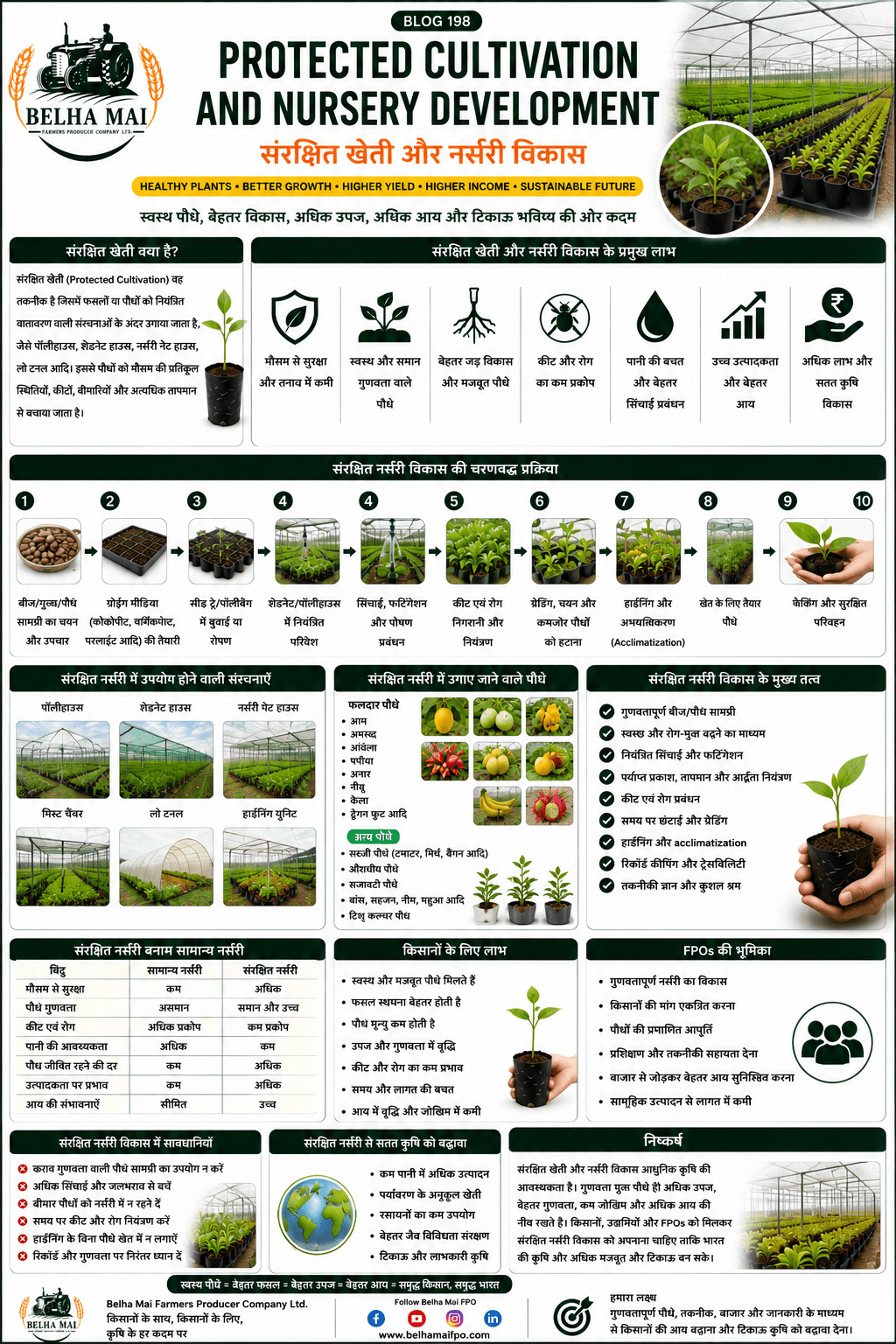
Protected cultivation and nursery development are becoming important parts of modern agriculture because farmers need better-quality plants, better crop planning and protection from climate stress. Protected cultivation means growing plants under structures like polyhouse, shade net house, insect-proof net house, low tunnel or mist chamber, where the crop or nursery plants receive a safer and more controlled environment. When this system is used for nursery development, farmers can get healthy, uniform and strong plants for better field performance.
संरक्षित खेती और नर्सरी विकास आधुनिक कृषि के महत्वपूर्ण हिस्से बनते जा रहे हैं क्योंकि किसानों को बेहतर गुणवत्ता वाले पौधे, बेहतर फसल योजना और जलवायु तनाव से सुरक्षा की आवश्यकता है। संरक्षित खेती का अर्थ है पॉलीहाउस, शेडनेट हाउस, इंसेक्ट-प्रूफ नेट हाउस, लो टनल या मिस्ट चेंबर जैसी संरचनाओं के अंदर पौधे उगाना, जहां फसल या नर्सरी पौधों को अधिक सुरक्षित और नियंत्रित वातावरण मिलता है। जब इस प्रणाली का उपयोग नर्सरी विकास के लिए किया जाता है, तो किसानों को खेत में बेहतर प्रदर्शन के लिए स्वस्थ, समान और मजबूत पौधे मिल सकते हैं।
Meaning of Protected Cultivation
Protected cultivation means growing crops or nursery plants under a protected structure that reduces the negative impact of harsh weather, pests, diseases and environmental stress. It does not mean that the farmer can control everything fully, but it allows better management of temperature, humidity, light, wind, rain and pest entry. This makes protected cultivation useful for vegetable production, flower cultivation, fruit plant nurseries, tissue culture plant hardening and high-value agriculture.
संरक्षित खेती का अर्थ है फसलों या नर्सरी पौधों को ऐसी संरक्षित संरचना के अंदर उगाना जो कठोर मौसम, कीट, रोग और पर्यावरणीय तनाव के नकारात्मक प्रभाव को कम करे। इसका अर्थ यह नहीं है कि किसान हर चीज को पूरी तरह नियंत्रित कर सकता है, लेकिन इससे तापमान, आर्द्रता, प्रकाश, हवा, बारिश और कीट प्रवेश का बेहतर प्रबंधन किया जा सकता है। इसलिए संरक्षित खेती सब्जी उत्पादन, फूलों की खेती, फलदार पौध नर्सरी, टिशू कल्चर पौध हार्डनिंग और उच्च मूल्य वाली कृषि के लिए उपयोगी है।
Meaning of Nursery Development
Nursery development means creating a proper system for producing healthy, strong, uniform and disease-free planting material. It includes nursery infrastructure, quality growing media, irrigation, nutrition, pest control, disease management, hardening, grading, record keeping and farmer guidance. When nursery development is combined with protected cultivation, the quality of planting material improves because young plants grow under safer and more scientific conditions.
नर्सरी विकास का अर्थ है स्वस्थ, मजबूत, समान और रोग-मुक्त पौध सामग्री तैयार करने के लिए उचित प्रणाली बनाना। इसमें नर्सरी इंफ्रास्ट्रक्चर, गुणवत्तापूर्ण ग्रोइंग मीडिया, सिंचाई, पोषण, कीट नियंत्रण, रोग प्रबंधन, हार्डनिंग, ग्रेडिंग, रिकॉर्ड कीपिंग और किसान मार्गदर्शन शामिल हैं। जब नर्सरी विकास को संरक्षित खेती से जोड़ा जाता है, तो पौध सामग्री की गुणवत्ता सुधरती है क्योंकि छोटे पौधे सुरक्षित और वैज्ञानिक परिस्थितियों में बढ़ते हैं।
Why Protected Cultivation is Important for Nurseries
Protected cultivation and nursery development are closely connected because young plants are very sensitive to heat, heavy rain, strong wind, pests and diseases. In open nurseries, seedlings may suffer due to sudden weather changes, poor drainage, insects and fungal infections. Protected structures provide a safer growing environment and improve plant survival. This helps nurseries produce better-quality plants and helps farmers reduce crop risk after planting.
संरक्षित खेती और नर्सरी विकास एक-दूसरे से गहराई से जुड़े हैं क्योंकि छोटे पौधे गर्मी, भारी बारिश, तेज हवा, कीट और रोगों के प्रति बहुत संवेदनशील होते हैं। खुली नर्सरियों में अचानक मौसम परिवर्तन, खराब जल निकासी, कीट और फंगल संक्रमण के कारण पौधों को नुकसान हो सकता है। संरक्षित ढांचे अधिक सुरक्षित वृद्धि वातावरण देते हैं और पौधों की जीवित रहने की क्षमता बढ़ाते हैं। इससे नर्सरियां बेहतर गुणवत्ता वाले पौधे तैयार कर सकती हैं और किसान रोपाई के बाद फसल जोखिम कम कर सकते हैं।
Types of Protected Structures
Protected cultivation and nursery development can use different structures depending on crop, climate, budget and objective. Common structures include polyhouse, shade net house, insect-proof net house, mist chamber, low tunnel, walk-in tunnel and hardening unit. Polyhouses are useful for more controlled production, shade net houses protect plants from excess sunlight, insect-proof structures reduce pest entry, and mist chambers support rooting and hardening. The correct structure should be selected based on nursery requirement.
संरक्षित खेती और नर्सरी विकास में फसल, जलवायु, बजट और उद्देश्य के अनुसार अलग-अलग संरचनाओं का उपयोग किया जा सकता है। सामान्य संरचनाओं में पॉलीहाउस, शेडनेट हाउस, इंसेक्ट-प्रूफ नेट हाउस, मिस्ट चेंबर, लो टनल, वॉक-इन टनल और हार्डनिंग यूनिट शामिल हैं। पॉलीहाउस अधिक नियंत्रित उत्पादन के लिए उपयोगी हैं, शेडनेट हाउस पौधों को अधिक धूप से बचाते हैं, इंसेक्ट-प्रूफ ढांचे कीट प्रवेश कम करते हैं, और मिस्ट चेंबर रूटिंग तथा हार्डनिंग में मदद करते हैं। सही संरचना नर्सरी की आवश्यकता के आधार पर चुननी चाहिए।
Polyhouse in Nursery Development
Polyhouse plays an important role in protected cultivation and nursery development because it provides a controlled and protected environment for plant growth. It helps protect young plants from heavy rain, wind, extreme sunlight and pest pressure. In a polyhouse nursery, farmers and nursery owners can manage irrigation, humidity and plant nutrition more efficiently. Polyhouse systems are especially useful for high-value vegetable seedlings, flowers, tissue culture plants and fruit plant hardening.
पॉलीहाउस संरक्षित खेती और नर्सरी विकास में महत्वपूर्ण भूमिका निभाता है क्योंकि यह पौध वृद्धि के लिए नियंत्रित और संरक्षित वातावरण देता है। यह छोटे पौधों को भारी बारिश, हवा, तेज धूप और कीट दबाव से बचाने में मदद करता है। पॉलीहाउस नर्सरी में किसान और नर्सरी संचालक सिंचाई, आर्द्रता और पौध पोषण का अधिक प्रभावी प्रबंधन कर सकते हैं। पॉलीहाउस प्रणाली उच्च मूल्य वाली सब्जी पौध, फूल, टिशू कल्चर पौध और फलदार पौध हार्डनिंग के लिए विशेष रूप से उपयोगी है।
Shade Net House in Nursery Development
Shade net house is one of the most practical protected structures for nursery development. It reduces sunlight intensity and protects young plants from heat stress. Shade net houses are useful for fruit plant nurseries, ornamental plants, medicinal plants, vegetable seedlings and agroforestry plants. They are generally more affordable than fully controlled polyhouses and can be suitable for FPOs and rural nurseries. Proper shade percentage should be selected according to crop requirement.
शेडनेट हाउस नर्सरी विकास के लिए सबसे व्यावहारिक संरक्षित ढांचों में से एक है। यह धूप की तीव्रता कम करता है और छोटे पौधों को गर्मी के तनाव से बचाता है। शेडनेट हाउस फलदार पौध नर्सरी, सजावटी पौधे, औषधीय पौधे, सब्जी पौध और एग्रोफॉरेस्ट्री पौधों के लिए उपयोगी हैं। ये पूरी तरह नियंत्रित पॉलीहाउस की तुलना में सामान्यतः अधिक किफायती होते हैं और FPOs तथा ग्रामीण नर्सरियों के लिए उपयुक्त हो सकते हैं। फसल की आवश्यकता के अनुसार सही शेड प्रतिशत चुनना चाहिए।
Mist Chamber and Rooting Support
Mist chamber is very important in protected cultivation and nursery development, especially for rooting cuttings, graft healing and tissue culture plant hardening. A mist chamber maintains high humidity and reduces water stress in delicate plants. It is useful for crops where young plants or cuttings need moisture support during early development. Proper misting helps improve rooting, survival and plant quality. However, too much moisture without hygiene can increase disease risk, so monitoring is necessary.
मिस्ट चेंबर संरक्षित खेती और नर्सरी विकास में बहुत महत्वपूर्ण है, विशेष रूप से कटिंग की रूटिंग, ग्राफ्ट हीलिंग और टिशू कल्चर पौध हार्डनिंग के लिए। मिस्ट चेंबर उच्च आर्द्रता बनाए रखता है और नाजुक पौधों में जल तनाव कम करता है। यह उन फसलों के लिए उपयोगी है जहां छोटे पौधों या कटिंग को शुरुआती विकास में नमी सहायता की जरूरत होती है। सही मिस्टिंग रूटिंग, जीवित रहने की क्षमता और पौध गुणवत्ता सुधारती है। हालांकि स्वच्छता के बिना अत्यधिक नमी रोग जोखिम बढ़ा सकती है, इसलिए निगरानी आवश्यक है।
Insect-Proof Net House
Insect-proof net house is useful for protected cultivation and nursery development because it reduces the entry of insects that can damage plants or spread diseases. Young nursery plants are highly vulnerable to sucking pests, leaf damage and virus-transmitting insects. Insect-proof structures help produce cleaner and healthier plants. This is especially important for vegetable seedlings, fruit plant nurseries and high-value crops where early pest infection can affect the entire crop.
इंसेक्ट-प्रूफ नेट हाउस संरक्षित खेती और नर्सरी विकास के लिए उपयोगी है क्योंकि यह पौधों को नुकसान पहुंचाने या बीमारी फैलाने वाले कीटों के प्रवेश को कम करता है। छोटे नर्सरी पौधे रस चूसने वाले कीटों, पत्ती नुकसान और वायरस फैलाने वाले कीटों के प्रति बहुत संवेदनशील होते हैं। इंसेक्ट-प्रूफ ढांचे अधिक स्वच्छ और स्वस्थ पौधे तैयार करने में मदद करते हैं। यह विशेष रूप से सब्जी पौध, फलदार पौध नर्सरी और उच्च मूल्य वाली फसलों के लिए महत्वपूर्ण है, जहां शुरुआती कीट संक्रमण पूरी फसल को प्रभावित कर सकता है।
Quality Growing Media
Protected cultivation and nursery development require quality growing media because nursery plants need strong roots and healthy early growth. Growing media may include cocopeat, vermicompost, compost, sand, perlite, vermiculite and other materials depending on crop requirement. The media should be clean, well-drained and free from pests and diseases. Good media improves root development, moisture management and plant survival after transplanting.
संरक्षित खेती और नर्सरी विकास के लिए गुणवत्तापूर्ण ग्रोइंग मीडिया आवश्यक है क्योंकि नर्सरी पौधों को मजबूत जड़ें और स्वस्थ शुरुआती वृद्धि चाहिए। फसल की आवश्यकता के अनुसार ग्रोइंग मीडिया में कोकोपीट, वर्मी कम्पोस्ट, कम्पोस्ट, बालू, परलाइट, वर्मीकुलाइट और अन्य सामग्री शामिल हो सकती है। मीडिया साफ, अच्छी जल निकासी वाला और कीट तथा रोग से मुक्त होना चाहिए। अच्छा मीडिया जड़ विकास, नमी प्रबंधन और रोपाई के बाद पौधों की जीवित रहने की क्षमता को सुधारता है।
Irrigation and Fertigation
Protected cultivation and nursery development depend on proper irrigation and fertigation systems. Young plants need regular moisture but cannot tolerate waterlogging. Drip, sprinkler, fogger or mist irrigation can be used according to nursery type. Fertigation helps supply nutrients through irrigation water in a controlled manner. This improves plant growth and reduces nutrient wastage. Scientific water and nutrient management are essential for producing strong nursery plants.
संरक्षित खेती और नर्सरी विकास सही सिंचाई और फर्टिगेशन प्रणाली पर निर्भर करते हैं। छोटे पौधों को नियमित नमी चाहिए, लेकिन वे जलभराव सहन नहीं कर सकते। नर्सरी प्रकार के अनुसार ड्रिप, स्प्रिंकलर, फॉगर या मिस्ट सिंचाई का उपयोग किया जा सकता है। फर्टिगेशन सिंचाई जल के माध्यम से नियंत्रित तरीके से पोषक तत्व देने में मदद करता है। इससे पौध वृद्धि सुधरती है और पोषक तत्वों की बर्बादी कम होती है। मजबूत नर्सरी पौधे तैयार करने के लिए वैज्ञानिक जल और पोषण प्रबंधन आवश्यक है।
Disease and Pest Management
Disease and pest management is a critical part of protected cultivation and nursery development. Protected structures reduce many risks, but they do not remove all problems. High humidity, poor ventilation, overwatering and lack of hygiene can still create disease problems. Regular monitoring, sanitation, proper spacing, ventilation, clean tools and preventive care are necessary. Diseased plants should be removed quickly so that infection does not spread.
रोग और कीट प्रबंधन संरक्षित खेती और नर्सरी विकास का महत्वपूर्ण हिस्सा है। संरक्षित ढांचे कई जोखिमों को कम करते हैं, लेकिन सभी समस्याओं को समाप्त नहीं करते। अधिक आर्द्रता, खराब वेंटिलेशन, अधिक सिंचाई और स्वच्छता की कमी फिर भी रोग समस्याएं पैदा कर सकती हैं। नियमित निगरानी, स्वच्छता, उचित दूरी, वेंटिलेशन, साफ उपकरण और रोकथाम उपाय आवश्यक हैं। रोगग्रस्त पौधों को तुरंत हटा देना चाहिए ताकि संक्रमण न फैले।
Hardening of Nursery Plants
Hardening is an important stage in protected cultivation and nursery development. Plants grown under protected conditions are safer, but they must be gradually prepared for open field conditions before transplanting. During hardening, plants are exposed slowly to more sunlight, lower humidity and natural air movement. This reduces transplanting shock and improves field survival. Without hardening, even good nursery plants may suffer after planting.
हार्डनिंग संरक्षित खेती और नर्सरी विकास का महत्वपूर्ण चरण है। संरक्षित परिस्थितियों में उगाए गए पौधे सुरक्षित होते हैं, लेकिन उन्हें खेत में लगाने से पहले धीरे-धीरे खुले वातावरण के लिए तैयार करना होता है। हार्डनिंग के दौरान पौधों को धीरे-धीरे अधिक धूप, कम आर्द्रता और प्राकृतिक हवा के संपर्क में लाया जाता है। इससे रोपाई का झटका कम होता है और खेत में जीवित रहने की क्षमता बढ़ती है। हार्डनिंग के बिना अच्छे नर्सरी पौधे भी रोपाई के बाद कमजोर पड़ सकते हैं।
Crops Suitable for Protected Nursery Development
Protected cultivation and nursery development are useful for many crops, including tomato, chilli, brinjal, capsicum, cucumber, watermelon, cabbage, cauliflower, mango, guava, papaya, banana, amla, lemon, pomegranate, bamboo, medicinal plants and ornamental plants. Crop selection should depend on local demand, climate, farmer requirement and market potential. For FPOs, crop selection should also match member farmers’ needs and future market linkage.
संरक्षित खेती और नर्सरी विकास कई फसलों के लिए उपयोगी हैं, जैसे टमाटर, मिर्च, बैंगन, शिमला मिर्च, खीरा, तरबूज, पत्ता गोभी, फूलगोभी, आम, अमरूद, पपीता, केला, आंवला, नींबू, अनार, बांस, औषधीय पौधे और सजावटी पौधे। फसल चयन स्थानीय मांग, जलवायु, किसान आवश्यकता और बाजार संभावना के आधार पर होना चाहिए। FPOs के लिए फसल चयन सदस्य किसानों की जरूरत और भविष्य के बाजार लिंक से भी मेल खाना चाहिए।
Benefits for Farmers
Protected cultivation and nursery development provide many benefits to farmers. Farmers get healthy, uniform and stronger plants that establish better in the field. Better plants reduce early crop failure, improve crop uniformity and support better productivity. Farmers also save time because they can purchase field-ready plants instead of preparing weak seedlings themselves. This is especially useful for small farmers and commercial horticulture growers.
संरक्षित खेती और नर्सरी विकास किसानों को कई लाभ देते हैं। किसानों को स्वस्थ, समान और मजबूत पौधे मिलते हैं जो खेत में बेहतर स्थापित होते हैं। बेहतर पौधे शुरुआती फसल असफलता कम करते हैं, फसल समानता सुधारते हैं और बेहतर उत्पादकता को समर्थन देते हैं। किसान समय भी बचाते हैं क्योंकि वे कमजोर पौध खुद तैयार करने के बजाय खेत-तैयार पौधे खरीद सकते हैं। यह विशेष रूप से छोटे किसानों और व्यावसायिक बागवानी उत्पादकों के लिए उपयोगी है।
Benefits for FPOs
Protected cultivation and nursery development can create a strong business model for FPOs. An FPO can develop a protected nursery, aggregate farmer demand, produce quality planting material and supply plants to members. FPOs can also provide technical training, crop planning and market linkage. This creates income for the FPO and reduces the risk of farmers buying poor-quality plants from unknown sources.
संरक्षित खेती और नर्सरी विकास FPOs के लिए मजबूत व्यवसाय मॉडल बना सकते हैं। एक FPO संरक्षित नर्सरी विकसित कर सकता है, किसान मांग एकत्र कर सकता है, गुणवत्तापूर्ण पौध सामग्री तैयार कर सकता है और सदस्यों को पौधे दे सकता है। FPOs तकनीकी प्रशिक्षण, फसल योजना और बाजार लिंक भी प्रदान कर सकते हैं। इससे FPO के लिए आय बनती है और किसानों का अज्ञात स्रोतों से खराब गुणवत्ता वाले पौधे खरीदने का जोखिम कम होता है।
Role in Tissue Culture Plant Hardening
Protected cultivation and nursery development are very important for tissue culture plant hardening. Tissue culture plantlets are produced in laboratories and are delicate when they come out of culture vessels. They need a protected environment to adjust gradually before field planting. Mist chambers, polyhouses and shade net houses help tissue culture plants develop stronger roots, better leaves and improved survival. This makes protected nursery systems essential for successful tissue culture plant supply.
संरक्षित खेती और नर्सरी विकास टिशू कल्चर पौध हार्डनिंग के लिए बहुत महत्वपूर्ण हैं। टिशू कल्चर पौधे प्रयोगशाला में तैयार होते हैं और कल्चर वेसल से बाहर आने पर नाजुक होते हैं। खेत में लगाने से पहले उन्हें धीरे-धीरे अनुकूल होने के लिए संरक्षित वातावरण की आवश्यकता होती है। मिस्ट चेंबर, पॉलीहाउस और शेडनेट हाउस टिशू कल्चर पौधों को मजबूत जड़ें, बेहतर पत्तियां और अधिक जीवित रहने की क्षमता विकसित करने में मदद करते हैं। इसलिए सफल टिशू कल्चर पौध आपूर्ति के लिए संरक्षित नर्सरी प्रणाली आवश्यक है।
Role in Climate Resilience
Protected cultivation and nursery development can support climate resilience by protecting young plants from extreme heat, heavy rain, wind and sudden weather changes. Climate change is increasing uncertainty for farmers, and nursery plants are especially sensitive to stress. Protected systems help reduce early plant damage and improve the reliability of plant supply. Strong nursery plants give farmers a better start in difficult climate conditions.
संरक्षित खेती और नर्सरी विकास छोटे पौधों को अत्यधिक गर्मी, भारी बारिश, हवा और अचानक मौसम बदलाव से बचाकर जलवायु सहनशीलता को समर्थन दे सकते हैं। जलवायु परिवर्तन किसानों के लिए अनिश्चितता बढ़ा रहा है, और नर्सरी पौधे तनाव के प्रति विशेष रूप से संवेदनशील होते हैं। संरक्षित प्रणाली शुरुआती पौध नुकसान कम करती है और पौध आपूर्ति की विश्वसनीयता सुधारती है। मजबूत नर्सरी पौधे कठिन जलवायु परिस्थितियों में किसानों को बेहतर शुरुआत देते हैं।
Role in Farmer Income Growth
Protected cultivation and nursery development can improve farmer income by supporting better crop establishment, higher survival, uniform growth and better productivity potential. Quality nursery plants can reduce replanting cost and improve crop planning. When farmers receive healthy plants and follow proper crop management, they can achieve better-quality produce. Better-quality produce supports better market opportunities, especially when linked with FPOs, grading, aggregation and branding.
संरक्षित खेती और नर्सरी विकास बेहतर फसल स्थापना, अधिक जीवित रहने की क्षमता, समान वृद्धि और बेहतर उत्पादकता क्षमता को समर्थन देकर किसान आय सुधार सकते हैं। गुणवत्तापूर्ण नर्सरी पौधे दोबारा रोपाई लागत कम कर सकते हैं और फसल योजना सुधार सकते हैं। जब किसानों को स्वस्थ पौधे मिलते हैं और वे सही फसल प्रबंधन अपनाते हैं, तो वे बेहतर गुणवत्ता वाला उत्पादन प्राप्त कर सकते हैं। बेहतर गुणवत्ता वाला उत्पादन बेहतर बाजार अवसरों को समर्थन देता है, विशेष रूप से जब यह FPOs, ग्रेडिंग, एग्रीगेशन और ब्रांडिंग से जुड़ा हो।
Investment and Planning
Protected cultivation and nursery development require proper investment planning. The cost depends on structure type, nursery size, irrigation system, crop selection, growing media, labour and technology level. A small shade net nursery may require lower investment, while a polyhouse or advanced hardening unit may need higher investment. Farmers, entrepreneurs and FPOs should prepare a practical plan based on demand, production capacity, market linkage and available technical support.
संरक्षित खेती और नर्सरी विकास के लिए उचित निवेश योजना आवश्यक है। लागत संरचना प्रकार, नर्सरी आकार, सिंचाई प्रणाली, फसल चयन, ग्रोइंग मीडिया, श्रम और तकनीक स्तर पर निर्भर करती है। छोटी शेडनेट नर्सरी में कम निवेश लग सकता है, जबकि पॉलीहाउस या उन्नत हार्डनिंग यूनिट में अधिक निवेश की आवश्यकता हो सकती है। किसानों, उद्यमियों और FPOs को मांग, उत्पादन क्षमता, बाजार लिंक और उपलब्ध तकनीकी सहायता के आधार पर व्यावहारिक योजना बनानी चाहिए।
Challenges in Protected Nursery Development
Protected cultivation and nursery development also have challenges. These include initial investment, technical knowledge, skilled labour, regular monitoring, pest and disease management, electricity and water requirement, and timely sale of plants. If nursery planning is weak, plants may remain unsold or become overgrown. Therefore, protected nursery development should be linked with farmer demand, crop season, training and marketing strategy.
संरक्षित खेती और नर्सरी विकास की कुछ चुनौतियां भी हैं। इनमें प्रारंभिक निवेश, तकनीकी ज्ञान, कुशल श्रम, नियमित निगरानी, कीट और रोग प्रबंधन, बिजली और पानी की आवश्यकता तथा पौधों की समय पर बिक्री शामिल हैं। यदि नर्सरी योजना कमजोर है, तो पौधे बिक नहीं पाएंगे या अधिक बड़े हो जाएंगे। इसलिए संरक्षित नर्सरी विकास को किसान मांग, फसल मौसम, प्रशिक्षण और मार्केटिंग रणनीति से जोड़ना चाहिए।
Government Support and Schemes
Protected cultivation and nursery development may receive support under horticulture, agriculture, protected cultivation, nursery development, MSME, startup and rural enterprise schemes, depending on eligibility and location. Farmers and FPOs should check with the State Horticulture Department, National Horticulture Board, MIDH, agriculture department and other relevant agencies. Since schemes and subsidy rules may change, updated verification is necessary before investment.
संरक्षित खेती और नर्सरी विकास को पात्रता और स्थान के आधार पर बागवानी, कृषि, संरक्षित खेती, नर्सरी विकास, MSME, स्टार्टअप और ग्रामीण उद्यम योजनाओं के तहत सहायता मिल सकती है। किसानों और FPOs को राज्य बागवानी विभाग, National Horticulture Board, MIDH, कृषि विभाग और अन्य संबंधित एजेंसियों से जानकारी लेनी चाहिए। चूंकि योजनाएं और सब्सिडी नियम बदल सकते हैं, इसलिए निवेश से पहले अद्यतन जानकारी की पुष्टि आवश्यक है।
Link with Agricultural Value Chain
Protected cultivation and nursery development are important for the agricultural value chain because quality plants are the first step in better production. Better plants lead to better crop growth, better production supports aggregation, and aggregation supports processing, branding and marketing. For crops like mango, amla, banana, guava, vegetables and agroforestry plants, strong nursery systems can strengthen the entire farm-to-market chain.
संरक्षित खेती और नर्सरी विकास कृषि वैल्यू चेन के लिए महत्वपूर्ण हैं क्योंकि गुणवत्तापूर्ण पौधे बेहतर उत्पादन का पहला कदम हैं। बेहतर पौधे बेहतर फसल वृद्धि देते हैं, बेहतर उत्पादन एग्रीगेशन को मजबूत करता है, और एग्रीगेशन प्रोसेसिंग, ब्रांडिंग और मार्केटिंग को समर्थन देता है। आम, आंवला, केला, अमरूद, सब्जियों और एग्रोफॉरेस्ट्री पौधों जैसी फसलों के लिए मजबूत नर्सरी प्रणाली पूरी खेत से बाजार चेन को मजबूत कर सकती है।
Belha Mai FPO Vision
Belha Mai Farmers Producer Company Ltd. believes that protected cultivation and nursery development can become a strong foundation for modern agriculture, horticulture expansion and farmer income growth. Quality planting material, protected nursery systems, farmer training and market linkage can help small farmers adopt high-value crops with confidence. Belha Mai FPO aims to support farmers through better technology, better plants, better information and stronger value chains.
Belha Mai Farmers Producer Company Ltd. का मानना है कि संरक्षित खेती और नर्सरी विकास आधुनिक कृषि, बागवानी विस्तार और किसान आय वृद्धि की मजबूत नींव बन सकते हैं। गुणवत्तापूर्ण पौध सामग्री, संरक्षित नर्सरी प्रणाली, किसान प्रशिक्षण और बाजार लिंक छोटे किसानों को आत्मविश्वास के साथ उच्च मूल्य वाली फसलें अपनाने में मदद कर सकते हैं। Belha Mai FPO बेहतर तकनीक, बेहतर पौधे, बेहतर जानकारी और मजबूत वैल्यू चेन के माध्यम से किसानों को समर्थन देना चाहता है।
Conclusion
Protected cultivation and nursery development are powerful tools for producing healthy, uniform and high-quality plants. Protected structures like polyhouse, shade net house, insect-proof net house and mist chamber help reduce weather stress, pest pressure and nursery losses. When combined with good media, irrigation, disease management, hardening and farmer training, protected nursery systems can improve crop productivity and farmer income. For FPOs, this can become a practical rural enterprise model linked with horticulture and agricultural value chains.
संरक्षित खेती और नर्सरी विकास स्वस्थ, समान और उच्च गुणवत्ता वाले पौधे तैयार करने के शक्तिशाली साधन हैं। पॉलीहाउस, शेडनेट हाउस, इंसेक्ट-प्रूफ नेट हाउस और मिस्ट चेंबर जैसे संरक्षित ढांचे मौसम तनाव, कीट दबाव और नर्सरी नुकसान को कम करने में मदद करते हैं। जब इन्हें अच्छे मीडिया, सिंचाई, रोग प्रबंधन, हार्डनिंग और किसान प्रशिक्षण के साथ जोड़ा जाता है, तो संरक्षित नर्सरी प्रणाली फसल उत्पादकता और किसान आय सुधार सकती है। FPOs के लिए यह बागवानी और कृषि वैल्यू चेन से जुड़ा व्यावहारिक ग्रामीण उद्यम मॉडल बन सकता है।
FAQ
What is protected cultivation?
Protected cultivation is the method of growing crops or nursery plants under protected structures like polyhouse, shade net house, insect-proof net house, low tunnel or mist chamber.
संरक्षित खेती पॉलीहाउस, शेडनेट हाउस, इंसेक्ट-प्रूफ नेट हाउस, लो टनल या मिस्ट चेंबर जैसे संरक्षित ढांचों में फसल या नर्सरी पौधे उगाने की विधि है।
How does protected cultivation help nursery development?
Protected cultivation helps nursery development by protecting young plants from weather stress, pests and diseases while supporting better growth, survival and plant quality.
संरक्षित खेती छोटे पौधों को मौसम तनाव, कीट और रोगों से बचाकर नर्सरी विकास में मदद करती है और बेहतर वृद्धि, जीवित रहने की क्षमता तथा पौध गुणवत्ता को समर्थन देती है।
Which structures are used in protected nursery development?
Common structures include polyhouse, shade net house, insect-proof net house, mist chamber, low tunnel, walk-in tunnel and hardening unit.
सामान्य संरचनाओं में पॉलीहाउस, शेडनेट हाउस, इंसेक्ट-प्रूफ नेट हाउस, मिस्ट चेंबर, लो टनल, वॉक-इन टनल और हार्डनिंग यूनिट शामिल हैं।
Can FPOs start protected nurseries?
Yes, FPOs can start protected nurseries by aggregating farmer demand, selecting suitable crops, creating nursery infrastructure and linking plant supply with training and markets.
हां, FPOs किसान मांग एकत्र करके, उपयुक्त फसलों का चयन करके, नर्सरी इंफ्रास्ट्रक्चर बनाकर और पौध आपूर्ति को प्रशिक्षण तथा बाजार से जोड़कर संरक्षित नर्सरी शुरू कर सकते हैं।
Why is hardening important in protected nursery development?
Hardening prepares nursery plants for field conditions and reduces transplanting shock after planting.
हार्डनिंग नर्सरी पौधों को खेत की परिस्थितियों के लिए तैयार करती है और रोपाई के बाद लगने वाले झटके को कम करती है।
Internal Links Section
👉 High-Tech Nursery in India: Complete Guide — https://belhamaifpo.com/agriculture/high-tech-nursery-in-india-complete-guide/
👉 What is a High-Tech Nursery in Agriculture? —https://belhamaifpo.com/agriculture/what-is-a-high-tech-nursery-in-agriculture/
👉 Benefits of High-Tech Nurseries for Farmers —https://belhamaifpo.com/agriculture/benefits-of-high-tech-nurseries-for-farmers/
👉 Nursery Management Practices for Fruit Plants —https://belhamaifpo.com/agriculture/nursery-management-practices-for-fruit-plants/
👉 Role of Nurseries in Improving Crop Productivity —https://belhamaifpo.com/agriculture/role-of-nurseries-in-improving-crop-productivity/
👉 Belha Mai FPO Website — https://belhamaifpo.com/
External Authority Links
👉 National Horticulture Board — https://nhb.gov.in/
👉 Ministry of Agriculture & Farmers Welfare — https://agriwelfare.gov.in/
👉 MIDH — https://midh.gov.in/
👉 ICAR — https://icar.org.in/
👉 MSME — https://msme.gov.in/
Follow Belha Mai FPO for More Updates
Website: https://belhamaifpo.com/
Facebook: https://www.facebook.com/profile.php?id=61561043486818
YouTube: https://www.youtube.com/channel/UC9ZvojoTMCa7mU1-Q_Bh60A
LinkedIn:https://www.linkedin.com/in/abhay-singh-ab5568280/
Instagram: https://instagram.com/belhamaifpo
Belha Mai FPO is working to support farmers through better information, technology, market linkage, value addition, FPO awareness and rural development.