फलदार पौधों के लिए नर्सरी प्रबंधन पद्धतियां
Introduction
Nursery management practices for fruit plants are very important because the future success of an orchard depends on the quality of plants used at the time of planting. Fruit plants like mango, amla, guava, papaya, banana, lemon, pomegranate and drumstick remain in the field for many years, so weak or diseased planting material can cause long-term loss to farmers. A well-managed nursery produces healthy, strong, true-to-type and disease-free plants that support better survival, better growth and better productivity.
Meaning of Nursery Management for Fruit Plants
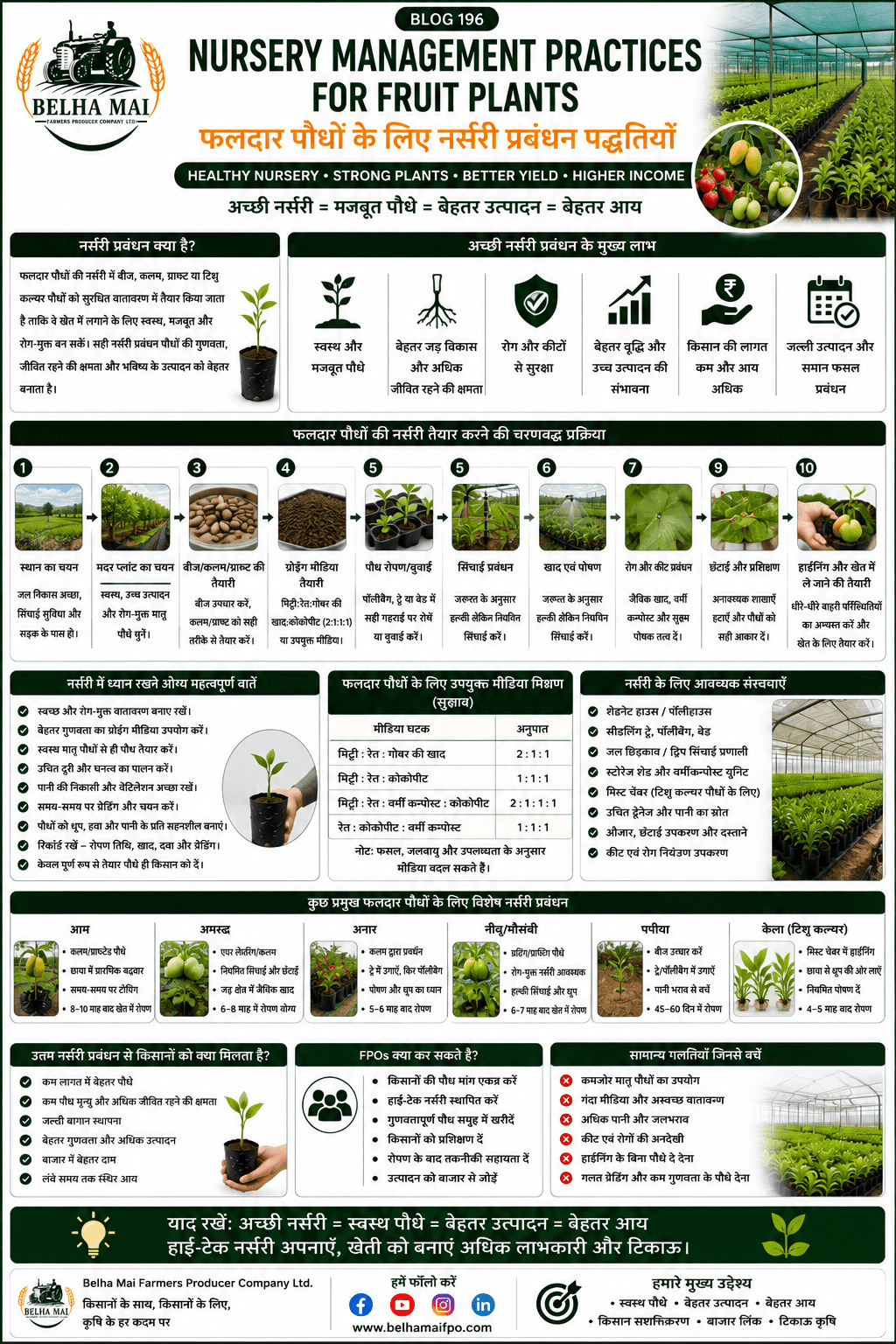
Nursery management practices for fruit plants mean all the activities required to produce good-quality plants from seed, cutting, graft, bud, layer or tissue culture plantlet. These practices include mother plant selection, seed or scion selection, media preparation, sowing, grafting, irrigation, nutrition, pest control, disease management, grading, hardening and dispatch. The aim is to prepare plants that are ready for field planting and capable of performing well after transplanting.
फलदार पौधों के लिए नर्सरी प्रबंधन पद्धतियों का अर्थ है वे सभी कार्य जो बीज, कटिंग, ग्राफ्ट, बड, लेयर या टिशू कल्चर पौध से गुणवत्तापूर्ण पौधे तैयार करने के लिए आवश्यक होते हैं। इनमें मदर प्लांट चयन, बीज या सायन चयन, मीडिया तैयारी, बुवाई, ग्राफ्टिंग, सिंचाई, पोषण, कीट नियंत्रण, रोग प्रबंधन, ग्रेडिंग, हार्डनिंग और डिस्पैच शामिल हैं। उद्देश्य ऐसे पौधे तैयार करना है जो खेत में लगाने के लिए तैयार हों और रोपाई के बाद अच्छा प्रदर्शन कर सकें।
Selection of Nursery Site
The first step in nursery management practices for fruit plants is the selection of a suitable nursery site. The nursery should be located on well-drained land with good sunlight, clean water, easy road access and protection from waterlogging. The site should not be in a low-lying area where rainwater collects. A good nursery location helps maintain plant health, reduces disease risk and makes plant transport easier for farmers and buyers.
फलदार पौधों के लिए नर्सरी प्रबंधन पद्धतियों का पहला कदम उपयुक्त नर्सरी स्थान का चयन है। नर्सरी अच्छी जल निकासी वाली भूमि पर होनी चाहिए, जहां पर्याप्त धूप, स्वच्छ पानी, सड़क सुविधा और जलभराव से सुरक्षा हो। नर्सरी ऐसी निचली जगह पर नहीं होनी चाहिए जहां बारिश का पानी जमा हो। अच्छा नर्सरी स्थान पौध स्वास्थ्य बनाए रखने, रोग जोखिम कम करने और किसानों तथा खरीदारों के लिए पौध परिवहन आसान बनाने में मदद करता है।
Selection of Healthy Mother Plants
Healthy mother plant selection is one of the most important nursery management practices for fruit plants. Mother plants should be true-to-type, disease-free, high-yielding and suitable for local climate and market demand. If the mother plant is poor, the nursery plants may also be poor. For grafted fruit plants, the quality of scion and rootstock directly affects future orchard performance. Therefore, every nursery should maintain proper records of mother plants and varieties.
स्वस्थ मदर प्लांट का चयन फलदार पौधों के लिए सबसे महत्वपूर्ण नर्सरी प्रबंधन पद्धतियों में से एक है। मदर प्लांट सही किस्म का, रोग-मुक्त, अधिक उत्पादन देने वाला और स्थानीय जलवायु तथा बाजार मांग के अनुकूल होना चाहिए। यदि मदर प्लांट खराब है, तो नर्सरी पौधे भी खराब हो सकते हैं। ग्राफ्टेड फलदार पौधों में सायन और रूटस्टॉक की गुणवत्ता भविष्य के बागान प्रदर्शन को सीधे प्रभावित करती है। इसलिए हर नर्सरी को मदर प्लांट और किस्मों का सही रिकॉर्ड रखना चाहिए।
Rootstock and Scion Selection
In fruit plant nurseries, rootstock and scion selection is very important, especially for crops like mango, guava, citrus and other grafted plants. The rootstock should be healthy, vigorous and compatible with the scion variety. The scion should be taken from a productive and disease-free mother plant. Good rootstock gives strength to the plant, while good scion ensures correct variety and fruit quality. This is a foundation practice in professional nursery management.
फलदार पौध नर्सरी में रूटस्टॉक और सायन चयन बहुत महत्वपूर्ण है, विशेष रूप से आम, अमरूद, साइट्रस और अन्य ग्राफ्टेड पौधों के लिए। रूटस्टॉक स्वस्थ, मजबूत और सायन किस्म के अनुकूल होना चाहिए। सायन उत्पादक और रोग-मुक्त मदर प्लांट से लिया जाना चाहिए। अच्छा रूटस्टॉक पौधे को मजबूती देता है, जबकि अच्छा सायन सही किस्म और फल गुणवत्ता सुनिश्चित करता है। यह पेशेवर नर्सरी प्रबंधन की आधारभूत पद्धति है।
Growing Media Preparation
Growing media preparation is a key part of nursery management practices for fruit plants. The media should support root growth, moisture retention, aeration and nutrient availability. Common media ingredients may include soil, sand, compost, cocopeat, vermicompost and other suitable materials depending on crop and nursery system. The media should be clean, well-drained and free from pests and diseases. Poor media can cause root rot, weak growth and poor survival after planting.
ग्रोइंग मीडिया की तैयारी फलदार पौधों के लिए नर्सरी प्रबंधन पद्धतियों का महत्वपूर्ण हिस्सा है। मीडिया ऐसा होना चाहिए जो जड़ विकास, नमी संरक्षण, वायु संचार और पोषक तत्व उपलब्धता को समर्थन दे। सामान्य मीडिया सामग्री में मिट्टी, बालू, कम्पोस्ट, कोकोपीट, वर्मी कम्पोस्ट और फसल तथा नर्सरी प्रणाली के अनुसार अन्य उपयुक्त सामग्री शामिल हो सकती है। मीडिया साफ, अच्छी जल निकासी वाला और कीट व रोग से मुक्त होना चाहिए। खराब मीडिया जड़ सड़न, कमजोर वृद्धि और रोपाई के बाद कम जीवित रहने की समस्या पैदा कर सकता है।
Use of Containers and Polybags
Proper containers, trays and polybags are important in nursery management practices for fruit plants. The container size should match the crop and plant age. Small containers may restrict root growth, while very large containers can increase cost and handling difficulty. Polybags should have drainage holes to prevent waterlogging. Good containers help develop a healthy root system and make plant transport easier. Root damage should be avoided during shifting and dispatch.
फलदार पौधों के लिए नर्सरी प्रबंधन में सही कंटेनर, ट्रे और पॉलीबैग का उपयोग महत्वपूर्ण है। कंटेनर का आकार फसल और पौधे की उम्र के अनुसार होना चाहिए। छोटे कंटेनर जड़ विकास को सीमित कर सकते हैं, जबकि बहुत बड़े कंटेनर लागत और संभालने की कठिनाई बढ़ा सकते हैं। जलभराव रोकने के लिए पॉलीबैग में ड्रेनेज होल होने चाहिए। अच्छे कंटेनर स्वस्थ जड़ प्रणाली विकसित करने और पौध परिवहन को आसान बनाने में मदद करते हैं। शिफ्टिंग और डिस्पैच के दौरान जड़ नुकसान से बचना चाहिए।
Seed Treatment and Sowing
For fruit plants grown from seed or rootstock, seed treatment and proper sowing are essential nursery management practices. Seeds should be selected from healthy fruits and treated where necessary to reduce disease risk and improve germination. Proper sowing depth, spacing, moisture and shade help improve seedling emergence. Weak or abnormal seedlings should be removed early. Good rootstock seedlings become the base for strong grafted fruit plants.
बीज या रूटस्टॉक से तैयार फलदार पौधों के लिए बीज उपचार और सही बुवाई आवश्यक नर्सरी प्रबंधन पद्धतियां हैं। बीज स्वस्थ फलों से चुने जाने चाहिए और जहां आवश्यक हो वहां रोग जोखिम कम करने तथा अंकुरण सुधारने के लिए उपचारित किए जाने चाहिए। सही बुवाई गहराई, दूरी, नमी और छाया अंकुरण सुधारने में मदद करते हैं। कमजोर या असामान्य पौधों को जल्दी हटा देना चाहिए। अच्छे रूटस्टॉक पौधे मजबूत ग्राफ्टेड फलदार पौधों का आधार बनते हैं।
Grafting and Budding Practices
Grafting and budding are important nursery management practices for fruit plants because many fruit crops are propagated vegetatively to maintain true-to-type quality. Skilled workers should perform grafting or budding using healthy rootstock and scion material. The graft union should be properly tied and protected. After grafting, plants should be kept under suitable humidity and shade until union formation is successful. Poor grafting can lead to weak plants and low survival.
ग्राफ्टिंग और बडिंग फलदार पौधों के लिए महत्वपूर्ण नर्सरी प्रबंधन पद्धतियां हैं क्योंकि कई फलदार फसलें सही किस्म बनाए रखने के लिए वानस्पतिक विधि से बढ़ाई जाती हैं। कुशल कर्मचारी स्वस्थ रूटस्टॉक और सायन सामग्री का उपयोग करके ग्राफ्टिंग या बडिंग करें। ग्राफ्ट यूनियन को सही तरीके से बांधना और सुरक्षित रखना चाहिए। ग्राफ्टिंग के बाद पौधों को उचित आर्द्रता और छाया में रखा जाना चाहिए जब तक कि यूनियन सफल न हो जाए। खराब ग्राफ्टिंग कमजोर पौधे और कम जीवित रहने की समस्या पैदा कर सकती है।
Irrigation Management
Irrigation is a very important part of nursery management practices for fruit plants. Nursery plants need regular moisture, but waterlogging should be avoided. Too much water can cause root diseases, while too little water can stress the plants. Drip, sprinkler or mist irrigation can be used depending on nursery type and crop. Irrigation should be scheduled according to weather, plant stage, media type and container size. Clean water should always be used.
सिंचाई फलदार पौधों के लिए नर्सरी प्रबंधन पद्धतियों का बहुत महत्वपूर्ण हिस्सा है। नर्सरी पौधों को नियमित नमी चाहिए, लेकिन जलभराव से बचना चाहिए। अधिक पानी जड़ रोग पैदा कर सकता है, जबकि कम पानी पौधों में तनाव पैदा करता है। नर्सरी प्रकार और फसल के अनुसार ड्रिप, स्प्रिंकलर या मिस्ट सिंचाई का उपयोग किया जा सकता है। सिंचाई मौसम, पौध अवस्था, मीडिया प्रकार और कंटेनर आकार के अनुसार तय करनी चाहिए। हमेशा स्वच्छ पानी का उपयोग करना चाहिए।
Nutrition Management
Nutrition management is essential for producing healthy fruit plants in the nursery. Plants need balanced nutrients for strong roots, healthy leaves and good growth. Organic manure, compost, biofertilizers and recommended fertilizers can be used according to plant requirement. Excess fertilizer should be avoided because it can burn roots and damage young plants. A scientific nutrition schedule helps produce strong and field-ready nursery plants.
नर्सरी में स्वस्थ फलदार पौधे तैयार करने के लिए पोषण प्रबंधन आवश्यक है। पौधों को मजबूत जड़ों, स्वस्थ पत्तियों और अच्छी वृद्धि के लिए संतुलित पोषक तत्वों की आवश्यकता होती है। पौध आवश्यकता के अनुसार जैविक खाद, कम्पोस्ट, जैव उर्वरक और अनुशंसित उर्वरकों का उपयोग किया जा सकता है। अधिक खाद से बचना चाहिए क्योंकि इससे जड़ें जल सकती हैं और छोटे पौधे खराब हो सकते हैं। वैज्ञानिक पोषण योजना मजबूत और खेत-तैयार नर्सरी पौधे तैयार करने में मदद करती है।
Pest and Disease Management
Pest and disease management is one of the most important nursery management practices for fruit plants. Nurseries should be inspected regularly for pests, fungal diseases, bacterial infections and nutrient deficiency symptoms. Sanitation, clean tools, proper spacing, good drainage and preventive care help reduce disease pressure. Diseased plants should be removed quickly to prevent spread. A healthy nursery environment protects plant quality and farmer trust.
कीट और रोग प्रबंधन फलदार पौधों के लिए सबसे महत्वपूर्ण नर्सरी प्रबंधन पद्धतियों में से एक है। नर्सरी में कीट, फंगल रोग, बैक्टीरियल संक्रमण और पोषक तत्वों की कमी के लक्षणों की नियमित जांच होनी चाहिए। स्वच्छता, साफ उपकरण, उचित दूरी, अच्छी जल निकासी और रोकथाम उपाय रोग दबाव को कम करते हैं। बीमारी वाले पौधों को जल्दी हटा देना चाहिए ताकि संक्रमण न फैले। स्वस्थ नर्सरी वातावरण पौध गुणवत्ता और किसान विश्वास की रक्षा करता है।
Weed Management
Weed management is necessary in fruit plant nurseries because weeds compete with nursery plants for water, nutrients, light and space. Weeds can also host pests and diseases. Regular hand weeding, clean media, mulching and proper nursery hygiene can reduce weed growth. In containers and polybags, weeds should be removed carefully without damaging plant roots. A weed-free nursery improves plant health and appearance.
फलदार पौध नर्सरी में खरपतवार प्रबंधन आवश्यक है क्योंकि खरपतवार पानी, पोषक तत्व, प्रकाश और स्थान के लिए नर्सरी पौधों से प्रतिस्पर्धा करते हैं। खरपतवार कीट और रोगों के आश्रय भी बन सकते हैं। नियमित हाथ से निराई, साफ मीडिया, मल्चिंग और नर्सरी स्वच्छता खरपतवार वृद्धि को कम कर सकते हैं। कंटेनर और पॉलीबैग में खरपतवार को जड़ों को नुकसान पहुंचाए बिना सावधानी से हटाना चाहिए। खरपतवार-मुक्त नर्सरी पौध स्वास्थ्य और गुणवत्ता को सुधारती है।
Shade and Temperature Management
Shade and temperature management are important nursery management practices for fruit plants, especially during hot weather or early plant stages. Young plants need protection from harsh sunlight, heat waves and sudden temperature changes. Shade nets, polyhouses and proper ventilation can help create a suitable microclimate. However, too much shade can make plants weak and elongated. Balanced light and temperature management are necessary for strong plant development.
छाया और तापमान प्रबंधन फलदार पौधों के लिए महत्वपूर्ण नर्सरी प्रबंधन पद्धतियां हैं, विशेष रूप से गर्म मौसम या शुरुआती पौध अवस्था में। छोटे पौधों को तेज धूप, लू और अचानक तापमान परिवर्तन से सुरक्षा चाहिए। शेडनेट, पॉलीहाउस और उचित वेंटिलेशन उपयुक्त सूक्ष्म जलवायु बनाने में मदद कर सकते हैं। हालांकि बहुत अधिक छाया पौधों को कमजोर और लंबा बना सकती है। मजबूत पौध विकास के लिए संतुलित प्रकाश और तापमान प्रबंधन आवश्यक है।
Grading of Nursery Plants
Grading is an important nursery management practice for fruit plants because all plants are not of the same quality. Plants should be graded based on height, stem thickness, root development, leaf health, graft union, disease-free status and overall vigour. Weak, diseased, damaged or poorly rooted plants should not be supplied to farmers. Grading helps maintain nursery reputation and ensures that farmers receive reliable planting material.
ग्रेडिंग फलदार पौधों के लिए महत्वपूर्ण नर्सरी प्रबंधन पद्धति है क्योंकि सभी पौधे समान गुणवत्ता के नहीं होते। पौधों की ग्रेडिंग ऊंचाई, तने की मोटाई, जड़ विकास, पत्ती स्वास्थ्य, ग्राफ्ट यूनियन, रोग-मुक्त स्थिति और समग्र मजबूती के आधार पर करनी चाहिए। कमजोर, रोगग्रस्त, क्षतिग्रस्त या खराब जड़ वाले पौध किसानों को नहीं देने चाहिए। ग्रेडिंग नर्सरी की प्रतिष्ठा बनाए रखती है और किसानों को विश्वसनीय पौध सामग्री मिलना सुनिश्चित करती है।
Hardening of Fruit Plants
Hardening is one of the most important nursery management practices for fruit plants before field planting. During hardening, plants are gradually exposed to outside conditions such as sunlight, wind and lower humidity. This prepares plants for field stress and improves survival after transplanting. Fruit plants should not be sent directly from protected conditions to the field without hardening. Proper hardening reduces transplanting shock and plant mortality.
खेत में लगाने से पहले हार्डनिंग फलदार पौधों के लिए सबसे महत्वपूर्ण नर्सरी प्रबंधन पद्धतियों में से एक है। हार्डनिंग के दौरान पौधों को धीरे-धीरे धूप, हवा और कम आर्द्रता जैसी बाहरी परिस्थितियों के संपर्क में लाया जाता है। इससे पौधे खेत के तनाव के लिए तैयार होते हैं और रोपाई के बाद जीवित रहने की क्षमता बढ़ती है। फलदार पौधों को संरक्षित वातावरण से सीधे खेत में नहीं भेजना चाहिए। सही हार्डनिंग रोपाई के झटके और पौध मृत्यु को कम करती है।
Record Keeping and Traceability
Record keeping is essential in professional nursery management practices for fruit plants. A nursery should maintain records of mother plants, seed source, scion source, grafting date, media used, treatments, plant batches, disease observations, grading and dispatch. Traceability helps build farmer trust and supports quality control. If any problem occurs later, records help identify the source and improve future nursery practices.
पेशेवर फलदार पौध नर्सरी प्रबंधन में रिकॉर्ड कीपिंग आवश्यक है। नर्सरी को मदर प्लांट, बीज स्रोत, सायन स्रोत, ग्राफ्टिंग तिथि, उपयोग किए गए मीडिया, उपचार, पौध बैच, रोग निरीक्षण, ग्रेडिंग और डिस्पैच का रिकॉर्ड रखना चाहिए। ट्रेसबिलिटी किसान विश्वास बनाती है और गुणवत्ता नियंत्रण को समर्थन देती है। यदि बाद में कोई समस्या आती है, तो रिकॉर्ड स्रोत पहचानने और भविष्य की नर्सरी पद्धतियों को सुधारने में मदद करते हैं।
Packaging and Transport
Packaging and transport are often ignored but they are important nursery management practices for fruit plants. Plants can get damaged during loading, unloading and transport if not handled properly. The root ball should remain moist, plants should be protected from direct heat and physical damage, and transport should be planned carefully. Good packaging and transport ensure that healthy plants reach farmers in good condition.
पैकेजिंग और परिवहन को अक्सर नजरअंदाज किया जाता है, लेकिन ये फलदार पौधों के लिए महत्वपूर्ण नर्सरी प्रबंधन पद्धतियां हैं। यदि सही तरीके से संभाला न जाए तो लोडिंग, अनलोडिंग और परिवहन के दौरान पौधे क्षतिग्रस्त हो सकते हैं। रूट बॉल नम रहनी चाहिए, पौधों को सीधी गर्मी और शारीरिक नुकसान से बचाना चाहिए, और परिवहन सावधानीपूर्वक योजना के साथ करना चाहिए। अच्छी पैकेजिंग और परिवहन सुनिश्चित करते हैं कि स्वस्थ पौधे किसानों तक अच्छी स्थिति में पहुंचें।
Farmer Guidance After Plant Supply
Good nursery management practices for fruit plants do not end after plant sale. Nurseries and FPOs should guide farmers on planting time, pit preparation, spacing, irrigation, nutrition, staking, mulching and plant protection. Many plant failures happen because farmers do not follow proper planting practices. Technical guidance after plant supply improves plant survival and farmer satisfaction. This also strengthens the nursery’s reputation.
फलदार पौधों के लिए अच्छी नर्सरी प्रबंधन पद्धतियां पौध बिक्री के बाद समाप्त नहीं होतीं। नर्सरियों और FPOs को किसानों को रोपाई समय, गड्ढा तैयारी, दूरी, सिंचाई, पोषण, सहारा, मल्चिंग और पौध सुरक्षा पर मार्गदर्शन देना चाहिए। कई पौध असफलताएं इसलिए होती हैं क्योंकि किसान सही रोपाई पद्धतियां नहीं अपनाते। पौध आपूर्ति के बाद तकनीकी मार्गदर्शन पौधों की जीवित रहने की क्षमता और किसान संतुष्टि बढ़ाता है। इससे नर्सरी की प्रतिष्ठा भी मजबूत होती है।
Common Mistakes in Fruit Plant Nursery Management
Common mistakes in nursery management practices for fruit plants include using poor mother plants, wrong variety material, infected media, overwatering, poor drainage, weak grafting, lack of hardening, no grading and poor record keeping. These mistakes reduce plant quality and damage farmer trust. A nursery should follow standard practices and regular monitoring to avoid such problems. Quality should always be given priority over quantity.
फलदार पौधों के लिए नर्सरी प्रबंधन में सामान्य गलतियों में खराब मदर प्लांट का उपयोग, गलत किस्म सामग्री, संक्रमित मीडिया, अधिक सिंचाई, खराब जल निकासी, कमजोर ग्राफ्टिंग, हार्डनिंग की कमी, ग्रेडिंग न करना और रिकॉर्ड न रखना शामिल हैं। ये गलतियां पौध गुणवत्ता घटाती हैं और किसान विश्वास को नुकसान पहुंचाती हैं। ऐसी समस्याओं से बचने के लिए नर्सरी को मानक पद्धतियां और नियमित निगरानी अपनानी चाहिए। मात्रा से अधिक गुणवत्ता को प्राथमिकता देनी चाहिए।
Role of FPOs in Fruit Plant Nursery Management
FPOs can play a strong role in nursery management practices for fruit plants by developing quality nurseries, aggregating farmer demand and supplying reliable planting material. An FPO can identify suitable fruit crops for local farmers, maintain mother plant blocks, train nursery workers, provide technical guidance and link farmers with markets. FPO-led nurseries can also create income opportunities for the organization while supporting member farmers with better plants.
FPOs गुणवत्तापूर्ण नर्सरी विकसित करके, किसान मांग एकत्र करके और विश्वसनीय पौध सामग्री उपलब्ध कराकर फलदार पौधों के नर्सरी प्रबंधन में मजबूत भूमिका निभा सकते हैं। एक FPO स्थानीय किसानों के लिए उपयुक्त फलदार फसलों की पहचान कर सकता है, मदर प्लांट ब्लॉक बनाए रख सकता है, नर्सरी कर्मचारियों को प्रशिक्षण दे सकता है, तकनीकी मार्गदर्शन दे सकता है और किसानों को बाजार से जोड़ सकता है। FPO आधारित नर्सरियां संगठन के लिए आय अवसर भी बना सकती हैं और सदस्य किसानों को बेहतर पौधे उपलब्ध करा सकती हैं।
Nursery Management and Farmer Income
Good nursery management practices for fruit plants are directly connected with farmer income. Healthy plants improve the chance of successful orchard establishment, better survival, stronger growth and better productivity. In fruit crops, one good plant can give income for many years, while one poor plant can create long-term loss. Therefore, investing in good nursery plants is a practical step towards better farmer income and stronger horticulture development.
फलदार पौधों के लिए अच्छी नर्सरी प्रबंधन पद्धतियां किसान आय से सीधे जुड़ी हैं। स्वस्थ पौधे सफल बागान स्थापना, बेहतर जीवित रहने की क्षमता, मजबूत वृद्धि और बेहतर उत्पादकता की संभावना बढ़ाते हैं। फलदार फसलों में एक अच्छा पौधा कई वर्षों तक आय दे सकता है, जबकि एक खराब पौधा लंबे समय तक नुकसान पैदा कर सकता है। इसलिए अच्छे नर्सरी पौधों में निवेश बेहतर किसान आय और मजबूत बागवानी विकास की दिशा में व्यावहारिक कदम है।
Belha Mai FPO Vision
Belha Mai Farmers Producer Company Ltd. believes that quality fruit plant nurseries can become a foundation for horticulture development, agroforestry expansion and farmer income growth. By promoting nursery management practices for fruit plants, high-tech nursery systems, farmer training and market-linked production, Belha Mai FPO aims to support farmers with better plants and better opportunities. Strong nurseries can build strong orchards, and strong orchards can build stronger rural livelihoods.
Belha Mai Farmers Producer Company Ltd. का मानना है कि गुणवत्तापूर्ण फलदार पौध नर्सरियां बागवानी विकास, एग्रोफॉरेस्ट्री विस्तार और किसान आय वृद्धि की नींव बन सकती हैं। फलदार पौधों के लिए नर्सरी प्रबंधन पद्धतियों, हाई-टेक नर्सरी सिस्टम, किसान प्रशिक्षण और बाजार से जुड़ी उत्पादन प्रणाली को बढ़ावा देकर Belha Mai FPO किसानों को बेहतर पौधे और बेहतर अवसर देना चाहता है। मजबूत नर्सरियां मजबूत बागान बनाती हैं, और मजबूत बागान मजबूत ग्रामीण आजीविका बनाते हैं।
Conclusion
Nursery management practices for fruit plants are essential for producing healthy, strong, true-to-type and disease-free planting material. Proper site selection, mother plant selection, media preparation, irrigation, nutrition, pest control, grading, hardening, record keeping and farmer guidance make a nursery successful. For farmers and FPOs, good nursery management is not only a technical activity; it is the foundation of better productivity, better income and sustainable horticulture development.
फलदार पौधों के लिए नर्सरी प्रबंधन पद्धतियां स्वस्थ, मजबूत, सही किस्म और रोग-मुक्त पौध सामग्री तैयार करने के लिए आवश्यक हैं। सही स्थान चयन, मदर प्लांट चयन, मीडिया तैयारी, सिंचाई, पोषण, कीट नियंत्रण, ग्रेडिंग, हार्डनिंग, रिकॉर्ड कीपिंग और किसान मार्गदर्शन नर्सरी को सफल बनाते हैं। किसानों और FPOs के लिए अच्छा नर्सरी प्रबंधन केवल तकनीकी कार्य नहीं है; यह बेहतर उत्पादकता, बेहतर आय और सतत बागवानी विकास की नींव है।
FAQ
What are nursery management practices for fruit plants?
Nursery management practices for fruit plants include mother plant selection, media preparation, irrigation, nutrition, pest control, disease management, grading, hardening and plant dispatch.
फलदार पौधों के लिए नर्सरी प्रबंधन पद्धतियों में मदर प्लांट चयन, मीडिया तैयारी, सिंचाई, पोषण, कीट नियंत्रण, रोग प्रबंधन, ग्रेडिंग, हार्डनिंग और पौध डिस्पैच शामिल हैं।
Why is nursery management important for fruit plants?
Nursery management is important because fruit plants remain in the field for many years, and poor-quality plants can cause long-term loss to farmers.
नर्सरी प्रबंधन महत्वपूर्ण है क्योंकि फलदार पौधे कई वर्षों तक खेत में रहते हैं और खराब गुणवत्ता वाले पौधे किसानों को लंबे समय तक नुकसान पहुंचा सकते हैं।
What is the role of mother plants in fruit nursery management?
Mother plants provide the source material for propagation, so they must be healthy, true-to-type, productive and disease-free.
मदर प्लांट पौध प्रसार के लिए स्रोत सामग्री देते हैं, इसलिए वे स्वस्थ, सही किस्म, उत्पादक और रोग-मुक्त होने चाहिए।
Why is hardening important for fruit plants?
Hardening prepares nursery plants for field conditions and improves survival after transplanting.
हार्डनिंग नर्सरी पौधों को खेत की परिस्थितियों के लिए तैयार करती है और रोपाई के बाद जीवित रहने की क्षमता बढ़ाती है।
How can FPOs support fruit plant nursery development?
FPOs can support fruit plant nursery development by aggregating demand, developing nurseries, maintaining mother plants, training farmers and linking production with markets.
FPOs किसान मांग एकत्र करके, नर्सरी विकसित करके, मदर प्लांट बनाए रखकर, किसानों को प्रशिक्षण देकर और उत्पादन को बाजार से जोड़कर फलदार पौध नर्सरी विकास को समर्थन दे सकते हैं।
Internal Links Section
👉 High-Tech Nursery in India: Complete Guide —https://belhamaifpo.com/agriculture/high-tech-nursery-in-india-complete-guide/
👉 What is a High-Tech Nursery in Agriculture? — https://belhamaifpo.com/agriculture/what-is-a-high-tech-nursery-in-agriculture/
👉 Benefits of High-Tech Nurseries for Farmers —https://belhamaifpo.com/agriculture/benefits-of-high-tech-nurseries-for-farmers/
👉 Commercial Tissue Culture Lab Setup in India — https://belhamaifpo.com/agriculture/commercial-tissue-culture-lab-setup-in-india/
👉 Mango Farming in India: Complete Guide —https://belhamaifpo.com/agriculture/mango-farming-in-india/
👉 Belha Mai FPO Website — https://belhamaifpo.com/
External Authority Links
👉 National Horticulture Board — https://nhb.gov.in/
👉 Ministry of Agriculture & Farmers Welfare — https://agriwelfare.gov.in/
👉 MIDH — https://midh.gov.in/
👉 ICAR — https://icar.org.in/
👉 ICAR-CISH Lucknow —https://cish.icar.gov.in/
Follow Belha Mai FPO for More Updates
Website: https://belhamaifpo.com/
Facebook:https://www.facebook.com/profile.php?id=61561043486818
YouTube: https://www.youtube.com/channel/UC9ZvojoTMCa7mU1-Q_Bh60A
LinkedIn: https://www.linkedin.com/in/abhay-singh-ab5568280/
Instagram:https://instagram.com/belhamaifpo
Belha Mai FPO is working to support farmers through better information, technology, market linkage, value addition, FPO awareness and rural development.