Introduction
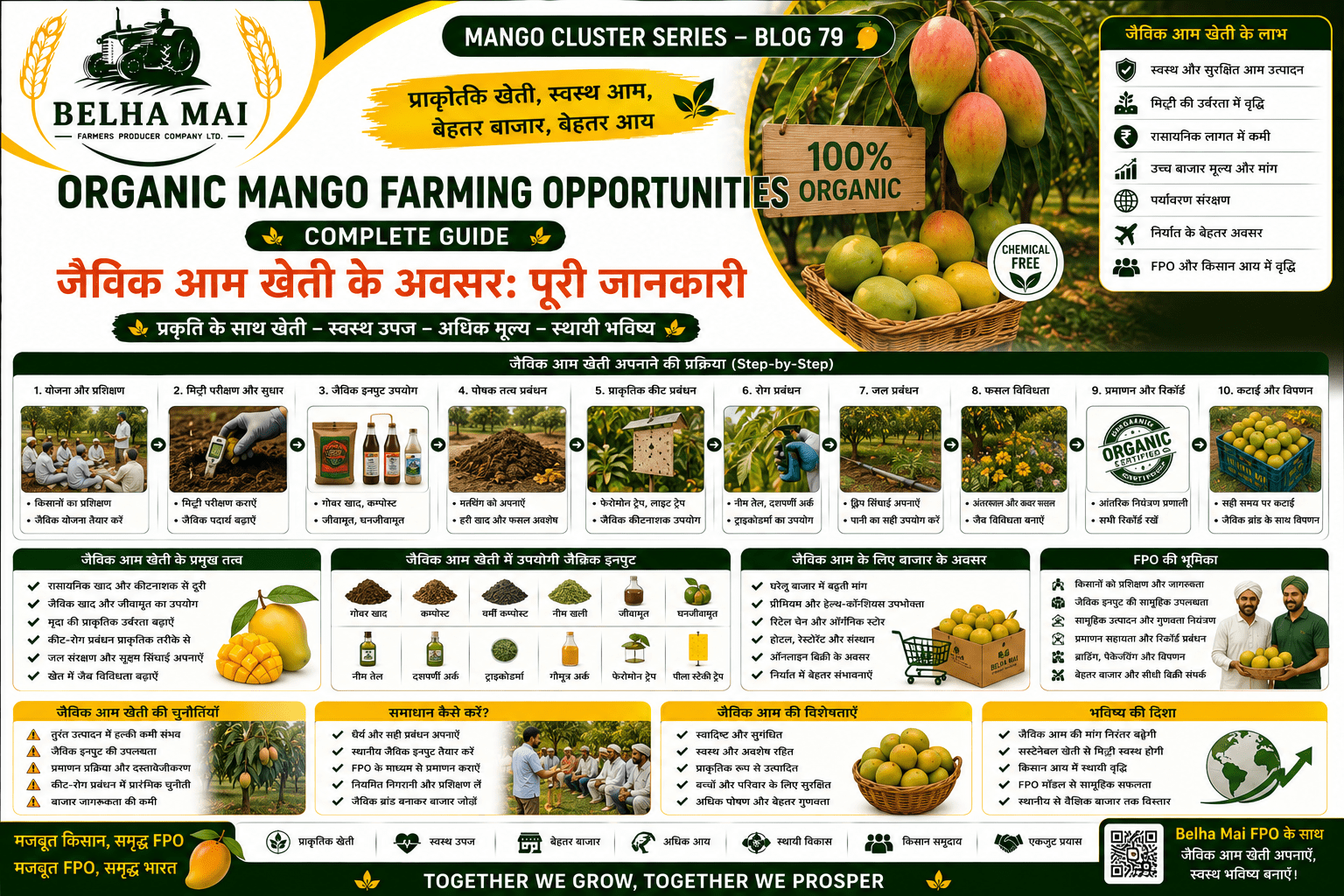
Organic mango farming opportunities are increasing in India because consumers are becoming more aware about food safety, health, environment and chemical residues. Mango is one of India’s most loved fruits, and naturally grown mangoes can attract premium buyers when quality, certification and market linkage are managed properly.
Organic mango farming is not only about stopping chemical fertilizers and pesticides. It is a complete system that focuses on soil health, organic matter, biodiversity, natural pest control, bio-inputs, water conservation, orchard sanitation and safe post-harvest handling.
For small farmers, organic mango farming can become difficult if done individually. But through FPOs, farmers can receive training, bio-inputs, certification support, aggregation, branding and market linkage.
जैविक आम खेती के अवसर
भारत में जैविक आम खेती के अवसर बढ़ रहे हैं क्योंकि उपभोक्ता food safety, health, environment और chemical residues को लेकर अधिक जागरूक हो रहे हैं। आम भारत का सबसे प्रिय फल है, और प्राकृतिक तरीके से उगाए गए आम premium buyers को आकर्षित कर सकते हैं, यदि quality, certification और market linkage सही हो।
जैविक आम खेती का मतलब केवल chemical fertilizers और pesticides बंद करना नहीं है। यह एक complete system है जिसमें soil health, organic matter, biodiversity, natural pest control, bio-inputs, water conservation, orchard sanitation और safe post-harvest handling शामिल होते हैं।
छोटे किसानों के लिए अकेले जैविक आम खेती करना कठिन हो सकता है। लेकिन FPO के माध्यम से किसानों को training, bio-inputs, certification support, aggregation, branding और market linkage मिल सकता है।
Why Organic Mango Farming Is Important
Organic mango farming is important because it can reduce chemical dependency and improve long-term orchard health. Mango is a long-duration crop, so soil health and tree health are very important for sustainable production.
Organic mango farming helps in:
improving soil fertility,
increasing organic carbon,
reducing chemical input cost over time,
protecting beneficial insects,
improving biodiversity,
producing safer fruit,
creating premium market opportunities,
and supporting sustainable farming.
Organic mango farming also fits well with climate-resilient agriculture because healthy soil holds more moisture and supports stronger trees.
जैविक आम खेती क्यों जरूरी है?
जैविक आम खेती इसलिए जरूरी है क्योंकि यह chemical dependency कम कर सकती है और लंबे समय तक orchard health सुधार सकती है। आम एक long-duration crop है, इसलिए soil health और tree health sustainable production के लिए बहुत महत्वपूर्ण हैं।
जैविक आम खेती से मदद मिलती है:
soil fertility सुधारने में,
organic carbon बढ़ाने में,
chemical input cost धीरे-धीरे कम करने में,
beneficial insects को बचाने में,
biodiversity बढ़ाने में,
safer fruit उत्पादन में,
premium market opportunities बनाने में,
और sustainable farming को बढ़ावा देने में।
जैविक आम खेती climate-resilient agriculture से भी जुड़ती है क्योंकि स्वस्थ मिट्टी अधिक नमी रोकती है और पेड़ को मजबूत बनाती है।
Difference Between Organic and Conventional Mango Farming
Conventional mango farming often depends on chemical fertilizers, pesticides and quick-response crop protection methods. Organic mango farming focuses on prevention, soil health and ecological balance.
In organic mango farming, farmers use:
compost,
vermicompost,
farmyard manure,
green manure,
bio-fertilizers,
bio-pesticides,
botanical extracts,
pheromone traps,
sticky traps,
orchard sanitation,
and biodiversity support.
Organic farming requires patience, planning and record keeping. Results may not come immediately, but long-term benefits can be strong.
जैविक और पारंपरिक आम खेती में अंतर
पारंपरिक आम खेती में अक्सर chemical fertilizers, pesticides और quick-response crop protection methods पर निर्भरता रहती है। जैविक आम खेती prevention, soil health और ecological balance पर ध्यान देती है।
जैविक आम खेती में किसान उपयोग करते हैं:
compost,
vermicompost,
farmyard manure,
green manure,
bio-fertilizers,
bio-pesticides,
botanical extracts,
pheromone traps,
sticky traps,
orchard sanitation,
और biodiversity support।
जैविक खेती में patience, planning और record keeping जरूरी है। परिणाम तुरंत नहीं मिलते, लेकिन long-term benefits मजबूत हो सकते हैं।
Soil Health in Organic Mango Farming
Soil health is the foundation of organic mango farming. If soil is weak, mango trees cannot produce good quality fruits regularly. Organic farming improves soil structure, microbial life and nutrient availability.
Farmers should focus on:
soil testing,
organic carbon improvement,
compost application,
vermicompost use,
mulching,
bio-fertilizers,
green cover,
and reduced soil erosion.
Healthy soil supports better root growth, better moisture retention and stronger tree immunity.
जैविक आम खेती में मिट्टी की सेहत
Soil health जैविक आम खेती की नींव है। यदि मिट्टी कमजोर है, तो आम के पेड़ नियमित रूप से अच्छी गुणवत्ता के फल नहीं दे सकते। जैविक खेती soil structure, microbial life और nutrient availability को सुधारती है।
किसानों को ध्यान देना चाहिए:
soil testing,
organic carbon improvement,
compost application,
vermicompost use,
mulching,
bio-fertilizers,
green cover,
और soil erosion कम करने पर।
स्वस्थ मिट्टी better root growth, moisture retention और tree immunity में मदद करती है।
Organic Manure and Compost
Organic manure is essential for organic mango orchards. Compost, farmyard manure and vermicompost improve soil fertility and microbial activity.
Farmers can use:
well-decomposed farmyard manure,
vermicompost,
compost,
leaf litter compost,
green manure,
and enriched organic manure.
Fresh or undecomposed manure should not be used directly because it can create pest, disease and root problems. Manure should be well decomposed and applied as per tree age and soil requirement.
जैविक खाद और कम्पोस्ट
Organic manure जैविक आम बाग के लिए जरूरी है। Compost, farmyard manure और vermicompost soil fertility और microbial activity को सुधारते हैं।
किसान उपयोग कर सकते हैं:
well-decomposed farmyard manure,
vermicompost,
compost,
leaf litter compost,
green manure,
और enriched organic manure।
ताजा या undecomposed manure सीधे उपयोग नहीं करना चाहिए क्योंकि इससे pest, disease और root problems हो सकती हैं। खाद अच्छी तरह सड़ी हुई होनी चाहिए और tree age व soil requirement के अनुसार उपयोग करनी चाहिए।
Bio-Fertilizers in Mango Orchard
Bio-fertilizers can support nutrient availability in organic mango farming. They help improve nutrient cycling and soil microbial activity.
Common bio-fertilizers may include:
Azotobacter,
Azospirillum,
phosphate-solubilizing bacteria,
potash-solubilizing bacteria,
mycorrhiza,
and other beneficial microbes.
Bio-fertilizers should be used carefully according to expert guidance. They work best when soil has enough organic matter and moisture.
आम बाग में जैव उर्वरक
Bio-fertilizers जैविक आम खेती में nutrient availability को support कर सकते हैं। ये nutrient cycling और soil microbial activity को बेहतर बनाते हैं।
सामान्य bio-fertilizers हो सकते हैं:
Azotobacter,
Azospirillum,
phosphate-solubilizing bacteria,
potash-solubilizing bacteria,
mycorrhiza,
और अन्य beneficial microbes।
Bio-fertilizers का उपयोग expert guidance के अनुसार करना चाहिए। ये तब बेहतर काम करते हैं जब मिट्टी में organic matter और moisture पर्याप्त हो।
Organic Pest Management in Mango
Organic pest management focuses on prevention, monitoring and ecological balance. Farmers should not wait until pest attack becomes severe. Regular orchard monitoring is important.
Organic pest management tools include:
pheromone traps,
methyl eugenol traps,
fruit fly lures,
yellow sticky traps,
blue sticky traps where suitable,
light or UV traps where suitable,
neem-based products,
botanical extracts,
biopesticides,
orchard sanitation,
and need-based intervention.
Fruit fly, mango hopper, mealy bug and thrips should be monitored carefully. Fallen and infested fruits should be collected and destroyed to reduce pest population.
आम में जैविक कीट प्रबंधन
जैविक कीट प्रबंधन prevention, monitoring और ecological balance पर आधारित होता है। किसानों को pest attack गंभीर होने का इंतजार नहीं करना चाहिए। नियमित orchard monitoring जरूरी है।
जैविक कीट प्रबंधन के उपकरण:
pheromone traps,
methyl eugenol traps,
fruit fly lures,
yellow sticky traps,
जहां उपयुक्त हो blue sticky traps,
जहां उपयुक्त हो light या UV traps,
neem-based products,
botanical extracts,
biopesticides,
orchard sanitation,
और need-based intervention।
Fruit fly, mango hopper, mealy bug और thrips की सावधानी से निगरानी करनी चाहिए। गिरे और infected fruits को इकट्ठा करके नष्ट करना चाहिए ताकि pest population कम हो।
Organic Disease Management
Disease management in organic mango farming depends on prevention. Dense, unmanaged orchards create humidity and poor air circulation, which increases disease pressure.
Organic disease management includes:
proper pruning,
canopy management,
air circulation,
orchard sanitation,
removal of infected plant parts,
balanced nutrition,
bio-control agents,
and expert-based organic treatment.
Important mango diseases such as powdery mildew, anthracnose, dieback and stem-end rot should be monitored regularly.
जैविक रोग प्रबंधन
जैविक आम खेती में disease management prevention पर निर्भर करता है। घने और unmanaged orchards में humidity और poor air circulation बढ़ता है, जिससे disease pressure बढ़ता है।
जैविक रोग प्रबंधन में शामिल है:
proper pruning,
canopy management,
air circulation,
orchard sanitation,
infected plant parts हटाना,
balanced nutrition,
bio-control agents,
और expert-based organic treatment।
Powdery mildew, anthracnose, dieback और stem-end rot जैसे mango diseases की नियमित monitoring करनी चाहिए।
Mulching and Water Conservation
Mulching is very useful in organic mango farming. It helps conserve soil moisture, reduce weed growth, improve soil temperature and add organic matter.
Farmers can use:
dry leaves,
straw,
crop residue,
grass mulch,
and composted organic material.
Mulch should be kept around the tree basin but should not touch the trunk directly. Water conservation is important because mango fruit development needs proper moisture management.
मल्चिंग और जल संरक्षण
Mulching जैविक आम खेती में बहुत उपयोगी है। इससे soil moisture बचती है, weed growth कम होती है, soil temperature संतुलित रहता है और organic matter बढ़ता है।
किसान उपयोग कर सकते हैं:
dry leaves,
straw,
crop residue,
grass mulch,
और composted organic material।
Mulch को tree basin के आसपास रखना चाहिए लेकिन सीधे trunk से नहीं लगाना चाहिए। Water conservation जरूरी है क्योंकि mango fruit development के लिए proper moisture management चाहिए।
Biodiversity in Organic Mango Orchard
Biodiversity is important in organic farming. A biodiverse orchard supports beneficial insects, pollinators, birds and soil organisms. It also helps reduce pest imbalance.
Farmers can promote biodiversity through:
flowering plants on bunds,
cover crops,
live fencing,
bee-friendly practices,
mixed cropping in young orchards,
and avoiding unnecessary chemical use.
Biodiversity makes the orchard more stable and eco-friendly.
जैविक आम बाग में जैव विविधता
Biodiversity जैविक खेती में महत्वपूर्ण है। जैव विविधता वाला बाग beneficial insects, pollinators, birds और soil organisms को support करता है। यह pest imbalance को कम करने में भी मदद करता है।
किसान biodiversity बढ़ा सकते हैं:
bunds पर flowering plants लगाकर,
cover crops से,
live fencing से,
bee-friendly practices से,
young orchards में mixed cropping से,
और unnecessary chemical use से बचकर।
Biodiversity बाग को अधिक stable और eco-friendly बनाती है।
Organic Certification for Mango
Organic certification is important if farmers want to sell mangoes as certified organic in premium or export markets. Without certification, farmers may follow organic practices, but they may not get full organic premium.
Certification requires:
defined organic practices,
conversion period,
farm records,
input records,
inspection,
traceability,
and compliance with standards.
For individual farmers, certification can be costly and difficult. FPOs can help by arranging group certification and maintaining records collectively.
आम के लिए जैविक प्रमाणन
यदि किसान premium या export markets में certified organic mango बेचना चाहते हैं, तो organic certification जरूरी है। बिना certification के किसान organic practices अपना सकते हैं, लेकिन उन्हें full organic premium मिलना कठिन हो सकता है।
Certification के लिए जरूरत होती है:
defined organic practices,
conversion period,
farm records,
input records,
inspection,
traceability,
और standards compliance।
Individual farmers के लिए certification महंगा और कठिन हो सकता है। FPO group certification और record keeping में मदद कर सकता है।
Market Opportunities for Organic Mango
Organic mango has market opportunities in premium domestic and export segments. Health-conscious consumers, urban retail stores, organic stores, online platforms, hotels and premium buyers may pay better prices for quality organic produce.
Market opportunities include:
organic retail stores,
premium supermarkets,
online grocery platforms,
direct consumer sales,
farm-to-home models,
organic food brands,
hotels and restaurants,
export buyers,
and value-added organic mango products.
However, premium markets require consistency, certification, packaging and reliable supply.
जैविक आम के बाजार अवसर
Organic mango के लिए premium domestic और export segments में अवसर हैं। Health-conscious consumers, urban retail stores, organic stores, online platforms, hotels और premium buyers quality organic produce के लिए बेहतर भाव दे सकते हैं।
Market opportunities:
organic retail stores,
premium supermarkets,
online grocery platforms,
direct consumer sales,
farm-to-home models,
organic food brands,
hotels and restaurants,
export buyers,
और value-added organic mango products।
लेकिन premium markets consistency, certification, packaging और reliable supply मांगते हैं।
Value-Added Organic Mango Products
Organic mango farming can also support value-added products. Certified organic mango products may attract better markets if properly processed and branded.
Possible products include:
organic mango pulp,
organic mango juice,
organic dried mango,
organic aam papad,
organic mango pickle,
organic mango chutney,
organic aamchur powder,
organic mango jam,
and organic mango candy.
For FPOs, organic value-added products can create year-round income and stronger brand identity.
मूल्यवर्धित जैविक आम उत्पाद
जैविक आम खेती value-added products को भी support कर सकती है। Certified organic mango products सही processing और branding के साथ बेहतर markets आकर्षित कर सकते हैं।
संभावित उत्पाद:
organic mango pulp,
organic mango juice,
organic dried mango,
organic aam papad,
organic mango pickle,
organic mango chutney,
organic aamchur powder,
organic mango jam,
और organic mango candy।
FPO के लिए organic value-added products सालभर income और strong brand identity बना सकते हैं।
Challenges in Organic Mango Farming
Organic mango farming has opportunities, but it also has challenges. Farmers should understand that organic farming requires planning and patience.
Common challenges include:
conversion period,
lower yield during transition,
pest and disease management difficulty,
certification cost,
record keeping,
limited organic input availability,
market linkage,
premium buyer access,
and quality consistency.
These challenges can be managed through FPO-led training, group certification, bio-input supply and buyer linkage.
जैविक आम खेती की चुनौतियां
जैविक आम खेती में अवसर हैं, लेकिन चुनौतियां भी हैं। किसानों को समझना चाहिए कि organic farming के लिए planning और patience जरूरी है।
सामान्य चुनौतियां:
conversion period,
transition के दौरान lower yield,
pest और disease management difficulty,
certification cost,
record keeping,
limited organic input availability,
market linkage,
premium buyer access,
और quality consistency।
इन चुनौतियों को FPO-led training, group certification, bio-input supply और buyer linkage से manage किया जा सकता है।
Role of FPOs in Organic Mango Farming
FPOs can play a major role in organic mango farming. Individual farmers may struggle with certification, inputs, training and marketing. But FPOs can create collective systems.
An FPO can support organic mango farming through:
farmer training,
soil testing,
organic input supply,
compost and vermicompost units,
bio-input resource centre,
IPM kits,
pheromone traps and lures,
orchard advisory,
group certification,
record keeping,
aggregation,
branding,
packaging,
premium buyer linkage,
and export preparation.
For Belha Mai Farmers Producer Company Ltd., organic mango farming can be connected with its agroecology, bio-input and Mango Cluster strategy.
जैविक आम खेती में FPO की भूमिका
FPO जैविक आम खेती में बड़ी भूमिका निभा सकता है। Individual farmers certification, inputs, training और marketing में संघर्ष कर सकते हैं। लेकिन FPO collective systems बना सकता है।
FPO जैविक आम खेती में मदद कर सकता है:
farmer training,
soil testing,
organic input supply,
compost और vermicompost units,
bio-input resource centre,
IPM kits,
pheromone traps और lures,
orchard advisory,
group certification,
record keeping,
aggregation,
branding,
packaging,
premium buyer linkage,
और export preparation।
Belha Mai Farmers Producer Company Ltd. जैविक आम खेती को अपनी agroecology, bio-input और Mango Cluster strategy से जोड़ सकता है।
Step-by-Step Plan for Organic Mango Farmers
Farmers should shift to organic mango farming step by step. Sudden changes without planning may create problems.
A practical plan can be:
do soil testing,
prepare organic farming plan,
start compost and vermicompost use,
reduce unnecessary chemical use gradually,
adopt IPM,
install pheromone traps and lures,
improve pruning and sanitation,
maintain farm records,
join FPO-led certification,
follow buyer requirements,
and develop organic market linkage.
This step-by-step method reduces risk and improves confidence.
जैविक आम किसानों के लिए चरणबद्ध योजना
किसानों को जैविक आम खेती में step by step जाना चाहिए। बिना planning के अचानक बदलाव करने से समस्या आ सकती है।
एक practical plan:
soil testing करें,
organic farming plan बनाएं,
compost और vermicompost use शुरू करें,
unnecessary chemical use धीरे-धीरे कम करें,
IPM अपनाएं,
pheromone traps और lures लगाएं,
pruning और sanitation सुधारें,
farm records रखें,
FPO-led certification से जुड़ें,
buyer requirements follow करें,
और organic market linkage develop करें।
इस step-by-step method से risk कम होता है और confidence बढ़ता है।
Conclusion
Organic mango farming opportunities are growing in India because consumers want safer, healthier and naturally grown fruits. Organic mango farming can improve soil health, reduce chemical dependency, protect biodiversity and open premium market opportunities.
However, organic farming requires planning, training, certification, record keeping and strong market linkage. Small farmers should not do this journey alone. FPOs can support farmers with organic inputs, bio-input resource centres, IPM tools, group certification, aggregation, branding and buyer linkage.
Belha Mai Farmers Producer Company Ltd. can use organic mango farming as an important part of its Mango Cluster and agroecology strategy to create healthier produce, better farmer income and sustainable rural development.
निष्कर्ष
भारत में जैविक आम खेती के अवसर बढ़ रहे हैं क्योंकि उपभोक्ता safer, healthier और naturally grown fruits चाहते हैं। जैविक आम खेती soil health सुधार सकती है, chemical dependency कम कर सकती है, biodiversity को बचा सकती है और premium market opportunities खोल सकती है।
लेकिन organic farming के लिए planning, training, certification, record keeping और strong market linkage जरूरी है। छोटे किसानों को यह यात्रा अकेले नहीं करनी चाहिए। FPO organic inputs, bio-input resource centres, IPM tools, group certification, aggregation, branding और buyer linkage के माध्यम से किसानों की मदद कर सकता है।
Belha Mai Farmers Producer Company Ltd. जैविक आम खेती को अपनी Mango Cluster और agroecology strategy का महत्वपूर्ण हिस्सा बना सकता है, जिससे healthier produce, better farmer income और sustainable rural development हो सके।
15. FAQ in English + Hindi
FAQ 1: What is organic mango farming?
Organic mango farming is a farming system that focuses on soil health, organic manure, bio-inputs, natural pest management, biodiversity, chemical reduction and safe fruit production.
प्रश्न 1: जैविक आम खेती क्या है?
जैविक आम खेती वह farming system है जिसमें soil health, organic manure, bio-inputs, natural pest management, biodiversity, chemical reduction और safe fruit production पर ध्यान दिया जाता है।
FAQ 2: Is organic mango farming profitable?
Organic mango farming can be profitable if quality production, certification, packaging, branding and premium buyer linkage are managed properly. Profit may take time because organic transition needs patience.
प्रश्न 2: क्या जैविक आम खेती लाभदायक है?
हां, यदि quality production, certification, packaging, branding और premium buyer linkage सही हो, तो जैविक आम खेती लाभदायक हो सकती है। Profit में समय लग सकता है क्योंकि organic transition patience मांगता है।
FAQ 3: What inputs are used in organic mango farming?
Organic mango farming uses compost, vermicompost, farmyard manure, bio-fertilizers, bio-pesticides, botanical extracts, neem-based products, pheromone traps, lures and organic mulching.
प्रश्न 3: जैविक आम खेती में कौन से inputs उपयोग होते हैं?
जैविक आम खेती में compost, vermicompost, farmyard manure, bio-fertilizers, bio-pesticides, botanical extracts, neem-based products, pheromone traps, lures और organic mulching उपयोग होते हैं।
FAQ 4: Can FPOs help farmers with organic mango certification?
Yes, FPOs can help farmers with group certification, record keeping, training, inspection coordination, traceability and premium market linkage.
प्रश्न 4: क्या FPO जैविक आम certification में मदद कर सकता है?
हां, FPO group certification, record keeping, training, inspection coordination, traceability और premium market linkage में मदद कर सकता है।
FAQ 5: What are the challenges in organic mango farming?
Main challenges include conversion period, pest and disease control, certification cost, record keeping, organic input availability, quality consistency and market linkage.
प्रश्न 5: जैविक आम खेती की चुनौतियां क्या हैं?
मुख्य चुनौतियां हैं conversion period, pest and disease control, certification cost, record keeping, organic input availability, quality consistency और market linkage।
Internal Links Section
Related Mango Cluster Blogs
👉 Mango Farming in India: Complete Guide
https://belhamaifpo.com/agriculture/mango-farming-in-india/
👉 Mango Orchard Management Practices
https://belhamaifpo.com/agriculture/mango-orchard-management-practices/
👉 Pest and Disease Management in Mango Farming
https://belhamaifpo.com/agriculture/pest-and-disease-management-in-mango-farming/
👉 Challenges in Mango Farming in India
https://belhamaifpo.com/agriculture/challenges-in-mango-farming-in-india/
👉 Value-Added Mango Products
https://belhamaifpo.com/agriculture/value-added-mango-products/
👉 Role of FPOs in Mango Marketing
https://belhamaifpo.com/agriculture/role-of-fpos-in-mango-marketing/
हिंदी में संबंधित आम क्लस्टर ब्लॉग
👉 भारत में आम की खेती: पूरी जानकारी
https://belhamaifpo.com/agriculture/mango-farming-in-india/
👉 आम बाग प्रबंधन: पूरी जानकारी
https://belhamaifpo.com/agriculture/mango-orchard-management-practices/
👉 आम की खेती में कीट और रोग प्रबंधन
https://belhamaifpo.com/agriculture/pest-and-disease-management-in-mango-farming/
👉 भारत में आम की खेती की चुनौतियां
https://belhamaifpo.com/agriculture/challenges-in-mango-farming-in-india/
👉 मूल्यवर्धित आम उत्पाद
https://belhamaifpo.com/agriculture/value-added-mango-products/
👉 आम मार्केटिंग में FPO की भूमिका
https://belhamaifpo.com/agriculture/role-of-fpos-in-mango-marketing/
External Authority Links
👉 NCONF Organic Farming Information
https://ncof.dacnet.nic.in/
👉 PGS India Organic Certification System
https://pgsindia-ncof.gov.in/
👉 NHB Mango Cultivation Guide
https://nhb.gov.in/report_files/mango/mango.htm
👉 ICAR-CISH Lucknow
https://www.cish.org.in/
👉 APEDA Organic Products Information
https://apeda.gov.in/apedawebsite/organic/Organic_Products.htm