Introduction
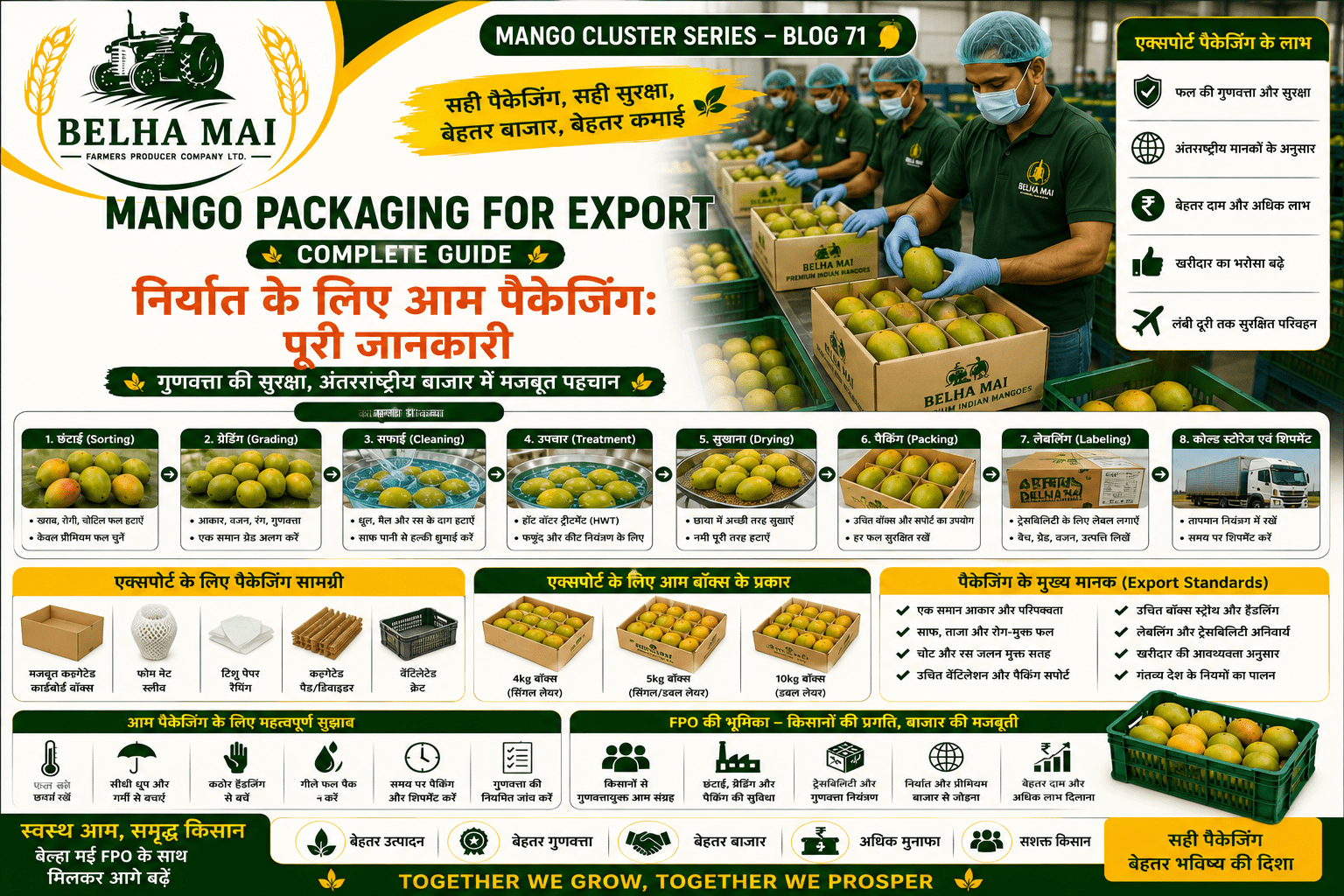
Mango packaging for export is a very important part of the mango value chain. Good packaging protects the fruit from damage, maintains quality, improves shelf life and builds confidence among buyers. For export markets, packaging is not only about putting mangoes in a box. It is about quality protection, traceability, hygiene, ventilation, labelling, handling and compliance.
Many farmers lose value because mangoes are packed casually after harvesting. If mangoes are not sorted, graded, de-sapped and packed properly, they may get bruised, develop stains, ripen unevenly or get rejected by buyers.
For farmers and FPOs, export packaging begins before the box. It begins with orchard management, proper harvesting, post-harvest handling, sorting, grading and quality control.
निर्यात के लिए आम पैकेजिंग
निर्यात के लिए आम पैकेजिंग आम वैल्यू चेन का बहुत महत्वपूर्ण हिस्सा है। अच्छी पैकेजिंग फल को नुकसान से बचाती है, गुणवत्ता बनाए रखती है, शेल्फ लाइफ बढ़ाती है और खरीदारों का भरोसा मजबूत करती है।
निर्यात बाजार में पैकेजिंग का मतलब केवल आम को बॉक्स में रखना नहीं है। इसका मतलब है गुणवत्ता सुरक्षा, ट्रेसबिलिटी, स्वच्छता, वेंटिलेशन, लेबलिंग, सही हैंडलिंग और नियमों का पालन।
कई किसान इसलिए कम दाम पाते हैं क्योंकि तुड़ाई के बाद आम को बिना सही छंटाई, ग्रेडिंग, डी-सैपिंग और पैकेजिंग के बेच दिया जाता है। ऐसे फल परिवहन में दब सकते हैं, दाग लग सकते हैं, असमान रूप से पक सकते हैं या खरीदार द्वारा अस्वीकार किए जा सकते हैं।
Why Packaging Matters in Mango Export
Mango is a delicate fruit. It can be easily damaged by pressure, heat, rough handling and poor ventilation. Export markets usually involve longer distance, more handling and stricter quality checks. This makes packaging very important.
Good mango export packaging helps in:
protecting fruits from injury,
reducing bruising,
maintaining fruit appearance,
improving shelf life,
supporting uniform ripening,
making handling easier,
improving buyer confidence,
and reducing rejection risk.
Packaging also helps branding. A clean, well-labelled and professional mango box creates a better impression than loose or unbranded fruit supply.
आम निर्यात में पैकेजिंग क्यों महत्वपूर्ण है?
आम एक नाजुक फल है। दबाव, गर्मी, खराब हैंडलिंग और खराब वेंटिलेशन से यह जल्दी खराब हो सकता है। निर्यात बाजार में लंबी दूरी, अधिक हैंडलिंग और सख्त गुणवत्ता जांच होती है। इसलिए पैकेजिंग बहुत जरूरी है।
अच्छी निर्यात पैकेजिंग से:
फल चोट से बचते हैं,
दबाव नुकसान कम होता है,
फल की दिखावट बनी रहती है,
शेल्फ लाइफ बढ़ती है,
समान पकने में मदद मिलती है,
हैंडलिंग आसान होती है,
खरीदार का भरोसा बढ़ता है,
और रिजेक्शन का जोखिम कम होता है।
पैकेजिंग ब्रांडिंग में भी मदद करती है। साफ, लेबल वाला और प्रोफेशनल आम बॉक्स बिना ब्रांड या ढीली सप्लाई से बेहतर प्रभाव बनाता है।
Export Packaging Starts with Quality Fruit
Packaging cannot improve poor quality fruit. If mangoes are immature, diseased, damaged or pest-affected, even the best packaging cannot make them export-quality. Export packaging should be done only after proper sorting and grading.
Before packaging, mangoes should be checked for:
correct maturity,
uniform size,
clean surface,
absence of injury,
absence of fruit fly damage,
absence of disease spots,
proper de-sapping,
and proper drying after cleaning or treatment.
Only good-quality fruits should be packed for export-oriented markets.
निर्यात पैकेजिंग अच्छी गुणवत्ता वाले फल से शुरू होती है
पैकेजिंग खराब गुणवत्ता वाले फल को अच्छा नहीं बना सकती। यदि आम कच्चे, रोगी, चोटिल या कीट प्रभावित हैं, तो सबसे अच्छी पैकेजिंग भी उन्हें निर्यात योग्य नहीं बना सकती।
निर्यात पैकेजिंग से पहले आम की जांच करनी चाहिए:
सही परिपक्वता,
समान आकार,
साफ सतह,
चोट न होना,
फल मक्खी नुकसान न होना,
रोग धब्बे न होना,
सही डी-सैपिंग,
और सफाई या उपचार के बाद सही सुखाना।
निर्यात बाजार के लिए केवल अच्छी गुणवत्ता वाले फल पैक करने चाहिए।
Step 1: Sorting Before Packaging
Sorting is the first step before export packaging. Damaged, diseased, immature, over-mature, cracked or pest-affected fruits should be removed.
Sorting helps protect the whole consignment. One rotten or infected fruit can affect other fruits inside the box. Buyers may also reject the entire lot if poor-quality fruits are found mixed with good fruits.
Sorting should be done by trained workers under clean conditions.
चरण 1: पैकेजिंग से पहले छंटाई
निर्यात पैकेजिंग से पहले छंटाई पहला कदम है। चोटिल, रोगी, कच्चे, अधिक पके, फटे या कीट प्रभावित फलों को हटाना चाहिए।
छंटाई पूरी खेप की सुरक्षा करती है। एक सड़ा या संक्रमित फल बॉक्स के अन्य फलों को प्रभावित कर सकता है। यदि अच्छे फलों के साथ खराब फल मिल जाते हैं, तो खरीदार पूरी खेप को अस्वीकार कर सकता है।
छंटाई प्रशिक्षित श्रमिकों द्वारा साफ वातावरण में करनी चाहिए।
Step 2: Grading for Export
Export buyers prefer uniform fruits. Therefore, mangoes should be graded according to size, weight, colour, maturity, variety and quality.
Grading helps in:
uniform box packing,
better presentation,
better price negotiation,
reduced buyer complaints,
and easier retail handling.
Mangoes of different varieties should not be mixed in the same export box unless specifically required by the buyer. Dasheri, Langra, Chausa, Alphonso, Kesar and other varieties should be packed variety-wise.
चरण 2: निर्यात के लिए ग्रेडिंग
निर्यात खरीदार समान फल पसंद करते हैं। इसलिए आम की ग्रेडिंग आकार, वजन, रंग, परिपक्वता, किस्म और गुणवत्ता के आधार पर करनी चाहिए।
ग्रेडिंग से:
समान बॉक्स पैकिंग,
बेहतर प्रस्तुति,
बेहतर भाव बातचीत,
कम खरीदार शिकायत,
और आसान रिटेल हैंडलिंग होती है।
अलग-अलग आम किस्मों को एक ही निर्यात बॉक्स में नहीं मिलाना चाहिए, जब तक खरीदार की विशेष मांग न हो। दशहरी, लंगड़ा, चौसा, अल्फांसो, केसर और अन्य किस्में किस्मवार पैक करनी चाहिए।
Step 3: Cleaning and Drying
Before packaging, mangoes should be clean and dry. Dust, latex stains and field dirt reduce fruit appearance. Cleaning improves presentation and buyer confidence.
If mangoes are washed or treated, they should be dried properly before packing. Wet fruits inside a closed box can develop fungal problems and rotting.
Drying should be done in a shaded, clean and ventilated area. Fruits should not be dried under harsh sunlight.
चरण 3: सफाई और सुखाना
पैकेजिंग से पहले आम साफ और सूखे होने चाहिए। धूल, रस के दाग और खेत की गंदगी फल की दिखावट खराब करते हैं। सफाई से प्रस्तुति बेहतर होती है और खरीदार का भरोसा बढ़ता है।
यदि आम की धुलाई या उपचार किया गया है, तो पैकिंग से पहले उन्हें ठीक से सुखाना चाहिए। बंद बॉक्स में गीले फल फफूंद और सड़न पैदा कर सकते हैं।
सुखाने का काम साफ, छायादार और हवादार जगह पर करना चाहिए। तेज धूप में सुखाने से बचना चाहिए।
Step 4: Choosing the Right Export Box
The export box should be strong, clean, food-safe and well-ventilated. It should protect mangoes during handling and transport. The box should not collapse under stacking pressure.
Common packaging options include:
corrugated fibreboard boxes,
ventilated cartons,
plastic crates for internal handling,
pulp trays or cushioning material,
and protective liners where required.
Export boxes should be selected based on fruit size, market requirement, buyer specification, transport distance and temperature conditions.
चरण 4: सही निर्यात बॉक्स का चयन
निर्यात बॉक्स मजबूत, साफ, खाद्य-सुरक्षित और हवादार होना चाहिए। उसे हैंडलिंग और परिवहन के दौरान आम की सुरक्षा करनी चाहिए। बॉक्स स्टैकिंग दबाव में दबना नहीं चाहिए।
सामान्य पैकेजिंग विकल्प:
कॉरुगेटेड फाइबरबोर्ड बॉक्स,
वेंटिलेटेड कार्टन,
आंतरिक हैंडलिंग के लिए प्लास्टिक क्रेट,
पल्प ट्रे या कुशनिंग सामग्री,
और जरूरत अनुसार प्रोटेक्टिव लाइनर।
निर्यात बॉक्स का चयन फल आकार, बाजार जरूरत, खरीदार की मांग, परिवहन दूरी और तापमान स्थिति के आधार पर करना चाहिए।
Step 5: Ventilation in Mango Packaging
Ventilation is very important in mango packaging. Mangoes continue to breathe after harvesting. If the box has poor ventilation, heat and moisture can build up inside the package. This can increase ripening speed, fungal growth and fruit spoilage.
Ventilated boxes help in:
air circulation,
heat removal,
moisture control,
better shelf life,
and reduced rotting.
Ventilation holes should be properly designed. Too many or poorly placed holes can reduce box strength, while too few holes can reduce airflow.
चरण 5: आम पैकेजिंग में वेंटिलेशन
आम पैकेजिंग में वेंटिलेशन बहुत महत्वपूर्ण है। तुड़ाई के बाद भी आम श्वसन करता है। यदि बॉक्स में हवा का सही प्रवाह नहीं है, तो पैकेज के अंदर गर्मी और नमी बढ़ सकती है। इससे पकने की गति, फफूंद और सड़न बढ़ सकती है।
वेंटिलेटेड बॉक्स से:
हवा का संचार,
गर्मी कम होना,
नमी नियंत्रण,
बेहतर शेल्फ लाइफ,
और कम सड़न होती है।
वेंटिलेशन छेद सही तरीके से होने चाहिए। बहुत ज्यादा या गलत जगह छेद बॉक्स को कमजोर कर सकते हैं, जबकि बहुत कम छेद हवा का प्रवाह रोक सकते हैं।
Step 6: Cushioning and Fruit Protection
Mangoes should not move freely inside the box. Movement during transport can cause rubbing, bruising and skin damage. Cushioning material can protect fruits from vibration and pressure.
Useful protection options include:
paper liners,
moulded trays,
fruit separators,
soft cushioning material,
and proper box filling.
However, packaging material should be clean and suitable for food handling. It should not contaminate the fruit.
चरण 6: कुशनिंग और फल सुरक्षा
आम बॉक्स के अंदर ढीले नहीं घूमने चाहिए। परिवहन के दौरान हिलने से फल रगड़ खाते हैं, दबते हैं और त्वचा खराब होती है। कुशनिंग सामग्री फल को झटकों और दबाव से बचाती है।
उपयोगी सुरक्षा विकल्प:
पेपर लाइनर,
मोल्डेड ट्रे,
फल सेपरेटर,
नरम कुशनिंग सामग्री,
और सही बॉक्स भराई।
लेकिन पैकेजिंग सामग्री साफ और खाद्य उपयोग के लिए उपयुक्त होनी चाहिए। इससे फल दूषित नहीं होना चाहिए।
Step 7: Avoid Overpacking
Overpacking is a common mistake. When too many mangoes are packed in one box, fruits get pressed and damaged. Overpacked boxes may also lose shape during stacking.
The box should contain the correct number of fruits according to box size, fruit weight and buyer requirement. Uniform packing looks professional and reduces damage.
FPOs should train workers to follow standard packing methods.
चरण 7: अधिक भराई से बचें
ओवरपैकिंग एक सामान्य गलती है। जब एक बॉक्स में बहुत अधिक आम भर दिए जाते हैं, तो फल दबते हैं और खराब होते हैं। ज्यादा भरे बॉक्स स्टैकिंग के दौरान अपना आकार भी खो सकते हैं।
बॉक्स में फल संख्या बॉक्स आकार, फल वजन और खरीदार की मांग के अनुसार होनी चाहिए। समान पैकिंग प्रोफेशनल दिखती है और नुकसान कम करती है।
FPO को श्रमिकों को मानक पैकिंग विधि पर प्रशिक्षण देना चाहिए।
Step 8: Labelling for Export Packaging
Labelling is very important in export packaging. A proper label helps buyers identify the product and maintain traceability.
A mango export box label may include:
product name,
variety name,
grade,
net weight,
count per box,
origin,
packer name,
FPO or company name,
batch number,
date of packing,
traceability code,
and handling instructions.
For Belha Mai FPO, QR-based traceability can become a strong value addition. It can help buyers know the origin, farmer group, variety, harvest date and quality process.
चरण 8: निर्यात पैकेजिंग में लेबलिंग
निर्यात पैकेजिंग में लेबलिंग बहुत महत्वपूर्ण है। सही लेबल से खरीदार उत्पाद की पहचान कर सकता है और ट्रेसबिलिटी बनाए रख सकता है।
आम निर्यात बॉक्स लेबल में ये जानकारी हो सकती है:
उत्पाद नाम,
किस्म का नाम,
ग्रेड,
शुद्ध वजन,
प्रति बॉक्स फल संख्या,
उत्पत्ति स्थान,
पैकर का नाम,
FPO या कंपनी का नाम,
बैच नंबर,
पैकिंग तारीख,
ट्रेसबिलिटी कोड,
और हैंडलिंग निर्देश।
Belha Mai FPO के लिए QR आधारित ट्रेसबिलिटी एक मजबूत मूल्यवर्धन बन सकती है। इससे खरीदार फल का origin, किसान समूह, किस्म, तुड़ाई तारीख और गुणवत्ता प्रक्रिया जान सकता है।
Step 9: Traceability in Mango Export
Traceability means keeping records of where the mango came from, who produced it, when it was harvested, when it was packed and where it was sold. This is very important for organized and export-oriented supply chains.
Traceability records may include:
farmer name,
village,
orchard location,
variety,
harvest date,
lot number,
grade,
packing date,
buyer name,
and transport details.
FPOs are well-positioned to manage traceability because they work with multiple farmers and can maintain farmer-wise records.
चरण 9: आम निर्यात में ट्रेसबिलिटी
ट्रेसबिलिटी का मतलब है रिकॉर्ड रखना कि आम कहां से आया, किस किसान ने पैदा किया, कब तुड़ाई हुई, कब पैकिंग हुई और किस खरीदार को बेचा गया। संगठित और निर्यात आधारित सप्लाई चेन के लिए यह बहुत जरूरी है।
ट्रेसबिलिटी रिकॉर्ड में शामिल हो सकते हैं:
किसान का नाम,
गांव,
बाग का स्थान,
किस्म,
तुड़ाई तारीख,
लॉट नंबर,
ग्रेड,
पैकिंग तारीख,
खरीदार का नाम,
और परिवहन विवरण।
FPO ट्रेसबिलिटी प्रबंधन के लिए बहुत उपयुक्त होता है क्योंकि वह कई किसानों के साथ काम करता है और किसानवार रिकॉर्ड रख सकता है।
Step 10: Cold Chain and Transport
Packaging works best when it is supported by proper temperature management and careful transport. If packed mangoes are kept in high heat, quality can decline quickly.
For long-distance and export markets, cold chain support may be required depending on market and variety. Even if full cold chain is not available, basic steps like shade handling, quick transport, clean vehicle and proper stacking can reduce damage.
During transport:
avoid rough loading,
avoid over-stacking,
maintain ventilation,
protect from direct heat,
keep boxes stable,
and avoid unnecessary delays.
चरण 10: कोल्ड चेन और परिवहन
पैकेजिंग सबसे अच्छा काम तब करती है जब उसके साथ सही तापमान प्रबंधन और सावधानीपूर्ण परिवहन हो। यदि पैक आम अधिक गर्मी में रखे गए, तो गुणवत्ता जल्दी घट सकती है।
लंबी दूरी और निर्यात बाजार के लिए किस्म और बाजार के अनुसार कोल्ड चेन सहायता की जरूरत हो सकती है। यदि पूरी कोल्ड चेन उपलब्ध नहीं है, तब भी छाया में रखना, जल्दी परिवहन, साफ वाहन और सही स्टैकिंग से नुकसान कम किया जा सकता है।
परिवहन के दौरान:
कठोर लोडिंग से बचें,
ज्यादा स्टैकिंग न करें,
वेंटिलेशन बनाए रखें,
सीधी गर्मी से बचाएं,
बॉक्स स्थिर रखें,
और अनावश्यक देरी से बचें।
Packaging for Different Mango Markets
Packaging should be designed according to the target market.
For local markets, plastic crates or basic cartons may be sufficient.
For premium retail, attractive boxes with labels and uniform fruit are better.
For institutional buyers, standard weight and consistent quality are important.
For export markets, packaging must meet buyer specifications and destination-country requirements.
FPOs should not use one packaging style for every market. Market-specific packaging can improve price realization.
अलग-अलग बाजारों के लिए आम पैकेजिंग
पैकेजिंग लक्ष्य बाजार के अनुसार होनी चाहिए।
स्थानीय बाजार के लिए प्लास्टिक क्रेट या सामान्य कार्टन पर्याप्त हो सकते हैं।
प्रीमियम रिटेल के लिए आकर्षक बॉक्स, लेबल और समान फल बेहतर होते हैं।
संस्थागत खरीदारों के लिए मानक वजन और स्थिर गुणवत्ता महत्वपूर्ण है।
निर्यात बाजार के लिए पैकेजिंग खरीदार और गंतव्य देश की जरूरत के अनुसार होनी चाहिए।
FPO को हर बाजार के लिए एक ही पैकेजिंग शैली नहीं अपनानी चाहिए। बाजार आधारित पैकेजिंग से बेहतर मूल्य मिल सकता है।
Common Mistakes in Mango Export Packaging
Farmers and FPOs should avoid common packaging mistakes because they can reduce quality and cause rejection.
Common mistakes include:
packing mixed grades together,
packing wet fruits,
using weak boxes,
poor ventilation,
overpacking,
wrong labelling,
no traceability,
rough handling,
poor stacking,
and delayed transport.
Avoiding these mistakes can improve buyer confidence and reduce losses.
आम निर्यात पैकेजिंग में सामान्य गलतियां
किसानों और FPO को पैकेजिंग की सामान्य गलतियों से बचना चाहिए क्योंकि ये गुणवत्ता कम कर सकती हैं और रिजेक्शन का कारण बन सकती हैं।
सामान्य गलतियां:
मिले-जुले ग्रेड साथ पैक करना,
गीले फल पैक करना,
कमजोर बॉक्स का उपयोग,
खराब वेंटिलेशन,
ओवरपैकिंग,
गलत लेबलिंग,
ट्रेसबिलिटी न होना,
कठोर हैंडलिंग,
गलत स्टैकिंग,
और परिवहन में देरी।
इन गलतियों से बचकर खरीदार का भरोसा बढ़ाया जा सकता है और नुकसान कम किया जा सकता है।
Role of FPOs in Mango Export Packaging
FPOs can play a major role in export packaging because small farmers alone may not have access to proper boxes, labels, grading, traceability, cold chain or buyers. FPOs can create a common system for member farmers.
An FPO can support mango export packaging through:
common collection centre,
sorting and grading facility,
standard packaging material,
trained packing workers,
QR traceability,
farmer-wise record keeping,
quality inspection,
cold storage linkage,
transport arrangement,
buyer communication,
and export market linkage.
For Belha Mai Farmers Producer Company Ltd., mango packaging for export can become a strong value addition service under the Mango Cluster. It can help farmers move from loose mandi sales to quality-based, branded and organized mango marketing.
आम निर्यात पैकेजिंग में FPO की भूमिका
FPO निर्यात पैकेजिंग में बड़ी भूमिका निभा सकता है क्योंकि छोटे किसानों के पास अकेले सही बॉक्स, लेबल, ग्रेडिंग, ट्रेसबिलिटी, कोल्ड चेन या खरीदार तक पहुंच नहीं होती। FPO सदस्य किसानों के लिए सामूहिक व्यवस्था बना सकता है।
FPO आम निर्यात पैकेजिंग में मदद कर सकता है:
सामूहिक संग्रह केंद्र,
छंटाई और ग्रेडिंग सुविधा,
मानक पैकेजिंग सामग्री,
प्रशिक्षित पैकिंग श्रमिक,
QR ट्रेसबिलिटी,
किसानवार रिकॉर्ड,
गुणवत्ता निरीक्षण,
कोल्ड स्टोरेज संपर्क,
परिवहन व्यवस्था,
खरीदार संवाद,
और निर्यात बाजार संपर्क।
Belha Mai Farmers Producer Company Ltd. के लिए Mango Cluster के तहत निर्यात पैकेजिंग एक मजबूत मूल्यवर्धन सेवा बन सकती है।
Branding Through Mango Packaging
Packaging is also a branding tool. A well-designed mango box can carry the FPO name, variety name, origin, quality grade and farmer story. This helps create trust and brand recall.
For Belha Mai FPO, packaging can highlight:
farmer producer company identity,
Uttar Pradesh mango cluster,
quality sorting and grading,
safe handling,
traceability,
freshness,
and direct farmer linkage.
Good packaging can help an FPO stand out in premium markets.
आम पैकेजिंग से ब्रांडिंग
पैकेजिंग ब्रांडिंग का भी माध्यम है। अच्छा डिजाइन किया गया आम बॉक्स FPO का नाम, किस्म, उत्पत्ति, गुणवत्ता ग्रेड और किसान की कहानी दिखा सकता है। इससे भरोसा और ब्रांड पहचान बनती है।
Belha Mai FPO पैकेजिंग में दिखा सकता है:
Farmer Producer Company की पहचान,
उत्तर प्रदेश Mango Cluster,
गुणवत्ता छंटाई और ग्रेडिंग,
सुरक्षित हैंडलिंग,
ट्रेसबिलिटी,
ताजगी,
और किसान से सीधा संपर्क।
अच्छी पैकेजिंग FPO को प्रीमियम बाजारों में अलग पहचान दे सकती है।
Conclusion
Mango packaging for export is a complete quality management process. It includes sorting, grading, cleaning, drying, box selection, ventilation, cushioning, labelling, traceability, cold chain and careful transport. Without proper packaging, even good mangoes can lose value during transport and handling.
For farmers, export packaging means better fruit protection and better price opportunity. For FPOs, it creates a path toward organized, branded and premium mango marketing.
Belha Mai Farmers Producer Company Ltd. can use export-oriented mango packaging as an important part of its Mango Cluster strategy to connect farmers with domestic premium, institutional and international buyers.
निष्कर्ष
निर्यात के लिए आम पैकेजिंग एक पूरी गुणवत्ता प्रबंधन प्रक्रिया है। इसमें छंटाई, ग्रेडिंग, सफाई, सुखाना, बॉक्स चयन, वेंटिलेशन, कुशनिंग, लेबलिंग, ट्रेसबिलिटी, कोल्ड चेन और सावधानीपूर्ण परिवहन शामिल हैं।
सही पैकेजिंग के बिना अच्छे आम भी परिवहन और हैंडलिंग में मूल्य खो सकते हैं। किसानों के लिए निर्यात पैकेजिंग बेहतर फल सुरक्षा और बेहतर भाव का अवसर है। FPO के लिए यह संगठित, ब्रांडेड और प्रीमियम आम मार्केटिंग का रास्ता बनाती है।
Belha Mai Farmers Producer Company Ltd. निर्यात आधारित आम पैकेजिंग को अपनी Mango Cluster रणनीति का महत्वपूर्ण हिस्सा बना सकता है।
15. FAQ in English + Hindi
FAQ 1: Why is packaging important for mango export?
Packaging is important for mango export because it protects fruits from injury, maintains quality, improves shelf life, supports traceability and builds buyer confidence.
प्रश्न 1: आम निर्यात में पैकेजिंग क्यों जरूरी है?
आम निर्यात में पैकेजिंग जरूरी है क्योंकि यह फल को चोट से बचाती है, गुणवत्ता बनाए रखती है, शेल्फ लाइफ बढ़ाती है, ट्रेसबिलिटी में मदद करती है और खरीदार का भरोसा बढ़ाती है।
FAQ 2: Which type of box is used for mango export?
Export mangoes are commonly packed in strong, clean and ventilated corrugated fibreboard boxes or buyer-approved cartons. Box type depends on buyer requirement and destination market.
प्रश्न 2: आम निर्यात के लिए कौन सा बॉक्स उपयोग होता है?
निर्यात आम सामान्य रूप से मजबूत, साफ और वेंटिलेटेड कॉरुगेटेड फाइबरबोर्ड बॉक्स या खरीदार द्वारा स्वीकृत कार्टन में पैक किए जाते हैं। बॉक्स का प्रकार खरीदार और बाजार की मांग पर निर्भर करता है।
FAQ 3: What information should be on a mango export box label?
A mango export box label may include product name, variety, grade, net weight, fruit count, origin, packer name, batch number, packing date, traceability code and handling instructions.
प्रश्न 3: आम निर्यात बॉक्स लेबल पर क्या जानकारी होनी चाहिए?
आम निर्यात बॉक्स लेबल पर उत्पाद नाम, किस्म, ग्रेड, शुद्ध वजन, फल संख्या, origin, पैकर नाम, बैच नंबर, पैकिंग तारीख, ट्रेसबिलिटी कोड और हैंडलिंग निर्देश हो सकते हैं।
FAQ 4: Why is ventilation important in mango packaging?
Ventilation is important because mangoes continue to breathe after harvesting. Proper airflow reduces heat and moisture build-up, helping improve shelf life and reduce rotting.
प्रश्न 4: आम पैकेजिंग में वेंटिलेशन क्यों जरूरी है?
वेंटिलेशन जरूरी है क्योंकि तुड़ाई के बाद भी आम श्वसन करता है। सही हवा प्रवाह गर्मी और नमी को कम करता है, जिससे शेल्फ लाइफ बढ़ती है और सड़न कम होती है।
FAQ 5: How can FPOs help in mango export packaging?
FPOs can help by arranging collection centres, sorting, grading, standard packaging, labelling, QR traceability, cold storage linkage, transport and buyer connection.
प्रश्न 5: FPO आम निर्यात पैकेजिंग में कैसे मदद कर सकता है?
FPO संग्रह केंद्र, छंटाई, ग्रेडिंग, मानक पैकेजिंग, लेबलिंग, QR ट्रेसबिलिटी, कोल्ड स्टोरेज संपर्क, परिवहन और खरीदार संपर्क में मदद कर सकता है।
Internal Links Section
Related Mango Cluster Blogs
👉 Mango Farming in India: Complete Guide
https://belhamaifpo.com/agriculture/mango-farming-in-india/
👉 Mango Harvesting Techniques
https://belhamaifpo.com/agriculture/mango-harvesting-techniques/
👉 Post-Harvest Management of Mango
https://belhamaifpo.com/agriculture/post-harvest-management-of-mango/
👉 Mango Grading and Sorting Process
https://belhamaifpo.com/agriculture/mango-grading-and-sorting-process/
हिंदी में संबंधित आम क्लस्टर ब्लॉग
👉 भारत में आम की खेती: पूरी जानकारी
https://belhamaifpo.com/agriculture/mango-farming-in-india/
👉 आम की तुड़ाई की सही तकनीक
https://belhamaifpo.com/agriculture/mango-harvesting-techniques/
👉 आम का कटाई के बाद प्रबंधन
https://belhamaifpo.com/agriculture/post-harvest-management-of-mango/
👉 आम की ग्रेडिंग और छंटाई प्रक्रिया
https://belhamaifpo.com/agriculture/mango-grading-and-sorting-process/
External Authority Links
👉 APEDA Mango Export Information
https://apeda.gov.in/Mango
👉 Uttar Pradesh Mango Export SOP
https://www.upkrishivipran.in/pdf/MangoSOP.pdf
👉 NHB Mango Cultivation Guide
https://nhb.gov.in/report_files/mango/mango.htm
👉 ICAR-CISH Lucknow
https://www.cish.org.in/
👉 APEDA Packhouse Recognition System
https://apeda.gov.in/apedawebsite/Announcements/Packhouse_Recognition_Scheme.htm