वृक्ष आधारित खेती के आर्थिक लाभ
Introduction
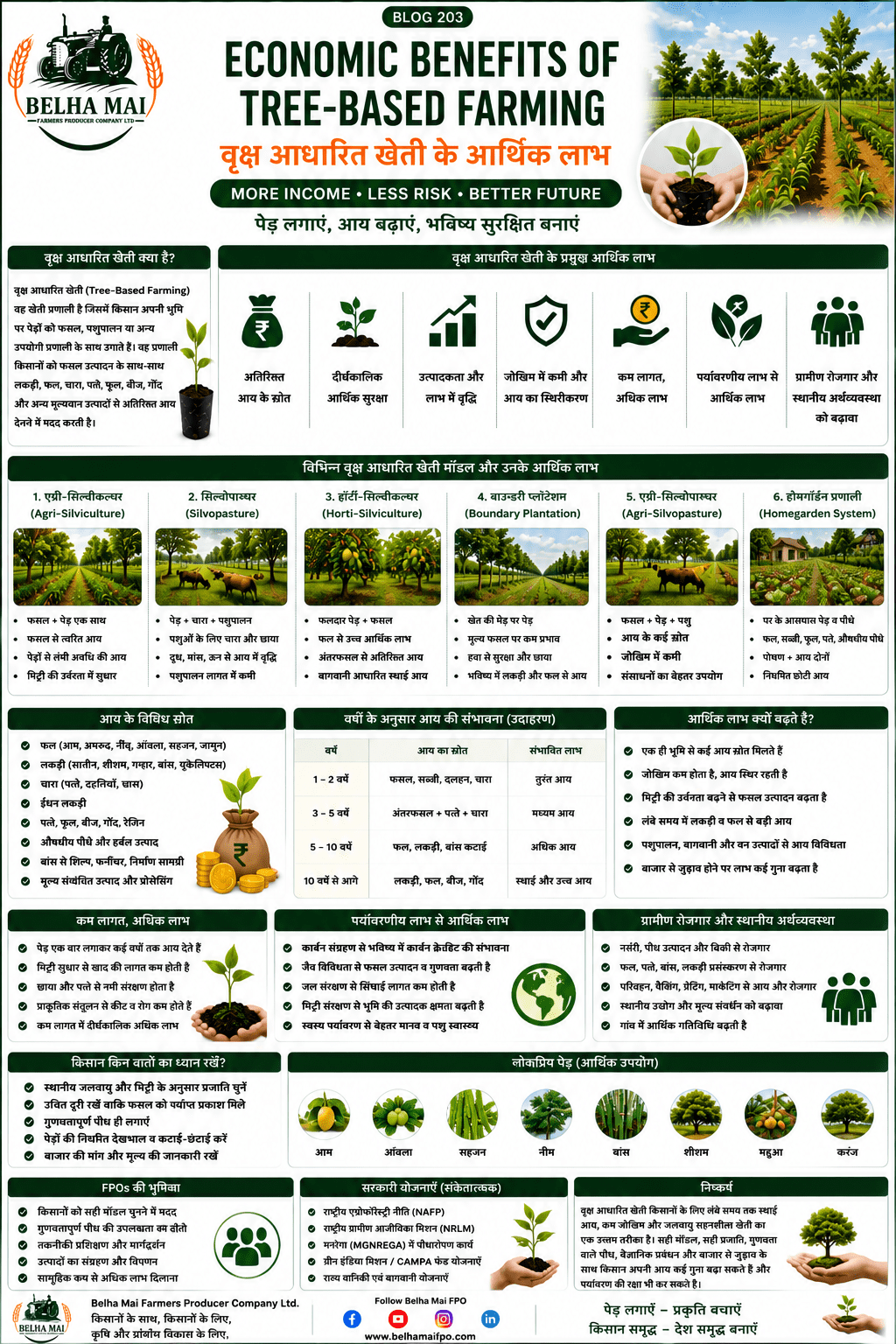
Tree-based farming is an important farming system where farmers grow trees along with crops, livestock or other farm activities to create multiple income sources from the same land. The economic benefits of tree-based farming are especially important for small and marginal farmers because trees can provide fruits, timber, fodder, fuelwood, bamboo, leaves, flowers, seeds, shade and long-term financial security. When planned properly, tree-based farming can reduce risk, improve farm productivity and create better income opportunities for rural families.
वृक्ष आधारित खेती एक महत्वपूर्ण कृषि प्रणाली है, जिसमें किसान पेड़ों को फसलों, पशुपालन या अन्य कृषि गतिविधियों के साथ उगाकर एक ही भूमि से कई आय स्रोत बनाते हैं। वृक्ष आधारित खेती के आर्थिक लाभ छोटे और सीमांत किसानों के लिए विशेष रूप से महत्वपूर्ण हैं क्योंकि पेड़ फल, लकड़ी, चारा, ईंधन लकड़ी, बांस, पत्तियां, फूल, बीज, छाया और दीर्घकालिक आर्थिक सुरक्षा दे सकते हैं। सही योजना के साथ वृक्ष आधारित खेती जोखिम कम कर सकती है, खेत की उत्पादकता सुधार सकती है और ग्रामीण परिवारों के लिए बेहतर आय अवसर बना सकती है।
Meaning of Tree-Based Farming
Tree-based farming means using trees as an important part of the farming system instead of keeping agriculture limited only to seasonal crops. Farmers may plant trees on boundaries, in rows, in orchards, with fodder crops, with livestock or as part of agroforestry models. The economic benefits of tree-based farming depend on tree species, spacing, market demand, crop combination, management and value addition. It is a long-term farming strategy, not just a plantation activity.
वृक्ष आधारित खेती का अर्थ है खेती प्रणाली में पेड़ों को महत्वपूर्ण हिस्सा बनाना, बजाय इसके कि कृषि केवल मौसमी फसलों तक सीमित रहे। किसान खेत की मेड़ पर, पंक्तियों में, बागानों में, चारा फसलों के साथ, पशुपालन के साथ या एग्रोफॉरेस्ट्री मॉडल के रूप में पेड़ लगा सकते हैं। वृक्ष आधारित खेती के आर्थिक लाभ पेड़ प्रजाति, दूरी, बाजार मांग, फसल संयोजन, प्रबंधन और मूल्य संवर्धन पर निर्भर करते हैं। यह केवल plantation गतिविधि नहीं, बल्कि दीर्घकालिक खेती रणनीति है।
Additional Income from the Same Land
One of the biggest economic benefits of tree-based farming is additional income from the same land. Farmers can continue seasonal crops and also earn from trees over time. Fruit trees provide seasonal income, timber trees provide long-term income, bamboo provides repeated harvest opportunities, and fodder trees support livestock income. This makes the farm more productive because the land generates income from more than one source.
वृक्ष आधारित खेती का सबसे बड़ा आर्थिक लाभ एक ही भूमि से अतिरिक्त आय है। किसान मौसमी फसलें जारी रख सकते हैं और समय के साथ पेड़ों से भी आय प्राप्त कर सकते हैं। फलदार पेड़ मौसमी आय देते हैं, लकड़ी वाले पेड़ दीर्घकालिक आय देते हैं, बांस बार-बार कटाई के अवसर देता है और चारा पेड़ पशुपालन आय को समर्थन देते हैं। इससे खेत अधिक उत्पादक बनता है क्योंकि भूमि एक से अधिक स्रोतों से आय देती है।
Long-Term Financial Security
Tree-based farming creates long-term financial security because many trees continue to provide benefits for several years. Fruit trees such as mango, amla, guava, lemon and jamun can generate income season after season. Timber and bamboo can act like a long-term savings asset for farmers. The economic benefits of tree-based farming become stronger when farmers plan tree harvest, market linkage and value addition in advance.
वृक्ष आधारित खेती दीर्घकालिक आर्थिक सुरक्षा बनाती है क्योंकि कई पेड़ कई वर्षों तक लाभ देते रहते हैं। आम, आंवला, अमरूद, नींबू और जामुन जैसे फलदार पेड़ मौसम दर मौसम आय दे सकते हैं। लकड़ी और बांस किसानों के लिए दीर्घकालिक बचत संपत्ति की तरह काम कर सकते हैं। जब किसान पेड़ों की कटाई, बाजार लिंक और मूल्य संवर्धन की पहले से योजना बनाते हैं, तो वृक्ष आधारित खेती के आर्थिक लाभ और मजबूत हो जाते हैं।
Income Diversification
Income diversification is one of the most practical economic benefits of tree-based farming. Farmers who depend only on one crop face higher risk from weather, pests, disease or price fall. Tree-based farming creates income from fruits, timber, fodder, bamboo, seeds, leaves, flowers and sometimes livestock products. This reduces dependence on a single crop and makes the household economy more stable.
आय विविधीकरण वृक्ष आधारित खेती का सबसे व्यावहारिक आर्थिक लाभ है। जो किसान केवल एक फसल पर निर्भर रहते हैं, उन्हें मौसम, कीट, रोग या मूल्य गिरावट से अधिक जोखिम होता है। वृक्ष आधारित खेती फल, लकड़ी, चारा, बांस, बीज, पत्तियां, फूल और कभी-कभी पशुधन उत्पादों से आय बनाती है। इससे एक फसल पर निर्भरता कम होती है और परिवार की अर्थव्यवस्था अधिक स्थिर बनती है।
Reduced Farming Risk
The economic benefits of tree-based farming include reduced farming risk. If a seasonal crop fails because of drought, flood, pest attack or low market price, farmers may still receive income from trees or tree-based products. Trees work as a risk cushion for farming families. This is very important in climate-affected agriculture where farmers need more than one source of income to remain financially safe.
वृक्ष आधारित खेती के आर्थिक लाभों में खेती जोखिम में कमी भी शामिल है। यदि मौसमी फसल सूखा, बाढ़, कीट आक्रमण या कम बाजार मूल्य के कारण खराब हो जाती है, तो किसान फिर भी पेड़ों या वृक्ष आधारित उत्पादों से आय प्राप्त कर सकते हैं। पेड़ किसान परिवारों के लिए जोखिम सुरक्षा की तरह काम करते हैं। जलवायु प्रभावित कृषि में यह बहुत महत्वपूर्ण है क्योंकि किसानों को आर्थिक रूप से सुरक्षित रहने के लिए एक से अधिक आय स्रोतों की आवश्यकता होती है।
Income from Fruit Trees
Fruit trees are an important part of tree-based farming because they provide regular seasonal income. Trees like mango, amla, guava, lemon, papaya, drumstick, jamun, ber and karonda can support farmer income when grown with proper management and market linkage. Fruit-based tree farming also creates opportunities for grading, processing, packaging and branding. FPOs can help farmers aggregate fruit produce and sell it in better markets.
फलदार पेड़ वृक्ष आधारित खेती का महत्वपूर्ण हिस्सा हैं क्योंकि वे नियमित मौसमी आय देते हैं। आम, आंवला, अमरूद, नींबू, पपीता, सहजन, जामुन, बेर और करौंदा जैसे पेड़ सही प्रबंधन और बाजार लिंक के साथ किसान आय को समर्थन दे सकते हैं। फल आधारित वृक्ष खेती ग्रेडिंग, प्रोसेसिंग, पैकेजिंग और ब्रांडिंग के अवसर भी बनाती है। FPOs किसानों के फल उत्पादन को एग्रीगेट करके बेहतर बाजारों में बेचने में मदद कर सकते हैं।
Income from Timber and Wood
Timber and wood are important sources of long-term income in tree-based farming. Trees like teak, shisham, eucalyptus, poplar, subabul and other locally suitable timber species can provide income after maturity, depending on legal rules and market conditions. Farmers should carefully check harvesting permissions and local regulations before planting timber trees. When managed properly, timber trees can become a long-term asset for farm families.
लकड़ी और टिम्बर वृक्ष आधारित खेती में दीर्घकालिक आय के महत्वपूर्ण स्रोत हैं। सागौन, शीशम, यूकेलिप्टस, पॉपलर, सुबबूल और अन्य स्थानीय उपयुक्त लकड़ी प्रजातियां परिपक्वता के बाद आय दे सकती हैं, जो कानूनी नियमों और बाजार स्थितियों पर निर्भर करती हैं। किसानों को लकड़ी वाले पेड़ लगाने से पहले कटाई अनुमति और स्थानीय नियमों की सावधानीपूर्वक जांच करनी चाहिए। सही प्रबंधन के साथ लकड़ी वाले पेड़ किसान परिवारों के लिए दीर्घकालिक संपत्ति बन सकते हैं।
Income from Bamboo
Bamboo is a strong option in tree-based farming because it has multiple uses and market opportunities. Bamboo can be used in construction, furniture, handicrafts, paper, packaging, fencing and industrial products. Farmers can plant bamboo on boundaries, wasteland, riverbanks or suitable farm areas. The economic benefits of tree-based farming become stronger when bamboo is linked with aggregation, processing and buyer networks through FPOs or rural enterprises.
बांस वृक्ष आधारित खेती में एक मजबूत विकल्प है क्योंकि इसके कई उपयोग और बाजार अवसर हैं। बांस का उपयोग निर्माण, फर्नीचर, हस्तशिल्प, कागज, पैकेजिंग, बाड़ और औद्योगिक उत्पादों में किया जा सकता है। किसान बांस को खेत की मेड़, खाली भूमि, नदी किनारे या उपयुक्त खेत क्षेत्रों में लगा सकते हैं। जब बांस को FPOs या ग्रामीण उद्यमों के माध्यम से एग्रीगेशन, प्रोसेसिंग और खरीदार नेटवर्क से जोड़ा जाता है, तो वृक्ष आधारित खेती के आर्थिक लाभ और मजबूत हो जाते हैं।
Income from Fodder Trees
Tree-based farming can provide economic benefits to livestock farmers through fodder trees and shade. Trees like subabul, drumstick and other suitable fodder species can support animal feed when managed properly. Fodder availability reduces pressure on purchased feed and supports dairy, goatery and livestock-based income. Shade from trees can also reduce heat stress in animals, which can indirectly support animal productivity.
वृक्ष आधारित खेती चारा पेड़ों और छाया के माध्यम से पशुपालक किसानों को आर्थिक लाभ दे सकती है। सुबबूल, सहजन और अन्य उपयुक्त चारा प्रजातियां सही प्रबंधन के साथ पशु चारे को समर्थन दे सकती हैं। चारा उपलब्धता खरीदे गए चारे पर निर्भरता कम करती है और डेयरी, बकरीपालन तथा पशुधन आधारित आय को समर्थन देती है। पेड़ों की छाया पशुओं में गर्मी तनाव कम कर सकती है, जिससे अप्रत्यक्ष रूप से पशु उत्पादकता को सहायता मिलती है।
Income from Medicinal and Useful Trees
Some tree-based farming systems can include medicinal, aromatic and multipurpose trees that provide leaves, seeds, bark, flowers or fruits. Neem, mahua, drumstick, amla and other locally suitable species can support herbal, nutritional or bio-input value chains. The economic benefits of tree-based farming increase when these products are collected, dried, processed and marketed properly. FPOs can help farmers build these value chains.
कुछ वृक्ष आधारित खेती प्रणालियों में औषधीय, सुगंधित और बहुउद्देश्यीय पेड़ शामिल हो सकते हैं, जो पत्तियां, बीज, छाल, फूल या फल देते हैं। नीम, महुआ, सहजन, आंवला और अन्य स्थानीय उपयुक्त प्रजातियां हर्बल, पोषण या जैविक इनपुट वैल्यू चेन को समर्थन दे सकती हैं। जब इन उत्पादों को सही तरीके से एकत्र, सुखाया, प्रोसेस और मार्केट किया जाता है, तो वृक्ष आधारित खेती के आर्थिक लाभ बढ़ते हैं। FPOs किसानों को ये वैल्यू चेन बनाने में मदद कर सकते हैं।
Lower Input Cost Over Time
Tree-based farming can reduce some input costs over time by improving soil health, adding organic matter, reducing erosion and improving water retention. Fallen leaves and biomass add nutrients and organic matter to the soil. Better soil health can reduce dependence on some external inputs when combined with good farming practices. The economic benefits of tree-based farming are not only from selling products, but also from reducing unnecessary costs.
वृक्ष आधारित खेती समय के साथ मिट्टी स्वास्थ्य सुधारकर, जैविक पदार्थ जोड़कर, कटाव कम करके और जल संरक्षण बढ़ाकर कुछ इनपुट लागत कम कर सकती है। गिरी हुई पत्तियां और बायोमास मिट्टी में पोषक तत्व और जैविक पदार्थ जोड़ते हैं। अच्छी खेती पद्धतियों के साथ बेहतर मिट्टी स्वास्थ्य कुछ बाहरी इनपुट पर निर्भरता कम कर सकता है। वृक्ष आधारित खेती के आर्थिक लाभ केवल उत्पाद बेचने से नहीं, बल्कि अनावश्यक लागत घटाने से भी मिलते हैं।
Better Soil and Better Productivity
Tree-based farming improves farm economics by supporting better soil and long-term productivity. Tree roots protect the soil, leaf litter improves organic matter and tree cover reduces erosion. Healthy soil supports better crop growth and more stable production. Over the years, this can improve the overall productivity of the farm. For small farmers, better soil health is a form of long-term economic security.
वृक्ष आधारित खेती बेहतर मिट्टी और दीर्घकालिक उत्पादकता को समर्थन देकर खेत की अर्थव्यवस्था सुधारती है। पेड़ों की जड़ें मिट्टी की रक्षा करती हैं, पत्तियों का गिरना जैविक पदार्थ बढ़ाता है और पेड़ आवरण कटाव कम करता है। स्वस्थ मिट्टी बेहतर फसल वृद्धि और अधिक स्थिर उत्पादन को समर्थन देती है। वर्षों में इससे खेत की कुल उत्पादकता सुधर सकती है। छोटे किसानों के लिए बेहतर मिट्टी स्वास्थ्य दीर्घकालिक आर्थिक सुरक्षा का रूप है।
Better Use of Land
One of the economic benefits of tree-based farming is better use of land. Farmers can use boundaries, bunds, corners, degraded patches and inter-row spaces for useful trees. This allows the farm to produce more value without stopping normal cropping in many cases. Boundary plantation and intercropping models are especially practical for small farmers because they use available space more efficiently.
वृक्ष आधारित खेती का एक आर्थिक लाभ भूमि का बेहतर उपयोग है। किसान खेत की मेड़, किनारे, खाली कोने, खराब हिस्से और पंक्तियों के बीच की जगह का उपयोग उपयोगी पेड़ों के लिए कर सकते हैं। इससे कई मामलों में सामान्य फसल को रोके बिना खेत से अधिक मूल्य प्राप्त किया जा सकता है। बाउंड्री प्लांटेशन और अंतर फसल मॉडल छोटे किसानों के लिए विशेष रूप से व्यावहारिक हैं क्योंकि वे उपलब्ध स्थान का अधिक प्रभावी उपयोग करते हैं।
Employment and Rural Enterprise
Tree-based farming can create employment and rural enterprise opportunities. Activities such as nursery raising, plantation, pruning, harvesting, grading, drying, processing, packaging and marketing can generate local work. Bamboo craft, fruit processing, herbal products, neem-based inputs and mahua-based products can create small rural businesses. FPOs can organize these activities and create collective economic benefits for farmers.
वृक्ष आधारित खेती रोजगार और ग्रामीण उद्यम अवसर बना सकती है। नर्सरी तैयार करना, plantation, छंटाई, कटाई, ग्रेडिंग, सुखाना, प्रोसेसिंग, पैकेजिंग और मार्केटिंग जैसी गतिविधियां स्थानीय रोजगार बना सकती हैं। बांस हस्तशिल्प, फल प्रोसेसिंग, हर्बल उत्पाद, नीम आधारित इनपुट और महुआ आधारित उत्पाद छोटे ग्रामीण व्यवसाय बना सकते हैं। FPOs इन गतिविधियों को संगठित करके किसानों के लिए सामूहिक आर्थिक लाभ बना सकते हैं।
Value Addition Opportunities
The economic benefits of tree-based farming increase when farmers and FPOs move beyond raw produce selling. Fruits can be processed into pulp, juice, powder, candy, dried slices or pickles. Bamboo can be converted into craft, furniture or utility products. Neem can support bio-input products. Mahua and other tree products can support rural value addition where legally and locally suitable. Value addition improves shelf life, market reach and profit potential.
जब किसान और FPOs कच्चे उत्पाद बेचने से आगे बढ़ते हैं, तो वृक्ष आधारित खेती के आर्थिक लाभ बढ़ते हैं। फलों को पल्प, जूस, पाउडर, कैंडी, सूखे स्लाइस या अचार में प्रोसेस किया जा सकता है। बांस को हस्तशिल्प, फर्नीचर या उपयोगी उत्पादों में बदला जा सकता है। नीम जैविक इनपुट उत्पादों को समर्थन दे सकता है। जहां कानूनी और स्थानीय रूप से उपयुक्त हो, महुआ और अन्य वृक्ष उत्पाद ग्रामीण मूल्य संवर्धन को समर्थन दे सकते हैं। मूल्य संवर्धन शेल्फ लाइफ, बाजार पहुंच और लाभ क्षमता बढ़ाता है।
Climate Risk Reduction and Economic Stability
Tree-based farming supports economic stability by reducing climate risk. Trees reduce heat stress, protect soil, improve water infiltration, support biodiversity and store carbon. These environmental benefits also have economic value because they help protect crop productivity and reduce losses. As climate uncertainty increases, the economic benefits of tree-based farming will become even more important for farmer livelihoods.
वृक्ष आधारित खेती जलवायु जोखिम कम करके आर्थिक स्थिरता को समर्थन देती है। पेड़ गर्मी तनाव कम करते हैं, मिट्टी की रक्षा करते हैं, पानी के मिट्टी में प्रवेश को सुधारते हैं, जैव विविधता को समर्थन देते हैं और कार्बन संग्रह करते हैं। इन पर्यावरणीय लाभों का आर्थिक मूल्य भी है क्योंकि ये फसल उत्पादकता की रक्षा और नुकसान कम करने में मदद करते हैं। जैसे-जैसे जलवायु अनिश्चितता बढ़ेगी, वृक्ष आधारित खेती के आर्थिक लाभ किसान आजीविका के लिए और महत्वपूर्ण होंगे।
Support for Carbon and Green Economy
Tree-based farming can create future opportunities in carbon and green economy models. Trees store carbon in biomass and soil, which may support carbon credit opportunities if proper measurement, verification and market systems are available. Farmers should not depend only on carbon income immediately, but they can see tree-based farming as a climate-smart investment. FPOs can play a future role in organizing farmers for carbon and sustainability-linked opportunities.
वृक्ष आधारित खेती कार्बन और हरित अर्थव्यवस्था मॉडल में भविष्य के अवसर बना सकती है। पेड़ बायोमास और मिट्टी में कार्बन संग्रह करते हैं, जिससे यदि सही मापन, सत्यापन और बाजार प्रणाली उपलब्ध हो तो कार्बन क्रेडिट अवसर बन सकते हैं। किसानों को तुरंत केवल कार्बन आय पर निर्भर नहीं रहना चाहिए, लेकिन वे वृक्ष आधारित खेती को जलवायु-स्मार्ट निवेश के रूप में देख सकते हैं। FPOs भविष्य में किसानों को कार्बन और sustainability-linked अवसरों के लिए संगठित करने में भूमिका निभा सकते हैं।
Tree-Based Farming for Small Farmers
The economic benefits of tree-based farming are very useful for small farmers when the model is carefully planned. Small farmers can plant trees on boundaries, bunds and unused spaces without reducing main crop area too much. Fruit trees, drumstick, bamboo, neem and other suitable species can provide additional income. The key is to choose species that match local climate, water availability, market demand and family needs.
वृक्ष आधारित खेती के आर्थिक लाभ छोटे किसानों के लिए बहुत उपयोगी हैं, यदि मॉडल सावधानीपूर्वक योजना के साथ बनाया जाए। छोटे किसान खेत की मेड़, किनारे और खाली जगहों पर पेड़ लगा सकते हैं, जिससे मुख्य फसल क्षेत्र बहुत अधिक कम नहीं होता। फलदार पेड़, सहजन, बांस, नीम और अन्य उपयुक्त प्रजातियां अतिरिक्त आय दे सकती हैं। मुख्य बात यह है कि ऐसी प्रजाति चुनी जाए जो स्थानीय जलवायु, पानी उपलब्धता, बाजार मांग और परिवार की जरूरत से मेल खाए।
Common Mistakes Farmers Should Avoid
Farmers should avoid common mistakes in tree-based farming such as planting wrong species, using poor-quality plants, ignoring spacing, not checking market demand, not understanding harvesting rules and planting trees without future income planning. Tree-based farming is long-term, so wrong decisions can affect farmers for many years. Proper planning, quality planting material and expert guidance are essential for economic success.
किसानों को वृक्ष आधारित खेती में सामान्य गलतियों से बचना चाहिए, जैसे गलत प्रजाति लगाना, खराब गुणवत्ता वाले पौधे उपयोग करना, दूरी की अनदेखी करना, बाजार मांग न देखना, कटाई नियम न समझना और भविष्य की आय योजना के बिना पेड़ लगाना। वृक्ष आधारित खेती दीर्घकालिक है, इसलिए गलत निर्णय किसानों को कई वर्षों तक प्रभावित कर सकते हैं। आर्थिक सफलता के लिए सही योजना, गुणवत्तापूर्ण पौध सामग्री और विशेषज्ञ मार्गदर्शन आवश्यक हैं।
Role of Quality Nurseries
Quality nurseries are essential for the economic benefits of tree-based farming. Poor tree seedlings may die, grow slowly or fail to provide expected income. Farmers should use healthy, disease-free and strong planting material from reliable nurseries. FPO-led nurseries and high-tech nurseries can supply quality plants for bamboo, neem, mahua, drumstick, mango, amla, guava, teak, shisham and other tree-based farming systems.
वृक्ष आधारित खेती के आर्थिक लाभ के लिए गुणवत्तापूर्ण नर्सरियां आवश्यक हैं। खराब वृक्ष पौधे मर सकते हैं, धीरे बढ़ सकते हैं या अपेक्षित आय देने में असफल हो सकते हैं। किसानों को विश्वसनीय नर्सरियों से स्वस्थ, रोग-मुक्त और मजबूत पौध सामग्री लेनी चाहिए। FPO आधारित नर्सरियां और हाई-टेक नर्सरियां बांस, नीम, महुआ, सहजन, आम, आंवला, अमरूद, सागौन, शीशम और अन्य वृक्ष आधारित खेती प्रणालियों के लिए गुणवत्तापूर्ण पौधे उपलब्ध करा सकती हैं।
Role of FPOs in Tree-Based Farming
FPOs can help farmers receive the full economic benefits of tree-based farming. An FPO can aggregate demand for plants, develop nurseries, provide training, guide species selection, support plantation planning and connect farmers with buyers. FPOs can also aggregate tree-based products and support processing, branding and marketing. This collective model can make tree-based farming more profitable and practical for small farmers.
FPOs किसानों को वृक्ष आधारित खेती के पूरे आर्थिक लाभ दिलाने में मदद कर सकते हैं। एक FPO पौधों की मांग एकत्र कर सकता है, नर्सरी विकसित कर सकता है, प्रशिक्षण दे सकता है, प्रजाति चयन में मार्गदर्शन कर सकता है, plantation planning में सहायता कर सकता है और किसानों को खरीदारों से जोड़ सकता है। FPOs वृक्ष आधारित उत्पादों को एग्रीगेट करके प्रोसेसिंग, ब्रांडिंग और मार्केटिंग को भी समर्थन दे सकते हैं। यह सामूहिक मॉडल वृक्ष आधारित खेती को छोटे किसानों के लिए अधिक लाभकारी और व्यावहारिक बना सकता है।
Tree-Based Farming and Value Chain Development
Tree-based farming becomes more profitable when linked with value chain development. Fruits, bamboo, timber, leaves, flowers, seeds and medicinal raw materials need collection, grading, storage, processing and marketing. If farmers only sell raw products individually, they may get lower prices. FPOs and rural enterprises can create value chains that help farmers receive better returns from tree-based products.
वृक्ष आधारित खेती तब अधिक लाभकारी होती है जब इसे वैल्यू चेन विकास से जोड़ा जाता है। फल, बांस, लकड़ी, पत्तियां, फूल, बीज और औषधीय कच्चे माल को संग्रह, ग्रेडिंग, भंडारण, प्रोसेसिंग और मार्केटिंग की आवश्यकता होती है। यदि किसान केवल कच्चे उत्पाद व्यक्तिगत रूप से बेचते हैं, तो उन्हें कम कीमत मिल सकती है। FPOs और ग्रामीण उद्यम ऐसी वैल्यू चेन बना सकते हैं, जिससे किसानों को वृक्ष आधारित उत्पादों से बेहतर लाभ मिले।
Belha Mai FPO Vision
Belha Mai Farmers Producer Company Ltd. believes that tree-based farming can become a strong pathway for farmer income, climate resilience and rural enterprise development. Trees like neem, mahua, bamboo, drumstick, mango, amla, guava and other locally suitable species can support both economic and environmental goals. Through quality nursery development, farmer training, plantation planning and market linkage, Belha Mai FPO aims to help farmers build long-term prosperity.
Belha Mai Farmers Producer Company Ltd. का मानना है कि वृक्ष आधारित खेती किसान आय, जलवायु सहनशीलता और ग्रामीण उद्यम विकास का मजबूत मार्ग बन सकती है। नीम, महुआ, बांस, सहजन, आम, आंवला, अमरूद और अन्य स्थानीय उपयुक्त प्रजातियां आर्थिक और पर्यावरणीय दोनों लक्ष्यों को समर्थन दे सकती हैं। गुणवत्तापूर्ण नर्सरी विकास, किसान प्रशिक्षण, plantation planning और बाजार लिंक के माध्यम से Belha Mai FPO किसानों को दीर्घकालिक समृद्धि बनाने में मदद करना चाहता है।
Conclusion
The economic benefits of tree-based farming are wide and long-term. It can provide additional income, reduce farming risk, improve soil health, support livestock, create value addition opportunities, generate rural employment and strengthen climate resilience. For farmers and FPOs, tree-based farming should be planned carefully with suitable species, quality planting material, proper spacing, legal awareness and strong market linkage. Trees on farms can become living assets that support both farmer prosperity and sustainable agriculture.
वृक्ष आधारित खेती के आर्थिक लाभ व्यापक और दीर्घकालिक हैं। यह अतिरिक्त आय दे सकती है, खेती जोखिम कम कर सकती है, मिट्टी स्वास्थ्य सुधार सकती है, पशुपालन को समर्थन दे सकती है, मूल्य संवर्धन अवसर बना सकती है, ग्रामीण रोजगार पैदा कर सकती है और जलवायु सहनशीलता मजबूत कर सकती है। किसानों और FPOs के लिए वृक्ष आधारित खेती को उपयुक्त प्रजाति, गुणवत्तापूर्ण पौध सामग्री, सही दूरी, कानूनी जानकारी और मजबूत बाजार लिंक के साथ सावधानीपूर्वक योजना बनाकर अपनाना चाहिए। खेतों में पेड़ जीवित संपत्ति बन सकते हैं, जो किसान समृद्धि और टिकाऊ कृषि दोनों को समर्थन देते हैं।
FAQ
What are the economic benefits of tree-based farming?
The economic benefits of tree-based farming include additional income, reduced risk, long-term financial security, fruit income, timber value, fodder support, bamboo income and value addition opportunities.
वृक्ष आधारित खेती के आर्थिक लाभों में अतिरिक्त आय, कम जोखिम, दीर्घकालिक आर्थिक सुरक्षा, फल आय, लकड़ी मूल्य, चारा समर्थन, बांस आय और मूल्य संवर्धन अवसर शामिल हैं।
How does tree-based farming increase farmer income?
Tree-based farming increases farmer income by creating multiple income sources from fruits, timber, bamboo, fodder, leaves, flowers, seeds and value-added products.
वृक्ष आधारित खेती फल, लकड़ी, बांस, चारा, पत्तियां, फूल, बीज और मूल्य संवर्धित उत्पादों से कई आय स्रोत बनाकर किसान आय बढ़ाती है।
Which trees are useful for tree-based farming?
Useful trees may include neem, mahua, bamboo, drumstick, mango, amla, guava, jamun, teak, shisham, subabul and other locally suitable species.
वृक्ष आधारित खेती के लिए नीम, महुआ, बांस, सहजन, आम, आंवला, अमरूद, जामुन, सागौन, शीशम, सुबबूल और अन्य स्थानीय उपयुक्त प्रजातियां उपयोगी हो सकती हैं।
Is tree-based farming suitable for small farmers?
Yes, tree-based farming is suitable for small farmers when trees are planted on boundaries, bunds, unused spaces or with proper spacing along with crops.
हां, वृक्ष आधारित खेती छोटे किसानों के लिए उपयुक्त है, यदि पेड़ों को खेत की मेड़, खाली जगह या फसलों के साथ सही दूरी पर लगाया जाए।
How can FPOs support tree-based farming?
FPOs can support tree-based farming by supplying quality plants, training farmers, aggregating products, creating value chains and linking farmers with better markets.
FPOs गुणवत्तापूर्ण पौधे उपलब्ध कराकर, किसानों को प्रशिक्षण देकर, उत्पादों को एग्रीगेट करके, वैल्यू चेन बनाकर और किसानों को बेहतर बाजारों से जोड़कर वृक्ष आधारित खेती को समर्थन दे सकते हैं।
Internal Links Section
👉 High-Tech Nursery in India: Complete Guide —https://belhamaifpo.com/agriculture/high-tech-nursery-in-india-complete-guide/
👉 What is Agroforestry and Its Benefits — https://belhamaifpo.com/agriculture/what-is-agroforestry-and-its-benefits/
👉 Role of Agroforestry in Climate Resilience — https://belhamaifpo.com/agriculture/role-of-agroforestry-in-climate-resilience/
👉 Best Agroforestry Models in India —https://belhamaifpo.com/agriculture/best-agroforestry-models-in-india/
👉 How Quality Planting Material Increases Yield — https://belhamaifpo.com/agriculture/how-quality-planting-material-increases-yield/
👉 Why small farmers struggle in India — https://belhamaifpo.com/agriculture/why-small-farmers-struggle-in-india/
👉 Belha Mai FPO Website — https://belhamaifpo.com/
External Authority Links
👉 Ministry of Agriculture & Farmers Welfare — https://agriwelfare.gov.in/
👉 ICAR — https://icar.org.in/
👉 National Horticulture Board — https://nhb.gov.in/
👉 MIDH — https://midh.gov.in/
👉 National Mission for a Green India — https://moef.gov.in/
Follow Belha Mai FPO for More Updates
Website: https://belhamaifpo.com/
Facebook: https://www.facebook.com/profile.php?id=61561043486818
YouTube: https://www.youtube.com/channel/UC9ZvojoTMCa7mU1-Q_Bh60A
LinkedIn:https://www.linkedin.com/in/abhay-singh-ab5568280/
Instagram:https://instagram.com/belhamaifpo
Belha Mai FPO is working to support farmers through better information, technology, market linkage, value addition, FPO awareness and rural development.