कार्बन खेती में मिट्टी परीक्षण की भूमिका
Introduction / परिचय
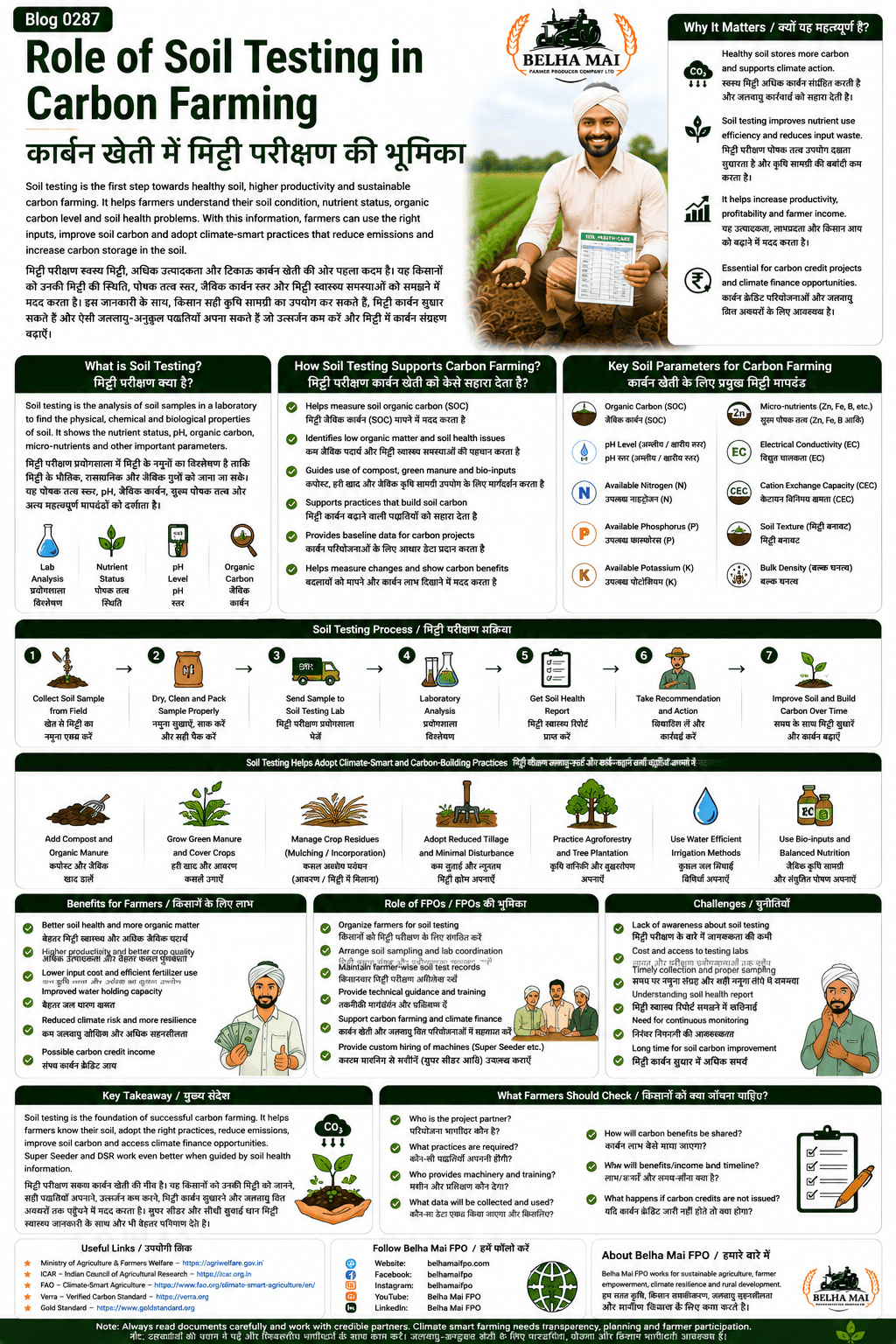
Role of soil testing in carbon farming is very important because carbon farming starts with understanding the soil. Farmers cannot improve soil carbon, soil health, nutrient balance or climate resilience without knowing the present condition of their soil. Soil testing helps farmers understand organic carbon, pH, nutrients, soil texture, salinity, micronutrients and other important parameters. This information helps farmers choose the right practices for carbon farming.
कार्बन खेती में मिट्टी परीक्षण की भूमिका बहुत महत्वपूर्ण है, क्योंकि कार्बन खेती मिट्टी को समझने से शुरू होती है। किसान अपनी मिट्टी की वर्तमान स्थिति जाने बिना मिट्टी कार्बन, मिट्टी स्वास्थ्य, पोषक संतुलन या जलवायु सहनशीलता में सुधार नहीं कर सकते। मिट्टी परीक्षण किसानों को जैविक कार्बन, अम्लीयता-क्षारीयता स्तर, पोषक तत्व, मिट्टी बनावट, लवणता, सूक्ष्म पोषक तत्व और अन्य महत्वपूर्ण मानकों को समझने में मदद करता है। यह जानकारी किसानों को कार्बन खेती के लिए सही पद्धतियाँ चुनने में सहायता देती है।
The topic Role of soil testing in carbon farming is especially important for FPOs because carbon farming projects need data, baseline records, monitoring and verification. If an FPO wants to work on soil carbon improvement, crop residue management, composting, bio-inputs, natural farming, organic farming or regenerative agriculture, soil testing becomes the first practical step. Without soil testing, farmers may adopt practices blindly, but with soil testing, they can adopt practices scientifically.
कार्बन खेती में मिट्टी परीक्षण की भूमिका किसान उत्पादक संगठनों के लिए विशेष रूप से महत्वपूर्ण है, क्योंकि कार्बन खेती परियोजनाओं को आँकड़े, आधार अभिलेख, निगरानी और सत्यापन की आवश्यकता होती है। यदि कोई किसान उत्पादक संगठन मिट्टी कार्बन सुधार, फसल अवशेष प्रबंधन, कंपोस्ट, जैविक कृषि सामग्री, प्राकृतिक खेती, जैविक खेती या पुनर्योजी कृषि पर काम करना चाहता है, तो मिट्टी परीक्षण पहला व्यावहारिक कदम बन जाता है। मिट्टी परीक्षण के बिना किसान पद्धतियाँ अनुमान से अपनाते हैं, लेकिन मिट्टी परीक्षण के साथ वे वैज्ञानिक रूप से पद्धतियाँ अपना सकते हैं।
What is Soil Testing? / मिट्टी परीक्षण क्या है?
Soil testing is the scientific analysis of soil samples to understand the physical, chemical and biological condition of soil. A soil test can show nutrient status, organic carbon level, pH level, electrical conductivity, major nutrients, micronutrients and other soil health indicators. It helps farmers know what their soil needs and what should be avoided.
मिट्टी परीक्षण मिट्टी के नमूनों का वैज्ञानिक विश्लेषण है, जिससे मिट्टी की भौतिक, रासायनिक और जैविक स्थिति को समझा जाता है। मिट्टी परीक्षण पोषक तत्व स्थिति, जैविक कार्बन स्तर, अम्लीयता-क्षारीयता स्तर, विद्युत चालकता, प्रमुख पोषक तत्व, सूक्ष्म पोषक तत्व और मिट्टी स्वास्थ्य के अन्य संकेतक दिखा सकता है। यह किसानों को बताता है कि उनकी मिट्टी को क्या चाहिए और किन चीजों से बचना चाहिए।
In Role of soil testing in carbon farming, soil testing is not only for fertilizer recommendation. It is also used to understand soil carbon, organic matter, nutrient balance, soil limitations and improvement potential. This makes soil testing useful for both productivity and climate action.
कार्बन खेती में मिट्टी परीक्षण की भूमिका में मिट्टी परीक्षण केवल उर्वरक सिफारिश के लिए नहीं होता। यह मिट्टी कार्बन, जैविक पदार्थ, पोषक संतुलन, मिट्टी की सीमाएँ और सुधार की संभावना समझने के लिए भी उपयोग होता है। इससे मिट्टी परीक्षण उत्पादकता और जलवायु कार्रवाई दोनों के लिए उपयोगी बनता है।
Why Soil Testing Matters in Carbon Farming / कार्बन खेती में मिट्टी परीक्षण क्यों महत्वपूर्ण है
Carbon farming aims to reduce emissions and increase carbon storage in soil and biomass. Soil testing helps identify how much organic carbon is already present in the soil and how much improvement may be possible. It also helps farmers choose the right practices such as composting, green manure, crop residue management, reduced tillage, crop rotation, bio-inputs and balanced nutrition.
कार्बन खेती का उद्देश्य उत्सर्जन घटाना और मिट्टी तथा जैवभार में कार्बन संग्रहण बढ़ाना है। मिट्टी परीक्षण यह पहचानने में मदद करता है कि मिट्टी में पहले से कितना जैविक कार्बन है और कितना सुधार संभव हो सकता है। यह किसानों को कंपोस्ट, हरी खाद, फसल अवशेष प्रबंधन, कम जुताई, फसल चक्र, जैविक कृषि सामग्री और संतुलित पोषण जैसी सही पद्धतियाँ चुनने में भी मदद करता है।
This is the main Role of soil testing in carbon farming. Soil testing provides the baseline. A baseline means the starting condition of the soil before the carbon farming project begins. Without baseline data, it becomes difficult to prove improvement later.
यही कार्बन खेती में मिट्टी परीक्षण की भूमिका का मुख्य भाग है। मिट्टी परीक्षण आधार स्थिति प्रदान करता है। आधार स्थिति का अर्थ है कार्बन खेती परियोजना शुरू होने से पहले मिट्टी की स्थिति। आधार आँकड़ों के बिना बाद में सुधार सिद्ध करना कठिन हो जाता है।
Soil Organic Carbon and Carbon Farming / मिट्टी जैविक कार्बन और कार्बन खेती
Soil organic carbon is one of the most important indicators in carbon farming. It shows how much carbon is stored in the organic matter of soil. Higher soil organic carbon usually means better soil structure, better water holding capacity, more microbial activity, better nutrient cycling and stronger climate resilience.
मिट्टी जैविक कार्बन कार्बन खेती के सबसे महत्वपूर्ण संकेतकों में से एक है। यह बताता है कि मिट्टी के जैविक पदार्थ में कितना कार्बन संग्रहित है। अधिक मिट्टी जैविक कार्बन का अर्थ सामान्यतः बेहतर मिट्टी बनावट, अधिक जल धारण क्षमता, अधिक सूक्ष्मजीव गतिविधि, बेहतर पोषक चक्र और मजबूत जलवायु सहनशीलता होता है।
In Role of soil testing in carbon farming, soil organic carbon measurement is important because it helps track whether sustainable practices are improving soil over time. If farmers add compost, manage residues, reduce excessive tillage and adopt crop rotation, soil organic carbon may gradually improve.
कार्बन खेती में मिट्टी परीक्षण की भूमिका में मिट्टी जैविक कार्बन मापन महत्वपूर्ण है, क्योंकि यह समय के साथ यह देखने में मदद करता है कि टिकाऊ पद्धतियाँ मिट्टी को सुधार रही हैं या नहीं। यदि किसान कंपोस्ट जोड़ते हैं, अवशेष प्रबंधन करते हैं, अत्यधिक जुताई कम करते हैं और फसल चक्र अपनाते हैं, तो मिट्टी जैविक कार्बन धीरे-धीरे सुधर सकता है।
Key Soil Parameters for Carbon Farming / कार्बन खेती के लिए मुख्य मिट्टी मानक
Organic carbon is the first important parameter. It shows the carbon status of soil. pH is another important parameter because very acidic or very alkaline soil can reduce nutrient availability and crop performance. Electrical conductivity shows salt level in soil, which is important for crop health and soil management.
जैविक कार्बन पहला महत्वपूर्ण मानक है। यह मिट्टी की कार्बन स्थिति दिखाता है। अम्लीयता-क्षारीयता स्तर दूसरा महत्वपूर्ण मानक है, क्योंकि बहुत अधिक अम्लीय या क्षारीय मिट्टी पोषक तत्व उपलब्धता और फसल प्रदर्शन को प्रभावित कर सकती है। विद्युत चालकता मिट्टी में लवणता स्तर बताती है, जो फसल स्वास्थ्य और मिट्टी प्रबंधन के लिए महत्वपूर्ण है।
Available nitrogen, phosphorus and potassium are also important because balanced nutrition improves crop growth and reduces nutrient waste. Micronutrients such as zinc, iron, boron and manganese also matter. In Role of soil testing in carbon farming, these parameters help farmers adopt balanced and efficient nutrient management.
उपलब्ध नाइट्रोजन, फॉस्फोरस और पोटैशियम भी महत्वपूर्ण हैं, क्योंकि संतुलित पोषण फसल वृद्धि सुधारता है और पोषक तत्वों की बर्बादी कम करता है। जिंक, आयरन, बोरॉन और मैंगनीज जैसे सूक्ष्म पोषक तत्व भी महत्वपूर्ण होते हैं। कार्बन खेती में मिट्टी परीक्षण की भूमिका में ये मानक किसानों को संतुलित और कुशल पोषक प्रबंधन अपनाने में मदद करते हैं।
How Soil Testing Supports Carbon Farming Practices / मिट्टी परीक्षण कार्बन खेती पद्धतियों को कैसे सहारा देता है
Soil testing helps farmers choose the right carbon-building practices. If soil organic carbon is low, farmers may be advised to add compost, farmyard manure, green manure and crop residues. If soil pH is not suitable, corrective measures may be suggested. If nutrients are imbalanced, balanced fertilizer and bio-input recommendations can be made.
मिट्टी परीक्षण किसानों को सही कार्बन बढ़ाने वाली पद्धतियाँ चुनने में मदद करता है। यदि मिट्टी जैविक कार्बन कम है, तो किसानों को कंपोस्ट, गोबर खाद, हरी खाद और फसल अवशेष जोड़ने की सलाह दी जा सकती है। यदि मिट्टी का अम्लीयता-क्षारीयता स्तर उपयुक्त नहीं है, तो सुधार उपाय सुझाए जा सकते हैं। यदि पोषक तत्व असंतुलित हैं, तो संतुलित उर्वरक और जैविक कृषि सामग्री की सिफारिश की जा सकती है।
This is a practical Role of soil testing in carbon farming because it prevents unnecessary input use. When farmers know the exact nutrient status of soil, they can avoid overuse of fertilizers. This reduces cost, reduces nutrient loss and may reduce emissions linked with inefficient input use.
यह कार्बन खेती में मिट्टी परीक्षण की भूमिका का व्यावहारिक भाग है क्योंकि यह अनावश्यक कृषि सामग्री उपयोग को रोकता है। जब किसानों को मिट्टी की सही पोषक स्थिति पता होती है, तो वे उर्वरकों के अधिक उपयोग से बच सकते हैं। इससे लागत घटती है, पोषक तत्व हानि कम होती है और अकुशल कृषि सामग्री उपयोग से जुड़े उत्सर्जन भी घट सकते हैं।
Soil Testing Process / मिट्टी परीक्षण प्रक्रिया
The first step is collecting soil samples properly. Samples should be taken from different points in the field and mixed to make a representative sample. The second step is drying, cleaning and packing the sample properly. The third step is sending the sample to a recognised soil testing laboratory.
पहला चरण मिट्टी नमूनों को सही तरीके से एकत्र करना है। खेत के अलग-अलग स्थानों से नमूने लेकर उन्हें मिलाया जाना चाहिए, ताकि प्रतिनिधि नमूना बन सके। दूसरा चरण नमूने को सुखाना, साफ करना और सही तरीके से पैक करना है। तीसरा चरण नमूने को मान्यता प्राप्त मिट्टी परीक्षण प्रयोगशाला भेजना है।
The fourth step is laboratory analysis. The fifth step is receiving the soil health report. The sixth step is understanding recommendations and taking action in the field. In Role of soil testing in carbon farming, soil testing is useful only when farmers actually use the recommendations in their farming practices.
चौथा चरण प्रयोगशाला विश्लेषण है। पाँचवाँ चरण मिट्टी स्वास्थ्य प्रतिवेदन प्राप्त करना है। छठा चरण सिफारिशों को समझना और खेत में कार्रवाई करना है। कार्बन खेती में मिट्टी परीक्षण की भूमिका में मिट्टी परीक्षण तभी उपयोगी है जब किसान वास्तव में सिफारिशों को अपनी खेती पद्धतियों में लागू करें।
Soil Testing and Baseline Data / मिट्टी परीक्षण और आधार आँकड़े
Baseline data means the starting condition of the farm before a project begins. In carbon farming, baseline data is very important because future improvements are compared with the starting condition. Soil testing provides scientific baseline data for soil organic carbon, nutrients and soil health.
आधार आँकड़े का अर्थ है परियोजना शुरू होने से पहले खेत की प्रारंभिक स्थिति। कार्बन खेती में आधार आँकड़े बहुत महत्वपूर्ण हैं क्योंकि भविष्य के सुधार की तुलना प्रारंभिक स्थिति से की जाती है। मिट्टी परीक्षण मिट्टी जैविक कार्बन, पोषक तत्वों और मिट्टी स्वास्थ्य के लिए वैज्ञानिक आधार आँकड़े प्रदान करता है।
This makes Role of soil testing in carbon farming essential for carbon credit projects. If a project claims that soil carbon has increased, it needs earlier soil data and later soil data to compare change. Without this comparison, carbon benefits become difficult to prove.
इससे कार्बन खेती में मिट्टी परीक्षण की भूमिका कार्बन क्रेडिट परियोजनाओं के लिए आवश्यक हो जाती है। यदि कोई परियोजना दावा करती है कि मिट्टी कार्बन बढ़ा है, तो उसे परिवर्तन की तुलना के लिए पुराने और नए मिट्टी आँकड़ों की आवश्यकता होती है। इस तुलना के बिना कार्बन लाभ सिद्ध करना कठिन हो जाता है।
Soil Testing and MRV / मिट्टी परीक्षण और मापन-प्रतिवेदन-सत्यापन
MRV means Measurement, Reporting and Verification. Soil testing supports the measurement part of MRV. It gives scientific data that can be used in project reports and verification. If soil testing is done properly and records are maintained, it can strengthen the credibility of a carbon farming project.
मापन-प्रतिवेदन-सत्यापन का अर्थ है मापन, प्रतिवेदन और सत्यापन। मिट्टी परीक्षण मापन भाग को सहारा देता है। यह वैज्ञानिक आँकड़े देता है जिनका उपयोग परियोजना प्रतिवेदन और सत्यापन में किया जा सकता है। यदि मिट्टी परीक्षण सही तरीके से किया जाए और अभिलेख रखे जाएँ, तो यह कार्बन खेती परियोजना की विश्वसनीयता को मजबूत कर सकता है।
In Role of soil testing in carbon farming, MRV is important because buyers and project partners need proof. They need evidence that climate-friendly practices have created measurable carbon benefits. Soil testing is one of the strongest forms of evidence for soil carbon projects.
कार्बन खेती में मिट्टी परीक्षण की भूमिका में मापन-प्रतिवेदन-सत्यापन महत्वपूर्ण है क्योंकि खरीदारों और परियोजना भागीदारों को प्रमाण चाहिए। उन्हें यह प्रमाण चाहिए कि जलवायु-अनुकूल पद्धतियों से मापने योग्य कार्बन लाभ बने हैं। मिट्टी परीक्षण मिट्टी कार्बन परियोजनाओं के लिए सबसे मजबूत प्रमाणों में से एक है।
How Soil Testing Improves Input Efficiency / मिट्टी परीक्षण कृषि सामग्री उपयोग क्षमता कैसे सुधारता है
Soil testing helps farmers apply nutrients based on need. If the soil already has enough of a nutrient, farmers can avoid unnecessary application. If a nutrient is deficient, they can apply it correctly. This improves crop growth and reduces wastage.
मिट्टी परीक्षण किसानों को आवश्यकता के आधार पर पोषक तत्व लगाने में मदद करता है। यदि मिट्टी में किसी पोषक तत्व की पर्याप्त मात्रा है, तो किसान अनावश्यक उपयोग से बच सकते हैं। यदि कोई पोषक तत्व कम है, तो उसे सही मात्रा में दिया जा सकता है। इससे फसल वृद्धि सुधरती है और बर्बादी कम होती है।
This is another important Role of soil testing in carbon farming because inefficient fertilizer use can increase cost and emissions. Balanced nutrient management can reduce unnecessary input use, support healthy crops and improve soil carbon-building practices.
यह कार्बन खेती में मिट्टी परीक्षण की भूमिका का एक और महत्वपूर्ण हिस्सा है क्योंकि अकुशल उर्वरक उपयोग लागत और उत्सर्जन बढ़ा सकता है। संतुलित पोषक प्रबंधन अनावश्यक कृषि सामग्री उपयोग घटा सकता है, स्वस्थ फसलों को सहारा दे सकता है और मिट्टी कार्बन बढ़ाने वाली पद्धतियों को सुधार सकता है।
Soil Testing and Crop Residue Management / मिट्टी परीक्षण और फसल अवशेष प्रबंधन
Crop residue management is a key carbon farming practice. Soil testing helps farmers understand whether residues, compost or organic manure are improving soil organic carbon and nutrient status. If residues are returned to the soil regularly, soil testing can show gradual improvement.
फसल अवशेष प्रबंधन कार्बन खेती की मुख्य पद्धति है। मिट्टी परीक्षण किसानों को यह समझने में मदद करता है कि अवशेष, कंपोस्ट या जैविक खाद मिट्टी जैविक कार्बन और पोषक स्थिति सुधार रहे हैं या नहीं। यदि अवशेषों को नियमित रूप से मिट्टी में लौटाया जाता है, तो मिट्टी परीक्षण धीरे-धीरे सुधार दिखा सकता है।
In Role of soil testing in carbon farming, this connection is very practical. Farmers can see evidence that residue management is not just an environmental activity, but a soil improvement activity. This increases farmer confidence.
कार्बन खेती में मिट्टी परीक्षण की भूमिका में यह संबंध बहुत व्यावहारिक है। किसान प्रमाण देख सकते हैं कि फसल अवशेष प्रबंधन केवल पर्यावरणीय गतिविधि नहीं, बल्कि मिट्टी सुधार गतिविधि है। इससे किसान विश्वास बढ़ता है।
Soil Testing and Water-Saving Farming / मिट्टी परीक्षण और जल बचत कृषि
Healthy soil with good organic matter can hold more water. Soil testing helps identify whether soil organic carbon and soil structure are improving. When farmers improve organic matter, the soil can retain more moisture and reduce irrigation need.
अच्छे जैविक पदार्थ वाली स्वस्थ मिट्टी अधिक पानी रोक सकती है। मिट्टी परीक्षण यह पहचानने में मदद करता है कि मिट्टी जैविक कार्बन और मिट्टी बनावट सुधर रही है या नहीं। जब किसान जैविक पदार्थ सुधारते हैं, तो मिट्टी अधिक नमी रोक सकती है और सिंचाई की आवश्यकता कम हो सकती है।
This is important in Role of soil testing in carbon farming because water-saving and carbon farming are connected. Better soil carbon supports water retention, and better water management supports climate resilience.
यह कार्बन खेती में मिट्टी परीक्षण की भूमिका में महत्वपूर्ण है क्योंकि जल बचत और कार्बन खेती आपस में जुड़े हैं। बेहतर मिट्टी कार्बन जल धारण क्षमता को सहारा देता है और बेहतर जल प्रबंधन जलवायु सहनशीलता को सहारा देता है।
Benefits for Farmers / किसानों के लिए लाभ
Farmers benefit from soil testing through better nutrient management, lower input cost, improved soil health, higher productivity, better crop quality, improved water holding capacity and reduced climate risk. Soil testing also helps farmers understand the long-term value of soil organic carbon.
किसानों को मिट्टी परीक्षण से बेहतर पोषक प्रबंधन, कम कृषि लागत, बेहतर मिट्टी स्वास्थ्य, अधिक उत्पादकता, बेहतर फसल गुणवत्ता, अधिक जल धारण क्षमता और कम जलवायु जोखिम के रूप में लाभ मिल सकता है। मिट्टी परीक्षण किसानों को मिट्टी जैविक कार्बन के दीर्घकालिक मूल्य को समझने में भी मदद करता है।
In Role of soil testing in carbon farming, farmers may also benefit from future carbon credit opportunities if soil carbon improvement is properly measured and verified. However, farmers should remember that carbon income is possible additional income, not guaranteed income.
कार्बन खेती में मिट्टी परीक्षण की भूमिका में यदि मिट्टी कार्बन सुधार का सही मापन और सत्यापन होता है, तो किसानों को भविष्य के कार्बन क्रेडिट अवसरों से भी लाभ मिल सकता है। हालाँकि किसानों को याद रखना चाहिए कि कार्बन आय संभावित अतिरिक्त आय है, निश्चित आय नहीं।
Role of FPOs / किसान उत्पादक संगठनों की भूमिका
FPOs can play a strong role in soil testing for carbon farming. They can organise farmers, collect soil samples, coordinate with laboratories, maintain farmer-wise records, explain soil health reports, arrange training and guide farmers towards carbon-building practices.
किसान उत्पादक संगठन कार्बन खेती के लिए मिट्टी परीक्षण में मजबूत भूमिका निभा सकते हैं। वे किसानों को संगठित कर सकते हैं, मिट्टी नमूने एकत्र कर सकते हैं, प्रयोगशालाओं से समन्वय कर सकते हैं, किसानवार अभिलेख रख सकते हैं, मिट्टी स्वास्थ्य प्रतिवेदन समझा सकते हैं, प्रशिक्षण आयोजित कर सकते हैं और किसानों को कार्बन बढ़ाने वाली पद्धतियों की ओर मार्गदर्शन दे सकते हैं।
FPOs can also use soil testing data to prepare climate finance proposals, carbon farming pilots, soil health programmes and sustainable agriculture projects. This makes Role of soil testing in carbon farming very important for FPO-led climate action.
किसान उत्पादक संगठन मिट्टी परीक्षण आँकड़ों का उपयोग जलवायु वित्त प्रस्ताव, कार्बन खेती प्रायोगिक परियोजना, मिट्टी स्वास्थ्य कार्यक्रम और टिकाऊ कृषि परियोजनाएँ तैयार करने में भी कर सकते हैं। इससे कार्बन खेती में मिट्टी परीक्षण की भूमिका किसान उत्पादक संगठन आधारित जलवायु कार्रवाई के लिए बहुत महत्वपूर्ण बनती है।
Challenges in Soil Testing / मिट्टी परीक्षण की चुनौतियाँ
The first challenge is lack of awareness. Many farmers do not test soil regularly and depend on traditional fertilizer habits. The second challenge is sample collection quality. If the soil sample is not collected properly, the report may not reflect the real condition of the field.
पहली चुनौती जागरूकता की कमी है। कई किसान नियमित रूप से मिट्टी परीक्षण नहीं कराते और पारंपरिक उर्वरक आदतों पर निर्भर रहते हैं। दूसरी चुनौती नमूना संग्रह की गुणवत्ता है। यदि मिट्टी नमूना सही तरीके से नहीं लिया गया, तो रिपोर्ट खेत की वास्तविक स्थिति नहीं दिखा सकती।
The third challenge in Role of soil testing in carbon farming is understanding the report. Farmers may receive a soil health report but may not know how to use it. The fourth challenge is regular monitoring because soil carbon improvement takes time and needs repeated testing.
कार्बन खेती में मिट्टी परीक्षण की भूमिका में तीसरी चुनौती रिपोर्ट को समझना है। किसानों को मिट्टी स्वास्थ्य प्रतिवेदन मिल सकता है, लेकिन वे उसे उपयोग करना नहीं जानते। चौथी चुनौती नियमित निगरानी है, क्योंकि मिट्टी कार्बन सुधार में समय लगता है और बार-बार परीक्षण की आवश्यकता होती है।
What Farmers Should Check Before Joining / जुड़ने से पहले किसान क्या जाँचें
Before joining any soil carbon or carbon farming project, farmers should ask who will collect soil samples, which laboratory will test the samples, what parameters will be tested, who will pay the cost, who will keep the soil data and how the results will be used.
किसी भी मिट्टी कार्बन या कार्बन खेती परियोजना से जुड़ने से पहले किसानों को पूछना चाहिए कि मिट्टी नमूने कौन एकत्र करेगा, कौन सी प्रयोगशाला परीक्षण करेगी, कौन से मानक जाँचे जाएँगे, लागत कौन देगा, मिट्टी आँकड़े किसके पास रहेंगे और परिणामों का उपयोग कैसे होगा।
Farmers should also ask how carbon benefits will be calculated, whether soil testing will be repeated, how income will be shared, what happens if carbon credits are not issued and whether farmer consent is clearly recorded. These questions make Role of soil testing in carbon farming safer and more transparent.
किसानों को यह भी पूछना चाहिए कि कार्बन लाभ की गणना कैसे होगी, क्या मिट्टी परीक्षण दोबारा होगा, आय कैसे बाँटी जाएगी, कार्बन क्रेडिट जारी न होने पर क्या होगा और क्या किसान सहमति स्पष्ट रूप से दर्ज है। ये प्रश्न कार्बन खेती में मिट्टी परीक्षण की भूमिका को अधिक सुरक्षित और पारदर्शी बनाते हैं।
Practical Model for Indian FPOs / भारतीय किसान उत्पादक संगठनों के लिए व्यावहारिक मॉडल
A practical model can begin with soil testing of 500 to 1,000 farmers. The FPO can select villages, collect farmer details, map land area, take soil samples, send samples to a recognised lab, prepare farmer-wise soil health records and organise training based on the results.
एक व्यावहारिक मॉडल पाँच सौ से एक हजार किसानों के मिट्टी परीक्षण से शुरू हो सकता है। किसान उत्पादक संगठन गाँवों का चयन कर सकता है, किसान विवरण एकत्र कर सकता है, भूमि क्षेत्र दर्ज कर सकता है, मिट्टी नमूने ले सकता है, नमूने मान्यता प्राप्त प्रयोगशाला भेज सकता है, किसानवार मिट्टी स्वास्थ्य अभिलेख बना सकता है और परिणामों के आधार पर प्रशिक्षण आयोजित कर सकता है।
After soil testing, the FPO can promote composting, crop residue management, green manure, reduced tillage, balanced nutrient management, bio-inputs, agroforestry and water-saving practices. If soil carbon improvement is measurable over time, the FPO can work with credible technical partners to explore carbon credit or climate finance opportunities.
मिट्टी परीक्षण के बाद किसान उत्पादक संगठन कंपोस्ट, फसल अवशेष प्रबंधन, हरी खाद, कम जुताई, संतुलित पोषक प्रबंधन, जैविक कृषि सामग्री, कृषि वानिकी और जल बचत पद्धतियों को बढ़ावा दे सकता है। यदि समय के साथ मिट्टी कार्बन सुधार मापने योग्य हो, तो संगठन विश्वसनीय तकनीकी भागीदारों के साथ कार्बन क्रेडिट या जलवायु वित्त अवसरों की संभावना देख सकता है।
Conclusion / निष्कर्ष
Role of soil testing in carbon farming can be explained in one simple line: soil testing is the foundation of scientific carbon farming. It helps farmers understand their soil, create baseline data, choose the right practices, reduce unnecessary inputs, improve soil carbon and support future carbon credit opportunities.
कार्बन खेती में मिट्टी परीक्षण की भूमिका को एक सरल वाक्य में समझाया जा सकता है: मिट्टी परीक्षण वैज्ञानिक कार्बन खेती की नींव है। यह किसानों को अपनी मिट्टी समझने, आधार आँकड़े बनाने, सही पद्धतियाँ चुनने, अनावश्यक कृषि सामग्री कम करने, मिट्टी कार्बन सुधारने और भविष्य के कार्बन क्रेडिट अवसरों को सहारा देने में मदद करता है।
For farmers, soil testing should be seen as an investment in better farming. For FPOs, Role of soil testing in carbon farming creates an opportunity to build farmer data systems, improve member services, prepare climate finance proposals and connect sustainable farming with verified carbon benefits.
किसानों के लिए मिट्टी परीक्षण को बेहतर खेती में निवेश के रूप में देखना चाहिए। किसान उत्पादक संगठनों के लिए कार्बन खेती में मिट्टी परीक्षण की भूमिका किसान आँकड़ा व्यवस्था बनाने, सदस्य सेवाएँ सुधारने, जलवायु वित्त प्रस्ताव तैयार करने और टिकाऊ खेती को सत्यापित कार्बन लाभों से जोड़ने का अवसर देती है।
Frequently Asked Questions (FAQs) / अक्सर पूछे जाने वाले प्रश्न
1. What is the Role of soil testing in carbon farming?
Role of soil testing in carbon farming is to provide soil health data, measure soil organic carbon, create baseline records, guide carbon-building practices and support MRV for carbon projects.
1. कार्बन खेती में मिट्टी परीक्षण की भूमिका क्या है?
कार्बन खेती में मिट्टी परीक्षण की भूमिका मिट्टी स्वास्थ्य आँकड़े देने, मिट्टी जैविक कार्बन मापने, आधार अभिलेख बनाने, कार्बन बढ़ाने वाली पद्धतियों का मार्गदर्शन करने और कार्बन परियोजनाओं के मापन-प्रतिवेदन-सत्यापन को सहारा देने की है।
2. Why is soil organic carbon important?
Soil organic carbon is important because it improves soil structure, water holding capacity, nutrient cycling, microbial activity, crop resilience and long-term soil fertility.
2. मिट्टी जैविक कार्बन क्यों महत्वपूर्ण है?
मिट्टी जैविक कार्बन महत्वपूर्ण है क्योंकि यह मिट्टी बनावट, जल धारण क्षमता, पोषक चक्र, सूक्ष्मजीव गतिविधि, फसल सहनशीलता और दीर्घकालिक मिट्टी उर्वरता सुधारता है।
3. Can soil testing help generate carbon credits?
Soil testing can support carbon credit projects by providing baseline and monitoring data, but carbon credits require proper measurement, verification, certification, credit issuance and buyer sale.
3. क्या मिट्टी परीक्षण कार्बन क्रेडिट बनाने में मदद कर सकता है?
मिट्टी परीक्षण आधार और निगरानी आँकड़े देकर कार्बन क्रेडिट परियोजनाओं को सहारा दे सकता है, लेकिन कार्बन क्रेडिट के लिए सही मापन, सत्यापन, प्रमाणन, क्रेडिट जारी होना और खरीदार बिक्री आवश्यक है।
4. How often should farmers test soil for carbon farming?
Farmers should test soil before starting a carbon farming project and repeat testing periodically as advised by the project methodology, soil experts or technical partner.
4. कार्बन खेती के लिए किसानों को कितनी बार मिट्टी परीक्षण कराना चाहिए?
किसानों को कार्बन खेती परियोजना शुरू करने से पहले मिट्टी परीक्षण कराना चाहिए और परियोजना पद्धति, मिट्टी विशेषज्ञ या तकनीकी भागीदार की सलाह के अनुसार समय-समय पर परीक्षण दोहराना चाहिए।
5. How can FPOs help in soil testing?
FPOs can organise soil sampling, coordinate with labs, maintain farmer-wise records, explain soil health reports, arrange training and connect soil testing with carbon farming or climate finance projects.
5. किसान उत्पादक संगठन मिट्टी परीक्षण में कैसे मदद कर सकते हैं?
किसान उत्पादक संगठन मिट्टी नमूना संग्रह आयोजित कर सकते हैं, प्रयोगशालाओं से समन्वय कर सकते हैं, किसानवार अभिलेख रख सकते हैं, मिट्टी स्वास्थ्य प्रतिवेदन समझा सकते हैं, प्रशिक्षण आयोजित कर सकते हैं और मिट्टी परीक्षण को कार्बन खेती या जलवायु वित्त परियोजनाओं से जोड़ सकते हैं।
Internal Links / आंतरिक लिंक
👉 Super Seeder, DSR, and Low-Emission Agriculture — https://belhamaifpo.com/agriculture/super-seeder-dsr-and-low-emission-agriculture/
👉 Crop Residue Management and Carbon Benefits — https://belhamaifpo.com/agriculture/crop-residue-management-and-carbon-benefits/
👉 Water-Saving Farming and Carbon Reduction — https://belhamaifpo.com/agriculture/water-saving-farming-and-carbon-reduction/
👉 Climate-Smart Agriculture and Carbon Farming — https://belhamaifpo.com/agriculture/climate-smart-agriculture-and-carbon-farming/
👉 Sustainable Agriculture and Climate Finance — https://belhamaifpo.com/agriculture/sustainable-agriculture-and-climate-finance/
👉 Soil Carbon and Sustainable Farming — https://belhamaifpo.com/agriculture/soil-carbon-and-sustainable-farming/
👉 Carbon Sequestration in Agriculture Explained — https://belhamaifpo.com/agriculture/carbon-sequestration-in-agriculture-explained/
👉 How to Measure Carbon Reduction on Farms — https://belhamaifpo.com/agriculture/how-to-measure-carbon-reduction-on-farms/
👉 MRV in Carbon Credit Projects: What Farmers Should Know — https://belhamaifpo.com/agriculture/mrv-in-carbon-credit-projects-what-farmers-should-know/
👉 Carbon Farming in India: Complete Guide — https://belhamaifpo.com/agriculture/carbon-farming-in-india-complete-guide/
👉 Role of FPOs in Carbon Credit Projects — https://belhamaifpo.com/agriculture/role-of-fpos-in-carbon-credit-projects/
👉 Farmer Producer Organizations Complete Guide — https://belhamaifpo.com/farmer-producer-organisation/farmer-producer-organizations-fpos/
👉 SDGs & Our FPO — https://belhamaifpo.com/sdg-goals/
External Authority Links / बाहरी प्राधिकरण लिंक
👉 Ministry of Agriculture & Farmers Welfare — https://agriwelfare.gov.in/
👉 Soil Health Card Scheme — https://soilhealth.dac.gov.in/
👉 ICAR — https://icar.org.in/
👉 FAO Climate-Smart Agriculture — https://www.fao.org/climate-smart-agriculture/en/
👉 FAO Soils Portal — https://www.fao.org/soils-portal/en/
👉 UNFCCC — https://unfccc.int/
👉 Verra Verified Carbon Standard — https://verra.org/programs/verified-carbon-standard/
👉 Gold Standard — https://www.goldstandard.org/
Follow Belha Mai FPO for More Updates / अधिक अपडेट के लिए Belha Mai FPO को फॉलो करें
👉 Website — https://belhamaifpo.com/
👉 Facebook — https://www.facebook.com/profile.php?id=61561043486818
👉 Instagram — https://instagram.com/belhamaifpo
👉 LinkedIn — https://www.linkedin.com/in/abhay-singh-ab5568280/
👉 YouTube — https://www.youtube.com/channel/UC9ZvojoTMCa7mU1-Q_Bh60A