क्या भारतीय किसानों के लिए कार्बन क्रेडिट आय वास्तविक है?
Introduction / परिचय
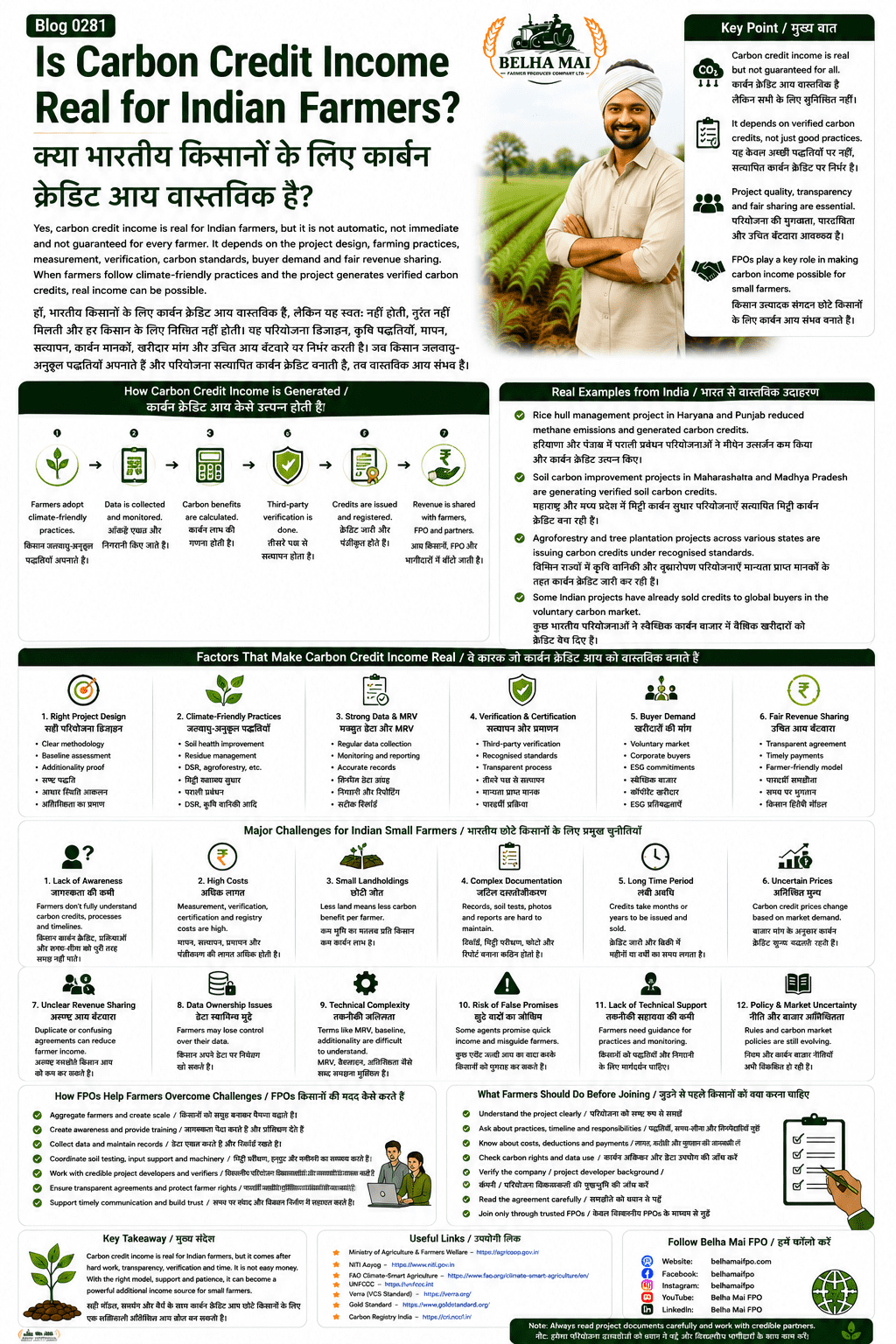
Is carbon credit income real for Indian farmers? Yes, carbon credit income can be real for Indian farmers, but it is not automatic, not immediate, and not guaranteed for every farmer. Carbon credit income depends on project design, farmer participation, climate-friendly practices, proper measurement, reporting, verification, certification, buyer demand, market price, and fair revenue sharing. Farmers must understand that carbon credit income comes only when a project creates verified climate benefits and those verified credits are sold.
क्या भारतीय किसानों के लिए कार्बन क्रेडिट आय वास्तविक है? हाँ, भारतीय किसानों के लिए कार्बन क्रेडिट आय वास्तविक हो सकती है, लेकिन यह अपने आप नहीं मिलती, तुरंत नहीं मिलती और हर किसान के लिए निश्चित नहीं होती। कार्बन क्रेडिट आय परियोजना रूपरेखा, किसान भागीदारी, जलवायु-अनुकूल पद्धतियों, सही मापन, प्रतिवेदन, सत्यापन, प्रमाणन, खरीदार मांग, बाज़ार मूल्य और उचित आय बँटवारे पर निर्भर करती है। किसानों को समझना चाहिए कि कार्बन क्रेडिट आय तभी आती है जब परियोजना सत्यापित जलवायु लाभ बनाती है और वे सत्यापित क्रेडिट बेचे जाते हैं।
The question Is carbon credit income real for Indian farmers? is important because many farmers and FPOs hear about carbon credits but do not know the real process. Some people present carbon credits like easy money, while the reality is different. Carbon credit income is possible, but it needs patience, data, long-term practice adoption, credible partners, and transparent agreements.
क्या भारतीय किसानों के लिए कार्बन क्रेडिट आय वास्तविक है? यह प्रश्न महत्वपूर्ण है क्योंकि बहुत से किसान और किसान उत्पादक संगठन कार्बन क्रेडिट के बारे में सुनते हैं, लेकिन वास्तविक प्रक्रिया नहीं जानते। कुछ लोग कार्बन क्रेडिट को आसान धन की तरह प्रस्तुत करते हैं, जबकि वास्तविकता अलग है। कार्बन क्रेडिट आय संभव है, लेकिन इसके लिए धैर्य, आँकड़े, दीर्घकालिक पद्धति अपनाना, विश्वसनीय भागीदार और पारदर्शी समझौते आवश्यक हैं।
What Does Carbon Credit Income Mean? / कार्बन क्रेडिट आय का अर्थ क्या है?
Carbon credit income means the money that may come from the sale of verified carbon credits generated through climate-friendly farming practices. These practices may include soil carbon improvement, tree plantation, agroforestry, crop residue management, Direct Seeded Rice, water-saving agriculture, composting, organic farming, natural farming, bio-inputs, and regenerative agriculture.
कार्बन क्रेडिट आय का अर्थ उस धन से है जो जलवायु-अनुकूल कृषि पद्धतियों से बने सत्यापित कार्बन क्रेडिट की बिक्री से आ सकता है। इन पद्धतियों में मिट्टी कार्बन सुधार, वृक्षारोपण, कृषि वानिकी, फसल अवशेष प्रबंधन, सीधी बुवाई धान, जल बचत कृषि, कंपोस्ट, जैविक खेती, प्राकृतिक खेती, जैविक कृषि सामग्री और पुनर्योजी कृषि शामिल हो सकती हैं।
In simple terms, Is carbon credit income real for Indian farmers? depends on whether the farming activity creates measurable climate benefit. If a farmer reduces emissions or increases carbon storage, and the project proves this through verification, carbon credits may be issued. After sale, farmers may receive income according to the agreement.
सरल शब्दों में, क्या भारतीय किसानों के लिए कार्बन क्रेडिट आय वास्तविक है? यह इस बात पर निर्भर करता है कि कृषि गतिविधि मापने योग्य जलवायु लाभ बनाती है या नहीं। यदि किसान उत्सर्जन घटाता है या कार्बन संग्रहण बढ़ाता है और परियोजना सत्यापन के माध्यम से इसे सिद्ध करती है, तो कार्बन क्रेडिट जारी हो सकते हैं। बिक्री के बाद किसानों को समझौते के अनुसार आय मिल सकती है।
Is Carbon Credit Income Real or Just a Promise? / कार्बन क्रेडिट आय वास्तविक है या केवल वादा?
Carbon credit income is real when the project is real, the methodology is credible, the data is correct, the carbon benefit is verified, the credits are issued, buyers purchase the credits, and revenue is shared fairly. It is not real when someone only gives verbal promises without explaining verification, certification, buyer linkage, timeline, and revenue sharing.
कार्बन क्रेडिट आय तब वास्तविक होती है जब परियोजना वास्तविक हो, पद्धति विश्वसनीय हो, आँकड़े सही हों, कार्बन लाभ सत्यापित हो, क्रेडिट जारी हों, खरीदार क्रेडिट खरीदें और आय का उचित बँटवारा हो। यह वास्तविक नहीं होती जब कोई केवल मौखिक वादा करे और सत्यापन, प्रमाणन, खरीदार जुड़ाव, समय-सीमा और आय बँटवारा न समझाए।
This is the honest answer to Is carbon credit income real for Indian farmers? Carbon credit income is not fake, but many unrealistic promises can be fake. Farmers should not reject the opportunity, but they should also not accept blind promises. They should ask questions and join only credible projects.
क्या भारतीय किसानों के लिए कार्बन क्रेडिट आय वास्तविक है? का ईमानदार उत्तर यही है। कार्बन क्रेडिट आय झूठी नहीं है, लेकिन कई अवास्तविक वादे झूठे हो सकते हैं। किसानों को अवसर को नकारना नहीं चाहिए, लेकिन बिना जाँच के वादों को स्वीकार भी नहीं करना चाहिए। उन्हें प्रश्न पूछने चाहिए और केवल विश्वसनीय परियोजनाओं से जुड़ना चाहिए।
How Carbon Credit Income is Generated / कार्बन क्रेडिट आय कैसे बनती है
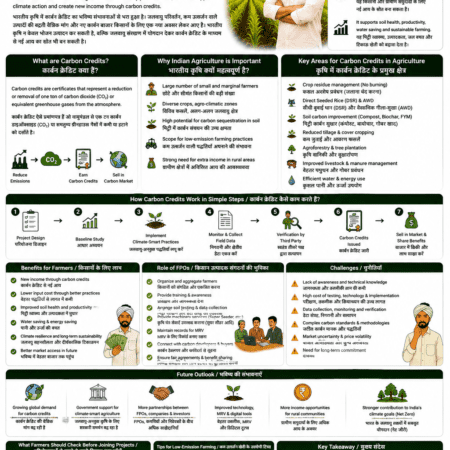
The first step is project design. A carbon project developer, FPO, or technical partner identifies a farming practice that can reduce emissions or increase carbon storage. The second step is baseline assessment, where the current farming condition is recorded before the project begins.
पहला चरण परियोजना रूपरेखा है। कार्बन परियोजना विकासकर्ता, किसान उत्पादक संगठन या तकनीकी भागीदार ऐसी कृषि पद्धति की पहचान करता है जो उत्सर्जन घटा सके या कार्बन संग्रहण बढ़ा सके। दूसरा चरण आधार स्थिति आकलन है, जिसमें परियोजना शुरू होने से पहले की वर्तमान कृषि स्थिति दर्ज की जाती है।
The third step is implementation. Farmers adopt approved practices such as residue management, tree plantation, composting, soil carbon improvement, Direct Seeded Rice, or water-saving farming. The fourth step is monitoring and data collection. The project collects farm records, photographs, soil data, practice adoption records, and other evidence.
तीसरा चरण क्रियान्वयन है। किसान फसल अवशेष प्रबंधन, वृक्षारोपण, कंपोस्ट, मिट्टी कार्बन सुधार, सीधी बुवाई धान या जल बचत खेती जैसी स्वीकृत पद्धतियाँ अपनाते हैं। चौथा चरण निगरानी और आँकड़ा संग्रह है। परियोजना खेत अभिलेख, चित्र, मिट्टी आँकड़े, पद्धति अपनाने के प्रमाण और अन्य साक्ष्य एकत्र करती है।
The fifth step is carbon calculation and verification. The project calculates emission reduction or carbon storage and gets it checked by an independent verifier. The sixth step is credit issuance and sale. If credits are issued and sold, income is shared with farmers as per agreement. This process explains why Is carbon credit income real for Indian farmers? has a conditional answer.
पाँचवाँ चरण कार्बन गणना और सत्यापन है। परियोजना उत्सर्जन कमी या कार्बन संग्रहण की गणना करती है और स्वतंत्र सत्यापन संस्था से उसकी जाँच कराती है। छठा चरण क्रेडिट जारी होना और बिक्री है। यदि क्रेडिट जारी और बेचे जाते हैं, तो आय किसानों के साथ समझौते के अनुसार बाँटी जाती है। यही प्रक्रिया बताती है कि क्या भारतीय किसानों के लिए कार्बन क्रेडिट आय वास्तविक है? का उत्तर शर्तों पर आधारित क्यों है।
Which Farming Practices Can Create Carbon Income? / कौन-सी कृषि पद्धतियाँ कार्बन आय बना सकती हैं?
Soil carbon improvement can support carbon credit income if farmers increase soil organic carbon through compost, crop residue management, reduced tillage, crop rotation, green manure, cover crops, and organic matter improvement. These practices also improve soil health and water retention.
मिट्टी कार्बन सुधार कार्बन क्रेडिट आय को सहारा दे सकता है यदि किसान कंपोस्ट, फसल अवशेष प्रबंधन, कम जुताई, फसल चक्र, हरी खाद, आवरण फसल और जैविक पदार्थ सुधार के माध्यम से मिट्टी जैविक कार्बन बढ़ाते हैं। ये पद्धतियाँ मिट्टी स्वास्थ्य और जल धारण क्षमता भी सुधारती हैं।
Tree plantation and agroforestry can create carbon credit opportunities because trees store carbon in trunks, branches, roots, leaves, and soil. However, tree survival, species selection, spacing, protection, and long-term monitoring are essential.
वृक्षारोपण और कृषि वानिकी कार्बन क्रेडिट अवसर बना सकते हैं क्योंकि पेड़ तने, शाखाओं, जड़ों, पत्तियों और मिट्टी में कार्बन संग्रहित करते हैं। हालाँकि पेड़ों का जीवित रहना, प्रजाति चयन, दूरी, सुरक्षा और दीर्घकालिक निगरानी आवश्यक है।
Direct Seeded Rice and water-saving paddy systems may support carbon income by reducing methane emissions and saving water. Crop residue management can reduce emissions by avoiding burning and returning biomass to soil. These examples show that Is carbon credit income real for Indian farmers? depends on suitable practices and proper verification.
सीधी बुवाई धान और जल बचत धान प्रणाली मीथेन उत्सर्जन घटाकर और पानी बचाकर कार्बन आय को सहारा दे सकती हैं। फसल अवशेष प्रबंधन जलाने से बचाकर और जैवभार को मिट्टी में लौटाकर उत्सर्जन कम कर सकता है। ये उदाहरण दिखाते हैं कि क्या भारतीय किसानों के लिए कार्बन क्रेडिट आय वास्तविक है? उपयुक्त पद्धतियों और सही सत्यापन पर निर्भर करता है।
Why Farmers May Not Receive Immediate Income / किसानों को तुरंत आय क्यों नहीं मिलती
Farmers may not receive immediate income because carbon credit projects take time. Soil carbon improves slowly. Trees take years to grow. Data collection needs regular monitoring. Verification and certification take time. Credits must be issued and then sold to buyers before revenue can be distributed.
किसानों को तुरंत आय इसलिए नहीं मिलती क्योंकि कार्बन क्रेडिट परियोजनाओं में समय लगता है। मिट्टी कार्बन धीरे-धीरे सुधरता है। पेड़ों को बढ़ने में वर्षों लगते हैं। आँकड़ा संग्रह के लिए नियमित निगरानी चाहिए। सत्यापन और प्रमाणन में समय लगता है। आय बाँटने से पहले क्रेडिट जारी और खरीदारों को बेचे जाने चाहिए।
This is a key point in Is carbon credit income real for Indian farmers? Farmers should not expect quick payment within a few days or weeks. Carbon income may take months or years depending on project type, verification cycle, buyer demand, and sale process.
क्या भारतीय किसानों के लिए कार्बन क्रेडिट आय वास्तविक है? में यह मुख्य बात है। किसानों को कुछ दिनों या हफ्तों में तुरंत भुगतान की उम्मीद नहीं करनी चाहिए। कार्बन आय परियोजना प्रकार, सत्यापन चक्र, खरीदार मांग और बिक्री प्रक्रिया के आधार पर महीनों या वर्षों में आ सकती है।
Why Carbon Credit Income is Not Guaranteed / कार्बन क्रेडिट आय निश्चित क्यों नहीं होती
Carbon credit income is not guaranteed because many conditions must be fulfilled. Farmers must adopt the required practices correctly. Data must be accurate. Carbon benefit must be measurable. Verification must be successful. Credits must be issued. Buyers must purchase the credits. Market price must be acceptable. Revenue sharing must be fair.
कार्बन क्रेडिट आय निश्चित नहीं होती क्योंकि कई शर्तें पूरी होनी चाहिए। किसानों को आवश्यक पद्धतियाँ सही तरीके से अपनानी होती हैं। आँकड़े सही होने चाहिए। कार्बन लाभ मापने योग्य होना चाहिए। सत्यापन सफल होना चाहिए। क्रेडिट जारी होने चाहिए। खरीदारों को क्रेडिट खरीदने चाहिए। बाज़ार मूल्य स्वीकार्य होना चाहिए। आय बँटवारा उचित होना चाहिए।
This makes the answer to Is carbon credit income real for Indian farmers? very practical. Yes, it can be real, but only when the full chain works. If any important stage fails, income may be delayed, reduced, or not generated.
इससे क्या भारतीय किसानों के लिए कार्बन क्रेडिट आय वास्तविक है? का उत्तर बहुत व्यावहारिक हो जाता है। हाँ, यह वास्तविक हो सकती है, लेकिन तभी जब पूरी श्रृंखला काम करे। यदि कोई महत्वपूर्ण चरण असफल होता है, तो आय में देरी हो सकती है, आय कम हो सकती है या आय बन ही नहीं सकती।
Factors That Make Carbon Credit Income Real / वे कारक जो कार्बन क्रेडिट आय को वास्तविक बनाते हैं
The first factor is a credible project developer. Farmers and FPOs should work only with companies or technical partners that can clearly explain methodology, verification, certification, payment timeline, buyer strategy, and revenue sharing.
पहला कारक विश्वसनीय परियोजना विकासकर्ता है। किसानों और किसान उत्पादक संगठनों को केवल ऐसी कंपनियों या तकनीकी भागीदारों के साथ काम करना चाहिए जो पद्धति, सत्यापन, प्रमाणन, भुगतान समय-सीमा, खरीदार रणनीति और आय बँटवारा स्पष्ट रूप से समझा सकें।
The second factor is strong MRV. Measurement, reporting, and verification are the backbone of carbon credit income. Without farm records, soil data, photographs, monitoring reports, and third-party verification, carbon credit income cannot become real.
दूसरा कारक मजबूत मापन-प्रतिवेदन-सत्यापन है। मापन, प्रतिवेदन और सत्यापन कार्बन क्रेडिट आय की रीढ़ हैं। खेत अभिलेख, मिट्टी आँकड़े, चित्र, निगरानी प्रतिवेदन और स्वतंत्र सत्यापन के बिना कार्बन क्रेडिट आय वास्तविक नहीं बन सकती।
The third factor is buyer demand. Even after credits are issued, they must be sold. Buyers may include companies, institutions, environmental investors, brands, development agencies, and climate-focused organisations. Strong buyer linkage makes income more practical.
तीसरा कारक खरीदार मांग है। क्रेडिट जारी होने के बाद भी उन्हें बेचना होता है। खरीदारों में कंपनियाँ, संस्थाएँ, पर्यावरणीय निवेशक, ब्रांड, विकास एजेंसियाँ और जलवायु केंद्रित संगठन शामिल हो सकते हैं। मजबूत खरीदार जुड़ाव आय को अधिक व्यावहारिक बनाता है।
The fourth factor is fair revenue sharing. Farmers should clearly know their share, FPO share, project developer share, cost deductions, payment method, and timeline. This is essential for trust.
चौथा कारक उचित आय बँटवारा है। किसानों को अपना हिस्सा, किसान उत्पादक संगठन का हिस्सा, परियोजना विकासकर्ता का हिस्सा, लागत कटौती, भुगतान तरीका और समय-सीमा स्पष्ट रूप से पता होनी चाहिए। यह विश्वास के लिए आवश्यक है।
Role of FPOs in Making Carbon Income Real / कार्बन आय को वास्तविक बनाने में किसान उत्पादक संगठनों की भूमिका
FPOs can make carbon credit income more realistic for small farmers by aggregating farmers, creating scale, maintaining records, coordinating training, supporting monitoring, and negotiating with project developers. Without aggregation, most small farmers may remain outside carbon markets.
किसान उत्पादक संगठन किसानों को संगठित करके, बड़ा स्तर बनाकर, अभिलेख रखकर, प्रशिक्षण का समन्वय करके, निगरानी में सहायता करके और परियोजना विकासकर्ताओं से बातचीत करके छोटे किसानों के लिए कार्बन क्रेडिट आय को अधिक वास्तविक बना सकते हैं। समूह के बिना अधिकांश छोटे किसान कार्बन बाज़ारों से बाहर रह सकते हैं।
In Is carbon credit income real for Indian farmers?, FPOs are important because they protect farmer interests. They can review agreements, ask about carbon rights, data ownership, cost deductions, payment timeline, buyer linkage, and exit conditions. This reduces risk and improves transparency.
क्या भारतीय किसानों के लिए कार्बन क्रेडिट आय वास्तविक है? में किसान उत्पादक संगठन महत्वपूर्ण हैं क्योंकि वे किसान हितों की रक्षा करते हैं। वे समझौतों की समीक्षा कर सकते हैं, कार्बन अधिकार, आँकड़ा स्वामित्व, लागत कटौती, भुगतान समय-सीमा, खरीदार जुड़ाव और बाहर निकलने की शर्तों के बारे में पूछ सकते हैं। इससे जोखिम कम होता है और पारदर्शिता बढ़ती है।
Risks Farmers Should Understand / किसानों को कौन से जोखिम समझने चाहिए
The first risk is false promises. If anyone promises fixed and immediate carbon income without explaining verification and buyer sale, farmers should be careful. Genuine projects explain both opportunity and risk.
पहला जोखिम झूठे वादों का है। यदि कोई सत्यापन और खरीदार बिक्री समझाए बिना निश्चित और तुरंत कार्बन आय का वादा करता है, तो किसानों को सावधान रहना चाहिए। वास्तविक परियोजनाएँ अवसर और जोखिम दोनों समझाती हैं।
The second risk is unclear agreement. If the agreement does not explain carbon rights, data ownership, project duration, cost deductions, revenue sharing, and exit conditions, farmers should not sign it.
दूसरा जोखिम अस्पष्ट समझौते का है। यदि समझौता कार्बन अधिकार, आँकड़ा स्वामित्व, परियोजना अवधि, लागत कटौती, आय बँटवारा और बाहर निकलने की शर्तें नहीं समझाता, तो किसानों को उस पर हस्ताक्षर नहीं करना चाहिए।
The third risk is market uncertainty. Credit prices can change. Buyer demand can change. Verification can take time. This is why Is carbon credit income real for Indian farmers? should always be answered with realism, not excitement only.
तीसरा जोखिम बाज़ार अनिश्चितता का है। क्रेडिट मूल्य बदल सकते हैं। खरीदार मांग बदल सकती है। सत्यापन में समय लग सकता है। इसलिए क्या भारतीय किसानों के लिए कार्बन क्रेडिट आय वास्तविक है? का उत्तर हमेशा यथार्थ के साथ देना चाहिए, केवल उत्साह के साथ नहीं।
What Farmers Should Check Before Joining / जुड़ने से पहले किसान क्या जाँचें
Before joining a carbon project, farmers should ask what practice they must adopt, how long the project will run, what data will be collected, who will verify the project, which carbon standard will be used, who will sell the credits, and when payment may come.
कार्बन परियोजना से जुड़ने से पहले किसानों को पूछना चाहिए कि उन्हें कौन-सी पद्धति अपनानी होगी, परियोजना कितने समय तक चलेगी, कौन से आँकड़े एकत्र होंगे, परियोजना का सत्यापन कौन करेगा, कौन सा कार्बन मानक उपयोग होगा, क्रेडिट कौन बेचेगा और भुगतान कब आ सकता है।
Farmers should also ask how revenue will be shared, what costs will be deducted, who owns carbon rights, who owns farm data, what happens if credits are not issued, and whether farmers can exit the project. These questions make Is carbon credit income real for Indian farmers? a practical decision rather than a blind hope.
किसानों को यह भी पूछना चाहिए कि आय कैसे बाँटी जाएगी, कौन सी लागत काटी जाएगी, कार्बन अधिकार किसके पास होंगे, खेत आँकड़ों का स्वामित्व किसके पास होगा, क्रेडिट जारी न होने पर क्या होगा और क्या किसान परियोजना से बाहर निकल सकते हैं। ये प्रश्न क्या भारतीय किसानों के लिए कार्बन क्रेडिट आय वास्तविक है? को अंधी आशा नहीं, बल्कि व्यावहारिक निर्णय बनाते हैं।
Practical Model for Indian FPOs / भारतीय किसान उत्पादक संगठनों के लिए व्यावहारिक मॉडल
A practical model can begin with 500 to 1,000 farmers and one or two measurable practices. The FPO can start with crop residue management, tree plantation, soil carbon improvement, or Direct Seeded Rice. The FPO should collect baseline data, conduct farmer training, maintain records, and work with a credible technical partner.
एक व्यावहारिक मॉडल पाँच सौ से एक हजार किसानों और एक या दो मापने योग्य पद्धतियों से शुरू हो सकता है। किसान उत्पादक संगठन फसल अवशेष प्रबंधन, वृक्षारोपण, मिट्टी कार्बन सुधार या सीधी बुवाई धान से शुरुआत कर सकता है। संगठन को आधार आँकड़े एकत्र करने चाहिए, किसान प्रशिक्षण करना चाहिए, अभिलेख रखने चाहिए और विश्वसनीय तकनीकी भागीदार के साथ काम करना चाहिए।
The FPO should not promise fixed income in the beginning. It should explain the process honestly and begin with a pilot. After one or two seasons, the FPO can review farmer participation, data quality, project cost, expected carbon benefit, verification status, and buyer linkage. This makes carbon credit income more realistic and safer for farmers.
किसान उत्पादक संगठन को शुरुआत में निश्चित आय का वादा नहीं करना चाहिए। उसे प्रक्रिया ईमानदारी से समझानी चाहिए और प्रायोगिक परियोजना से शुरुआत करनी चाहिए। एक या दो मौसम के बाद संगठन किसान भागीदारी, आँकड़ा गुणवत्ता, परियोजना लागत, अपेक्षित कार्बन लाभ, सत्यापन स्थिति और खरीदार जुड़ाव की समीक्षा कर सकता है। इससे कार्बन क्रेडिट आय किसानों के लिए अधिक वास्तविक और सुरक्षित बनती है।
Conclusion / निष्कर्ष
Is carbon credit income real for Indian farmers? Yes, it can be real, but it is not easy money. It comes after proper project design, farmer participation, climate-friendly practices, data collection, MRV, verification, certification, credit issuance, buyer sale, and transparent revenue sharing.
क्या भारतीय किसानों के लिए कार्बन क्रेडिट आय वास्तविक है? हाँ, यह वास्तविक हो सकती है, लेकिन यह आसान धन नहीं है। यह सही परियोजना रूपरेखा, किसान भागीदारी, जलवायु-अनुकूल पद्धतियों, आँकड़ा संग्रह, मापन-प्रतिवेदन-सत्यापन, सत्यापन, प्रमाणन, क्रेडिट जारी होने, खरीदार बिक्री और पारदर्शी आय बँटवारे के बाद आती है।
For Indian farmers, carbon credit income should be treated as possible additional income, not guaranteed income. For FPOs, carbon credits can become a powerful opportunity if handled with patience, transparency, credible partners, strong documentation, and farmer-first agreements.
भारतीय किसानों के लिए कार्बन क्रेडिट आय को संभावित अतिरिक्त आय के रूप में देखना चाहिए, निश्चित आय के रूप में नहीं। किसान उत्पादक संगठनों के लिए कार्बन क्रेडिट एक मजबूत अवसर बन सकते हैं, यदि इन्हें धैर्य, पारदर्शिता, विश्वसनीय भागीदारों, मजबूत दस्तावेज़ीकरण और किसान हितों को प्राथमिकता देने वाले समझौतों के साथ संभाला जाए।
Frequently Asked Questions (FAQs) / अक्सर पूछे जाने वाले प्रश्न
1. Is carbon credit income real for Indian farmers?
Yes, Is carbon credit income real for Indian farmers? Yes, it can be real if the project is properly measured, verified, certified, credits are sold, and revenue is shared fairly.
1. क्या भारतीय किसानों के लिए कार्बन क्रेडिट आय वास्तविक है?
हाँ, क्या भारतीय किसानों के लिए कार्बन क्रेडिट आय वास्तविक है? हाँ, यह वास्तविक हो सकती है यदि परियोजना का सही मापन, सत्यापन और प्रमाणन हो, क्रेडिट बिकें और आय का उचित बँटवारा हो।
2. Is carbon credit income guaranteed?
No, carbon credit income is not guaranteed. It depends on project design, farmer participation, verification, credit sale, buyer demand, market price, and revenue-sharing agreement.
2. क्या कार्बन क्रेडिट आय निश्चित होती है?
नहीं, कार्बन क्रेडिट आय निश्चित नहीं होती। यह परियोजना रूपरेखा, किसान भागीदारी, सत्यापन, क्रेडिट बिक्री, खरीदार मांग, बाज़ार मूल्य और आय बँटवारा समझौते पर निर्भर करती है।
3. How long does carbon credit income take?
Carbon credit income may take months or years depending on project type, monitoring period, verification process, credit issuance, and buyer sale.
3. कार्बन क्रेडिट आय आने में कितना समय लगता है?
कार्बन क्रेडिट आय आने में परियोजना प्रकार, निगरानी अवधि, सत्यापन प्रक्रिया, क्रेडिट जारी होने और खरीदार बिक्री के आधार पर महीनों या वर्षों का समय लग सकता है।
4. How can FPOs help farmers earn carbon credit income?
FPOs can aggregate farmers, collect data, support training, coordinate MRV, protect farmer rights, negotiate agreements, and work with credible carbon project developers.
4. किसान उत्पादक संगठन किसानों को कार्बन क्रेडिट आय दिलाने में कैसे मदद कर सकते हैं?
किसान उत्पादक संगठन किसानों को संगठित कर सकते हैं, आँकड़े एकत्र कर सकते हैं, प्रशिक्षण में सहायता दे सकते हैं, मापन-प्रतिवेदन-सत्यापन का समन्वय कर सकते हैं, किसान अधिकारों की रक्षा कर सकते हैं, समझौतों पर बातचीत कर सकते हैं और विश्वसनीय कार्बन परियोजना विकासकर्ताओं के साथ काम कर सकते हैं।
5. What should farmers check before joining a carbon project?
Farmers should check project duration, required practices, data ownership, carbon rights, verification process, cost deductions, revenue sharing, buyer linkage, payment timeline, and exit conditions.
5. कार्बन परियोजना से जुड़ने से पहले किसानों को क्या जाँचना चाहिए?
किसानों को परियोजना अवधि, आवश्यक पद्धतियाँ, आँकड़ा स्वामित्व, कार्बन अधिकार, सत्यापन प्रक्रिया, लागत कटौती, आय बँटवारा, खरीदार जुड़ाव, भुगतान समय-सीमा और बाहर निकलने की शर्तें जाँचनी चाहिए।
Internal Links / आंतरिक लिंक
👉 Challenges in Carbon Credit Projects for Small Farmers — https://belhamaifpo.com/agriculture/challenges-in-carbon-credit-projects-for-small-farmers/
👉 Carbon Credit Business Model for Farmer Producer Organizations — https://belhamaifpo.com/agriculture/carbon-credit-business-model-for-farmer-producer-organizations/
👉 Can FPOs Aggregate Farmers for Carbon Credits? — https://belhamaifpo.com/agriculture/can-fpos-aggregate-farmers-for-carbon-credits/
👉 Carbon Credit Companies in India and How They Work — https://belhamaifpo.com/agriculture/carbon-credit-companies-in-india-and-how-they-work/
👉 Who Buys Agricultural Carbon Credits? — https://belhamaifpo.com/agriculture/who-buys-agricultural-carbon-credits/
👉 Carbon Credit Certification Process in Agriculture — https://belhamaifpo.com/agriculture/carbon-credit-certification-process-in-agriculture/
👉 MRV in Carbon Credit Projects: What Farmers Should Know — https://belhamaifpo.com/agriculture/mrv-in-carbon-credit-projects-what-farmers-should-know/
👉 How to Measure Carbon Reduction on Farms — https://belhamaifpo.com/agriculture/how-to-measure-carbon-reduction-on-farms/
👉 Carbon Farming in India: Complete Guide — https://belhamaifpo.com/agriculture/carbon-farming-in-india-complete-guide/
👉 Carbon Credit Opportunities in Indian Agriculture — https://belhamaifpo.com/agriculture/carbon-credit-opportunities-in-indian-agriculture/
👉 Role of FPOs in Carbon Credit Projects — https://belhamaifpo.com/agriculture/role-of-fpos-in-carbon-credit-projects/
👉 Farmer Producer Organizations Complete Guide — https://belhamaifpo.com/farmer-producer-organisation/farmer-producer-organizations-fpos/
👉 SDGs & Our FPO — https://belhamaifpo.com/sdg-goals/
External Authority Links / बाहरी प्राधिकरण लिंक
👉 Ministry of Agriculture & Farmers Welfare — https://agriwelfare.gov.in/
👉 NITI Aayog — https://www.niti.gov.in/
👉 UNFCCC — https://unfccc.int/
👉 FAO Climate-Smart Agriculture — https://www.fao.org/climate-smart-agriculture/en/
👉 World Bank Climate-Smart Agriculture — https://www.worldbank.org/en/topic/climate-smart-agriculture
👉 Verra Verified Carbon Standard — https://verra.org/programs/verified-carbon-standard/
👉 Gold Standard — https://www.goldstandard.org/
👉 Carbon Registry-India — https://cri.nccf.in/
Follow Belha Mai FPO for More Updates / अधिक अपडेट के लिए Belha Mai FPO को फॉलो करें
👉 Website — https://belhamaifpo.com/
👉 Facebook — https://www.facebook.com/profile.php?id=61561043486818
👉 Instagram — https://instagram.com/belhamaifpo
👉 LinkedIn — https://www.linkedin.com/in/abhay-singh-ab5568280/
👉 YouTube — https://www.youtube.com/channel/UC9ZvojoTMCa7mU1-Q_Bh60A