Introduction
Role of Collective Farming in Increasing Farmer Income is an important topic for rural development, small farmer prosperity, and sustainable agriculture. In India, many farmers are small and marginal, which means they have limited land, limited capital, limited machinery, and weak bargaining power in the market. When such farmers work individually, their income often remains low and uncertain.
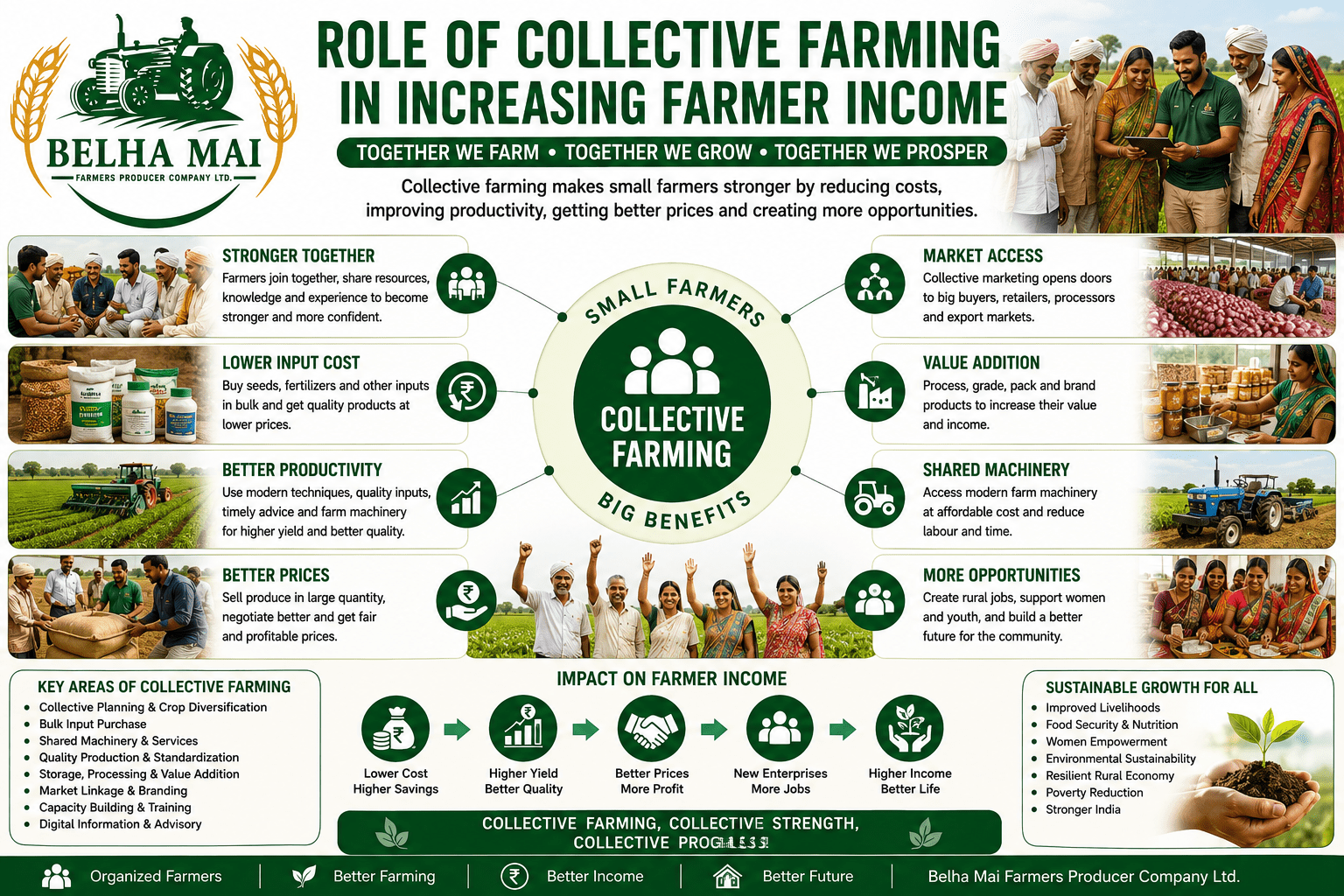
Collective farming helps farmers overcome these limitations by bringing them together. Farmers can share resources, purchase inputs together, access machinery, plan crops, aggregate produce, negotiate with buyers, and create value-added products. This collective approach can help reduce costs and improve income.
Farmer Producer Organizations, cooperatives, farmer groups, and community-based institutions can make collective farming more organized and practical. Through these institutions, collective farming can become a strong pathway for increasing farmer income and strengthening the rural economy.
Role of Collective Farming in Increasing Farmer Income Through Farmer Unity
Role of Collective Farming in Increasing Farmer Income begins with farmer unity. A single small farmer may not have enough produce, bargaining power, or market access. But when many farmers come together, they become stronger as a group.
Farmer unity helps in collective decision-making, collective purchase, collective marketing, shared learning, and common infrastructure development. It also builds confidence among farmers because they are no longer working alone.
When farmers unite, they can solve problems that are difficult to solve individually. This unity becomes the foundation for better income, better services, and stronger rural development.
Role of Collective Farming in Increasing Farmer Income Through Lower Input Costs
Input cost is one of the biggest challenges for farmers. Seeds, fertilizers, pesticides, organic inputs, labour, machinery, irrigation, and transport can reduce farmer profit if costs are too high.
Collective farming helps reduce input costs because farmers can purchase inputs in bulk. Bulk purchasing can improve price negotiation and ensure better quality. It also reduces the risk of farmers buying poor-quality or fake inputs from unreliable sources.
Lower input cost directly improves net farmer income. Even when crop prices do not increase, reduced production cost can help farmers earn more from the same land.
Role of Collective Farming in Increasing Farmer Income Through Shared Machinery
Modern farm machinery can improve productivity, save time, reduce labour pressure, and support timely farm operations. However, small farmers often cannot afford tractors, seed drills, rotavators, Super Seeders, sprayers, or harvest equipment individually.
Collective farming allows farmers to share machinery through FPOs, custom hiring centers, or farm machinery banks. This gives small farmers access to technology without needing to purchase expensive machines.
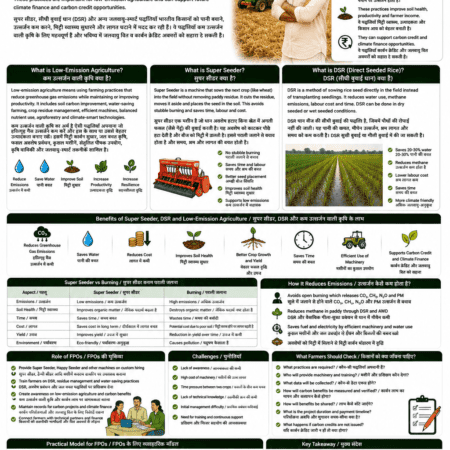
Shared machinery reduces cost and improves efficiency. It also supports better sowing, harvesting, residue management, and resource use. This helps farmers increase income while reducing the burden of manual work.
Role of Collective Farming in Increasing Farmer Income Through Better Productivity
Productivity improves when farmers get access to better seeds, timely advice, proper crop planning, quality inputs, machinery, irrigation guidance, and technical support. Collective farming makes these services easier to organize.
When farmers work together, training programs, demonstrations, soil testing, crop advisory, and expert guidance can reach more people at one time. Farmers can also learn from each other’s experience.
Better productivity means higher output from the same land. When productivity improves along with cost reduction and better market linkage, farmer income increases more effectively.
Role of Collective Farming in Increasing Farmer Income Through Better Market Access
Market access is one of the strongest reasons for collective farming. Individual farmers often sell small quantities to local traders at lower prices. They may not have access to large buyers, processors, retailers, institutional buyers, or exporters.
Collective farming helps farmers aggregate produce in larger quantities. Larger quantity improves bargaining power and makes it easier to deal with bigger buyers. It also allows better grading, sorting, packaging, and transport planning.
Better market access can reduce dependence on middlemen and distress selling. When farmers get better prices, their income improves directly.
Role of Collective Farming in Increasing Farmer Income Through Collective Marketing
Collective marketing is a powerful tool for increasing farmer income. When farmers sell together, they can negotiate better terms, reduce transport cost, maintain quality standards, and supply larger orders.
Collective marketing also helps farmers understand demand, pricing, buyer requirements, quality expectations, and market timing. This allows them to plan production better.
Through FPOs, collective marketing can become more professional. Farmers can move from unorganized selling to planned, documented, and market-linked selling.
Role of Collective Farming in Increasing Farmer Income Through Value Addition
Value addition is one of the most important ways collective farming increases income. Raw produce usually gives limited profit. But when produce is cleaned, graded, sorted, processed, packaged, branded, and marketed, its value increases.
Collective farming can support value addition because farmers can pool produce and create common processing facilities. Products such as flour, pulses, honey, amla products, mango pulp, dehydrated products, millet products, spices, and packaged food can generate higher income.
Value addition also creates rural employment. Women, youth, machine operators, packaging workers, logistics teams, and marketing teams can all benefit. This makes collective farming useful not only for farmers, but also for the wider village economy.
Role of Collective Farming in Increasing Farmer Income Through Storage and Aggregation
Many farmers sell produce immediately after harvest because they do not have storage facilities. This often leads to distress selling at low prices. Storage and aggregation can help farmers wait for better market opportunities.
Collective farming makes storage and aggregation more practical. Farmers can use common collection centers, warehouses, packhouses, cold rooms, or FPO-managed storage facilities.
When farmers are not forced to sell immediately, they can improve price realization. Better storage also reduces wastage and improves quality. This supports higher income.
Role of Collective Farming in Increasing Farmer Income Through Crop Planning
When farmers grow crops without market planning, they may face low prices because many farmers produce the same crop at the same time. Collective farming can improve crop planning based on demand, soil suitability, water availability, and market opportunity.
FPOs can help farmers plan crops according to buyer demand, processing needs, local climate, and income potential. They can also guide farmers toward diversification.
Better crop planning reduces risk and improves income stability. It allows farmers to move from random production to planned agriculture.
Role of Collective Farming in Increasing Farmer Income Through Crop Diversification
Crop diversification helps farmers reduce risk and create multiple income sources. Depending on only one crop can be risky because prices may fall or crops may fail due to weather or pests.
Collective farming can support diversification into vegetables, pulses, millets, oilseeds, horticulture, agroforestry, beekeeping, dairy, poultry, fisheries, and value-added products.
Diversification improves income stability. It also supports nutrition, soil health, biodiversity, and climate resilience. When managed collectively, diversification becomes easier to plan and market.
Role of Collective Farming in Increasing Farmer Income Through Knowledge Sharing
Farmers often learn best from other farmers. Collective farming creates a platform where farmers can share experiences, compare results, discuss problems, and learn better practices.
Knowledge sharing can include seed selection, pest control, irrigation, soil health, natural farming, machinery use, post-harvest handling, and market information. FPOs can strengthen this by organizing training and expert sessions.
Better knowledge leads to better decisions. Better decisions reduce losses and improve income. This makes knowledge sharing an important income-building tool.
Role of Collective Farming in Increasing Farmer Income Through Soil Health
Soil health is directly linked with farmer income. Weak soil increases input dependency and reduces productivity. Healthy soil supports better yield, better water retention, and long-term farming stability.
Collective farming can promote soil testing, organic matter improvement, composting, balanced fertilizer use, crop rotation, green manure, and natural farming practices. When a group of farmers adopts soil health practices, the impact can be larger.
Improving soil health reduces long-term costs and improves productivity. This helps increase farmer income in a sustainable way.
Role of Collective Farming in Increasing Farmer Income Through Water Management
Water is a critical resource in agriculture. Poor water management can increase costs, reduce productivity, and create crop risk. Collective farming can support better water planning at the community level.
Farmers can work together on irrigation scheduling, water conservation, farm ponds, micro-irrigation, mulching, crop selection, and efficient water use. Shared learning helps farmers understand how to save water and improve crop performance.
Better water management reduces crop failure risk and supports stable income. This is especially important in areas affected by irregular rainfall and climate change.
Role of Collective Farming in Increasing Farmer Income Through Risk Reduction
Farmers face many risks such as price fluctuation, pest attack, crop failure, climate shocks, input quality issues, and market uncertainty. Individual farmers often struggle to manage these risks alone.
Collective farming reduces risk by spreading knowledge, improving access to advisory services, enabling collective bargaining, supporting crop planning, and creating market linkages. It also allows farmers to share resources and support each other.
When risk reduces, farmer income becomes more stable. Stability is as important as profit because rural families need reliable income for education, health, food, and household expenses.
Role of Collective Farming in Increasing Farmer Income Through Women Participation
Women play a major role in farming and post-harvest work. Collective farming can increase farmer income more effectively when women are included in training, decision-making, processing, packaging, and value-added activities.
Women can contribute strongly to grading, sorting, seed preservation, food processing, packaging, livestock management, and local enterprise development. When women earn income, household welfare improves.
Collective farming gives women a platform to participate in the rural economy more formally. This supports income growth, gender equality, and community development.
Role of Collective Farming in Increasing Farmer Income Through Rural Employment
Collective farming can create employment beyond crop production. It can generate work in input supply, machinery services, aggregation, storage, processing, packaging, transport, sales, digital operations, and field coordination.
This is important because rural families need income throughout the year. Agriculture-based employment can reduce migration pressure and support village-level prosperity.
When collective farming is connected with FPOs and value chains, it becomes a source of local jobs for farmers, women, youth, and service providers.
Role of Collective Farming in Increasing Farmer Income Through Financial Inclusion
Access to finance is important for farming and enterprise development. Many small farmers struggle to get formal credit because of documentation, collateral, or limited institutional support.
Collective farming through FPOs can improve financial inclusion. A well-managed FPO can help farmers connect with banks, credit schemes, insurance, financial literacy, and government support.
Financial inclusion helps farmers invest in better inputs, irrigation, machinery, livestock, processing, storage, and enterprise. This supports higher income and long-term growth.
Role of Collective Farming in Increasing Farmer Income Through Government Scheme Access
Many government schemes support agriculture, farm machinery, irrigation, storage, processing, training, credit, and rural enterprise. However, small farmers may not know how to access them.
Collective farming institutions such as FPOs can help farmers understand schemes, complete documentation, coordinate with departments, and access benefits.
Better scheme access can reduce cost, create infrastructure, improve productivity, and support income growth. This makes institutional support very important for collective farming.
Role of Collective Farming in Increasing Farmer Income Through Partnerships
Collective farming becomes stronger when supported by partnerships. Farmers need support from government departments, banks, CSR organizations, NGOs, research institutions, universities, technology providers, processors, exporters, and buyers.
Partnerships can bring finance, machinery, training, infrastructure, market access, quality systems, and business guidance. FPOs can act as the bridge between farmer groups and development partners.
Strong partnerships help collective farming move beyond local cooperation into structured rural development and enterprise growth.
Role of Collective Farming in Increasing Farmer Income and SDGs
Collective farming is connected with several Sustainable Development Goals. It supports poverty reduction, food security, gender equality, decent work, responsible production, climate action, life on land, and partnerships.
When farmers work together, local agriculture becomes more organized and sustainable. Collective farming helps link village-level action with larger development goals.
This makes collective farming important not only for farmer income, but also for sustainable rural transformation.
Belha Mai FPO and Collective Farming
Belha Mai Farmers Producer Company Ltd. is working to strengthen farmers through collective action, input services, farm machinery, market linkage, value addition, women participation, digital outreach, and sustainable agriculture.
The FPO model reflects the power of collective farming. Farmers become stronger when they work together, share resources, access services, and connect with better markets.
For Belha Mai FPO, collective farming is not only about production. It is about increasing farmer income, creating rural enterprise, improving livelihoods, and building a stronger farmer-led rural economy.
Why Collective Farming Matters for India’s Future
India has millions of small and marginal farmers. If they continue to work in isolation, it will be difficult for them to compete in modern agriculture and value chains. Collective farming gives them scale, structure, and strength.
The future of agriculture will depend on farmer institutions, market linkage, value addition, sustainable practices, and rural enterprise. Collective farming can bring all these elements together.
For India, collective farming can help turn small farmers into strong economic participants. This is essential for increasing farmer income and reducing rural poverty.
Conclusion
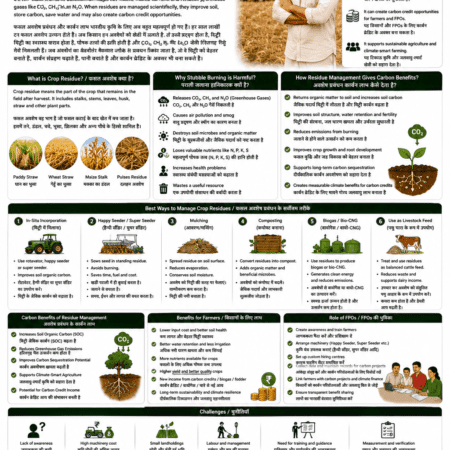
Role of Collective Farming in Increasing Farmer Income can be understood through one clear idea: farmers earn better when they work together. Collective farming reduces input costs, improves productivity, enables shared machinery, supports crop planning, creates market access, strengthens value addition, and builds rural employment.
FPOs make collective farming more organized and practical. They help farmers move from individual struggle to collective progress.
For Belha Mai Farmers Producer Company Ltd., collective farming represents a path toward stronger farmers, better income, sustainable agriculture, and long-term rural prosperity.
FAQ
What is the Role of Collective Farming in Increasing Farmer Income?
The role of collective farming in increasing farmer income is to help farmers reduce costs, share resources, access machinery, improve productivity, sell collectively, get better prices, create value addition, and connect with better markets.
How does collective farming reduce input costs?
Collective farming reduces input costs by allowing farmers to purchase seeds, fertilizers, pesticides, organic inputs, and other services in bulk. Bulk purchase can improve price negotiation and quality control.
How does collective farming improve market access?
Collective farming improves market access by aggregating produce in larger quantities. This helps farmers connect with wholesalers, processors, retailers, institutional buyers, and larger markets.
Can collective farming help small farmers?
Yes. Collective farming is especially useful for small farmers because it gives them scale, bargaining power, access to shared machinery, better services, and stronger market opportunities.
How do FPOs support collective farming?
FPOs support collective farming by organizing farmers, providing input services, creating farm machinery access, aggregating produce, supporting value addition, connecting with buyers, and building partnerships.
Why should CSR organizations support collective farming?
CSR organizations should support collective farming because it can improve farmer income, reduce rural poverty, empower women, create rural employment, promote sustainable agriculture, and strengthen grassroots institutions.
Internal Links Section
👉 SDG Goals — https://belhamaifpo.com/sdg-goals/
👉 Farmer Producer Organizations Complete Guide —https://belhamaifpo.com/farmer-producer-organisation/farmer-producer-organizations-fpos/
👉 How Agriculture Can Reduce Rural Poverty in India —https://belhamaifpo.com/sdg-goals/how-agriculture-can-reduce-rural-poverty-in-india/
👉 How FPOs Reduce Poverty in Rural India —https://belhamaifpo.com/sdg-goals/how-fpos-reduce-poverty-in-rural-india/
👉 Role of FPOs in Achieving Rural Development in India — https://belhamaifpo.com/sdg-goals/role-of-fpos-in-achieving-rural-development-in-india/
👉 Belha Mai FPO — https://belhamaifpo.com/
External Authority Links
👉 United Nations Sustainable Development Goals — https://sdgs.un.org/goals
👉 NITI Aayog SDG India Index —https://www.niti.gov.in/sdg-india-index
👉 Ministry of Agriculture and Farmers Welfare — https://agriwelfare.gov.in/
👉 Small Farmers’ Agribusiness Consortium — https://sfacindia.com/
👉 National Bank for Agriculture and Rural Development — https://www.nabard.org/
Follow Belha Mai FPO for More Updates
Website: https://belhamaifpo.com/
Facebook:https://www.facebook.com/profile.php?id=61561043486818
YouTube: https://www.youtube.com/channel/UC9ZvojoTMCa7mU1-Q_Bh60A
LinkedIn:https://www.linkedin.com/in/abhay-singh-ab5568280/
Instagram: https://instagram.com/belhamaifpo
Belha Mai Farmers Producer Company Ltd. supports farmers through better information, technology, market linkage, value addition, FPO awareness, rural development, and sustainable agriculture.