Introduction
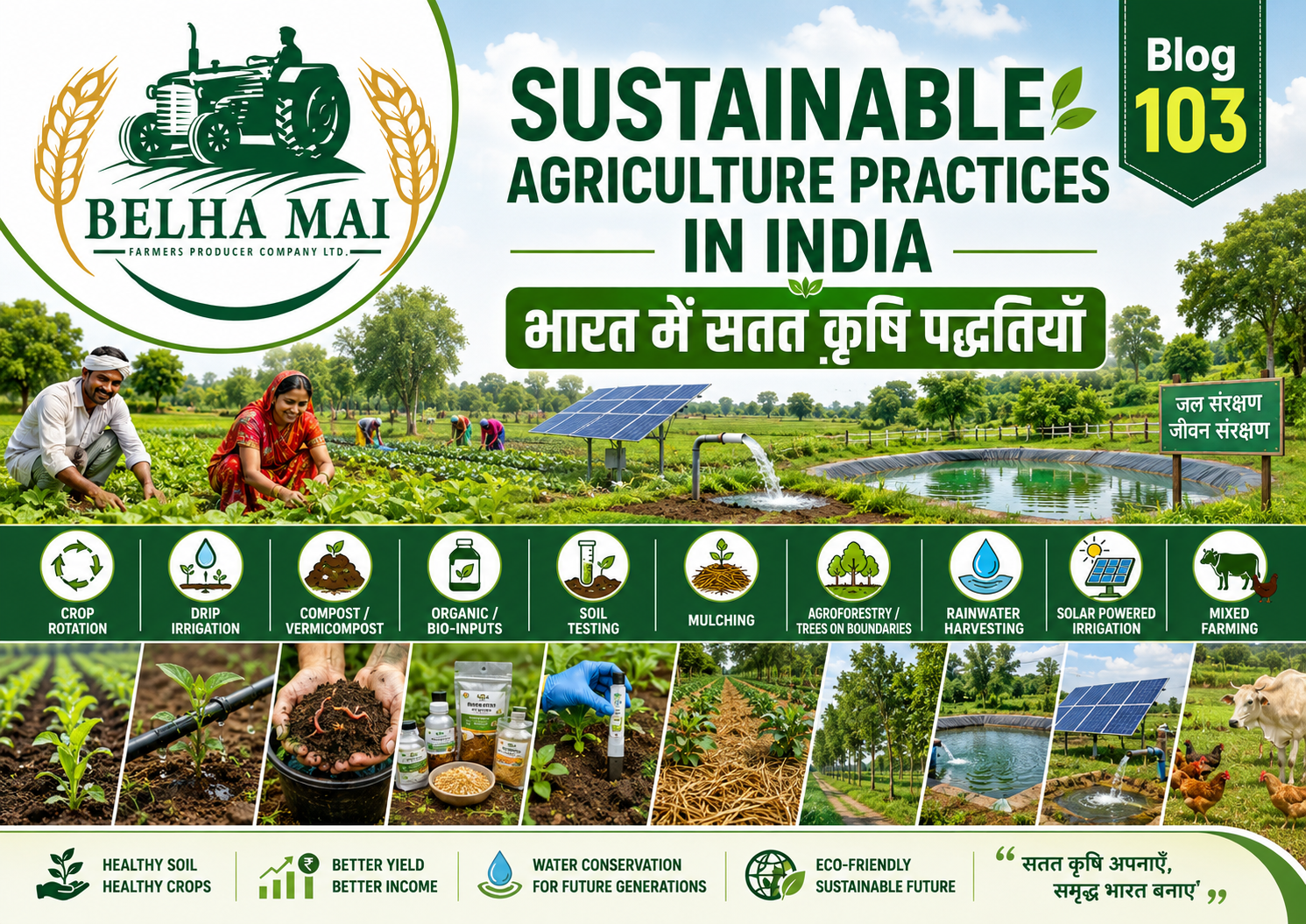
Sustainable agriculture practices in India are becoming very important because farming is facing serious pressure from climate change, soil degradation, water shortage, rising input cost, pest attacks, declining biodiversity and unstable farmer income. Farmers need methods that can improve production today without damaging soil, water and natural resources for tomorrow.
परिचय
भारत में सतत कृषि पद्धतियां बहुत महत्वपूर्ण होती जा रही हैं क्योंकि खेती जलवायु परिवर्तन, मिट्टी क्षरण, पानी की कमी, बढ़ती लागत, कीट प्रकोप, जैव विविधता में कमी और अस्थिर किसान आय जैसे दबावों का सामना कर रही है। किसानों को ऐसी पद्धतियों की जरूरत है जो आज उत्पादन बढ़ाएं, लेकिन कल की मिट्टी, पानी और प्राकृतिक संसाधनों को नुकसान न पहुंचाएं।
What sustainable agriculture means
Sustainable agriculture means farming in a way that protects soil, saves water, reduces unnecessary chemical dependency, improves biodiversity, supports farmer income and keeps land productive for future generations. It is not against modern farming. It is about using science, tradition and technology in a balanced way.
सतत कृषि का अर्थ
सतत कृषि का मतलब है ऐसी खेती जो मिट्टी की रक्षा करे, पानी बचाए, अनावश्यक रासायनिक निर्भरता कम करे, जैव विविधता बढ़ाए, किसान आय को support करे और भूमि को आने वाली पीढ़ियों के लिए उपजाऊ बनाए रखे। यह आधुनिक खेती के खिलाफ नहीं है। यह विज्ञान, परंपरा और तकनीक का संतुलित उपयोग है।
Why sustainable agriculture is needed in India
Sustainable agriculture practices in India are needed because most Indian farmers are small and marginal farmers. They cannot afford high input cost, repeated crop failure, soil fertility decline or water shortage. Sustainable farming helps reduce risk and creates long-term stability.
भारत में सतत कृषि की जरूरत क्यों है
भारत में सतत कृषि पद्धतियां इसलिए जरूरी हैं क्योंकि अधिकतर भारतीय किसान छोटे और सीमांत किसान हैं। वे बढ़ती लागत, बार-बार फसल नुकसान, मिट्टी की उपजाऊ शक्ति में कमी या पानी की कमी को सहन नहीं कर सकते। सतत खेती जोखिम कम करती है और दीर्घकालिक स्थिरता बनाती है।
Sustainable agriculture is linked with farmer income
Many people think sustainability only means environment protection. But sustainable agriculture practices in India are also directly connected with farmer income. If soil is healthy, water is saved, input cost is reduced and crop quality improves, farmers can earn better income over time.
सतत कृषि किसान आय से जुड़ी है
कई लोग सोचते हैं कि sustainability का मतलब केवल पर्यावरण संरक्षण है। लेकिन भारत में सतत कृषि पद्धतियां किसान आय से भी सीधे जुड़ी हुई हैं। यदि मिट्टी स्वस्थ रहे, पानी बचे, input cost घटे और फसल गुणवत्ता सुधरे, तो किसान लंबे समय में बेहतर आय कमा सकता है।
Soil health is the foundation
Healthy soil is the foundation of sustainable farming. Soil is not just dust; it is a living system with minerals, organic matter, microbes, earthworms, water and air. When soil health improves, crops become stronger, fertilizer works better and water use becomes more efficient.
मिट्टी स्वास्थ्य नींव है
स्वस्थ मिट्टी सतत खेती की नींव है। मिट्टी केवल धूल नहीं है; यह minerals, organic matter, microbes, earthworms, water और air से बनी जीवित प्रणाली है। जब मिट्टी स्वास्थ्य सुधरता है, तो फसल मजबूत होती है, खाद बेहतर काम करती है और पानी का उपयोग अधिक प्रभावी होता है।
Soil testing supports sustainable agriculture
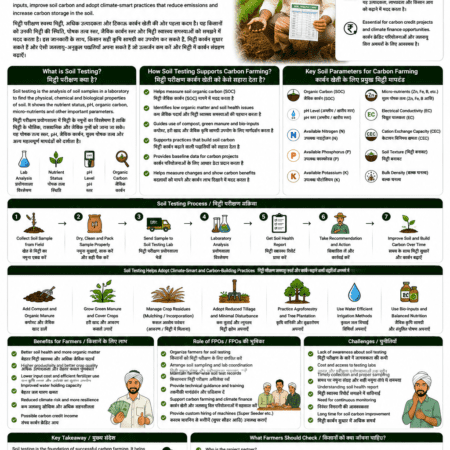
Soil testing is one of the most practical sustainable agriculture practices in India. It helps farmers understand nutrient status, pH, organic carbon and soil condition. Without soil testing, farmers often apply fertilizer by guesswork, which increases cost and may damage soil balance.
मिट्टी परीक्षण सतत कृषि को support करता है
मिट्टी परीक्षण भारत में सतत कृषि पद्धतियों में सबसे व्यावहारिक उपायों में से एक है। यह किसान को nutrient status, pH, organic carbon और soil condition समझने में मदद करता है। बिना मिट्टी परीक्षण के किसान अनुमान से खाद डालते हैं, जिससे लागत बढ़ती है और मिट्टी का संतुलन बिगड़ सकता है।
Balanced nutrient management
Sustainable farming does not mean stopping all fertilizers immediately. It means using nutrients wisely. Farmers should use soil test recommendations, organic matter, compost, bio-fertilizers and balanced chemical fertilizers where needed. Balanced nutrition gives better results than excessive input use.
संतुलित पोषण प्रबंधन
सतत खेती का मतलब सभी fertilizers को तुरंत बंद करना नहीं है। इसका मतलब है nutrients का समझदारी से उपयोग। किसानों को soil test recommendation, organic matter, compost, bio-fertilizers और जरूरत के अनुसार balanced chemical fertilizers का उपयोग करना चाहिए। संतुलित पोषण excessive input use से बेहतर परिणाम देता है।
Compost and vermicompost improve soil
Compost and vermicompost increase organic matter in soil. They improve soil structure, water holding capacity, microbial activity and nutrient availability. For small farmers, composting can reduce dependence on costly external inputs and improve long-term soil fertility.
कंपोस्ट और वर्मी कंपोस्ट मिट्टी सुधारते हैं
Compost और vermicompost मिट्टी में organic matter बढ़ाते हैं। वे soil structure, water holding capacity, microbial activity और nutrient availability को सुधारते हैं। छोटे किसानों के लिए composting costly external inputs पर निर्भरता घटा सकती है और long-term soil fertility सुधार सकती है।
Crop rotation maintains soil balance
Crop rotation means changing crops in a planned way. Growing the same crop again and again can reduce soil fertility and increase pest pressure. Crop rotation with pulses, cereals, oilseeds, vegetables and green manure crops helps maintain soil balance.
फसल चक्र मिट्टी संतुलन बनाए रखता है
Crop rotation का मतलब है योजनाबद्ध तरीके से फसल बदलना। एक ही फसल बार-बार उगाने से soil fertility घट सकती है और pest pressure बढ़ सकता है। Pulses, cereals, oilseeds, vegetables और green manure crops के साथ crop rotation मिट्टी संतुलन बनाए रखने में मदद करता है।
Pulses are important in sustainable farming
Pulses are very useful in sustainable agriculture because they help improve soil nitrogen through biological nitrogen fixation. Including pulses in the cropping system can reduce fertilizer pressure and support soil fertility. Pulses also improve farm income and nutrition.
दलहन सतत खेती में महत्वपूर्ण हैं
Pulses सतत कृषि में बहुत उपयोगी हैं क्योंकि वे biological nitrogen fixation के माध्यम से soil nitrogen सुधारने में मदद करती हैं। Cropping system में दलहन शामिल करने से fertilizer pressure कम हो सकता है और soil fertility support होती है। दलहन farm income और nutrition भी सुधारती हैं।
Green manure restores fertility
Green manure crops are grown and mixed into the soil to improve fertility. They add organic matter, support microbes and improve soil structure. Green manuring is one of the simple sustainable agriculture practices in India that can help farmers rebuild weak soil.
हरी खाद उपजाऊ शक्ति बहाल करती है
Green manure crops को उगाकर मिट्टी में मिलाया जाता है ताकि fertility सुधरे। वे organic matter जोड़ते हैं, microbes को support करते हैं और soil structure सुधारते हैं। Green manuring भारत में सतत कृषि पद्धतियों में सरल उपाय है जो कमजोर मिट्टी को सुधारने में मदद कर सकता है।
Mulching saves water and protects soil
Mulching means covering the soil with crop residue, straw, leaves, plastic mulch or other suitable materials. It reduces evaporation, controls weeds, protects soil from erosion and improves moisture retention. Mulching is very useful in vegetables, fruits and horticulture crops.
मल्चिंग पानी बचाती है और मिट्टी की रक्षा करती है
Mulching का मतलब है मिट्टी को crop residue, straw, leaves, plastic mulch या अन्य suitable materials से ढकना। यह evaporation घटाती है, weeds control करती है, soil erosion से रक्षा करती है और moisture retention सुधारती है। Mulching vegetables, fruits और horticulture crops में बहुत उपयोगी है।
Water conservation is essential
Water conservation is a major part of sustainable agriculture practices in India. Farmers need to save every drop because groundwater is declining in many areas and rainfall is becoming uncertain. Water conservation supports productivity, reduces risk and protects future farming.
जल संरक्षण बहुत जरूरी है
जल संरक्षण भारत में सतत कृषि पद्धतियों का प्रमुख हिस्सा है। किसानों को हर बूंद बचानी होगी क्योंकि कई क्षेत्रों में groundwater घट रहा है और rainfall uncertain हो रही है। Water conservation productivity को support करता है, risk घटाता है और future farming की रक्षा करता है।
Drip irrigation improves efficiency
Drip irrigation provides water near the root zone and reduces wastage. It is useful for vegetables, fruits, flowers, nurseries and protected cultivation. For small farmers with limited water, drip irrigation can improve yield and income from small land.
ड्रिप सिंचाई दक्षता बढ़ाती है
Drip irrigation जड़ क्षेत्र के पास पानी पहुंचाती है और wastage कम करती है। यह vegetables, fruits, flowers, nurseries और protected cultivation के लिए उपयोगी है। Limited water वाले छोटे किसानों के लिए drip irrigation छोटी जमीन से yield और income बढ़ा सकती है।
Sprinkler irrigation saves water
Sprinkler irrigation distributes water more evenly and can be useful for several crops. It reduces water wastage compared with uncontrolled flood irrigation. Sprinkler systems can support better water management where field conditions are suitable.
स्प्रिंकलर सिंचाई पानी बचाती है
Sprinkler irrigation पानी को अधिक समान रूप से फैलाती है और कई फसलों के लिए उपयोगी हो सकती है। यह uncontrolled flood irrigation की तुलना में water wastage कम करती है। जहां field conditions suitable हों, sprinkler systems better water management में मदद कर सकते हैं।
Rainwater harvesting supports farm security
Rainwater harvesting through farm ponds, check dams, recharge pits, field bunds and water storage structures can improve irrigation security. It helps farmers store rainwater and recharge groundwater. This is especially important in areas with seasonal rainfall.
वर्षा जल संचयन farm security बढ़ाता है
Farm ponds, check dams, recharge pits, field bunds और water storage structures के माध्यम से rainwater harvesting irrigation security बढ़ा सकती है। यह farmers को rainwater store करने और groundwater recharge करने में मदद करती है। Seasonal rainfall वाले क्षेत्रों में यह विशेष रूप से महत्वपूर्ण है।
Agroforestry protects land and income
Agroforestry means growing trees with crops or livestock systems. Trees reduce erosion, improve biodiversity, add organic matter, provide shade, store carbon and create additional income. Fruit trees, timber trees, fodder trees and multipurpose trees can make farms more resilient.
कृषि वानिकी भूमि और आय की रक्षा करती है
Agroforestry का मतलब है crops या livestock systems के साथ trees लगाना। Trees erosion कम करते हैं, biodiversity सुधारते हैं, organic matter जोड़ते हैं, shade देते हैं, carbon store करते हैं और additional income बनाते हैं। Fruit trees, timber trees, fodder trees और multipurpose trees farms को अधिक resilient बना सकते हैं।
Integrated farming reduces risk
Integrated farming means combining crops, livestock, poultry, fishery, goatery, beekeeping, horticulture and composting in a planned way. It creates multiple income sources and reduces dependence on a single crop. This model is useful for small farmers.
Integrated farming जोखिम कम करती है
Integrated farming का मतलब है crops, livestock, poultry, fishery, goatery, beekeeping, horticulture और composting को योजनाबद्ध तरीके से जोड़ना। यह multiple income sources बनाती है और एक फसल पर निर्भरता कम करती है। यह model छोटे किसानों के लिए उपयोगी है।
Mixed farming supports sustainability
Mixed farming combines crop production with livestock. Crop residues can feed animals, animal dung can become manure and farm income becomes more stable. Mixed farming is one of the traditional sustainable agriculture practices in India that still has strong value.
Mixed farming sustainability को support करती है
Mixed farming crop production को livestock के साथ जोड़ती है। Crop residues पशुओं के feed बन सकते हैं, animal dung manure बन सकता है और farm income अधिक stable हो सकती है। Mixed farming भारत में सतत कृषि पद्धतियों में पारंपरिक लेकिन महत्वपूर्ण model है।
Crop diversification improves resilience
Crop diversification means growing different crops instead of depending only on one crop. It helps manage market risk, climate risk and pest risk. Farmers can include cereals, pulses, oilseeds, vegetables, fruits, fodder and medicinal plants according to local conditions.
फसल विविधीकरण resilience बढ़ाता है
Crop diversification का मतलब है केवल एक फसल पर निर्भर रहने के बजाय अलग-अलग crops उगाना। यह market risk, climate risk और pest risk को manage करने में मदद करता है। किसान local conditions के अनुसार cereals, pulses, oilseeds, vegetables, fruits, fodder और medicinal plants शामिल कर सकते हैं।
Natural farming and organic practices
Natural farming and organic practices focus on reducing chemical dependency, improving soil biology and using local resources. These practices can be useful when farmers receive proper training, market linkage and certification or trust-based selling systems where needed.
प्राकृतिक खेती और जैविक पद्धतियां
Natural farming और organic practices chemical dependency घटाने, soil biology सुधारने और local resources का उपयोग करने पर ध्यान देती हैं। ये पद्धतियां तब उपयोगी होती हैं जब farmers को proper training, market linkage और जरूरत के अनुसार certification या trust-based selling systems मिलें।
Bio-inputs can reduce chemical pressure
Bio-fertilizers, bio-pesticides, botanical extracts, compost and microbial solutions can support sustainable farming. Farmers should use genuine, tested and recommended bio-inputs. FPOs can help farmers access reliable bio-inputs and training.
जैव-इनपुट chemical pressure घटा सकते हैं
Bio-fertilizers, bio-pesticides, botanical extracts, compost और microbial solutions sustainable farming को support कर सकते हैं। किसानों को genuine, tested और recommended bio-inputs का उपयोग करना चाहिए। FPO farmers को reliable bio-inputs और training तक पहुंचाने में मदद कर सकते हैं।
Integrated pest management
Integrated Pest Management means controlling pests through a combination of methods. It includes monitoring, resistant varieties, biological control, traps, clean cultivation and need-based pesticide use. IPM reduces unnecessary chemical use and protects crop health.
Integrated pest management
Integrated Pest Management का मतलब है कई तरीकों को मिलाकर pests control करना। इसमें monitoring, resistant varieties, biological control, traps, clean cultivation और need-based pesticide use शामिल हैं। IPM unnecessary chemical use घटाता है और crop health की रक्षा करता है।
Climate-resilient varieties
Sustainable agriculture practices in India should include climate-resilient varieties. Farmers need varieties that can tolerate drought, heat, flood, pest pressure or short-duration seasons. Choosing the right variety according to soil, water and climate can reduce risk.
जलवायु-सहनशील किस्में
भारत में सतत कृषि पद्धतियों में climate-resilient varieties शामिल होनी चाहिए। किसानों को ऐसी varieties चाहिए जो drought, heat, flood, pest pressure या short-duration seasons को tolerate कर सकें। Soil, water और climate के अनुसार सही variety चुनना risk कम कर सकता है।
Protected cultivation for small farmers
Protected cultivation such as polyhouse, greenhouse and shade net can help small farmers grow high-value crops. It needs investment, training, irrigation and market linkage. If done properly, it can increase income from limited land.
छोटे किसानों के लिए protected cultivation
Polyhouse, greenhouse और shade net जैसी protected cultivation छोटे किसानों को high-value crops उगाने में मदद कर सकती है। इसके लिए investment, training, irrigation और market linkage चाहिए। सही तरीके से किया जाए तो यह limited land से income बढ़ा सकती है।
Multilayer farming for better land use
Multilayer farming helps small farmers use limited land more effectively. Different crops are grown at different heights and durations. For example, fruit trees, vegetables, spices and creepers can be combined carefully. This improves income and biodiversity.
बेहतर land use के लिए multilayer farming
Multilayer farming छोटे किसानों को limited land का बेहतर उपयोग करने में मदद करती है। अलग-अलग height और duration वाली crops को साथ में उगाया जाता है। उदाहरण के लिए fruit trees, vegetables, spices और creepers को carefully combine किया जा सकता है। इससे income और biodiversity दोनों सुधरती हैं।
Reducing crop residue burning
Crop residue burning damages soil life, reduces organic matter and creates pollution. Sustainable agriculture practices in India should promote residue management through super seeders, mulching, composting, fodder use and bio-decomposition. Residue should be treated as a resource, not waste.
फसल अवशेष जलाना कम करना
Crop residue burning soil life को नुकसान पहुंचाता है, organic matter घटाता है और pollution पैदा करता है। भारत में सतत कृषि पद्धतियों में super seeders, mulching, composting, fodder use और bio-decomposition के माध्यम से residue management को बढ़ावा देना चाहिए। Residue को waste नहीं, resource मानना चाहिए।
Renewable energy in agriculture
Solar pumps, solar dryers and renewable energy systems can reduce dependence on diesel and unreliable electricity. Solar-powered irrigation and drying systems can reduce cost and emissions. However, solar pumps must be used with responsible water management.
कृषि में renewable energy
Solar pumps, solar dryers और renewable energy systems diesel और unreliable electricity पर निर्भरता कम कर सकते हैं। Solar-powered irrigation और drying systems cost और emissions घटा सकते हैं। लेकिन solar pumps का उपयोग responsible water management के साथ होना चाहिए।
Sustainable post-harvest management
Sustainability does not stop at crop production. Drying, grading, storage, cold chain, packaging and processing are also important. Reducing post-harvest losses means farmers can earn more from the same crop without increasing land pressure.
सतत post-harvest management
Sustainability crop production पर खत्म नहीं होती। Drying, grading, storage, cold chain, packaging और processing भी महत्वपूर्ण हैं। Post-harvest losses घटाने का मतलब है कि किसान बिना land pressure बढ़ाए उसी crop से अधिक income कमा सकता है।
Value addition supports sustainability
Value addition helps farmers earn more from produce. Processing grains, fruits, vegetables, millets, amla, mango and honey can reduce wastage and create rural employment. Sustainable agriculture practices in India should connect production with processing and branding.
Value addition sustainability को support करता है
Value addition किसानों को produce से अधिक income कमाने में मदद करता है। Grains, fruits, vegetables, millets, amla, mango और honey की processing wastage कम कर सकती है और rural employment बना सकती है। भारत में सतत कृषि पद्धतियों को production के साथ processing और branding से जोड़ना चाहिए।
Digital agriculture supports sustainability
Digital tools can support sustainable farming through weather alerts, crop advisory, soil records, irrigation scheduling, pest alerts, market prices and digital payments. Technology can help farmers use resources more carefully and make better decisions.
डिजिटल कृषि sustainability को support करती है
Digital tools weather alerts, crop advisory, soil records, irrigation scheduling, pest alerts, market prices और digital payments के माध्यम से sustainable farming को support कर सकते हैं। Technology farmers को resources का सावधानी से उपयोग करने और better decisions लेने में मदद करती है।
FPOs can promote sustainable agriculture
Farmer Producer Organizations can play a major role in sustainable agriculture practices in India. FPOs can organize training, provide soil testing, supply bio-inputs, support machinery access, create water conservation models, promote aggregation and connect farmers with better markets.
FPO सतत कृषि को बढ़ावा दे सकते हैं
Farmer Producer Organizations भारत में सतत कृषि पद्धतियों में बड़ी भूमिका निभा सकते हैं। FPO training organize कर सकते हैं, soil testing दे सकते हैं, bio-inputs supply कर सकते हैं, machinery access support कर सकते हैं, water conservation models बना सकते हैं, aggregation promote कर सकते हैं और farmers को better markets से जोड़ सकते हैं।
FPOs can make sustainable farming affordable
Small farmers may not adopt sustainable technologies alone because of cost and knowledge gaps. FPOs can make solutions affordable through shared machinery, group training, bulk purchase, community infrastructure, collective marketing and scheme linkage.
FPO sustainable farming को affordable बना सकते हैं
छोटे किसान cost और knowledge gaps के कारण sustainable technologies अकेले नहीं अपना पाते। FPO shared machinery, group training, bulk purchase, community infrastructure, collective marketing और scheme linkage के माध्यम से solutions को affordable बना सकते हैं।
Farmer training is essential
Sustainable farming needs knowledge. Farmers need practical training on soil health, composting, drip irrigation, crop rotation, pest management, water conservation, agroforestry, value addition and market linkage. Training should be local, simple and field-based.
किसान प्रशिक्षण जरूरी है
Sustainable farming के लिए knowledge जरूरी है। Farmers को soil health, composting, drip irrigation, crop rotation, pest management, water conservation, agroforestry, value addition और market linkage पर practical training चाहिए। Training local, simple और field-based होनी चाहिए।
Sustainable agriculture and market demand
Consumers are increasingly interested in safe, traceable and responsibly produced food. Farmers can benefit from this demand if they maintain quality, records, packaging and trust. FPOs can help farmers build traceable and farmer-owned brands.
सतत कृषि और market demand
Consumers safe, traceable और responsibly produced food में अधिक रुचि दिखा रहे हैं। यदि farmers quality, records, packaging और trust maintain करें, तो वे इस demand से benefit ले सकते हैं। FPO farmers को traceable और farmer-owned brands बनाने में मदद कर सकते हैं।
Sustainable agriculture and climate change
Climate change is making farming more uncertain. Sustainable agriculture practices in India help farmers adapt through water saving, soil health improvement, crop diversification, agroforestry, resilient varieties and better planning. Sustainability is a practical climate strategy.
सतत कृषि और जलवायु परिवर्तन
Climate change farming को अधिक uncertain बना रहा है। भारत में सतत कृषि पद्धतियां water saving, soil health improvement, crop diversification, agroforestry, resilient varieties और better planning के माध्यम से farmers को adapt करने में मदद करती हैं। Sustainability एक practical climate strategy है।
Belha Mai FPO perspective
Belha Mai Farmers Producer Company Ltd. believes that sustainable agriculture practices in India must become practical for small farmers. Farmers need soil testing, bio-inputs, water conservation, crop diversification, machinery access, training, FPO support, value addition and market linkage. Sustainability should increase farmer income while protecting natural resources.
बेल्हा माई FPO का दृष्टिकोण
Belha Mai Farmers Producer Company Ltd. का मानना है कि भारत में सतत कृषि पद्धतियां छोटे किसानों के लिए practical बननी चाहिए। Farmers को soil testing, bio-inputs, water conservation, crop diversification, machinery access, training, FPO support, value addition और market linkage चाहिए। Sustainability को natural resources की रक्षा करते हुए farmer income बढ़ानी चाहिए।
Conclusion
Sustainable agriculture practices in India are necessary for protecting soil, saving water, reducing input cost, improving biodiversity, managing climate risk and increasing long-term farmer income. Sustainable farming is not only about environment; it is about farmer survival, profitability and future security.
निष्कर्ष
भारत में सतत कृषि पद्धतियां soil protection, water saving, input cost reduction, biodiversity improvement, climate risk management और long-term farmer income के लिए जरूरी हैं। Sustainable farming केवल environment के बारे में नहीं है; यह farmer survival, profitability और future security से जुड़ी है।
The way forward
The way forward is soil testing, composting, crop rotation, water conservation, micro-irrigation, agroforestry, integrated farming, natural farming, bio-inputs, digital advisory, value addition and FPO-led collective action. Sustainable agriculture practices in India can build healthy soil, healthy crops, strong farmers and a stronger rural economy.
आगे का रास्ता
आगे का रास्ता soil testing, composting, crop rotation, water conservation, micro-irrigation, agroforestry, integrated farming, natural farming, bio-inputs, digital advisory, value addition और FPO-led collective action है। भारत में सतत कृषि पद्धतियां healthy soil, healthy crops, strong farmers और stronger rural economy बना सकती हैं।
FAQ in English
What are sustainable agriculture practices in India?
Sustainable agriculture practices in India are farming methods that protect soil, save water, reduce unnecessary chemical use, improve biodiversity, reduce climate risk and support long-term farmer income.
Why are sustainable agriculture practices in India important?
Sustainable agriculture practices in India are important because farmers face soil degradation, water shortage, climate change, rising input cost and unstable income.
Which practices are included in sustainable agriculture?
Sustainable agriculture includes crop rotation, composting, vermicompost, soil testing, mulching, drip irrigation, rainwater harvesting, agroforestry, bio-inputs, integrated farming and natural farming.
How does sustainable agriculture improve farmer income?
Sustainable agriculture improves farmer income by reducing input cost, improving soil health, saving water, reducing crop loss, improving quality and supporting value addition.
Can small farmers adopt sustainable agriculture?
Yes, small farmers can adopt sustainable agriculture through low-cost practices, FPO support, training, shared machinery, bio-inputs, water conservation and crop diversification.
How do FPOs support sustainable agriculture?
FPOs support sustainable agriculture by organizing training, soil testing, bio-input supply, machinery access, water conservation, aggregation, value addition and market linkage.
Is sustainable agriculture against modern technology?
No, sustainable agriculture is not against modern technology. It combines traditional knowledge, scientific methods and modern tools in a balanced way.
What is the future of sustainable agriculture in India?
The future of sustainable agriculture in India depends on soil health, water conservation, climate resilience, FPO support, digital tools, farmer training and better markets.
FAQ in Hindi
भारत में सतत कृषि पद्धतियां क्या हैं?
भारत में सतत कृषि पद्धतियां ऐसी खेती की विधियां हैं जो मिट्टी की रक्षा करती हैं, पानी बचाती हैं, अनावश्यक chemical use कम करती हैं, biodiversity सुधारती हैं, climate risk घटाती हैं और long-term farmer income को support करती हैं।
भारत में सतत कृषि पद्धतियां क्यों महत्वपूर्ण हैं?
भारत में सतत कृषि पद्धतियां इसलिए महत्वपूर्ण हैं क्योंकि किसान soil degradation, water shortage, climate change, rising input cost और unstable income जैसी समस्याओं का सामना कर रहे हैं।
सतत कृषि में कौन सी पद्धतियां शामिल हैं?
सतत कृषि में crop rotation, composting, vermicompost, soil testing, mulching, drip irrigation, rainwater harvesting, agroforestry, bio-inputs, integrated farming और natural farming शामिल हैं।
सतत कृषि किसान आय कैसे बढ़ाती है?
सतत कृषि input cost घटाकर, soil health सुधारकर, water saving करके, crop loss कम करके, quality सुधारकर और value addition support करके किसान आय बढ़ाती है।
क्या छोटे किसान सतत कृषि अपना सकते हैं?
हाँ, छोटे किसान low-cost practices, FPO support, training, shared machinery, bio-inputs, water conservation और crop diversification के माध्यम से sustainable agriculture अपना सकते हैं।
FPO सतत कृषि को कैसे support करते हैं?
FPO training, soil testing, bio-input supply, machinery access, water conservation, aggregation, value addition और market linkage के माध्यम से sustainable agriculture को support करते हैं।
क्या सतत कृषि modern technology के खिलाफ है?
नहीं, सतत कृषि modern technology के खिलाफ नहीं है। यह traditional knowledge, scientific methods और modern tools को balanced way में जोड़ती है।
भारत में सतत कृषि का भविष्य क्या है?
भारत में सतत कृषि का भविष्य soil health, water conservation, climate resilience, FPO support, digital tools, farmer training और better markets पर निर्भर है।
Internal Links Section
👉 Soil degradation in India: causes and solutions
https://belhamaifpo.com/agriculture/soil-degradation-in-india-causes-and-solutions/
👉 Irrigation problems in Indian agriculture
https://belhamaifpo.com/agriculture/irrigation-problems-in-indian-agriculture/
👉 Impact of climate change on farming
https://belhamaifpo.com/agriculture/impact-of-climate-change-on-farming/
👉 Role of technology in modern farming
https://belhamaifpo.com/agriculture/technology-in-modern-farming/
👉 Digital agriculture in India
https://belhamaifpo.com/agriculture/digital-agriculture-india/
👉 Youth involvement in farming
https://belhamaifpo.com/agriculture/youth-involvement-farming/
👉 Farmer Producer Organization
https://belhamaifpo.com/farmer-producer-organization/
👉 Agriculture
https://belhamaifpo.com/agriculture/
External Authority Links
👉 National Mission for Sustainable Agriculture
https://nmsa.dac.gov.in/
👉 Soil Health Card
https://soilhealth.dac.gov.in/
👉 Department of Agriculture & Farmers Welfare
https://agriwelfare.gov.in/
👉 Indian Council of Agricultural Research
https://icar.org.in/
👉 Small Farmers’ Agribusiness Consortium
https://sfacindia.com/
Follow Belha Mai FPO for More Updates
For more farmer awareness blogs, agriculture updates, FPO development content, product information and practical farming videos, please follow and connect with Belha Mai Farmers Producer Company Ltd.
👉 Website
https://belhamaifpo.com/
👉 Facebook Page
https://www.facebook.com/profile.php?id=61561043486818
👉 YouTube Channel
https://www.youtube.com/channel/UC9ZvojoTMCa7mU1-Q_Bh60A
👉 LinkedIn
https://www.linkedin.com/in/abhay-singh-ab5568280/
👉 Instagram
https://instagram.com/belhamaifpo
Belha Mai FPO is working to support farmers through better information, technology, market linkage, value addition, FPO awareness and rural development.