Introduction
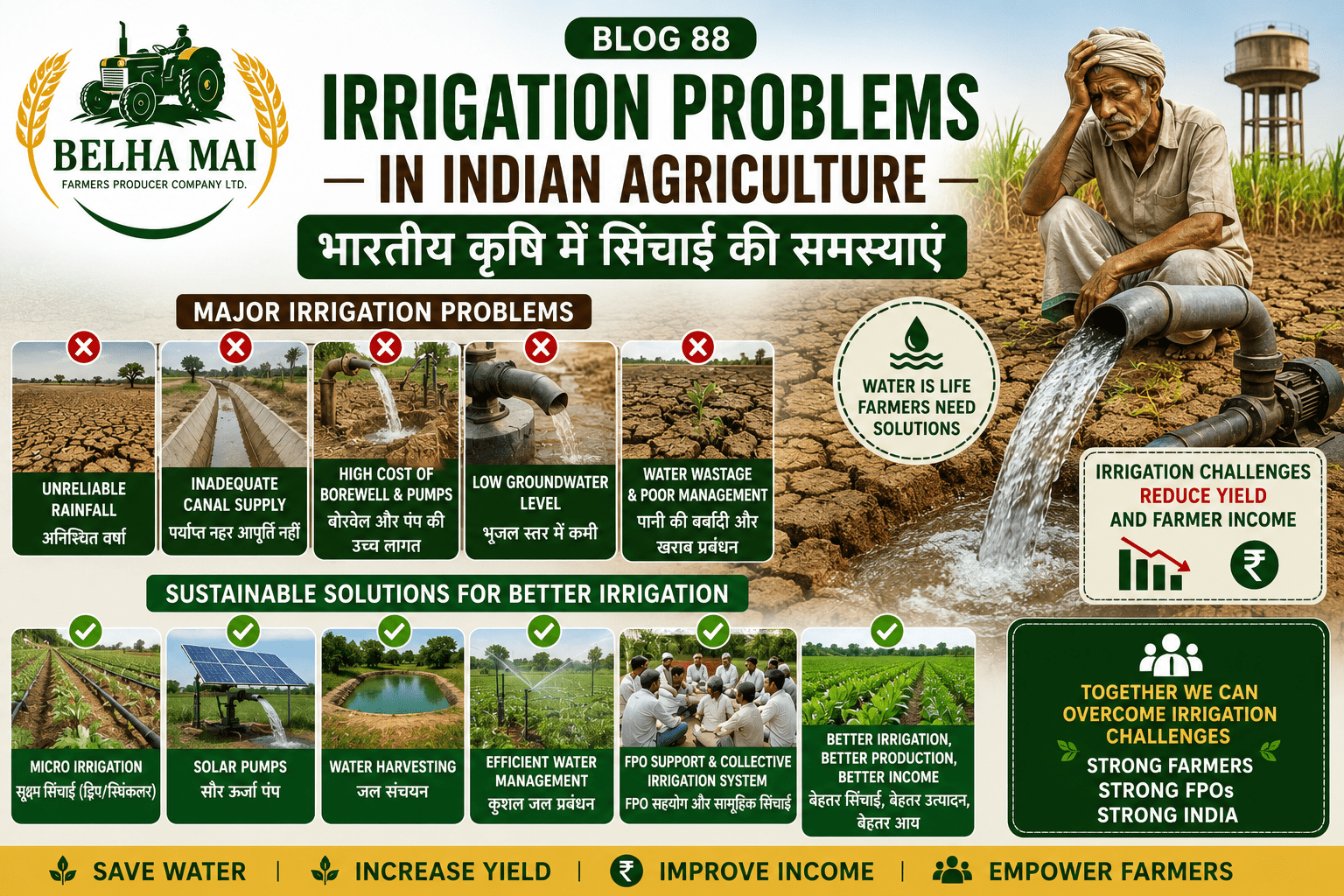
Irrigation problems in Indian agriculture are among the most serious challenges affecting farmers, especially small and marginal farmers. Water is the foundation of farming. A farmer may have good seed, fertile soil, proper fertilizer and hard work, but without water at the right time, the crop cannot perform well.
परिचय
भारतीय कृषि में सिंचाई की समस्याएं किसानों, विशेष रूप से छोटे और सीमांत किसानों के सामने सबसे गंभीर चुनौतियों में से एक हैं। पानी खेती की नींव है। किसान के पास अच्छा बीज, उपजाऊ मिट्टी, सही खाद और मेहनत हो सकती है, लेकिन यदि सही समय पर पानी न मिले तो फसल अच्छा उत्पादन नहीं दे पाती।
Irrigation is directly connected with farmer income
Irrigation is not only about giving water to crops. It is directly connected with crop planning, productivity, quality, risk reduction and farmer income. When irrigation is reliable, farmers can choose better crops, grow vegetables, horticulture crops, nursery plants, flowers and high-value crops. When irrigation is uncertain, farmers remain dependent on low-risk and low-income cropping patterns.
सिंचाई सीधे किसान आय से जुड़ी है
सिंचाई केवल फसल को पानी देने का विषय नहीं है। यह फसल योजना, उत्पादन, गुणवत्ता, जोखिम कम करने और किसान आय से सीधे जुड़ी हुई है। जब सिंचाई भरोसेमंद होती है, तो किसान बेहतर फसलें, सब्जियां, बागवानी फसलें, नर्सरी पौधे, फूल और उच्च मूल्य वाली फसलें उगा सकता है। जब सिंचाई अनिश्चित होती है, तो किसान कम जोखिम और कम आय वाली फसलों तक सीमित रह जाता है।
Rainfall dependency creates uncertainty
A large number of farmers still depend on rainfall for crop production. But rainfall is not always timely, equal or sufficient. Sometimes rain comes late. Sometimes it comes too early. Sometimes rainfall is heavy in a short period and then there is a long dry spell. Such uncertainty makes agriculture risky.
वर्षा पर निर्भरता अनिश्चितता पैदा करती है
बहुत से किसान अभी भी फसल उत्पादन के लिए वर्षा पर निर्भर हैं। लेकिन वर्षा हमेशा समय पर, समान और पर्याप्त नहीं होती। कई बार बारिश देर से होती है। कई बार बहुत जल्दी हो जाती है। कई बार थोड़े समय में अधिक बारिश हो जाती है और फिर लंबे समय तक सूखा पड़ जाता है। यह अनिश्चितता खेती को जोखिमपूर्ण बना देती है।
Small farmers suffer the most from irrigation problems
Small farmers are affected more seriously by irrigation problems because they do not have enough financial strength to build their own water infrastructure. A large farmer may install a borewell, pump, pipeline, sprinkler or drip irrigation system because the investment can be used over a larger area. But for a small farmer with one or two acres, the same investment may not be financially viable.
सिंचाई समस्याओं से छोटे किसान सबसे ज्यादा प्रभावित होते हैं
छोटे किसान सिंचाई समस्याओं से सबसे अधिक प्रभावित होते हैं क्योंकि उनके पास अपनी सिंचाई व्यवस्था बनाने की पर्याप्त आर्थिक क्षमता नहीं होती। बड़ा किसान बोरवेल, पंप, पाइपलाइन, स्प्रिंकलर या ड्रिप सिंचाई प्रणाली लगा सकता है क्योंकि उसका खर्च अधिक जमीन पर उपयोग हो जाता है। लेकिन एक या दो एकड़ वाले छोटे किसान के लिए वही निवेश आर्थिक रूप से व्यवहारिक नहीं होता।
Personal borewell is often not viable for small farmers
One of the real ground-level problems is the cost of boring or borewell installation. A small farmer may need water, but installing a personal borewell may cost too much compared to the income from a small landholding. After borewell installation, there may be additional costs for pump, electricity connection, pipeline, diesel, repair and maintenance.
छोटे किसानों के लिए व्यक्तिगत बोरवेल अक्सर व्यवहारिक नहीं होता
जमीनी स्तर की एक बड़ी समस्या बोरिंग या बोरवेल लगाने की लागत है। छोटे किसान को पानी की जरूरत होती है, लेकिन अपनी छोटी जमीन की आय की तुलना में व्यक्तिगत बोरवेल लगाना बहुत महंगा हो सकता है। बोरवेल लगाने के बाद पंप, बिजली कनेक्शन, पाइपलाइन, डीजल, मरम्मत और रखरखाव का अतिरिक्त खर्च भी आता है।
Dependence on rented pumps increases cost
Many small farmers depend on rented pumps or water from neighbouring farmers. This increases the cost of irrigation and reduces control over timing. If the pump is not available when needed, the crop may suffer. Timely irrigation is very important during germination, flowering, fruiting and grain filling stages.
किराए के पंप पर निर्भरता लागत बढ़ाती है
कई छोटे किसान किराए के पंप या पड़ोसी किसान के पानी पर निर्भर रहते हैं। इससे सिंचाई की लागत बढ़ती है और समय पर सिंचाई करने की क्षमता कम हो जाती है। यदि जरूरत के समय पंप उपलब्ध न हो, तो फसल को नुकसान हो सकता है। अंकुरण, फूल आने, फल लगने और दाना भरने के समय सही सिंचाई बहुत जरूरी होती है।
Canal irrigation is not equally available everywhere
Canals are an important irrigation source in many regions, but canal water does not reach every farmer equally. Some fields are near the canal, while others are far away. Sometimes water is available only at certain times. Sometimes canals are not maintained properly. This creates unequal access to irrigation.
नहर सिंचाई हर जगह समान रूप से उपलब्ध नहीं है
कई क्षेत्रों में नहरें सिंचाई का महत्वपूर्ण स्रोत हैं, लेकिन नहर का पानी हर किसान तक समान रूप से नहीं पहुंचता। कुछ खेत नहर के पास होते हैं, जबकि कुछ दूर। कई बार पानी केवल निश्चित समय पर मिलता है। कई बार नहरों का रखरखाव सही नहीं होता। इससे सिंचाई की पहुंच असमान हो जाती है।
Groundwater depletion is a serious concern
In many areas, groundwater levels are falling due to over-extraction, poor recharge, reduced rainfall, excessive borewell use and weak water conservation. As groundwater goes deeper, farmers need more powerful pumps and more energy. This increases the cost of irrigation and makes farming more expensive.
भूजल स्तर में गिरावट गंभीर चिंता है
कई क्षेत्रों में अधिक दोहन, कम रिचार्ज, कम वर्षा, अत्यधिक बोरवेल उपयोग और कमजोर जल संरक्षण के कारण भूजल स्तर गिर रहा है। जब भूजल गहराई में चला जाता है, तो किसानों को अधिक क्षमता वाले पंप और अधिक ऊर्जा की जरूरत होती है। इससे सिंचाई की लागत बढ़ती है और खेती महंगी हो जाती है।
Water wastage reduces irrigation efficiency
In many farms, water is still applied through flood irrigation. This method can waste a lot of water if not managed properly. Excess water may run off, evaporate or create waterlogging. Poor irrigation efficiency means more water is used but the crop does not receive balanced moisture.
पानी की बर्बादी सिंचाई दक्षता घटाती है
कई खेतों में अभी भी पारंपरिक flood irrigation यानी भराव सिंचाई की जाती है। यदि इसे सही तरीके से प्रबंधित न किया जाए, तो इसमें बहुत पानी बर्बाद हो सकता है। अतिरिक्त पानी बह सकता है, वाष्पित हो सकता है या जलभराव कर सकता है। सिंचाई दक्षता कम होने का मतलब है कि पानी अधिक लगता है, लेकिन फसल को संतुलित नमी नहीं मिलती।
Poor water management affects soil health
Wrong irrigation practices can damage soil health. Too much water can cause waterlogging, root disease and nutrient loss. Too little water causes drought stress. In some areas, poor drainage and repeated irrigation can also increase salinity. Good irrigation management protects both crop and soil.
खराब जल प्रबंधन मिट्टी की सेहत को प्रभावित करता है
गलत सिंचाई पद्धतियां मिट्टी की सेहत को नुकसान पहुंचा सकती हैं। अधिक पानी से जलभराव, जड़ रोग और पोषक तत्वों की हानि हो सकती है। कम पानी से सूखे का तनाव आता है। कुछ क्षेत्रों में खराब जल निकासी और बार-बार सिंचाई से लवणता भी बढ़ सकती है। अच्छी सिंचाई व्यवस्था फसल और मिट्टी दोनों की रक्षा करती है।
Climate change is making irrigation more important
Climate change has increased rainfall uncertainty, heat stress and dry spells. Farmers now face unexpected weather conditions more frequently. In such a situation, assured irrigation becomes even more important. Without reliable irrigation, farmers cannot protect crops from climate shocks.
जलवायु परिवर्तन ने सिंचाई को और महत्वपूर्ण बना दिया है
जलवायु परिवर्तन के कारण वर्षा की अनिश्चितता, गर्मी और सूखे की अवधि बढ़ रही है। किसान अब अधिक बार अप्रत्याशित मौसम परिस्थितियों का सामना कर रहे हैं। ऐसी स्थिति में भरोसेमंद सिंचाई और भी जरूरी हो जाती है। भरोसेमंद सिंचाई के बिना किसान फसल को जलवायु जोखिम से नहीं बचा सकता।
Irrigation problems limit crop diversification
Farmers who do not have assured irrigation usually avoid high-value but water-sensitive crops. They may continue growing traditional crops because these are safer under uncertain conditions. This limits income growth. Crop diversification into vegetables, fruits, pulses, oilseeds, flowers and nursery crops needs better water access.
सिंचाई समस्याएं फसल विविधीकरण को सीमित करती हैं
जिन किसानों के पास भरोसेमंद सिंचाई नहीं होती, वे अक्सर उच्च मूल्य वाली लेकिन पानी-संवेदनशील फसलों से बचते हैं। वे परंपरागत फसलें उगाते रहते हैं क्योंकि अनिश्चित परिस्थितियों में वे अपेक्षाकृत सुरक्षित होती हैं। इससे आय वृद्धि सीमित हो जाती है। सब्जियां, फल, दलहन, तिलहन, फूल और नर्सरी फसलों की ओर फसल विविधीकरण के लिए बेहतर जल उपलब्धता जरूरी है।
Irrigation is essential for greenhouse and polyhouse farming
Greenhouse, polyhouse and protected cultivation can increase farmer income from small land, but these systems need controlled irrigation. Drip irrigation, fertigation and proper water scheduling are very important in protected cultivation. Without assured water, protected farming cannot succeed.
ग्रीनहाउस और पॉलीहाउस खेती के लिए सिंचाई जरूरी है
ग्रीनहाउस, पॉलीहाउस और protected cultivation छोटी जमीन से किसान आय बढ़ा सकते हैं, लेकिन इन प्रणालियों में नियंत्रित सिंचाई की जरूरत होती है। ड्रिप सिंचाई, फर्टिगेशन और सही जल प्रबंधन protected cultivation में बहुत महत्वपूर्ण हैं। भरोसेमंद पानी के बिना protected farming सफल नहीं हो सकती।
Micro-irrigation can improve water use efficiency
Micro-irrigation includes drip and sprinkler systems. These systems apply water more efficiently and reduce wastage. Drip irrigation delivers water near the root zone, while sprinkler irrigation distributes water more uniformly. These technologies can help farmers save water and improve crop productivity.
सूक्ष्म सिंचाई जल उपयोग दक्षता बढ़ा सकती है
सूक्ष्म सिंचाई में ड्रिप और स्प्रिंकलर सिस्टम शामिल हैं। ये प्रणालियां पानी को अधिक दक्षता से उपयोग करती हैं और बर्बादी कम करती हैं। ड्रिप सिंचाई पानी को जड़ क्षेत्र के पास पहुंचाती है, जबकि स्प्रिंकलर सिंचाई पानी को अधिक समान रूप से फैलाती है। ये तकनीकें पानी बचाने और उत्पादन बढ़ाने में मदद कर सकती हैं।
Drip irrigation is useful for small farmers
Drip irrigation can be especially useful for small farmers because it saves water, reduces weed growth, improves fertilizer efficiency and supports high-value crops. However, the initial cost can be a challenge. Farmers need subsidy, technical guidance and proper installation support.
ड्रिप सिंचाई छोटे किसानों के लिए उपयोगी है
ड्रिप सिंचाई छोटे किसानों के लिए विशेष रूप से उपयोगी हो सकती है क्योंकि यह पानी बचाती है, खरपतवार कम करती है, खाद उपयोग दक्षता बढ़ाती है और उच्च मूल्य वाली फसलों में मदद करती है। लेकिन इसकी शुरुआती लागत चुनौती हो सकती है। किसानों को सब्सिडी, तकनीकी मार्गदर्शन और सही स्थापना सहायता की जरूरत होती है।
Solar pumps can reduce irrigation energy cost
Solar pumps can help farmers reduce dependence on diesel and unreliable electricity. They can make irrigation more affordable in the long term. However, solar pumps also require proper planning, maintenance and water-use discipline. If not managed carefully, they may also increase groundwater extraction.
सोलर पंप सिंचाई ऊर्जा लागत घटा सकते हैं
सोलर पंप किसानों की डीजल और अनिश्चित बिजली पर निर्भरता कम कर सकते हैं। लंबे समय में ये सिंचाई को अधिक किफायती बना सकते हैं। लेकिन सोलर पंप के लिए सही योजना, रखरखाव और जल उपयोग अनुशासन जरूरी है। यदि सावधानी से प्रबंधन न हो, तो इससे भूजल दोहन भी बढ़ सकता है।
Water harvesting can support irrigation security
Water harvesting structures such as farm ponds, check dams, recharge pits and field bunds can help store rainwater and improve groundwater recharge. These systems are especially useful in areas where rainfall is seasonal but water demand continues through the crop cycle.
जल संचयन सिंचाई सुरक्षा में मदद कर सकता है
फार्म पोंड, चेक डैम, रिचार्ज पिट और खेत की मेड़ जैसी जल संचयन संरचनाएं वर्षा जल को संग्रहित करने और भूजल रिचार्ज बढ़ाने में मदद कर सकती हैं। ये प्रणालियां उन क्षेत्रों में विशेष रूप से उपयोगी हैं जहां वर्षा मौसमी होती है लेकिन फसल चक्र में पानी की जरूरत बनी रहती है।
Community irrigation can help small farmers
For small farmers, community irrigation can be more practical than individual irrigation. A group of farmers can use shared borewell, shared pump, pipeline network, farm pond or solar irrigation system. This reduces individual investment burden and improves water access.
सामुदायिक सिंचाई छोटे किसानों की मदद कर सकती है
छोटे किसानों के लिए व्यक्तिगत सिंचाई की तुलना में सामुदायिक सिंचाई अधिक व्यवहारिक हो सकती है। किसान समूह साझा बोरवेल, साझा पंप, पाइपलाइन नेटवर्क, फार्म पोंड या सोलर सिंचाई प्रणाली का उपयोग कर सकता है। इससे व्यक्तिगत निवेश बोझ कम होता है और पानी की पहुंच बेहतर होती है।
FPOs can create shared irrigation models
Farmer Producer Organizations can identify irrigation gaps in farmer clusters and create shared solutions. FPOs can help farmers access micro-irrigation schemes, connect with departments, arrange technical guidance, create community irrigation infrastructure and promote water-saving practices.
FPO साझा सिंचाई मॉडल बना सकते हैं
Farmer Producer Organization किसान समूहों में सिंचाई की कमी पहचानकर साझा समाधान बना सकते हैं। FPO किसानों को सूक्ष्म सिंचाई योजनाओं से जोड़ सकते हैं, विभागों से संपर्क कर सकते हैं, तकनीकी मार्गदर्शन दिला सकते हैं, सामुदायिक सिंचाई इंफ्रास्ट्रक्चर बना सकते हैं और जल बचत पद्धतियों को बढ़ावा दे सकते हैं।
FPOs can support drip and sprinkler adoption
Many farmers hesitate to adopt drip or sprinkler irrigation because they do not understand the system, cost, maintenance or subsidy process. FPOs can provide awareness, demonstration, supplier linkage, subsidy guidance and after-installation support.
FPO ड्रिप और स्प्रिंकलर अपनाने में मदद कर सकते हैं
कई किसान ड्रिप या स्प्रिंकलर सिंचाई अपनाने में हिचकिचाते हैं क्योंकि उन्हें प्रणाली, लागत, रखरखाव या सब्सिडी प्रक्रिया की पूरी जानकारी नहीं होती। FPO जागरूकता, प्रदर्शन, सप्लायर लिंक, सब्सिडी मार्गदर्शन और स्थापना के बाद सहायता दे सकते हैं।
Irrigation planning should be crop-specific
Different crops need different amounts of water at different stages. Paddy, wheat, pulses, vegetables, fruit plants and nursery crops do not have the same water requirement. Farmers need crop-specific irrigation schedules to avoid both water stress and water wastage.
सिंचाई योजना फसल के अनुसार होनी चाहिए
अलग-अलग फसलों को अलग-अलग चरणों पर अलग मात्रा में पानी चाहिए। धान, गेहूं, दलहन, सब्जियां, फलदार पौधे और नर्सरी फसलों की जल आवश्यकता समान नहीं होती। किसानों को फसल-विशेष सिंचाई योजना की जरूरत होती है ताकि पानी की कमी और पानी की बर्बादी दोनों से बचा जा सके।
Soil testing and irrigation are connected
Soil type affects irrigation requirement. Sandy soil, clay soil and loamy soil hold water differently. If farmers understand their soil, they can irrigate more efficiently. Soil testing and soil health advisory can improve water management.
मिट्टी परीक्षण और सिंचाई आपस में जुड़े हैं
मिट्टी का प्रकार सिंचाई आवश्यकता को प्रभावित करता है। बलुई मिट्टी, चिकनी मिट्टी और दोमट मिट्टी पानी को अलग-अलग तरीके से रोकती हैं। यदि किसान अपनी मिट्टी को समझता है, तो वह अधिक दक्षता से सिंचाई कर सकता है। मिट्टी परीक्षण और मिट्टी स्वास्थ्य सलाह जल प्रबंधन को बेहतर बना सकते हैं।
Better irrigation improves fertilizer efficiency
When water is managed properly, fertilizers work better. Too much water can wash away nutrients, while too little water can prevent nutrient uptake by roots. Drip irrigation with fertigation can improve nutrient use efficiency, especially in vegetables and horticulture crops.
बेहतर सिंचाई खाद उपयोग दक्षता बढ़ाती है
जब पानी का सही प्रबंधन होता है, तो खाद बेहतर काम करती है। अधिक पानी पोषक तत्वों को बहा सकता है, जबकि कम पानी जड़ों द्वारा पोषक तत्व ग्रहण करने में बाधा बन सकता है। फर्टिगेशन के साथ ड्रिप सिंचाई सब्जियों और बागवानी फसलों में पोषक तत्व उपयोग दक्षता बढ़ा सकती है।
Irrigation affects crop quality
Water availability affects crop size, colour, taste, grain filling, fruit development and overall quality. In fruits and vegetables, irregular irrigation may cause cracking, poor size, flower drop or low market value. Better irrigation can improve both yield and quality.
सिंचाई फसल की गुणवत्ता को प्रभावित करती है
पानी की उपलब्धता फसल के आकार, रंग, स्वाद, दाना भरने, फल विकास और कुल गुणवत्ता को प्रभावित करती है। फल और सब्जियों में अनियमित सिंचाई से फल फटना, छोटा आकार, फूल झड़ना या कम बाजार मूल्य जैसी समस्या आ सकती है। बेहतर सिंचाई उत्पादन और गुणवत्ता दोनों बढ़ा सकती है।
Water-user discipline is important
Irrigation solutions work only when farmers use water responsibly. Over-irrigation, unnecessary pumping and poor maintenance can damage the system. Community systems need rules, timing, cost-sharing and maintenance discipline.
जल उपयोग अनुशासन जरूरी है
सिंचाई समाधान तभी सफल होते हैं जब किसान पानी का जिम्मेदारी से उपयोग करें। अधिक सिंचाई, अनावश्यक पंपिंग और खराब रखरखाव प्रणाली को नुकसान पहुंचा सकते हैं। सामुदायिक प्रणालियों के लिए नियम, समय, लागत साझेदारी और रखरखाव अनुशासन जरूरी है।
Digital tools can support irrigation management
Digital tools can help farmers with weather forecasts, irrigation alerts, soil moisture information and crop advisory. Simple mobile-based advisories can help farmers know when to irrigate and how much water to apply.
डिजिटल उपकरण सिंचाई प्रबंधन में मदद कर सकते हैं
डिजिटल उपकरण किसानों को मौसम पूर्वानुमान, सिंचाई अलर्ट, मिट्टी नमी जानकारी और फसल सलाह देने में मदद कर सकते हैं। सरल मोबाइल आधारित सलाह किसानों को बता सकती है कि कब सिंचाई करनी है और कितना पानी देना है।
Belha Mai FPO perspective
Belha Mai Farmers Producer Company Ltd. believes that irrigation problems in Indian agriculture must be addressed through practical and collective models. Small farmers cannot always afford individual borewell, pump or irrigation systems. Therefore, FPO-led shared irrigation, micro-irrigation, soil testing, crop advisory, water harvesting and technology support can help farmers improve productivity and income.
बेल्हा माई FPO का दृष्टिकोण
Belha Mai Farmers Producer Company Ltd. का मानना है कि भारतीय कृषि में सिंचाई की समस्याओं का समाधान व्यावहारिक और सामूहिक मॉडल से होना चाहिए। छोटे किसान हमेशा व्यक्तिगत बोरवेल, पंप या सिंचाई प्रणाली नहीं लगा सकते। इसलिए FPO आधारित साझा सिंचाई, सूक्ष्म सिंचाई, मिट्टी परीक्षण, फसल सलाह, जल संचयन और तकनीकी सहायता किसानों की उत्पादकता और आय बढ़ाने में मदद कर सकती है।
Conclusion
Irrigation problems in Indian agriculture affect productivity, crop planning, quality, income and farmer confidence. Small farmers suffer more because personal irrigation infrastructure is often not financially viable for them. Rainfall dependency, costly borewells, low groundwater, poor canal access, water wastage and climate change make irrigation one of the biggest agricultural challenges.
निष्कर्ष
भारतीय कृषि में सिंचाई की समस्याएं उत्पादन, फसल योजना, गुणवत्ता, आय और किसान के आत्मविश्वास को प्रभावित करती हैं। छोटे किसान इससे अधिक प्रभावित होते हैं क्योंकि व्यक्तिगत सिंचाई ढांचा उनके लिए अक्सर आर्थिक रूप से व्यवहारिक नहीं होता। वर्षा पर निर्भरता, महंगे बोरवेल, गिरता भूजल स्तर, कमजोर नहर पहुंच, पानी की बर्बादी और जलवायु परिवर्तन सिंचाई को कृषि की सबसे बड़ी चुनौतियों में से एक बनाते हैं।
The way forward
The way forward is better water management, micro-irrigation, drip irrigation, sprinkler systems, solar pumps, water harvesting, community irrigation, crop-specific irrigation planning and FPO-led shared infrastructure. If water is managed well, farmers can grow better crops, reduce risk, increase productivity and improve income.
आगे का रास्ता
आगे का रास्ता बेहतर जल प्रबंधन, सूक्ष्म सिंचाई, ड्रिप सिंचाई, स्प्रिंकलर सिस्टम, सोलर पंप, जल संचयन, सामुदायिक सिंचाई, फसल-विशेष सिंचाई योजना और FPO आधारित साझा इंफ्रास्ट्रक्चर है। यदि पानी का सही प्रबंधन हो, तो किसान बेहतर फसल उगा सकता है, जोखिम घटा सकता है, उत्पादन बढ़ा सकता है और आय सुधार सकता है।
FAQ in English
What are irrigation problems in Indian agriculture?
Irrigation problems in Indian agriculture include rainfall dependency, costly borewells, low groundwater, poor canal access, water wastage, high pump cost and lack of micro-irrigation infrastructure.
Why do small farmers face more irrigation problems?
Small farmers face more irrigation problems because they often cannot afford their own borewell, pump, pipeline, drip irrigation or sprinkler system due to small landholding and limited income.
Why is borewell not viable for many small farmers?
Borewell is often not viable for small farmers because the cost of boring, pump, electricity, pipeline and maintenance is too high compared to income from small landholdings.
How does irrigation affect farmer income?
Irrigation affects farmer income by improving crop productivity, crop quality, crop diversification and reducing climate risk. Poor irrigation reduces yield and income.
How can FPOs solve irrigation problems?
FPOs can solve irrigation problems through shared irrigation systems, community borewells, micro-irrigation support, water harvesting, solar pumps, crop advisory and scheme linkage.
What is micro-irrigation?
Micro-irrigation includes drip and sprinkler irrigation systems that use water efficiently and reduce wastage.
Can drip irrigation help small farmers?
Yes, drip irrigation can help small farmers save water, reduce weed growth, improve fertilizer efficiency and support high-value crops.
What is the best solution for irrigation problems in Indian agriculture?
The best solution is a combination of water harvesting, micro-irrigation, community irrigation, solar pumps, groundwater recharge, crop planning and FPO-led shared infrastructure.
FAQ in Hindi
भारतीय कृषि में सिंचाई की समस्याएं क्या हैं?
भारतीय कृषि में सिंचाई की समस्याओं में वर्षा पर निर्भरता, महंगे बोरवेल, गिरता भूजल स्तर, कमजोर नहर पहुंच, पानी की बर्बादी, पंप की लागत और सूक्ष्म सिंचाई की कमी शामिल हैं।
छोटे किसान सिंचाई समस्या से अधिक प्रभावित क्यों होते हैं?
छोटे किसान इसलिए अधिक प्रभावित होते हैं क्योंकि वे अपनी छोटी जमीन और सीमित आय के कारण व्यक्तिगत बोरवेल, पंप, पाइपलाइन, ड्रिप या स्प्रिंकलर सिस्टम आसानी से नहीं लगा सकते।
छोटे किसानों के लिए बोरवेल व्यवहारिक क्यों नहीं होता?
बोरवेल की लागत, पंप, बिजली, पाइपलाइन और रखरखाव का खर्च छोटी जमीन से होने वाली आय की तुलना में अधिक हो सकता है, इसलिए यह कई छोटे किसानों के लिए व्यवहारिक नहीं होता।
सिंचाई किसान आय को कैसे प्रभावित करती है?
सिंचाई उत्पादन, गुणवत्ता, फसल विविधीकरण और जलवायु जोखिम प्रबंधन को प्रभावित करती है। खराब सिंचाई से उत्पादन और आय दोनों घटते हैं।
FPO सिंचाई समस्याओं को कैसे हल कर सकते हैं?
FPO साझा सिंचाई प्रणाली, सामुदायिक बोरवेल, सूक्ष्म सिंचाई सहायता, जल संचयन, सोलर पंप, फसल सलाह और योजना लिंक के माध्यम से सिंचाई समस्याओं को हल कर सकते हैं।
सूक्ष्म सिंचाई क्या है?
सूक्ष्म सिंचाई में ड्रिप और स्प्रिंकलर सिंचाई प्रणाली शामिल हैं, जो पानी का अधिक दक्षता से उपयोग करती हैं और बर्बादी कम करती हैं।
क्या ड्रिप सिंचाई छोटे किसानों की मदद कर सकती है?
हाँ, ड्रिप सिंचाई पानी बचाती है, खरपतवार कम करती है, खाद उपयोग दक्षता बढ़ाती है और उच्च मूल्य वाली फसलों में मदद करती है।
भारतीय कृषि में सिंचाई समस्याओं का सबसे अच्छा समाधान क्या है?
सबसे अच्छा समाधान जल संचयन, सूक्ष्म सिंचाई, सामुदायिक सिंचाई, सोलर पंप, भूजल रिचार्ज, फसल योजना और FPO आधारित साझा इंफ्रास्ट्रक्चर का संयोजन है।
Internal Links Section
👉 Why small farmers struggle in India
https://belhamaifpo.com/agriculture/why-small-farmers-struggle-in-india/
👉 Major problems in Indian agriculture
https://belhamaifpo.com/agriculture/major-problems-in-indian-agriculture/
👉 Impact of middlemen on farmer income
https://belhamaifpo.com/agriculture/impact-of-middlemen-on-farmer-income/
👉 How FPOs solve market linkage issues
https://belhamaifpo.com/agriculture/how-fpos-solve-market-linkage-issues/
👉 Soil Testing
https://belhamaifpo.com/soil-testing/
👉 Farmer Producer Organization
https://belhamaifpo.com/farmer-producer-organization/
👉 Agriculture
https://belhamaifpo.com/agriculture/
External Authority Links
👉 Pradhan Mantri Krishi Sinchayee Yojana
https://pmksy.gov.in/
👉 Per Drop More Crop
https://pdmc.da.gov.in/
👉 Department of Agriculture & Farmers Welfare
https://agriwelfare.gov.in/
👉 Ministry of Jal Shakti
https://jalshakti-dowr.gov.in/
👉 Small Farmers’ Agribusiness Consortium
https://sfacindia.com/