Introduction
Post-harvest losses in agriculture are one of the biggest reasons why farmers lose income even after producing a good crop. Many farmers believe that the main challenge is crop production, but the truth is that a large part of farmer income is also decided after harvest. If the crop is not handled, dried, stored, graded, packed and transported properly, the farmer may lose both quantity and quality.
परिचय
कृषि में कटाई के बाद होने वाले नुकसान किसान आय कम होने का एक बड़ा कारण हैं, भले ही किसान ने अच्छी फसल पैदा की हो। कई किसान मानते हैं कि मुख्य चुनौती उत्पादन है, लेकिन सच्चाई यह है कि किसान की आय का बड़ा हिस्सा कटाई के बाद भी तय होता है। यदि फसल की सही हैंडलिंग, सुखाई, भंडारण, ग्रेडिंग, पैकिंग और ढुलाई नहीं होती, तो किसान मात्रा और गुणवत्ता दोनों खो सकता है।
Post-harvest loss is an income loss
Post-harvest loss is not only crop loss. It is income loss. A farmer spends money on seed, fertilizer, pesticide, irrigation, labour and harvesting. If produce gets damaged after harvest, the farmer loses the value of all these efforts. This is why post-harvest management is as important as crop production.
कटाई के बाद नुकसान आय का नुकसान है
कटाई के बाद होने वाला नुकसान केवल फसल का नुकसान नहीं है। यह आय का नुकसान है। किसान बीज, खाद, कीटनाशक, सिंचाई, मजदूरी और कटाई पर खर्च करता है। यदि कटाई के बाद उपज खराब हो जाती है, तो किसान की पूरी मेहनत का मूल्य घट जाता है। इसलिए post-harvest management उत्पादन जितना ही महत्वपूर्ण है।
Why post-harvest losses happen
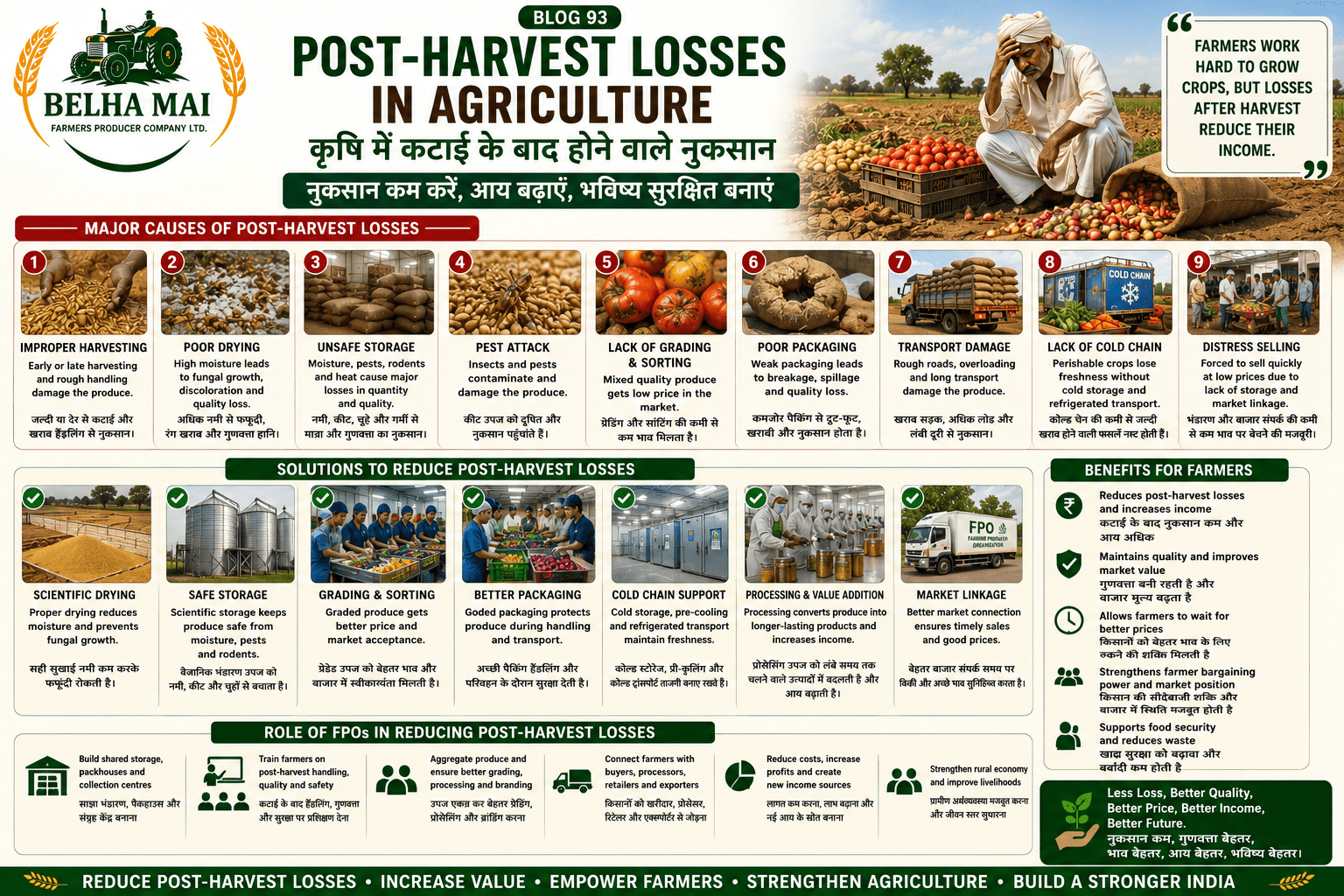
Post-harvest losses in agriculture happen due to many reasons. Poor harvesting methods, delayed drying, unsafe storage, moisture, pest attack, poor packaging, rough transport, lack of grading, lack of cold chain and weak market linkage all contribute to losses. These losses are higher when farmers do not have access to proper infrastructure.
कटाई के बाद नुकसान क्यों होता है
कृषि में कटाई के बाद होने वाले नुकसान कई कारणों से होते हैं। खराब कटाई पद्धति, देर से सुखाई, असुरक्षित भंडारण, नमी, कीट प्रकोप, खराब पैकिंग, खराब ढुलाई, ग्रेडिंग की कमी, कोल्ड चेन की कमी और कमजोर बाजार संपर्क सभी नुकसान बढ़ाते हैं। जब किसानों के पास सही इंफ्रास्ट्रक्चर नहीं होता, तो ये नुकसान और अधिक हो जाते हैं।
Small farmers suffer more from post-harvest losses
Small farmers are affected more because they usually do not have their own storage, drying platform, packhouse, cold room, grading unit or transport vehicle. They often sell immediately after harvest because they cannot hold produce safely. This weakens their bargaining power and reduces income.
छोटे किसान कटाई के बाद नुकसान से अधिक प्रभावित होते हैं
छोटे किसान अधिक प्रभावित होते हैं क्योंकि उनके पास अपना भंडारण, सुखाई प्लेटफॉर्म, पैकहाउस, कोल्ड रूम, ग्रेडिंग यूनिट या ट्रांसपोर्ट वाहन नहीं होता। वे अक्सर कटाई के तुरंत बाद बेच देते हैं क्योंकि वे उपज को सुरक्षित नहीं रख सकते। इससे उनकी सौदेबाजी शक्ति कमजोर होती है और आय घटती है।
Poor harvesting causes early losses
Losses can begin at the harvesting stage itself. If crops are harvested too early or too late, quality may decline. Rough handling during harvesting can damage fruits, vegetables and grains. In horticulture crops like mango, amla, guava and vegetables, careful harvesting is very important for better market value.
खराब कटाई से शुरुआती नुकसान होता है
नुकसान कटाई के समय से ही शुरू हो सकता है। यदि फसल बहुत जल्दी या बहुत देर से काटी जाए, तो गुणवत्ता घट सकती है। कटाई के दौरान खराब हैंडलिंग से फल, सब्जियां और अनाज खराब हो सकते हैं। आम, आंवला, अमरूद और सब्जियों जैसी बागवानी फसलों में सावधानी से कटाई बेहतर बाजार मूल्य के लिए बहुत जरूरी है।
Drying is very important for grains and pulses
Grains, pulses, oilseeds and seeds need proper drying before storage. If moisture remains high, fungal growth, bad smell, discoloration, pest attack and quality loss can happen. Farmers often lose income because produce is stored before it is properly dried.
अनाज और दलहन के लिए सुखाई बहुत जरूरी है
अनाज, दलहन, तिलहन और बीजों को भंडारण से पहले सही तरीके से सुखाना जरूरी है। यदि नमी अधिक रह जाए, तो फफूंद, बदबू, रंग खराब होना, कीट प्रकोप और गुणवत्ता नुकसान हो सकता है। कई किसान इसलिए आय खो देते हैं क्योंकि उपज पूरी तरह सूखने से पहले ही store कर दी जाती है।
Moisture is a major cause of post-harvest losses
Moisture is one of the biggest reasons behind post-harvest losses in agriculture. Moisture damages grains, pulses, spices and seeds. It also affects packaging, storage life and market acceptance. Scientific drying and moisture-safe storage can reduce this loss.
नमी कटाई के बाद नुकसान का बड़ा कारण है
नमी कृषि में कटाई के बाद होने वाले नुकसान का एक बड़ा कारण है। नमी अनाज, दलहन, मसाले और बीजों को खराब करती है। यह पैकिंग, storage life और market acceptance को भी प्रभावित करती है। वैज्ञानिक सुखाई और moisture-safe storage से यह नुकसान कम हो सकता है।
Unsafe storage increases losses
If produce is stored in unsafe rooms, open sheds, damp floors or poor-quality bags, losses increase. Moisture, insects, rodents, dust and heat can damage produce. Scientific storage protects produce quality and helps farmers wait for better prices.
असुरक्षित भंडारण नुकसान बढ़ाता है
यदि उपज असुरक्षित कमरों, खुले शेड, गीले फर्श या खराब बोरियों में रखी जाए, तो नुकसान बढ़ जाता है। नमी, कीट, चूहे, धूल और गर्मी उपज को नुकसान पहुंचा सकते हैं। वैज्ञानिक भंडारण उपज की गुणवत्ता बचाता है और किसानों को बेहतर भाव का इंतजार करने में मदद करता है।
Lack of cold chain affects perishable crops
Fruits, vegetables, flowers and dairy-related products need cold chain support. Without cold storage, pre-cooling and refrigerated transport, perishable crops lose freshness quickly. Farmers are forced to sell fast, often at low prices.
कोल्ड चेन की कमी जल्दी खराब होने वाली फसलों को प्रभावित करती है
फल, सब्जियां, फूल और डेयरी से जुड़े उत्पादों को cold chain support की जरूरत होती है। कोल्ड स्टोरेज, pre-cooling और refrigerated transport न होने पर जल्दी खराब होने वाली फसलें ताजगी खो देती हैं। किसान जल्दी बेचने के लिए मजबूर होता है और अक्सर कम भाव मिलता है।
Grading and sorting reduce losses
Grading and sorting separate produce according to size, quality, maturity and condition. Damaged produce can be removed, and better quality produce can be sold at better prices. Without grading, farmers may receive one average price for mixed-quality produce.
ग्रेडिंग और सॉर्टिंग नुकसान कम करते हैं
ग्रेडिंग और सॉर्टिंग उपज को आकार, गुणवत्ता, maturity और स्थिति के अनुसार अलग करती है। खराब उपज अलग की जा सकती है और बेहतर गुणवत्ता वाली उपज बेहतर दाम पर बिक सकती है। ग्रेडिंग न होने पर किसान को मिली-जुली गुणवत्ता की उपज का एक औसत भाव मिलता है।
Packaging protects produce during transport
Good packaging protects produce from pressure, heat, moisture and physical damage. Fruits and vegetables need crates, ventilated boxes or suitable packaging. Grains and pulses need clean, dry and strong bags. Poor packaging increases damage and reduces market value.
पैकेजिंग ढुलाई के दौरान उपज की रक्षा करती है
अच्छी पैकेजिंग उपज को दबाव, गर्मी, नमी और physical damage से बचाती है। फल और सब्जियों के लिए crates, ventilated boxes या suitable packaging जरूरी है। अनाज और दलहन के लिए साफ, सूखी और मजबूत बोरियां चाहिए। खराब पैकेजिंग नुकसान बढ़ाती है और बाजार मूल्य घटाती है।
Transport damage reduces farmer income
Many post-harvest losses happen during transport. Overloading, rough roads, poor vehicle condition, bad stacking and long travel time can damage produce. In fruits and vegetables, bruising and crushing reduce quality and price.
ढुलाई में नुकसान किसान आय घटाता है
कटाई के बाद कई नुकसान ढुलाई के दौरान होते हैं। overloading, खराब सड़क, खराब वाहन, गलत stacking और लंबी दूरी उपज को नुकसान पहुंचा सकती है। फल और सब्जियों में दबना और चोट लगना गुणवत्ता और भाव दोनों घटाता है।
Delayed selling increases spoilage
If farmers cannot sell produce quickly and do not have proper storage, spoilage increases. This is common in vegetables and fruits. Delay in sale without cold chain can turn a good harvest into a financial loss.
बिक्री में देरी से खराबी बढ़ती है
यदि किसान उपज जल्दी नहीं बेच पाता और उसके पास सही भंडारण नहीं है, तो खराबी बढ़ती है। यह सब्जियों और फलों में आम समस्या है। कोल्ड चेन के बिना बिक्री में देरी अच्छी फसल को आर्थिक नुकसान में बदल सकती है।
Post-harvest losses reduce bargaining power
When farmers know their produce may spoil soon, they cannot bargain strongly. Buyers may offer lower prices because they understand the farmer’s urgency. Better storage and post-harvest infrastructure give farmers the power to wait and negotiate.
कटाई के बाद नुकसान सौदेबाजी शक्ति घटाता है
जब किसान जानता है कि उसकी उपज जल्दी खराब हो सकती है, तो वह मजबूत सौदेबाजी नहीं कर पाता। खरीदार कम भाव दे सकता है क्योंकि उसे किसान की मजबूरी पता होती है। बेहतर भंडारण और post-harvest infrastructure किसान को रुकने और बातचीत करने की शक्ति देता है।
Market linkage is important for reducing losses
Even good storage is not enough without market linkage. Farmers need buyers, price information, transport planning and timely sale. FPOs can connect farmers with mandis, processors, retailers, exporters, institutional buyers and e-commerce platforms.
नुकसान कम करने के लिए बाजार संपर्क जरूरी है
केवल अच्छा भंडारण पर्याप्त नहीं है यदि बाजार संपर्क नहीं है। किसानों को खरीदार, भाव जानकारी, ट्रांसपोर्ट योजना और समय पर बिक्री की जरूरत होती है। FPO किसानों को मंडी, प्रोसेसर, रिटेलर, निर्यातक, संस्थागत खरीदार और ई-कॉमर्स प्लेटफॉर्म से जोड़ सकता है।
Value addition reduces post-harvest loss
Value addition can convert produce into longer-lasting products. Fruits can become pulp, juice, jam, powder or dried products. Grains can become flour. Millets can become ready-to-cook products. Amla can become powder, juice and health products. Value addition reduces waste and increases income.
मूल्य संवर्धन कटाई के बाद नुकसान कम करता है
मूल्य संवर्धन उपज को लंबे समय तक टिकने वाले उत्पादों में बदल सकता है। फल pulp, juice, jam, powder या dried products बन सकते हैं। अनाज flour बन सकता है। मिलेट्स ready-to-cook products बन सकते हैं। आंवला powder, juice और health products बन सकता है। मूल्य संवर्धन waste घटाता है और आय बढ़ाता है।
Processing creates income opportunities
Processing helps farmers move beyond raw produce selling. When FPOs process produce, they can create branded products, reduce spoilage and access better markets. Processing also creates rural employment for women and youth.
प्रोसेसिंग आय के अवसर बनाती है
प्रोसेसिंग किसानों को कच्ची उपज बेचने से आगे ले जाती है। जब FPO उपज की प्रोसेसिंग करता है, तो वह branded products बना सकता है, खराबी कम कर सकता है और बेहतर बाजारों तक पहुंच सकता है। प्रोसेसिंग महिलाओं और युवाओं के लिए ग्रामीण रोजगार भी बनाती है।
Packhouse infrastructure is essential
Packhouses are important for cleaning, washing, grading, sorting, packing and pre-cooling of horticulture crops. Without packhouses, farmers often sell ungraded and poorly packed produce, which reduces value.
पैकहाउस इंफ्रास्ट्रक्चर जरूरी है
पैकहाउस बागवानी फसलों की सफाई, washing, grading, sorting, packing और pre-cooling के लिए महत्वपूर्ण हैं। पैकहाउस के बिना किसान अक्सर ungraded और खराब पैक की गई उपज बेचता है, जिससे मूल्य घट जाता है।
Storage gives farmers time
Time is very important in agriculture marketing. If the farmer has no time, the farmer has no bargaining power. Storage gives farmers time to compare prices, arrange buyers, plan transport and sell better. This is why storage is directly linked with income.
भंडारण किसान को समय देता है
कृषि बाजार में समय बहुत महत्वपूर्ण है। यदि किसान के पास समय नहीं है, तो उसकी सौदेबाजी शक्ति नहीं होती। भंडारण किसान को भाव की तुलना करने, खरीदार खोजने, ट्रांसपोर्ट योजना बनाने और बेहतर बिक्री का समय देता है। इसलिए भंडारण सीधे आय से जुड़ा है।
Digital tools can reduce losses
Digital tools can help farmers with weather alerts, price information, buyer contacts, storage records, transport coordination and payment tracking. Simple digital systems through FPOs can improve post-harvest planning.
डिजिटल उपकरण नुकसान कम कर सकते हैं
डिजिटल उपकरण किसानों को मौसम अलर्ट, भाव जानकारी, खरीदार संपर्क, storage records, transport coordination और payment tracking में मदद कर सकते हैं। FPO के माध्यम से सरल digital systems post-harvest planning को बेहतर बना सकते हैं।
FPOs can reduce post-harvest losses
Farmer Producer Organizations can reduce post-harvest losses by creating shared infrastructure. This includes collection centres, storage units, packhouses, cold rooms, grading lines, drying platforms, processing units and market linkage systems.
FPO कटाई के बाद नुकसान कम कर सकते हैं
Farmer Producer Organizations shared infrastructure बनाकर कटाई के बाद नुकसान कम कर सकते हैं। इसमें collection centres, storage units, packhouses, cold rooms, grading lines, drying platforms, processing units और market linkage systems शामिल हैं।
FPOs help in aggregation
Aggregation means collecting produce from many farmers. When produce is aggregated, the FPO can grade, store, process and sell in bulk. This reduces individual farmer risk and improves market power.
FPO एकत्रीकरण में मदद करते हैं
Aggregation का मतलब है कई किसानों की उपज इकट्ठा करना। जब उपज एकत्र होती है, तो FPO उसे grade, store, process और bulk में sell कर सकता है। इससे individual farmer risk घटता है और market power बढ़ती है।
FPOs improve quality control
Quality control is important for reducing losses and getting better prices. FPOs can train farmers on harvesting, drying, sorting, grading, packing and storage. When quality improves, farmer income improves.
FPO गुणवत्ता नियंत्रण सुधारते हैं
गुणवत्ता नियंत्रण नुकसान कम करने और बेहतर दाम पाने के लिए जरूरी है। FPO किसानों को harvesting, drying, sorting, grading, packing और storage पर training दे सकता है। जब गुणवत्ता सुधरती है, तो किसान आय भी सुधरती है।
FPOs can connect with processors and buyers
Post-harvest losses reduce when produce moves quickly and properly to the right buyer. FPOs can connect farmers with processors, wholesalers, retailers, exporters, institutions and food companies. This creates stable demand and better planning.
FPO प्रोसेसर और खरीदारों से जोड़ सकते हैं
कटाई के बाद नुकसान तब घटता है जब उपज सही समय पर और सही तरीके से सही खरीदार तक पहुंचती है। FPO किसानों को processors, wholesalers, retailers, exporters, institutions और food companies से जोड़ सकता है। इससे stable demand और बेहतर planning बनती है।
Training is necessary for post-harvest management
Many losses happen because farmers do not receive practical training. Training should cover harvesting stage, moisture control, drying, cleaning, packaging, stacking, pest control, storage hygiene and transport handling. Training must be simple and practical.
post-harvest management के लिए प्रशिक्षण जरूरी है
कई नुकसान इसलिए होते हैं क्योंकि किसानों को व्यावहारिक प्रशिक्षण नहीं मिलता। प्रशिक्षण में harvesting stage, moisture control, drying, cleaning, packaging, stacking, pest control, storage hygiene और transport handling शामिल होना चाहिए। प्रशिक्षण सरल और व्यावहारिक होना चाहिए।
Belha Mai FPO perspective
Belha Mai Farmers Producer Company Ltd. believes that reducing post-harvest losses in agriculture is essential for improving farmer income. Farmers need not only better production but also better storage, grading, processing, packaging, market linkage and value addition. FPOs can become the bridge between farmer produce and profitable markets.
बेल्हा माई FPO का दृष्टिकोण
Belha Mai Farmers Producer Company Ltd. का मानना है कि कृषि में कटाई के बाद होने वाले नुकसान को कम करना किसान आय बढ़ाने के लिए जरूरी है। किसानों को केवल बेहतर उत्पादन नहीं, बल्कि बेहतर भंडारण, ग्रेडिंग, प्रोसेसिंग, पैकिंग, बाजार संपर्क और मूल्य संवर्धन की भी जरूरत है। FPO किसान उपज और लाभदायक बाजारों के बीच पुल बन सकता है।
Conclusion
Post-harvest losses in agriculture reduce farmer income even after a successful crop season. Poor harvesting, moisture, unsafe storage, lack of drying, poor grading, bad packaging, rough transport, cold chain gaps and weak market linkage all cause losses. Small farmers suffer the most because they lack individual infrastructure.
निष्कर्ष
कृषि में कटाई के बाद होने वाले नुकसान अच्छी फसल के बाद भी किसान आय घटा देते हैं। खराब कटाई, नमी, असुरक्षित भंडारण, सुखाई की कमी, कमजोर ग्रेडिंग, खराब पैकिंग, खराब ढुलाई, कोल्ड चेन की कमी और कमजोर बाजार संपर्क सभी नुकसान का कारण बनते हैं। छोटे किसान सबसे अधिक प्रभावित होते हैं क्योंकि उनके पास व्यक्तिगत इंफ्रास्ट्रक्चर नहीं होता।
The way forward
The way forward is scientific harvesting, drying, storage, grading, sorting, packaging, cold chain, packhouse, processing, value addition and FPO-led market linkage. If farmers can reduce post-harvest losses, they can earn more from the same crop without increasing land area.
आगे का रास्ता
आगे का रास्ता scientific harvesting, drying, storage, grading, sorting, packaging, cold chain, packhouse, processing, value addition और FPO-led market linkage है। यदि किसान कटाई के बाद नुकसान कम कर सकें, तो वे बिना जमीन बढ़ाए उसी फसल से अधिक आय प्राप्त कर सकते हैं।
FAQ in English
What are post-harvest losses in agriculture?
Post-harvest losses in agriculture are losses that happen after harvesting due to poor handling, drying, storage, grading, packaging, transport, cold chain gaps and market delays.
Why are post-harvest losses important?
Post-harvest losses are important because they reduce farmer income, crop quality, food availability and market value even after a good harvest.
What causes post-harvest losses?
Post-harvest losses are caused by moisture, pest attack, unsafe storage, poor drying, lack of cold storage, rough transport, bad packaging and delayed selling.
How do post-harvest losses affect small farmers?
Small farmers suffer more because they usually do not have storage, drying platforms, cold rooms, packhouses, grading units or transport facilities.
How can FPOs reduce post-harvest losses?
FPOs can reduce post-harvest losses through collection centres, storage, packhouses, cold rooms, grading, sorting, processing, value addition and direct market linkage.
Why is cold storage important?
Cold storage is important for perishable crops such as fruits, vegetables, flowers, mango and amla because it protects freshness and reduces spoilage.
How does value addition reduce losses?
Value addition converts raw produce into longer-lasting products such as flour, pulp, juice, powder, dried products and packaged foods, reducing spoilage and increasing income.
What is the best solution for post-harvest losses in agriculture?
The best solution is a combination of proper harvesting, drying, storage, grading, packaging, cold chain, processing, value addition and FPO-led market linkage.
FAQ in Hindi
कृषि में कटाई के बाद होने वाले नुकसान क्या हैं?
कृषि में कटाई के बाद होने वाले नुकसान वे नुकसान हैं जो कटाई के बाद खराब हैंडलिंग, सुखाई, भंडारण, ग्रेडिंग, पैकिंग, ढुलाई, cold chain की कमी और बाजार देरी के कारण होते हैं।
कटाई के बाद नुकसान महत्वपूर्ण क्यों हैं?
कटाई के बाद नुकसान महत्वपूर्ण हैं क्योंकि अच्छी फसल होने के बाद भी ये किसान आय, फसल गुणवत्ता, भोजन उपलब्धता और बाजार मूल्य को कम कर देते हैं।
कटाई के बाद नुकसान के कारण क्या हैं?
कटाई के बाद नुकसान के कारण नमी, कीट प्रकोप, असुरक्षित भंडारण, खराब सुखाई, cold storage की कमी, खराब ढुलाई, खराब पैकिंग और बिक्री में देरी हैं।
छोटे किसानों पर कटाई के बाद नुकसान का क्या प्रभाव पड़ता है?
छोटे किसान अधिक प्रभावित होते हैं क्योंकि उनके पास storage, drying platforms, cold rooms, packhouses, grading units या transport facilities नहीं होतीं।
FPO कटाई के बाद नुकसान कैसे कम कर सकते हैं?
FPO collection centres, storage, packhouses, cold rooms, grading, sorting, processing, value addition और direct market linkage के माध्यम से नुकसान कम कर सकते हैं।
cold storage क्यों जरूरी है?
Cold storage फल, सब्जी, फूल, आम और आंवला जैसी जल्दी खराब होने वाली फसलों की ताजगी बचाता है और spoilage कम करता है।
value addition नुकसान कैसे कम करता है?
Value addition कच्ची उपज को flour, pulp, juice, powder, dried products और packaged foods जैसे लंबे समय तक टिकने वाले उत्पादों में बदलता है, जिससे खराबी घटती है और आय बढ़ती है।
कृषि में कटाई के बाद नुकसान का सबसे अच्छा समाधान क्या है?
सबसे अच्छा समाधान proper harvesting, drying, storage, grading, packaging, cold chain, processing, value addition और FPO-led market linkage का संयोजन है।
Internal Links Section
👉 Why small farmers struggle in India
https://belhamaifpo.com/agriculture/why-small-farmers-struggle-in-india/
👉 Major problems in Indian agriculture
https://belhamaifpo.com/agriculture/major-problems-in-indian-agriculture/
👉 How FPOs solve market linkage issues
https://belhamaifpo.com/agriculture/how-fpos-solve-market-linkage-issues/
👉 Lack of storage facilities in rural India
https://belhamaifpo.com/agriculture/rural-storage-problems-india/
👉 Impact of climate change on farming
https://belhamaifpo.com/agriculture/impact-of-climate-change-on-farming/
👉 Farmer Producer Organization
https://belhamaifpo.com/farmer-producer-organization/
👉 Agriculture
https://belhamaifpo.com/agriculture/
External Authority Links
👉 Ministry of Food Processing Industries
https://www.mofpi.gov.in/
👉 National Horticulture Board
https://nhb.gov.in/
👉 Warehousing Development and Regulatory Authority
https://wdra.gov.in/
👉 Department of Agriculture & Farmers Welfare
https://agriwelfare.gov.in/
👉 Small Farmers’ Agribusiness Consortium
https://sfacindia.com/