Introduction
Understanding the FPO business model explained in simple terms is essential for farmers, entrepreneurs, and stakeholders who want to build a successful Farmer Producer Organization. An FPO is not just a group of farmers—it is a structured business entity that operates with the goal of increasing farmer income and improving market access.
The FPO business model is based on collective strength, where farmers come together to produce, aggregate, and sell their products efficiently. In this guide, we will explain how the FPO business model works, its key components, and real-world examples.
📘 What is an FPO Business Model?
The FPO business model refers to the way a Farmer Producer Organization operates to generate revenue and provide benefits to its members. It focuses on aggregation, value addition, and collective marketing.
👉 https://belhamaifpo.com/uncategorized/farmer-producer-organizations-fpos/
⚙️ How the FPO Business Model Works
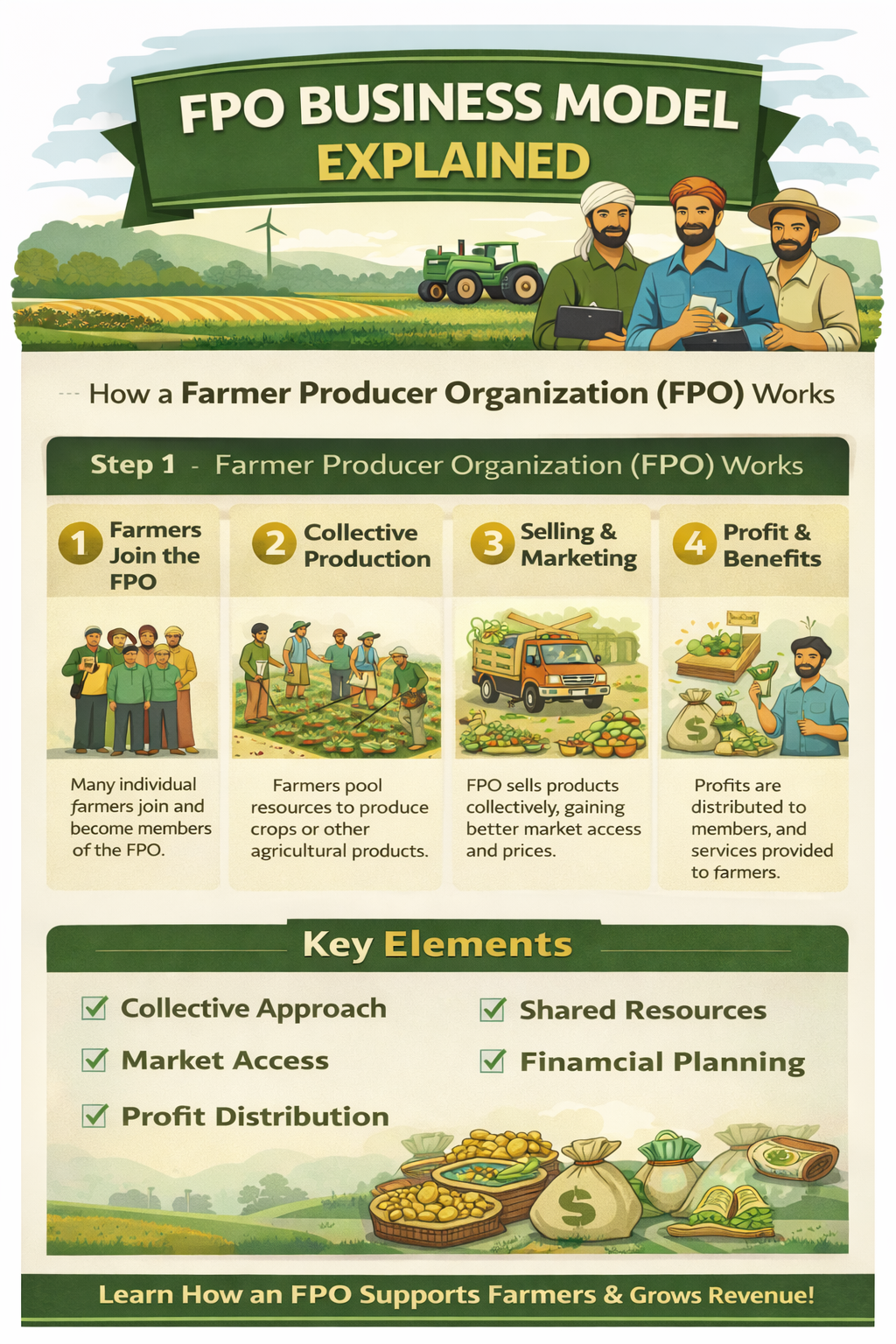
The FPO business model works in a structured process:
🔹 1. Farmer Mobilization
Farmers join together to form an organization. Each member contributes to the collective strength of the FPO.
🔹 2. Aggregation of Produce
The FPO collects produce from all members, which increases the quantity and improves bargaining power.
🔹 3. Input Supply
FPOs provide inputs like seeds, fertilizers, and pesticides at lower costs.
👉 https://belhamaifpo.com/agriculture/top-benefits-of-joining-an-fpo-for-small-farmers-in-india/
🔹 4. Processing and Value Addition
Some FPOs engage in processing activities such as grading, packaging, and agro-processing to increase product value.
🔹 5. Collective Marketing
The FPO sells produce in bulk directly to buyers, eliminating middlemen and ensuring better prices.
🔹 6. Profit Distribution
Profits earned are distributed among members or reinvested in the organization.
💰 Revenue Streams in FPO Business Model
An FPO generates income through multiple sources:
- Commission on sales
- Sale of agricultural inputs
- Processing and packaging services
- Membership fees
- Government grants and schemes
👉 (Internal Link: How FPOs earn money → upcoming blog)
🧠 Key Elements of a Successful FPO Business Model
A strong FPO business model includes:
- Collective approach
- Strong leadership
- Market linkages
- Financial planning
- Member participation
📊 Example of FPO Business Model
Let’s take a simple example:
A group of 300 farmers forms an FPO for vegetable production.
- They purchase seeds and fertilizers in bulk at lower prices
- They aggregate vegetables and sell directly to wholesale markets
- They avoid middlemen and get better pricing
- They invest in cold storage to reduce losses
👉 Result:
- Higher income
- Reduced costs
- Better market access
⚠️ Challenges in FPO Business Model
Despite its benefits, the FPO business model faces challenges such as:
- Lack of professional management
- Limited working capital
- Poor market connections
👉https://belhamaifpo.com/uncategorized/challenges-faced-by-fpos-in-india/
🏛️ Support for FPO Business Model
The FPO ecosystem is supported by institutions like the Small Farmers Agribusiness Consortium and policies regulated by the Ministry of Corporate Affairs.
These organizations provide funding, training, and technical assistance.
🔗 How to Build a Strong FPO Business Model
To build a successful FPO:
- Focus on aggregation
- Develop market linkages
- Invest in infrastructure
- Train members regularly
- Adopt digital tools
Conclusion
The FPO business model explained clearly shows how collective action can transform agriculture. By bringing farmers together, reducing costs, and improving market access, FPOs create a sustainable and profitable system.
A well-planned FPO business model can significantly improve farmer income and contribute to rural development.
⚠️ To know more about Farmer Producer companyplease check this blog: https://belhamaifpo.com/uncategorized/farmer-producer-organizations-fpos/