छोटे किसानों के लिए कार्बन क्रेडिट परियोजनाओं की चुनौतियाँ
Introduction / परिचय
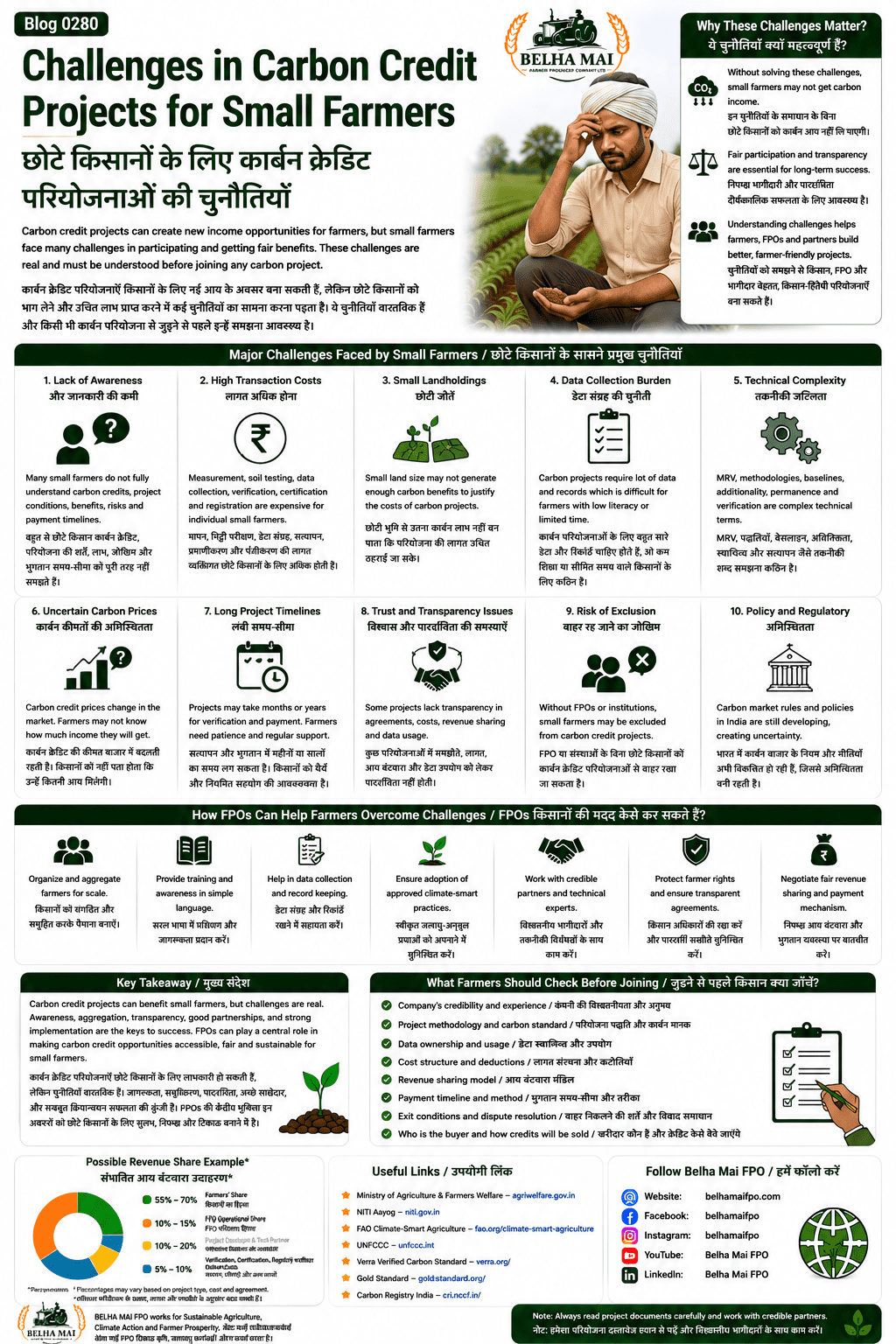
Challenges in carbon credit projects for small farmers are very important to understand because carbon credits are often presented as a new income opportunity, but the actual process is complex, technical, and long-term. Small farmers may hear that carbon farming can create additional income, but they often do not know how projects are designed, how carbon reduction is measured, who verifies the project, who buys the credits, and when payment may actually come. This lack of clarity can create confusion, wrong expectations, and risk for farmers.
छोटे किसानों के लिए कार्बन क्रेडिट परियोजनाओं की चुनौतियाँ समझना बहुत महत्वपूर्ण है, क्योंकि कार्बन क्रेडिट को अक्सर नई आय के अवसर के रूप में प्रस्तुत किया जाता है, लेकिन वास्तविक प्रक्रिया जटिल, तकनीकी और दीर्घकालिक होती है। छोटे किसान सुनते हैं कि कार्बन खेती से अतिरिक्त आय बन सकती है, लेकिन उन्हें अक्सर यह नहीं पता होता कि परियोजनाएँ कैसे बनती हैं, कार्बन कमी कैसे मापी जाती है, सत्यापन कौन करता है, क्रेडिट कौन खरीदता है और भुगतान वास्तव में कब आ सकता है। इस स्पष्टता की कमी से किसानों में भ्रम, गलत अपेक्षाएँ और जोखिम पैदा हो सकते हैं।
The topic Challenges in carbon credit projects for small farmers is especially relevant in India because most farmers are small and marginal. A single farmer may not have enough land, records, technical capacity, or market access to participate independently. Therefore, FPOs, cooperatives, credible project developers, and transparent agreements are essential to make carbon credit projects practical and safe for small farmers.
छोटे किसानों के लिए कार्बन क्रेडिट परियोजनाओं की चुनौतियाँ भारत में विशेष रूप से प्रासंगिक हैं, क्योंकि अधिकांश किसान छोटे और सीमांत हैं। एक अकेले किसान के पास स्वतंत्र रूप से भाग लेने के लिए पर्याप्त भूमि, अभिलेख, तकनीकी क्षमता या बाज़ार पहुँच नहीं हो सकती। इसलिए छोटे किसानों के लिए कार्बन क्रेडिट परियोजनाओं को व्यावहारिक और सुरक्षित बनाने के लिए किसान उत्पादक संगठन, सहकारी संस्थाएँ, विश्वसनीय परियोजना विकासकर्ता और पारदर्शी समझौते आवश्यक हैं।
Why Small Farmers Face More Challenges / छोटे किसानों को अधिक चुनौतियाँ क्यों आती हैं
Small farmers usually have limited landholding, limited financial capacity, and limited access to technical services. Carbon credit projects require measurement, reporting, verification, certification, field data, soil testing, monitoring, and buyer linkage. These requirements may be difficult for a small farmer to manage alone.
छोटे किसानों के पास सामान्यतः सीमित भूमि, सीमित आर्थिक क्षमता और तकनीकी सेवाओं तक सीमित पहुँच होती है। कार्बन क्रेडिट परियोजनाओं में मापन, प्रतिवेदन, सत्यापन, प्रमाणन, खेत आँकड़े, मिट्टी परीक्षण, निगरानी और खरीदार से जुड़ाव की आवश्यकता होती है। इन आवश्यकताओं को अकेले संभालना छोटे किसान के लिए कठिन हो सकता है।
This is one of the biggest Challenges in carbon credit projects for small farmers. Carbon markets work on scale and verified data. If farmers are scattered and unorganised, project costs become high and monitoring becomes difficult. This is why farmer aggregation through FPOs becomes necessary.
यह छोटे किसानों के लिए कार्बन क्रेडिट परियोजनाओं की चुनौतियाँ में सबसे बड़ी चुनौतियों में से एक है। कार्बन बाज़ार बड़े स्तर और सत्यापित आँकड़ों पर काम करते हैं। यदि किसान बिखरे हुए और असंगठित हैं, तो परियोजना लागत बढ़ जाती है और निगरानी कठिन हो जाती है। इसलिए किसान उत्पादक संगठनों के माध्यम से किसानों को संगठित करना आवश्यक हो जाता है।
Challenge 1: Lack of Awareness / चुनौती 1: जागरूकता की कमी
The first major challenge is lack of awareness. Many farmers hear the term carbon credit, but they do not understand what it actually means. They may think that simply planting trees, using compost, or doing natural farming will immediately create carbon income. In reality, carbon credits are generated only after proper measurement, verification, certification, issuance, and sale.
पहली बड़ी चुनौती जागरूकता की कमी है। बहुत से किसान कार्बन क्रेडिट शब्द सुनते हैं, लेकिन वे इसका वास्तविक अर्थ नहीं समझते। वे सोच सकते हैं कि केवल पेड़ लगाने, कंपोस्ट उपयोग करने या प्राकृतिक खेती करने से तुरंत कार्बन आय बन जाएगी। वास्तव में कार्बन क्रेडिट सही मापन, सत्यापन, प्रमाणन, जारी होने और बिक्री के बाद ही बनते हैं।
This awareness gap is central to Challenges in carbon credit projects for small farmers because wrong understanding can lead to wrong decisions. Farmers may join projects without knowing their responsibilities, payment timeline, data use, and risks. Proper training in simple language is essential before any farmer joins a carbon project.
यह जागरूकता की कमी छोटे किसानों के लिए कार्बन क्रेडिट परियोजनाओं की चुनौतियाँ का मुख्य भाग है, क्योंकि गलत समझ से गलत निर्णय हो सकते हैं। किसान अपनी जिम्मेदारियाँ, भुगतान समय-सीमा, आँकड़ों का उपयोग और जोखिम समझे बिना परियोजनाओं से जुड़ सकते हैं। किसी भी किसान के कार्बन परियोजना से जुड़ने से पहले सरल भाषा में सही प्रशिक्षण आवश्यक है।
Challenge 2: Small Landholding and Low Scale / चुनौती 2: छोटी भूमि और कम स्तर
Small farmers usually have small land parcels. A single farmer may generate very little carbon benefit compared to the cost of measurement and verification. Carbon projects involve fixed costs such as project design, baseline survey, soil testing, monitoring, verification, certification, and registry. If the project covers only a few farmers, the cost per farmer becomes very high.
छोटे किसानों के पास सामान्यतः छोटे भूमि टुकड़े होते हैं। एक अकेला किसान मापन और सत्यापन की लागत की तुलना में बहुत कम कार्बन लाभ बना सकता है। कार्बन परियोजनाओं में परियोजना रूपरेखा, आधार सर्वेक्षण, मिट्टी परीक्षण, निगरानी, सत्यापन, प्रमाणन और पंजीकरण जैसी स्थिर लागतें होती हैं। यदि परियोजना में केवल कुछ किसान शामिल हों, तो प्रति किसान लागत बहुत अधिक हो जाती है।
This is why scale is one of the most practical Challenges in carbon credit projects for small farmers. FPOs can reduce this problem by aggregating many farmers. When hundreds or thousands of farmers participate together, the project becomes more viable, measurable, and attractive for project developers and buyers.
इसीलिए बड़ा स्तर छोटे किसानों के लिए कार्बन क्रेडिट परियोजनाओं की चुनौतियाँ में सबसे व्यावहारिक चुनौती है। किसान उत्पादक संगठन अनेक किसानों को संगठित करके इस समस्या को कम कर सकते हैं। जब सैकड़ों या हजारों किसान साथ भाग लेते हैं, तो परियोजना अधिक व्यावहारिक, मापने योग्य और परियोजना विकासकर्ताओं तथा खरीदारों के लिए आकर्षक बनती है।
Challenge 3: High Cost of Measurement and Verification / चुनौती 3: मापन और सत्यापन की अधिक लागत
Carbon credit projects need strong measurement and verification. Soil testing, field visits, digital tools, data collection, satellite monitoring, verification agency fees, certification fees, and registry costs can make projects expensive. Small farmers cannot usually pay these costs upfront.
कार्बन क्रेडिट परियोजनाओं को मजबूत मापन और सत्यापन की आवश्यकता होती है। मिट्टी परीक्षण, खेत भ्रमण, डिजिटल साधन, आँकड़ा संग्रह, उपग्रह निगरानी, सत्यापन संस्था शुल्क, प्रमाणन शुल्क और पंजीकरण लागत परियोजना को महंगा बना सकते हैं। छोटे किसान सामान्यतः ये लागतें पहले से नहीं दे सकते।
This is one of the serious Challenges in carbon credit projects for small farmers because if costs are not clearly explained, farmers may later feel cheated when deductions happen from carbon revenue. Every project should clearly mention who pays the cost, what will be deducted, and how net income will be calculated.
यह छोटे किसानों के लिए कार्बन क्रेडिट परियोजनाओं की चुनौतियाँ में गंभीर चुनौती है, क्योंकि यदि लागतें स्पष्ट रूप से नहीं समझाई गईं, तो बाद में कार्बन आय से कटौती होने पर किसान ठगा हुआ महसूस कर सकते हैं। हर परियोजना में यह स्पष्ट होना चाहिए कि लागत कौन देगा, क्या कटेगा और शुद्ध आय कैसे निकलेगी।
Challenge 4: Complex Documentation / चुनौती 4: जटिल दस्तावेज़ीकरण
Carbon projects require detailed documentation. Farmer details, land records, crop records, input use, irrigation details, soil testing reports, photographs, location records, practice adoption records, and monitoring reports may be needed. Many small farmers are not used to maintaining such detailed records.
कार्बन परियोजनाओं में विस्तृत दस्तावेज़ीकरण आवश्यक होता है। किसान विवरण, भूमि अभिलेख, फसल अभिलेख, कृषि सामग्री उपयोग, सिंचाई विवरण, मिट्टी परीक्षण प्रतिवेदन, चित्र, स्थान अभिलेख, पद्धति अपनाने के प्रमाण और निगरानी प्रतिवेदन की आवश्यकता हो सकती है। बहुत से छोटे किसान ऐसे विस्तृत अभिलेख रखने के अभ्यस्त नहीं होते।
Documentation is one of the most difficult Challenges in carbon credit projects for small farmers because poor records can weaken the project. Even if farmers follow good practices, carbon credits may not be issued if the proof is missing. FPOs can help by creating simple farmer-wise record systems.
दस्तावेज़ीकरण छोटे किसानों के लिए कार्बन क्रेडिट परियोजनाओं की चुनौतियाँ में सबसे कठिन चुनौतियों में से एक है, क्योंकि कमजोर अभिलेख परियोजना को कमजोर बना सकते हैं। किसान अच्छी पद्धतियाँ अपनाएँ, फिर भी यदि प्रमाण नहीं हैं, तो कार्बन क्रेडिट जारी नहीं हो सकते। किसान उत्पादक संगठन सरल किसानवार अभिलेख व्यवस्था बनाकर मदद कर सकते हैं।
Challenge 5: Long Time Period / चुनौती 5: लंबी समय अवधि
Carbon credit projects usually take time. Soil carbon improvement may take several seasons. Tree plantation projects may take years to show meaningful carbon storage. Verification and certification also take time. Farmers expecting quick payment may lose interest if the timeline is not explained clearly.
कार्बन क्रेडिट परियोजनाओं में सामान्यतः समय लगता है। मिट्टी कार्बन सुधार में कई मौसम लग सकते हैं। वृक्षारोपण परियोजनाओं में महत्वपूर्ण कार्बन संग्रहण दिखाने में वर्षों लग सकते हैं। सत्यापन और प्रमाणन में भी समय लगता है। यदि समय-सीमा स्पष्ट न हो, तो तुरंत भुगतान की उम्मीद रखने वाले किसान रुचि खो सकते हैं।
This long timeline is one of the important Challenges in carbon credit projects for small farmers. Farmers need honest communication from the beginning. Carbon credit income should be explained as possible future income, not immediate income.
यह लंबी समय-सीमा छोटे किसानों के लिए कार्बन क्रेडिट परियोजनाओं की चुनौतियाँ में महत्वपूर्ण चुनौती है। किसानों को शुरुआत से ही ईमानदार संवाद चाहिए। कार्बन क्रेडिट आय को संभावित भविष्य आय के रूप में समझाना चाहिए, तुरंत आय के रूप में नहीं।
Challenge 6: Uncertain Carbon Credit Price / चुनौती 6: कार्बन क्रेडिट मूल्य की अनिश्चितता
Carbon credit prices can change based on buyer demand, project quality, certification standard, credit type, market reputation, and global carbon market conditions. Farmers may expect a fixed price, but in many voluntary carbon market projects, price can vary.
कार्बन क्रेडिट का मूल्य खरीदार मांग, परियोजना गुणवत्ता, प्रमाणन मानक, क्रेडिट प्रकार, बाज़ार प्रतिष्ठा और वैश्विक कार्बन बाज़ार स्थिति के आधार पर बदल सकता है। किसान निश्चित मूल्य की उम्मीद कर सकते हैं, लेकिन कई स्वैच्छिक कार्बन बाज़ार परियोजनाओं में मूल्य बदल सकता है।
Price uncertainty is one of the practical Challenges in carbon credit projects for small farmers. Farmers should not join a project only because someone promises a high price. They should ask how the price will be decided, whether a buyer is already available, and what happens if credits sell at a lower price.
मूल्य अनिश्चितता छोटे किसानों के लिए कार्बन क्रेडिट परियोजनाओं की चुनौतियाँ में व्यावहारिक चुनौती है। किसानों को केवल इसलिए परियोजना से नहीं जुड़ना चाहिए कि कोई ऊँचे मूल्य का वादा कर रहा है। उन्हें पूछना चाहिए कि मूल्य कैसे तय होगा, क्या खरीदार पहले से उपलब्ध है और यदि क्रेडिट कम मूल्य पर बिके तो क्या होगा।
Challenge 7: Unclear Revenue Sharing / चुनौती 7: अस्पष्ट आय बँटवारा
Revenue sharing is often a sensitive issue. Many parties may be involved in a carbon project, including farmers, FPOs, project developers, measurement partners, verification agencies, registries, and buyers. If the revenue-sharing model is not clear, disputes can arise later.
आय बँटवारा अक्सर संवेदनशील विषय होता है। कार्बन परियोजना में किसान, किसान उत्पादक संगठन, परियोजना विकासकर्ता, मापन भागीदार, सत्यापन संस्था, पंजीकरण व्यवस्था और खरीदार जैसे कई पक्ष शामिल हो सकते हैं। यदि आय बँटवारा मॉडल स्पष्ट न हो, तो बाद में विवाद हो सकते हैं।
This is one of the major Challenges in carbon credit projects for small farmers because farmers may not understand gross revenue, net revenue, cost deduction, farmer share, FPO share, and project developer share. All these details should be written in simple language before the project starts.
यह छोटे किसानों के लिए कार्बन क्रेडिट परियोजनाओं की चुनौतियाँ में बड़ी चुनौती है, क्योंकि किसान कुल आय, शुद्ध आय, लागत कटौती, किसान हिस्सा, किसान उत्पादक संगठन हिस्सा और परियोजना विकासकर्ता हिस्सा नहीं समझ सकते। परियोजना शुरू होने से पहले ये सभी बातें सरल भाषा में लिखित होनी चाहिए।
Challenge 8: Data Ownership and Farmer Rights / चुनौती 8: आँकड़ा स्वामित्व और किसान अधिकार
Carbon projects collect a lot of farmer data. This may include land details, crop practices, input use, soil test reports, photographs, location information, and farming history. Farmers should know who owns this data, how it will be used, whether it will be shared, and whether they can withdraw consent.
कार्बन परियोजनाएँ किसानों के बहुत से आँकड़े एकत्र करती हैं। इसमें भूमि विवरण, कृषि पद्धतियाँ, कृषि सामग्री उपयोग, मिट्टी परीक्षण प्रतिवेदन, चित्र, स्थान जानकारी और खेती इतिहास शामिल हो सकते हैं। किसानों को पता होना चाहिए कि इन आँकड़ों का स्वामित्व किसके पास होगा, उनका उपयोग कैसे होगा, क्या उन्हें साझा किया जाएगा और क्या वे अपनी सहमति वापस ले सकते हैं।
Data ownership is one of the less discussed Challenges in carbon credit projects for small farmers. Farmers may not realise the value of their data. FPOs must protect farmer data and ensure that agreements clearly mention data use and farmer consent.
आँकड़ा स्वामित्व छोटे किसानों के लिए कार्बन क्रेडिट परियोजनाओं की चुनौतियाँ में कम चर्चा की जाने वाली चुनौती है। किसान अपने आँकड़ों का मूल्य नहीं समझ पाते। किसान उत्पादक संगठनों को किसान आँकड़ों की रक्षा करनी चाहिए और यह सुनिश्चित करना चाहिए कि समझौतों में आँकड़ा उपयोग और किसान सहमति स्पष्ट हो।
Challenge 9: Technical Complexity / चुनौती 9: तकनीकी जटिलता
Carbon projects involve many technical terms such as baseline, additionality, permanence, leakage, double counting, MRV, validation, verification, registry, and carbon rights. These terms are difficult for small farmers to understand without proper explanation.
कार्बन परियोजनाओं में आधार स्थिति, अतिरिक्तता, स्थायित्व, रिसाव, दोहरी गिनती, मापन-प्रतिवेदन-सत्यापन, मान्यता, सत्यापन, पंजीकरण और कार्बन अधिकार जैसे अनेक तकनीकी शब्द शामिल होते हैं। सही समझाए बिना छोटे किसानों के लिए इन शब्दों को समझना कठिन होता है।
Technical complexity is one of the key Challenges in carbon credit projects for small farmers. Project developers and FPOs should explain every concept in simple farmer language. Farmers should never be asked to sign agreements without understanding technical responsibilities and risks.
तकनीकी जटिलता छोटे किसानों के लिए कार्बन क्रेडिट परियोजनाओं की चुनौतियाँ में मुख्य चुनौती है। परियोजना विकासकर्ताओं और किसान उत्पादक संगठनों को हर विषय सरल किसान भाषा में समझाना चाहिए। किसानों से तकनीकी जिम्मेदारियाँ और जोखिम समझे बिना कभी भी समझौते पर हस्ताक्षर नहीं कराने चाहिए।
Challenge 10: Practice Adoption and Continuity / चुनौती 10: पद्धति अपनाना और निरंतरता
Carbon projects require farmers to adopt agreed practices consistently. If a farmer agrees to avoid residue burning, plant trees, use compost, reduce flooding in paddy, or follow soil health practices, these actions must continue as per project rules. If farmers stop following practices, the project may lose credibility.
कार्बन परियोजनाओं में किसानों को सहमत पद्धतियों को लगातार अपनाना होता है। यदि किसान फसल अवशेष न जलाने, पेड़ लगाने, कंपोस्ट उपयोग करने, धान में पानी भरे रहने की अवधि घटाने या मिट्टी स्वास्थ्य पद्धतियाँ अपनाने पर सहमत होता है, तो इन कार्यों को परियोजना नियमों के अनुसार जारी रखना होता है। यदि किसान पद्धतियों का पालन रोक देते हैं, तो परियोजना की विश्वसनीयता घट सकती है।
This is another important part of Challenges in carbon credit projects for small farmers. Farmers may stop participating if they do not see immediate benefit. Regular training, field support, demonstrations, and communication are necessary to maintain participation.
यह छोटे किसानों के लिए कार्बन क्रेडिट परियोजनाओं की चुनौतियाँ का एक और महत्वपूर्ण हिस्सा है। यदि किसानों को तुरंत लाभ नहीं दिखता, तो वे भागीदारी रोक सकते हैं। भागीदारी बनाए रखने के लिए नियमित प्रशिक्षण, खेत सहायता, प्रदर्शन और संवाद आवश्यक हैं।
Challenge 11: Risk of False Promises / चुनौती 11: झूठे वादों का जोखिम
Because carbon credits are still new for many farmers, there is a risk of false promises. Some agents may say that farmers will receive quick income without explaining verification, certification, buyer demand, price risk, and revenue sharing. Such promises can damage farmer trust.
क्योंकि कार्बन क्रेडिट अभी भी कई किसानों के लिए नया विषय है, इसलिए झूठे वादों का जोखिम रहता है। कुछ एजेंट यह कह सकते हैं कि किसानों को सत्यापन, प्रमाणन, खरीदार मांग, मूल्य जोखिम और आय बँटवारा समझाए बिना तुरंत आय मिल जाएगी। ऐसे वादे किसान विश्वास को नुकसान पहुँचा सकते हैं।
False promises are among the most dangerous Challenges in carbon credit projects for small farmers. Farmers and FPOs should always ask for written project details, company background, carbon standard, verification process, payment terms, and exit conditions before joining.
झूठे वादे छोटे किसानों के लिए कार्बन क्रेडिट परियोजनाओं की चुनौतियाँ में सबसे खतरनाक चुनौतियों में से एक हैं। किसानों और किसान उत्पादक संगठनों को जुड़ने से पहले हमेशा लिखित परियोजना विवरण, कंपनी की पृष्ठभूमि, कार्बन मानक, सत्यापन प्रक्रिया, भुगतान शर्तें और बाहर निकलने की शर्तें माँगनी चाहिए।
Challenge 12: Lack of Local Technical Support / चुनौती 12: स्थानीय तकनीकी सहायता की कमी
Many carbon farming practices require local technical support. Direct Seeded Rice needs proper weed and water management. Tree plantation needs species selection and survival monitoring. Soil carbon improvement needs compost, residue management, and reduced tillage planning. Without local support, farmers may adopt practices incorrectly.
कई कार्बन खेती पद्धतियों के लिए स्थानीय तकनीकी सहायता की आवश्यकता होती है। सीधी बुवाई धान के लिए सही खरपतवार और जल प्रबंधन चाहिए। वृक्षारोपण के लिए प्रजाति चयन और जीवित रहने की निगरानी चाहिए। मिट्टी कार्बन सुधार के लिए कंपोस्ट, फसल अवशेष प्रबंधन और कम जुताई योजना चाहिए। स्थानीय सहायता के बिना किसान पद्धतियों को गलत तरीके से अपना सकते हैं।
This is one of the field-level Challenges in carbon credit projects for small farmers. FPOs can help by arranging training, field visits, demonstrations, machinery access, input quality support, and regular follow-up.
यह खेत स्तर की छोटे किसानों के लिए कार्बन क्रेडिट परियोजनाओं की चुनौतियाँ में से एक है। किसान उत्पादक संगठन प्रशिक्षण, खेत भ्रमण, प्रदर्शन, कृषि यंत्र पहुँच, सामग्री गुणवत्ता सहायता और नियमित संपर्क की व्यवस्था करके मदद कर सकते हैं।
Role of FPOs in Reducing These Challenges / इन चुनौतियों को कम करने में FPOs की भूमिका
FPOs can reduce many Challenges in carbon credit projects for small farmers by aggregating farmers, creating awareness, maintaining records, coordinating training, supporting monitoring, and negotiating with project developers. FPOs can act as the trusted local institution between farmers and carbon market partners.
किसान उत्पादक संगठन किसानों को संगठित करके, जागरूकता बनाकर, अभिलेख रखकर, प्रशिक्षण का समन्वय करके, निगरानी में सहायता करके और परियोजना विकासकर्ताओं से बातचीत करके छोटे किसानों के लिए कार्बन क्रेडिट परियोजनाओं की चुनौतियाँ को कम कर सकते हैं। किसान उत्पादक संगठन किसानों और कार्बन बाज़ार भागीदारों के बीच विश्वसनीय स्थानीय संस्था के रूप में काम कर सकते हैं।
FPOs can also protect farmers from unclear agreements. They can review contracts, ask about carbon rights, data ownership, cost deductions, payment timeline, verification process, buyer linkage, and revenue sharing. This makes carbon projects safer for small farmers.
किसान उत्पादक संगठन किसानों को अस्पष्ट समझौतों से भी बचा सकते हैं। वे समझौतों की समीक्षा कर सकते हैं, कार्बन अधिकार, आँकड़ा स्वामित्व, लागत कटौती, भुगतान समय-सीमा, सत्यापन प्रक्रिया, खरीदार जुड़ाव और आय बँटवारे के बारे में पूछ सकते हैं। इससे कार्बन परियोजनाएँ छोटे किसानों के लिए अधिक सुरक्षित बनती हैं।
What Small Farmers Should Check Before Joining / जुड़ने से पहले छोटे किसानों को क्या जाँचना चाहिए
Before joining a carbon project, farmers should ask what practices they must follow, how long the project will continue, who will collect data, who will verify the project, whether any cost will be deducted, how income will be shared, and when payment may come.
कार्बन परियोजना से जुड़ने से पहले किसानों को पूछना चाहिए कि उन्हें कौन-सी पद्धतियाँ अपनानी होंगी, परियोजना कितने समय तक चलेगी, आँकड़े कौन एकत्र करेगा, सत्यापन कौन करेगा, क्या कोई लागत काटी जाएगी, आय कैसे बाँटी जाएगी और भुगतान कब आ सकता है।
Farmers should also ask about carbon rights, data ownership, buyer linkage, project developer experience, carbon standard, exit conditions, and what happens if credits are not issued. Understanding these points can reduce Challenges in carbon credit projects for small farmers and protect farmer interests.
किसानों को कार्बन अधिकार, आँकड़ा स्वामित्व, खरीदार जुड़ाव, परियोजना विकासकर्ता का अनुभव, कार्बन मानक, बाहर निकलने की शर्तें और क्रेडिट जारी न होने की स्थिति के बारे में भी पूछना चाहिए। इन बातों को समझना छोटे किसानों के लिए कार्बन क्रेडिट परियोजनाओं की चुनौतियाँ को कम कर सकता है और किसान हितों की रक्षा कर सकता है।
Practical Solution Model for FPOs / FPOs के लिए व्यावहारिक समाधान मॉडल
A practical solution is to start with a pilot project instead of directly committing thousands of farmers. The FPO can begin with 500 to 1,000 interested farmers and one or two measurable practices such as crop residue management, tree plantation, soil carbon improvement, or Direct Seeded Rice. This helps test farmer response, data systems, cost, and project partner performance.
एक व्यावहारिक समाधान यह है कि हजारों किसानों को सीधे जोड़ने के बजाय प्रायोगिक परियोजना से शुरुआत की जाए। किसान उत्पादक संगठन पाँच सौ से एक हजार इच्छुक किसानों और फसल अवशेष प्रबंधन, वृक्षारोपण, मिट्टी कार्बन सुधार या सीधी बुवाई धान जैसी एक या दो मापने योग्य पद्धतियों से शुरुआत कर सकता है। इससे किसान प्रतिक्रिया, आँकड़ा व्यवस्था, लागत और परियोजना भागीदार के प्रदर्शन की जाँच हो सकती है।
The FPO should prepare baseline records, conduct awareness meetings, sign clear farmer agreements, arrange training, maintain field records, and work with a credible technical partner. This approach reduces Challenges in carbon credit projects for small farmers and builds confidence before scaling.
किसान उत्पादक संगठन को आधार अभिलेख तैयार करने चाहिए, जागरूकता बैठकें करनी चाहिए, स्पष्ट किसान समझौते करने चाहिए, प्रशिक्षण की व्यवस्था करनी चाहिए, खेत अभिलेख रखने चाहिए और विश्वसनीय तकनीकी भागीदार के साथ काम करना चाहिए। यह तरीका छोटे किसानों के लिए कार्बन क्रेडिट परियोजनाओं की चुनौतियाँ को कम करता है और विस्तार से पहले विश्वास बनाता है।
Conclusion / निष्कर्ष
Challenges in carbon credit projects for small farmers are real, but they can be managed with the right institutional model. The major challenges include lack of awareness, small landholding, high measurement cost, complex documentation, long time period, price uncertainty, unclear revenue sharing, data ownership issues, technical complexity, and false promises.
छोटे किसानों के लिए कार्बन क्रेडिट परियोजनाओं की चुनौतियाँ वास्तविक हैं, लेकिन सही संस्थागत मॉडल से उन्हें संभाला जा सकता है। प्रमुख चुनौतियों में जागरूकता की कमी, छोटी भूमि, अधिक मापन लागत, जटिल दस्तावेज़ीकरण, लंबी समय-सीमा, मूल्य अनिश्चितता, अस्पष्ट आय बँटवारा, आँकड़ा स्वामित्व से जुड़े मुद्दे, तकनीकी जटिलता और झूठे वादे शामिल हैं।
For small farmers, carbon credit projects should be approached carefully, not emotionally. Carbon credit income should be treated as possible additional income, not guaranteed income. For FPOs, this is an opportunity to organise farmers, build strong data systems, protect farmer rights, and connect sustainable agriculture with climate finance through credible partners.
छोटे किसानों को कार्बन क्रेडिट परियोजनाओं को सावधानी से समझकर अपनाना चाहिए, भावनात्मक रूप से नहीं। कार्बन क्रेडिट आय को संभावित अतिरिक्त आय के रूप में देखना चाहिए, निश्चित आय के रूप में नहीं। किसान उत्पादक संगठनों के लिए यह किसानों को संगठित करने, मजबूत आँकड़ा व्यवस्था बनाने, किसान अधिकारों की रक्षा करने और विश्वसनीय भागीदारों के माध्यम से टिकाऊ कृषि को जलवायु वित्त से जोड़ने का अवसर है।
Frequently Asked Questions (FAQs) / अक्सर पूछे जाने वाले प्रश्न
1. What are the main Challenges in carbon credit projects for small farmers?
The main Challenges in carbon credit projects for small farmers include lack of awareness, high measurement cost, small landholding, complex documentation, long timelines, uncertain prices, unclear revenue sharing, and technical complexity.
1. छोटे किसानों के लिए कार्बन क्रेडिट परियोजनाओं की मुख्य चुनौतियाँ क्या हैं?
छोटे किसानों के लिए कार्बन क्रेडिट परियोजनाओं की चुनौतियाँ में जागरूकता की कमी, अधिक मापन लागत, छोटी भूमि, जटिल दस्तावेज़ीकरण, लंबी समय-सीमा, मूल्य अनिश्चितता, अस्पष्ट आय बँटवारा और तकनीकी जटिलता शामिल हैं।
2. Can small farmers earn from carbon credits?
Yes, small farmers may earn from carbon credits, but only if the project is properly measured, verified, certified, credits are sold, and revenue is shared fairly.
2. क्या छोटे किसान कार्बन क्रेडिट से आय कमा सकते हैं?
हाँ, छोटे किसान कार्बन क्रेडिट से आय कमा सकते हैं, लेकिन तभी जब परियोजना का सही मापन, सत्यापन और प्रमाणन हो, क्रेडिट बिकें और आय का उचित बँटवारा हो।
3. Why do small farmers need FPOs for carbon projects?
Small farmers need FPOs because FPOs can aggregate farmers, reduce project cost, maintain records, coordinate training, support monitoring, and negotiate with project developers.
3. छोटे किसानों को कार्बन परियोजनाओं के लिए किसान उत्पादक संगठन की आवश्यकता क्यों होती है?
छोटे किसानों को किसान उत्पादक संगठन की आवश्यकता होती है क्योंकि संगठन किसानों को जोड़ सकता है, परियोजना लागत घटा सकता है, अभिलेख रख सकता है, प्रशिक्षण का समन्वय कर सकता है, निगरानी में सहायता कर सकता है और परियोजना विकासकर्ताओं से बातचीत कर सकता है।
4. Is carbon credit income guaranteed?
No, carbon credit income is not guaranteed. It depends on project quality, farmer participation, measurement, verification, credit issuance, buyer demand, market price, and revenue-sharing terms.
4. क्या कार्बन क्रेडिट आय निश्चित होती है?
नहीं, कार्बन क्रेडिट आय निश्चित नहीं होती। यह परियोजना गुणवत्ता, किसान भागीदारी, मापन, सत्यापन, क्रेडिट जारी होने, खरीदार मांग, बाज़ार मूल्य और आय बँटवारा शर्तों पर निर्भर करती है।
5. What should farmers check before joining a carbon project?
Farmers should check project duration, required practices, data use, carbon rights, verification process, cost deductions, revenue sharing, buyer linkage, payment timeline, and exit conditions.
5. कार्बन परियोजना से जुड़ने से पहले किसानों को क्या जाँचना चाहिए?
किसानों को परियोजना अवधि, आवश्यक पद्धतियाँ, आँकड़ा उपयोग, कार्बन अधिकार, सत्यापन प्रक्रिया, लागत कटौती, आय बँटवारा, खरीदार जुड़ाव, भुगतान समय-सीमा और बाहर निकलने की शर्तें जाँचनी चाहिए।
Internal Links / आंतरिक लिंक
👉 Carbon Credit Business Model for Farmer Producer Organizations — https://belhamaifpo.com/agriculture/carbon-credit-business-model-for-farmer-producer-organizations/
👉 Can FPOs Aggregate Farmers for Carbon Credits? — https://belhamaifpo.com/agriculture/can-fpos-aggregate-farmers-for-carbon-credits/
👉 Carbon Credit Companies in India and How They Work — https://belhamaifpo.com/agriculture/carbon-credit-companies-in-india-and-how-they-work/
👉 Who Buys Agricultural Carbon Credits? — https://belhamaifpo.com/agriculture/who-buys-agricultural-carbon-credits/
👉 Carbon Credit Certification Process in Agriculture — https://belhamaifpo.com/agriculture/carbon-credit-certification-process-in-agriculture/
👉 MRV in Carbon Credit Projects: What Farmers Should Know — https://belhamaifpo.com/agriculture/mrv-in-carbon-credit-projects-what-farmers-should-know/
👉 How to Measure Carbon Reduction on Farms — https://belhamaifpo.com/agriculture/how-to-measure-carbon-reduction-on-farms/
👉 Carbon Farming in India: Complete Guide — https://belhamaifpo.com/agriculture/carbon-farming-in-india-complete-guide/
👉 Role of FPOs in Carbon Credit Projects — https://belhamaifpo.com/agriculture/role-of-fpos-in-carbon-credit-projects/
👉 Farmer Producer Organizations Complete Guide — https://belhamaifpo.com/farmer-producer-organisation/farmer-producer-organizations-fpos/
👉 SDGs & Our FPO — https://belhamaifpo.com/sdg-goals/
External Authority Links / बाहरी प्राधिकरण लिंक
👉 Ministry of Agriculture & Farmers Welfare — https://agriwelfare.gov.in/
👉 NITI Aayog — https://www.niti.gov.in/
👉 UNFCCC — https://unfccc.int/
👉 FAO Climate-Smart Agriculture — https://www.fao.org/climate-smart-agriculture/en/
👉 World Bank Climate-Smart Agriculture — https://www.worldbank.org/en/topic/climate-smart-agriculture
👉 Verra Verified Carbon Standard — https://verra.org/programs/verified-carbon-standard/
👉 Gold Standard — https://www.goldstandard.org/
👉 Carbon Registry-India — https://cri.nccf.in/
Follow Belha Mai FPO for More Updates / अधिक अपडेट के लिए Belha Mai FPO को फॉलो करें
👉 Website — https://belhamaifpo.com/
👉 Facebook — https://www.facebook.com/profile.php?id=61561043486818
👉 Instagram — https://instagram.com/belhamaifpo
👉 LinkedIn — https://www.linkedin.com/in/abhay-singh-ab5568280/
👉 YouTube — https://www.youtube.com/channel/UC9ZvojoTMCa7mU1-Q_Bh60A