भारत में कार्बन क्रेडिट कंपनियाँ और वे कैसे काम करती हैं
Introduction / परिचय
Carbon credit companies in India and how they work is an important topic for farmers and FPOs because many farmers hear about carbon credits, but they do not know which companies are involved, what these companies actually do, and how farmers can safely participate in carbon projects. Carbon credit companies act as a bridge between farmers, project developers, verification agencies, carbon standards, registries, and buyers. They help design projects, collect data, measure carbon benefits, arrange verification, issue credits, connect with buyers, and distribute revenue according to agreements.
भारत में कार्बन क्रेडिट कंपनियाँ और वे कैसे काम करती हैं यह किसानों और किसान उत्पादक संगठनों के लिए महत्वपूर्ण विषय है, क्योंकि बहुत से किसान कार्बन क्रेडिट के बारे में सुनते हैं, लेकिन उन्हें यह नहीं पता होता कि कौन सी कंपनियाँ इसमें काम कर रही हैं, ये कंपनियाँ वास्तव में क्या करती हैं और किसान सुरक्षित रूप से कार्बन परियोजनाओं में कैसे भाग ले सकते हैं। कार्बन क्रेडिट कंपनियाँ किसानों, परियोजना विकासकर्ताओं, सत्यापन संस्थाओं, कार्बन मानकों, पंजीकरण व्यवस्थाओं और खरीदारों के बीच पुल का काम करती हैं। ये कंपनियाँ परियोजना रूपरेखा, आँकड़ा संग्रह, कार्बन लाभ मापन, सत्यापन व्यवस्था, क्रेडिट जारी करने, खरीदारों से जुड़ाव और समझौते के अनुसार आय बँटवारे में मदद करती हैं।
The topic Carbon credit companies in India and how they work is also important because not every company works in the same way. Some companies are project developers, some focus on measurement and MRV, some work as registries or marketplaces, some support certification, and some provide advisory services. Examples of active or relevant names in India’s carbon farming and carbon market ecosystem include Grow Indigo, Boomitra, Varaha, EKI Energy Services, and Carbon Registry-India, while international standards such as Verra and Gold Standard are also widely referenced in certification and credit issuance discussions.
भारत में कार्बन क्रेडिट कंपनियाँ और वे कैसे काम करती हैं विषय इसलिए भी महत्वपूर्ण है क्योंकि हर कंपनी एक जैसी भूमिका नहीं निभाती। कुछ कंपनियाँ परियोजना विकास करती हैं, कुछ मापन और निगरानी पर काम करती हैं, कुछ पंजीकरण या बाज़ार मंच के रूप में काम करती हैं, कुछ प्रमाणन में सहायता करती हैं और कुछ परामर्श सेवाएँ देती हैं। इसलिए किसानों और किसान उत्पादक संगठनों को किसी भी कंपनी के साथ जुड़ने से पहले उसकी भूमिका, विश्वसनीयता, पद्धति, सत्यापन प्रक्रिया, आय बँटवारा और किसान अधिकारों को स्पष्ट रूप से समझना चाहिए।
What Do Carbon Credit Companies Do? / कार्बन क्रेडिट कंपनियाँ क्या करती हैं?
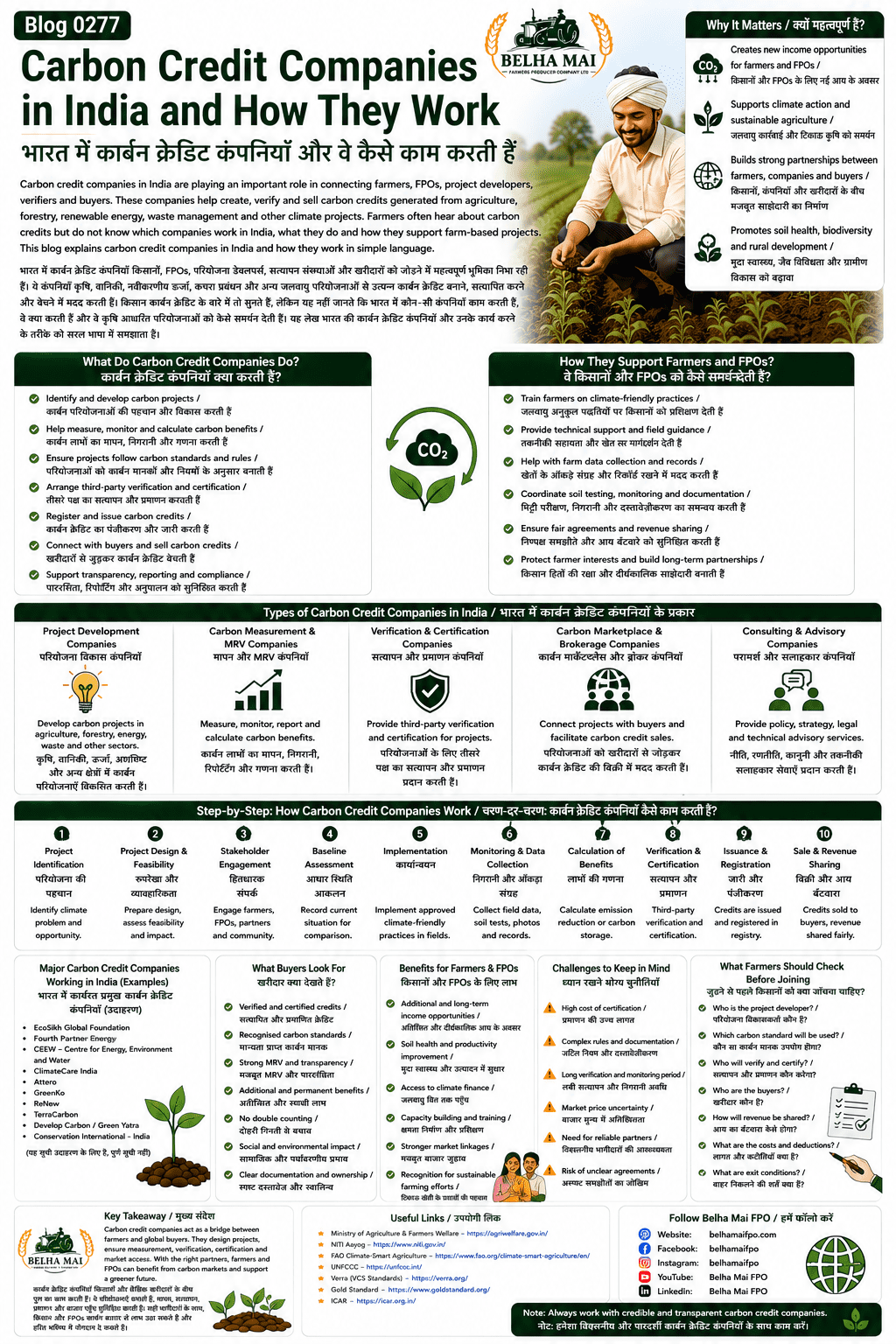
Carbon credit companies identify climate-friendly project opportunities and convert them into structured carbon projects. In agriculture, this may include soil carbon improvement, tree plantation, agroforestry, crop residue management, Direct Seeded Rice, water-saving agriculture, composting, organic farming, natural farming, regenerative agriculture, bio-inputs, and low-carbon farming systems. Their role is to make these practices measurable, reportable, verifiable, and marketable.
कार्बन क्रेडिट कंपनियाँ जलवायु-अनुकूल परियोजना अवसरों की पहचान करती हैं और उन्हें व्यवस्थित कार्बन परियोजनाओं में बदलती हैं। कृषि में इसमें मिट्टी कार्बन सुधार, वृक्षारोपण, कृषि वानिकी, फसल अवशेष प्रबंधन, सीधी बुवाई धान, जल बचत कृषि, कंपोस्ट, जैविक खेती, प्राकृतिक खेती, पुनर्योजी कृषि, जैविक कृषि सामग्री और कम-कार्बन खेती प्रणालियाँ शामिल हो सकती हैं। इन कंपनियों की भूमिका इन पद्धतियों को मापने योग्य, प्रतिवेदित करने योग्य, सत्यापित करने योग्य और बाज़ार योग्य बनाना है।
To understand Carbon credit companies in India and how they work, farmers should remember that carbon credit companies do not simply pay farmers for doing sustainable farming. They first design a project, create a baseline, collect data, monitor field activities, calculate carbon benefits, arrange verification, register credits, and connect with buyers. Payment usually comes only after credits are verified, issued, sold, and revenue is distributed as per agreement.
भारत में कार्बन क्रेडिट कंपनियाँ और वे कैसे काम करती हैं समझने के लिए किसानों को याद रखना चाहिए कि कार्बन क्रेडिट कंपनियाँ केवल टिकाऊ खेती करने के बदले किसानों को सीधे भुगतान नहीं करतीं। वे पहले परियोजना बनाती हैं, आधार स्थिति तैयार करती हैं, आँकड़े एकत्र करती हैं, खेत गतिविधियों की निगरानी करती हैं, कार्बन लाभ की गणना करती हैं, सत्यापन कराती हैं, क्रेडिट पंजीकृत कराती हैं और खरीदारों से जोड़ती हैं। भुगतान सामान्यतः तभी आता है जब क्रेडिट सत्यापित, जारी, बेचे जाते हैं और समझौते के अनुसार आय बाँटी जाती है।
Why Carbon Credit Companies Matter for Farmers / किसानों के लिए कार्बन क्रेडिट कंपनियाँ क्यों महत्वपूर्ण हैं
Carbon credit companies matter because individual small farmers usually cannot manage the complete carbon project cycle alone. Carbon projects require technical knowledge, data systems, soil testing, digital monitoring, verification, certification, legal agreements, registry access, buyer linkage, and revenue sharing. These steps are difficult for individual farmers without institutional support.
कार्बन क्रेडिट कंपनियाँ इसलिए महत्वपूर्ण हैं क्योंकि व्यक्तिगत छोटे किसान सामान्यतः पूरी कार्बन परियोजना प्रक्रिया अकेले नहीं संभाल सकते। कार्बन परियोजनाओं में तकनीकी ज्ञान, आँकड़ा व्यवस्था, मिट्टी परीक्षण, डिजिटल निगरानी, सत्यापन, प्रमाणन, कानूनी समझौते, पंजीकरण पहुँच, खरीदार जुड़ाव और आय बँटवारे की आवश्यकता होती है। संस्थागत सहायता के बिना ये चरण व्यक्तिगत किसानों के लिए कठिन होते हैं।
In Carbon credit companies in India and how they work, the practical role of these companies is to bring technical systems and market access. Farmers and FPOs bring land, farming practices, local trust, and field implementation. When both sides work transparently, carbon projects can create climate benefits and possible farmer income.
भारत में कार्बन क्रेडिट कंपनियाँ और वे कैसे काम करती हैं में इन कंपनियों की व्यावहारिक भूमिका तकनीकी व्यवस्था और बाज़ार पहुँच लाना है। किसान और किसान उत्पादक संगठन भूमि, कृषि पद्धतियाँ, स्थानीय विश्वास और खेत स्तर क्रियान्वयन लाते हैं। जब दोनों पक्ष पारदर्शिता से काम करते हैं, तो कार्बन परियोजनाएँ जलवायु लाभ और संभावित किसान आय बना सकती हैं।
Types of Carbon Credit Companies in India / भारत में कार्बन क्रेडिट कंपनियों के प्रकार
Project development companies design and implement carbon projects. They identify suitable farmers, villages, crops, and practices. They prepare project documents, create baselines, coordinate implementation, collect data, and work towards certification and credit issuance. Many farmer-based carbon projects depend on such project developers.
परियोजना विकास कंपनियाँ कार्बन परियोजनाएँ बनाती और लागू करती हैं। वे उपयुक्त किसानों, गाँवों, फसलों और पद्धतियों की पहचान करती हैं। वे परियोजना दस्तावेज़ तैयार करती हैं, आधार स्थिति बनाती हैं, क्रियान्वयन का समन्वय करती हैं, आँकड़े एकत्र करती हैं और प्रमाणन तथा क्रेडिट जारी करने की दिशा में काम करती हैं।
MRV companies focus on measurement, reporting, and verification support. They may use field data, soil testing, mobile applications, satellite images, remote sensing, photographs, and digital tools to measure carbon benefits. MRV is the backbone of any credible carbon credit project.
मापन-प्रतिवेदन-सत्यापन कंपनियाँ कार्बन लाभ मापन और परियोजना प्रतिवेदन में सहायता करती हैं। वे खेत आँकड़े, मिट्टी परीक्षण, मोबाइल अनुप्रयोग, उपग्रह चित्र, दूरसंवेदी तकनीक, चित्र और डिजिटल साधनों का उपयोग करके कार्बन लाभ माप सकती हैं। मापन-प्रतिवेदन-सत्यापन किसी भी विश्वसनीय कार्बन क्रेडिट परियोजना की रीढ़ है।
Verification and certification organisations check whether the project follows approved rules and whether the claimed carbon benefit is real. They review data, documents, calculations, and field evidence. These organisations create trust in the carbon market.
सत्यापन और प्रमाणन संस्थाएँ यह जाँचती हैं कि परियोजना स्वीकृत नियमों का पालन कर रही है या नहीं और दावा किया गया कार्बन लाभ वास्तविक है या नहीं। वे आँकड़े, दस्तावेज़, गणना और खेत प्रमाण की समीक्षा करती हैं। ये संस्थाएँ कार्बन बाज़ार में विश्वास बनाती हैं।
Marketplace and brokerage companies help connect verified carbon credits with buyers. They may support credit sales, buyer negotiations, registry transactions, and revenue distribution. Advisory companies provide policy, legal, technical, and strategy support to project developers, companies, FPOs, and institutions.
बाज़ार और दलाली से जुड़ी कंपनियाँ सत्यापित कार्बन क्रेडिट को खरीदारों से जोड़ने में मदद करती हैं। वे क्रेडिट बिक्री, खरीदार बातचीत, पंजीकरण लेन-देन और आय वितरण में सहायता कर सकती हैं। परामर्श कंपनियाँ परियोजना विकासकर्ताओं, कंपनियों, किसान उत्पादक संगठनों और संस्थाओं को नीति, कानूनी, तकनीकी और रणनीतिक सहायता देती हैं।
Examples of Carbon Credit Companies and Platforms / कार्बन क्रेडिट कंपनियों और मंचों के उदाहरण
In India, Grow Indigo has presented itself as an agricultural carbon programme focused on helping farmers adopt regenerative practices and participate in carbon credit opportunities. Boomitra has announced a Verra-registered soil carbon farming project in India, while Varaha has been reported in relation to agricultural and biochar-based carbon credit activity, including a Google purchase agreement for Indian farm-linked biochar credits.
भारत में कुछ कंपनियाँ और मंच कृषि आधारित कार्बन परियोजनाओं, मिट्टी कार्बन, जैविक पदार्थ, कृषि अवशेष, पुनर्योजी कृषि और खरीदार जुड़ाव से जुड़े कार्य कर रहे हैं। किसानों और किसान उत्पादक संगठनों को इन नामों को केवल उदाहरण के रूप में देखना चाहिए, अंतिम अनुशंसा के रूप में नहीं। किसी भी कंपनी के साथ जुड़ने से पहले पद्धति, सत्यापन, किसान समझौता, आय बँटवारा, लागत कटौती और परियोजना अवधि की अच्छी तरह जाँच करनी चाहिए।
EKI Energy Services describes itself as a carbon credit developer and supplier with climate advisory and carbon asset management expertise, while Carbon Registry-India describes itself as a voluntary carbon registry that tracks and verifies carbon offset credits generated by projects in India. Verra and Gold Standard are global standards frequently used or referenced for certification of carbon reduction, removal, and sustainability impacts.
ईकेआई एनर्जी सर्विसेज, कार्बन रजिस्ट्री-इंडिया, वेरा और गोल्ड स्टैंडर्ड जैसे नाम कार्बन बाज़ार व्यवस्था में अलग-अलग भूमिकाओं से जुड़े हैं। कुछ परियोजना विकास या कार्बन परिसंपत्ति प्रबंधन से जुड़े हैं, कुछ पंजीकरण व्यवस्था से, और कुछ मानक तथा प्रमाणन से। इसलिए भारत में कार्बन क्रेडिट कंपनियाँ और वे कैसे काम करती हैं समझते समय यह जानना जरूरी है कि हर नाम की भूमिका अलग हो सकती है।
How Carbon Credit Companies Work Step by Step / कार्बन क्रेडिट कंपनियाँ चरण-दर-चरण कैसे काम करती हैं
The first step is project identification. The company identifies a climate problem and a possible project opportunity. For example, it may identify residue burning in a region, low soil carbon, high water use in rice, degraded land, or potential for agroforestry. The company then checks whether the project can be measured and certified.
पहला चरण परियोजना पहचान है। कंपनी किसी जलवायु समस्या और संभावित परियोजना अवसर की पहचान करती है। उदाहरण के लिए, वह किसी क्षेत्र में फसल अवशेष जलाने की समस्या, कम मिट्टी कार्बन, धान में अधिक जल उपयोग, कमजोर भूमि या कृषि वानिकी संभावना की पहचान कर सकती है। इसके बाद कंपनी जाँचती है कि परियोजना मापी और प्रमाणित की जा सकती है या नहीं।
The second step is project design. The company prepares project boundaries, farmer selection criteria, crop details, methodology, monitoring plan, estimated carbon benefit, project duration, and revenue-sharing structure. This is a critical part of Carbon credit companies in India and how they work because weak project design can create problems later.
दूसरा चरण परियोजना रूपरेखा है। कंपनी परियोजना सीमा, किसान चयन मानदंड, फसल विवरण, पद्धति, निगरानी योजना, अनुमानित कार्बन लाभ, परियोजना अवधि और आय बँटवारा व्यवस्था तैयार करती है। यह भारत में कार्बन क्रेडिट कंपनियाँ और वे कैसे काम करती हैं का महत्वपूर्ण हिस्सा है, क्योंकि कमजोर परियोजना रूपरेखा आगे समस्या पैदा कर सकती है।
The third step is farmer and FPO engagement. The company meets farmers, FPOs, local institutions, and community leaders. Farmers are informed about required practices, project responsibilities, possible benefits, risks, data collection, and payment timelines. A clear written agreement should be created before farmers join.
तीसरा चरण किसान और किसान उत्पादक संगठन से जुड़ाव है। कंपनी किसानों, किसान उत्पादक संगठनों, स्थानीय संस्थाओं और समुदाय प्रतिनिधियों से मिलती है। किसानों को आवश्यक पद्धतियों, परियोजना जिम्मेदारियों, संभावित लाभ, जोखिम, आँकड़ा संग्रह और भुगतान समय-सीमा के बारे में बताया जाता है। किसानों के जुड़ने से पहले स्पष्ट लिखित समझौता होना चाहिए।
The fourth step is baseline assessment. The company records the condition before project implementation. This may include current farming practices, fertilizer use, irrigation, residue burning, soil condition, tree cover, manure management, and fuel use. Baseline is needed to prove future improvement.
चौथा चरण आधार स्थिति आकलन है। कंपनी परियोजना क्रियान्वयन से पहले की स्थिति दर्ज करती है। इसमें वर्तमान कृषि पद्धतियाँ, उर्वरक उपयोग, सिंचाई, फसल अवशेष जलाना, मिट्टी स्थिति, वृक्ष आवरण, गोबर प्रबंधन और ईंधन उपयोग शामिल हो सकते हैं। भविष्य के सुधार को सिद्ध करने के लिए आधार स्थिति आवश्यक है।
The fifth step is implementation. Farmers adopt agreed climate-friendly practices such as residue management, tree plantation, DSR, composting, reduced tillage, soil health improvement, bio-input use, or water-saving agriculture. The company or FPO provides guidance, training, and monitoring support.
पाँचवाँ चरण क्रियान्वयन है। किसान सहमत जलवायु-अनुकूल पद्धतियाँ अपनाते हैं, जैसे फसल अवशेष प्रबंधन, वृक्षारोपण, सीधी बुवाई धान, कंपोस्ट, कम जुताई, मिट्टी स्वास्थ्य सुधार, जैविक कृषि सामग्री उपयोग या जल बचत कृषि। कंपनी या किसान उत्पादक संगठन प्रशिक्षण, मार्गदर्शन और निगरानी सहायता देता है।
The sixth step is monitoring and data collection. The company collects farm data, soil reports, photographs, location details, input records, yield records, tree survival data, and practice adoption proof. This data supports MRV and certification.
छठा चरण निगरानी और आँकड़ा संग्रह है। कंपनी खेत आँकड़े, मिट्टी प्रतिवेदन, चित्र, स्थान विवरण, कृषि सामग्री अभिलेख, उत्पादन अभिलेख, पेड़ों के जीवित रहने के आँकड़े और पद्धति अपनाने का प्रमाण एकत्र करती है। यही आँकड़े मापन-प्रतिवेदन-सत्यापन और प्रमाणन को सहारा देते हैं।
The seventh step is calculation and reporting. The company calculates emission reduction or carbon storage using an approved methodology. It then prepares reports for validation, verification, and certification.
सातवाँ चरण गणना और प्रतिवेदन है। कंपनी स्वीकृत पद्धति का उपयोग करके उत्सर्जन कमी या कार्बन संग्रहण की गणना करती है। इसके बाद वह मान्यता, सत्यापन और प्रमाणन के लिए प्रतिवेदन तैयार करती है।
The eighth step is verification and certification. An independent verifier checks whether the data and carbon benefit are real and valid. If the project passes verification, carbon credits may be issued and registered under the selected system.
आठवाँ चरण सत्यापन और प्रमाणन है। स्वतंत्र सत्यापन संस्था जाँचती है कि आँकड़े और कार्बन लाभ वास्तविक और मान्य हैं या नहीं। यदि परियोजना सत्यापन में सफल होती है, तो कार्बन क्रेडिट जारी और पंजीकृत हो सकते हैं।
The ninth step is sale and revenue sharing. The company connects credits with buyers. After credits are sold, revenue is distributed according to the agreement among farmers, FPOs, project developers, and other stakeholders.
नौवाँ चरण बिक्री और आय बँटवारा है। कंपनी क्रेडिट को खरीदारों से जोड़ती है। क्रेडिट बिकने के बाद किसानों, किसान उत्पादक संगठनों, परियोजना विकासकर्ताओं और अन्य पक्षों के बीच समझौते के अनुसार आय बाँटी जाती है।
How These Companies Support Farmers and FPOs / ये कंपनियाँ किसानों और किसान उत्पादक संगठनों को कैसे सहायता देती हैं
Carbon credit companies can train farmers on climate-friendly practices. They may explain how to manage crop residues, improve soil carbon, adopt water-saving methods, plant trees, use compost, reduce unnecessary input use, or shift towards regenerative practices. Training is important because carbon projects fail if farmers do not implement practices correctly.
कार्बन क्रेडिट कंपनियाँ किसानों को जलवायु-अनुकूल पद्धतियों पर प्रशिक्षण दे सकती हैं। वे फसल अवशेष प्रबंधन, मिट्टी कार्बन सुधार, जल बचत पद्धति, वृक्षारोपण, कंपोस्ट उपयोग, अनावश्यक कृषि सामग्री उपयोग में कमी या पुनर्योजी पद्धतियों की ओर बदलाव समझा सकती हैं। प्रशिक्षण महत्वपूर्ण है क्योंकि किसान पद्धतियाँ सही रूप से लागू नहीं करते तो कार्बन परियोजना असफल हो सकती है।
They can also support farmer data collection. In Carbon credit companies in India and how they work, data is a major requirement. Companies may use mobile applications, field surveys, soil testing, photographs, and GPS records. FPOs can support this process by maintaining farmer-wise records and coordinating with field teams.
वे किसान आँकड़ा संग्रह में भी सहायता कर सकती हैं। भारत में कार्बन क्रेडिट कंपनियाँ और वे कैसे काम करती हैं में आँकड़े एक बड़ी आवश्यकता हैं। कंपनियाँ मोबाइल अनुप्रयोग, खेत सर्वेक्षण, मिट्टी परीक्षण, चित्र और स्थान अभिलेख का उपयोग कर सकती हैं। किसान उत्पादक संगठन किसानवार अभिलेख रखकर और खेत दलों से समन्वय करके इस प्रक्रिया को सहारा दे सकते हैं।
Carbon credit companies may also help farmers access buyers indirectly. Farmers usually cannot reach global carbon buyers alone. A credible company can connect certified credits with buyers, but farmers must ensure that revenue sharing is transparent and written clearly.
कार्बन क्रेडिट कंपनियाँ किसानों को अप्रत्यक्ष रूप से खरीदारों तक पहुँचाने में भी मदद कर सकती हैं। किसान सामान्यतः अकेले वैश्विक कार्बन खरीदारों तक नहीं पहुँच सकते। विश्वसनीय कंपनी प्रमाणित क्रेडिट को खरीदारों से जोड़ सकती है, लेकिन किसानों को यह सुनिश्चित करना चाहिए कि आय बँटवारा पारदर्शी और लिखित रूप में स्पष्ट हो।
Benefits for Farmers and FPOs / किसानों और किसान उत्पादक संगठनों के लाभ
The first benefit is possible additional income. If carbon credits are successfully verified, issued, sold, and shared fairly, farmers may receive additional income. However, this income is not immediate or guaranteed. It depends on project quality, verification, buyer demand, market price, and agreement terms.
पहला लाभ संभावित अतिरिक्त आय है। यदि कार्बन क्रेडिट सफलतापूर्वक सत्यापित, जारी, बेचे और उचित रूप से बाँटे जाते हैं, तो किसानों को अतिरिक्त आय मिल सकती है। हालाँकि यह आय तुरंत या निश्चित नहीं होती। यह परियोजना गुणवत्ता, सत्यापन, खरीदार मांग, बाज़ार मूल्य और समझौते की शर्तों पर निर्भर करती है।
The second benefit is better farming. Carbon projects often promote practices that improve soil health, water use, biodiversity, residue management, and farm resilience. Even before carbon income comes, farmers may benefit from better soil, reduced waste, and improved long-term productivity.
दूसरा लाभ बेहतर खेती है। कार्बन परियोजनाएँ अक्सर ऐसी पद्धतियों को बढ़ावा देती हैं जो मिट्टी स्वास्थ्य, जल उपयोग, जैव विविधता, फसल अवशेष प्रबंधन और खेत सहनशीलता सुधारती हैं। कार्बन आय आने से पहले भी किसान बेहतर मिट्टी, कम बर्बादी और दीर्घकालिक उत्पादकता सुधार से लाभ उठा सकते हैं।
The third benefit is institutional strengthening for FPOs. By participating in carbon projects, FPOs can build farmer data systems, improve training models, develop climate finance partnerships, and become recognised as local implementation partners.
तीसरा लाभ किसान उत्पादक संगठनों की संस्थागत मजबूती है। कार्बन परियोजनाओं में भाग लेकर संगठन किसान आँकड़ा व्यवस्था बना सकते हैं, प्रशिक्षण मॉडल सुधार सकते हैं, जलवायु वित्त साझेदारी विकसित कर सकते हैं और स्थानीय क्रियान्वयन भागीदार के रूप में पहचान बना सकते हैं।
Challenges and Risks / चुनौतियाँ और जोखिम
The first challenge is unclear promises. Some companies or agents may promise quick income without explaining certification, verification, market risk, and payment timeline. Farmers should be careful if anyone says carbon credit income is fixed or immediate.
पहली चुनौती अस्पष्ट वादे हैं। कुछ कंपनियाँ या एजेंट प्रमाणन, सत्यापन, बाज़ार जोखिम और भुगतान समय-सीमा समझाए बिना तुरंत आय का वादा कर सकते हैं। यदि कोई कहता है कि कार्बन क्रेडिट आय निश्चित या तुरंत मिलेगी, तो किसानों को सावधान रहना चाहिए।
The second challenge is cost deduction. Carbon projects may involve costs for soil testing, data collection, monitoring, verification, certification, registry, and buyer linkage. Farmers and FPOs should understand who pays these costs and whether they will be deducted from farmer payments.
दूसरी चुनौती लागत कटौती है। कार्बन परियोजनाओं में मिट्टी परीक्षण, आँकड़ा संग्रह, निगरानी, सत्यापन, प्रमाणन, पंजीकरण और खरीदार जुड़ाव की लागत हो सकती है। किसानों और किसान उत्पादक संगठनों को समझना चाहिए कि ये लागत कौन देगा और क्या इन्हें किसान भुगतान से काटा जाएगा।
The third challenge is data ownership. In Carbon credit companies in India and how they work, farmer data is central. Farmers should know who owns the data, how it will be used, whether it can be shared, and whether farmers can withdraw from the project.
तीसरी चुनौती आँकड़ा स्वामित्व है। भारत में कार्बन क्रेडिट कंपनियाँ और वे कैसे काम करती हैं में किसान आँकड़े अत्यंत महत्वपूर्ण हैं। किसानों को यह पता होना चाहिए कि आँकड़ों का स्वामित्व किसके पास होगा, उनका उपयोग कैसे होगा, क्या उन्हें साझा किया जा सकता है और क्या किसान परियोजना से बाहर निकल सकते हैं।
The fourth challenge is market uncertainty. Even after credits are issued, the selling price may vary. Buyer demand, project quality, carbon standard, verification strength, and market conditions affect income.
चौथी चुनौती बाज़ार अनिश्चितता है। क्रेडिट जारी होने के बाद भी बिक्री मूल्य बदल सकता है। खरीदार मांग, परियोजना गुणवत्ता, कार्बन मानक, सत्यापन की मजबूती और बाज़ार स्थिति आय को प्रभावित करते हैं।
What Farmers Should Check Before Joining / जुड़ने से पहले किसानों को क्या जाँचना चाहिए
Before joining any carbon project, farmers should ask who the company is, what experience it has, which carbon standard will be used, what farming practices are required, who will collect data, who will verify the project, and when payment may come.
किसी भी कार्बन परियोजना से जुड़ने से पहले किसानों को पूछना चाहिए कि कंपनी कौन है, उसका अनुभव क्या है, कौन सा कार्बन मानक उपयोग होगा, कौन-सी कृषि पद्धतियाँ आवश्यक होंगी, आँकड़े कौन एकत्र करेगा, परियोजना का सत्यापन कौन करेगा और भुगतान कब आ सकता है।
Farmers should also ask about carbon rights, data ownership, revenue sharing, cost deductions, project duration, exit conditions, and responsibility if credits are not issued. Since Carbon credit companies in India and how they work involves long-term commitments, farmers should never sign unclear documents.
किसानों को कार्बन अधिकार, आँकड़ा स्वामित्व, आय बँटवारा, लागत कटौती, परियोजना अवधि, बाहर निकलने की शर्तें और क्रेडिट जारी न होने की स्थिति में जिम्मेदारी के बारे में भी पूछना चाहिए। क्योंकि भारत में कार्बन क्रेडिट कंपनियाँ और वे कैसे काम करती हैं में दीर्घकालिक प्रतिबद्धताएँ शामिल होती हैं, किसानों को अस्पष्ट दस्तावेज़ों पर कभी हस्ताक्षर नहीं करना चाहिए।
Role of FPOs in Working with Carbon Credit Companies / कार्बन क्रेडिट कंपनियों के साथ काम करने में किसान उत्पादक संगठनों की भूमिका
FPOs can protect farmers by checking company credibility before project participation. They can review agreements, ask technical questions, demand written clarity, and ensure that farmer rights are protected. FPOs should not allow individual farmers to sign confusing agreements without proper explanation.
किसान उत्पादक संगठन परियोजना में भागीदारी से पहले कंपनी की विश्वसनीयता जाँचकर किसानों की रक्षा कर सकते हैं। वे समझौतों की समीक्षा कर सकते हैं, तकनीकी प्रश्न पूछ सकते हैं, लिखित स्पष्टता मांग सकते हैं और किसान अधिकारों की सुरक्षा सुनिश्चित कर सकते हैं। संगठन को किसानों को बिना सही समझाए जटिल समझौतों पर हस्ताक्षर नहीं करने देना चाहिए।
FPOs can also make projects successful by organising farmers, maintaining records, supporting training, coordinating soil testing, monitoring practice adoption, and building trust. This is why Carbon credit companies in India and how they work should always be understood along with the role of FPOs.
किसान उत्पादक संगठन किसानों को संगठित करके, अभिलेख रखकर, प्रशिक्षण में सहायता देकर, मिट्टी परीक्षण का समन्वय करके, पद्धति अपनाने की निगरानी करके और विश्वास बनाकर परियोजनाओं को सफल बना सकते हैं। इसलिए भारत में कार्बन क्रेडिट कंपनियाँ और वे कैसे काम करती हैं को हमेशा किसान उत्पादक संगठनों की भूमिका के साथ समझना चाहिए।
Practical Model for Indian FPOs / भारतीय किसान उत्पादक संगठनों के लिए व्यावहारिक मॉडल
A practical model can begin with a small pilot of 500 to 1,000 farmers. The FPO can first identify suitable villages, crops, and practices. It can prepare farmer lists, land details, current farming practices, and basic soil health records. Then it can invite credible carbon credit companies or project developers for discussion.
एक व्यावहारिक मॉडल पाँच सौ से एक हजार किसानों की छोटी प्रायोगिक परियोजना से शुरू हो सकता है। किसान उत्पादक संगठन पहले उपयुक्त गाँव, फसलें और पद्धतियाँ पहचान सकता है। वह किसान सूची, भूमि विवरण, वर्तमान कृषि पद्धतियाँ और बुनियादी मिट्टी स्वास्थ्य अभिलेख तैयार कर सकता है। इसके बाद वह विश्वसनीय कार्बन क्रेडिट कंपनियों या परियोजना विकासकर्ताओं को चर्चा के लिए आमंत्रित कर सकता है।
The FPO should compare proposals from different companies. It should evaluate methodology, cost, verification plan, farmer responsibility, payment timeline, data ownership, revenue sharing, and buyer strategy. After selecting a credible partner, the FPO can begin with a pilot rather than signing a very large project immediately.
किसान उत्पादक संगठन को अलग-अलग कंपनियों के प्रस्तावों की तुलना करनी चाहिए। उसे पद्धति, लागत, सत्यापन योजना, किसान जिम्मेदारी, भुगतान समय-सीमा, आँकड़ा स्वामित्व, आय बँटवारा और खरीदार रणनीति का मूल्यांकन करना चाहिए। विश्वसनीय भागीदार चुनने के बाद संगठन को तुरंत बहुत बड़ी परियोजना पर हस्ताक्षर करने के बजाय प्रायोगिक स्तर से शुरुआत करनी चाहिए।
Conclusion / निष्कर्ष
Carbon credit companies in India and how they work can be understood as a bridge between farmers and carbon markets. These companies may help design projects, measure carbon benefits, arrange certification, connect with buyers, and distribute revenue. But farmers and FPOs must understand that carbon credit income depends on verification, credit issuance, buyer demand, market price, and transparent agreements.
भारत में कार्बन क्रेडिट कंपनियाँ और वे कैसे काम करती हैं को किसानों और कार्बन बाज़ारों के बीच पुल के रूप में समझा जा सकता है। ये कंपनियाँ परियोजना बनाने, कार्बन लाभ मापने, प्रमाणन कराने, खरीदारों से जोड़ने और आय वितरण में मदद कर सकती हैं। लेकिन किसानों और किसान उत्पादक संगठनों को समझना चाहिए कि कार्बन क्रेडिट आय सत्यापन, क्रेडिट जारी होने, खरीदार मांग, बाज़ार मूल्य और पारदर्शी समझौतों पर निर्भर करती है।
For farmers, the safest approach is to work through trusted FPOs and credible companies. For FPOs, the best approach is to ask hard questions, start with pilots, protect farmer rights, maintain strong records, and work only with transparent partners. Carbon credit opportunities are real, but they must be handled with patience, science, documentation, and trust.
किसानों के लिए सबसे सुरक्षित तरीका विश्वसनीय किसान उत्पादक संगठनों और भरोसेमंद कंपनियों के माध्यम से काम करना है। किसान उत्पादक संगठनों के लिए सबसे अच्छा तरीका है कठिन प्रश्न पूछना, प्रायोगिक परियोजना से शुरुआत करना, किसान अधिकारों की रक्षा करना, मजबूत अभिलेख रखना और केवल पारदर्शी भागीदारों के साथ काम करना। कार्बन क्रेडिट अवसर वास्तविक हैं, लेकिन उन्हें धैर्य, विज्ञान, दस्तावेज़ीकरण और विश्वास के साथ संभालना चाहिए।
Frequently Asked Questions (FAQs) / अक्सर पूछे जाने वाले प्रश्न
1. What are Carbon credit companies in India and how they work?
Carbon credit companies in India and how they work refers to companies that design carbon projects, collect data, measure carbon benefits, arrange verification, issue credits, connect with buyers, and support revenue sharing.
1. भारत में कार्बन क्रेडिट कंपनियाँ और वे कैसे काम करती हैं?
भारत में कार्बन क्रेडिट कंपनियाँ और वे कैसे काम करती हैं का अर्थ उन कंपनियों से है जो कार्बन परियोजनाएँ बनाती हैं, आँकड़े एकत्र करती हैं, कार्बन लाभ मापती हैं, सत्यापन कराती हैं, क्रेडिट जारी कराने में सहायता करती हैं, खरीदारों से जोड़ती हैं और आय बँटवारे को सहारा देती हैं।
2. Do carbon credit companies pay farmers directly?
Not always. Payment usually depends on successful project implementation, verification, credit issuance, sale of credits, and the revenue-sharing agreement.
2. क्या कार्बन क्रेडिट कंपनियाँ किसानों को सीधे भुगतान करती हैं?
हमेशा नहीं। भुगतान सामान्यतः सफल परियोजना क्रियान्वयन, सत्यापन, क्रेडिट जारी होने, क्रेडिट बिक्री और आय बँटवारा समझौते पर निर्भर करता है।
3. Which companies work in agricultural carbon credits in India?
Examples of companies and platforms associated with India’s agricultural carbon and carbon market ecosystem include Grow Indigo, Boomitra, Varaha, EKI Energy Services, Carbon Registry-India, and global standards such as Verra and Gold Standard.
3. भारत में कृषि कार्बन क्रेडिट में कौन सी कंपनियाँ काम करती हैं?
भारत की कृषि कार्बन और कार्बन बाज़ार व्यवस्था से जुड़े उदाहरणों में ग्रो इंडिगो, बूमित्रा, वराहा, ईकेआई एनर्जी सर्विसेज, कार्बन रजिस्ट्री-इंडिया और वेरा तथा गोल्ड स्टैंडर्ड जैसे वैश्विक मानक शामिल हैं।
4. How can FPOs work with carbon credit companies?
FPOs can aggregate farmers, maintain records, coordinate training, support data collection, check company credibility, negotiate agreements, and work with carbon project developers for verification and buyer linkage.
4. किसान उत्पादक संगठन कार्बन क्रेडिट कंपनियों के साथ कैसे काम कर सकते हैं?
किसान उत्पादक संगठन किसानों को संगठित कर सकते हैं, अभिलेख रख सकते हैं, प्रशिक्षण का समन्वय कर सकते हैं, आँकड़ा संग्रह में सहायता कर सकते हैं, कंपनी की विश्वसनीयता जाँच सकते हैं, समझौते पर बातचीत कर सकते हैं और सत्यापन तथा खरीदार जुड़ाव के लिए कार्बन परियोजना विकासकर्ताओं के साथ काम कर सकते हैं।
5. What should farmers check before joining a carbon project?
Farmers should check the company’s credibility, project standard, methodology, data use, carbon rights, payment timeline, revenue sharing, cost deductions, verification process, and exit conditions.
5. कार्बन परियोजना से जुड़ने से पहले किसानों को क्या जाँचना चाहिए?
किसानों को कंपनी की विश्वसनीयता, परियोजना मानक, पद्धति, आँकड़ा उपयोग, कार्बन अधिकार, भुगतान समय-सीमा, आय बँटवारा, लागत कटौती, सत्यापन प्रक्रिया और बाहर निकलने की शर्तें जाँचनी चाहिए।
Internal Links / आंतरिक लिंक
👉 Who Buys Agricultural Carbon Credits? — https://belhamaifpo.com/agriculture/who-buys-agricultural-carbon-credits/
👉 Carbon Credit Certification Process in Agriculture — https://belhamaifpo.com/agriculture/carbon-credit-certification-process-in-agriculture/
👉 Compliance Carbon Market vs Voluntary Carbon Market — https://belhamaifpo.com/agriculture/compliance-carbon-market-vs-voluntary-carbon-market/
👉 Voluntary Carbon Market Explained for Farmers — https://belhamaifpo.com/agriculture/voluntary-carbon-market-explained-for-farmers/
👉 MRV in Carbon Credit Projects: What Farmers Should Know — https://belhamaifpo.com/agriculture/mrv-in-carbon-credit-projects-what-farmers-should-know/
👉 How to Measure Carbon Reduction on Farms — https://belhamaifpo.com/agriculture/how-to-measure-carbon-reduction-on-farms/
👉 Carbon Farming in India: Complete Guide — https://belhamaifpo.com/agriculture/carbon-farming-in-india-complete-guide/
👉 Carbon Credit Opportunities in Indian Agriculture — https://belhamaifpo.com/agriculture/carbon-credit-opportunities-in-indian-agriculture/
👉 Role of FPOs in Carbon Credit Projects — https://belhamaifpo.com/agriculture/role-of-fpos-in-carbon-credit-projects/
👉 Farmer Producer Organizations Complete Guide — https://belhamaifpo.com/farmer-producer-organisation/farmer-producer-organizations-fpos/
👉 SDGs & Our FPO — https://belhamaifpo.com/sdg-goals/
External Authority Links / बाहरी प्राधिकरण लिंक
👉 Ministry of Agriculture & Farmers Welfare — https://agriwelfare.gov.in/
👉 NITI Aayog — https://www.niti.gov.in/
👉 UNFCCC — https://unfccc.int/
👉 FAO Climate-Smart Agriculture — https://www.fao.org/climate-smart-agriculture/en/
👉 Verra Verified Carbon Standard — https://verra.org/programs/verified-carbon-standard/
👉 Gold Standard — https://www.goldstandard.org/
👉 Carbon Registry-India — https://cri.nccf.in/
👉 Grow Indigo Carbon Programme — https://www.growindigo.co.in/carbon/
Follow Belha Mai FPO for More Updates / अधिक अपडेट के लिए Belha Mai FPO को फॉलो करें
👉 Website — https://belhamaifpo.com/
👉 Facebook — https://www.facebook.com/profile.php?id=61561043486818
👉 Instagram — https://instagram.com/belhamaifpo
👉 LinkedIn — https://www.linkedin.com/in/abhay-singh-ab5568280/
👉 YouTube — https://www.youtube.com/channel/UC9ZvojoTMCa7mU1-Q_Bh60A