भारतीय कृषि में कार्बन क्रेडिट के अवसर
Introduction / परिचय
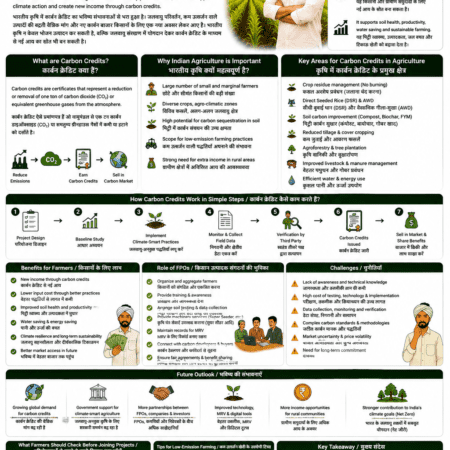
Carbon credit opportunities in Indian agriculture are becoming an important topic because farming is directly connected with soil, water, trees, crop residue, energy use, and greenhouse gas emissions. India has millions of small and marginal farmers, diverse crops, large cultivated area, and strong possibilities for sustainable farming practices. If farmers adopt climate-friendly practices and the environmental benefits are properly measured and verified, these benefits may create carbon credits. These credits can become a future opportunity for farmers, Farmer Producer Organizations, project developers, companies, and climate finance institutions.
भारतीय कृषि में कार्बन क्रेडिट के अवसर एक महत्वपूर्ण विषय बनते जा रहे हैं, क्योंकि खेती सीधे मिट्टी, पानी, पेड़ों, फसल अवशेष, ऊर्जा उपयोग और हरितगृह गैस उत्सर्जन से जुड़ी है। भारत में करोड़ों छोटे और सीमांत किसान हैं, विविध फसलें हैं, बड़ा कृषि क्षेत्र है और टिकाऊ कृषि पद्धतियों की मजबूत संभावना है। यदि किसान जलवायु-अनुकूल पद्धतियाँ अपनाते हैं और पर्यावरणीय लाभों को सही तरीके से मापा तथा सत्यापित किया जाता है, तो ये लाभ कार्बन क्रेडिट बना सकते हैं। ये क्रेडिट किसानों, किसान उत्पादक संगठनों, परियोजना विकासकर्ताओं, कंपनियों और जलवायु वित्त संस्थाओं के लिए भविष्य का अवसर बन सकते हैं।
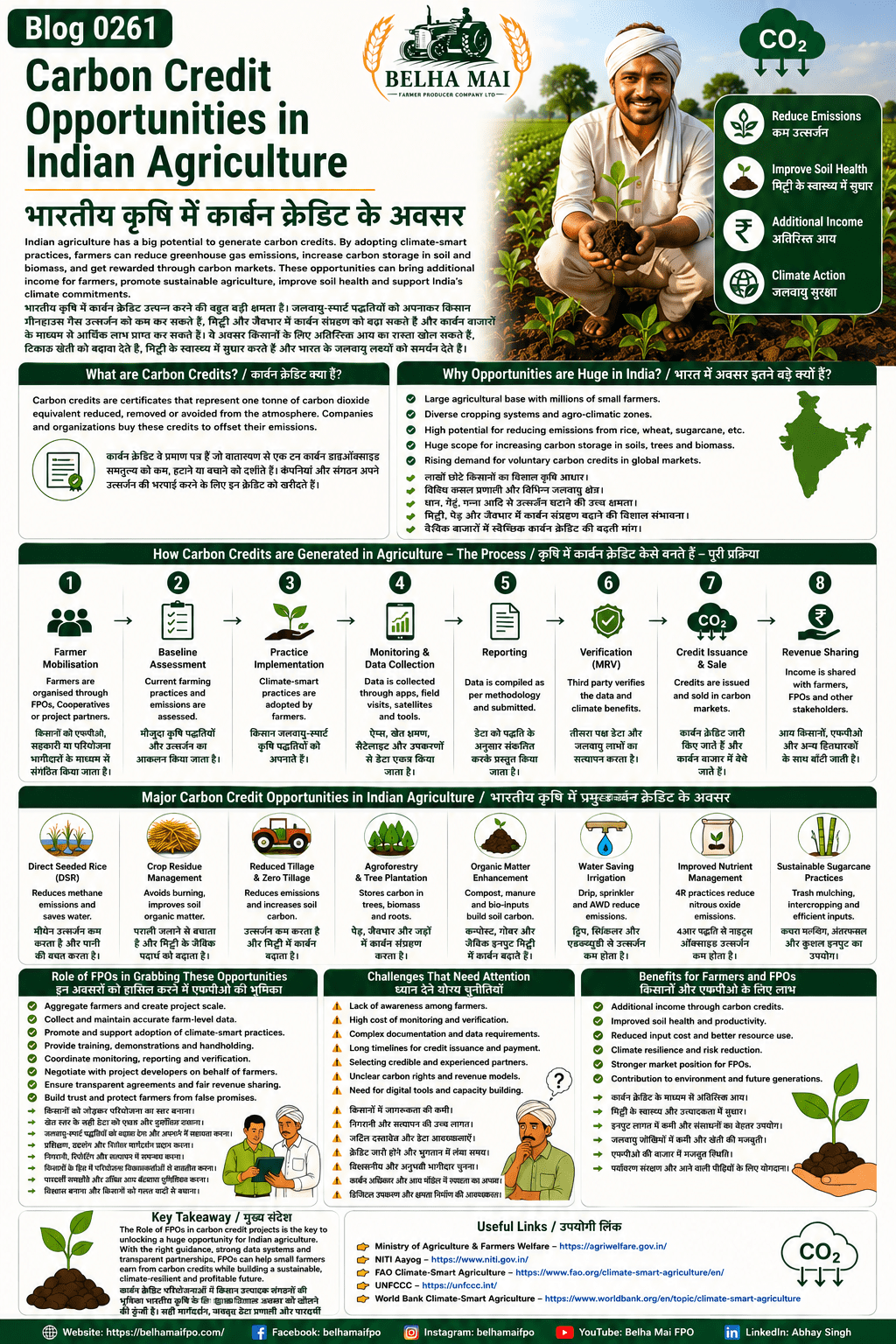
The important point is that Carbon credit opportunities in Indian agriculture are real, but they are not automatic. Farmers cannot simply claim carbon credits by saying that they are doing sustainable farming. A proper project structure is required. This includes farmer aggregation, baseline assessment, practice implementation, data collection, monitoring, reporting, verification, credit issuance, carbon market sale, and transparent revenue sharing. This is why FPOs can play a very important role in converting carbon credit opportunities into real farmer benefits.
महत्वपूर्ण बात यह है कि भारतीय कृषि में कार्बन क्रेडिट के अवसर वास्तविक हैं, लेकिन अपने आप नहीं मिलते। किसान केवल यह कहकर कार्बन क्रेडिट का दावा नहीं कर सकते कि वे टिकाऊ खेती कर रहे हैं। इसके लिए सही परियोजना ढाँचा चाहिए। इसमें किसानों का समूह बनाना, आधार स्थिति का आकलन, पद्धतियों का क्रियान्वयन, आँकड़ा संग्रह, निगरानी, प्रतिवेदन, सत्यापन, क्रेडिट जारी होना, कार्बन बाज़ार में बिक्री और पारदर्शी आय बँटवारा शामिल है। इसलिए किसान उत्पादक संगठन इन अवसरों को वास्तविक किसान लाभ में बदलने में बहुत महत्वपूर्ण भूमिका निभा सकते हैं।
Why Carbon Credit Opportunities in Indian Agriculture Are Important / भारतीय कृषि में कार्बन क्रेडिट के अवसर क्यों महत्वपूर्ण हैं
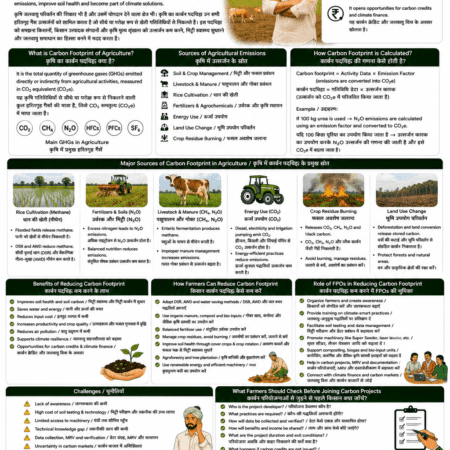
Carbon credit opportunities in Indian agriculture are important because agriculture is both affected by climate change and also linked with emissions. Irregular rainfall, heat waves, drought, floods, declining soil fertility, pest attacks, and rising input costs are already affecting farmers. At the same time, practices such as crop residue burning, inefficient fertilizer use, excessive tillage, and flooded paddy fields can increase emissions. Carbon credit projects can encourage farmers to shift towards better practices that reduce emissions and improve soil health.
भारतीय कृषि में कार्बन क्रेडिट के अवसर इसलिए महत्वपूर्ण हैं क्योंकि कृषि जलवायु परिवर्तन से प्रभावित भी होती है और उत्सर्जन से जुड़ी भी होती है। अनियमित वर्षा, लू, सूखा, बाढ़, घटती मिट्टी उर्वरता, कीट प्रकोप और बढ़ती लागत पहले से किसानों को प्रभावित कर रहे हैं। साथ ही फसल अवशेष जलाना, उर्वरकों का असंतुलित उपयोग, अत्यधिक जुताई और लगातार पानी भरे धान खेत उत्सर्जन बढ़ा सकते हैं। कार्बन क्रेडिट परियोजनाएँ किसानों को बेहतर पद्धतियों की ओर बढ़ने के लिए प्रोत्साहित कर सकती हैं, जिससे उत्सर्जन कम हो और मिट्टी का स्वास्थ्य सुधरे।
India also has a strong opportunity because of its large farmer base and growing FPO movement. If farmers are organised through FPOs, Carbon credit opportunities in Indian agriculture can be implemented at scale. This can help small farmers participate in climate finance, while also improving farming systems through soil health, water conservation, tree plantation, residue management, and regenerative agriculture.
भारत के पास अपने विशाल किसान आधार और बढ़ते किसान उत्पादक संगठन आंदोलन के कारण मजबूत अवसर भी है। यदि किसानों को किसान उत्पादक संगठनों के माध्यम से संगठित किया जाए, तो भारतीय कृषि में कार्बन क्रेडिट के अवसर बड़े स्तर पर लागू किए जा सकते हैं। इससे छोटे किसान जलवायु वित्त से जुड़ सकते हैं और साथ ही मिट्टी स्वास्थ्य, जल संरक्षण, वृक्षारोपण, फसल अवशेष प्रबंधन और पुनर्योजी कृषि के माध्यम से खेती व्यवस्था बेहतर हो सकती है।
Major Carbon Credit Opportunities in Indian Agriculture / भारतीय कृषि में प्रमुख कार्बन क्रेडिट अवसर
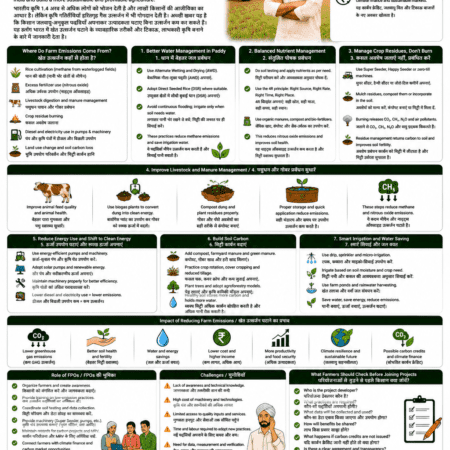
One of the biggest Carbon credit opportunities in Indian agriculture is crop residue management. In many regions, farmers burn crop residue because they need to clear fields quickly for the next crop. This causes air pollution, soil damage, and emissions. If farmers use Super Seeder, mulching, composting, or residue incorporation instead of burning, this can reduce emissions and improve soil organic matter.
भारतीय कृषि में कार्बन क्रेडिट के अवसर में सबसे बड़ा अवसर फसल अवशेष प्रबंधन है। कई क्षेत्रों में किसान अगली फसल के लिए खेत जल्दी खाली करने के कारण फसल अवशेष जला देते हैं। इससे वायु प्रदूषण, मिट्टी को नुकसान और उत्सर्जन होता है। यदि किसान जलाने के बजाय सुपर सीडर, आच्छादन, कंपोस्ट या अवशेष मिलाने की पद्धति अपनाएँ, तो उत्सर्जन कम हो सकता है और मिट्टी में जैविक पदार्थ बढ़ सकता है।
Another important opportunity is Direct Seeded Rice. Traditional paddy cultivation often requires standing water, which can increase methane emissions. Direct Seeded Rice can reduce water use and support lower-emission rice cultivation in suitable areas. However, it needs proper training, weed control, seed selection, and farmer guidance. If implemented carefully, it can become one of the strong Carbon credit opportunities in Indian agriculture.
दूसरा महत्वपूर्ण अवसर सीधी बुवाई धान है। पारंपरिक धान खेती में अक्सर खेत में लगातार पानी भरा रहता है, जिससे मीथेन उत्सर्जन बढ़ सकता है। सीधी बुवाई धान उपयुक्त क्षेत्रों में पानी की बचत कर सकती है और कम उत्सर्जन वाली धान खेती को बढ़ावा दे सकती है। हालाँकि इसके लिए सही प्रशिक्षण, खरपतवार नियंत्रण, बीज चयन और किसान मार्गदर्शन आवश्यक है। यदि इसे सावधानी से लागू किया जाए, तो यह भारतीय कृषि में कार्बन क्रेडिट के अवसर में एक मजबूत क्षेत्र बन सकता है।
Agroforestry and tree plantation are also major opportunities. Trees store carbon in wood, roots, leaves, and biomass. Agroforestry can provide farmers with shade, fruit, fodder, timber, biodiversity benefits, and long-term climate resilience. However, tree-based carbon projects require careful planning, good survival rate, proper species selection, and long-term monitoring.
कृषि वानिकी और वृक्षारोपण भी बड़े अवसर हैं। पेड़ लकड़ी, जड़ों, पत्तियों और जैवभार में कार्बन संग्रहित करते हैं। कृषि वानिकी किसानों को छाया, फल, चारा, लकड़ी, जैव विविधता और दीर्घकालिक जलवायु मजबूती दे सकती है। हालाँकि पेड़ आधारित कार्बन परियोजनाओं के लिए सावधानीपूर्वक योजना, अच्छी जीवित रहने की दर, उचित प्रजाति चयन और दीर्घकालिक निगरानी आवश्यक होती है।
Soil Carbon as an Opportunity / मिट्टी कार्बन एक अवसर के रूप में
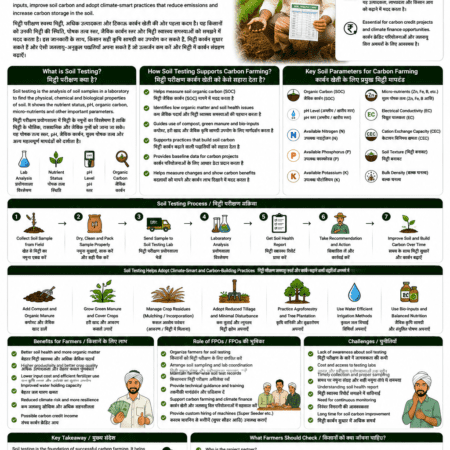
Soil carbon is one of the most discussed Carbon credit opportunities in Indian agriculture. Healthy soil can store carbon through organic matter, roots, compost, crop residues, and reduced soil disturbance. When farmers improve soil organic carbon, they may also improve soil fertility, water retention, microbial activity, and crop resilience.
मिट्टी कार्बन भारतीय कृषि में कार्बन क्रेडिट के अवसर में सबसे अधिक चर्चा वाला क्षेत्र है। स्वस्थ मिट्टी जैविक पदार्थ, जड़ों, कंपोस्ट, फसल अवशेषों और कम मिट्टी व्यवधान के माध्यम से कार्बन संग्रहित कर सकती है। जब किसान मिट्टी में जैविक कार्बन बढ़ाते हैं, तो मिट्टी की उर्वरता, जल धारण क्षमता, सूक्ष्मजीव गतिविधि और फसल की मजबूती भी सुधर सकती है।
Practices that support soil carbon include compost application, farmyard manure, green manure, crop rotation, cover crops, reduced tillage, residue retention, bio-inputs, and soil testing-based nutrient management. However, soil carbon projects need strong measurement and verification because soil carbon changes slowly and varies by soil type, crop system, rainfall, and management practices.
मिट्टी कार्बन बढ़ाने वाली पद्धतियों में कंपोस्ट, गोबर खाद, हरी खाद, फसल चक्र, आवरण फसलें, कम जुताई, फसल अवशेष रोकना, जैविक कृषि सामग्री और मिट्टी परीक्षण आधारित पोषक तत्व प्रबंधन शामिल हैं। हालाँकि मिट्टी कार्बन परियोजनाओं में मजबूत मापन और सत्यापन आवश्यक होता है, क्योंकि मिट्टी कार्बन धीरे-धीरे बदलता है और मिट्टी प्रकार, फसल प्रणाली, वर्षा और प्रबंधन पद्धतियों के अनुसार अलग-अलग होता है।
Water-Saving Agriculture and Carbon Credits / जल बचत कृषि और कार्बन क्रेडिट
Water-saving agriculture can also create Carbon credit opportunities in Indian agriculture, especially in crops where water management is linked with emissions. In paddy cultivation, improved water management can reduce methane emissions. Practices such as alternate wetting and drying, Direct Seeded Rice, better irrigation scheduling, and drip irrigation may help reduce water use and emissions in suitable conditions.
जल बचत कृषि भी भारतीय कृषि में कार्बन क्रेडिट के अवसर बना सकती है, विशेषकर उन फसलों में जहाँ जल प्रबंधन उत्सर्जन से जुड़ा होता है। धान खेती में बेहतर जल प्रबंधन मीथेन उत्सर्जन कम कर सकता है। आंतरायिक गीलापन और सूखापन, सीधी बुवाई धान, बेहतर सिंचाई समय निर्धारण और बूँद-बूँद सिंचाई जैसी पद्धतियाँ उपयुक्त परिस्थितियों में पानी के उपयोग और उत्सर्जन को कम कर सकती हैं।
Water-saving practices also reduce pressure on groundwater and improve climate resilience. For farmers, the direct benefit may come through lower irrigation cost and better water availability. If these benefits are measured under a recognised project, they may also support carbon credit generation.
जल बचत पद्धतियाँ भूजल पर दबाव कम करती हैं और जलवायु मजबूती बढ़ाती हैं। किसानों को इसका सीधा लाभ कम सिंचाई लागत और बेहतर जल उपलब्धता के रूप में मिल सकता है। यदि इन लाभों को किसी मान्यता प्राप्त परियोजना के अंतर्गत मापा जाए, तो ये कार्बन क्रेडिट निर्माण में भी सहायक हो सकते हैं।
Bio-Inputs and Low-Carbon Farming / जैविक कृषि सामग्री और कम उत्सर्जन खेती
Bio-inputs can support Carbon credit opportunities in Indian agriculture by improving soil health and reducing unnecessary chemical input use. Biofertilizers, biopesticides, compost, vermicompost, microbial solutions, and organic matter additions can help create healthier soil systems. When farmers use nutrients more efficiently, emissions linked with excessive fertilizer use may reduce.
जैविक कृषि सामग्री भारतीय कृषि में कार्बन क्रेडिट के अवसर को मजबूत कर सकती है, क्योंकि इससे मिट्टी स्वास्थ्य सुधरता है और अनावश्यक रासायनिक कृषि सामग्री का उपयोग कम हो सकता है। जैव उर्वरक, जैव कीटनाशक, कंपोस्ट, केंचुआ खाद, सूक्ष्मजीव आधारित घोल और जैविक पदार्थ मिट्टी को स्वस्थ बना सकते हैं। जब किसान पोषक तत्वों का अधिक कुशल उपयोग करते हैं, तो अत्यधिक उर्वरक उपयोग से जुड़े उत्सर्जन कम हो सकते हैं।
However, bio-input use must be linked with proper agronomy. Farmers should not replace everything suddenly without technical guidance. The aim should be balanced nutrient management, soil testing, organic matter improvement, and gradual transition toward low-carbon farming systems.
हालाँकि जैविक कृषि सामग्री का उपयोग सही कृषि विज्ञान से जुड़ा होना चाहिए। किसानों को तकनीकी मार्गदर्शन के बिना अचानक सब कुछ बदलना नहीं चाहिए। उद्देश्य संतुलित पोषक तत्व प्रबंधन, मिट्टी परीक्षण, जैविक पदार्थ सुधार और कम उत्सर्जन वाली खेती व्यवस्था की ओर क्रमिक बदलाव होना चाहिए।
Livestock and Manure Management Opportunities / पशुपालन और गोबर प्रबंधन के अवसर
Livestock systems can also create Carbon credit opportunities in Indian agriculture when manure is managed properly. Poor manure handling can release methane and other emissions. Composting, biogas, improved manure storage, and organic manure application can reduce waste and improve soil fertility.
पशुपालन व्यवस्था भी भारतीय कृषि में कार्बन क्रेडिट के अवसर बना सकती है, यदि गोबर और पशु अपशिष्ट का सही प्रबंधन किया जाए। खराब गोबर प्रबंधन से मीथेन और अन्य उत्सर्जन हो सकते हैं। कंपोस्ट, बायोगैस, बेहतर गोबर भंडारण और जैविक खाद उपयोग से अपशिष्ट कम हो सकता है और मिट्टी की उर्वरता सुधर सकती है।
For small farmers, livestock-linked carbon projects may work better when implemented through village-level groups, dairy cooperatives, or FPOs. Proper records, household participation, and regular monitoring are important for such projects.
छोटे किसानों के लिए पशुपालन आधारित कार्बन परियोजनाएँ गाँव स्तर के समूहों, दुग्ध सहकारी संस्थाओं या किसान उत्पादक संगठनों के माध्यम से बेहतर काम कर सकती हैं। ऐसी परियोजनाओं के लिए सही अभिलेख, परिवार स्तर की भागीदारी और नियमित निगरानी महत्वपूर्ण होती है।
Role of FPOs in Capturing These Opportunities / इन अवसरों को सफल बनाने में किसान उत्पादक संगठनों की भूमिका
FPOs are central to capturing Carbon credit opportunities in Indian agriculture because they can organise small farmers at scale. Individual farmers often do not have access to project developers, verification agencies, climate finance institutions, or carbon buyers. FPOs can bring farmers together, maintain records, conduct training, support practice adoption, and negotiate with project partners.
भारतीय कृषि में कार्बन क्रेडिट के अवसर को सफल बनाने में किसान उत्पादक संगठन केंद्रीय भूमिका निभाते हैं, क्योंकि वे छोटे किसानों को बड़े स्तर पर संगठित कर सकते हैं। व्यक्तिगत किसानों के पास सामान्यतः परियोजना विकासकर्ताओं, सत्यापन संस्थाओं, जलवायु वित्त संस्थाओं या कार्बन खरीदारों तक पहुँच नहीं होती। किसान उत्पादक संगठन किसानों को साथ ला सकते हैं, अभिलेख रख सकते हैं, प्रशिक्षण कर सकते हैं, पद्धतियों को अपनाने में सहायता कर सकते हैं और परियोजना भागीदारों से बातचीत कर सकते हैं।
The role of FPOs is also to protect farmers from unrealistic promises. Many farmers hear about carbon credit income but do not understand the process. FPOs must explain that carbon credit income is not immediate and not guaranteed. It depends on successful implementation, proper measurement, verification, credit sale, and revenue-sharing terms.
किसान उत्पादक संगठनों की भूमिका किसानों को अवास्तविक वादों से बचाना भी है। बहुत से किसान कार्बन क्रेडिट आय के बारे में सुनते हैं, लेकिन प्रक्रिया को नहीं समझते। किसान उत्पादक संगठनों को यह स्पष्ट करना चाहिए कि कार्बन क्रेडिट आय तुरंत नहीं मिलती और निश्चित नहीं होती। यह सफल क्रियान्वयन, सही मापन, सत्यापन, क्रेडिट बिक्री और आय बँटवारे की शर्तों पर निर्भर करती है।
Challenges in Carbon Credit Opportunities / कार्बन क्रेडिट अवसरों की चुनौतियाँ
Even though Carbon credit opportunities in Indian agriculture are promising, there are many challenges. The first challenge is awareness. Farmers and FPOs often hear the word carbon credit but do not know how to access the opportunity. They may not know which agency to approach, what documents are needed, what the contract means, or when payment may come.
हालाँकि भारतीय कृषि में कार्बन क्रेडिट के अवसर आशाजनक हैं, फिर भी कई चुनौतियाँ हैं। पहली चुनौती जागरूकता की कमी है। किसान और किसान उत्पादक संगठन कार्बन क्रेडिट शब्द सुनते हैं, लेकिन यह नहीं जानते कि इस अवसर तक कैसे पहुँचना है। उन्हें यह जानकारी नहीं होती कि किस संस्था से संपर्क करना है, कौन से दस्तावेज़ चाहिए, समझौते का अर्थ क्या है या भुगतान कब मिल सकता है।
The second challenge is measurement and verification. Carbon credit projects require reliable data. Soil carbon, methane reduction, nitrous oxide reduction, and biomass growth must be measured or estimated through accepted methods. This can be costly and technical. Without credible monitoring and verification, carbon credits cannot be issued or sold.
दूसरी चुनौती मापन और सत्यापन है। कार्बन क्रेडिट परियोजनाओं में विश्वसनीय आँकड़ों की आवश्यकता होती है। मिट्टी कार्बन, मीथेन कमी, नाइट्रस ऑक्साइड कमी और जैवभार वृद्धि को स्वीकृत तरीकों से मापना या अनुमानित करना होता है। यह महंगा और तकनीकी हो सकता है। विश्वसनीय निगरानी और सत्यापन के बिना कार्बन क्रेडिट जारी या बेचे नहीं जा सकते।
The third challenge is implementation. Some startups and agencies may talk about carbon farming, but village-level implementation is not easy. It requires farmer trust, local staff, long-term engagement, documentation discipline, and transparent agreements. This is why FPO-based models may work better than purely technology-driven models.
तीसरी चुनौती क्रियान्वयन है। कुछ नवाचार आधारित कंपनियाँ कार्बन खेती की बात कर सकती हैं, लेकिन गाँव स्तर पर क्रियान्वयन आसान नहीं है। इसके लिए किसान विश्वास, स्थानीय कर्मचारी, दीर्घकालिक जुड़ाव, दस्तावेज़ अनुशासन और पारदर्शी समझौते चाहिए। इसलिए किसान उत्पादक संगठन आधारित मॉडल केवल तकनीक आधारित मॉडल की तुलना में बेहतर काम कर सकते हैं।
Practical Model for Indian FPOs / भारतीय किसान उत्पादक संगठनों के लिए व्यावहारिक मॉडल
A practical model for capturing Carbon credit opportunities in Indian agriculture can begin with a pilot project of 500 to 1,000 farmers. The FPO can identify suitable villages, crops, land areas, and farming practices. It can collect farmer data, organise awareness meetings, and choose practices such as crop residue management, Direct Seeded Rice, reduced tillage, tree plantation, bio-inputs, water-saving irrigation, and soil health improvement.
भारतीय कृषि में कार्बन क्रेडिट के अवसर को सफल बनाने के लिए व्यावहारिक मॉडल पाँच सौ से एक हजार किसानों की प्रायोगिक परियोजना से शुरू हो सकता है। किसान उत्पादक संगठन उपयुक्त गाँव, फसलें, भूमि क्षेत्र और कृषि पद्धतियाँ चुन सकता है। वह किसान आँकड़े एकत्र कर सकता है, जागरूकता बैठकें कर सकता है और फसल अवशेष प्रबंधन, सीधी बुवाई धान, कम जुताई, वृक्षारोपण, जैविक कृषि सामग्री, जल बचत सिंचाई और मिट्टी स्वास्थ्य सुधार जैसी पद्धतियाँ चुन सकता है।
The FPO should then approach credible carbon project developers or climate finance partners. The FPO can handle farmer mobilisation and local implementation, while the technical partner can manage methodology, monitoring, verification, certification, and buyer linkage. This model reduces risk and makes participation practical for small farmers.
इसके बाद किसान उत्पादक संगठन को विश्वसनीय कार्बन परियोजना विकासकर्ताओं या जलवायु वित्त भागीदारों से संपर्क करना चाहिए। संगठन किसान समन्वय और स्थानीय क्रियान्वयन संभाल सकता है, जबकि तकनीकी भागीदार पद्धति, निगरानी, सत्यापन, प्रमाणन और खरीदार से जुड़ाव संभाल सकता है। यह मॉडल जोखिम कम करता है और छोटे किसानों की भागीदारी को व्यावहारिक बनाता है।
Benefits of Carbon Credit Opportunities in Indian Agriculture / भारतीय कृषि में कार्बन क्रेडिट अवसरों के लाभ
The benefits of Carbon credit opportunities in Indian agriculture go beyond additional income. Farmers may benefit from better soil health, reduced input wastage, improved water use, lower pollution, better crop resilience, and stronger market positioning. FPOs may benefit through institutional strengthening, better farmer engagement, data systems, and partnerships with climate finance institutions.
भारतीय कृषि में कार्बन क्रेडिट के अवसर के लाभ अतिरिक्त आय से आगे जाते हैं। किसानों को बेहतर मिट्टी स्वास्थ्य, अनावश्यक कृषि खर्च में कमी, बेहतर जल उपयोग, कम प्रदूषण, बेहतर फसल मजबूती और मजबूत बाज़ार पहचान का लाभ मिल सकता है। किसान उत्पादक संगठनों को संस्थागत मजबूती, बेहतर किसान जुड़ाव, आँकड़ा व्यवस्था और जलवायु वित्त संस्थाओं के साथ साझेदारी का लाभ मिल सकता है।
For India, these opportunities can support climate action, rural income diversification, sustainable agriculture, and responsible land management. If implemented properly, Carbon credit opportunities in Indian agriculture can contribute to both farmer welfare and environmental protection.
भारत के लिए ये अवसर जलवायु कार्रवाई, ग्रामीण आय विविधीकरण, टिकाऊ कृषि और जिम्मेदार भूमि प्रबंधन को समर्थन दे सकते हैं। यदि इन्हें सही तरीके से लागू किया जाए, तो भारतीय कृषि में कार्बन क्रेडिट के अवसर किसान कल्याण और पर्यावरण संरक्षण दोनों में योगदान कर सकते हैं।
Conclusion / निष्कर्ष
Carbon credit opportunities in Indian agriculture are promising, but they require clarity, patience, science, and organised implementation. India has strong potential because of its large farmer base, diverse crops, soil improvement needs, residue management challenges, water conservation needs, and growing FPO network. But this opportunity will become real only when farmers are properly trained, data is collected accurately, projects are verified, and revenue sharing is transparent.
भारतीय कृषि में कार्बन क्रेडिट के अवसर आशाजनक हैं, लेकिन इनके लिए स्पष्टता, धैर्य, विज्ञान और संगठित क्रियान्वयन आवश्यक है। भारत के पास अपने विशाल किसान आधार, विविध फसलों, मिट्टी सुधार की आवश्यकता, फसल अवशेष प्रबंधन की चुनौती, जल संरक्षण की जरूरत और बढ़ते किसान उत्पादक संगठन नेटवर्क के कारण मजबूत संभावना है। लेकिन यह अवसर तभी वास्तविक बनेगा जब किसानों को सही प्रशिक्षण मिले, आँकड़े सही रूप से एकत्र हों, परियोजनाएँ सत्यापित हों और आय बँटवारा पारदर्शी हो।
For small farmers, the safest path is not to chase quick carbon credit income, but to join credible FPO-led or institution-led carbon farming projects. With the right model, Carbon credit opportunities in Indian agriculture can support sustainable farming, improve soil health, reduce emissions, and create future climate finance benefits for farmers and FPOs.
छोटे किसानों के लिए सुरक्षित मार्ग त्वरित कार्बन क्रेडिट आय के पीछे भागना नहीं, बल्कि विश्वसनीय किसान उत्पादक संगठन आधारित या संस्था आधारित कार्बन खेती परियोजनाओं से जुड़ना है। सही मॉडल के साथ भारतीय कृषि में कार्बन क्रेडिट के अवसर टिकाऊ खेती, बेहतर मिट्टी स्वास्थ्य, कम उत्सर्जन और किसानों तथा किसान उत्पादक संगठनों के लिए भविष्य के जलवायु वित्त लाभों को सहारा दे सकते हैं।
Frequently Asked Questions (FAQs) / अक्सर पूछे जाने वाले प्रश्न
1. What are Carbon credit opportunities in Indian agriculture?
Carbon credit opportunities in Indian agriculture are opportunities where farmers adopt sustainable practices that reduce emissions or increase carbon storage, and these benefits may be converted into carbon credits after measurement and verification.
1. भारतीय कृषि में कार्बन क्रेडिट के अवसर क्या हैं?
भारतीय कृषि में कार्बन क्रेडिट के अवसर वे अवसर हैं जहाँ किसान ऐसी टिकाऊ कृषि पद्धतियाँ अपनाते हैं जो उत्सर्जन कम करती हैं या कार्बन संग्रहण बढ़ाती हैं, और मापन तथा सत्यापन के बाद ये लाभ कार्बन क्रेडिट में बदल सकते हैं।
2. Which farming practices can generate carbon credits in India?
Practices such as crop residue management, Direct Seeded Rice, reduced tillage, agroforestry, tree plantation, composting, bio-inputs, water-saving irrigation, and soil health improvement may support carbon credit projects.
2. भारत में कौन-सी कृषि पद्धतियाँ कार्बन क्रेडिट में सहायक हो सकती हैं?
फसल अवशेष प्रबंधन, सीधी बुवाई धान, कम जुताई, कृषि वानिकी, वृक्षारोपण, कंपोस्ट, जैविक कृषि सामग्री, जल बचत सिंचाई और मिट्टी स्वास्थ्य सुधार जैसी पद्धतियाँ कार्बन क्रेडिट परियोजनाओं में सहायक हो सकती हैं।
3. Can small farmers benefit from carbon credit opportunities?
Yes, small farmers can benefit, but usually through FPOs, cooperatives, or credible project partners because carbon credit projects need scale, data, and verification.
3. क्या छोटे किसान कार्बन क्रेडिट अवसरों से लाभ उठा सकते हैं?
हाँ, छोटे किसान लाभ उठा सकते हैं, लेकिन सामान्यतः किसान उत्पादक संगठनों, सहकारी संस्थाओं या विश्वसनीय परियोजना भागीदारों के माध्यम से, क्योंकि कार्बन क्रेडिट परियोजनाओं में बड़े स्तर, आँकड़ों और सत्यापन की आवश्यकता होती है।
4. Are carbon credit opportunities guaranteed income for farmers?
No, carbon credit opportunities are not guaranteed income. Income depends on project success, verification, credit sale, buyer demand, price, and revenue-sharing agreement.
4. क्या कार्बन क्रेडिट अवसर किसानों के लिए निश्चित आय हैं?
नहीं, कार्बन क्रेडिट अवसर निश्चित आय नहीं हैं। आय परियोजना की सफलता, सत्यापन, क्रेडिट बिक्री, खरीदार मांग, मूल्य और आय बँटवारा समझौते पर निर्भर करती है।
5. Why are FPOs important for Carbon credit opportunities in Indian agriculture?
FPOs are important because they aggregate small farmers, maintain records, support training, coordinate implementation, and connect farmers with project developers and climate finance partners.
5. भारतीय कृषि में कार्बन क्रेडिट के अवसरों के लिए किसान उत्पादक संगठन क्यों महत्वपूर्ण हैं?
किसान उत्पादक संगठन इसलिए महत्वपूर्ण हैं क्योंकि वे छोटे किसानों को संगठित करते हैं, अभिलेख रखते हैं, प्रशिक्षण में सहायता करते हैं, क्रियान्वयन का समन्वय करते हैं और किसानों को परियोजना विकासकर्ताओं तथा जलवायु वित्त भागीदारों से जोड़ते हैं।
Internal Links / आंतरिक लिंक
👉 Carbon Farming in India: Complete Guide — https://belhamaifpo.com/agriculture/carbon-farming-in-india-complete-guide/
👉 Role of FPOs in Carbon Credit Projects — https://belhamaifpo.com/agriculture/role-of-fpos-in-carbon-credit-projects/
👉 Can Small Farmers Earn from Carbon Credits? — https://belhamaifpo.com/agriculture/can-small-farmers-earn-from-carbon-credits/
👉 How Carbon Credits Work for Farmers — https://belhamaifpo.com/agriculture/how-carbon-credits-work-for-farmers/
👉 What is Carbon Credit in Agriculture? — https://belhamaifpo.com/agriculture/what-is-carbon-credit-in-agriculture/
👉 Farmer Producer Organizations Complete Guide — https://belhamaifpo.com/farmer-producer-organisation/farmer-producer-organizations-fpos/
👉 SDGs & Our FPO — https://belhamaifpo.com/sdg-goals/
External Authority Links / बाहरी प्राधिकरण लिंक
👉 Ministry of Agriculture & Farmers Welfare — https://agriwelfare.gov.in/
👉 NITI Aayog — https://www.niti.gov.in/
👉 FAO Climate-Smart Agriculture — https://www.fao.org/climate-smart-agriculture/en/
👉 UNFCCC — https://unfccc.int/
👉 World Bank Climate-Smart Agriculture — https://www.worldbank.org/en/topic/climate-smart-agriculture
Follow Belha Mai FPO for More Updates / अधिक अपडेट के लिए Belha Mai FPO को फॉलो करें
👉 Website — https://belhamaifpo.com/
👉 Facebook — https://www.facebook.com/profile.php?id=61561043486818
👉 Instagram — https://instagram.com/belhamaifpo
👉 LinkedIn — https://www.linkedin.com/in/abhay-singh-ab5568280/
👉 YouTube — https://www.youtube.com/channel/UC9ZvojoTMCa7mU1-Q_Bh60A